Skip to content

What good is the research university?

We all should keep asking that question, if for this reason only: The University of Rochester’s answers get ever better.

Start with economic growth. We’re upstate New York’s largest employer, with a multiplier effect of some 30,000 jobs across the state. And of course there’s the clear educational task—fostering a future Renée Fleming, the next fusion energy pioneer, the next great biotech entrepreneur. It’s no accident that this University has produced 13 Pulitzer Prizes, 12 Nobels, 77 Grammys, and even two Guinness World Records.

Then there are the tangible results. Contributions by URochester students, faculty, staff, and alumni over the past 175 years have been making our lives richer, healthier, filled with music, enlightened. In the pages that follow, some of the items may surprise you, from Avatar’s native language to anabolic steroids, from the volunteer military to metal that refuses to sink.

These gifts to the world offer proof of the University’s philanthropic leverage. A dollar contributed to URochester seeds more than a single investigator, building, or experiment; it can lead to profound, positive change. Innovations that emerge from our laboratories, clinics, performance spaces, and classrooms continue to transform optics, nursing, galactic imagery, music, materials science, even the way major corporations are run. All in the pursuit of making the world ever better.

So, congratulations! As a reader of this magazine and a member of the URochester community, you share the credit for one of the world’s great resources. At the same time, we all have an increasingly urgent obligation to spread the word. Meliora is more than a wish or ambition for us; it’s a living, global, inspiring actuality.

And so we bring you this evidence-based survey, a cross-section of the indispensable research university.

—The Editors

With contributions by David Andreatta, Alison Arnold, Luke Auburn, Karen Black, Matt Cook, Gianluca D’Elia, Jay Heinrichs, Sandra Knispel, Johanna Lester, Tama Miyake Lung, Mark Michaud, Leslie Orr, Erin Peterson, Melissa Pheterson, Sofia Tokar, and Lindsey Valich. Illustrations by James Joyce.


Topics on this page:

Health & Care

From HPV to RNA, URochester leads in preventions and cures by…

1. Putting a vaccine into the cancer fight.

Human papillomavirus (HPV) is one of the most common sexually transmitted infections worldwide, causing genital warts and consisting of two strains that cause nearly all cases of more than 70 percent of cervical cancers. In the 1990s, URochester faculty Richard Reichman, William Bonnez, and Robert Rose ’94M (PhD) contributed to the development of a definitive HPV vaccine: the world’s first cancer-preventing inoculation, saving hundreds of thousands of women’s lives.

Collaborating at the School of Medicine & Dentistry, the trio discovered that harmless virus-like particles could safely trigger immune protection against HPV. Following FDA approval in 2006, the vaccine was adopted worldwide, leading to dramatic reductions in HPV infections, precancerous lesions, and genital warts. Beyond its direct health impact, the HPV vaccine has become a milestone in cancer prevention. MP

2. Detecting mental health problems before they start.

It seems standard now, but the notion of “prevention” barely existed in the vocabulary of the mental health field in 1957. Cue URochester psychologist Emory Cowen, who started a program he dubbed the Primary Mental Health Project at Rochester’s School No. 33, a joint enterprise with the Rochester City School District.

Used to detect and prevent school adjustment problems in young children, the PMHP has been adopted in more than 700 school districts around the world, with more than a quarter of a million children having participated in the program since its inception.

The project, focusing on building wellness and establishing trust rather than merely treating emotional damage after the fact, is known for its longevity and as a revolutionary step in mental health intervention. JL

3. Recruiting a dog to fight crime.

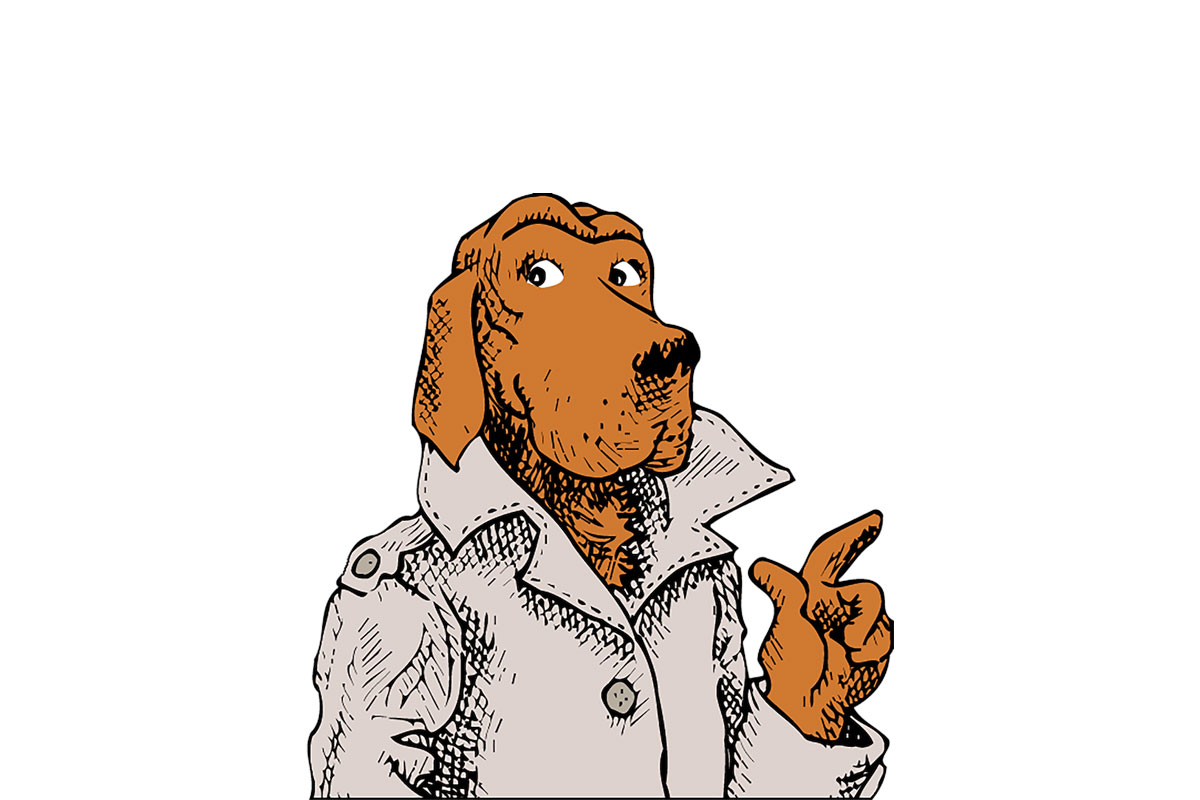
Trench coat. Signature voice. Enemy to criminals everywhere. Enter McGruff the Crime Dog. URochester alumnus Jack Keil ’44 created and voiced the canine, who debuted in 1980 to teach us all how to “take a bite out of crime.”
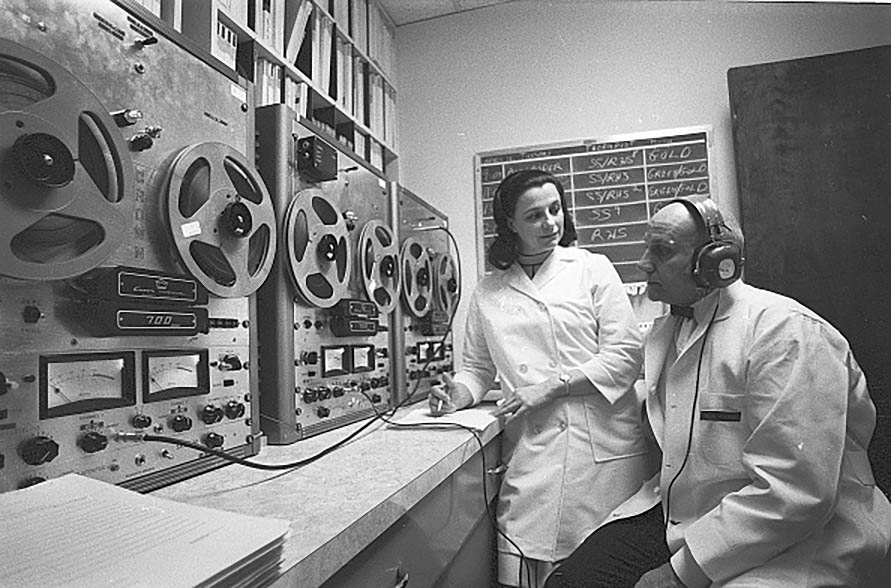
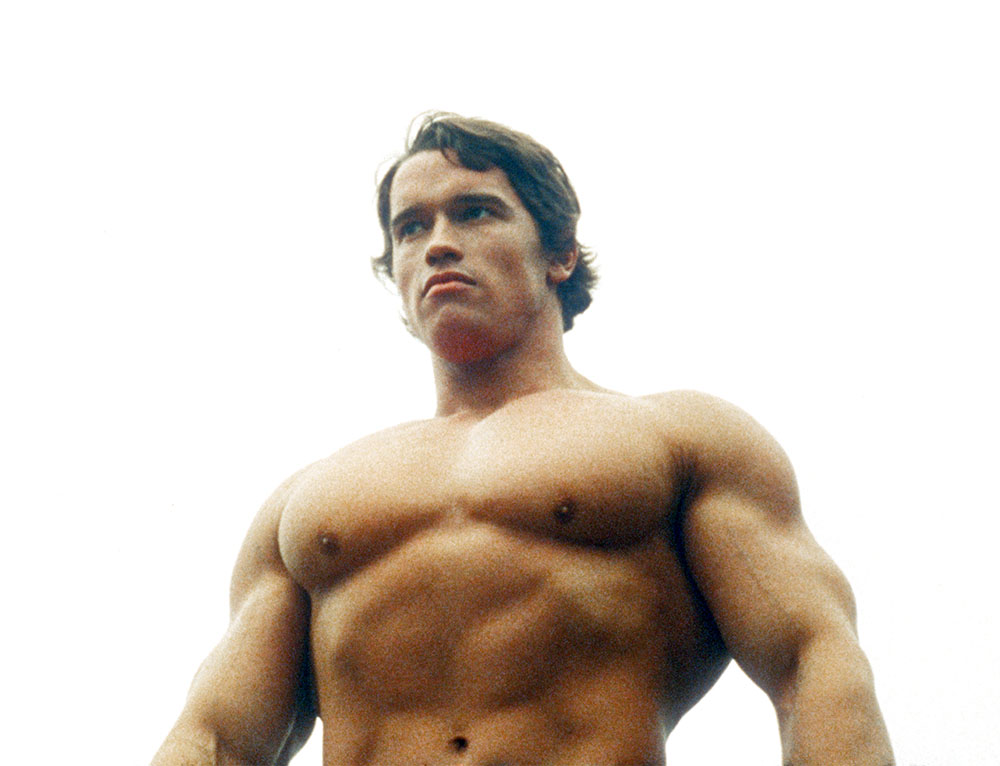
Forty-five (human) years after he was created, McGruff is still the face of the National Crime Prevention Council. JL

4. Correcting RNA’s deadly mistakes.

It may seem like the lesser known of the nucleic acids, but RNA (ribonucleic acid) has been having a moment. Talk of RNA-based treatments and trials has become commonplace, thanks primarily to the COVID-19 pandemic and the rapid development of messenger RNA (mRNA) vaccines.

At URochester, Lynne Maquat, director of the Center for RNA Biology who has been studying RNA since 1972, discovered nonsense-mediated mRNA decay—one of the major surveillance systems in the body that protects against innate mistakes in gene expression by targeting and eliminating deleterious mRNAs that could lead to the production of incomplete and potentially toxic proteins that can cause disease.

Key chapters are still being written by many URochester researchers, and new clinical trials are showing the life-changing promise of this once-obscure research. The University’s expertise in mRNAs will continue to lead to new therapeutics for a wide range of diseases that cannot currently be treated with conventional drugs. JL

5. Supporting local children and families.

Established in 1979, Mt. Hope Family Center is one of just three NIH-funded national centers specializing in treating children who have suffered trauma and maltreatment. Affiliated with the Department of Psychology, MHFC translates its researchers’ scientific findings into evidence-based therapies and programs—providing intervention and prevention services to thousands of Rochester-area children and families. JL

6. Curing acne, pneumonia, and the Black Death.

While working at Pfizer in the early 1950s, Lloyd Conover ’50 (PhD) invented the first antibiotic arising from chemical modification of a naturally occurring drug. More effective, broader in spectrum, and cheaper to produce, tetracycline was also a godsend for those who were allergic to penicillin. Granted a patent in 1955, it soon became the most prescribed broad-spectrum antibiotic in the US, treating everything from acne to pneumonia to, yes, the bubonic plague. MP

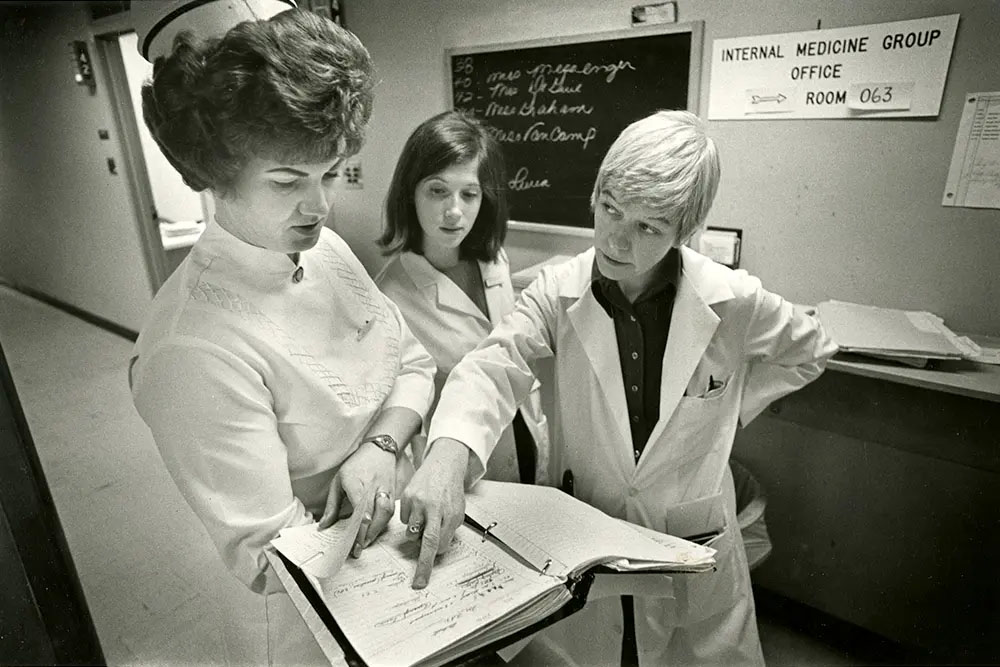
Three women in lab coats examining a document together in a laboratory setting.
For the second year in a row, nurse practitioner has topped the U.S. News & World Report’s Best Jobs rankings. (Chris Quillen / University of Rochester Medical Center Photograph Collection)

7. Pioneering the nurse practitioner movement.

Today, being treated by a nurse practitioner (NP) seems almost as common as seeing a physician. The role—now a norm in most healthcare settings—has URochester roots. An early leader in the NP movement, the School of Nursing introduced the first academic program for acute care NPs and became one of the first nursing schools to prepare pediatric NPs to work in primary care throughout the 1970s and ’80s.

The inaugural dean of the school, Loretta Ford, originated the NP role and founded the first academic program for NPs at the University of Colorado alongside pediatrician Henry Silver before coming to URochester in 1972. Ford’s bold ideas often faced resistance and skepticism, but she worked tirelessly to advocate for nurses as educators, researchers, and advanced practice providers, garnering greater respect for nursing and transforming the way millions of Americans receive care.

“I get a lot of credit for 140,000 nurses, and I don’t deserve it,” Ford said of the growing NP profession in a 2011 acceptance speech when she was inducted into the National Women’s Hall of Fame. “They’re the ones who fought the good fight. They took the heat and they stood it and they’ve done beautifully.” GD

8. Eradicating smallpox.

During the 1960s and ’70s, Donald Henderson ’54M (MD) directed the World Health Organization team that methodically tracked smallpox infections and immunized others in their circles. In 1980 the WHO declared smallpox eradicated—the only human disease to achieve this status to date. It is hailed as one of history’s most profound public health successes. MP

9. Paving the way for the Pill.

Drug-delivery pioneer Alejandro Zaffaroni ’49M (PhD), ’51M (Pdc), ’72M (Honorary) became known for making the impossible possible. Among myriad accomplishments and creations, Zaffaroni had a hand in developing the birth control pill, therapeutic corticosteroids, transdermal patches for nicotine, and controlled-release systems for various drugs.

He stayed at URochester to complete an NIH Fellowship from 1949 to 1951, where his research led to the “Zaffaroni technique” for isolating steroids, which gained international attention. An outright visionary, Zaffaroni received the National Medal of Technology and Innovation and was inducted into the National Inventors Hall of Fame at the Smithsonian Institution. JL

10. Making chemo tolerable.

Until the 1980s, many cancer patients quit chemotherapy because of its harsh side effects. Longtime URochester faculty member Gary Morrow ’88M (MS) transformed this challenge into a new field—known as cancer control—focused on making life better for patients and survivors. His research helped establish URochester and the Wilmot Cancer Institute as global leaders, with the American Society of Clinical Oncology citing nausea prevention research as one of the top five advances of the past 50 years. LO

11. Smacking down diphtheria.

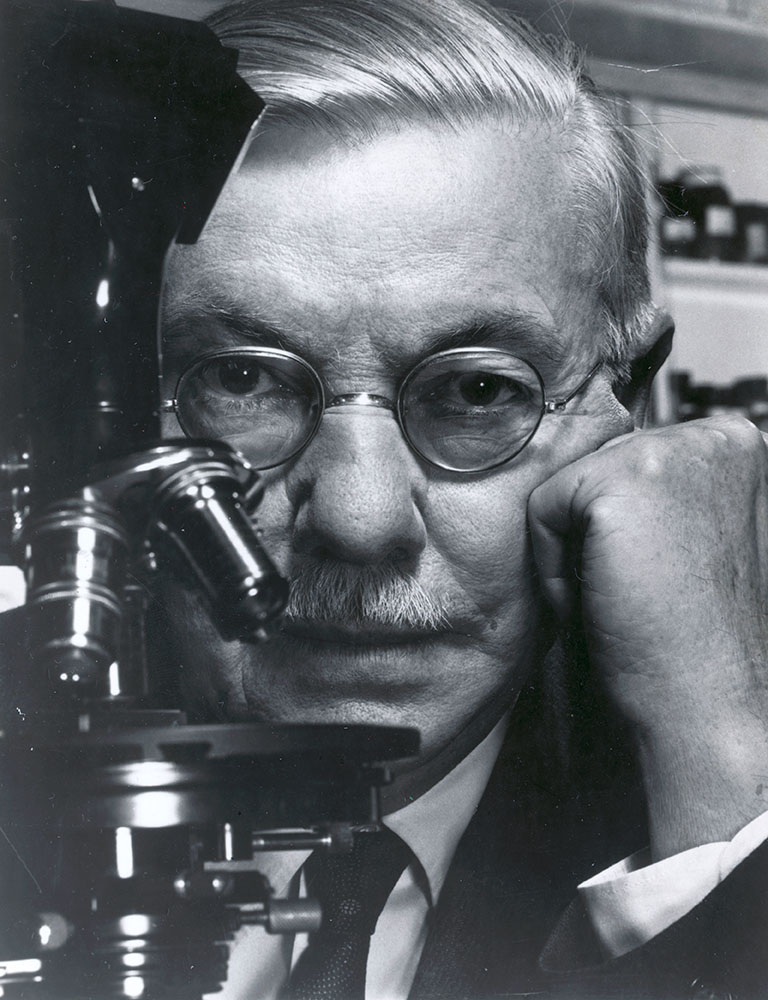
In 1893, a diphtheria epidemic hit the city of Rochester. Good thing Charles Wright Dodge had arrived at URochester three years earlier—toting his own microscope, as the University didn’t have one. Dodge, who founded the Department of Biology, developed the country’s first diphtheria antitoxin, which took control over Rochester’s epidemic. He would go on to serve on the department’s faculty for 40 years. JL

A man sits on a bench, gazing at a sprawling cityscape under a hazy sky.
John Seinfeld’s research transformed how air quality in Los Angeles (and elsewhere) is studied. (Bettmann for Getty Images)

12. Modeling air pollution.

John Seinfeld ’64 revolutionized the way scientists study pollution. When the atmospheric scientist joined the California Institute of Technology, he took special interest in Los Angeles’s smog levels, which at the time were hitting historic highs. Seinfeld and his research group systematically examined air pollution data and developed the first large-scale urban air pollution model for the Los Angeles basin. That spurred a new field of scientific research focused on modeling tropospheric pollution, and it laid the foundation for pollution modeling used nationwide by the Environmental Protection Agency. LA

13. Solving the liver’s deadliest problems.

As a senior investigator at the National Institutes of Health during the 1970s, Harvey Alter ’56, ’60M (MD) puzzled over a persistent finding: Many patients were developing chronic hepatitis after receiving blood transfusions, even when tests ruled out hepatitis A and B.

Through meticulous studies, Alter demonstrated the existence of a previously unknown infectious agent responsible for most cases of transfusion-associated hepatitis. In 1989, he identified the virus as hepatitis C—a breakthrough in public health. Within years, highly sensitive blood tests built around this finding virtually eliminated the risk of transfusion-related hepatitis C in many countries.

Alter received the 2020 Nobel Prize in Physiology or Medicine for his work, with the Nobel committee crediting Alter and his partners with “greatly improving global health.” Alter’s work also laid the foundation for effective antiviral drugs that can now cure the infection, preventing liver failure and cancer while saving millions of lives worldwide. MP

14. Finding spinach’s special K.

Dark green vegetables like kale, spinach, and broccoli are potent sources of vitamin K, essential to bone health and blood clotting. Danish biochemist Henrik Dam discovered the vitamin in the early 1930s while working in Europe. He was conducting research at the University of Rochester Medical Center in 1943 when he shared the Nobel Prize in Physiology or Medicine for this discovery.

Popeye creator E. C. Segar is said to have chosen spinach as his character’s signature food to encourage kids to eat more of the nutrient-rich vegetable. JL

15. Making tap water safe.

We have Martin Tiernan, Class of 1906, to thank for the safety of our public drinking water. While working at the Gerard Ozone Process Company in 1913, Tiernan and Charles Frederick Wallace introduced the world’s first chlorinator. JL

16. Detecting the hazards in transmission lines.

Edwin Carstensen, a professor of electrical engineering for nearly 50 years, made pioneering contributions to the understanding and development of ultrasound. Working with a committee established by the National Institutes of Health, he helped set the worldwide standards for ultrasound exposure. His landmark book, Biological Effects of Transmission Line Fields (1987), was widely influential in legal and government actions aimed at reducing exposure to electromagnetic fields. In 1986, he became the founding director of the Rochester Center for Biomedical Ultrasound, with one of the largest groups of MD and PhD researchers active in medical ultrasound. LA

17. Battling eating disorders.

Suffering and recovering from an eating disorder can be a lonely journey but not for those fortunate to be treated at the School of Nursing’s Western New York Comprehensive Care Center for Eating Disorders, one of only three comprehensive care centers in the state. Longtime director and professor of clinical nursing Mary Tantillo ’86N (MS) is widely hailed for her innovative multifamily therapy group approach for young adults with anorexia nervosa, known as Reconnecting for Recovery (R4R). TML

18. Bringing science to full bloom.

In 1952, URochester chemistry professor Marshall Gates achieved the first total synthesis of morphine. Previously obtainable only by extracting it from opium poppies—think of the fields lulling Dorothy to sleep in Oz—the potent pain reliever could now be built entirely in the laboratory from a starter kit of chemicals.

In more than 30 methodical steps, Gates and his team created a new source for a stable and controlled supply of morphine independent of crop yields and supply chain challenges. Though the process yielded only minute quantities of morphine, it proved that chemists could replicate nature’s most complex compounds. It also went on to fuel the design of other synthetic painkillers and anesthetics. MP

19. Tackling the problems of prenatal alcohol exposure.

Caused by exposure to alcohol during pregnancy, fetal alcohol spectrum disorders (FASD) cause behavioral, learning, and physical problems in 1 to 5 percent of Americans. New treatments, developed by URochester psychologists, focus on strength-based interventions and improving people’s quality of life. The FASD Diagnostic and Evaluation Clinic, a partnership between the Department of Developmental and Behavioral Pediatrics at Golisano Children’s Hospital and Mt. Hope Family Center, is one of just two specialty clinics in the state that regularly diagnose FASD. Next up is a documentary that seeks to decrease stigma and increase awareness. SK

20. Delivering healthy smiles.

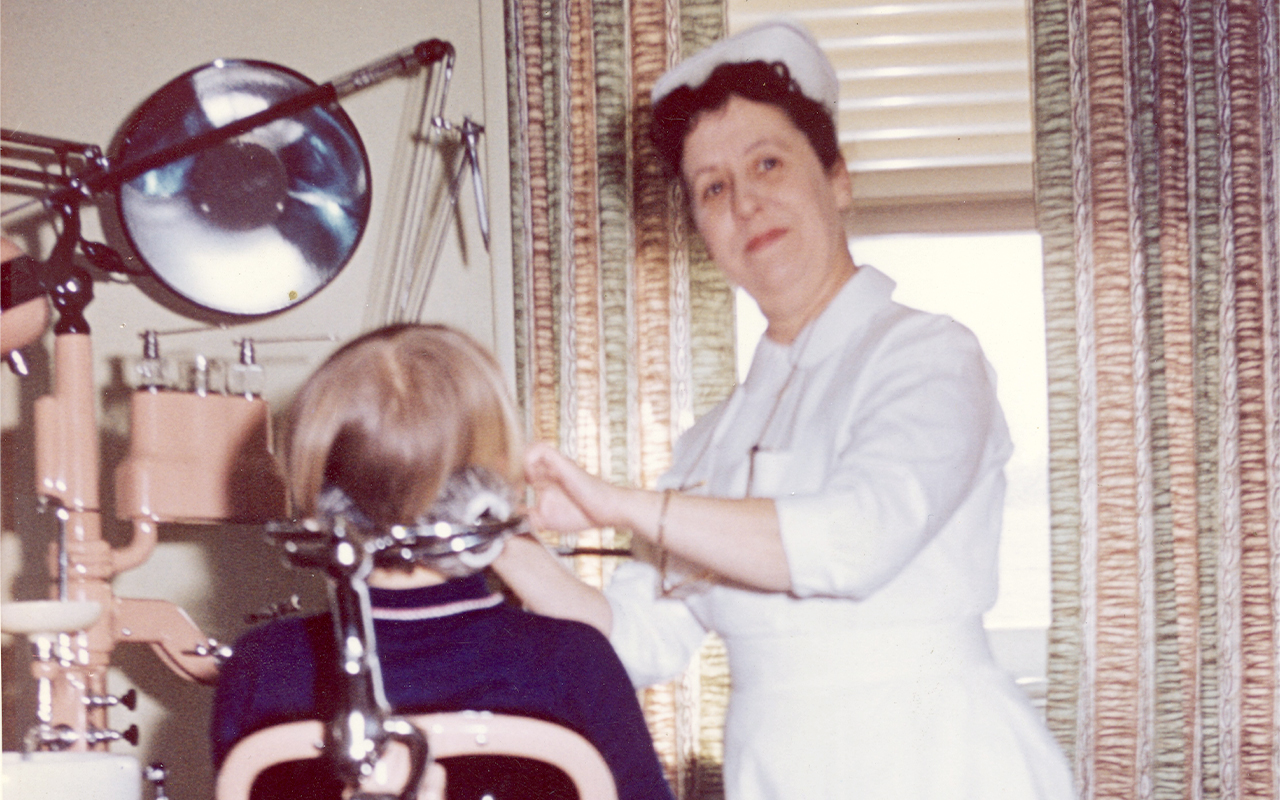
Since 1967, the Eastman Institute for Oral Health’s SMILEmobile program has provided dental care to underserved children and adults in Rochester and the surrounding area. The state-of-the-art dental offices on wheels bring services directly to schools, group homes, and nursing homes—reducing barriers like transportation and insurance and helping boost patients’ academic performance.

SMILEmobile was a New York first in creating dental offices on wheels. Some 39,000 kids have been served by the program. TML

21. Improving cancer treatment for over-60s.

URochester is a trailblazer in geriatric oncology. Our research has improved cancer treatment in adults aged 60 and up—with geriatric assessments of the whole person, functional ability, and other illnesses and health conditions. URochester was among the first in the nation to open a dedicated Geriatric Oncology Clinic, founded by Supriya Mohile, a professor of medicine and of surgery. JL

22. Eliminating bacterial meningitis in kids.

Pediatric researchers David Smith ’58M (MD), ’92 (Honorary), Porter Anderson, and Richard Insel transformed child health worldwide by developing the Haemophilus influenzae type b (Hib) conjugate vaccine, virtually eliminating a leading cause of bacterial meningitis—a previously often fatal illness—in preschoolers. Since the vaccine became universally recommended for infants in 1990, cases among children under five have dropped by as much as 99 percent. The URochester team’s breakthrough not only subdued Hib but also inspired new vaccines using the same template. One notable product of this approach is Prevnar, the vaccine that protects against pneumococcal infections. MP

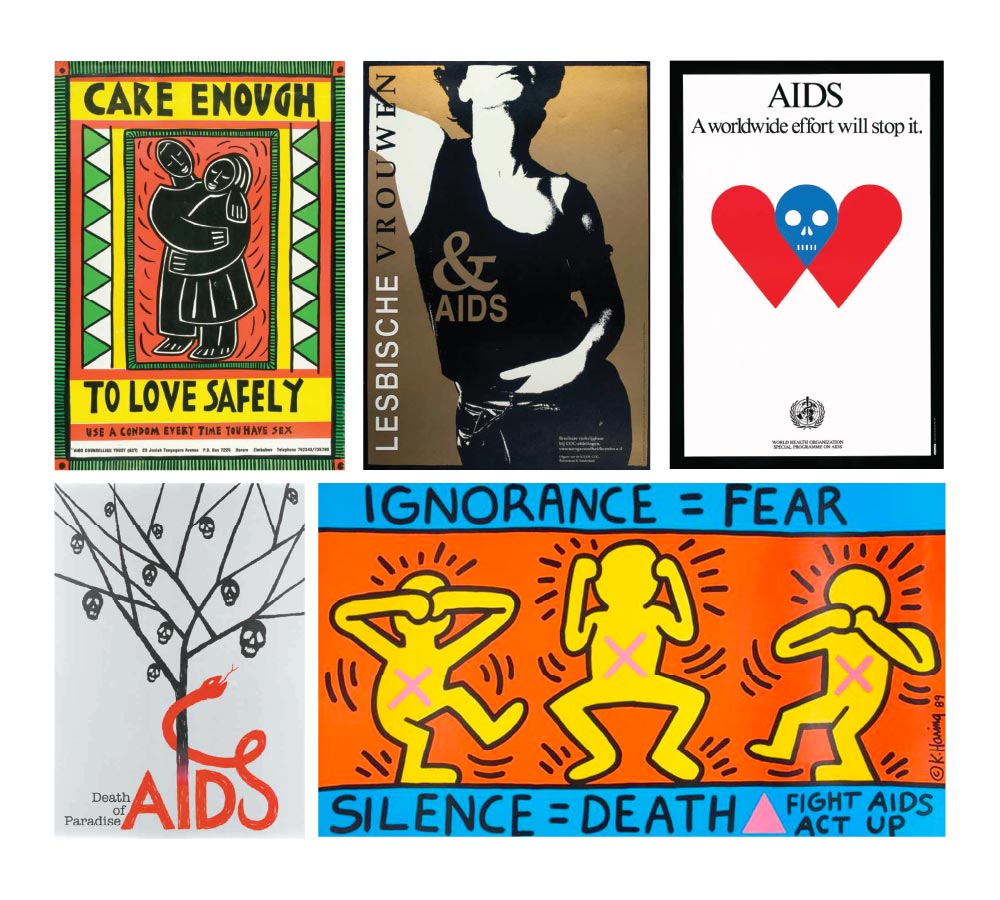
A collage of posters featuring the words care, ignorance, fear, and AIDS in bold, impactful typography.
Featuring more than 8,000 posters, the AIDS Education Collection documents HIV/AIDS education efforts in more than 130 countries and in more than 75 languages and dialects. (Aids Education Collection / Department of Rare Books, Special Collections, and Preservation)

23. Discovering AIDS.

Michael Gottlieb ’73M (MD), ’74M (Res), ’77M (Res) made medical history as the first physician to identify and describe the disease that soon after became known as acquired immune deficiency syndrome, or AIDS. The date of Gottlieb’s report—June 5, 1981—marks the official start of the AIDS epidemic. Since cofounding the American Foundation for AIDS Research in 1985, Gottlieb has been a leading advocate for AIDS research and treatment.

URochester is also home to the AIDS Education Collection, housed in the River Campus Libraries’ Department of Rare Books, Special Collections, and Preservation. A gift from the late physician and medical historian Edward Atwater ’50, it’s one of the world’s largest collections of HIV/AIDS posters and visual resources.

And there’s more: The Medical Center was one of the first research sites in the country to conduct HIV vaccine studies, and its Rochester Victory Alliance, established in 1988, is one of the first five clinics in the world focused on HIV vaccine research. JL

24. Revealing the gene that launched Celebrex.

Warning: The ending to this story is bittersweet. In 1990, URochester scientists led by Donald Young helped discover the gene responsible for the COX-2 enzyme—paving the way for new and more powerful anti-inflammatory drugs and sparking a global pharmaceutical race to identify drugs that would inhibit the action of the enzyme.

When URochester received patents—eight years after the initial filing—for Young’s inventions, Pfizer had already begun marketing the COX-2 inhibitor Celebrex. A patent infringement lawsuit ensued, but, in 2003, federal courts declared URochester’s patents invalid and denied an appeal. US Supreme Court justices claimed we failed to offer details on specific compounds that would inhibit the enzyme. So, while we discovered the gene, we missed out on the drug. JL

25. Preventing RSV in seniors.

In May and June 2023, the US Food and Drug Administration approved the first vaccines to prevent respiratory syncytial virus (RSV) infection in older adults. Medical Center experts were involved in testing two of the three vaccines and Professor of Medicine Edward Walsh served as the national lead investigator for the trials testing Pfizer’s vaccine, Abrysvo. Walsh and Professor of Medicine Ann Falsey have worked with Pfizer for nearly 20 years developing and testing RSV vaccines for adults. JL

26. Proving we need to get the lead out.

The dangers of lead exposure have been well documented: everything from developmental delays in children to reproductive issues in adults. But it was Deborah Cory-Slechta, a professor of environmental medicine, who demonstrated in 2003 that even very low levels of the metal damaged the brains of young children. She became cochair of a 2012 Centers for Disease Control and Prevention panel that recommended slashing by half the level of lead that should be considered as the point for intervention by physicians and public health authorities. Her ongoing research has led to similar influential advisory roles for plastics, pesticides, air pollution, and various volatile chemicals. TML

27. Telling you what to expect from surgery.

Imagine going in for surgery with no idea of what to expect, during either the procedure or the recovery period afterward. Thanks to Jean Johnson, a professor at the nursing school and director for nursing oncology at the Wilmot Cancer Institute from 1979 to 1993, you don’t have to. Her groundbreaking research on information sharing and self-regulation theory revolutionized the way healthcare is provided, giving doctors and nurses the tools to help patients cope with illness and the impact of its treatment. When it comes to healing, knowledge truly is power. TML

28. Healing through music.

What happens when the resources of an acclaimed music school meet those of a top-tier academic medical center? Corridors turn into concert halls, patients find healing in creative arts therapy, and artists receive care attuned to their craft. Jointly run by the Eastman School of Music and the Medical Center and the region’s only center of its kind, Eastman Performing Arts Medicine furthers these initiatives while studying music’s rich potential to promote healing, from live lullabies in the NICU to the optimal playlist in the OR. MP

29. Raising hope for Hodgkin’s lymphoma patients.

In a landmark study led by Wilmot Cancer Institute Director Jonathan Friedberg and published in 2024, a new treatment combining the immunotherapy drug nivolumab and chemotherapy raised the survival rate for advanced Hodgkin’s lymphoma patients to 92 percent, suggesting a new standard therapy for the disease. Friedberg predicts that within a few decades we’ll see many fewer breast cancers in Hodgkin’s patients, as well as “less infertility, less heart disease.” JL

30. Improving the lives of moms and babies.

Over more than four decades, research consistently has proven that the Nurse-Family Partnership succeeds at its most important goals: keeping children healthy and safe and improving the lives of moms and babies. At the forefront of this research was Harriet Kitzman ’61W (MS), ’84N (PhD), whose development of a nurse home visitation program became the basis for the initiative. JL

A woman assists a child in a car seat, ensuring their safety and comfort while preparing for a journey.
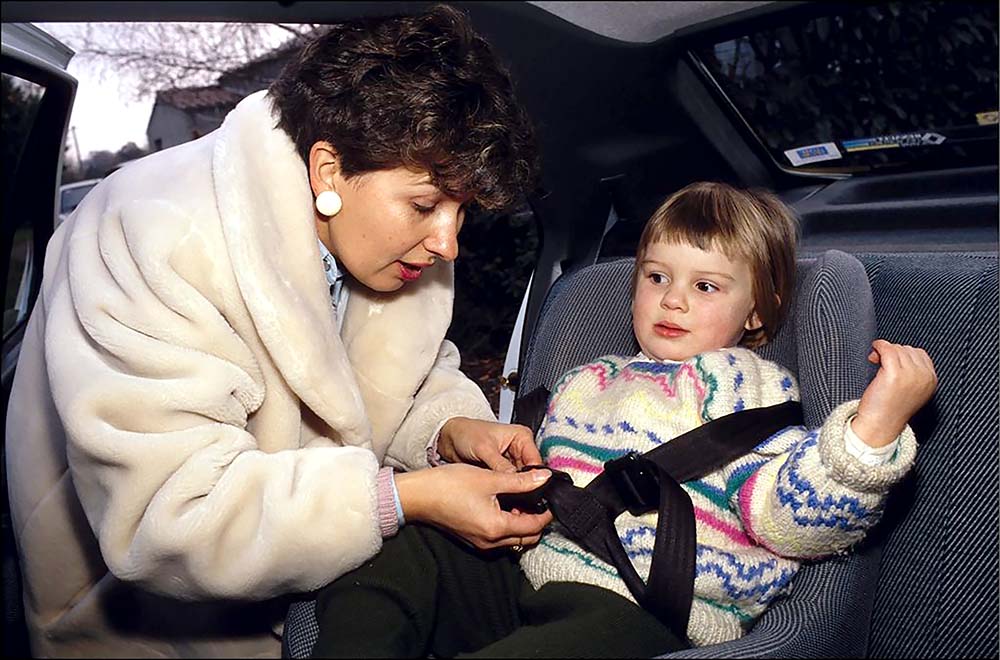
Seatbelts save an estimated 15,000 lives annually in the US, according to the National Highway Traffic Safety Administration. (Alain Le Bot for Getty Images)

31. Turning science into safety.

Racetracks may seem odd settings for an epiphany, but John States ’46, a professor at the medical school from 1976 to 1990, noticed that race-car drivers in high-speed collisions fared better than his patients on ordinary roads, thanks to their safety harness. His research and advocacy made New York the first state to require seatbelts, in 1984, and earned him the nickname “Dr. Seatbelt.” MP

32. Giving liver its due.

While most of us know to start scarfing down beef liver at the first sign of anemia, it took two URochester researchers and 40 Dalmatian-English bulldogs to lead to this 1934 Nobel Prize–winning discovery. By showing that certain foods—especially liver—stimulated rapid regeneration of hemoglobin and red blood cells in the anemia-induced dogs, the medical school’s founding dean, George Whipple, and his assistant, Frieda Robscheit-Robbins, laid the groundwork for the successful treatment of humans with pernicious anemia. TML

A team of surgeons in scrubs collaborates in a brightly lit operating room during a surgical procedure.

33. The save

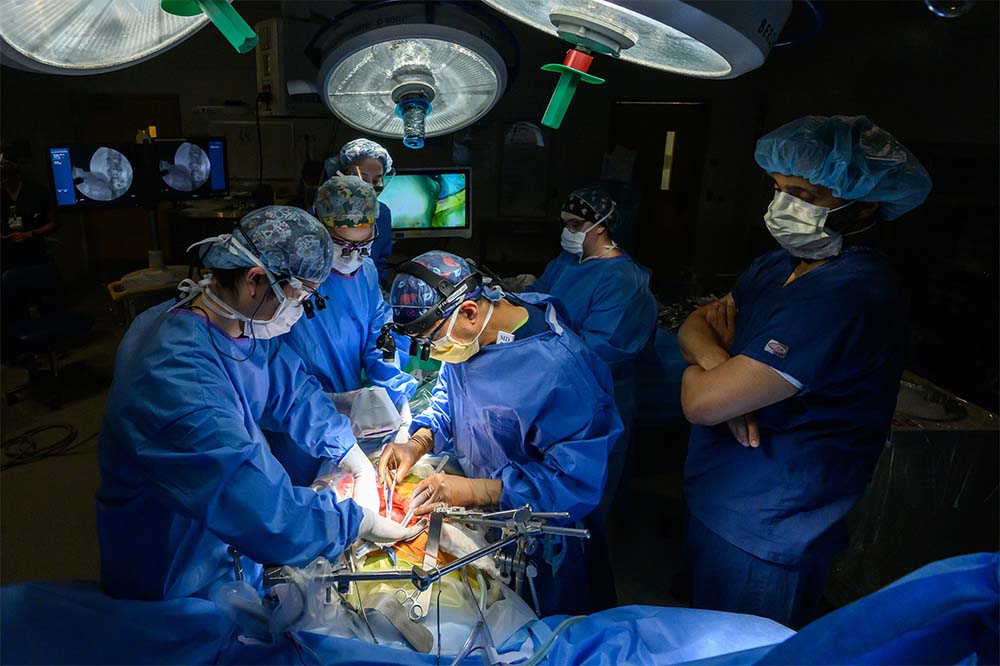
This woman’s life depended on a determined doctor, a groundbreaking procedure, and an institution built to support the research behind complex medicine.

Read more

Stars & Planets

URochester researchers and alumni have boldly gone…

34. To future discovery of alien life.

When we eventually find life on another planet, Wolf Vishniac deserves some credit. Funded in 1959 by NASA’s first exobiology research award, the “Wolf Trap” was the first working prototype of an instrument that could remotely detect extraterrestrial biota. Astronomer Carl Sagan named a crater on Mars for the URochester biology professor after he died on an expedition to Antarctica. You’ll find the Vishniac Crater in the Giant Footprint, at the exact longitude and latitude of the professor’s demise on Earth. MC

35. To a star named for guess what.

Morton Kaplon ’51 (PhD) codiscovered the R-Star (R for Rochester) while he was a graduate student. Kaplon, who later became a physics professor and department chair at URochester, used a balloon to lift Kodak photographic plates to 100,000 feet to capture a specific particle collision that was theorized to occur in the upper atmosphere. The pattern of star-like images left on the plates (hence “R-Star”) provided evidence for a new particle called the neutral pi-meson (now called the neutral pion). Kaplon was also the first to measure the life of a neutral meson, which was the shortest of any elementary nuclear particle observed at the time. JL

36. To the language used by famous blue aliens.

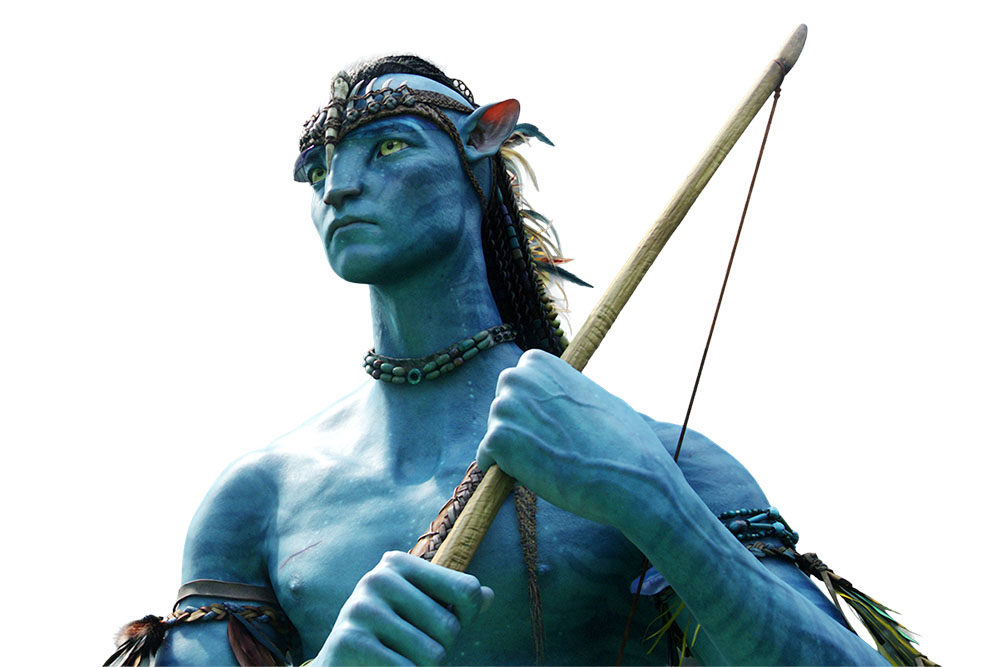
Linguist Paul Frommer ’65 built Na’vi, the language spoken by the natives of Pandora in the film Avatar. Na’vi now stands among Klingon, Elvish, and Dothraki as popular fictional languages that are actually learnable. (You can master Na’vi for yourself by going to learnnavi.org.) Ayoel ayngati kameie nìwotx! We see you all! MC

37. To exoplanets and their inner workings.

Hosted at URochester, the Center for Matter at Atomic Pressures is an NSF-designated Physics Frontiers Center that brings together scientists from around the country to explore new worlds, stars, and revolutionary states of matter. Their work involves not only researching the thousands of exoplanets outside our solar system but also replicating the extreme conditions found in the interiors of those planets within a laboratory setting. The findings could have monumental implications for life as we know it on Earth. TML

38. To dazzling observations of our universe.

When NASA launched the Hubble Space Telescope in 1990, the project seemed on the verge of failure: The first pictures came back foggy. Duncan Moore, then the director of the Institute of Optics, stepped up to lead a panel investigating the problem. A year later, they announced a solution: The main mirror had not been ground perfectly, creating a slight distortion. A series of repair missions then brought the Hubble back to life and enabled it to deliver the images that continue to change our fundamental understanding of the universe. Rochester scientists also contributed to Hubble’s successor, the James Webb Space Telescope. Optics professor James Fienup and his PhD students developed the phase retrieval algorithms that tune the primary telescope’s 18 hexagonal mirrors, allowing it to capture accurate data from as far back in time as 13 billion years.

Left: An image captured by the James Webb Space Telescope shows newborn stars forming in a region called Pismis 24, giving scientists rare insight into the properties of hot young stars and how they evolve. LA

39. Deep into the final frontier.

Physics professor Nicholas Bigelow helped develop quantum-based experiments for NASA’s Cold Atom Lab aboard the International Space Station. Broadscale, it could help solve mysteries of the universe and deepen our understanding of the fundamental laws of nature. In the short term, the knowledge gained will be essential in developing new space-based quantum technologies.

Kevin Righter, an earth and environmental sciences professor, served as the curation lead on the NASA mission OSIRIS-Rex. Righter helped keep space rocks collected from the Bennu asteroid free of contaminants, allowing scientists on Earth to determine what was truly extraterrestrial.

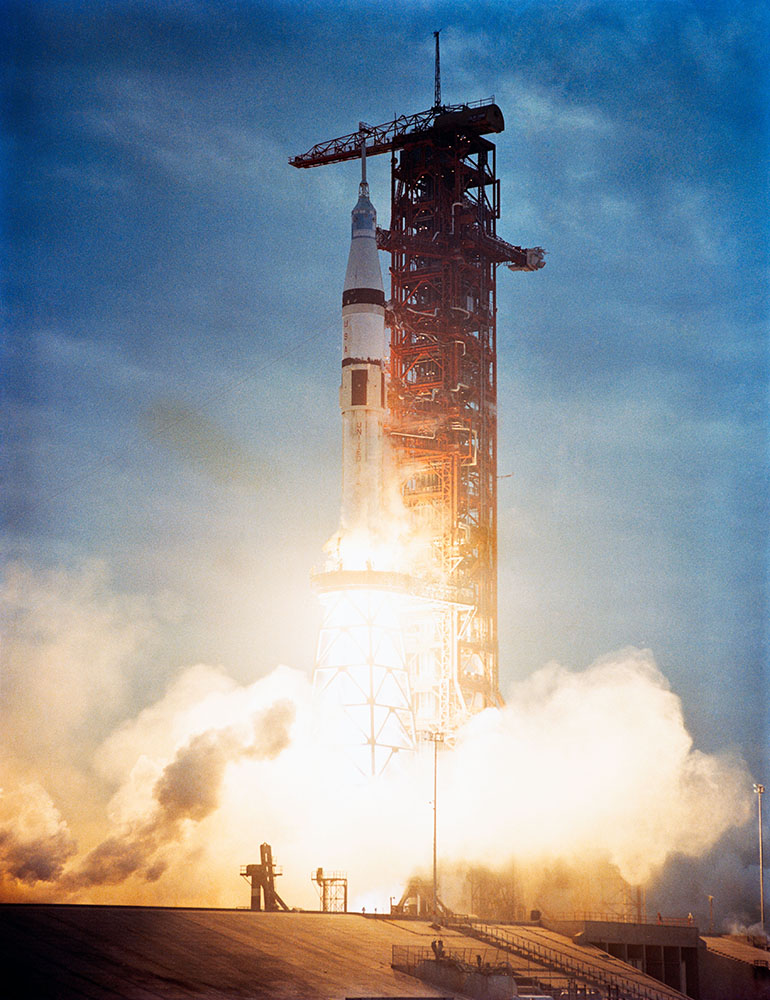
Edward Gibson ’59, ’74 (Honorary), James Pawelczyk ’82, and Josh Cassada ’00 (PhD) have all ventured into the great unknown. Gibson was part of a record-setting 84-day stint aboard Skylab 3. Pawelczyk served as Columbia’s payload specialist on a 16-day mission. And Cassada spent 157 days as part of the NASA SpaceX Crew-5 mission on the ISS. MC

40. To the matter of dark matter.

URochester researchers are contributing to the world’s most sensitive dark matter detector. Located nearly a mile underground in South Dakota, the LUX-ZEPLIN collaboration leads the hunt for weakly interacting massive particles, or WIMPs. Scientists believe these hypothetical particles make up the dark matter that holds together galaxies. The URochester team developed the data acquisition electronics and firmware used in the detector, supporting efforts to uncover the nature of the invisible matter shaping our universe. LV

41. To the reason the universe exists.

Carl Richard Hagen, a professor emeritus of physics who joined the URochester faculty in 1962, played a key role in the 1964 discovery of the Higgs mechanism and the prediction of a new particle—the Higgs boson—that scientists would spend the next half-century chasing. In a landmark paper now referred to as “GHK,” Hagen and coauthors Gerald Guralnik and Tom Kibble provided the most complete theoretical proof of how particles gain mass and, by extension, an explanation of why the universe as we know it exists. TML

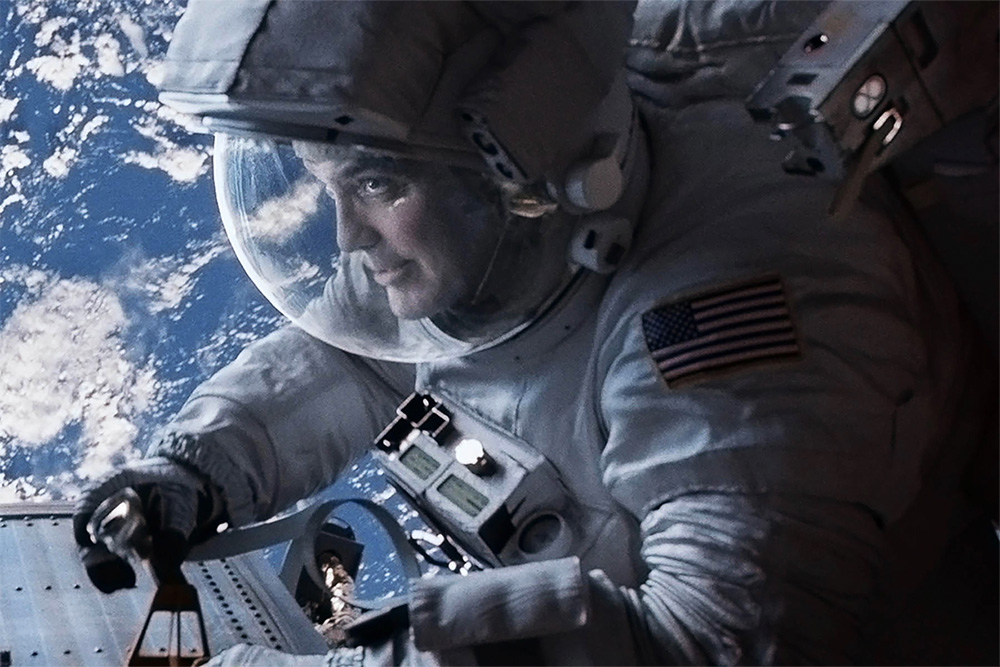
An astronaut floating in space holds a bottle of water, surrounded by stars and the Earth in the background.
Gravity, one of three space-related movies George Clooney has starred in, won seven Oscars—including for directing, visual effects, and cinematography —in 2014.

42. To the stars among us.

It seems impossible, but there was a time when George Clooney wasn’t famous. John Levey ’69, as vice president of casting and talent for Warner Bros. Television, cast Clooney in ER—the role that skyrocketed him to fame and ultimately gave us Ocean’s Eleven, Batman & Robin, Syriana, and, yes, Gravity. JL

43. To the formation of stars and galaxies.

Long before the James Webb Space Telescope made headlines, URochester professor Judith Pipher was making it possible to peer through clouds of cosmic gas and dust to uncover the formations of stars and galaxies. Widely considered the “mother of infrared astronomy,” Pipher led the development of ultrasensitive detectors that use infrared light to reveal celestial objects invisible at other wavelengths. Her groundbreaking work, used on missions like NASA’s Spitzer Space Telescope, opened a hidden window into the universe. LV

44. To mysterious ghost particles.

Our modern understanding of the building blocks of matter would be incomplete without Masatoshi Koshiba ’55 (PhD), who received a share of the 2002 Nobel Prize in Physics for detecting and measuring cosmic neutrinos—tiny subatomic particles often called “ghost particles” because they rarely interact with matter. In the 1980s, Koshiba led the development of a massive underground facility built within the Kamioka mine in Japan that catches neutrinos as they are emitted from the sun. LV

45. To the rocks beneath us.

Herman LeRoy Fairchild, a professor of geology and natural history at URochester from 1888 until his retirement in 1920, cofounded the Geological Society of America. He devoted much of his life to studying the geology of the Finger Lakes, taking countless photographs that he then projected in his classroom. He is said to have used the same lantern slide projector for his entire 32-year career, modifying the source of light as technology advanced. (In 1934, Fairchild also weighed in on the centuries-old “Seneca Drums” mystery— which you should Google immediately.) JL

46. To humanity’s understanding of science.

As a self-described “science evangelist,” URochester astrophysicist Adam Frank isn’t afraid to broach a wide variety of subjects—from intelligent life forms in the universe to climate change to high-energy-density physics to the importance of science and its funding. A regular on NPR’s All Things Considered and a frequent contributor to The New York Times, Frank combines passion with deep authority—all while conducting computational astrophysics research into how stars form. JL

Image of the Starship Enterprise (NCC-1701) from Star Trek, showcasing its iconic design against a starry background.
With its multiracial cast and one of the first interracial kisses on American TV, Star Trek’s influence extended far beyond the small screen. (University of Rochester photo / J. Adam Fenster)

47. To the starship Enterprise.

URochester faculty and alumni created music and sound, penned episodes, and otherwise expanded the cultural reach of a show that boldly went where no show had gone before.

The second pilot episode of Star Trek: The Original Series, marked the first time audiences heard the iconic theme music. That arresting fanfare was composed by Alexander Courage ’41E. It wasn’t his only gift to the show.

The Original Series crew struggled to produce the proper sound effect for the USS Enterprise flying across the screen during the opening credits. Courage, using only his voice, produced the whoosh sound that became an indelible part of the show’s history.

Another URochesterian, English Professor Sarah Higley, created the character of Lieutenant Reginald Endicott Barclay III in Star Trek: The Next Generation. Writing under the pseudonym “Sally Caves,” Higley wrote the episode “Hollow Pursuits” in which Barclay is introduced as a character. She went on to cowrite another episode, “Babel,” for Star Trek: Deep Space Nine.

Thomas Perry ’74 (PhD) also wrote for The Next Generation. His episode, “Reunion,” has Worf, the Klingon captain of the Enterprise, meeting his son and tragically losing his would-be wife.

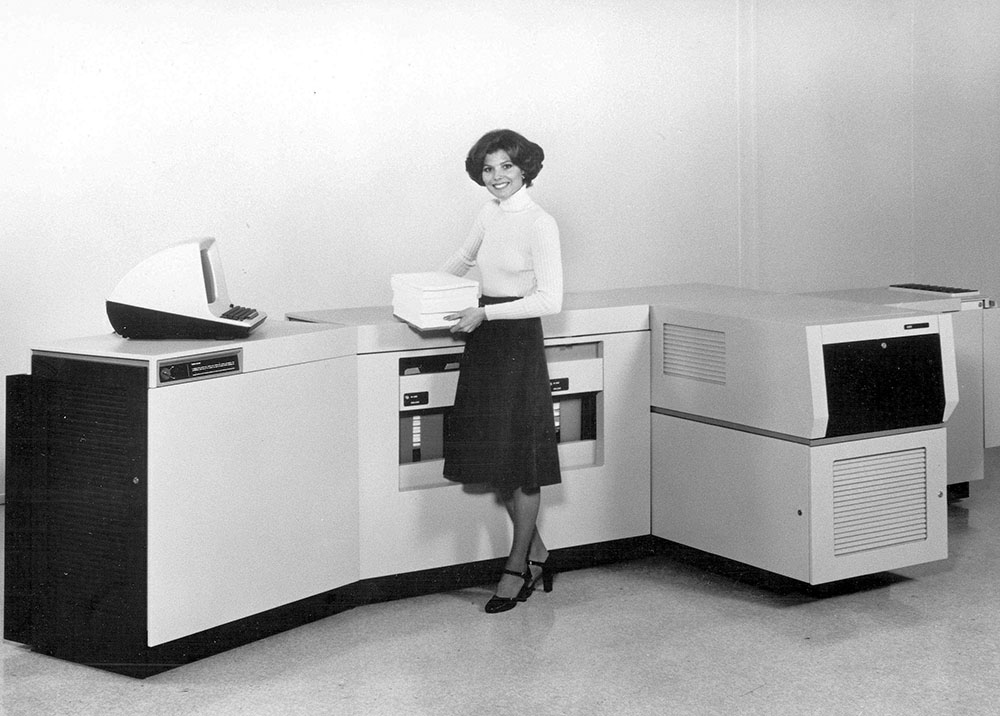
Heading into dangerously nerdy depths now with one of the earliest networked computer games, the Star Trek–inspired Alto Trek. Codeveloped by Gene Ball ’83 (PhD) and Rick Rashid ’80 (PhD), ’15 (Honorary) in 1978, Alto Trek, designed for the Xerox Alto, gave players the option of controlling a starship as a Klingon, Romulan, or Terran (all races taken from the show). MC

48. To the planet we stand on.

A native Rochesterian, Grove Karl Gilbert, Class of 1862, helped launch the US Geological Survey to advance the study of geomorphology and planetary science. He served as chief geologist under renowned explorer John Wesley Powell. In addition to three peaks on Earth, craters on the moon and Mars are named in his honor. JL

49. To the affairs of our world.

Vera Micheles Dean, an authority on international affairs who taught at URochester from 1954 to 1961, got America talking about the world. During her tenure, she maintained her longtime role as editor and research director at the Foreign Policy Association and launched the organization’s Great Decisions program. It remains the broadest public engagement initiative on world affairs in the country. DA

50. To the math behind quantum physics.

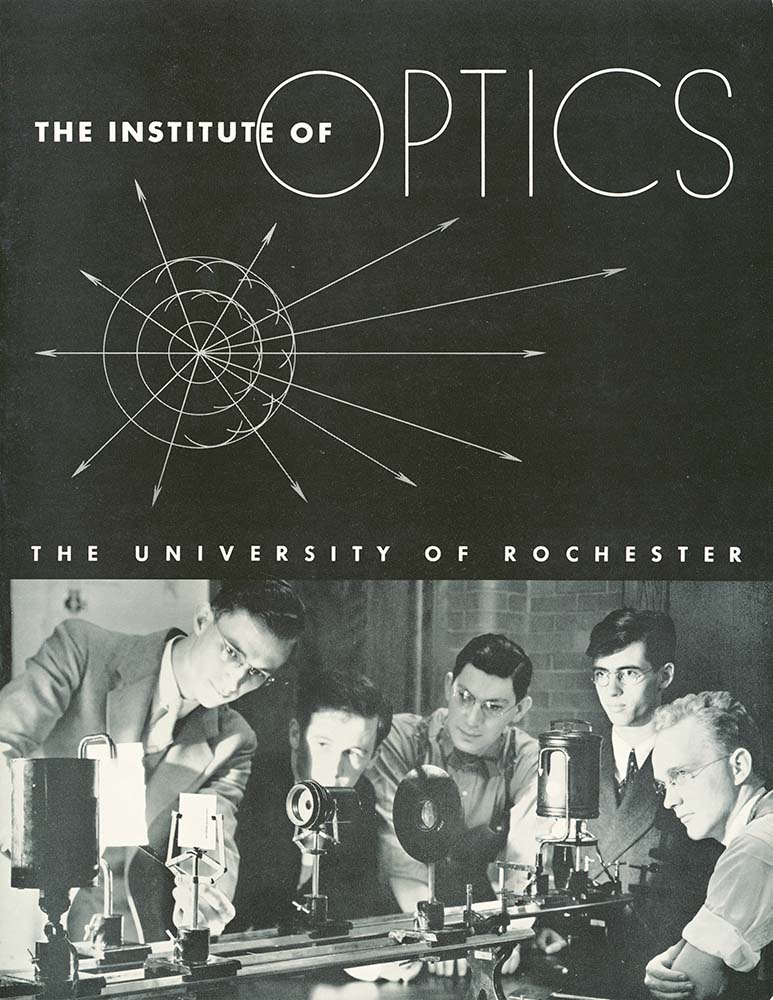
One of the earliest faculty members of the Institute of Optics was an expert in the emerging discipline of quantum mechanics. Appointed by President Rush Rhees, Jane Dewey joined the institute in 1929, its founding year. She went on to author landmark papers and to develop several important scientific equations and concepts—including the Slade-Dewey equation in ballistic science and the Dewey-McKenzie estimate in materials science. LA

51. To the behavior of atoms while they hold still.

Steven Chu ’70, ’98 (Honorary) may be known to Americans as Secretary of Energy under President Barack Obama. But physicists laud him for developing a technique to cool and trap atoms using laser light. This revolutionary method slowed atoms to nearly absolute zero, allowing scientists to study atomic behavior with unprecedented accuracy. The invention opened new doors in quantum mechanics and quantum computing and won Chu—along with Claude Cohen-Tannoudji and William Phillips—the Nobel Prize. LV

52. To the very heaviest quark.

In 1995, physicists confirmed the existence of the top quark—the heaviest of the six known types of quarks, which are the building blocks of matter—by identifying its telltale decay patterns during high-energy collisions at Fermilab. URochester researchers helped design and operate the detectors that caught the top quark’s fleeting “footprints” and analyzed the data leading to its big reveal. LV

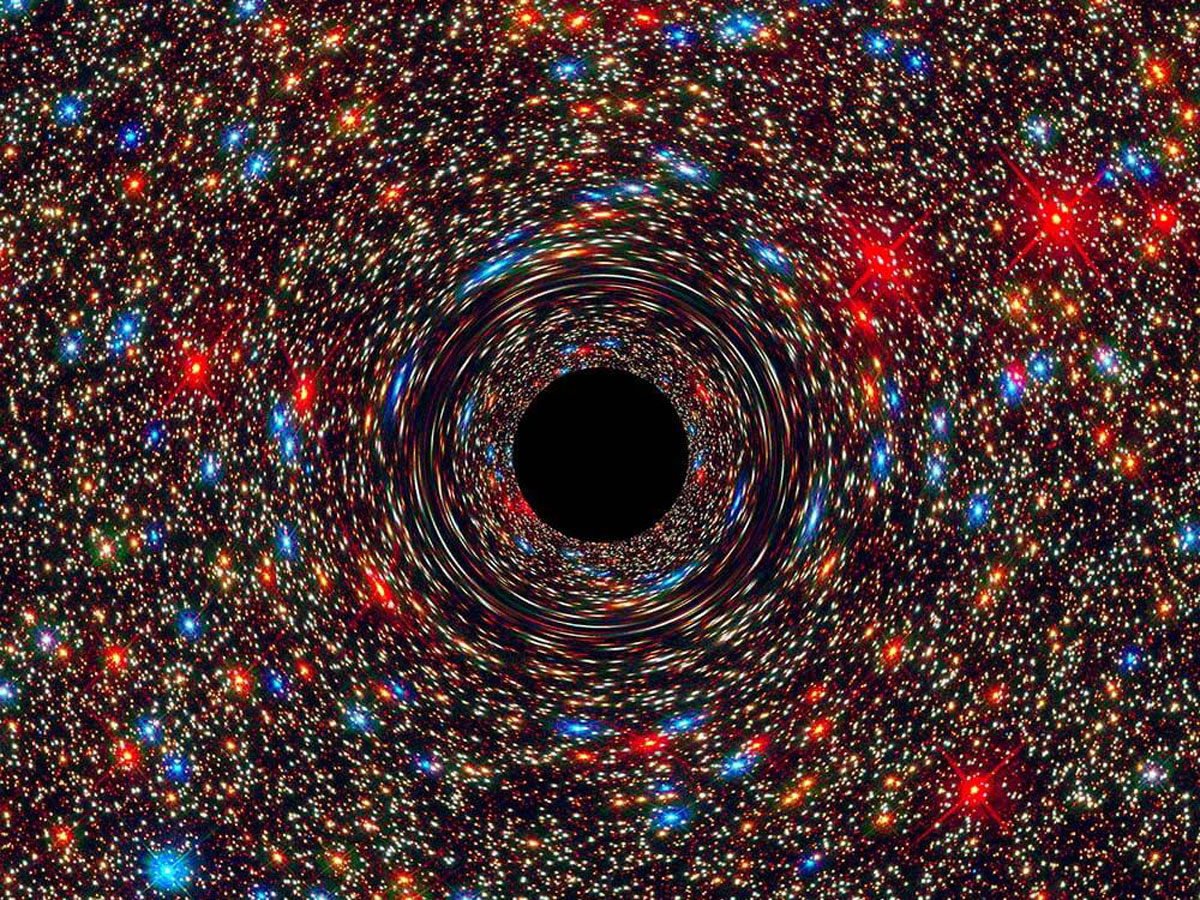
A black hole at the center of a galaxy, surrounded by swirling stars and cosmic dust, illustrating its immense gravitational pull.

53. To the first confirmed black hole.

In 1971, British astronomer Paul Murdin ’71 (PhD), along with Australian astronomer Louise Webster at England’s Royal Greenwich Observatory, made the first clear identification of a black hole. Cygnus X-1, discovered using the Isaac Newton Telescope, remains among the most studied astronomical objects in its class. Murdin was also on the team that observed the Vela pulsar from Australia’s Siding Spring Observatory in 1977, the faintest star ever measured at the time. TML

Stage & Screen

As a center for music, optics, and artistry, URochester presents …

54. A better, brighter picture.

Thank Professor Emeritus Ching Tang for helping develop the thin-film, light-emitting technology now widely used in computers, smartphones, and televisions. While working at Eastman Kodak, Tang and his colleague, Steven Van Slyke, created the first practical OLEDs.

Unlike liquid-crystal displays that rely on a backlight, organic light-emitting diode screens use luminescent organic materials to make their own light. The result: more efficient use of power, longer battery life, and improved display quality. OLEDs are thinner and lighter, provide superior brightness and color, and offer ultrafast response time for refreshing and on-off switching.

Tang is also credited with several key innovations leading to the commercialization of the new technology. The first OLED product appeared in 1997, and the first television featuring an OLED display, produced by Sony, entered the market in 2008. By 2023, the global OLED market was valued at $50.8 billion.

Tang joined the URochester faculty in 2006 and has since earned numerous honors, including the Kyoto Prize. LA

55. America’s top pop conductor.

Mitch Miller ’32E—renowned bandleader, record producer, and host of the hugely popular Sing Along with Mitch—knew a hit and how to make one. His 1955 recording of “The Yellow Rose of Texas” sat at number one on the Billboard retail chart for six weeks. It’s still the most popular version of the roughly 175-year-old song. JL

56. The very best Ol’ Man River.

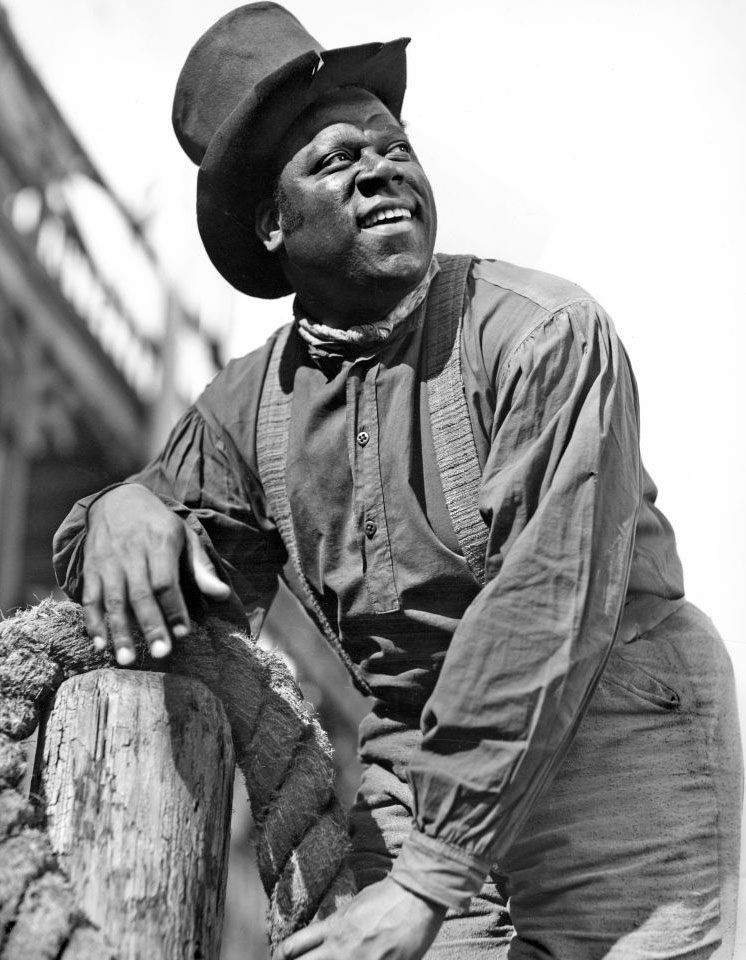
If you’ve never listened to a recording of William Warfield ’42E, ’88 (Honorary) singing “Ol’ Man River,” please go do so now. We’ll wait. A renowned bass-baritone concert singer, Warfield played the role of “Joe” in the 1951 film Showboat, performing what would become his signature song. He would go on to sing the song across the globe, in several languages, for the next four decades. JL

A large orchestra performs in a spacious auditorium, led by a conductor at the front.
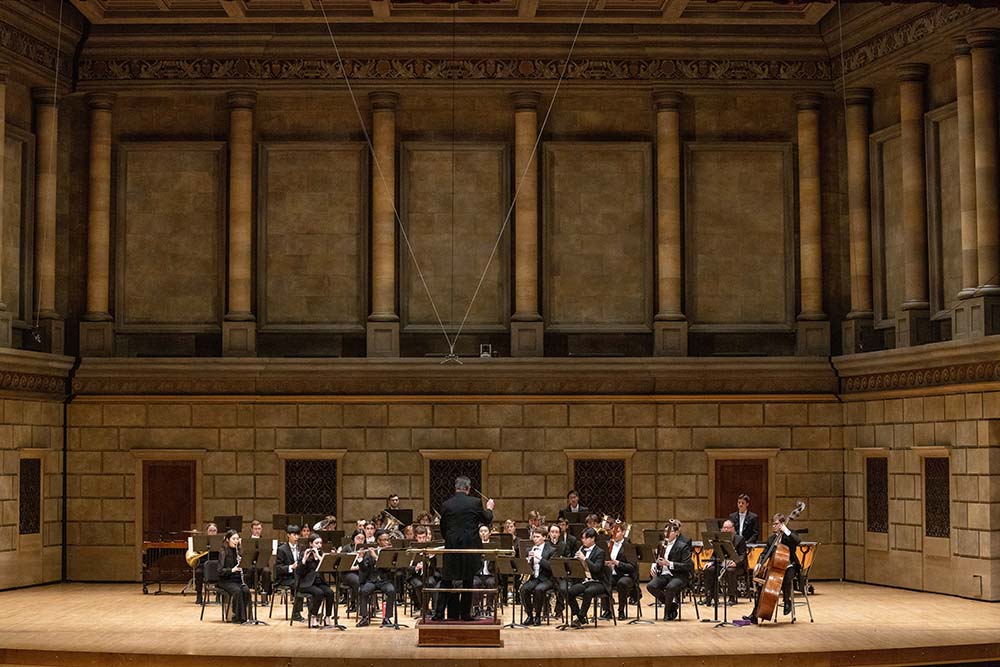
The Eastman Wind Ensemble, led by its current conductor, Mark Davis Scatterday, gave a 70th-anniversary concert in Kodak Hall in 2023. It included works by Mozart and Paul Hindemith in a nod to the ensemble’s debut concert repertoire. (University of Rochester photo / John Schlia)

57. The revolutionary wind ensemble.

On February 8, 1953, the Eastman Wind Ensemble debuted in the Eastman School of Music’s Kilbourn Hall, marking a little-noticed but profound shift in the world of music.

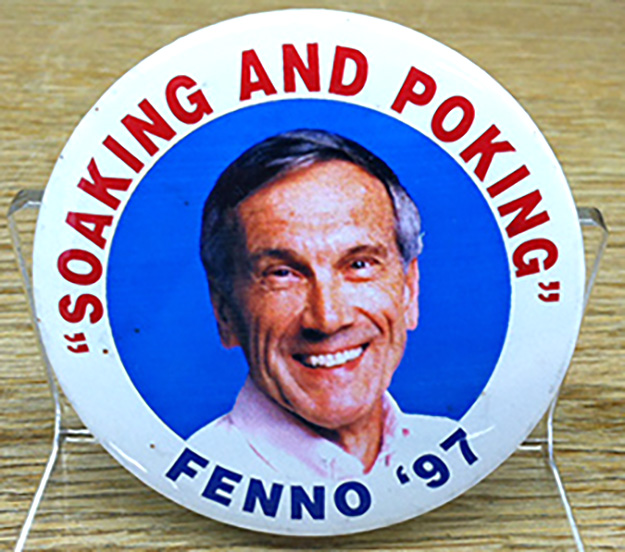
Before that Sunday afternoon concert, most music for wind instruments was performed by large symphonic bands with two or more players on each part. Frederick Fennell ’37E, ’39E (MM), ’88 (Honorary), then on the faculty at Eastman, envisioned something different: an ensemble modeled after an orchestra’s principle of one player per part.

The result was transformative. In Fennell’s ensemble, every instrument had its own voice, every player a distinct responsibility. In effect, he maintained, each musician became “the soloist his private teacher had taught him to be.”

Even before the ensemble’s public debut, Fennell wrote to 400 composers requesting suitable compositions. Early responses from Percy Grainger, Paul Hindemith, Vincent Persichetti, and Ralph Vaughan Williams would form the basis for ever more ambitious, large-scale works specifically for wind ensembles, a repertoire that simply didn’t exist before Fennell’s vision.

Beyond the music itself, the wind ensemble raised the bar for music education. The model spread rapidly through school music programs across North America and far beyond. Today, the Eastman Wind Ensemble remains one of the most respected groups of its kind, while its alumni bring Fennell’s famed precision and artistry to the world’s most prestigious performing organizations. TML

A group of children gathered in a room, focused on music stands while practicing their instruments.
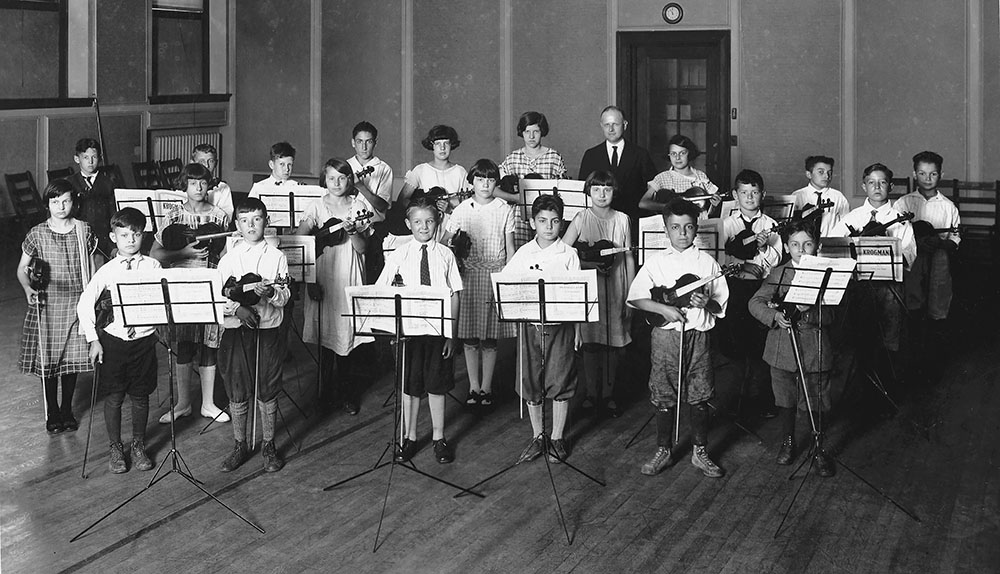
The Eastman Community Music School has evolved since 1921 from a preparatory department to a center for enrichment open to everyone. (Sibley Music Library / Eastman School of Music)

58. Music for a whole community.

George Eastman intended the music school that bears his name as a resource for all Rochesterians, not only college students. In 1966, Eastman faculty member Milford Fargo established the acclaimed Eastman Children’s Chorus, the first such ensemble at the school. In the 1980s, a newly envisioned Community Education Division began adding more educational opportunities for the community, including a program of preschool music classes developed by faculty member Donna Brink Fox. The Community Education Division has more recently evolved into the Eastman Community Music School, which continues to expand upon the vision of offering music to everyone in the community, regardless of age. TML

59. America’s longest-suffering mother.

Aspiring actress Debra Jo Rupp ’74 arrived at URochester just as we launched our theater department. From campus stages to Hollywood sets, she’s built a career of scene-stealing turns—most memorably as Kitty Forman, the beloved but beleaguered mom on That ’70s Show and That ’90s Show. Rupp, who also appeared on Friends and Seinfeld, made her film debut in Big. ST

60. Music by our elders.

Giving new meaning to “an oldie but a goodie,” Professor Emeritus of Music Education Roy Ernst created New Horizons to give senior adults a supportive, noncompetitive space to learn to play music or to return to making music after years of building careers and raising children. The original chapter, now part of the Eastman Community Music School, is one of more than 180 members of the New Horizons International Music Association, which includes bands, orchestras, choruses, and other music groups. TML

A yellow vinyl record featuring a woman in a flowing dress, set against a vibrant background.
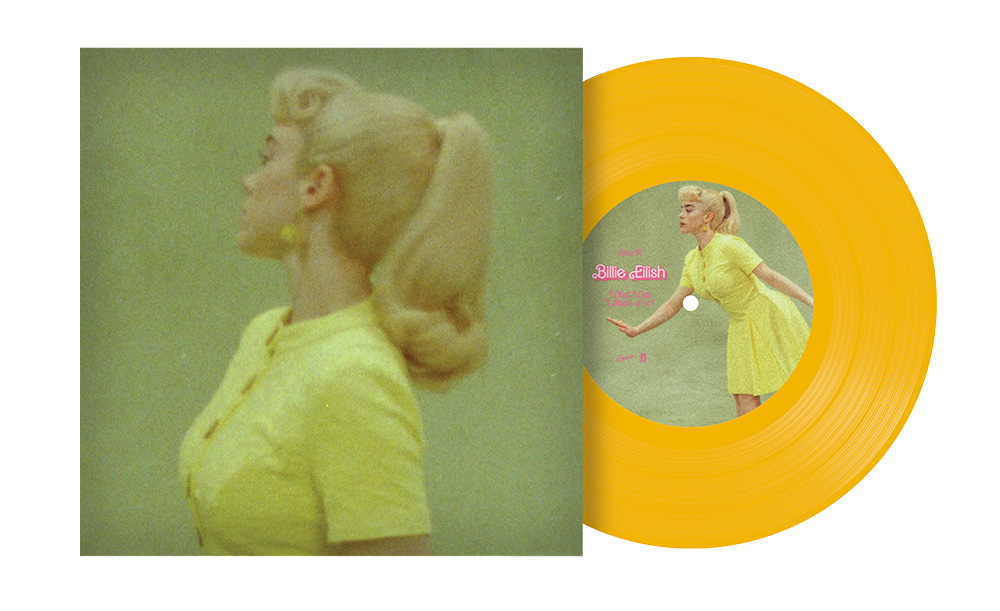
Besides an Oscar, “What Was I Made For?” won Song of the Year and Best Song Written for Visual Media at the 2024 Grammys. (Interscope Records)

61. The old-school sound of that Barbie song.

Even before “What Was I Made For?” won the Oscar for Best Original Song at the 2024 Academy Awards, fans and critics hailed the Barbie single for its wistful, melancholy sound. Billie Eilish’s brother and producer, Finneas O’Connell, gives credit to a digital plug-in created by two former Hajim School students for their senior design project. Daniel Fine ’19 and Ben Schmitz ’19 developed SketchCassette to enable users to add lo-fi effects typical of four-track cassette tapes to their musical tracks. It’s now the signature product of their five-year-old company, Aberrant DSP. TML

62. Jazz’s best bass lines.

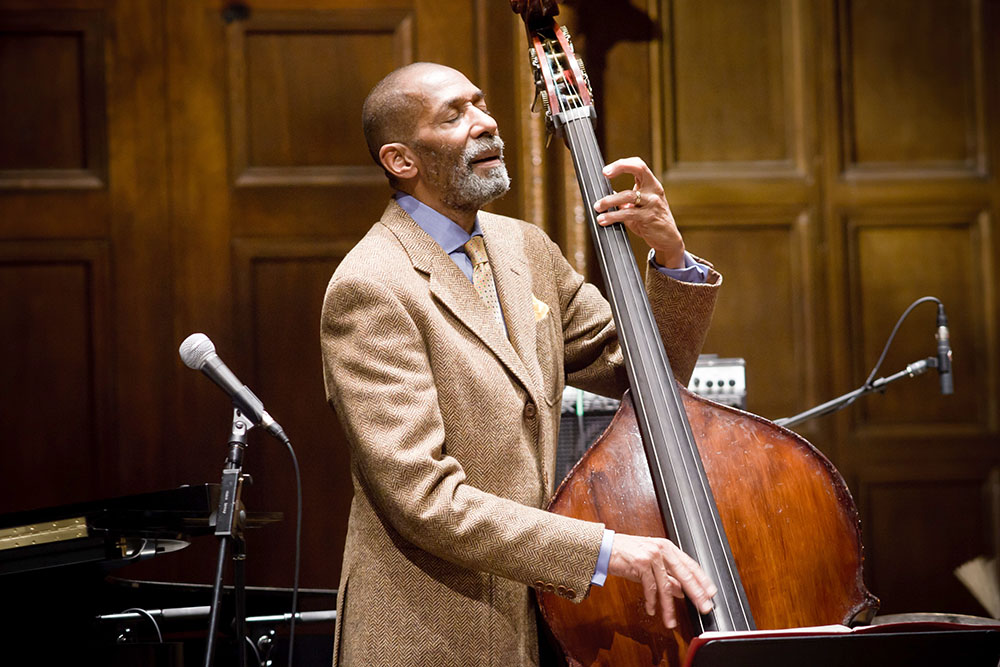
Ron Carter ’59E, ’10 (Honorary), one of the most original and prolific figures in modern jazz, contributed to groundbreaking albums such as E.S.P., Miles Smiles, Nefertiti, and Seven Steps to Heaven, helping to define post-bop with Miles Davis, Herbie Hancock, Wayne Shorter, and Tony Williams. With more than 2,200 recordings to his name, Carter holds the Guinness World Record as the most-recorded jazz bassist—which he set way back in 2015. JL

63. A trophy case that’s running out of room.

Move over, Beyoncé. Eastman boasts a total of 76 Grammy wins among its faculty and alumni—that’s 41 more than Queen Bey, if you’re counting—not to mention dozens more nominations. And that doesn’t include the Hajim School’s Stephen Roessner ’23 (PhD), an assistant professor of electrical and computer engineering who took home a gold-plated gramophone for his engineering work on Messiaen: Livre Du Saint-Sacrement in 2010. TML

64. Songs that fill a void.

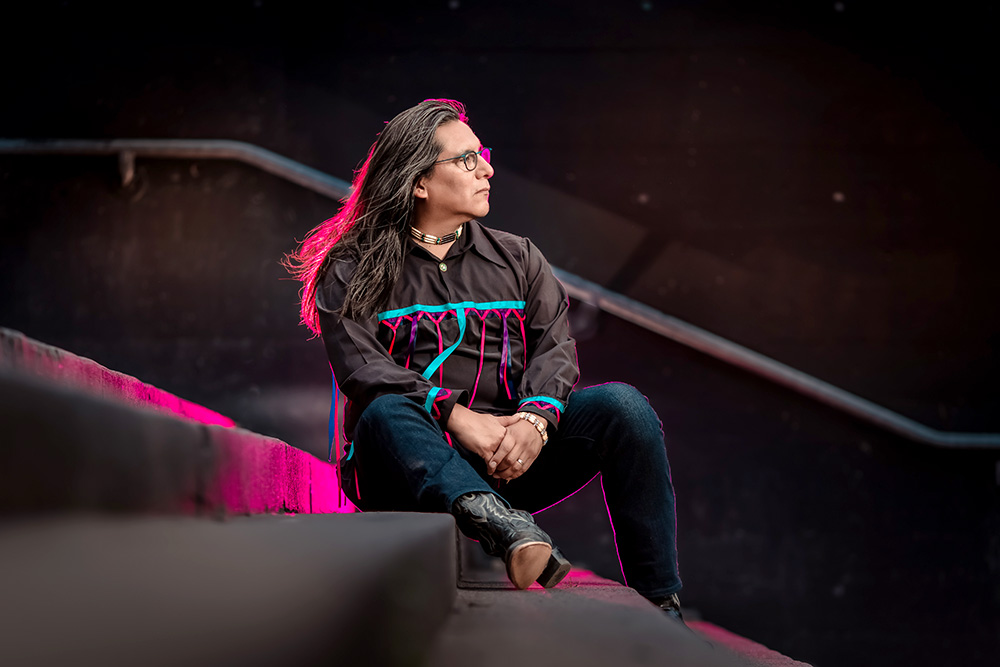
When artists started coming to Timothy Long ’92E (MM) during the height of the Black Lives Matter movement to find works by Native American composers, there wasn’t much he could offer. So the artistic and music director of opera at Eastman—whose mother belongs to the Choctaw Nation and father was from the Muscogee Creek Nation—decided to rectify the situation with the North American Indigenous Songbook. Together with Anna Martin ’23E (MM) and Peggy Monastra ’92E (MA)—and through the Plimpton Foundation, which he conceived with his father-in-law Randy Plimpton—Long commissioned and secured Native American and Indigenous composers for a new collection of vocal works. A selection of songs premiered at National Sawdust in Brooklyn in 2024. JL

65. A place for musicians of African descent to come together.

Founded by classical pianist Armenta (Adams) Hummings Dumisani in 1993 and now held in association with Eastman, Gateways Music Festival is the only festival in the country dedicated to connecting and supporting professional classical musicians of African descent. URochester started hosting the festival in 1995, a year after Dumisani joined the Eastman faculty. In 2022, the Gateways Orchestra became the first all-Black symphony orchestra to perform at Carnegie Hall. TML

66. Damn Yankees and The Pajama Game.

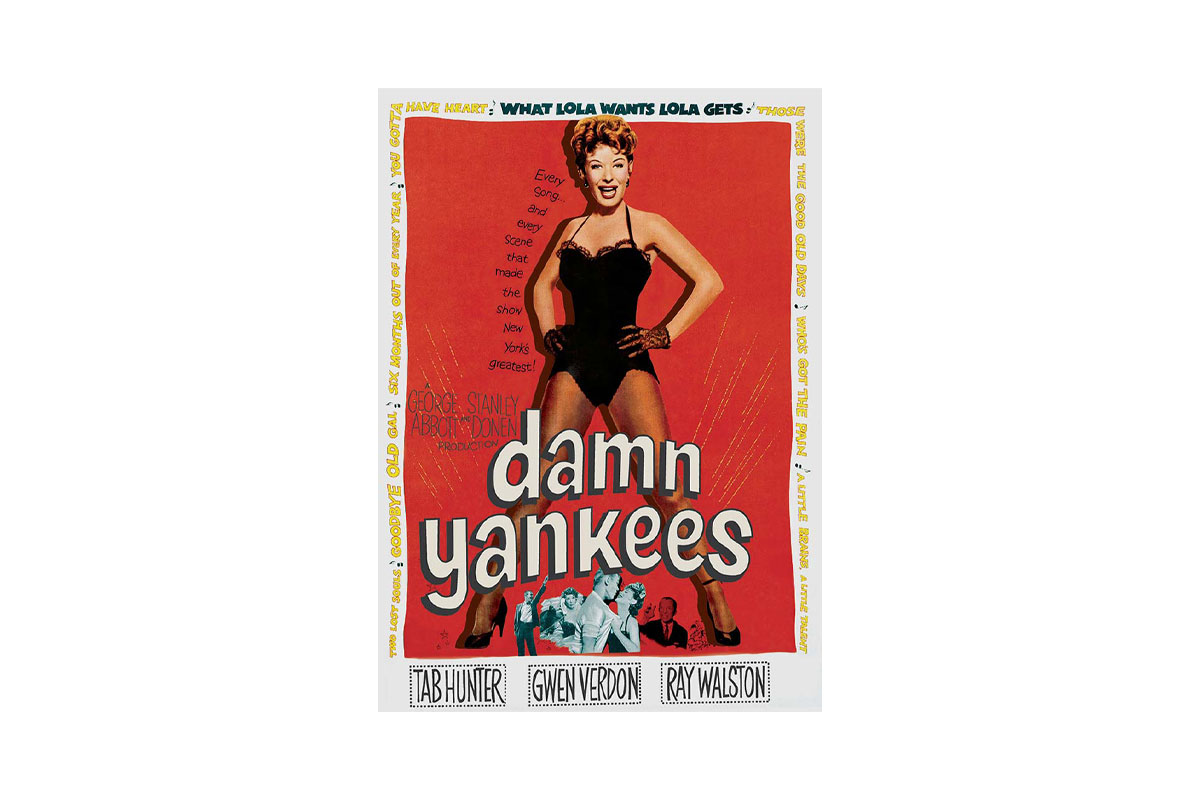
George Abbott, Class of 1911, ’61 (Honorary), created hits on the stage and screen almost too numerous to count. The writer, producer, and director’s body of work includes Three Men on a Horse, Wonderful Town, The Pajama Game, Damn Yankees, and A Funny Thing Happened on the Way to the Forum. Along the way, he accumulated six Tony Awards, a Pulitzer Prize, and a National Medal of Arts. Fun fact: Abbott wrote his first-ever play for the University Dramatic Club. JL

67. The original home movie.

Paving the way for America’s Funniest Home Videos, Marion Norris Gleason ’62 (Honorary)—who went on to become a research assistant in the Department of Pharmacology and Toxicology—was recruited by the Eastman Kodak Company in 1921 to film what is thought to be the first home (or amateur) movie. Titled The Picnic Party, it features Gleason’s 10-month-old son at a birthday party in which he and another boy eat marshmallows and throw mud. (As with many of the best films, cats and dogs also play a part.) JL

68. The big behind ‘big screen.’

Robert Hopkins and Brian O’Brien, who both served as director of the Institute of Optics, helped design and develop the Todd-AO widescreen film process first used for the 1955 movie Oklahoma! By delivering sharper images using a single camera with an oversize bug-eye lens, the Todd-AO not only dazzled moviegoers but also offered a cheaper, simpler alternative to the prevailing Cinerama system that required three cameras and projectors. JL

69. Music that feels so good.

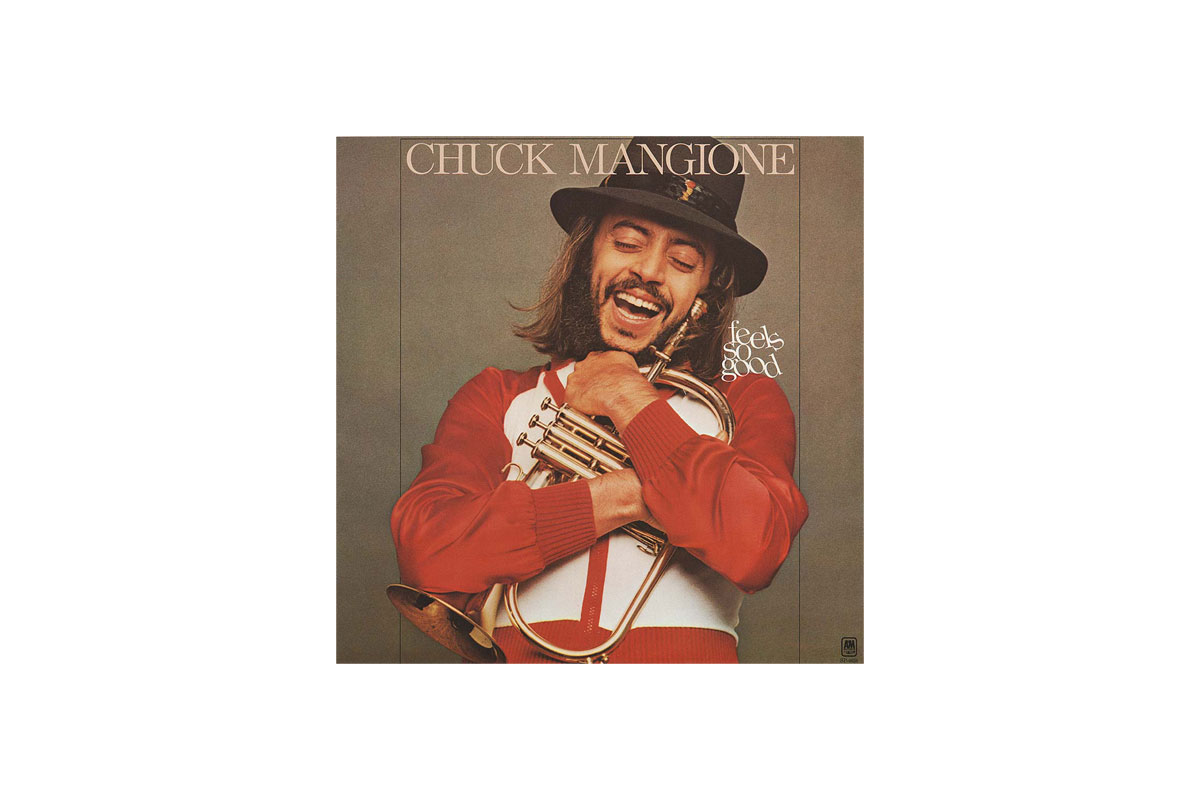
Even if you don’t frequent jazz festivals or groove out to smooth jazz in the car, chances are you’ve heard the trumpet and flugelhorn stylings of the late Chuck Mangione ’63E, ’85E (Honorary). The Grammy-winning Rochester native—and fedora devotee—is credited with bringing jazz into the mainstream with hits like the title track of his 1977 double-platinum album Feels So Good. Mangione, who was the first director of the Eastman Jazz Orchestra, also composed and performed the official theme song of the 1980 Winter Olympics in Lake Placid, “Give It All You Got.”

Feels So Good peaked at No. 2 on the Billboard albums chart, while its title track made the top of the adult contemporary chart. TML

70. A little redhead promising tomorrow.

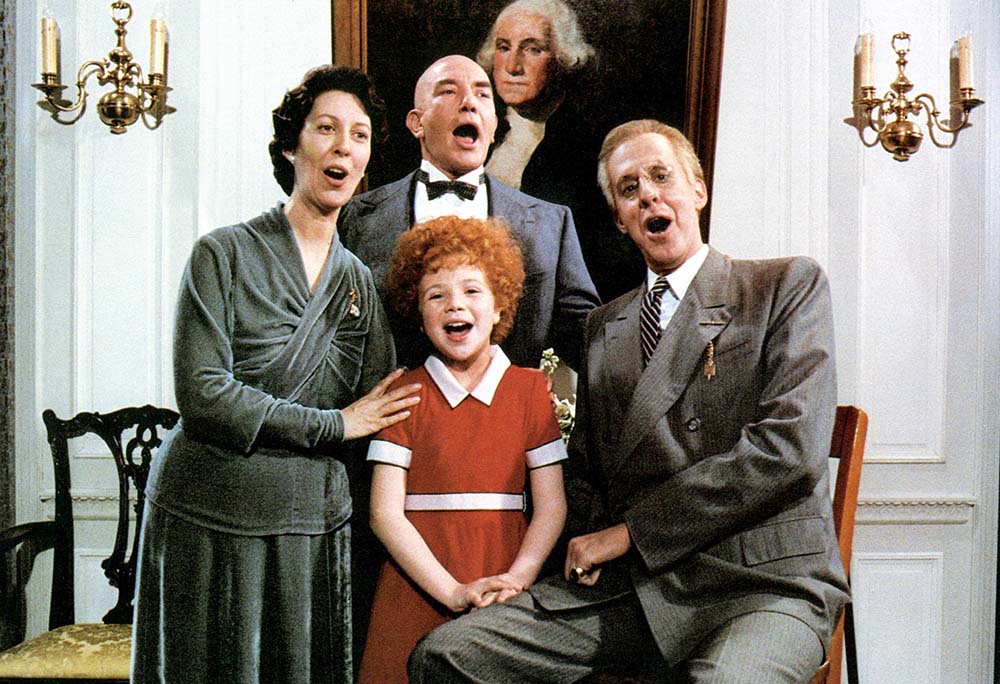
If you’ve gotten this far in the world without knowing the tune to any of the songs from Annie, color us shocked. It’s just one of more than a dozen musicals composed by Eastman alumnus Charles Strouse ’47E. His decades-long career also included such hits as Applause and Bye Bye Birdie—both of which, along with Annie, earned him Tony Awards.

After its hugely successful Broadway run, Annie got made into a movie that was released in 1982. JL

71. Our favorite movie and TV scores.

George Eastman not only made capturing moving images possible; his generosity also contributed to some of the most memorable music written for big and small screens alike. The unmistakable piano chords from All in the Family? Another masterpiece by Charles Strouse ’47E. The brooding score behind House of Cards? That’s the work of Jeff Beal ’85E, who with his wife Joan Beal ’84E built on Eastman’s legacy with the 2016 founding of the school’s Beal Institute for Film Music & Contemporary Media. Oh, and lest we forget the nostalgia-inducing My Little Pony and Winnie the Pooh movies? Beal Institute Director Mark Watters had a hand in those as well as dozens of projects with Disney and Pixar. TML

72. A historic Pulitzer Prize.

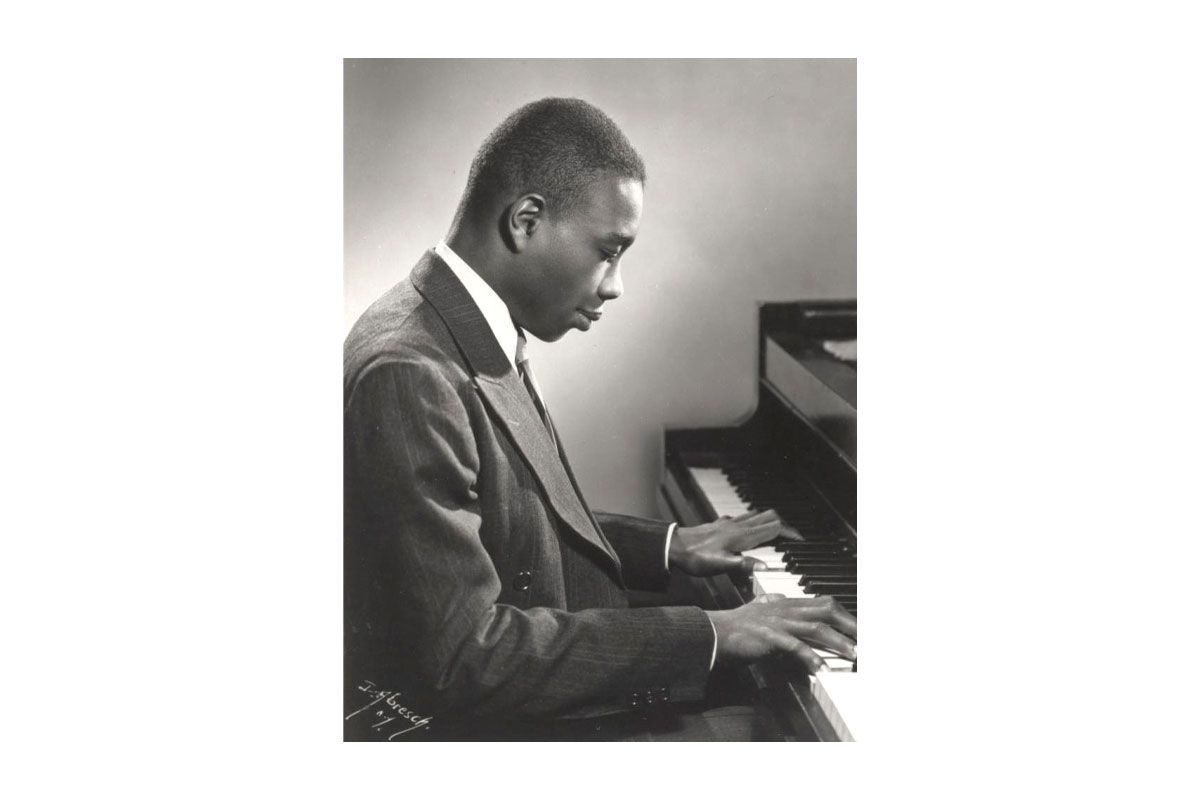
URochester boasts 13 Pulitzer Prizes among its faculty and alumni—awards that span history, poetry, music, and drama. But one stands out in the nation’s cultural memory: In 1996, George Walker ’56E (DMA), ’12 (Honorary) became the first Black composer to win the prize for music, honored for Lilacs for Voice and Orchestra. One of the most prolific and accomplished American composers of the 20th century—and the first African American to earn a doctorate from Eastman—he is remembered at the George Walker Center, which provides a space for building community among Eastman faculty, staff, and students. TML

73. An ever better IMAX.

First came Todd-AO (see opposite page). Then came IMAX. Now the IMAX Prismless Laser Projector is pushing the limits of the big screen even further. Barry Silverstein ’84, who will soon return to join the faculty at the Institute of Optics, helped spearhead the design and development of the 2024 Oscar-winning innovation that uses optical mirrors in place of prisms to enhance brightness, clarity, and contrast. TML

74. A real live Betty Crocker.

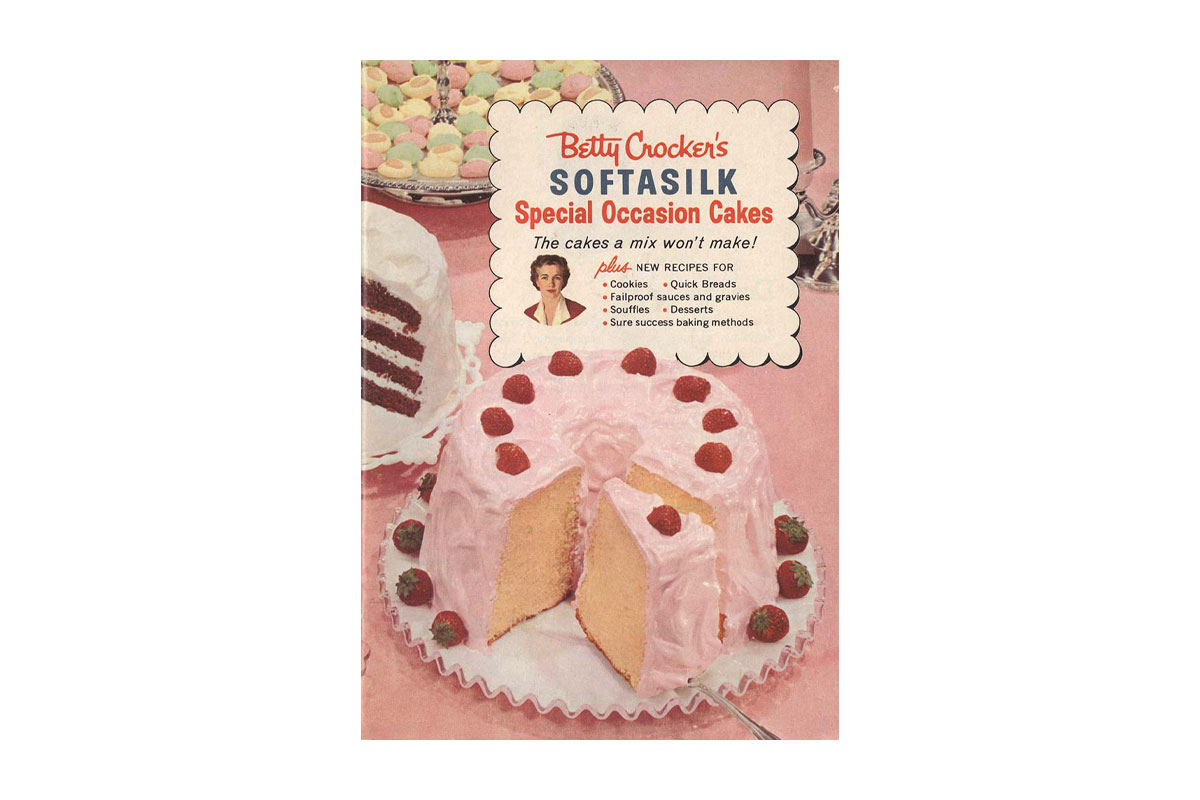
As the slogan goes, all good things start with a Betty Crocker cake mix. And from 1950 to 1965, the face on that cake mix was Adelaide Fish Cumming, a 1926 Eastman graduate. During her tenure as one of history’s only “living trademarks,” Cumming made television, radio, and trade show appearances and showed celebrities of the day how to “bake like a Betty.” JL

A scene from The Matrix Reloaded featuring Neo in a dramatic pose against a futuristic city backdrop.

75. The Matrix’s fight scenes.

That slo-mo, bullet-dodging scene in The Matrix that made you say, “Whoa”? Visual effects technology supervisor George Borshukov ’95 helped develop what’s come to be known as the “bullet time” effect, winning him the first of two technical Oscars. Borshukov also helped develop ever more dramatic visual effects for later installments in the Matrix series. MC

Body & Mind

URochester asks just what makes us tick. Such as …

76. Why do naked mole rats live so long?

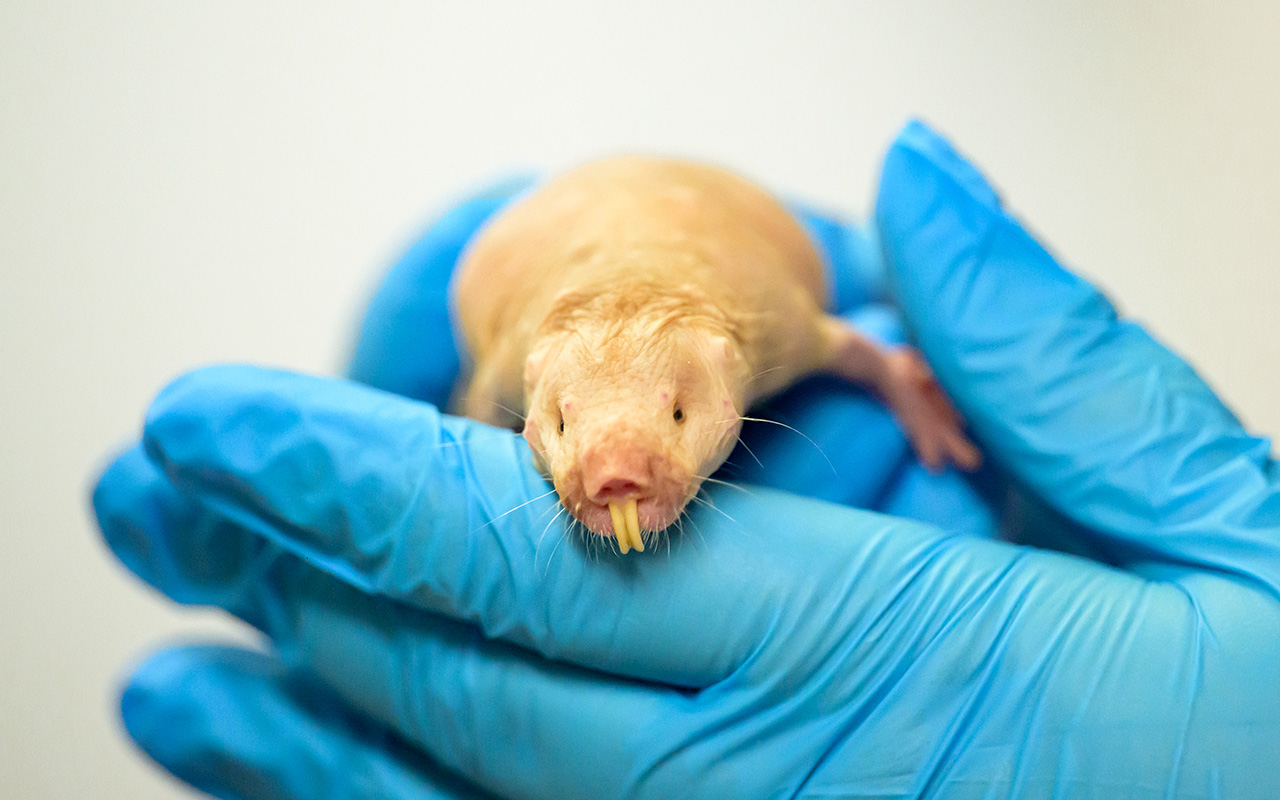
Only their mothers would find naked mole rats adorable. But when it comes to aging, they’re the stars of the show. URochester biologists Vera Gorbunova and Andrei Seluanov discovered a “fountain of youth” gene in the animals that enables them to live a long life free of cancer, heart disease, neurological diseases, and arthritis. The team transferred the gene to mice, extending their lifespan and opening up new possibilities to slow aging and fight inflammation-related diseases in humans. JL

77. Can the placebo effect make us healthy?

If you’ve ever gotten sick under stress or observed the placebo effect, you’re giving props to Robert Ader, the URochester professor of psychiatry who proved the link between the brain’s perceptions and the body’s immune system. Though first greeted with skepticism, his theories that our mind could impact our ability to fight disease are now embraced worldwide. MP

Two individuals in lab coats stand beside a large machine in a laboratory setting.
Masters and Johnson merged science and sex, pioneering the new discipline of sexology. (Ben Martin for Getty Images)

78. Exactly what arouses us?

In 1966, William Masters ’43M (MD), ’87 (Honorary), then part of the faculty at Washington University in St. Louis, and his research assistant, Virginia Johnson, were the first to study human sexual response through direct observation and physiological measurement. Their findings, published in the breakthrough text Human Sexual Response, thus helped launch the sexual revolution. JL

79. How does testosterone spark big muscles?

Pioneering endocrinology researcher Charles Kochakian ’36M (PhD), who also taught physiology at URochester, discovered the connection between testosterone and muscle mass, which helped lead to the development of anabolic steroids. While Kochakian focused on the application of steroids for cancer and other medical issues, he should be beloved by every pumped-up gym rat. TML

80. How does a fruit fly compute?

A fruit fly’s brain may be minuscule, but it can form memories, solve problems, and even get drunk. All of which makes the FlyWire Connectome—a map of all the connections among neurons in a fruit fly’s brain—a groundbreaking resource for understanding what’s happening inside our own heads. Researchers from URochester’s Del Monte Institute for Neuroscience helped create the connectome, which was published in October 2024. TML

81. How much heat can we can really take?

When the US Army wanted to ascertain the physiological limits of military ground troops fighting Nazis in the deserts of North Africa, they turned to URochester physiology professor Edward Adolph. The human body’s tolerance to extreme heat was just one of many research projects Adolph pursued in his 62 years at the University; others included the effects of cold, conveniently conducted on Rochester rooftops. He also authored more than 150 articles and four books and was awarded the Presidential Certificate of Merit. TML

A black and white photo of a classroom with a woman teaching students at desks, engaged in a lesson.
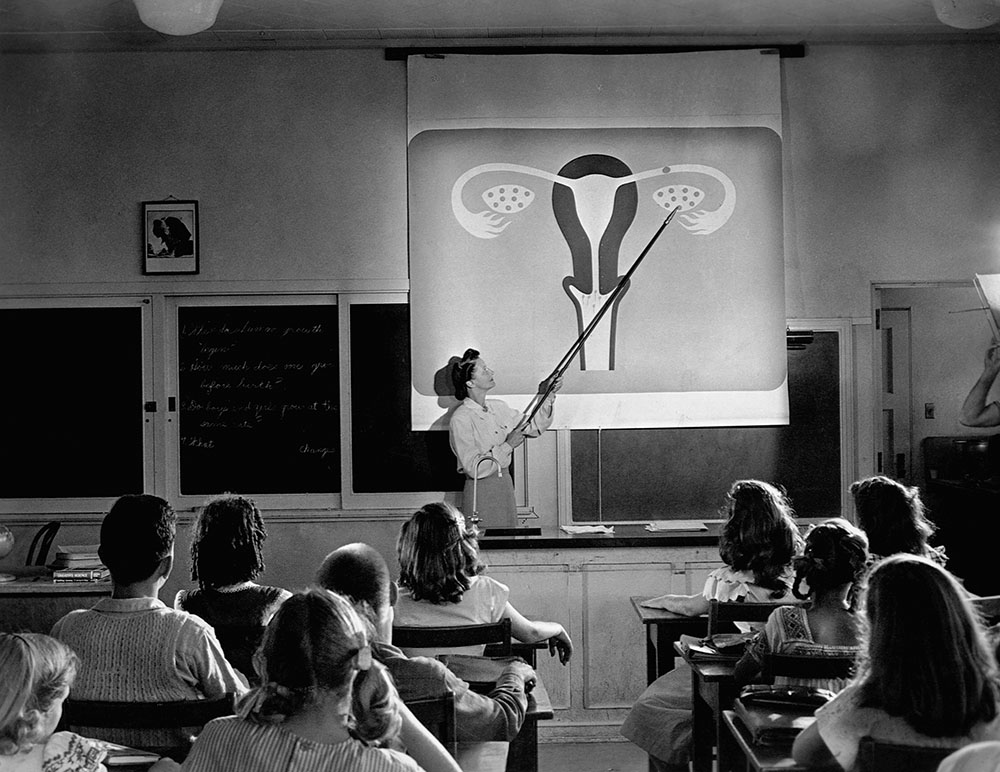
Mary Calderone transformed American sex education, making scenes like this from a 1948 film possible. (Library of Congress / Corbis / Getty)

82. Does sexuality lie beyond the bedroom?

As the medical director of Planned Parenthood from 1953 to 1964, Mary Calderone ’39M (MD) helped convince the American Medical Association and the American Public Health Association to declare family planning part of comprehensive healthcare. And as cofounder, executive director, and president of the Sex Information and Education Council, she encouraged open conversations about sexuality and offered resources to develop sex education programs.

People magazine noted that what Rachel Carson did for the environment and Margaret Sanger did for birth control, Calderone did for sex education. She was inducted into the National Women’s Hall of Fame in 1998.

“Most people, of course, think that sex is something you do,” she said in 1985. “It is not. It’s something you are. Your sexuality is yourself, as the total person you are.” JL

83. Can space photography help us explore the eye?

URochester has long been at the forefront of adaptive optics, with faculty from across the Flaum Eye Institute, the Center for Visual Science, and the Institute of Optics working together to improve eyesight for people who are legally blind and those with 20/20 vision alike. Employing the same technique used by astronomers to take clear pictures of the sky, a team led by ophthalmology professor David Williams transformed our understanding of the structure and function of the human eye by developing the first instruments able to capture high-resolution images of the living retina. TML

84. Can a 3D model help cure blindness?

Age-related macular degeneration (AMD), which leads to a loss of central vision, is the most frequent cause of blindness in adults 50 years of age or older. While there is still no cure for AMD, URochester researchers made an important breakthrough in 2021 with the first three-dimensional lab eye model that mimics the part of the human retina affected in macular degeneration. The model is being used to find treatments and possible cures for AMD and the wet form of macular degeneration, which is the more debilitating and blinding form of the disease. TML

85. Can drugs treat muscular dystrophy?

URochester reached a significant milestone in its trailblazing muscular dystrophy research with the FDA’s 2023 approval of the first gene therapy for Duchenne muscular dystrophy (DMD). Neurology and pediatrics professor Emma Ciafaloni played a leading role in the clinical trials, and the University was among the first sites to treat patients. The drugs have significantly improved outcomes for children with DMD and laid the groundwork for next-generation gene and RNA therapies for myotonic dystrophy, facioscapulohumeral muscular dystrophy, and beyond. MM

86. Is there hope for the most terrible brain diseases?

URochester is a global leader in bringing life-changing neurological drugs to patients worldwide. The Medical Center houses the world’s largest Parkinson’s and Huntington’s clinical trial data repositories. Our researchers have contributed to 12 FDA-approved treatments for Parkinson’s and Huntington’s diseases, periodic paralysis, and Friedreich’s ataxia. And, in 2023, we played a critical role in the FDA approval of valbenazine for Huntington’s disease. The Center for Health + Technology carries on this important work, which started with Ira Shoulson ’71M (MD), ’73M (Res), ’77M (Res) in the mid-1980s. MM

87. How do teen brains work?

The Adolescent Brain Cognitive Development Study, commonly called the ABCD study, is the largest long-term investigation of brain development and child health. URochester is one of 21 research institutions nationwide that recruited families to participate and collect data. Funded by the NIH, the study tracks biological and behavioral development from adolescence into young adulthood, enabling the creation of baseline standards for brain development. JL

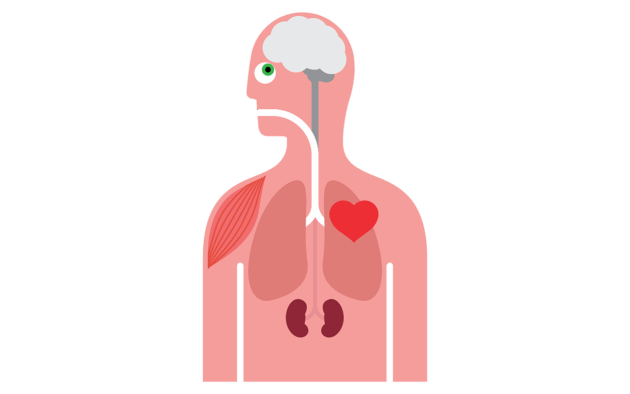
Stylized human body diagram showing organs like heart, brain, lungs, and kidneys to illustrate treatments for different body systems.88. If we target cancer cells, can radiation cause less damage?

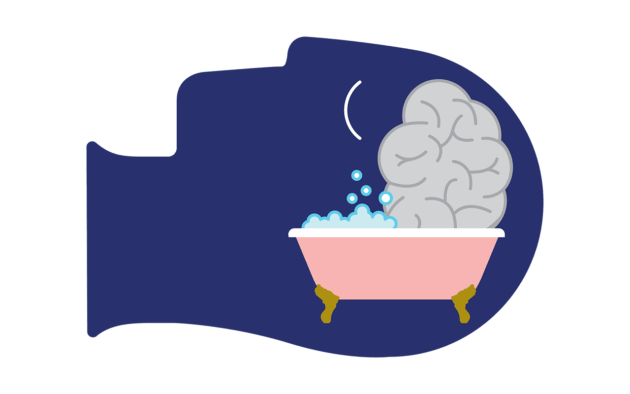
Having laid the groundwork for using radiation to destroy cancer cells—a treatment now used routinely in more than 80 percent of cancer cases—researchers at the Wilmot Cancer Institute became the first to apply shaped-beam radiosurgery to patients suffering from cancer that had spread to the lungs and other organs. The targeted approach, first used as a lifesaving brain cancer treatment, causes limited damage to healthy tissue. As a result, patients experience minimal side effects and can live much longer than they would with conventional treatment. TML

89. How can doctors help preemies take their first breaths?

From its first gulp of air, a baby needs surfactant to coat its tiny air sacs, allowing oxygen to enter the blood and preventing the lungs from collapsing. But babies born prematurely often lack this substance, with fatal results. Led by medical professor Robert Notter ’80M (MD), URochester researchers derived a surfactant drug from calf lungs that dramatically improved preemie survival rates. Notter built on his research to advance surfactant therapy for many breathing disorders. MP

90. What device can keep hearts beating?

A member of URochester’s faculty for more than five decades, Arthur Moss made some of the most significant discoveries in the prevention and treatment of sudden cardiac death. His work on the Multicenter Automatic Defibrillator Implantation Trial series showed that an implantable cardiac defibrillator can significantly reduce death rates. He was also the founding director of the Medical Center’s Heart Research Follow-up Program, a worldwide hub of cardiovascular research studies. JL

91. Do organ transplants really save patients’ lives?

The living donor liver transplant program isn’t the only URochester initiative saving lives through organ transplantation. The Medical Center performed its first heart transplant in 2001 and by the end of 2023 had carried out 354 of the lifesaving surgeries. In 2023 alone, a record 40 people received heart transplants at the University—an 82 percent increase over the previous record. This placed us among an elite group of transplant centers along with Columbia, Mass General, and Emory. TML

92. Which genes cause kidney disease?

While an estimated 37 million people in the US have kidney disease, few new therapeutics have been registered to treat or cure it over the last 40 years. Hoping to change that is Hongbo Liu, an assistant professor of biomedical genetics, who co-led a recent study to identify the genes that cause kidney disease. By relating different types of genomic data to each other, the team was able to create a “Kidney Disease Genetic Scorecard” that highlights particular genes and cell types and opens up new possibilities for therapies. TML

Illustration of a brain soaking in a bathtub, symbolizing the glymphatic system that cleans waste from the brain during sleep.93. What does sleep do besides just give us rest?
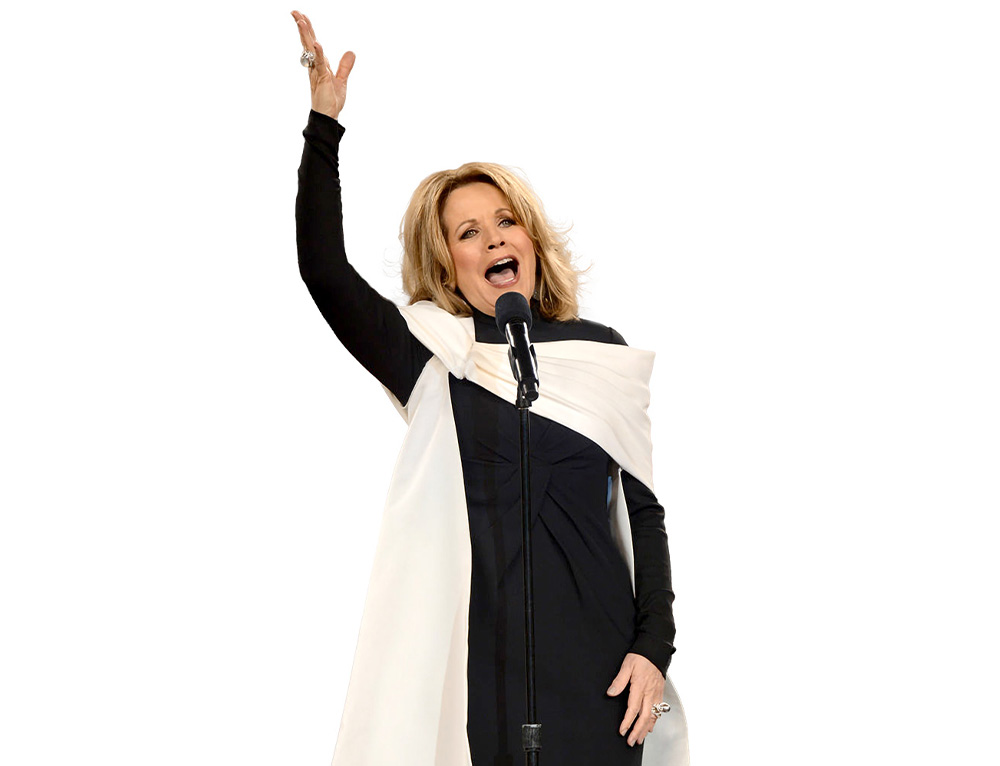
It allows our brain to clear toxic waste that left alone could lead to neurological disorders.

With her discovery of the glymphatic system, URochester neuroscientist Maiken Nedergaard fundamentally reshaped our understanding of brain physiology and the biological purpose of sleep.

First described by her team in 2012, this previously hidden network of channels parallels blood vessels to pump cerebrospinal fluid (CSF) through brain tissue, clearing toxic waste such as beta‑amyloid and tau proteins associated with neurodegenerative diseases. Waste clearance is most active during non-REM sleep, when the glymphatic system synchronizes oscillations of norepinephrine, cerebral blood volume, and CSF flow.

Nedergaard codirects the Center for Translational Neuromedicine, which maintains research facilities at URochester and the University of Copenhagen. She has received numerous accolades, including the 2024 Nakasone Award from the International Human Frontier Science Program Organization. Her lab’s contributions offer new insights into how glymphatic function slows with age and gets impaired by disrupted sleep, high blood pressure, and traumatic brain injury. Ongoing research also includes how the glymphatic system influences the progression of Alzheimer’s, Parkinson’s, and Huntington’s diseases.

The significance of this research extends to clinical concerns about sleep aids. In a study published in February in the journal Cell, her team demonstrated that the common sedative zolpidem (sold under the brand name Ambien, among others) suppresses the glymphatic system in mice. This might hinder the brain’s natural waste-clearing processes, setting the stage for neurological disorders. By establishing a mechanistic link among norepinephrine dynamics, vascular activity, and glymphatic clearance, Nedergaard’s work underscores the importance of preserving natural sleep architecture for optimal brain health.

Building on these foundational insights, in 2022 Nedergaard secured a $15 million NIH grant to dissect the mechanics controlling CSF movement, involving multidisciplinary teams from URochester, Penn State, Boston University, and Copenhagen. Recent collaborations with mechanical engineers in the Hajim School demonstrated that a hormone-like compound, prostaglandin F₂α—currently used to induce labor—can revive age-related declines in cervical lymphatic vessel contractions in mice, restoring CSF clearance to youthful levels.

Globally, Nedergaard’s research has catalyzed new avenues for therapeutic development, from enhancing drug delivery to the central nervous system to designing sleep interventions that bolster brain waste removal. Her discoveries continue to influence neuroscience, biomedical engineering, and clinical practice around the world, offering hope for preventive and restorative strategies against age-related neurological disorders. MM

94. Does a hormone lie behind a mother’s love?

In 1953, Vincent du Vigneaud ’27M (PhD), ’65 (Honorary) isolated oxytocin and determined its chemical composition. This “love hormone,” critical to childbirth and social bonding, thus became the first peptide hormone to have its sequence of amino acids determined. He went on to win the Nobel Prize for synthesizing oxytocin. JL

95. Can the arts change the brain and body?

Critics widely consider Renée Fleming ’83E (MM), ’11 (Honorary) one of the greatest sopranos alive today. The first woman to solo headline an opening night gala at the Met, she also became the first classical artist to sing the national anthem at the Super Bowl. When she’s not wowing audiences with her vocal artistry, Fleming is an advocate for the emerging field of neuroarts: the study of how the arts measurably change the brain, body, and behavior. A WHO Goodwill Ambassador, Fleming edited the 2024 anthology Music and Mind: Harnessing the Arts for Health and Wellness. TML

96. Should we avoid eating fish during pregnancy?

Nearly four decades of research in Seychelles has found no evidence of neurodevelopmental harm linked to fish consumption during pregnancy. The Seychelles Child Development Study, led by Medical Center researchers since 1986, suggests that the omega-3 fatty acids and other micronutrients found in fish—which are critical for brain development—may in fact counteract any potential adverse effects of mercury. JL

97. What hormone could prevent pregnancy?

In 1928, George Corner and Willard Allen of the School of Medicine & Dentistry isolated progesterone—the “other” ovarian hormone—after an arduous process of high-vacuum distillation and crystallization. Their collaboration, sparked by a chance encounter at URochester, transformed endocrinology and ultimately led to the development of the birth control pill. JL

98. How does DNA reproduce?

Arthur Kornberg ’41M (MD), ’62 (Honorary) received the Nobel Prize in 1959 for discovering DNA polymerase, an enzyme that’s instrumental to the formation and replication of DNA. Kornberg’s wife, Sylvy Kornberg ’38, ’40M (MS), made her own breakthroughs to advance her husband’s synthesis of DNA strands. Their findings laid the groundwork for genetic engineering. Their union, meanwhile, produced yet another Nobel laureate—son Roger won the prize for chemistry in 2006. MP

Dental hygienist in uniform treats a child in a vintage dental chair, part of an early school dental care program.

99. What can help dentists to keep fillings intact?

In 1955, Michael Buonocore introduced acid etching of enamel, a breakthrough technique to improve adhesive bonding during dental procedures and that remains integral to modern dental practices. It was his first of many advances in the field of restorative dentistry.

As chair of the department of dental materials at the Eastman Institute for Oral Health (previously Eastman Dental Center), Buonocore went on to advance the understanding and application of pit-andfissure sealants. This work laid the foundation for the development of white composite resin fillings that bond directly to the tooth structure.

Buonocore’s research also paved the way for a broad range of restorative and esthetic dental procedures, including composite bridges and veneers. These contributions continue to advance global dental practices, making him a pivotal figure in the evolution of restorative dentistry worldwide. KB

Tools & Tech

URochester ingenuity launches devices that …

3D printer nozzle deposits biological material in a petri dish, representing research in printing living materials and biofilms.
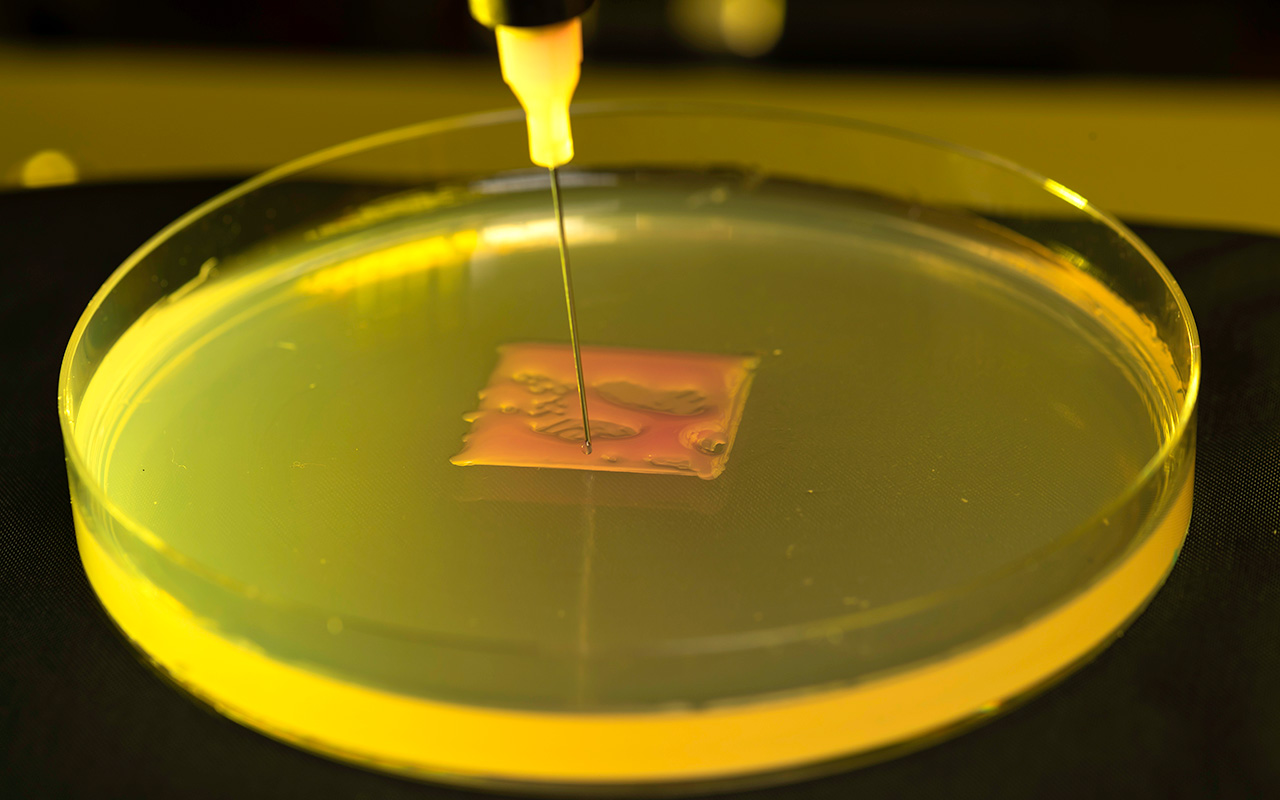
The Meyer Lab has synthetically engineered and studied biofilms. (University of Rochester photo / J. Adam Fenster)

100. Print bacteria that eat plastic.

URochester biologist Anne S. Meyer and her team use 3D printers to print bacteria. By combining synthetic biology with materials science, they create sustainable, living materials with applications in medicine, clean energy, and advanced technologies. Her team’s innovations include microbial systems that break down ocean plastics and living optical devices for advanced imaging. Meyer also mentors URochester’s award-winning iGEM team, guiding undergraduates to produce a noninvasive test for endometriosis, biosensors that instantly detect sepsis, and a device that harnesses bacteria to generate clean energy. LV

101. Formed the lifeblood of Silicon Valley.

In 1957, Jay Last ’51, ’11 (Honorary) became one of the eight legendary—or, as some said, “traitorous”—founders of the Fairchild Semiconductor Corporation. There, he directed the R&D group that invented the first commercial silicon planar transistors and the first integrated circuit chips—the lifeblood of the modern computer. More than any other company, Fairchild established Silicon Valley as the center of the computer industry. Last, meanwhile, will always be remembered as one of the hightech hub’s original fathers. LA

102. Will let your phone detect tooth decay.

Upwards of 70 million Americans lack dental coverage, threatening devastating harm to their oral health and overall well-being. Children are the most vulnerable to this lack of care. To support them, the Eastman Institute for Oral Health is in the final stages of developing a smartphone app that can detect tooth decay in its early reversible stage. The app is the first known use of AI imaging technology outside the dental clinic and through a smartphone. It will also provide information on diet and oral hygiene to prevent further decay while connecting users with available dentists and insurance. TML

103. Put optical devices on a single chip.

While serving as a professor and later director of the Institute of Optics in the 1980s and ’90s, Dennis Hall laid important foundations for integrated photonics, which incorporates miniaturized optical devices onto a single chip. Just as electronic integrated circuits use electricity, integrated photonics uses light signals to transmit information. Hall’s lab created an all-silicon-based platform for integrated photonics, leading to chips with greater speed and reduced power demand. LA

104. Support Parkinson’s patients wherever they are.

Over the past decade, URochester computer scientists led by Professor Ehsan Hoque have developed an AI-powered screening tool for Parkinson’s, the world’s fastest-growing neurological disability. Because the disease can present itself differently in patients, the researchers have developed short, simple online tests to analyze speech, motor skills, and facial expressions. URochester researchers see the method as a fast, low-barrier, and accessible way to flag warning signs in people, particularly those in remote areas. The tool might encourage them to seek more thorough clinical evaluations. LA

Gerard Mourou, dressed in a white shirt and tie, is engaged in work on a sophisticated machine.
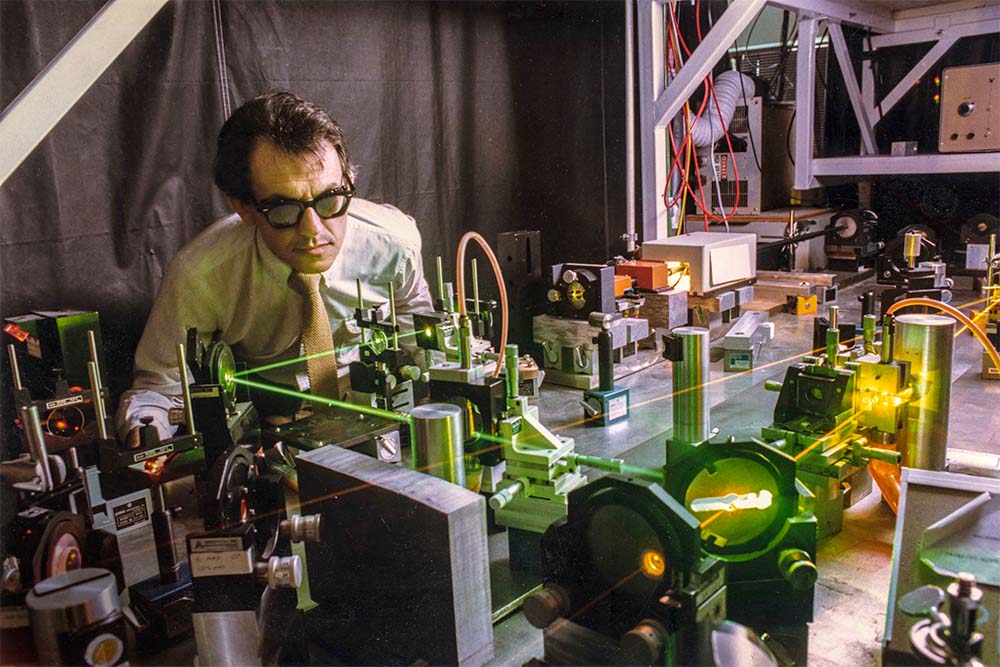
As a scientist at the Laboratory for Laser Energetics, Gérard Mourou helped shape the direction of research in high-powered lasers. (University Libraries / Department of Rare Books, Special Collections, and Preservation)


105. Treat cancer, replace contact lenses, and revolutionize physics.

The tool: chirped-pulse amplification.

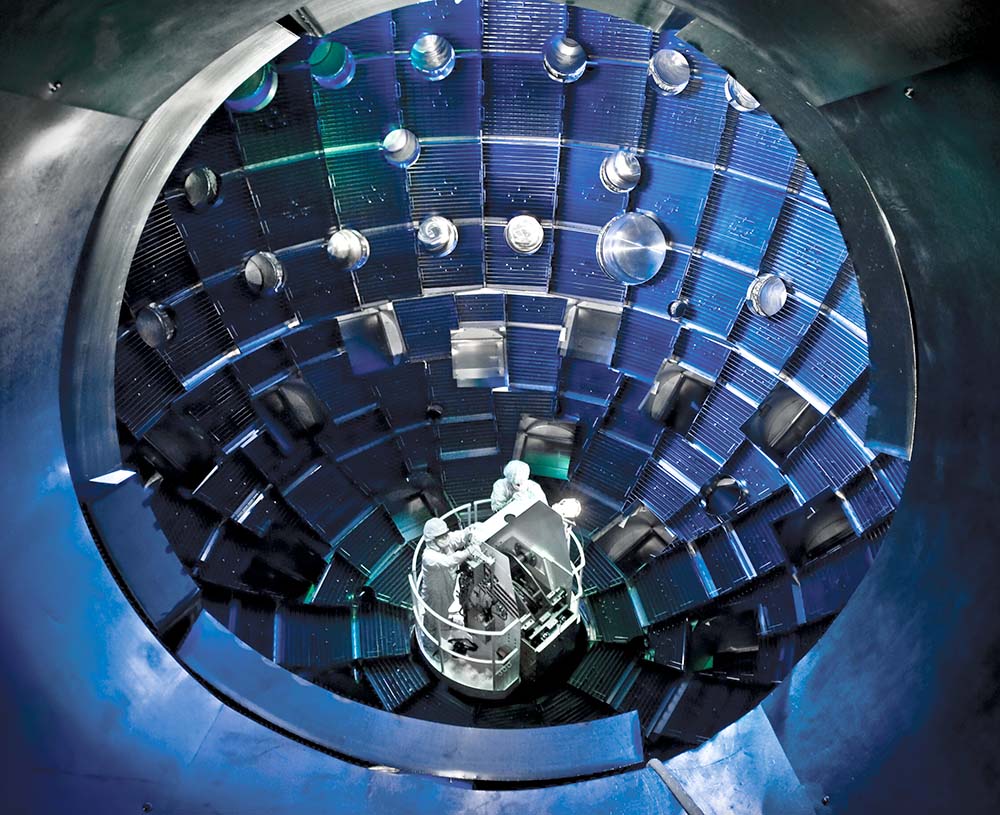
Chirped-pulse amplification (CPA) creates ultrashort, extremely high-intensity laser pulses without damaging the material used to amplify the pulses. Developed in the 1980s by then graduate student Donna Strickland ’89 (PhD) and her advisor, senior scientist Gérard Mourou at URochester’s Laboratory for Laser Energetics, CPA was a monumental achievement and earned Strickland and Mourou the 2018 Nobel Prize in Physics.

The technique stretches a laser pulse in time to lower its peak power, amplifying the pulse and then compressing it again. By packing vast energy into shorter bursts, the laser becomes considerably more intense, producing pulses that are both ultrafast and extremely powerful.

CPA revolutionized laser science and dramatically expanded what lasers can do across a variety of fields. It is the foundation behind many high-precision technologies: In medicine, CPA enables laser-based cancer treatments, such as proton therapies for deep-tissue tumors. In manufacturing, CPA powers the precise machining of a wide range of materials, including the cover glass used in smartphones.

In research, scientists use CPA to study fundamental physics principles: By generating intense bursts of charged particles and light, scientists can replicate extreme conditions found in space. In addition, biologists, chemists, and physicists use CPA to take ultrafast images of splitsecond molecular processes, allowing them to study atomic behavior and fusion, and to develop new materials.

CPA, however, is perhaps best known for its role in vision correction, enabling Lasik procedures that precisely reshape the cornea by cutting tissue without damaging surrounding areas, and helping millions of patients improve their vision. LV

106. Enable AI deep learning.

In the early 1980s, a team of researchers at the University rekindled excitement in the branch of artificial intelligence known as connectionism. This approach studied human mental processes and cognition using artificial neural networks. The interdisciplinary work of URochester researchers, including computer science professors Christopher Brown and Dana Ballard and students like Rajesh Rao ’98 (PhD), helped to fuel a revival in the connectionist approach that ultimately led to today’s deep learning dominance. LA

107. Save ships and blast kidney stones.

URochester electrical engineer Hugh Flynn’s research on acoustic cavitation paved the way for applications ranging from biomedical ultrasound to nuclear fusion. When struck by intense sound waves, air bubbles in liquids undergo a series of violent compressions and expansions. The force exerted by these bubbles can easily damage surfaces such as ships’ propellers. Flynn’s contributions included a 1972 Environmental Protection Agency report to Congress and the president on the effects of sonic booms on structures. And he increased our understanding of lithotripsy, which uses rapid ultrasonic pulses to destroy kidney stones. LA

108. Keep metal objects from sinking.

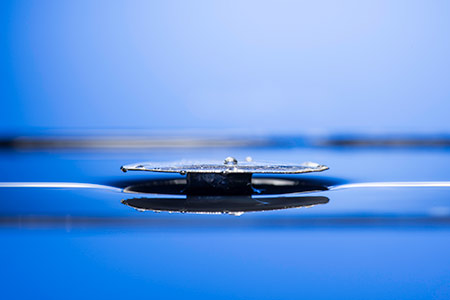
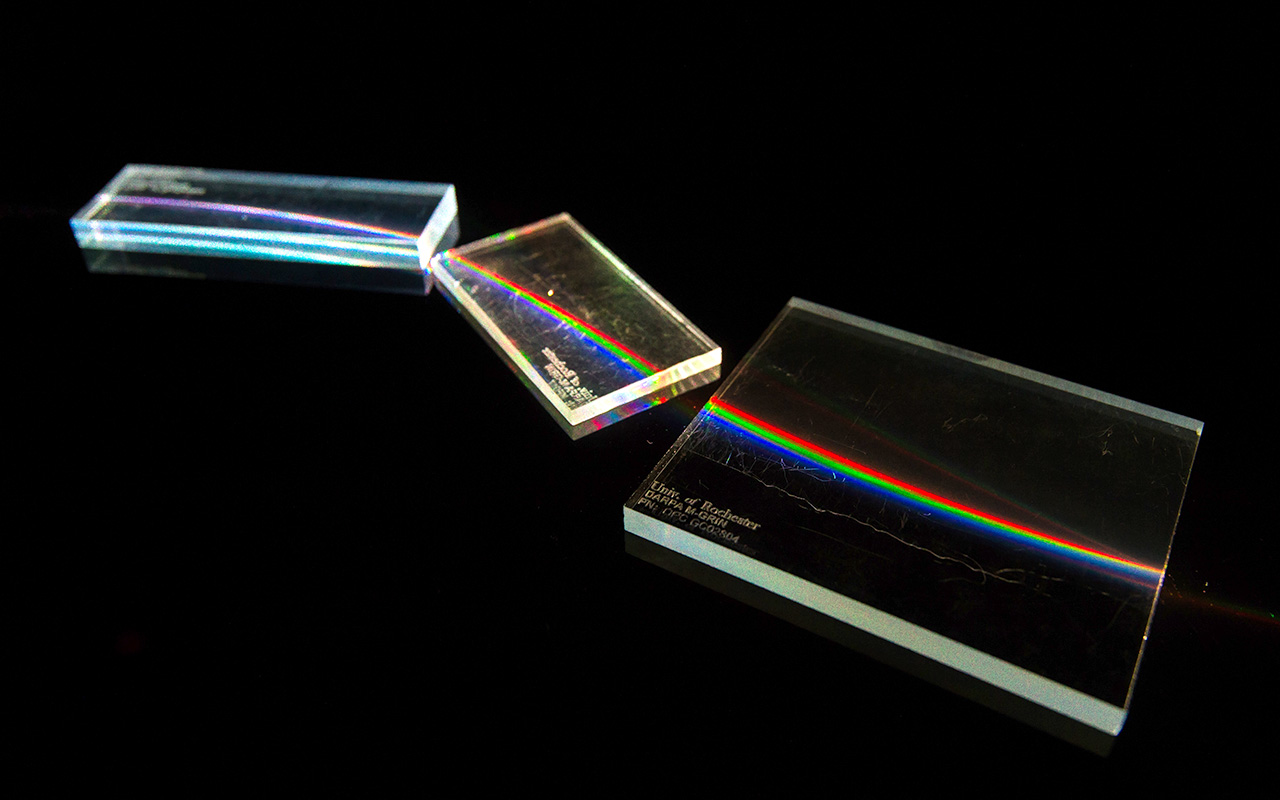
In 2019, inspired by diving bell spiders and rafts of fire ants, researchers in the lab of Chunlei Guo, a professor of optics and of physics and a senior scientist at the Laboratory for Laser Energetics, created a metallic structure so water repellent—or superhydrophobic—it refuses to sink. If only the builders of the Titanic had waited another hundred years or so. JL

109. Removed the stumbling blocks from semiconductors.

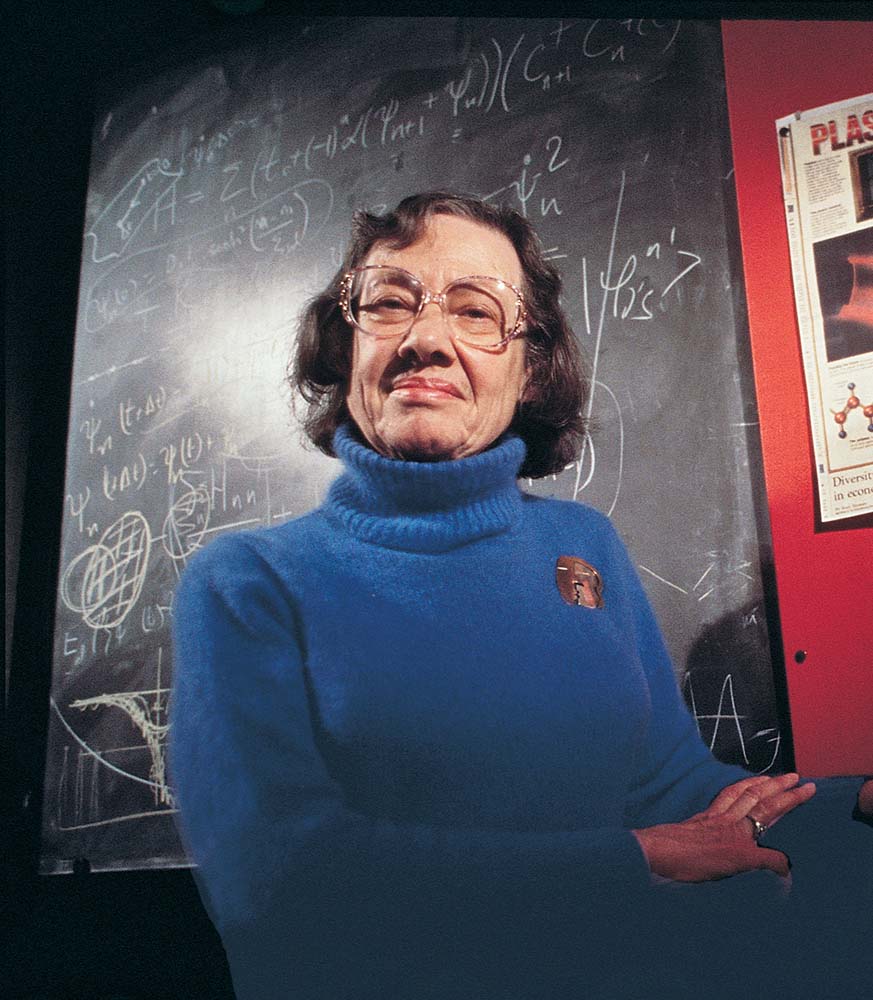
A leading chemist and physicist, Esther Conwell ’44 (MS), ’11 (Honorary) helped launch the computer age with her groundbreaking work on how electrons move through semiconductors. Her research laid the foundation for modern electronics.

Early in her career, Conwell contributed to the development of transistors. Meanwhile, she codeveloped the Conwell-Weisskopf theory, which explains how “impurity ions” impede the flow of electrons in semiconductors. The theory remains a cornerstone in physics.

Conwell returned to URochester as a professor in the 1990s, shifting her focus to studying the flow of electrons through DNA—research that opened new doors in molecular electronics and biophysics. Over the course of her career, she held four patents, published more than 270 scientific papers, and broke countless barriers for women in STEM fields.

Among her many accolades: memberships in the National Academy of Sciences and the American Academy of Arts and Sciences; the National Medal of Science awarded by President Barack Obama in 2009; and a place on Discover magazine’s list of the 50 most important women in science. LV

110. Customize Lasik surgery.

For centuries, glasses and contacts corrected just three common flaws: nearsightedness, farsightedness, and astigmatism. Then in 1997, URochester scientists helped change the game with wavefront sensing—a technology that detects dozens of subtle visual imperfections known as higher-order aberrations. Working with the Flaum Eye Institute’s Refractive Surgery Center, optics professor David Williams and his team used this data to pioneer customized Lasik surgery. Their innovations improved surgical outcomes and pushed laser vision correction to new levels of precision. LV

111. Enhance life after cataracts.

Each year more than 30 million people globally receive surgery to correct cataracts. While the vast majority opt to have a monofocal intraocular lens implanted, allowing for clear distance vision, more and more patients are choosing to toss their contacts and reading glasses in favor of a trifocal intraocular lens developed by Jim Schwiegerling ’90, ’91 (MS). The URochester optics alumnus’s innovation, approved by the FDA in 2019, not only represents the cutting edge of lens replacement; it also better meets the needs of our modern, multitasking lives. TML

112. Level up macOS, Linux, and Windows.

Computer science professor Michael Scott and his research group have developed several algorithms in software running on billions of devices, including macOS, Linux, and Windows operating systems. The Michael-Scott (MS) queue (or its variants), incorporated into the standard library of the Java programming language, is noted for its “lock-free,” scalable design. LA

113. Transformed color printing.

In the early 1990s, ink-jet and laser printers showed promise, but they consumed gobs of computing power and their images were uninspiring. Theophano Mitsa ’91 (PhD) and engineering professor Kevin Parker created a deceptively elegant solution. Their blue noise mask shifted otherwise distracting errors in the printing process to higher wavelengths where, because of a quirk of the human eye, they would be less visible. The technology became one of the most lucrative inventions in URochester’s history. LA

Three men in suits examine an experimental xerography machine at the Battelle Institute in 1948.
Haloid’s John Dessauer, Chester Carlson, and Joseph Wilson test an experimental xerography machine at the Battelle Institute in 1948. (Courtesy of Xerox Corp.)

114. Made “xerox” a verb.

If you’ve spent any time at all on—or even driven through—URochester’s River Campus, then the names Joseph C. Wilson ’31 and Chester Carlson will sound familiar. They’re kind of a big deal.

In 1906, the Haloid Photographic Company was founded in Rochester to manufacture photographic paper and equipment. (Its name would metamorphize to Haloid Xerox in 1958 and Xerox Corporation in 1961.) In 1938, Carlson, a physicist working independently, invented a process for printing images using an electrically charged photoconductor-coated metal plate and dry powder “toner.”

Wilson, who had taken over Haloid from his father and is credited as the founder of Xerox, saw the promise of Carlson’s invention after Haloid chemical engineer John Dessauer brought it to his attention. In 1946, he signed an agreement to develop it as a commercial product. And, in 1959, Carlson created the Xerox 914, the world’s first plain paper photocopier. (The “914” came from the machine’s ability to handle copy originals up to 9 x 14 inches.) With a price tag of $27,500, the copier could be rented for just $25 a month plus 10 cents per copy.

Demonstrated on live television, the 914 has been widely hailed as “the most successful single product of all time.” JL

115. Flag hidden heart attacks.

Chest pain sends more than six million Americans to the emergency room each year, but diagnosing its cause drains vital time and resources. At the School of Nursing, Salah Al-Zaiti is implementing an AI-based tool he designed to identify hidden heart attacks. Crunching data from a 10-second electrocardiogram, the algorithm helps providers make diagnoses more quickly and accurately. MP

116. Enable large-scale AI.

In the 1990s, Robert Jacobs, a professor of brain and cognitive sciences and of computer science, led the development of a machine learning technique called “mixture of experts” that made large-scale AI possible. The technique takes a divideand- conquer approach, using specialized sub-networks or “experts” to split up a problem. This made deep-learning models, especially large language models, more scalable and cost-effective. LA

117. Let computers work together.

Parallel computing breaks large, complex problems into smaller groups of calculations that run simultaneously across multiple processors with shared memory. The Department of Computer Science had long studied the field when, in 1984, it acquired a 128-node BBN Butterfly Parallel Processor—the world’s largest shared-memory multiprocessor. Faculty including Thomas LeBlanc, Michael Scott, and Christopher Brown used it to pioneer innovations in parallel algorithms, memory management, synchronization, and operating system design. LA

118. Detect roadblocks in supply chains.

Need a near real-time view of global trade activity? There’s a tool for that. A cross-university team of economists—including Yukun Liu, an associate professor of finance at Simon Business School—has created the Blue Center Index of Critical Supply Chain Disruptions. It helps firms and policymakers identify breakdowns in the flow of essential goods with unprecedented speed and precision. JL

119. Revolutionized computer printing.

Gary Starkweather ’66 (MS) deserves credit for the laser printer. After devising a crude prototype, he went to Xerox and created SLOT, his “scanning laser output terminal,” using a Xerox 7000 copier as his base. In 1977, Xerox launched the 9700 laser printer, which made billions of dollars for the company. JL

120. Made laser vision correction a reality.

Before Lasik became a household name, Charles Munnerlyn ’69 (PhD) was laying the scientific groundwork that made it possible. As the head of research and development at Tropel Inc. in Rochester, he designed the first digital device to measure refractive errors, which allowed optometrists to pinpoint patients’ vision needs with unprecedented accuracy.

In the 1980s, Munnerlyn began exploring how lasers could be used to improve eyesight. He built the first working excimer laser system—an ultraviolet laser that reshapes the cornea with extreme precision without heating tissue—for laser eye surgery. He also developed the Munnerlyn formula, a calculation that is still used today to guide these procedures. The formula tells ophthalmologists exactly how much corneal tissue to remove to correct vision disorders like myopia and astigmatism.

In 1987 Munnerlyn cofounded VISX, which went on to become the world’s largest manufacturer of laser-based vision correction systems. By 2002, it was estimated that nearly two-thirds of all laser eye surgeries in the US used VISX technology. The company, based in Santa Clara, California, was acquired by Advanced Medical Optics in 2004 in a $1.27 billion deal and later became part of Johnson & Johnson.

Munnerlyn’s trailblazing work helped make laser vision correction a reality—quite literally changing how many of us see the world. LV

121. Advance lasers like no other.

Home to the world’s largest university-based laser facilities, URochester’s Laboratory for Laser Energetics (LLE) has been at the forefront of laser-driven inertial confinement fusion, high-energy-density science, and laser-based science and technology for more than 50 years.

At the heart of LLE is the Omega Laser Facility, where two football-field-sized laser systems drive targets smaller than one millimeter in diameter to pressures found in the cores of planets and temperatures hotter than the surface of the sun. Omega’s unique capabilities make LLE indispensable to the National Nuclear Security Administration’s stockpile stewardship program.

But LLE’s strengths extend well beyond its lasers. With its dedication to developing cutting-edge diagnostics, optics, and computational tools, the laboratory drives regional innovation while training the next generation of scientists and engineers. Each year, LLE produces more than 100 peer-reviewed papers in scientific journals and trains some 20 PhD students.

More than a laboratory, LLE is a vital national resource for science, security, and energy resilience, serving as a center of collaboration with industry, national laboratories, and academia. AA

122. Foiled library catalog thieves.

Otis Hall Robinson, Class of 1861, brought order to chaos for librarians everywhere when he devised a system to keep patrons from being able to remove individual cards from the library card catalog. The solution: Punch holes at the bottom of each card and run a wire (and later a rod) through them to keep the cards in place. JL

123. Electrify the Vette.

A member of Chevrolet’s Corvette team since 1993 and executive chief engineer since 2006, Tadge Juechter ’79 has helped reimagine “America’s sports car” many times over. From a test model of the C5 Corvette in the 1990s to the new E-Ray—the first electrified vehicle in the model’s history—Juechter has been instrumental in nearly every Vette evolution. JL

124. Eliminated the horse and buggy.

“Inventor of the automobile” is a much-contested title, but patent lawyer George Selden, Class of 1865, has a hat in the ring. Selden filed a patent (No. 549,160) for the “Road Engine” in 1879, which made him the earliest to claim the conception of a gas-powered automobile. However, his patent wasn’t granted until 1895, by which time Henry Ford and Karl Benz had turned automaking into an industry. MC

125. Put computing’s pedal to the metal.

By using ultrafast laser pulses to control electrons, URochester researchers helped create the world’s fastest logic gate—a key building block of computers. The discovery opens the door to information processing at the petahertz limit, where nearly one quadrillion computational operations happen per second. That’s almost a million times faster than your laptop. LV

126. Make a material for a whole new industry.

James C. M. Li found a way to produce metallic glass for the first time. By freezing molten metal so quickly that the atoms can’t revert to a crystalline state, the research by the late materials science professor led to an entire industry. Engineers use glassy metals to create electrical transformers that transfer energy much more efficiently than conventional transformers. LA

127. Make insect-like lenses to peer into cracks.

Duncan Moore, a professor emeritus in optical engineering science, championed the development of gradient-index lenses, which work much like insect eyes, using a single lens in place of several to bend light rays. This enabled smaller, less expensive endoscopes, both in medicine and in rifle scopes. Moore commercialized the technology by founding Gradient Lens Corp., a manufacturer of high-quality, low-cost Hawkeye borescopes—devices that allow users to peer into narrow, hardto- reach cavities. LA

128. Allowed soldiers to see in the dark.

During World War II, the Institute of Optics developed an array of night vision devices, glare-resistant sun goggles, and gun sights along with fluorescent reflectors to safely illuminate roads and runways in combat zones. By war’s end, about half of the country’s university-based military optics research projects were conducted at URochester. The ceramic kilns of the Memorial Art Gallery were even made to mold aspheric lenses for aerial cameras. Brian O’Brien, then director of the institute, received the Medal for Merit, the nation’s highest civilian award, for his work. JL

A man seated at a computer desk, focused on the screen in front of him.
Jerry Feldman named his department’s four Xerox Alto computers John, Paul, George, and Ringo. (University Libraries / Department of Rare Books, Special Collections, and Preservation)

129. Enabled the whole freaking internet.

Without this operating system, we wouldn’t have laptops, smartphones, or a workable World Wide Web.

The operating systems that now power modern laptops, smartwatches, phones, and other devices have roots in the early days of URochester’s Department of Computer Science.

In the late 1970s, founding department chair Jerry Feldman—with Rick Rashid ’80 (PhD), ’15 (Honorary) and technical operations manager Liudy Bukys, among others—created Rochester’s Intelligent Gateway (RIG), providing a convenient way to connect and access various minicomputers, larger campus machines, and the ARPANET, a precursor to the internet.

RIG was a landmark in network architecture, “one of the earliest and most comprehensive attempts at designing a distributed operating system and supporting a network architecture from the ground up,” according to a 1982 paper published in the journal Computer.

While he launched the computer science department at Carnegie Mellon University, Rashid began work on the operating system Accent. The next evolutionary step took place when Rashid and his PhD student, fellow URochester alumnus Avie Tevanian ’83, developed the Mach operating system with an ingenious “microkernel” design that popularized concepts like virtual memory.

Steve Jobs’s NeXT Computer company then hired Tevanian and used Mach as the basis for its operating system. When Apple acquired NeXT, Jobs brought Tevanian with him to redesign the system as Mac OS. Meanwhile, Bill Gates recruited Rashid to launch Microsoft Research in 1991. Rashid’s teams collaborated with the world’s foremost researchers on initiatives that expanded the state of the art across the breadth of computing.

Rashid and Tevanian’s work remains at the heart of Apple iOS and macOS systems—and its influence can also be traced to operating systems such as GNU Hurd and UNIX systems OSF/1, Digital Unix, and Tru64 Unix. LA

Knowledge & Ideas

Why do we need innovative thinking? Let us count the ways.

130. Because ending the draft made us stronger.

When President Richard Nixon ended the Selective Service in 1973, he did so with the help of a roster of URochester faculty and administrators who served the President’s Commission on an All-Volunteer Armed Force.

President W. Allen Wallis, an economist and statistician, was one of 15 members of the commission. William Meckling, dean of the Graduate School of Management (later to become Simon Business School), served as executive director of the staff, which included URochester economist Walter Oi and former senior associate dean for faculty and research Ron Hansen.

The argument that they— along with University of Chicago economist Milton Friedman and others—helped shape focused less on the unpopularity of the draft during the Vietnam War and more on labor economics. Raising the salaries of enlistees, they posited, would increase retention, reduce turnover, and lower the frequency of training personnel. DA

131. Because research and knowledge bring us wealth.

Before Paul Romer upended the study of economic growth, traditional models treated technological progress as an external, or exogenous, factor. The economist, who taught at URochester from 1982 to 1988, challenged that notion. He argued that technological innovation was instead driven by homegrown factors like people, innovation, knowledge, and companies’ deliberate investments in research and human capital.

By modeling how incentives, market structures, and policy choices shaped innovation, he provided a framework for government to promote long-term prosperity through investments in education, research, and development along with intellectual property protections.

Romer’s insights influenced policies worldwide, inspiring investments in knowledge incubators and technological hubs. He shared the Nobel Prize in Economic Sciences in 2018, and his endogenous growth theory continues to shape strategies for fostering innovation-driven economies in both developed and developing nations. DA

132. Because well-being comes from letting people rule themselves.

What really motivates us? Money and power? Or fear and punishment? Ultimately neither, at least not in a truly lasting and fulfilling way, according to URochester psychologists Edward Deci and Richard Ryan.

Their self-determination theory (SDT) shifted motivation research from control to support based on the idea that all humans have the natural—intrinsic— tendency to behave in effective and healthful ways. Deci and Ryan argue that humans need three fundamental psychological supports—autonomy, competence, and relatedness— to achieve growth, engagement, and well-being. Formalized in their landmark 1985 book Intrinsic Motivation and Self-Determination in Human Behavior, SDT remains one of the most influential theories in motivation research, spawning thousands of clinical studies worldwide and garnering hundreds of thousands of citations for the duo’s body of work. SK

A large audience seated in a spacious auditorium, attentively facing the front stage.
The Rochester Conference drew a who’s who of the global physics community to Rochester in the postwar period. (University Libraries / Department of Rare Books, Special Collections, and Preservation)

133. Because bringing great minds together creates high energy.

The world’s premier conference on high-energy physics began at URochester in 1950, organized by physics chair Robert Marshak. Since 1960, the International Conference on High Energy Physics has been held every two years in a different city, but it is still affectionately referred to as the “Rochester Conference.” TML

134. Because a STEM MBA opens doors.

While many top American business schools offer STEM-designated MBA programs, Simon Business School was the first. Administrators recognized early on that business degrees in science, technology, engineering, and math open doors. They signal to employers that Simon graduates have skills highly sought in today’s job market— particularly in data and technology. DA

135. Because understanding Kant requires deft translation.

The complex philosophical concepts of the German thinker Immanuel Kant are notoriously difficult to grasp. But scholars the world over have an edge thanks to the translations of his writings by Lewis White Beck, the late URochester philosophy professor. His scholarship laid the foundation for a strong tradition of Kant studies. DA

136. Because visual arts cross disciplines.

Introduced in 1988, URochester’s graduate program in visual and cultural studies was the first of its kind offered at a university in the US. Interdisciplinary coursework and individual research combine to elevate students in the program to analyze visual objects in a comprehensive and contextual way. Since its founding, the program has been copied at universities across the country. JL

137. Because reading benefits at-risk kids.

The Warner School of Education & Human Development’s Project READ and ROC Reading Partners programs build a culture of literacy for at-risk students. Their interactive programming and emphasis on community building boost students’ literacy skills, reading potential, and ability to approach any literacy task with confidence. JL

138. Because translation opens up the world to us.

One of only a handful of publishing houses dedicated to increasing access to world literature for English readers, URochester’s Open Letter ranks among the best. Publishing 10 titles each year and running the website Three Percent, the nonprofit literary translation press searches the world for extraordinary and influential authors, helping readers discover imaginative, stunning works of fiction and poetry. Founded in 2008, it boasts several award-winning books, authors, and translators. JL

139. Because understanding slavery needed economic know-how.

Stanley Engerman upended how scholars think about the economics of slavery. With coauthor Robert Fogel (a Nobel laureate and former fellow member of the URochester economics faculty), he crunched the data on plantation records, productivity, and profitability. The findings, published in 1974’s Time on the Cross, startled many. Slavery, they argued, was not economically doomed before the Civil War. ST

140. Because coherence is king.

Quantum optics, which explores how light interacts with atomic particles, has its roots at URochester. Leonard Mandel, who joined the faculty in 1964, became known for his groundbreaking experiments on the nature of light and was the first to actually observe certain remarkable phenomena predicted by quantum theory. His work gave rise to the “Mandel formula” addressing the topic of photon detection. He, along with Emil Wolf, also helped launch the influential Rochester Conference on Coherence and Quantum Optics. LA

A vibrant mural depicting two women adorned with flowers, painted on a wall.
Artist Sarah Rutherford painted a mural of a young and old Susan B. Anthony in the tunnels near Dewey Hall. (University of Rochester photo / J. Adam Fenster)

141. Because one woman’s activism can change the course of history.

Susan B. Anthony’s legacy lives on with us.

Rochester is synonymous with Susan B. Anthony—from her home on Madison Street to her gravesite in Mt. Hope Cemetery (an Election Day pilgrimage) to the bridge named for her and Frederick Douglass that carries I-490 over the Genesee River.

When it came to URochester, Anthony made her mark early on. In 1900, she led a successful campaign to have women admitted to the then all-male institution by raising $50,000 in pledges; she threw in the cash value of her own life insurance policy.

It seems only fitting, then, that URochester holds a special distinction for being a collector, curator, and steward of her legacy. The Department of Rare Books, Special Collections, and Preservation houses important holdings, including several collections of letters, personal items, and suffrage memorabilia.

But the University’s care of her legacy extends beyond the library. The Susan B. Anthony Institute for Gender, Sexuality, and Women’s Studies addresses curricular and scholarly issues throughout history and in contemporary society. The Susan B. Anthony Center works to foster social justice and equality by translating research into policy through community collaboration.

And a shout-out to the Susan B. Anthony Halls, which grace the River Campus. JL

142. Because multisensory learning makes knowledge accessible.

A prolific inventor, Edmund Lyon, Class of 1877, created a mechanism to enable the blind to write in a perfectly uniform style of modified script, a mechanical apparatus for teaching numbers, and a system to aid in the teaching of speech to the deaf. The Lyon Phonetic Manual built on Alexander Melville Bell’s Visible Speech system by using hand positions to show how sound was produced in the mouth. It was developed at the Rochester School for the Deaf, where Lyon volunteered and met his wife, a teacher. JL

143. Because something nuts can inspire a new field of human behavior.
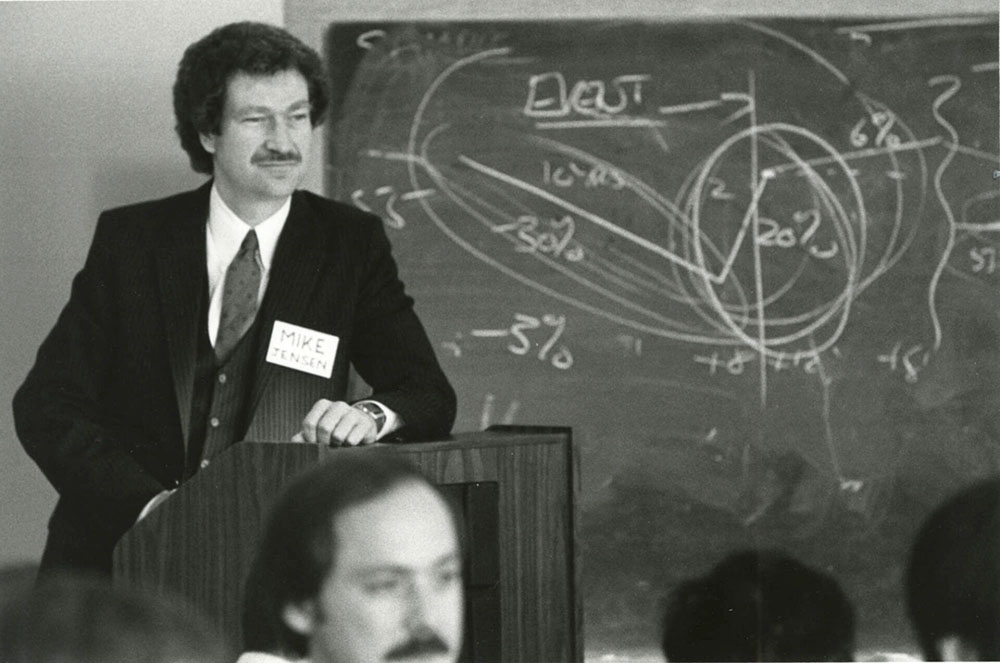
The theory in a nutshell: Sometimes you feel like a nut; sometimes you don’t. This thinking launched the groundbreaking work of economist Richard Thaler ’74 (PhD), ’10 (Honorary) who won the Nobel Prize in Economic Sciences in 2017 for “contributions to behavioral economics.”

Thaler credits his career to a bowl of cashews at a dinner party he hosted in Rochester. He knew the main course was coming but recognized he was powerless to stop snacking on the cashews that had been put out for guests. The problem, he knew, was one of self-control and shortsightedness. So, he took the bowl and hid it in the kitchen.

“If the cashews aren’t in front of you, you’re less tempted to eat them,” he told The New York Times upon receiving the Nobel. “If you have to get up and walk all the way to the kitchen—in this gigantic house I was living in as a graduate student in Rochester—you don’t end up eating so much.”

The episode set him on unprecedented research into why people fail to act the way economic theories suggest they should. Challenging the long-held belief of economists that humans are rational problem solvers, Thaler proved that people are, sometimes, just nuts. DA

Michael Jensen in a suit and tie stands at a podium in front of a blackboard, addressing an audience.
Described as “a force of nature,” Michael Jensen started his workday at 4 or 5 a.m. (University Libraries / Department of Rare Books, Special Collections, and Preservation)

144. Because executives needed skin in the game.

Michael Jensen’s Theory of the Firm changed corporate management.

Michael Jensen not only reshaped how scholars and practitioners view the relationship between managers and corporate shareholders; he changed how companies are run. And so he became one of the most influential economists in corporate finance, organizational theory, and behavioral economics.

Jensen’s breakthrough came in 1976 when he coauthored a seminal paper with William Meckling, then-dean of the graduate management school, where Jensen taught from 1967 to 1988. Published in the Journal of Financial Economics, “Theory of the firm: Managerial behavior, agency costs, and ownership structure” would become the single most-cited article in business academia.

Jensen and Meckling showed that conflicts naturally arise when company owners (“principals”) hire executives (“agents”) to steer the firm on their behalf. Their solution: Give top executives an equity stake so their interests align with shareholders’. (On the downside for employees, this also sometimes meant trimming the workforce.)

Jensen went on to develop his organizational theory, asserting that companies are not mere profit-maximizing black boxes but complex systems where governance, hierarchy, and incentives shape performance. His ideas revolutionized executive pay, making stock options and performance-based bonuses standard tools to align managers with shareholders.

Understandably, Jensen’s work has both fans and detractors. According to Bloomberg Opinion, critics deemed him “the high priest of the greed-is-good era,” while admirers saw “the surgeon who gave Anglo-Saxon capitalism a new lease of life.” SK

145. Because a single experiment can be beautiful.

In 1958, biologist Franklin Stahl ’56 (PhD), ’82 (Honorary) helped prove how DNA copies itself—an experiment so clear and elegant that many scientists call it “the most beautiful experiment in biology.” Working with Matthew Meselson at Caltech, Stahl showed that when DNA replicates, each new DNA molecule contains one original strand and one new strand. His “beautiful experiment” left a lasting mark on our understanding of how genetic information gets passed on. LV

146. Because great literature should be read aloud.

“Out of my life I fashioned a fistful of words. When I opened my hand, they flew away.” We beg to differ, Hyam Plutzik; your legacy endures. Ask Adrienne Rich, Ralph Ellison, Michael Ondaatje, Maureen N. McLane, or the other 300 literati who share their work in his name. For 62 years, URochester has honored the English professor and Pulitzer finalist through the longest-running public reading series on an American campus. Better still? The Plutzik Reading Series has always been free and open to the public. MP

147. Because higher education can change lives—anywhere.

For nearly a decade, the Rochester Education Justice Initiative (REJI) has been breaking educational barriers. REJI delivers degree-granting college programs in three nearby state prisons—and, at Attica Correctional Facility, URochester is the first R1 university in New York state to offer a bachelor’s degree for incarcerated students. The goals: transform lives, support successful reentry, and strengthen the greater Rochester community through the power of learning. ST

148. Because poetry can have a sense of humor.

When Anthony Hecht died in 2004, the former US Poet Laureate was remembered as a “formalist” poet best known for his searing chronicles of 20th-century terrors. Indeed, his second book, The Hard Hours, addressed his haunting memories as an infantryman during World War II. It earned him the Pulitzer Prize in 1968.

But Hecht, who spent 18 years on the faculty at URochester, had a playful side. That was most evident in the light verse form called double dactyl that he created with fellow poet Paul Pascal. Like a limerick, the double dactyl is rigid in its structure and usually humorous. It became popular on American college campuses in the 1960s for its irreverence and obligatory use of nonsense words. DA

149. Because organs are music’s royalty.

With its unparalleled collection of new and historic organs, the Eastman Rochester Organ Initiative, established in 2002, has boosted Rochester’s reputation as a leading center for organ study and performance. Housed at the Eastman School of Music and across the city, the instruments include the only full-size Italian Baroque organ in the Western Hemisphere, now taking pride of place in the Memorial Art Gallery’s Fountain Court. Eastman students also have access to more than a dozen high-quality organs in the Rochester area, including the Opus 1416 Aeolian pipe organ that George Eastman installed in his East Avenue mansion so that he could enjoy live music with his breakfast. TML

150. Because voters know there’s no place like home.

You know how voters say they dislike Congress but trust and re-elect their local member? Political scientists call it “Fenno’s paradox” after the late Richard Fenno. Known for his startlingly original scholarship on Congress, he helped build the Department of Political Science into an influential powerhouse. Fenno, who died in 2020, spent his entire career at URochester. The American Political Science Association awards an annual prize that bears his name. DA

151. Because books contain the deepest wisdom.

Several URochester figures wrote the (actual) books that have become seminal texts in their respective fields.

Breastfeeding: A Guide for the Medical Profession
(Elsevier, 1979)
Ruth Anderson Lawrence ’49M (MD), ’58M (Res), a professor emeritus of pediatrics, was an international expert in breastfeeding medicine, and her book continues to be the preeminent reference for clinicians worldwide.

Computer Vision
(Prentice Hall, 1982)
URochester professors Christopher Brown and Dana Ballard, who developed the active vision paradigm, helped define the emerging field of computer science; their book is still referenced in academic settings.

Natural Language Understanding
(Benjamin/Cummings Publishing, 1987)
This influential text from James Allen, a professor emeritus of computer science, delivers a synthesis of the major modern techniques and research in natural language processing.

Nonlinear Fiber Optics
(Academic Press, 1989)
Optics professor Govind Agrawal has authored eight books, several of which are used at universities worldwide. Leading the list is this standard graduate textbook for training telecommunication engineers.

Nonlinear Optics
(Academic Press, 1992)
Professor Robert Boyd is world-renowned for his studies of “slow” and “fast” light propagation and quantum imaging techniques. This textbook has become a standard reference work in the field.

Nursing Care for the Patient with Burns
(Mosby, 1972)
Florence Jacoby, a registered nurse at Strong Memorial Hospital, set the standard for burn nursing worldwide after treating survivors of a plane crash in 1963.

Principles of Optics
(Elsevier, 1958)
Longtime professor Emil Wolf was one of the most recognized optical scientists of his generation, and this work, cowritten with Nobel laureate Max Born, is the most cited textbook in physics.

Schwartz’s Principles of Surgery
(McGraw-Hill, 1969)
A nationally recognized “Icon of Surgery” and former chair of surgery at URochester, Seymour Schwartz edited and cowrote the “Surgeon’s Bible” used to teach generations of young doctors. JL

152. Because nursing needs research and care to go hand in hand.

When Loretta Ford became the inaugural dean of the School of Nursing in 1972, most schools designed nursing like a patchwork quilt: education in one corner, research in another, practice set apart from both. Ford drew them together into the Unification Model, an approach in which students learn from discovery, research grows from hands-on care, and patients benefit from the innovation that courses through classrooms, labs, and clinics. The Unification Model would become a guide for advanced practice nurses throughout the world. MP

153. Because optics innovation can start with the surface.

Lenses and mirrors had been mostly limited to spherical shapes until the 21st century, when optical engineering professor Jannick Rolland and her husband, the late Kevin Rolland-Thompson, a professor and visiting scientist at the Institute of Optics, pioneered the emerging area of freeform optics. The URochester team created the theoretical framework to understand how surfaces guide light in three dimensions. They made possible new mobile displays, LED lighting, remote sensing devices, and astronomical instrumentation. Rolland was inducted into the National Academy of Inventors in 2020. LA

154. Because higher ed needs academic musicians.

Recognizing the growing demand for skilled musicians in American higher education, Eastman was the first school in the country to promote a doctor of musical arts, and one of the very first to offer it. Longtime school director Howard Hanson led efforts in the early 1950s to create the DMA as a pathway for performing musicians to enjoy a successful career in academia while offering students firstrate practical instruction. Demand for the degree proved so great that it has since been replicated worldwide. TML

Right: Will Gay Bottje, who received the first doctor of musical arts in 1955, studies in the old Sibley Music Library.

155. Because a pivotal moment in history can still be unearthed.

The ancient city of Yodfat in Israel, the first Jewish city to fall in the First Jewish-Roman War, was buried in a rocky hilltop for nearly 2,000 years before it was unearthed in an excavation led by URochester archaeologists in the 1990s. The dig uncovered dramatic evidence of the city’s siege in 67 CE, offering proof of the carnage and events chronicled by Josephus and deepening global insight into a pivotal moment in history. DA

156. Because political science can be Moneyballed.

William Riker transformed the discipline with math, models, and game theory.

Moneyball, the book and movie about the Oakland Athletics’ pioneering of sabermetrics, teaches that a small-market team with the right analytics can change the game. That’s URochester in political science.

Starting in the 1960s, Professor William Riker pioneered the Rochester School, a quiet revolution that introduced positive political theory and transformed the study of power and policy.

Riker put politics on the same scientific footing as the hard sciences and economics. That meant using formal models, math and statistics, and game theory—not to argue what should happen but to better understand and predict what does happen. Positive political theory starts with individual decision-making and self-interest, then scales up to explain the collective outcomes we see in elections, legislatures, and diplomacy.

From there, Riker and his like-minded colleagues at URochester wrote the playbook others copied. Departments across the country began recruiting “Rochesterians” to build their own winning programs—proof that our small-but-mighty approach was both portable and powerful.

By turning intuition into models, models into predictions, and predictions into testable hypotheses, URochester established a new common language for the discipline—along with a vocabulary that has seeped into more mainstream political analysis as well. ST

157. Because scholars shouldn’t wander for medieval texts.

Scholars of medieval literature who wanted to compare copies of specific texts had long faced the challenge of having to travel the world to far-flung archives. After all, the printing press was not around when most of the texts were written and copies were made by hand, complete with errors and mistranslations. All that changed when Russell Peck, who taught English at URochester for more than half a century, established the Middle English Texts Series (METS) in 1989. The series, a publication of the Rossell Hope Robbins Library, offers free digital and affordable print editions of a wide range of medieval writings.

“METS democratizes access,” says Anna Siebach-Larsen, the executive director of the project, who oversees the Rossell Hope Robbins Library and Koller-Collins Center for English Studies. “It puts the literature out there for everybody.” She adds that it has helped “transform our understanding and study of medieval culture.” METS resources, including a new website and digital reader that launched in November 2024, get used by scholars about 750,000 times annually, according to project administrators. It is one of the longest-running Open Access initiatives in the world. Until 2025, the project had primarily been supported by grants from the National Endowment for the Humanities. DA

158. Because accountants should see the future.

At URochester, “positive” means progress. Just as political scientist William Riker launched positive political theory here—using math and models to explain how people actually make choices—Simon Business School professors Ross Watts and Jerold Zimmerman did the same for accounting. Their positive accounting theory shifted the field from prescriptive rules to predictive science by showing why companies act the way they do. The result: Corporate finance policies worldwide, from taxes to executive pay, are now grounded in observations and evidence instead of bean-counting and guesswork. ST

159. Because to see the world in a grain of sand, you want William Blake in the ether.

URochester and the University of North Carolina at Chapel Hill digitally safeguard poet and artist William Blake’s blazing words and dazzling prints—including one with “The Tyger,” one of the most anthologized poems in the English literary canon. For three decades, the William Blake Archive has captured the Romantic poet’s masterpieces and released them into the wilds of the Internet. ST

160. Because lost stories can be brought back from the dead.

How do you read a sacred scroll whose text has been blurred by time? How do you see the contents of a manuscript so fragile that to open it more than a crack would destroy it? At URochester, you take it to Associate Professor of English and of Computer Science Gregory Heyworth. Founder of the discipline of textual science, Heyworth directs the Lazarus Project, an interdisciplinary effort to recover lost texts and images from damaged manuscripts, maps, and artifacts. Its stated mission: “To use science to see the invisible, read the illegible, visualize the obscure, conserve the past, and educate the present.” MC

161. Because it helps to be Thoreau.

Raymond Borst ’33 never lived off the grid like the subject of his scholarship, naturalist Henry David Thoreau. But he scoured the country, amassing the largest privately held collection of Thoreau’s work outside the archives of the Thoreau Society. His collection, housed in Rush Rhees Library, anchors URochester’s impressive holdings of 19th-century American literature. DA

162. Because great music should be held in your hand.

Searching for sheet music published during World War II? Interested in seeing an autograph manuscript of La Mer? Or perhaps you’d like to explore an 11th-century compilation of treatises on the medieval arts of arithmetic, geometry, music, and astronomy? With nearly 750,000 items, the Sibley Music Library offers all this—and much more. The largest music library affiliated with any college or university in the US, Sibley serves not only Eastman students and faculty but also music lovers throughout the greater Rochester area—fulfilling founder Hiram W. Sibley’s original vision for the collection. TML

Left: Ruth Watanabe headed the Sibley Music Library for 37 years.

163. Because every great city needs an art museum.

Claude Monet in the morning, Rashid Johnson in the afternoon—no trip to New York City required. URochester’s Memorial Art Gallery (MAG) packs 5,000 years of art, from ancient Egyptian treasures to bold contemporary works, into our region’s very own “Mini Met.” With blockbuster shows, community festivals, and days when the doors are flung open for free, MAG proves you don’t need a big city to have big culture. ST

164. Because explorers eventually bring it all home.

For some of us, it’s baseball cards or stamps. Maybe coins or even vinyl records. For Rochester native Henry Ward, it was fascinating specimens from around the world. The early explorer accumulated some 40,000 specimens in geology, mineralogy, petrography, and paleontology in the mid-1800s—the largest collection of its kind in the country at the time—with a mission to bring the natural sciences to a wider audience. He later formed a company, Ward’s Natural Science Establishment, which exists to this day. Ward taught natural science at URochester from 1861 to 1875, and his papers are some of the most frequently accessed in the library’s collection. JL

165. Because Lincoln still lives.

The Department of Rare Books, Special Collections, and Preservation contains a letter from Abraham Lincoln written on the day of his assassination. Part of the University’s expansive Seward collection of letters, books, and ephemera, it may be the last he ever wrote. Also of note: William Stoddard, Lincoln’s personal secretary, was a member of URochester’s Class of 1858. JL

166. Because the best medicine requires people science.

In 1977, medical faculty George Engel and John Romano developed the biopsychosocial model of medical education to describe the intricate web of patient care, from mental health to family dynamics to cultural tradition. (Engel called it “people science.”) Touchpoints like patient histories have reshaped medicine to include the bigger picture. MP

167. Because optics are key to our vision.

The Institute of Optics is the cradle of scientists and entrepreneurs.

In 1929, with support from George Eastman and Edward Bausch, URochester founded the nation’s first optical science, engineering, and design program to train American scientists in a field long dominated by Germany. Nearly a century later, the Institute of Optics has awarded roughly half of all optics degrees in the US—with alumni who include Nobel laureate Donna Strickland ’89 (PhD)—and spurred a thriving local economy in the Rochester and Finger Lakes region that includes more than 150 optics, photonics, and imaging companies. LA

Now & Next

Here you find the leading edge and what lies beyond.

168. Next: Meeting the promise of safe, abundant energy.

Clean, limitless energy might seem like a pipe dream. But URochester scientists are working tirelessly to realize this goal. Not only did the Laboratory for Laser Energetics (LLE) play a significant role in the long-awaited achievement of fusion ignition, but it is also the leader of a national research hub dedicated to advancing inertial fusion energy science and technology. TML

169. Now: Advancing AI to heal us.

Empire AI, a consortium of public and private research institutions handpicked by New York Governor Kathy Hochul, is forging the future by accelerating the responsible development of artificial intelligence. URochester is the first integrated health system in the consortium, which launched in 2024 to establish a state-of-the-art computing center to be used for research, job creation, and advancing AI for the public good. DA

170. Now: A deep study into microplastics.

Food wrappers. Plastic bottles. Cigarette butts. Synthetic clothing. These sources of plastic waste produce microplastics— those frequently difficult to detect and mitigate particles that have been found in everything from human blood to breast milk. Scientists know little about their long-term impact on human health, but a new research center is looking to change that. A collaboration between URochester and the Rochester Institute of Technology, the Lake Ontario MicroPlastics Center will study the lifecycle of microplastics, including their movement in the Great Lakes, human exposure to the particles, and the resulting health impact. JL

171. Next: Transplanting animal organs into humans.

It may seem like the stuff of movies and science fiction, but xenotransplantation— transplanting animal organs into humans—is very real and quite possibly the future for the more than 100,000 people on US organ waitlists alone. In 2021, Robert Montgomery ’87M (MD) performed the first investigational transplant of a genetically engineered nonhuman kidney (a pig’s, to be exact) to a human body. TML

172. Next: Finding asteroids before they find us.

When it launches sometime after September 2027, NASA’s Near-Earth Object Surveyor will be the first space telescope designed to find potential hazards before they find—and crash into—us. URochester scientists Judith Pipher, William Forrest, and Craig McMurtry helped make this Earth-defending mission possible by developing a sensor that can collect infrared light emitted by dark asteroids and comets as they’re heated by sunlight. No word on whether it can detect flying saucers too. TML

173. Now: Chips instead of animals to test medicines.

For centuries, researchers have used animals to test drugs and study disease—an approach that has saved lives but remains controversial and imperfect. One reason why: Lab animals aren’t human. A promising alternative is tissue-on-chip technology, in which human cells are arranged in a microfluidic device that mimics real tissue responses.

URochester is home to one of four NIH-sponsored centers that aim to produce these devices as FDA-qualified drug development tools. Led by biomedical engineering professor James McGrath along with faculty members Hani Awad, Joan Adamo, and Ben Miller from the University of Rochester Medical Center, the Translational Center for Barrier Microphysiological Systems (TraCe-bMPS) focuses on barrier functions in disease—interfaces in tissue that are critical for the progression of infection, cancer, and many autoimmune disorders.

While McGrath predicts animal models will continue to be an important part of drug development processes for years, if not decades, this technology will reduce the use of such testing and increase the efficiency and accuracy of preclinical data. LV

174. Next: The world’s most powerful laser.

Because having the largest university-based laser wasn’t enough, LLE is now designing the world’s most powerful laser. Powered by funding from the National Science Foundation and intended to serve research communities for decades to come, NSF OPAL will comprise two new 25-petawatt lasers located at URochester which will enable experiments to study fundamental science at the cutting edge. It will harness another URochester innovation: optical parametric chirped-pulse amplification. TML

Illustration of a signpost with arrows pointing to “1850” and “Boundless Possibility,” rooted in dandelions.

175. Next: A future of Boundless Possibility.

Don’t believe us? Reread the list above.

Learn more about Boundless Possibility, URochester’s 2030 Strategic Plan

This story appears in the fall 2025 issue of Rochester Review, the magazine of the University of Rochester.