The methane hunters
 Lindsey Valich
|
Senior Communications Specialist
How URochester scientists are tracking the elusive greenhouse gas—and why it matters.
Methane is one of the most powerful drivers of near-term climate change—yet notoriously difficult to trace to its sources. University of Rochester scientists are conducting research everywhere from the Genesee River to Antarctica, working to determine where it comes from, where it goes, and where cutting emissions could make the greatest difference.
Topics on this page:
Why methane matters
To slow global warming, scientists first need to understand where this powerful greenhouse gas comes from, how it moves, and where emissions can be cut.
Methane is everywhere yet remarkably difficult to pin down.
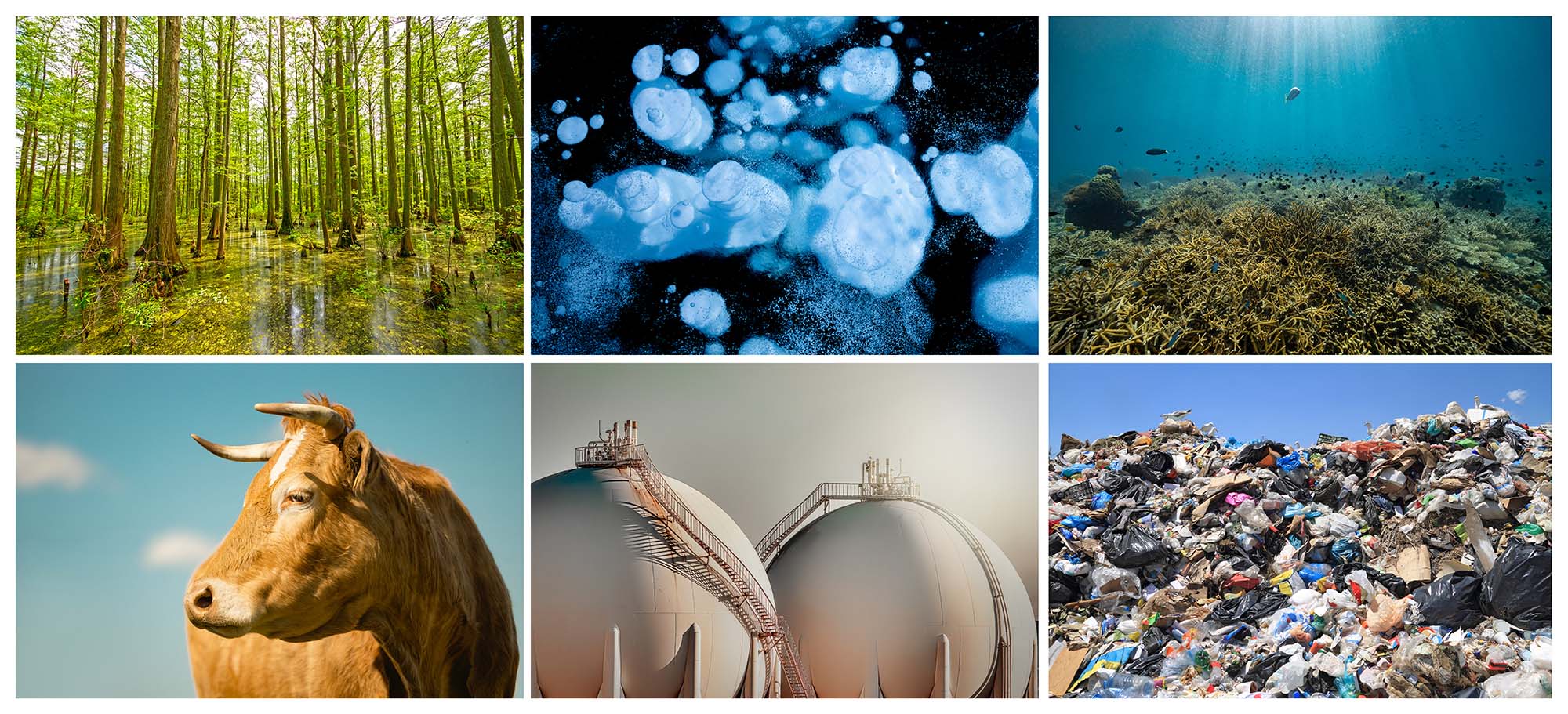
The invisible, odorless gas rises from wetlands and landfills, bubbles from the bottoms of lakes, leaks from oil and gas wells, and is even burped out by cows as they digest their food. Although it occurs in tiny concentrations, methane has an outsized effect on near-term warming, making it an increasingly important target for climate action. The challenge is deciding where to act: Scientists first have to identify the sources that matter most and understand what happens to the gas after it is released.
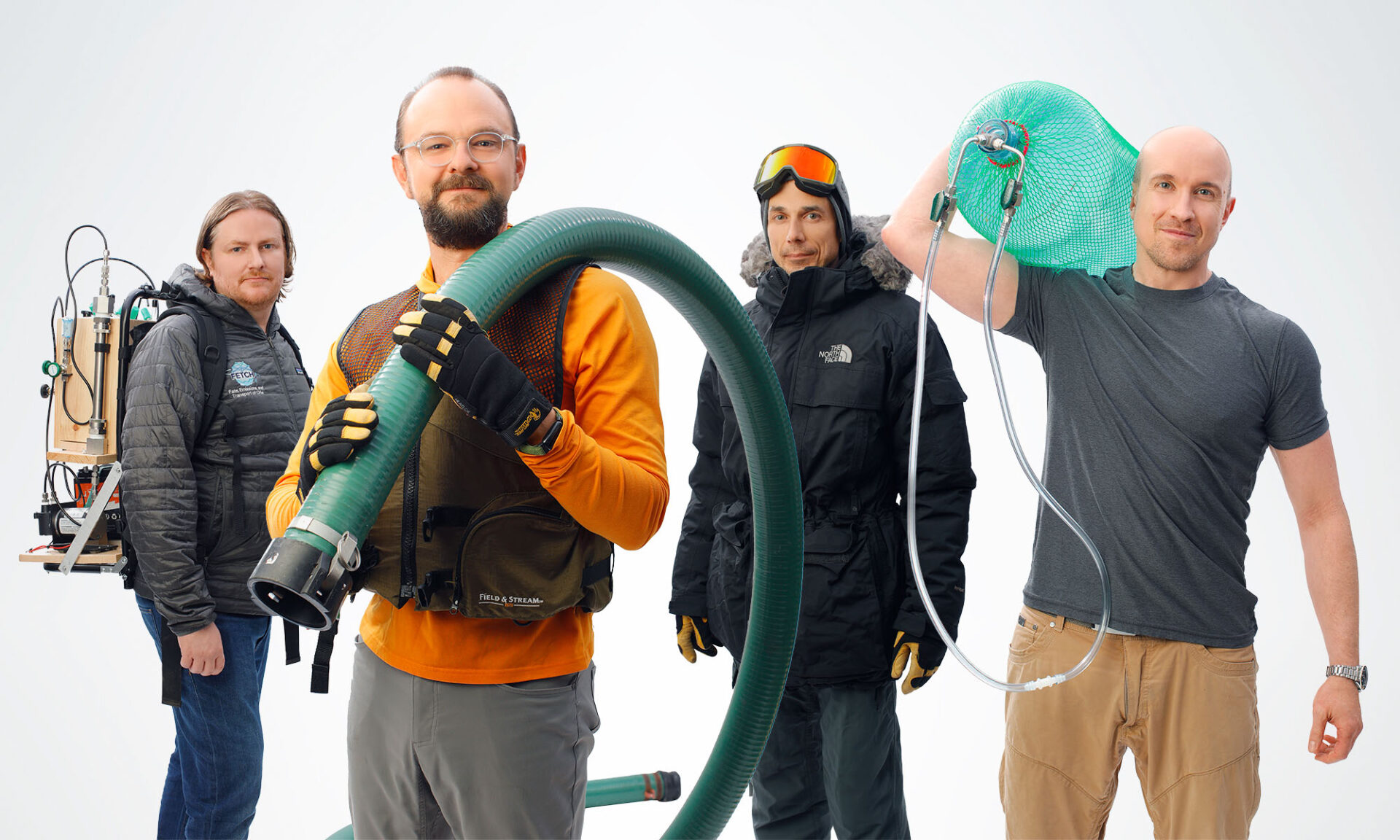
To do that, they have become methane hunters. At the University of Rochester, John Kessler, Lee Murray, Vasilii Petrenko, and Thomas Weber are among the researchers pursuing clues scattered across the planet, from ancient air trapped in Antarctic ice and methane seeping from lake and ocean sediments to measurements collected on state roadways and observations made by satellites hundreds of miles above Earth. Each approaches the problem from a different perspective and at a different scale, together building a more complete picture of methane’s journey through the planet and how that knowledge could help shape climate solutions.
“We’re not stamp collectors,” says Kessler, who, along with Murray, Petrenko, and Weber, is a member of the University’s Department of Earth and Environmental Sciences. “We’re not just collecting routine, isolated measurements. We want to discover something new. Ultimately, we want to be able to predict these systems and inform policies that can help mitigate methane. But there’s also a science side to our motivation—the science must be new and unique and creative and cool.”
Small gas, big impact
Methane has been in Earth’s atmosphere for millions of years. Scientists have known for decades that it’s a greenhouse gas. But it has only recently become one of the world’s top climate priorities as scientists have gained new tools to track emissions and a better understanding of methane’s role in near-term global warming.
30%
Methane is responsible for roughly 30 percent of global warming since the Industrial Revolution.
Methane matters not because it’s the most abundant gas—it isn’t—but because it packs such a punch. Molecule for molecule, methane traps far more heat than carbon dioxide over the first few decades after it is released. But unlike carbon dioxide, which can persist in the atmosphere for centuries, methane breaks down in about a decade. That means cutting methane emissions today could slow the pace of global warming relatively quickly and noticeably in a person’s lifetime. That realization has prompted governments, industries, and researchers around the world to invest in better ways to measure, monitor, and reduce methane emissions.
“If we’re looking to solve climate change,” Kessler says, “one of the low-hanging fruits is methane.”
In 2021, the United States and the European Union launched the Global Methane Pledge, committing 159 nations and the European Commission to take voluntary actions to collectively cut methane emissions by at least 30 percent below 2020 levels by 2030. Meeting that target could avoid more than 0.2 degrees Celsius of warming by 2050. States including New York have also adopted their own measures to reduce methane emissions.
Beyond its role in climate change, methane has taken on growing economic and public-health importance. Companies lose a valuable fuel when methane leaks from pipelines and infrastructure, and regulations have created additional incentives to find and stop the leaks. Many methane sources also release pollutants that are harmful to human health.
“You’ve got the climate argument for reducing methane emissions, you’ve got the economic argument for reducing emissions, and now there’s also a human health argument,” says URochester atmospheric scientist Sean Crowell, who uses satellite data to help measure methane in the atmosphere. “A lot of things that release methane also release other things like benzene that are carcinogens if we breathe them.”
But before emissions can be reduced, scientists have to know where they’re coming from.
Following an invisible trail
Finding methane turns out to be far more complicated than just spotting a gas leak. For one thing, the concentration of methane in our atmosphere is only about two parts per million. This means that for every million molecules of air, only two are methane.
“Detecting something this low in concentration is a challenge,” Kessler says.
If methane came from a single source, tracing it would be relatively straightforward. But methane comes from many places, both natural and human-caused. Some rises from wetlands and lake and ocean sediments. Other emissions escape from landfills, leaking pipelines, and livestock. Once all these methane molecules mix together in the atmosphere, they become almost impossible to tell apart.
“If we’re looking to solve climate change, one of the low-hanging fruits is methane.” —John Kessler
The challenge is compounded because natural and human-caused emissions often overlap in the same landscape. A monitoring station may detect methane from a wetland, landfill, herd of cattle, or gas facility at the same time. Scientists therefore have to work backward from what they measure, combining chemical fingerprints with wind patterns, field observations, satellites, and models—each adding a different piece of evidence about where the gas originated.
Methane is also constantly moving and changing. Some is consumed by microbes before it ever reaches the atmosphere, while some escapes into the air. Once there, winds may carry it far from where it was released as chemical reactions gradually begin breaking it down. By the time scientists measure a plume, it may have traveled hundreds of miles from its source and already started to disappear.
One of methane’s biggest natural checks is the hydroxyl radical, or OH, which reacts with the gas and helps break it down. But scientists still don’t know exactly what role changes in OH have played in methane’s rise and fall. That uncertainty makes it harder to explain why atmospheric methane surges in some periods and stalls in others.
81X
If we emit one ton of methane today, it would warm Earth 81 times as much over 20 years as one ton of carbon dioxide.
After rising steadily for decades, methane concentrations unexpectedly plateaued in the mid-1990s, remaining relatively stable until about 2007. Then they began rising again. After the COVID-19 pandemic, concentrations increased at the fastest rates ever recorded.
“We have no idea why,” says Murray, an atmospheric scientist. “There are many theories, but even people using the exact same data are drawing different conclusions about what has been driving these trends over the historic past and the recent past.”
Understanding methane, then, isn’t just a matter of measuring its concentration at a given place and time. Scientists must balance all the processes adding methane to the atmosphere against those removing it—and determine how quickly that balance is changing. Together, those gains and losses make up what’s known as the global methane budget.
Building the hunter’s toolkit
No one scientist can track methane’s entire journey. Each methane hunter pursues different leads, together revealing how the gas moves through Earth’s ocean, soil, and atmospheric systems in ways no single instrument can capture.
Some leads lie hidden in the past, preserved in air bubbles in ancient ice and tiny fossils in ocean sediments that reveal how methane behaved long before people began keeping records. Others are unfolding in real time, in lakes, oceans, wetlands, landfills, and the atmosphere itself, where scientists measure methane as it is produced, transported, and removed. Still others emerge when thousands of individual measurements are combined in computer models or observed from hundreds of miles above Earth by satellites, revealing patterns impossible to see from the ground.
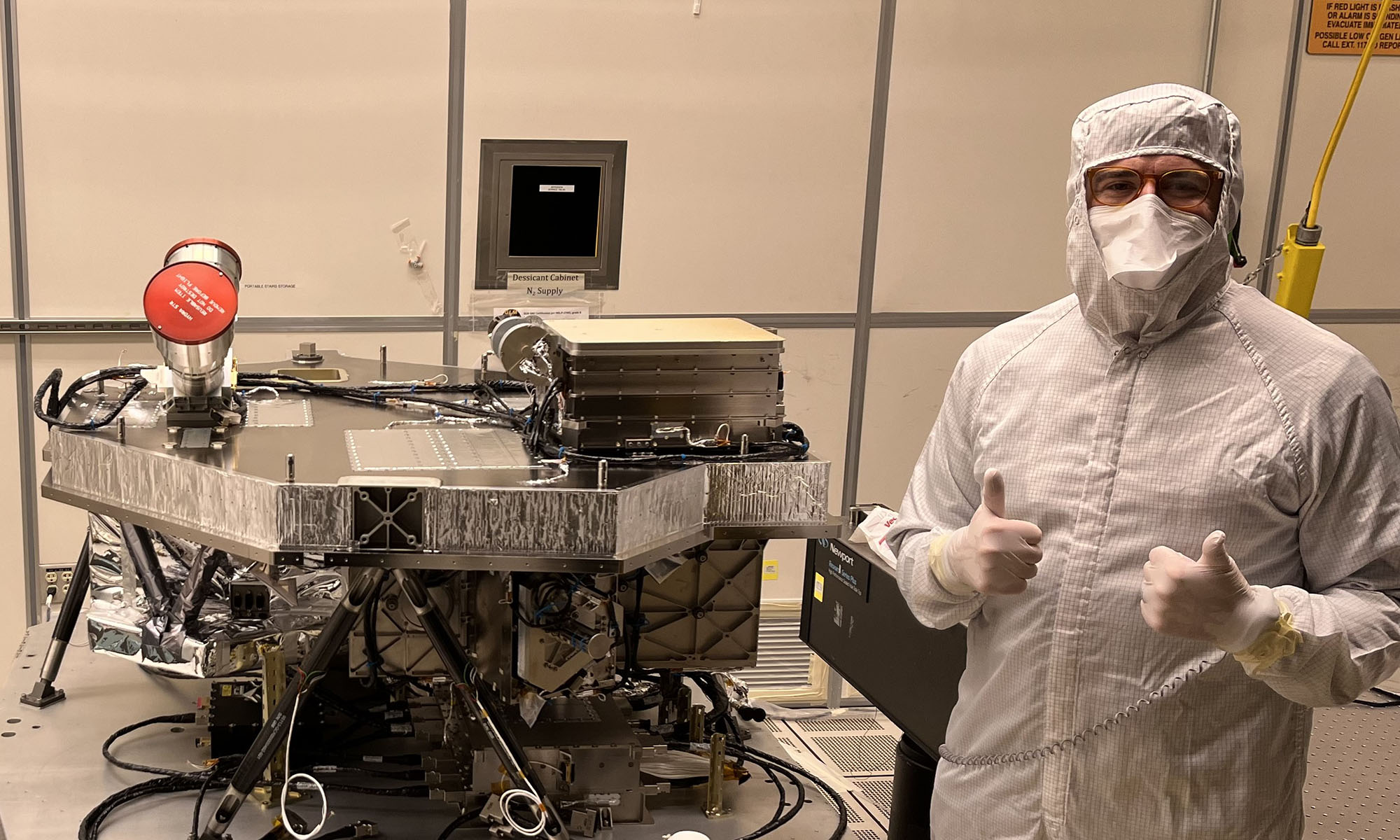
“The advantage to having so many people working on different aspects of methane is being able to understand the atmospheric methane and methane in the Earth system as a whole,” Petrenko says. “This allows us to make the best measurements possible and be very comprehensive.”
Many of those measurements are integrated through FETCH₄ (Fate, Emissions, and Transport of CH4), an international collaboration cofounded by Petrenko and Murray at URochester in 2023. The initiative brings together experts in field measurements, isotope chemistry, atmospheric modeling, and satellite observations to better understand Earth’s methane budget.
Each method has its limits. A methane measurement collected from a lake tells only part of the story. Ice cores reveal the atmosphere of the past, but they can’t show what happens next. Satellites can spot methane plumes from space, but they can’t always determine the exact source on the ground. Computer models connect those pieces, but they depend on accurate field measurements to improve their predictions.
Turning clues into action
The better scientists understand methane, the better equipped society will be to identify which emissions can actually be reduced.
Murray’s work has already helped point New York toward methane sources that might otherwise have gone unnoticed. While monitoring the state’s greenhouse gases, Murray and his team detected unexpectedly large methane plumes coming from a network of salt mines beneath Seneca and Cayuga Lakes. The mines, which extract road salt from ancient geological formations, pass through the same formations that contain natural gas. After Murray’s team brought the finding to the state’s Department of Environmental Conservation, the agency began investigating the mines as a potential source of methane.
“The advantage to having so many people working on different aspects of methane is being able to understand the atmospheric methane and methane in the Earth system as a whole.” —Vasilii Petrenko
A 2025 United Nations Environment Programme report found that global methane emissions are still rising—but also that many of the tools needed to reduce them already exist. More than 80 percent of the potential reductions by 2030 could be achieved at low cost, the report found, with most of the opportunity in the energy sector and additional reductions possible in waste and agriculture.
“I think we will potentially get there with really bright people working on the removal side,” Kessler says. “Heck, it might even come from our own department. But it’s the emissions-reduction side of this where we need governments and societies to act together.”
Methane mitigation—including efforts to capture the gas before it leaks into the atmosphere—is becoming more common. Landfills and waste facilities, for instance, are doing more to mitigate methane emissions through initiatives that Crowell describes as “putting covers on top of the mountains of garbage, then pushing all that methane into a natural gas or renewable natural gas recovery system.”
Reducing and mitigating methane emissions depends on knowing where—and how—to intervene. Each new measurement brings scientists one step closer to understanding a greenhouse gas that has long hidden in plain sight. Methane may be invisible, but the scientists following its trail are making it increasingly hard to ignore.
Tiny fossils, big clues
Paleoceanographer Chiara Borrelli studies microscopic fossils buried beneath the seafloor to reconstruct ancient climates and investigate methane seeps—revealing what Earth’s past can tell us about its changing future.
Vasilii Petrenko: Tracking methane back in time
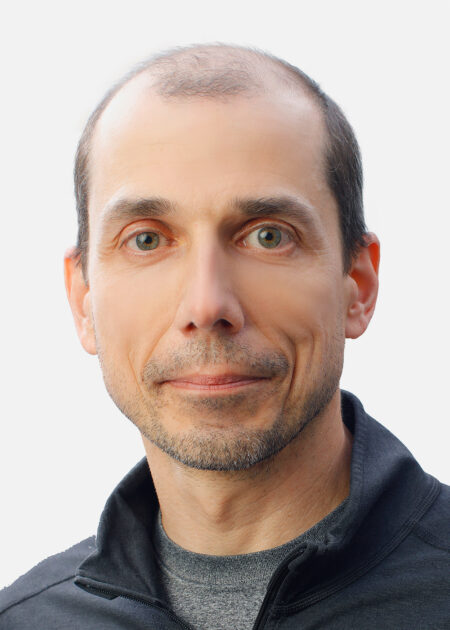
Vasilii Petrenko studies air that no human alive today has ever breathed.
Tiny bubbles trapped inside Antarctic ice preserve samples of Earth’s atmosphere dating back more than a million years. To Petrenko, an atmospheric chemist, those bubbles are time capsules containing ancient air from long before thermometers, satellites, or air-quality monitors existed.
By comparing that ancient air with methane collected from modern sources such as landfills and wetlands, Petrenko traces how the gas has changed through time and helps answer the question: Where is today’s methane coming from?
Petrenko travels to the extremes of the globe, from Antarctica to Greenland, to collect ice cores, which provide a baseline that modern atmospheric measurements cannot. The air inside the ice cores reveals what Earth’s atmosphere looked like before the Industrial Revolution—when human-caused methane emissions began rising dramatically—making it possible to distinguish natural variability from human-driven change.
What he has found is alarming. “When we compare methane levels from before the Industrial Revolution to now, methane has gone up between a factor of two and a half and three,” Petrenko says. “We know that this really large increase is driven by human activity.”
Petrenko distinguishes methane sources by analyzing their unique chemical fingerprints. But once methane from different sources mixes together in the atmosphere, the process becomes all the more challenging. “Untangling these contributions requires combining isotope measurements with field observations and atmospheric models,” he says.
Using the air trapped in the ice cores, scientists have constructed a continuous methane record stretching back 1.2 million years, with snapshots of methane levels extending nearly three million years into the past.
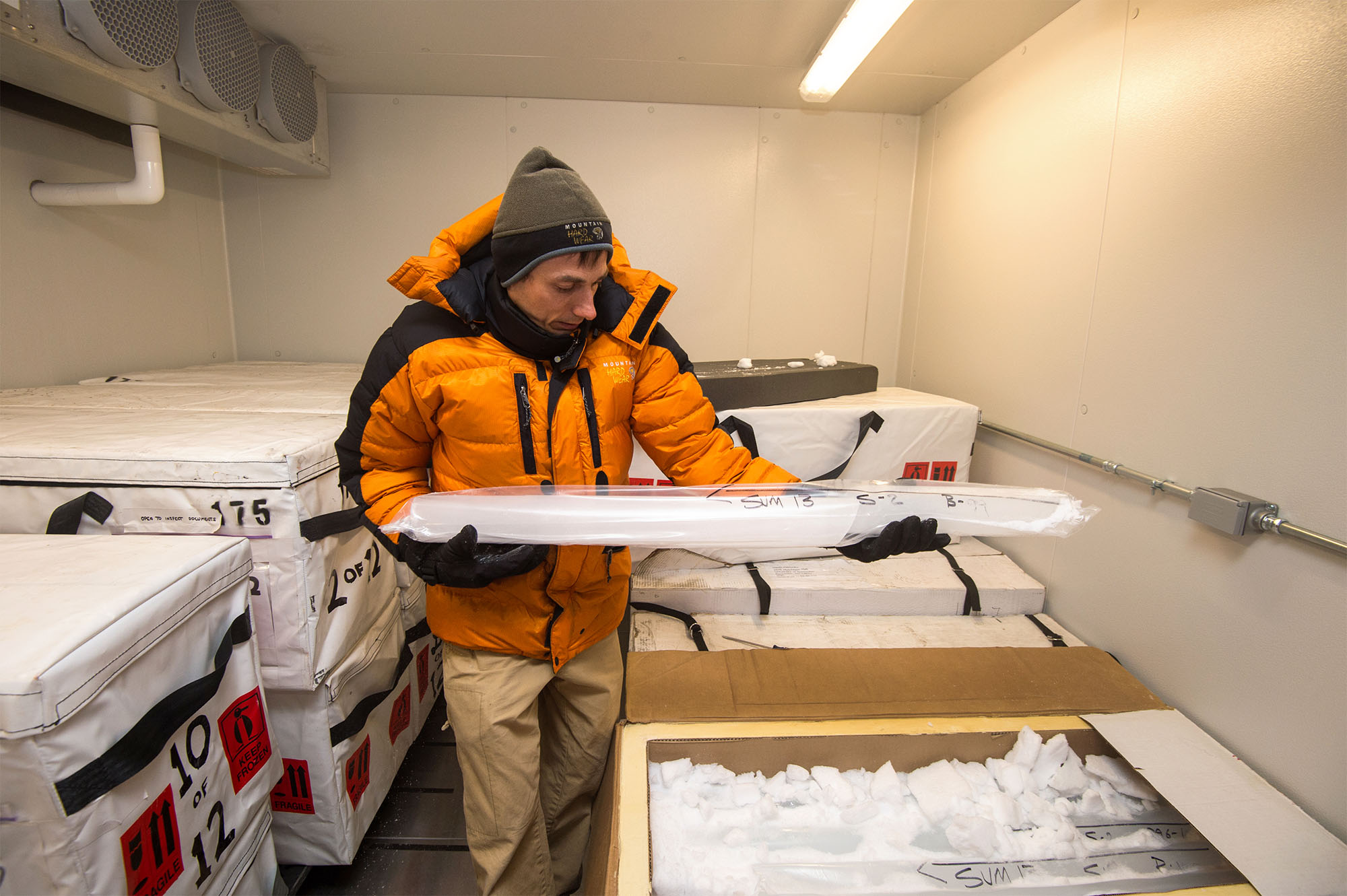
Looking across such a long span allows researchers to examine periods of natural climate change, including transitions from glacial periods (ice ages) to interglacials (warmer periods between ice ages) and compare them with what is happening today.
Petrenko also studies present-day emissions, collecting data from landfills and natural seeps from ancient underground deposits. Undergraduate and graduate students regularly take part in the work, participating in field campaigns, collecting samples, and publishing their own research.
Recent projects by Katie Hall ’24, ’25 (MS) and Maggie Scholer ’24, for example, showed that natural methane seepage from hydrocarbon basins in Michigan and the Southwest is far lower than previously estimated—findings that help scientists better distinguish natural methane emissions from those caused by human activity.
Research in Petrenko’s lab reveals that climate shifts have caused methane levels to rise and fall before. But against a record stretching back more than a million years, the speed and magnitude of today’s increase stand apart.
“Where we are now,” he says, “is completely unprecedented.”
Lee Murray: Chasing methane through the atmosphere
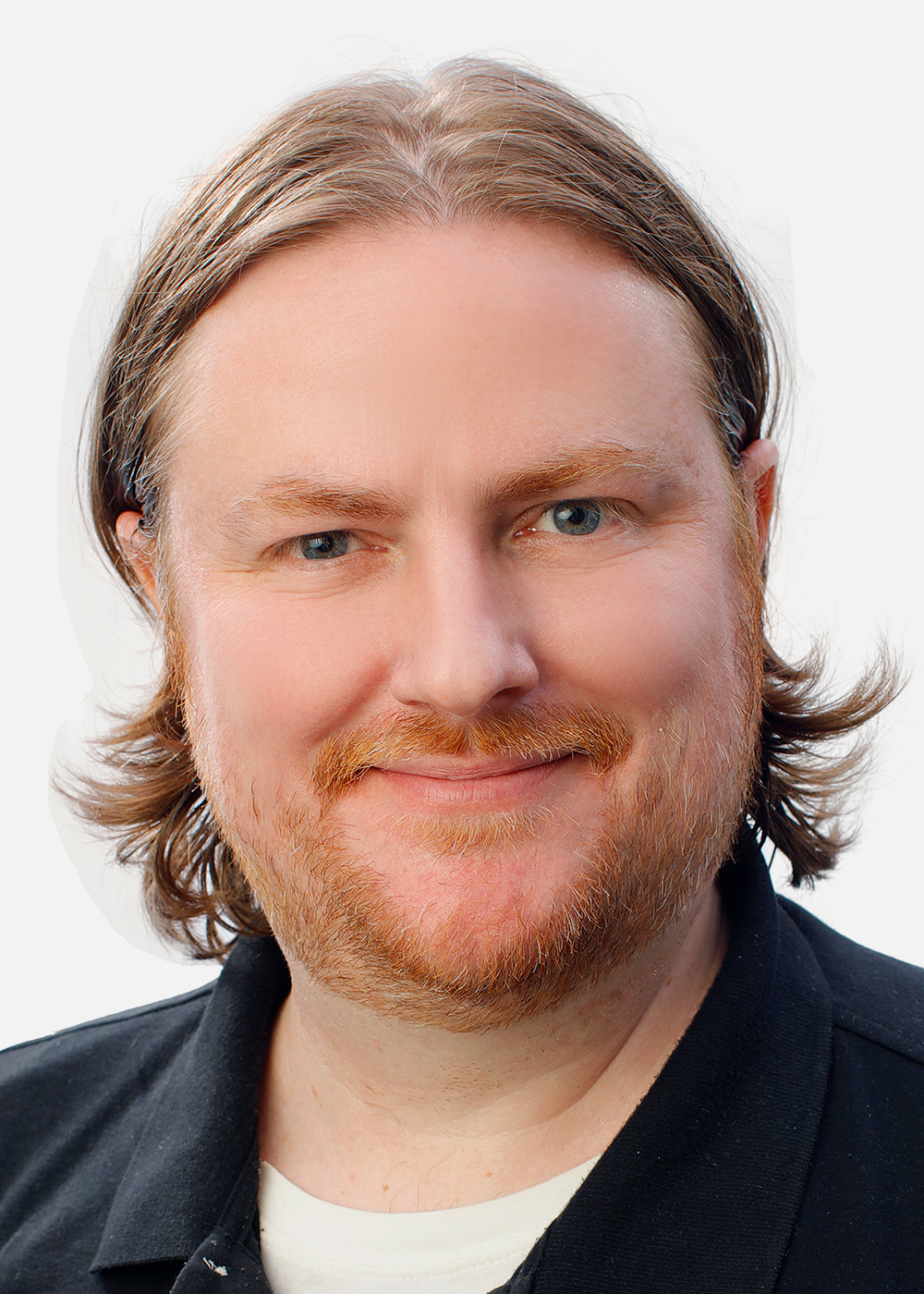 For atmospheric scientist Lee Murray, hunting methane often means following the wind.
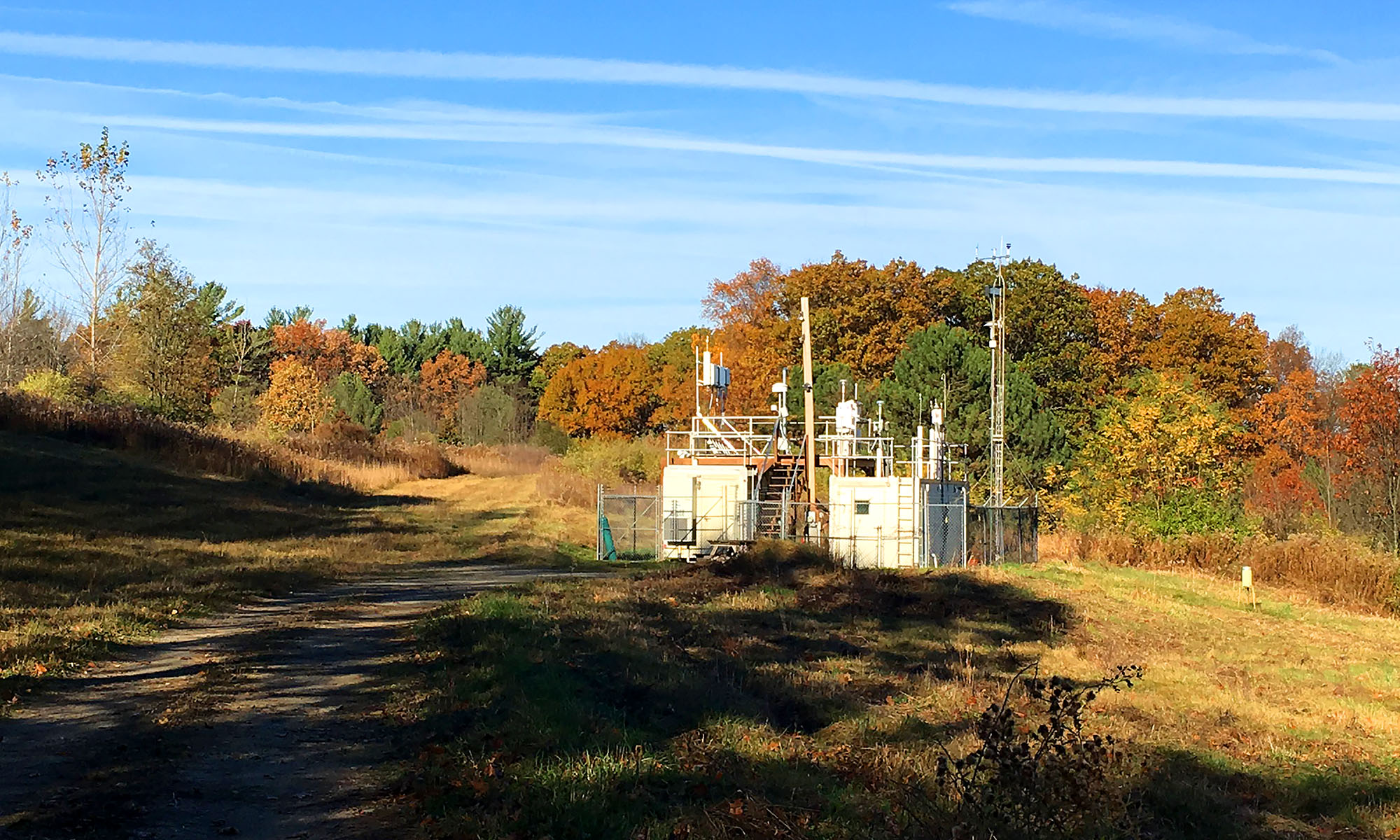
In a 2021 study, for example, Murray and his collaborators used a modified Mercedes-Benz Sprinter van as a mobile laboratory, driving around New York in search of emissions from some of the state’s largest landfills and other potential sources. Equipped with methane sensors, the van allowed them to measure the concentration of the gas in the air as they moved.
By comparing those measurements with wind patterns, they could begin to determine where the methane they were detecting came from. They could then combine the mobile measurements with data from stationary monitoring sites, aircraft, satellites, and computer models to build a more complete map of emissions across the state.
Sometimes, that kind of research attracts more attention than expected. When Murray’s team hired an aircraft to measure methane emissions, including around a natural gas plant in Oswego, the FBI came calling to make sure the flight was authorized.
Murray is also interested in what happens to the gas once it reaches the atmosphere. His research focuses in part on the hydroxyl radical, or OH. Often called “the detergent of the atmosphere,” OH is a highly reactive molecule that helps break down methane and other pollutants. While OH is the primary natural mechanism for removing methane from the atmosphere, methane reacts with OH unusually slowly compared with many other compounds.
By studying the factors that control OH and the atmosphere’s overall oxidative capacity, Murray is trying to determine the rate at which methane and other gases are naturally removed from the air. That question is becoming increasingly important as private companies investigate whether increasing OH could help remove greenhouse gases from the atmosphere.
Murray has serious concerns about the idea. “Just the thought of intentionally perturbing the atmosphere’s most critical resource, which is its oxidative capacity, is quite disturbing,” he says. “Any form of geoengineering is risky because it will have side effects.”
Deliberately increasing OH in the atmosphere does not automatically mean that more methane will be removed. OH also reacts with many other compounds, and those reactions could have consequences of their own.
That’s not to say scientists should simply ignore the possibility, notes Murray. If companies attempt to alter the atmosphere’s chemistry, researchers need to understand all the potential repercussions.
Doing that requires knowing what is actually happening in the atmosphere, which can be difficult when the thing you’re trying to measure is invisible to human eyes. “The bane of communicating my research is always that air is transparent,” Murray says, “so you can never get good photographs.”
John Kessler: Following methane through ebbs and flows
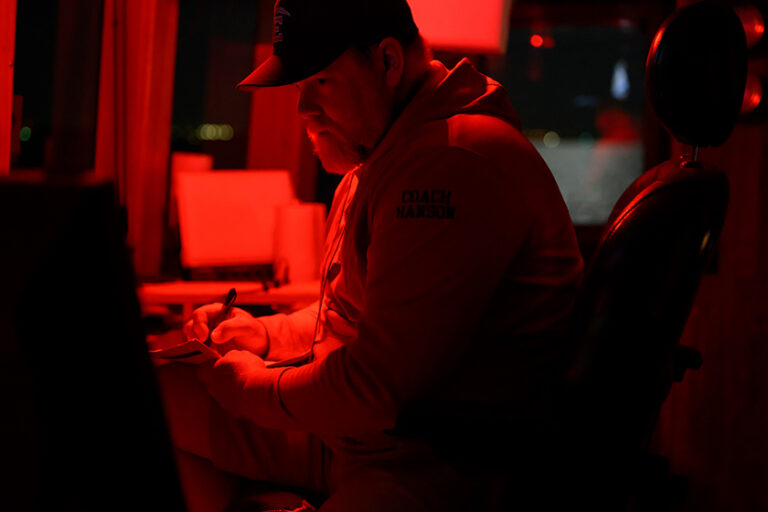
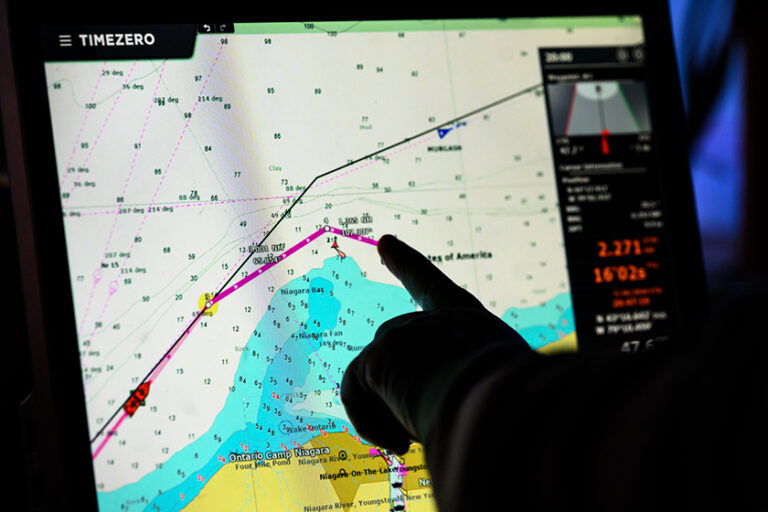
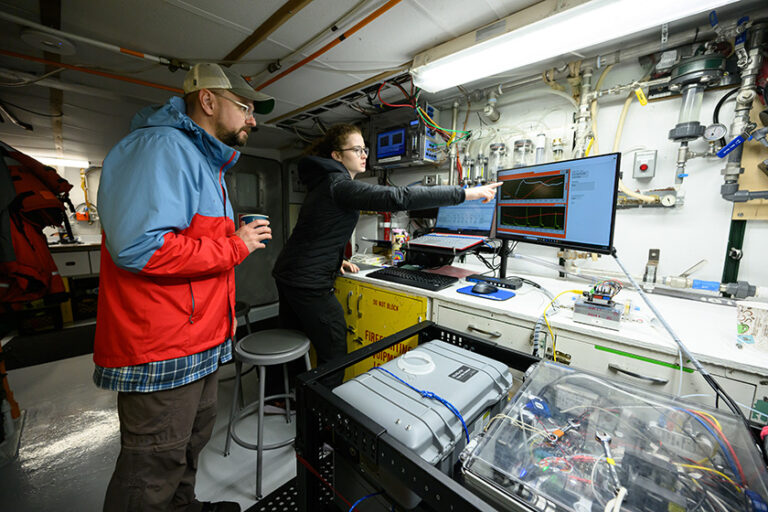
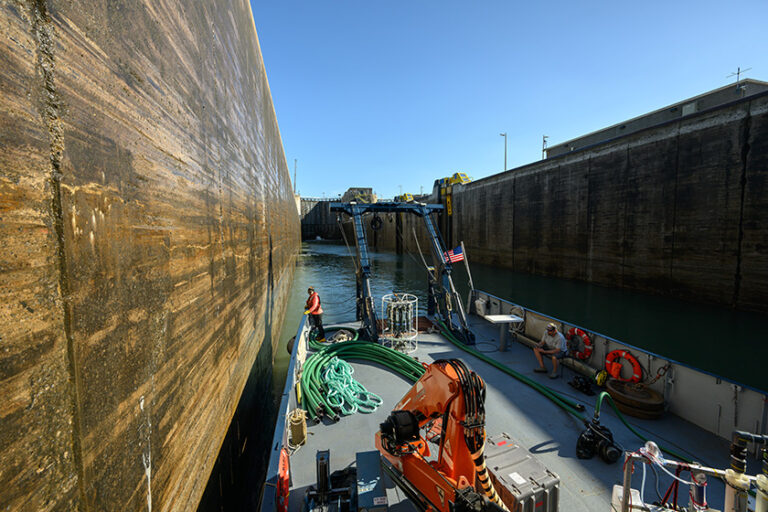
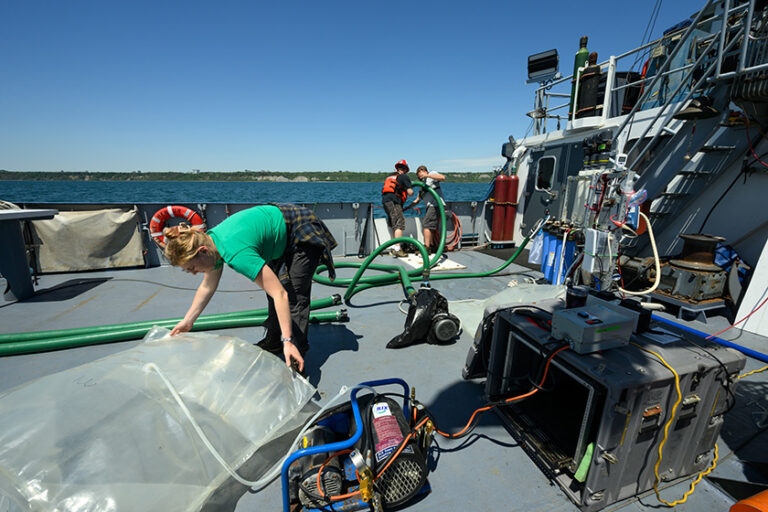
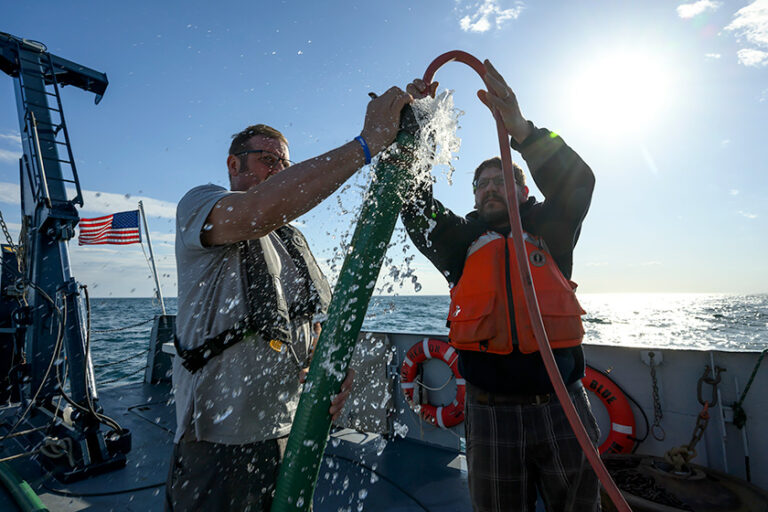
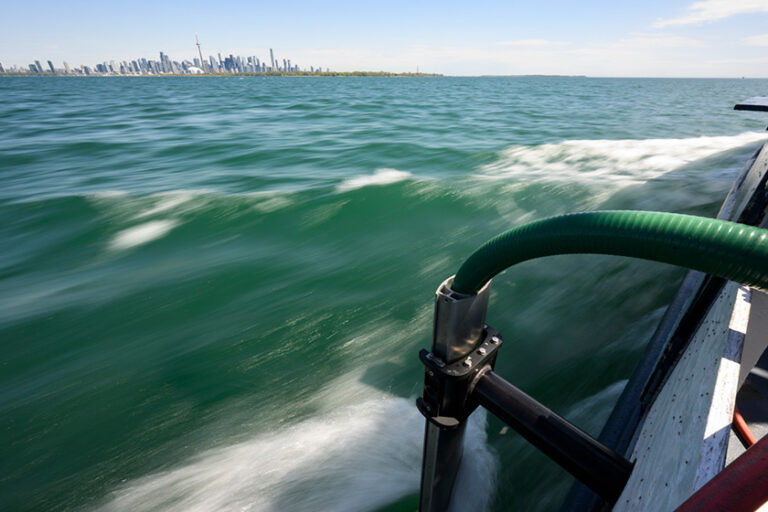
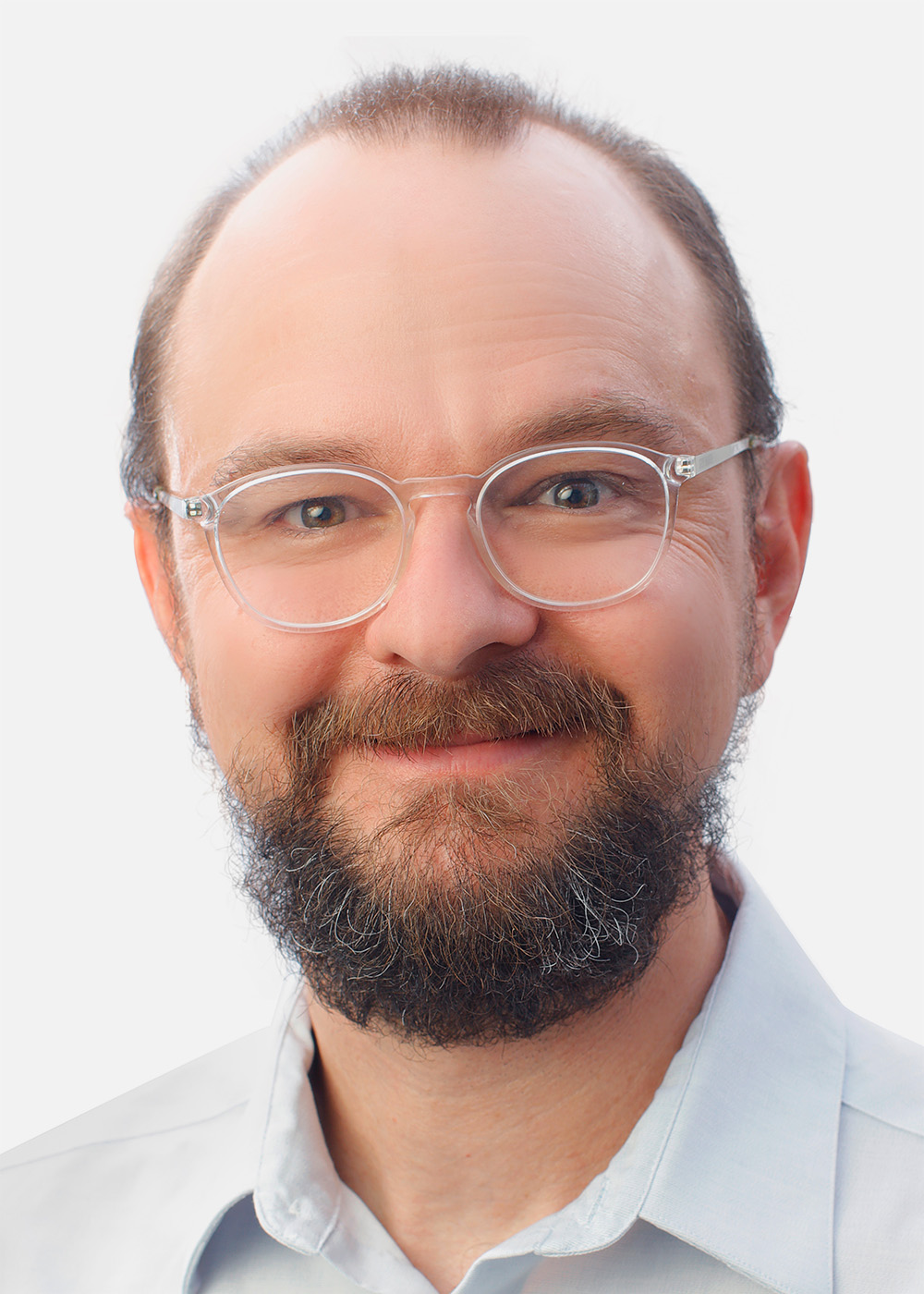 Every 10 seconds, another measurement appears on John Kessler’s computer screen aboard the R/V Blue Heron. As the research vessel crosses the Great Lakes, Kessler—a marine and freshwater chemist—builds a detailed picture of methane concentrations beneath the water’s surface. “This continual data collection allows us to capture and map gradients that were previously invisible,” he explains.
During a two-week expedition, the complicated maze of pumps, sampling bottles, tubing, and sensors on the R/V Blue Heron records tens of thousands of measurements, revealing subtle changes that would be impossible to detect from occasional sampling alone.
In aquatic systems, methane’s path is rarely straightforward. Concentrations can change dramatically over surprisingly short distances and over the course of days or weeks as weather, water circulation, biological activity, and sediment processes shift.
A handful of water samples can show “hot spots” where the gas is present, but continual measurements can reveal much more: the processes that affect methane throughout an entire aquatic system.
The data allow Kessler and his team—including undergraduate and graduate students—to trace how methane spreads in the water from sources such as lake sediments, oil and gas infrastructure, and seafloor seeps; how much is consumed by microbes before reaching the surface; and how much ultimately escapes into the atmosphere as a greenhouse gas.
“We’re trying to study the dynamics of the entire methane system,” Kessler says.
That interest in methane’s hidden pathways also motivated Kessler’s earlier work on the 2010 Deepwater Horizon oil spill, where he helped investigate the fate of the enormous quantities of methane released from the disaster. Rather than asking how much methane had escaped, he was brought on to study what happened after it entered the ocean.
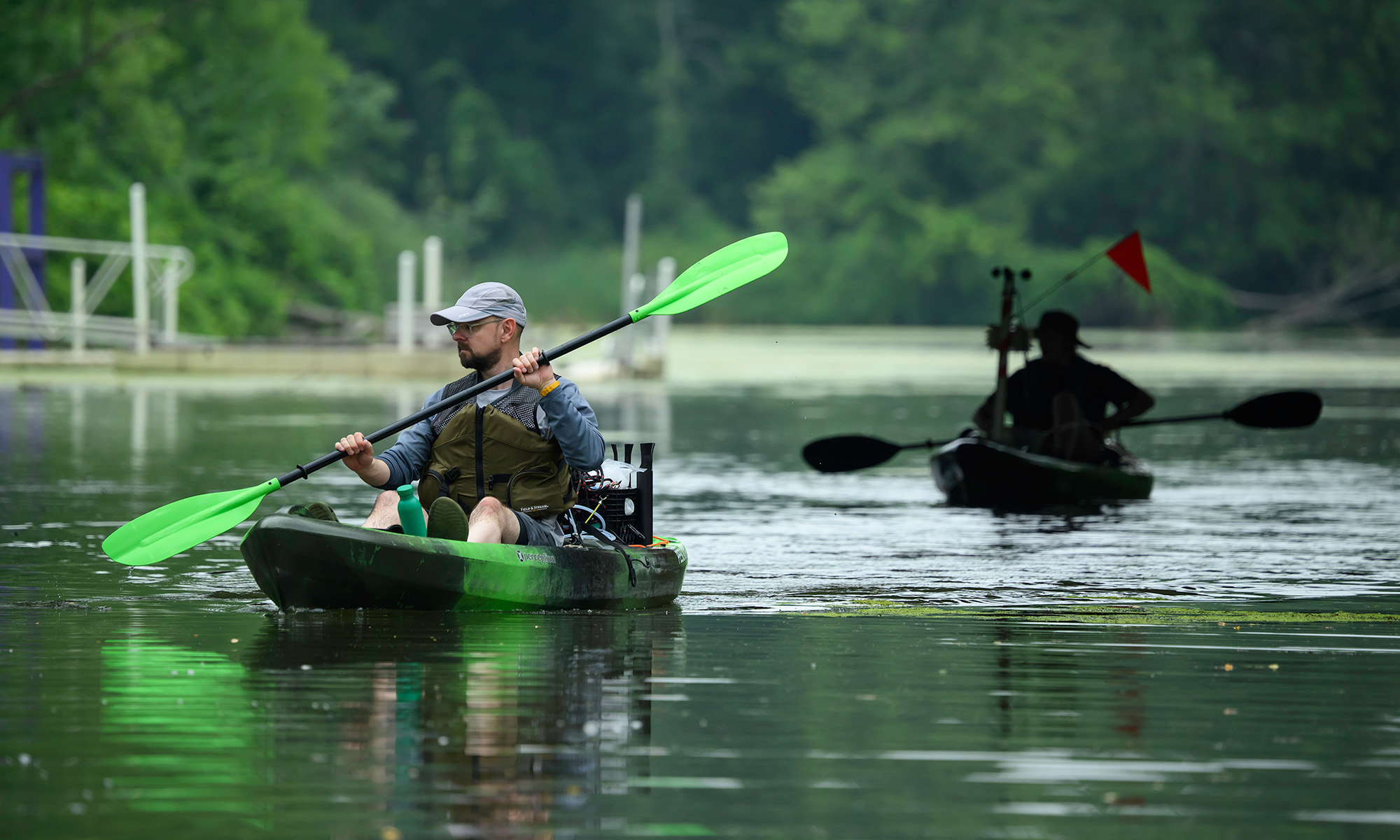
Today, in addition to his work aboard the R/V Blue Heron and other vessels on the oceans, Kessler employs a scaled-down version of the same approach in waterways closer to home. Using specially equipped kayaks as floating laboratories, he and his students have surveyed the Genesee River and Erie Canal in and around Rochester.For students, these vessels become floating classrooms, giving them firsthand experience with every stage of the scientific process, from collecting measurements in the field to interpreting data showing how methane behaves in aquatic environments.
Those detailed observations do more than explain today’s methane emissions. They provide the real-world foundation for computer models that can scale local and regional measurements into a global picture of methane dynamics and help scientists predict how those systems may change in a warming world.
“If we don’t understand what’s going on beneath the surface,” Kessler says, “then our predictive capability is nothing.”
Thomas Weber: Piecing together the methane puzzle
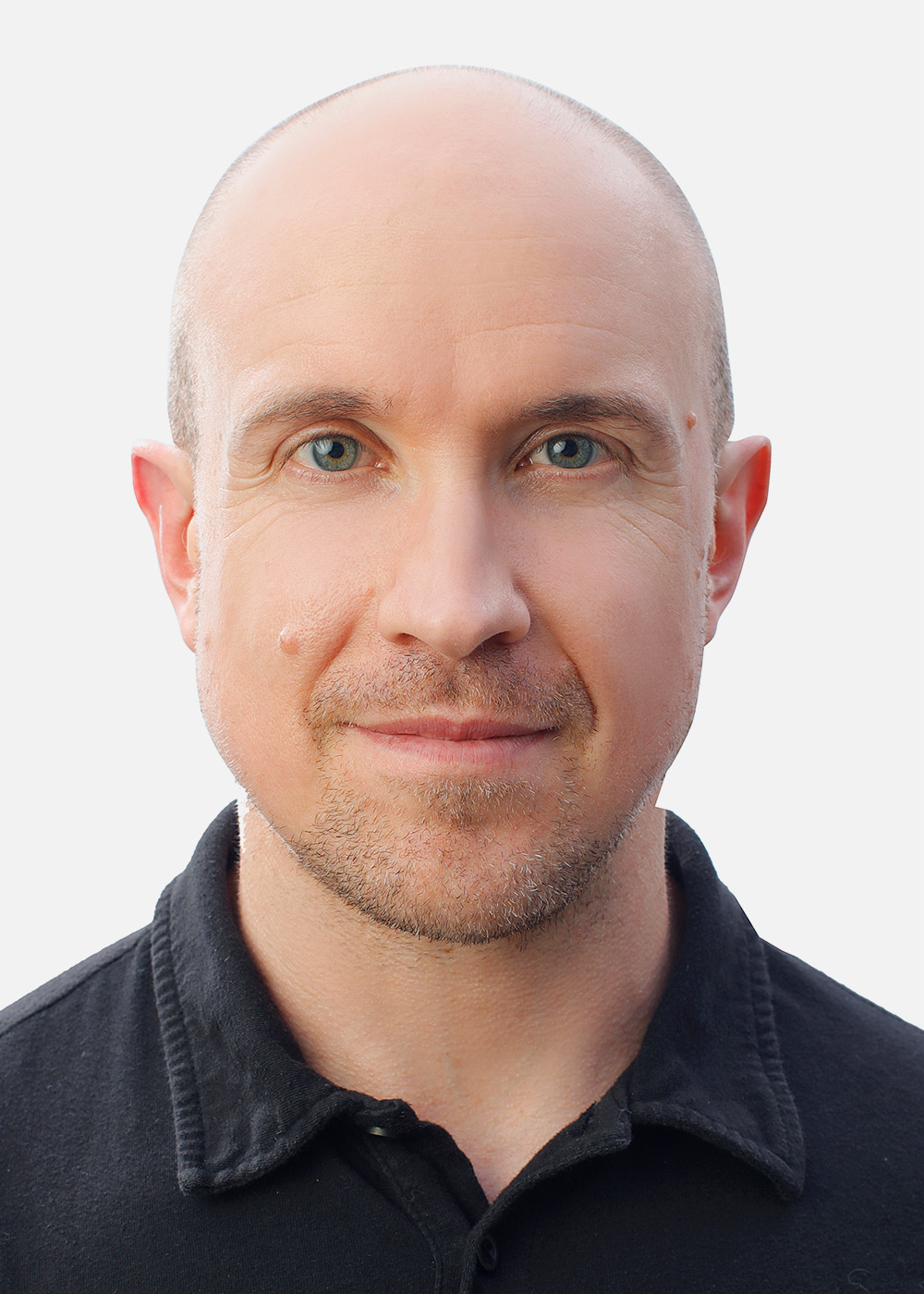 Scientists can’t measure every drop of seawater or every plume of methane rising from the world’s oceans and lakes. Instead, they collect measurements from specific locations and times, then use models to weave those observations into a larger picture. That’s where Thomas Weber comes in.
Weber, the director of graduate studies for the Department of Earth and Environmental Sciences, is a chemical oceanographer who builds computer models that reveal patterns scientists can’t observe directly. The models help researchers estimate how much methane the world’s oceans release into the atmosphere and how those emissions may respond as the climate changes.
“The ocean is a relatively small source of methane to the atmosphere,” Weber says, “but it’s probably the one with the most question marks in regard to how it will change as the climate system changes.”
Understanding those changes requires accounting for every source and sink in Earth’s methane budget, much like balancing a bank account. It’s not enough to know how much methane is entering and leaving the atmosphere today. Researchers also need to understand how each source and sink behaves and how those processes may shift over time.
“If you’re really interested in what the balance on your bank account will look like in 10 years’ time, you can’t get there just by knowing how your salary is going to change,” he says. “You have to be able to predict all of the different incomes and expenditures.”
For Weber, models are not just tools for predicting the future. They also help scientists test ideas and understand the biological and chemical processes that control methane cycling. His research focuses in part on understanding the microscopic organisms beneath the water that produce and consume methane.
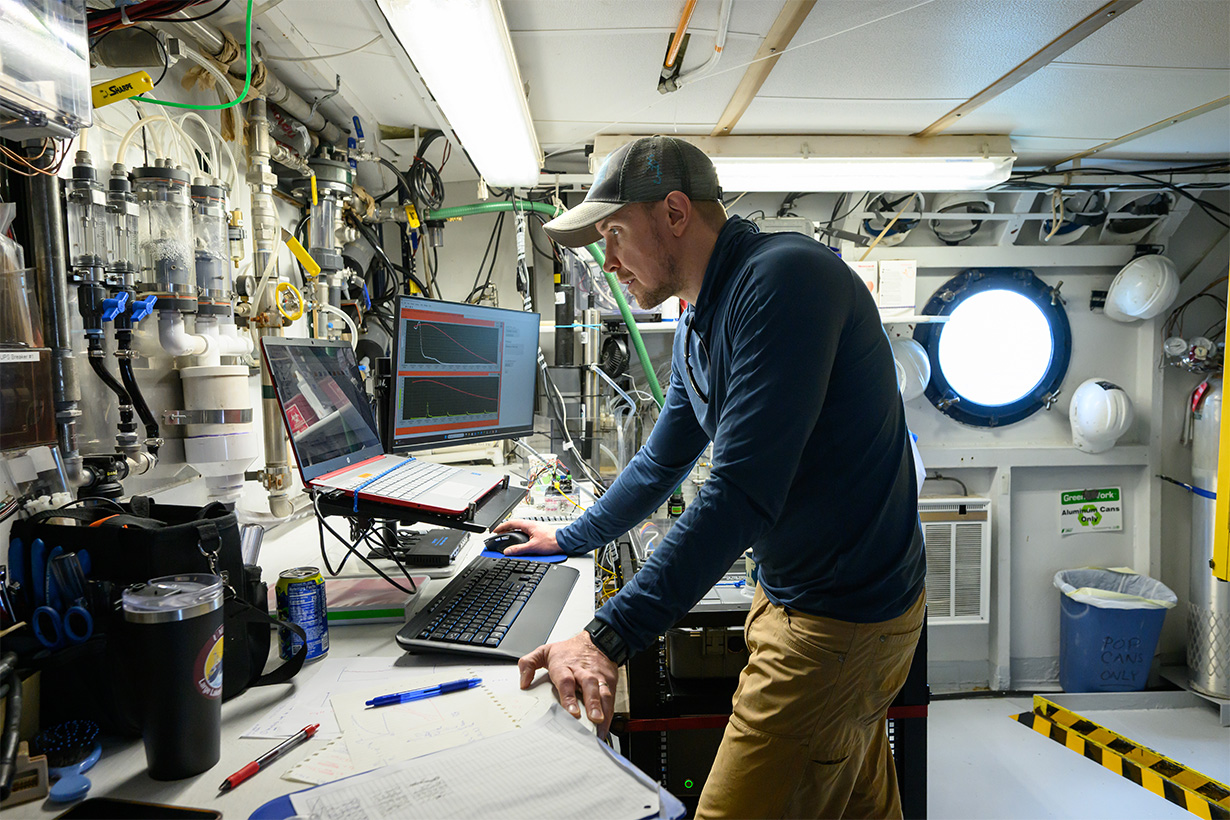
Increasingly, Weber has joined field expeditions himself, bringing a modeler’s perspective to deciding which measurements will be most useful for improving the models.
“It helps to have modelers involved in data collection because we know the data sets that would be perfect to validate models against,” Weber says. “We need to break down the traditional boundary between nerdy modelers at their computers and intrepid field scientists going out and collecting the data.”
Current observations inform the models, but scientists can also test them against Earth’s past. Ancient methane records—from sources such as Antarctic ice cores and ocean sediments—provide real-world benchmarks. If a model can accurately reproduce past changes in Earth’s methane cycle, scientists can have greater confidence in its ability to explore what might happen in the future.
So when is a model considered successful? For Weber, the test is simple: “When it tells you something useful that the data alone can’t tell you.”
Testing the waters
URochester faculty and graduate students set off aboard the research vessel Blue Heron to measure methane across the Great Lakes—one sample, sensor, and data point at a time.
Photography by J. Adam Fenster



How you can help
Methane is a global problem, but some of its biggest human-caused sources are tied to everyday choices—from what we eat to how we power our homes and handle food waste.
“We can definitely do a lot as a society,” says John Kessler. “And we have to do better. There are some informed choices that I hope we can make, not just as a country, but as a global society, to limit methane.”
Eat less red meat. Cattle and sheep release methane as they digest food. Replacing even a few meals each week with plant-based proteins can reduce your methane footprint.
Reduce food waste. The less food that ends up in landfills, the less organic matter is available to produce methane. Plan meals, freeze leftovers, and use food before it spoils.
Compost food scraps. In landfills, food waste becomes so tightly compacted that it decomposes without oxygen, producing methane. Composting allows food scraps to break down in the presence of oxygen, dramatically reducing methane emissions.
Choose cleaner energy. If you have the option, purchase electricity from renewable sources, install solar panels, or replace older gas-powered appliances with electric alternatives. Reducing the demand for natural gas can help lower methane emissions from oil and gas production.
Support community initiatives. Many communities are expanding composting programs, capturing methane from landfills, offering community solar farms, and repairing leaking natural gas infrastructure.
This story appears in the fall 2026 issue of Rochester Review, the magazine of the University of Rochester.