24 May 10 | Chad W. Post

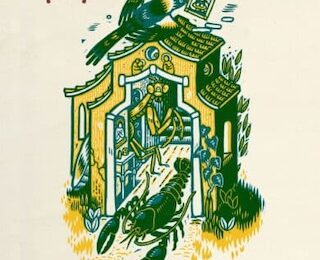
The latest addition to our Reviews Section is a piece by Dan Vitale on A. H. Tammsaare’s The Misadventures of the New Satan, which was translated by Olga Shartze, revised by Christopher Moseley and published by Norvik/Dufour.

Although the title would be well suited to a mediocre sit-com, this novel sounds pretty interesting:

The Misadventures of the New Satan (1939) was Tammsaare’s last novel (he died the following year). This edition is a revision, by Christopher Moseley, of an English translation by Olga Shartze published in Moscow in 1978, the hundredth anniversary of Tammsaare’s birth. In contrast to the ambition and breadth of Truth and Justice, it has the deceptive simplicity of a folktale.

On its surface, the novel’s plot is extremely mundane. Jürka, a brawny, simpleminded peasant farmer, struggles for economic survival against the elements and the whims of his double-dealing, double-talking neighbor (and later landlord), known locally as Cunning Ants. Life on Jürka’s farm, the Pit, is difficult and harsh: in the course of his long life Jürka buries two wives and also a few of his children, who are so numerous that Tammsaare never bothers to mention them all. Predictably, Ants takes advantage of Jürka’s labor, his good nature, and his almost total lack of business sense, until at the end of the story, when Ants threatens everything Jürka has worked so hard for, Jürka commits a violent and foolhardy act of revenge.

What saves the book from being little more than a rustic melodrama is the supernatural twist Tammsaare has given it: Jürka is Satan in human form. In a prologue, we witness a conversation between Satan and St. Peter in which we learn that the continued existence of hell is threatened by God’s suspicion that human beings are incapable of salvation and should therefore not be eternally punished for failing at something that was never within their power to achieve. To protect his fiefdom, Satan agrees to be subjected to earthly incarnation so as to win salvation and thereby prove God wrong. If he succeeds, then God will let hell—and humankind—continue to exist.

Dan’s one of our longtime reviewers (see his other pieces here) and you can read his full review of The Misadventures of the New Satan by clicking here.


Comments are disabled for this article.
....
Basti
Basti by Intizar Husain
Reviewed by Rachael Daum

The Urdu word basti refers to any space, intimate to worldly, and is often translated as “common place” or “a gathering place.” This book by Intizar Husain, who is widely regarded as one of the most important living Pakistani writers,. . .

Read More >

The Whispering Muse
The Whispering Muse by Sjón
Reviewed by Vincent Francone

The Whispering Muse, one of three books by Icelandic writer Sjón just published in North America, is nothing if not inventive. Stories within stories, shifting narration, leaps in time, and characters who transform from men to birds and back again—you’ve. . .

Read More >

Mundo Cruel by Luis Negrón
Mundo Cruel by Luis Negrón by Luis Negrón
Reviewed by Camila Santos

Luis Negrón’s debut collection Mundo Cruel is a journey through Puerto Rico’s gay world. Published in 2010, the book is already in its fifth Spanish edition. Here in the U.S., the collection has been published by Seven Stories Press and. . .

Read More >

Selected Translations by W. S. Merwin
Selected Translations by W. S. Merwin by Various
Reviewed by Grant Barber

“South”

To have watched from one of your patios
the ancient stars
from the bank of shadow to have watched
the scattered lights
my ignorance has learned no names for
nor their places in constellations
to have heard the ring of. . .

Read More >

LoveStar
LoveStar by Andri Snær Magnason
Reviewed by Larissa Kyzer

When Icelandic author Andri Snær Magnason first published LoveStar, his darkly comic parable of corporate power and media influence run amok, the world was in a very different place. (This was back before both Facebook and Twitter, if you can. . .

Read More >

Hi, This Is Conchita and Other Stories
Hi, This Is Conchita and Other Stories by Santiago Roncagliolo
Reviewed by Tiffany Nichols

When starting Hi, This Is Conchita and Other Stories, Santiago Roncagliolo’s second work to be translated into English, I was expecting Roncagliolo to explore the line between evil and religion that was front and center in Red April. Admittedly, I. . .

Read More >

City of Angels, or, The Overcoat of Dr. Freud
City of Angels, or, The Overcoat of Dr. Freud by Christa Wolf
Reviewed by Josh Billings

Christa Wolf’s newly-translated City of Angels is a novel of atonement, and in this way the work of art that it resembles most to me is not another book, but the 2003 Sophia Coppola film Lost in Translation. Like that. . .

Read More >

Where Tigers Are at Home
Where Tigers Are at Home by Jean-Marie Blas de Roblès
Reviewed by Grant Barber

French author—philosopher, poet, novelist—de Roblès writes something approaching the Great (Latin) American Novel, about Brazilian characters, one of whom is steeped in the life of the seventeenth century polymath (but almost always erroneous) Jesuit Athanasius Kircher. Eleazard von Wogau, a. . .

Read More >

Lenin's Kisses
Lenin's Kisses by Yan Lianke
Reviewed by Brendan Riley

A rich, beautifully written, consistently surprising satire, Yan Lianke’s Lenin’s Kisses boasts an elaborate, engrossing plot with disarming twists and compelling characters both challenged and challenging. It leads the reader on a strange pilgrimage—often melancholy but certainly rewarding—through a China. . .

Read More >

The Miracle Cures of Dr. Aira
The Miracle Cures of Dr. Aira by César Aira
Reviewed by Emily Davis

Maybe I’ve been watching too much Doctor Who lately, and I’m therefore liable to see everything through science-fiction-colored glasses. But when the pages of The Miracle Cures of Dr. Aira refer to “the totality of the present and of eternity”. . .

Read More >

The next few events from our Translation Events Calendar: See More Events >