
17 February 11 | Chad W. Post

Similar to years past, we’re going to be featuring each of the 25 titles on the BTBA Fiction Longlist over the next month plus, but in contrast to previous editions, this year we’re going to try an experiment and frame all write-ups as “why this book should win.” Some of these entries will be absurd, some more serious, some very funny, a lot written by people who normally don’t contribute to Three Percent. Overall, the point is to have some fun and give you a bunch of reasons as to why you should read at least a few of the BTBA titles.

Click here for all past and future posts.

Microscripts by Robert Walser, translated by Susan Bernofsky

Language: German
Country: Switzerland
Publisher: New Directions/Christine Burgin
Pages: 160

Why This Book Should Win: Most beautifully designed book on the longlist; beyond being an interesting text, it has a fascinating backstory; Walser has been in the running for several years with The Assistant and The Tanners, but has yet to win; Susan Bernofsky (who has multiple titles on the longlist) is amazing and deserves to win.

Today, one of our BTBA judges looks at Robert Walser’s Microscripts.

This is not a book to simply be read. It is a collection of secrets, devised by the author, only to be initially dismissed as gibberish, sorted by a caretaker sometime later, taken in by an amateur who thought otherwise, transcribed into German by a team of two over a decade, then finally, expertly translated into English and re-ordered and edited in book form.

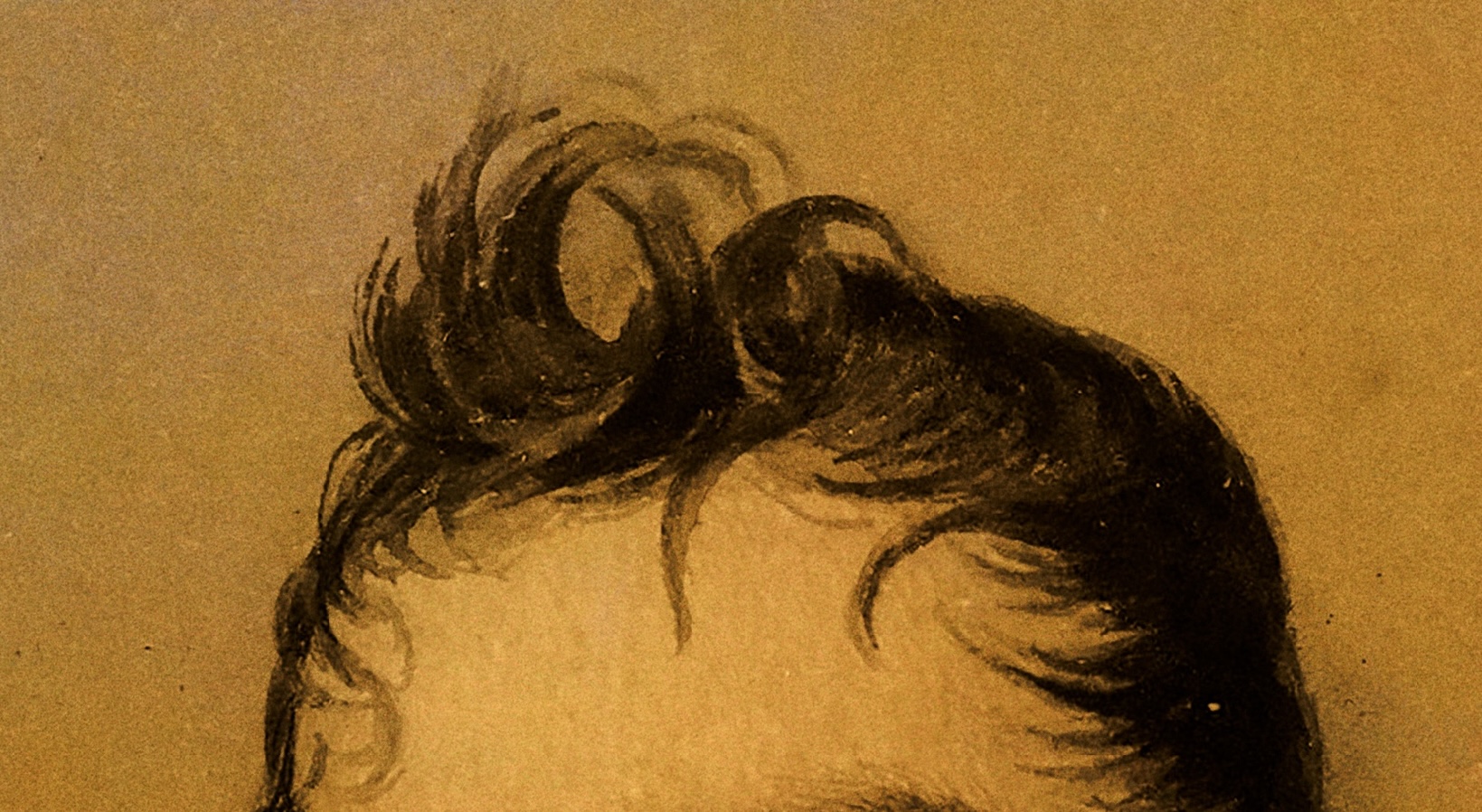
The stories and fragments are for the most part without titles, rendered in a defunct miniature script, never meant to meet the reader’s eyes. They rely upon a portrait before each translation begins, the first sentence sometimes dictating a makeshift title.

With Walser’s writing, there is a silent step back, a gathering of thoughts before each move is made, so as to disarm the unknown future. There is no pretense, no absolutes and little residue. Not much to grab onto in the form of a sure-footed narrative here, no plot-driven whirlwind tales or any reliance upon full-blown characters.

The rhythms of language and syntax devise paths of their own device. An image of a conversation that’s taking place forces your gaze upon a singular object. The entirety of a description ultimately pays tribute to the subject of the story. Walser’s words can leave you directionless. They carry you along, adrift in his language, unsure of both the author’s intention and your path upon reading his words.

I remember someone at New Directions telling me about the existence of the Microscripts while the English translation was still in the works. I had built up images in my head accordingly, filed them away, and waited for the true object to be revealed sometime later. Then I was given a sample facsimile of one of “texts” at a book fair. I was intrigued and puzzled, as one would be without the aid of a proper translation. I regarded the image simply as an objet d’art, putting the oversized loose sheet on the bookshelf and waited for an answer.

This volume of well-ordered scraps is anything but. The transparent design echoes the ordering of a puzzling archive, allowing the reader to flitter between image, original text and translation freely. An afterword by Walter Benjamin gives credence to his contemporary and provides needed context.

Ultimately, the book functions as an unintended collaborative artwork made by many, celebrating the work of an unrivalled master of the minuscule and perhaps, unintentionally functioning as a guide of how to unlock secrets slowly over time.


Comments are disabled for this article.
....
Traveler of the Century
Traveler of the Century by Andrés Neuman
Reviewed by Chad W. Post

When I was about two-thirds of the way through Neuman’s very ambitious, very engrossing novel, Bromance Will Evans asked me what I thought the purpose the rapist had in this book. Not who the rapist was—something that’s held in suspense. . .

Read More >

Anatomy of a Night
Anatomy of a Night by Anna Kim
Reviewed by Jennifer Marquart

“At night Amarâq is coated with a darkness as viscous as unmixed colors, neither the fjord nor the mountains, valleys, lakes, or the river exist, there is only a black mass, a void that spreads across the landscape sporadically, pressing. . .

Read More >

Les aigles puent
Les aigles puent by Lutz Bassman
Reviewed by John Thomas Mahany

If you’ve been following any of the recent Antoine Volodine talk going around Three Percent—both on the blog or on the podcasts—and have heard his fans wax obsessive over all his alter author-egos, you’re probably starting to feel some Volodine. . .

Read More >

Red Spectres
Red Spectres by V. Bryusov/M. Bulgakov/S. Krzhizhanovsky et al.
Reviewed by Aleksandra Fazlipour

Muireann Maguire’s Red Spectres is a stunning and engaging collection of eleven Russian gothic tales written by various authors during the early Soviet Era, all but two stories of which are featured in English for the first time ever. These. . .

Read More >

El arte de la resurrección (The Art of Resurrection)
El arte de la resurrección (The Art of Resurrection) by Hernán Rivera Letelier
Reviewed by Jeremy Osner

“The small stone plaza was floating in the midday heat. The Christ of Elqui, kneeling on the ground, his gaze thrown back on high, the part in his hair dark under the Atacaman sun—he felt himself falling into an ecstasy.. . .

Read More >

There Once Lived a Girl Who Seduced Her Sister's Husband, and He Hanged Himself: Love Stories
There Once Lived a Girl Who Seduced Her Sister's Husband, and He Hanged Himself: Love Stories by Ludmilla Petrushevskaya
Reviewed by Brendan Riley

This slender, uncanny volume—the second, best-selling collection of stories by Russian author Ludmilla Petrushevskaya to appear in the U.S.—has already received considerable, well-deserved praise from many critics and high profile publications. Its seventeen short tales, averaging ten pages each, are. . .

Read More >

Basti
Basti by Intizar Husain
Reviewed by Rachael Daum

The Urdu word basti refers to any space, intimate to worldly, and is often translated as “common place” or “a gathering place.” This book by Intizar Husain, who is widely regarded as one of the most important living Pakistani writers,. . .

Read More >

The Whispering Muse
The Whispering Muse by Sjón
Reviewed by Vincent Francone

The Whispering Muse, one of three books by Icelandic writer Sjón just published in North America, is nothing if not inventive. Stories within stories, shifting narration, leaps in time, and characters who transform from men to birds and back again—you’ve. . .

Read More >

Mundo Cruel by Luis Negrón
Mundo Cruel by Luis Negrón by Luis Negrón
Reviewed by Camila Santos

Luis Negrón’s debut collection Mundo Cruel is a journey through Puerto Rico’s gay world. Published in 2010, the book is already in its fifth Spanish edition. Here in the U.S., the collection has been published by Seven Stories Press and. . .

Read More >

Selected Translations by W. S. Merwin
Selected Translations by W. S. Merwin by Various
Reviewed by Grant Barber

“South”

To have watched from one of your patios
the ancient stars
from the bank of shadow to have watched
the scattered lights
my ignorance has learned no names for
nor their places in constellations
to have heard the ring of. . .

Read More >

The next few events from our Translation Events Calendar: See More Events >