Although I tend to write these quite often, I somewhat hate doing the effusive “this author is so great!” thing. Not that the authors don’t deserve it, in fact, quite the opposite, but there’s something much more intellectually satisfying about writing a harsh diss. Virulent criticism, which is usually wedded in a small dislike of something that gets blown up to an extreme for a variety of reasons, such as humor, point driving, or posturing, makes you seem a lot smarter than you probably are. Noticing a flaw, or pointing out an inconsistency, or trashing an author’s otherwise stellar reputation, is impressive. You are a better reader than others because you pay attention to shortcomings and now how to contrast these with a nearly Platonic ideal of what a Great Book should be instead of simply reading for enjoyment while on the beach or in the bathroom, half-distracted by the anxieties of daily life.
By contrast, giving an author too much love—even if deserved, even if he/she is already well-respected internationally—makes you seem a bit foolish and simple, like a cheerleader or a lifelong Cubs fan.


Nevertheless, although I’ve only read two of his books—The Train Was on Time and The Lost Honor of Katharina Blum—I think Heinrich Böll is one o my new favorite authors.
I’m not sure why it’s taken me so long to read Böll. Part of it is the war thing—almost all of his books are tied to World War II, which doesn’t get me off as much as it does others. Also doesn’t help that the dude wrote approximately 762 books, making it tricky to figure out where exactly to start.
Both of which are totally shitty reasons, especially now that I’ve read a couple of books and fallen under the charm of Böll’s prose, the crafty way he puts together his stories, his compelling characters, etc.
I’m going to write a full review of The Train Was on Time in the next couple weeks, but this novel—about Andreas, a young German soldier who, while boarding a train suddenly knows for certain that the war’s coming to a close and he’s going to die . . . soon—is incredibly tight and evocative. The writing is precise, complemented by a certain charm in the authorial voice that drew me in immediately.
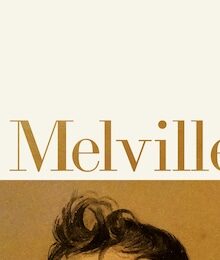
Another stupid reason why I didn’t read Böll before now: the previously published editions weren’t 1/10,000th as attractive as the new “Essential Heinrich Böll” series from Melville House Publishing.
I don’t think there’s another press in America the World as good at branding themselves as Melville House.


First off, look at those covers—fucking beautiful. Simple, dreamy and geometric. Attractive. That’s something you’ll never really get with ebooks. Sure, it’s pretty simple to design a new 2” x 3” jpeg whenever you want, but there is a certain thrill that comes from collecting a set of newly reissued books from your favorite author. Not to mention, something like this helps push the books out in front of the eyes of readers again. Switching a jpg image on a website just kind of isn’t the same.
And then there’s the “Essential” part of their series. Suddenly the total number of books Böll’s written doesn’t really matter. There are eight (six pictured here, plus Irish Journal and What’s to Become of the Boy? Or, Something to Do with Books) books Melville has decided to reissue. Obviously, these are the ones worth reading. And I will. Book by book by book.
Adding introductions or afterwords to reprints is nothing new, but the line-up of people who wrote pieces for these reissues is pretty interesting. There’s William Vollmann, who is to afterwords what Harry Mathews is to book blurbs, and there’s Salman Rushdie, but there’s also Jess Crispin of Bookslut and Scott Esposito of Quarterly Conversation. Very cool, and very smart, since both of these writers are also well-known for helping promote great works of literature.


Anyway, all this is to say that I love Heinrich Böll, and you should too. (And to prove that yes, I am still alive, working on occasion, and reading. I know it’s been a slow Three Percent summer . . .)
Full reviews of all the books to come . . .
When I was about two-thirds of the way through Neuman’s very ambitious, very engrossing novel, Bromance Will Evans asked me what I thought the purpose the rapist had in this book. Not who the rapist was—something that’s held in suspense. . .
“At night Amarâq is coated with a darkness as viscous as unmixed colors, neither the fjord nor the mountains, valleys, lakes, or the river exist, there is only a black mass, a void that spreads across the landscape sporadically, pressing. . .
If you’ve been following any of the recent Antoine Volodine talk going around Three Percent—both on the blog or on the podcasts—and have heard his fans wax obsessive over all his alter author-egos, you’re probably starting to feel some Volodine. . .
Muireann Maguire’s Red Spectres is a stunning and engaging collection of eleven Russian gothic tales written by various authors during the early Soviet Era, all but two stories of which are featured in English for the first time ever. These. . .
“The small stone plaza was floating in the midday heat. The Christ of Elqui, kneeling on the ground, his gaze thrown back on high, the part in his hair dark under the Atacaman sun—he felt himself falling into an ecstasy.. . .
This slender, uncanny volume—the second, best-selling collection of stories by Russian author Ludmilla Petrushevskaya to appear in the U.S.—has already received considerable, well-deserved praise from many critics and high profile publications. Its seventeen short tales, averaging ten pages each, are. . .
The Urdu word basti refers to any space, intimate to worldly, and is often translated as “common place” or “a gathering place.” This book by Intizar Husain, who is widely regarded as one of the most important living Pakistani writers,. . .
The Whispering Muse, one of three books by Icelandic writer Sjón just published in North America, is nothing if not inventive. Stories within stories, shifting narration, leaps in time, and characters who transform from men to birds and back again—you’ve. . .
Luis Negrón’s debut collection Mundo Cruel is a journey through Puerto Rico’s gay world. Published in 2010, the book is already in its fifth Spanish edition. Here in the U.S., the collection has been published by Seven Stories Press and. . .
“South”
To have watched from one of your patios
the ancient stars
from the bank of shadow to have watched
the scattered lights
my ignorance has learned no names for
nor their places in constellations
to have heard the ring of. . .