
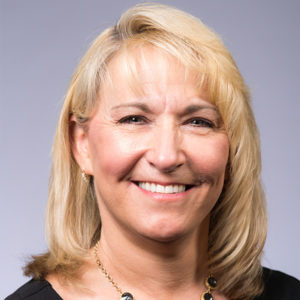
 After two decades of leadership at the University of Rochester, Julie Myers, vice president for information technology and chief information officer, will retire effective August 31.
Myers joined the University in 2006 after a distinguished career in the corporate sector, including leadership roles at Eastman Kodak. At Rochester, she was named the University’s first chief information security officer and was charged with helping strengthen the institution’s growing digital infrastructure at a time when information technology was becoming increasingly central to teaching, research, healthcare, and administration.
Over the course of her tenure, Myers has helped guide the University through a period of significant technological transformation. She has played a key role in developing a more coordinated enterprise approach to technology, building stronger governance and strategy for major systems, and helping integrate IT operations across the University and the Medical Center.
Reflecting on her time at Rochester, Myers said she is most proud of the way technology has helped connect people and work across the institution.
“I have loved being part of the University of Rochester community, and it has truly been an honor to serve here,” Myers said. “If there is one accomplishment that makes me proud, it’s helping make the University feel smaller by bringing people, systems, and applications together in ways that are more cohesive and intentional.”
Myers noted that when she first arrived, many systems operated independently of one another. Today, she says, technology across the University is significantly more connected and aligned with institutional priorities.
“The role of IT is ultimately about enabling people,” she said. “At a university with roughly 40,000 faculty, staff and students across academic, research, and healthcare environments, our job is to make sure the technology works in ways that help people be as productive and effective as possible.”
Under her leadership, the University strengthened enterprise information technology governance and built a more strategic framework for managing major technology platforms. Myers also helped to champion collaborations across the River Campus and the University of Rochester Medical Center, helping to ensure that systems and infrastructure could support the University’s integrated academic, research, and clinical missions.
Looking ahead, Myers believes the institution is well positioned to build on this foundation, particularly in areas such as data analytics and the rapidly expanding role of artificial intelligence in higher education and healthcare.
Provost Nicole Sampson thanked Myers for her long service and recognized her impact on the institution. “Julie has been an exceptional leader and partner to the University community,” Sampson said. “Through her efforts, the University now benefits from a far more harmonized and strategically aligned IT ecosystem. Her work has strengthened our ability to support research, education, and clinical care in an increasingly digital world.”
Myers is currently working through a transition plan with University leadership to ensure that critical initiatives and priority projects continue moving forward smoothly over the coming months.
In retirement, Myers looks forward to spending more time with her growing family, including her nine grandchildren, with a tenth on the way, traveling with her husband, and continuing to find ways to support the University’s mission.
A national search will be initiated to identify Myers’s successor. More information about the search will be available in the coming weeks.