
“The most meaningful part of class is the fact it was intentional time dedicated to self-care and mindfulness throughout my week with others who were also trying to build healthy habits. It can feel difficult to do it alone, so seeing others on a weekly basis was nice.”
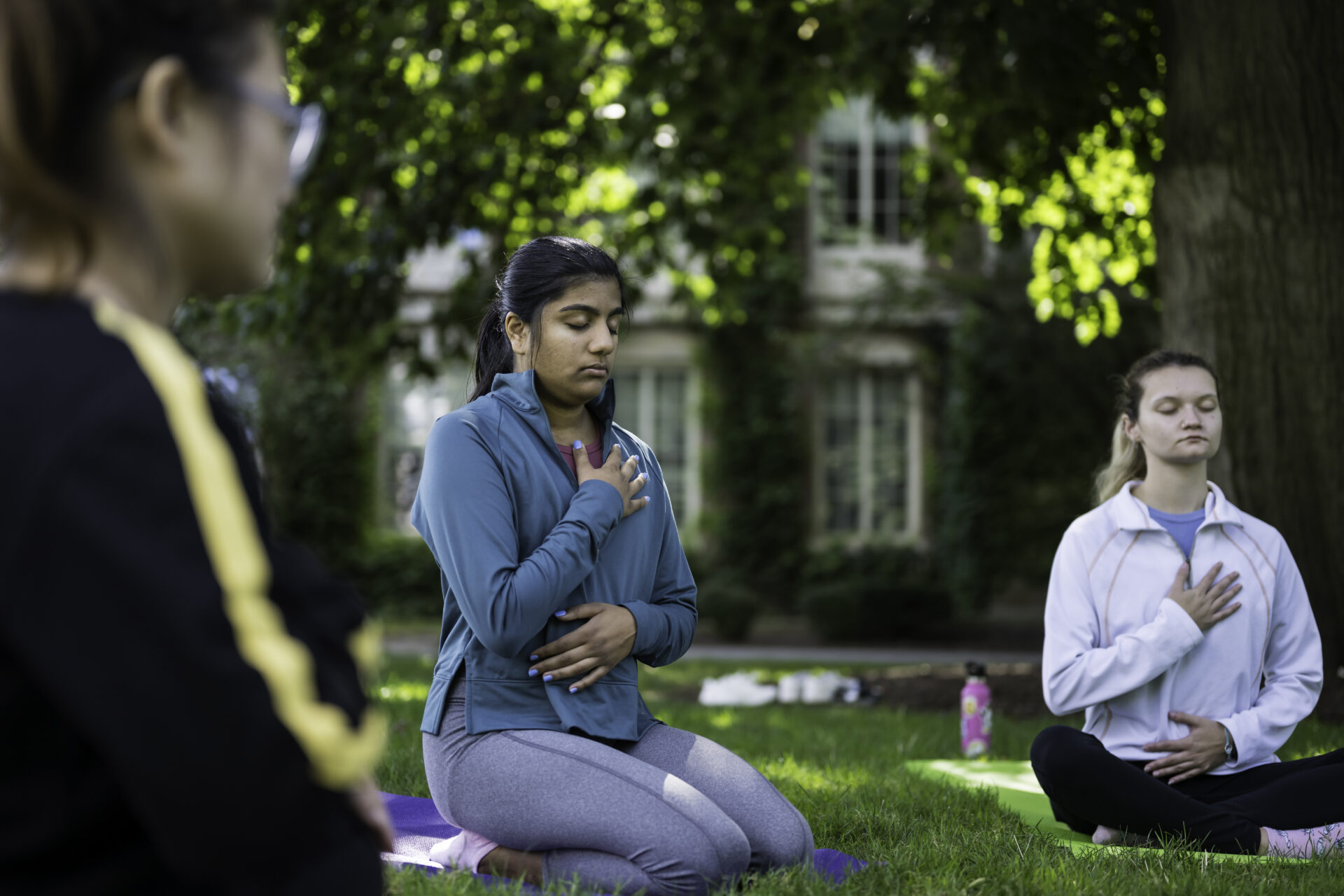
Mindfulness Class Offerings
Calming U
Unleash the potential of mindfulness, emotional intelligence, and self-compassion in this empowering 4-week course tailored to University of Rochester students. By blending guided meditation practices, introspective exercises, and meaningful discussions, participants will foster heightened self-awareness, emotional resilience, and thoughtful responses to obstacles. Embracing a calmer, more focused, and growth-oriented mindset, individuals will be equipped with invaluable tools to conquer academic and work challenges and flourish both personally and professionally.
All undergraduate and graduate students who complete the 4-week series will receive their choice of a: Yoga Mat, Meditation Cushion, or Self-Compassion Workbook. Undergraduate students will also receive Medallion Credit once completed.
Drop In Purposeful Pauses
Take a mindful pause in your day with the Mindful University Project’s 30-minute Drop-In Purposeful Pause Sessions. Open to the entire University of Rochester community, these sessions offer an opportunity to slow down, reconnect, and explore mindfulness in an accessible and welcoming environment. Each session will be led by one of our talented instructors, and will feature a wide array of mindfulness practices. Whether you’re brand new to mindfulness or want to continue your practice in community, you’re welcome to join whenever your schedule allows!
See Our List of Offerings
Join us for an array of mindfulness courses. These classes are open to all URochester community members unless specifically noted.
Calming U
- Wednesdays, October 7, 14, 21, and 28
- Facilitator: Sean Watson
- Time: 4-5:15 PM
- Location: Douglass Commons, Room 407
- Mondays, October 26, November 2, 9, and 16
- Facilitator: Whitney Gegg-Harrison
- Time: 9:30-10:45 AM
- Location: Douglass Commons, Room 407
- Fridays, October 30th, November 6, 13, and 20
- Facilitator: Debra Corea
- Time: 11 AM – 12:15 PM
- Location: Zoom
Drop-In Purposeful Pause Sessions
- In Person Sessions
- Facilitator: Rotating Instructors
- Date & Time: Select Mondays from 4-4:30 PM
- Location: Douglass Commons, Room 302
- Dates:
- September 14th, 28th
- October 19th
- November 2nd, 16th, and 30th
- Virtual Mindfulness Sessions
-
- Facilitator: Kyle Trenshaw
- Date & Time: Every Thursday, 12:15-12:45 PM, September 3rd until December 3rd
- Location: https://rochester.zoom.us/j/99050170094
Trauma-Informed Statement
The team of University of Rochester Mindful University Project teachers are committed to the expectation that all individuals in our courses who seek our services should be met with a safe, welcoming, and respectful environment. Our teachers are knowledgeable about the impact of trauma, recognize how trauma can manifest in the body and mind, incorporate trauma-informed mindfulness practices into their teaching, and actively seek to prevent re-traumatization.
However, we acknowledge that mindfulness practices are not a cure-all to emotional distress and/or trauma. Those who are living with trauma and engage in mindfulness practices, particularly sustained attention to their internal experience, may experience heightened emotions of traumatic stress and/or potential re-traumatization. If at any point you notice signs of distress or are triggered, our teachers are available to meet with you privately to help better support you in your mindfulness practice and connect you to any on-campus therapeutic resources you may need.
In addition to your instructor, I strongly encourage you to contact the many other support services on campus that stand ready to assist you.
Students:
Employees:
Entire University Community:
Rave reviews
Here’s what people are saying about their experience learning to meditate.
“Learning how to meditate and be more mindful was one of the best things I’ve done as a student here. I’ve struggled with anxiety for many years and became really overwhelmed by everything by my sophomore year. My grades started to fall as I slept less and tried to take on more and more. I’m so thankful for the skills I learned in this class. It’s not only made me a better student but it’s also made me a happier person!”