
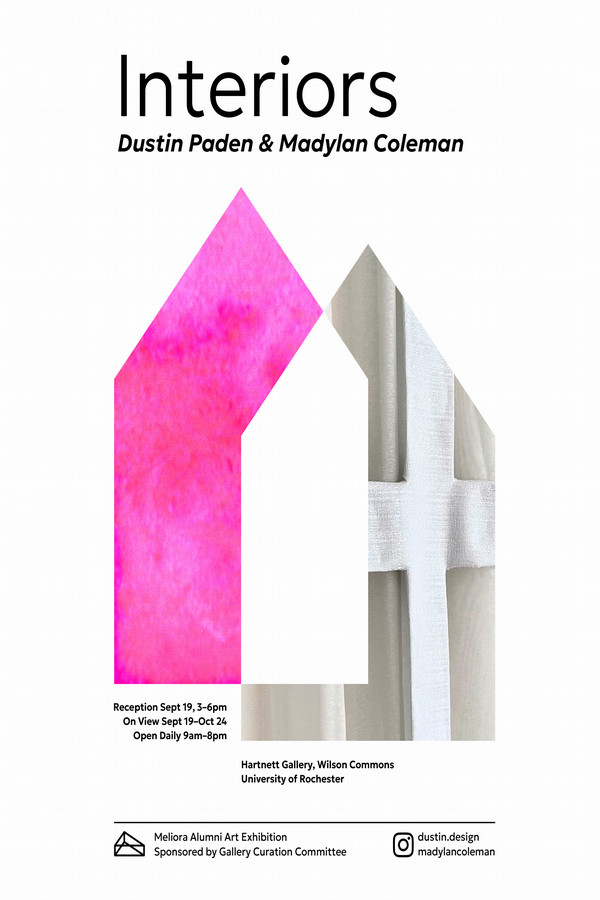
Interiors
Artists: Dustin Paden & Madylan Coleman
Dates: September 19 - October 24, 2025
Artist Statement
You’re invited in. Literally and figuratively, Paden and Coleman use projection and distortion to personify objects in the home. These objects become an intimate and vulnerable visual language to investigate the past and present. They recite moments of connection and disconnection, seeking catharsis through their production. The work debates itself: what do we reveal and what do we obscure? How do we filter? Through manipulation of found and familiar artifacts, they shine light on the unsaid, and hope you’ll exit with newfound connection.
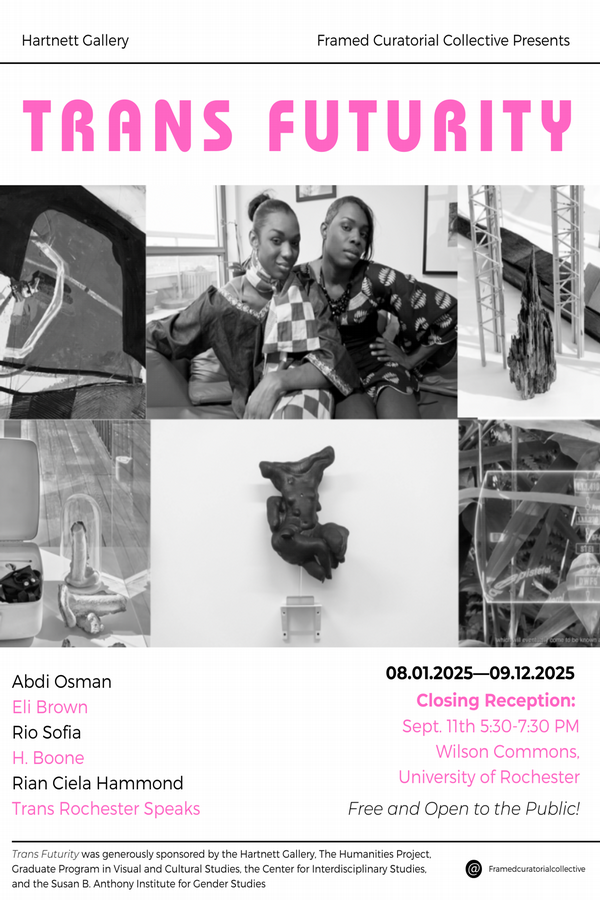
Trans Futurity
Artists: Rian Ciela Hammond, H Boone, Eli Brown, Rio Sofia, and Abdi Osman. Curated by Bethany Fincher, Emily Broad, Bridgette Fleming
Dates: July 30 - September 12, 2025
Artist Statement
Trans Futurity draws inspiration from the inciting claim of the 2025 Science Fiction Research Association Conference: "Trans people are (in) the future."
Inspired by artist Alisha B. Wormsley's proclamation, "There are Black People in the Future," this statement's simple descriptive structure paradoxically underscores the force and radicality of such a claim. A statement of fact rather than a rallying cry, "Trans people are (in) the future" boldly indexes and makes a dual truth claim about an existent future: trans people are there in that future, and they are that future.
Accordingly, the works in this exhibition take "the future" not as a distant or determined destination, but as a matter of potential futurities that are actively molded in the present and uncovered in the past. The strategies that fulfill this claim include hacking and recoding the inherited tools of colonial technoscience, as seen with Rian Ciela Hammond's multimedia exploration of steroid hormone production; finding and cultivating affinities across species, as with Eli Brown's speculative survival kit and interactive database; and—as embodied by Rio Sofia's autobiographical work-playing and performing across the vulnerable but vitalizing spectrum of possibilities that is opened up by the prefix trans-.
Against ahistorical presumptions that gender variance is "new," these artists draw on archives to reenliven the trans futurities that have been erased. Abdi Osman's Plantation Futures, inspired by Katherine McKittrick's essay of the same name, explores how the logic of plantations continually shapes the present and uses parafictional photography to "plot" Blackness and gender outside of carceral norms. Trans ROC Speaks and H Boone create their own idiosyncratic archives, the former through an oral history of lived experiences and local activism, and the latter through scans of the artists' trans friends recombined and 3D-printed into posthuman sculptures. The works in Trans Futurity show how the essentializing categories of race, gender, sexuality, and nature are mutually constituted in the interest of consolidating power, profit, and the privatization of the earth. Together, they combat these processes of isolation to stake a claim for a future rooted in care and coalition—a future no less than trans*
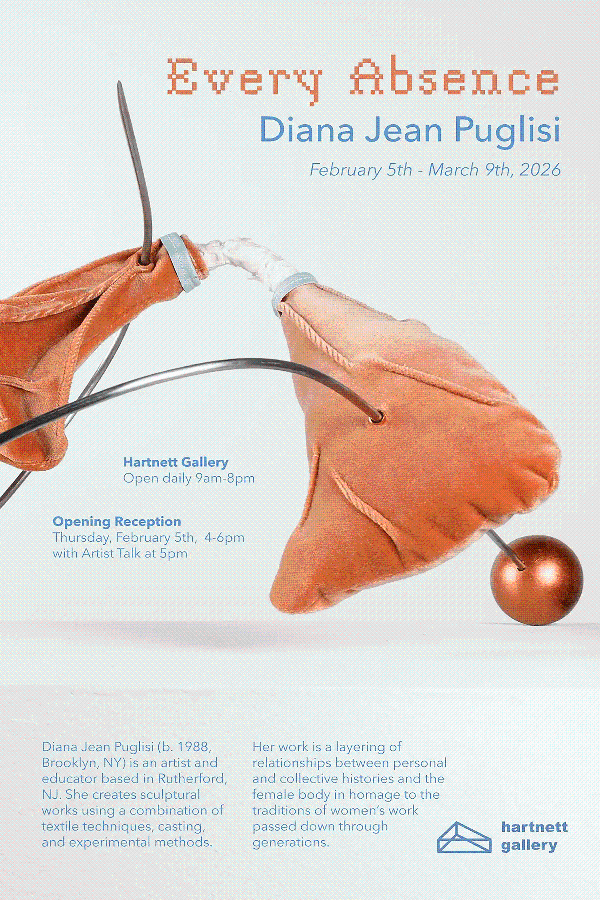
Every Absence
Artist: Diana Jean Puglisi
Dates: February 5 - March 9, 2026
Artist Statement:
The works feature hard and soft stuffed forms, hand-sharpened pins of differing sizes, hot-glue cameos, and lace casts made of acrylic paint—each part can be seen as the protagonist or antagonist creating, mending, or wounding the work. The sculptures invite touch alongside off-kilter structures that resist it, and mirror the oscillations of hormonal flux and maternal identity. They enact transformation through textures that crack, glitter, and bruise on surfaces that are pierced, stitched, and laid bare.
Every Absence is anchored in Puglisi’s matrilineal lineage and lived experience with chronic thyroid disease, and confronts the porous boundaries between health and illness, self and other, control and surrender. The work’s language is invisible and intimate, spoken amid spaces carved out by transformation. The work explores the emotional terrain of motherhood, chronic illness, and bodily autonomy—spaces marked as much by presence as by loss, absence, and unspoken labor. What emerges is a meditation on the fragmented, resilient, and relational body.