
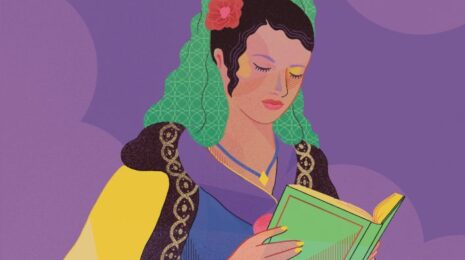
Three Percent #188: Cultural Support in Multilingual Spain [A Riveting Event]
In this episode, Chad talks with Olga Castro (Univ. of Warwick), and translators Jacob Rogers (Galician), Mara Faye Lethem (Catalan), Robin Munby (Asturian), and Aritz Branton (Basque) about literatures from the official (and unofficial) languages of Spain, ways in which the regional governments support translation from these ...
>
BTBA 2020 Streaming Events
In a normal year, we would be gathering in NYC to announce the winners of the Best Translated Book Award, followed by a nice reception. Well . . . Since that's obviously not going to happen, we actually came up with TWO replacement events that—if I'm being totally honest—might be even better than our normal party, ...
>

Seventeen [Why This Book Should Win]
Check in daily for new Why This Book Should Win posts covering all thirty-five titles longlisted for the 2019 Best Translated Book Awards. Adam Hetherington is a reader and a BTBA judge. Seventeen by Hideo Yokoyama, translated from the Japanese by Louise Heal Kawai (Japan, FSG) In August of 1985, Japan Airlines ...
>
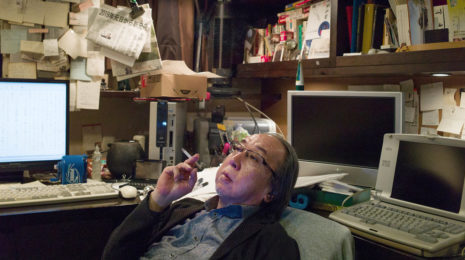
“Seventeen” by Hideo Yokoyama
Seventeen by Hideo Yokoyama Translated from Japanese by Louise Heal Kawai 368 pgs. | hc | 9780374261245 | $28.00 MCD/Farrar, Straus and Giroux Review by Maggie Myers Seventeen is a thrilling mixture of truth and fiction by Hideo Yokoyama, acclaimed author of Six Four (which has also been translated into ...
>

Two Events in Toronto!
If you listen to either of our podcasts, you probably know that I’ve been traveling a whole lot this fall. Spain, Poland, Minneapolis (twice!), and Brazil. All of these trips have been fantastic, and you can expect some posts about Poland and Brazil in the near future, but in the meantime, I wanted to tell you about my ...
>

Two Month Review #2.8: this is the eleventh book, my 12th composition book, book 13 (Tómas Jónsson, Bestseller, Pages 282-305)
CORRECTION: Throughout this podcast, we joke about having recorded the final episode of the season live at Spoonbill & Sugartown last weekend. This is a lie! The live event will take place THIS SATURDAY (September 30, 2017) as part of the Taste of Iceland events. Eliza Reid, Iceland’s First Lady, will start things ...
>
Two Month Review #2.5: tómas's seventh composition book, 8. (Tómas Jónsson, Bestseller, Pages 140-199)
This week author and translator Idra Novey joins Chad and Lytton to talk about one of the most challenging sections of the book so far. Not only is there a proliferation of children whose voices constantly interrupt Tómas’s thoughts, but there are a few more unsettling bits that raise questions about what we should ...
>
Read Local: Supporting Rochester Presses and Making Events Fun Again
Although we referenced Read Local in the write up of Josefine Klougart’s tour, I haven’t really explained what it is here, or why I think it could be a really exciting thing for Rochester. Just to as not to bury the lede, the first Read Local event is Friday, September 23rd at 6pm at Nox Cocktail Lounge. ...
>
All Open Letter Fall Events
Although I already miss the lazy days of summer, this fall is going to be amazing. First off, the St. Louis Cardinals will be in the playoffs, again, which guarantees me at least a couple weeks of emotional rollercoasting and eventual disappointment. In terms of books, there are a ton of great things coming out this ...
>
"The Man Between" Event in Rochester on Thursday, April 2nd
If you happen to live in Rochester, or would like to visit and check our Open Letter and/or the University of Rochester’s Literary Translation Programs, I HIGHLY encourage you to come out this Thursday for one of the most star-studded translation events we’ve ever put together. In honor of The Man Between: ...
>
Reminder for Three Percent Events Calendar
Considering that the fall semester and season are night, we just wanted to post a brief reminder that Three Percent is happy to add literary translation events to its Events Calendar. To have events added to the calendar, please send all relevant event information (time, location, description, etc., and web link, if ...
>
Crossing Worlds: Translation, Eventfulness, and the Political @ Barnard College
On Friday, May 2 and Saturday, May 3, the Center for Translation Studies and the Columbia Institute for Comparative Literature and Society will present a conference, Crossing Worlds: Translation, Eventfulness, and the Political. Crossing Worlds: Translation, Eventfulness and the Political, a conference organized by the ...
>
Bulgarian Literature Live! [All the Events, Part III]
And, following on the posts about Amanda Michalopoulou’s tour and the announcement of the Reading the World Conversation Series events, here are some details about a few upcoming Bulgarian literature events that might interest you. Bulgarian Fiction Night at 192 Books Tuesday, April 8th, 7pm Albena Stambolova ...
>
Spring 2014 Reading the World Conversation Series [All the Events, Part II]
Following on the post about Amanda Michalopoulou’s upcoming events, here’s a list of all three Reading the World Conversation Series events taking place this month. Women in Translation Thursday, April 10th, 6pm Welles-Brown Room Rush Rhees Library University of Rochester Rochester, NY 14627 A ...
>
Amanda Michalopoulou's Reading Tour [All the April Events, Part I]
Amanda Michalopoulou’s second novel to appear in English, the brilliantly titled Why I Killed My Best Friend, doesn’t officially come out until May 20th, but we released it a couple months early for her cross-country tour. The book details the lifelong ups-and-downs of two best friends who meet in grade ...
>
PEN America Event for Stig Dagerman
A couple weeks ago, a copy of Stig Dagerman’s Sleet (translated by Steven Hartman) arrived at our offices. To be honest, I’d never heard of Dagerman, but the attractive cover (I am a fan of Godine’s new Verba Mundi designs) and a very nice email from the book’s publicist kept this on my desk as a book ...
>
RTWCS: Ledig House Event CANCELLED
This should be pretty obvious, but we’ve had to cancel Tuesday’s RTWCS: Ledig House Event. Hopefully we’ll be able to do something with them in the spring. In the meantime, stay dry, ...
>
RTWCS: Ledig House Event
Next Tuesday we’re going to be hosting the second event of this year’s Reading the World Conversation Series—our annual event featuring four authors currently in residence at the Ledig House. As one of—if not the—only residencies in the U.S. dedicated to international writing and literature, ...
>
EVENT – Thursday, Dec. 1, 2011: Sergio Chejfec & Margaret B. Carson
Our second (and final!) Reading the World Conversation Series event of the fall is happening in just a few days. As always, it’s taking place in Rochester, NY. So, if you’re in the area, you’d better check it out—lest all your friends go without you and bond intimately over the great time they all ...
>
Reminder: RTWCS Event Tonight!
If you’re in the Rochester area, you should definitely come out for tonight’s Reading the World Conversation Series event. This is the first one of the 2011-12 season (which may actually be the last season due to lack of funding—another story for another post) and will feature four writers and translators ...
>
Albert Cossery and Two Lines Launch Event
On Wednesday, November 9th at 7:30pm, Two Lines is collaborating with The Bridge reading series to put on a special event at McNally Jackson (52 Prince St.) in celebration of the new issue, Counterfeits. “Counterfeits” editor Luc Sante will host the event, and will be joined by translators Aaron Kerner, Patrick ...
>
EVENT – Tuesday, Oct. 25, 2011: International Writers from the Ledig House
Our big Reading the World Conversation Series events for the fall are just about to start, with our first event happening next Tuesday. If you’re near the Rochester (NY) area, please come and check it out. Here are the intoxicating details on event #1: Reading the World Conversation Series: International Writers ...
>
PEN World Voices in Rochester [Events!]
In case we haven’t mentioned this before, tonight we’re co-hosting a special event with Writers & Books and PEN World Voices featuring three international authors: Najat El Hachmi, Marcelo Figueras, and Carsten Jensen. All the info can be found here, but in short, this event starts at 7pm at Writers & ...
>
PEN: Brooklyn Public Library Event
Where: Brooklyn Public Library Central Branch, Dweck Center, 10 Grand Army Plaza, New York City The status of Arab women—often portrayed in the US and Europe as invisible, silent, and subjugated—has been used for a variety of purposes, from passing discriminatory legislation to justifying invasion. Join moderator ...
>
PEN: Next Steps: On College, Jobs, and Independence, an Event for Young Adults
Where: Westbeth Center for the Arts, Gallery, 57 Bethune St., New York City The professional trajectory in publishing was once crystal-clear: graduate from college, learn the craft through an apprenticeship, and land a cushy gig. But decades of economic strain have considerably diminished opportunities for building a ...
>
EVENT – Wednesday, April 27, 2011: Reading the World w/ Thomas Pletzinger & Ross Benjamin
Our final Reading the World event of the spring is coming up next Wednesday, April 27, in Rochester. (This event is not to be confused, by the way, with another that we have scheduled quickly thereafter on May 2. That event is our contribution to the PEN World Voices Tour, and we’ll be posting all the info on that ...
>
EVENT – Wednesday, April 13, 2011: Reading the World w/ Piotr Sommer & Bill Martin
As mentioned in the previous post, our second RTW event of the spring is almost upon us, and it’s happening this Wednesday, April 13, at the University of Rochester. All the breathtaking details follow below. Reading the World Conversation Series Piotr Sommer & Bill Martin: Polish Poetry and ...
>
EVENT – Monday, Feb. 21, 2011 – Reading the World Conversation Series: Samuel Hazo & Nirvana Tanoukhi
Our first RTW event of the “spring” (I think we’d better keep that term in quotes for a little while longer, especially in Rochester) is coming up in just a few short weeks. See below for all the advance info that’s fit to print. Reading the World Conversation Series: Samuel Hazo & Nirvana ...
>
Reading the World Conversation Series: Announcing Our Spring 2011 Events
Extended details on all three events are in the queue. In the meantime, though, here’s a rundown of the schedule for this spring’s Reading the World Conversation Series. These events are hosted by Open Letter and University of Rochester Arts & Sciences, and all events are supported in part by the ...
>
Bragi Olafsson's Upcoming Events & Giveaway
As you may already know, Bragi Olafsson’s new novel, The Ambassador, is releasing next month. It’s an awesome, hilarious, fun novel about an Icelandic poet who attends a poetry festival in Lithuania, where his coat is stolen, where he gets pretty wasted, and where he meets a bunch of eccentric poets (surprise?). ...
>
Tonight's RTWCS Event
For all of you within driving distances of Rochester, you really should come out tonight for our first Reading the World Conversation Series Event of the season. Barbara Epler (publisher of New Directions) will be talking with Susan Bernofsky (translator of a number of German authors) about Robert Walser’s Microscripts, ...
>
Fall 2010 Reading the World Conversation Series Events
And here it is—the official Fall RTWCS schedule. We have three great events lined up with a possible surprise fourth in the works (more info on that when/if it happens), and hopefully any and everyone in the Central NY area will come out for these. And if you’re not living in the CNY, you can always fly in . . . ...
>
A Quasi-Literary Event for People in Rochester
This isn’t an official Open Letter event (or Three Percent event, or Writers & Books event), but any and everyone in Rochester reading this should come to Tapas 177 tomorrow night at 8pm for the second “Rochester Literary Salon.” This was an idea that Alexa Scott-Flaherty (of Writers & Books) and I ...
>
PEN World Voices: Friday's Events
Following up on yesterday’s post about today’s PEN World Voices events, here’s a list of the things taking place on Friday that seem most interesting to me. (Some of which I’ll be writing about for the PEN blogs. More on that later.) The Poetry of Edward Hopper (Scandinavia House, 58 Park Avenue, ...
>
PEN World Voices Festival (Preview of Thursday Events)
I’ve been meaning to write a bunch of things about the PEN World Voices events, but, well, life has sort of gotten in the way. Instead, what I think I’ll do is simply preview some of tomorrow’s events, and then tomorrow I’ll write up stuff about Friday and weekend. I’m flying down early (like ...
>
Macedonio Fernandez Event at the Americas Society
So last month, the day after the announcement of the Best Translated Book Award, the Americas Society hosted an amazing panel to help launch Macedonio Fernandez’s The Museum of Eterna’s Novel (The First Good Novel). This event—which Open Letter executive committee member Hal Glasser helped put ...
>
Reading the World Conversation Series: Announcing Our Spring 2010 Events
More information on each event will be posted separately, but—so you can mark your calendars now—here is the rundown of all three events in this spring’s Reading the World Conversation Series at the University of Rochester. These events are hosted by Open Letter and University of Rochester Arts & ...
>
"The Greatest Event Since It and the World Began"
So now that the Best Translated Book Awards are over, I can fully concentrate on the next event—one for Macedonio Fernandez’s The Museum of Eterna’s Novel (The First Good Novel) that is taking place tonight at the Americas Society tonight at 7pm. Our cheeky title for this event comes from Macedonio ...
>
The Greatest Event Since It and the World Began
This is still a few weeks away, but seeing that I’ll be off in Abu Dhabi for a while (see tomorrow’s post), I thought I should mention this now. On Thursday, March 11th at 7:00pm at the Americas Society (680 Park Ave, NYC) there will be a special event in honor of the first English publication of Macedonio ...
>

Tonight's BTBA Event!
(A glamorous shelf in my glamorous office filled with BTBA titles.) Just a reminder that after five weeks of build-up, we’ll be announcing the fiction and poetry finalists for this year’s Best Translated Book Awards tonight at 7pm tonight at Idlewild Books (12 W. 19th St.). Cressida Leyshon will be ...
>
BTBA Finalists Event at Idlewild Books
We still have a few (like seven) books from the fiction longlist left to profile, but to be honest, my attention is turning to next week’s announcement of the fiction and poetry finalists . . . As we did last year, we’ll be announcing 10 books from each category—truly the best of the best of the literature ...
>
The Most Important Television Event of the Century
Begins tonight with the season six premiere of Lost. And of course, since I lost the TV in my divorce (grr!) and have my kids tonight (yah! except for the no going over to someone’s house to watch Lost aspect), I’ll have to wait until tomorrow or Thursday to actually see tonight’s episode . . . So if anyone ...
>
¿Qué pasa? An NBCC Reads Event
Where: Durango Building, UT-San Antonio, San Antonio, TX The National Book Critics Circle recently polled its membership on the question: “Which work in translation has had the most effect on your reading and writing?” Some of the responses were posted on the NBCC Web site. As a follow-up, in various cities the NBCC ...
>
Reading the World Conversation Series: Announcing Our Fall 2009 Events
For all those in the Rochester area, here are the events we’ve scheduled for this fall’s Reading the World Conversation Series. More information on each individual event will be posted soon, but here is the rundown, so you can mark your calendars now. These events are hosted by Open Letter and University of ...
>
Events To Attend
Our events calendar is a bit empty right now (if you’re hosting—or attending—any interesting events related to international literature, please e-mail us so that we can include it on that calendar to the right . . ), but there are a number of interesting events coming up that might be of ...
>
Some Upcoming Events at Skylight Books
Here’s a message from Monica Carter of Salonica and Skylight Books—our featured indie store of the month—about some interesting upcoming events. One of the trademarks of Skylight Books is the ability to recognize and promote the literary greats of our time. Ten years ago, Skylight Books not only ...
>
Did You See Our Events Calendar?
The newest addition to Three Percent is our “Translation Events Calendar,” which is over to the right, beneath the featured Indie Bookstore of the Month. The purpose of this calendar is to highlight translation related events (readings from international authors, roundtables featuring translators, etc.) from ...
>
Death in Spring: Review and Event
Death in Spring by Merce Rodoreda is probably our biggest book of the spring. I was planning on giving away a few copies of the galley, but the response from reviewers was so overwhelming that we quite literally ran out (we don’t even have a copy in our archive) and even had to send out a few unbound copies. This ...
>
Event: The Politics of Translation
Next Monday (March 23), we’re hosting a roundtable discussion at the University of Rochester with several highly distinguished guests—and, also, Chad will be there. Here are the basics: “The Politics of Translation: What Gets Translated and Why” March 23, 5:00 P.M. Plutzik Library (in Special ...
>
Harvard "Select Seventy" and Other Open Letter Publicity
I just found out last week that the Harvard Book Store selected The Conqueror by Jan Kjaerstad as part of its Select Seventy program. As implied by the name, this program consists of seventy books selected by booksellers and buyers—all of which are sold at a 20% discount for the month. Seeing any of our books on a ...
>
The Philoctetes Center Event on Translation
A couple weeks ago, the Philoctetes Center for the Multidisciplinary Study of the Imagination (one of the best names I’ve ever come across), hosted an interesting event on translation: Borges once noted that nothing was more central to the “modest mystery” of literature than translation. Across centuries and ...
>
BOMB's Americas Issue Event
Just a reminder that BOMB’s special event for the 10th anniversary of its “Americas Issue” is taking place tonight at the King Juan Carlos Center at NYU (53 Washington Square South). The event starts at 6:30 and includes readings from two great Chilean poets—Raul Zurita and Nicanor Parra—and ...
>
Upcoming Events Pt. II: Has the US Lost Touch with World Literature?
If only teleporting was cheap, and, you know, possible . . . Friday, January 23, 2009 7:00pm – 9:00pm Housing Works Bookstore Café 126 Crosby Street New York, NY Panelists Esther Allen, translator, former co-director of PEN World Voices, author of International PEN report on Translation and Globalization; ...
>
Upcoming Events Pt. I: BOMB's "Americas Issue" Party
Just so happens I’m going to be in New York for this, and will definitely be attending: Thursday, January 29 Reading & Launch Party Reception 6:30–8:30pm Co-sponsored by NYU’s MFA Program in Creative Writing in Spanish Contributors to BOMB 106 read in both Spanish and English. Featuring the work ...
>
This Week's Events
This week is probably going to be another slow one for Three Percent, but for good reason. Bragi Olafsson is in town and we’ve stacked up a number of events and readings, beginning tonight. Here’s his official schedule: Reading and Discussion on Monday, October 6th, 8pm Karpeles Manuscript Library 220 North St. ...
>
New York Lit Crawl and the CLMP Event
Tomorrow evening, the first ever New York City Lit Crawl will take place. Essentially a bar crawl + literature, the Lit Crawl will feature five events taking place in the Lower East Side at 6 pm, followed by another six events in the East Village at 7:15, and then six more in Williamsburg at 8:30, with a final after-party at ...
>
Cool Idea for a Book Event
Over at The Valve there’s an interesting reading event taking place that could be a really cool model for future online book clubs. The book at the center of this event is Douglas Wolk’s very interesting Reading Comics. But it’s the structure of this “event” that got me intrigued. ...
>
The Best PEN World Voice Event Ever
In my opinion at least, was the “Tribute to Robert Walser,” the audiofile of which is now available online A number of audiofiles from this year’s festival—including the Town Hall Readings, the Mia Farrow and Bernard-Henri Levy discussion on Darfur, and the Celebration of New Voices from China now ...
>
Center for the Art of Translation Event
We don’t usually post event info here, but based on the nature of (and Three Percent/Open Letter connection to) this event, I think it’s definitely worth highlighting. All this info is repeated below, but as part of the Association of Writers & Writing Programs conference (a.k.a. AWP), the Center for the Art of ...
>
Open Letter Article, Fall List, and Upcoming Event
This is a pretty loaded post, but this morning the new issue of UR’s Currents was released (which explains the above picture) and includes a long overview on Open Letter, including descriptions of our inaugural list of titles. The books don’t come out until Fall 2008 (the first will have a September 26th pub ...
>
Sunflower event in NYC
Sara, at NYRB’s weblog, is inviting you to their ‘launch’ event for Sunflower. If you’re in NYC tomorrow you should go check it out. The Hungarian Cultural Center presents John Lukacs in conversation with John Bátki. They will be discussing Gyúla Krúdy’s Sunflower. This fantasia of a book ...
>
Brooklyn Book Festival and Other Events
The Brooklyn Book Festival is on Sunday, and has a host of interesting events scheduled. (I’d include the link, but the website doesn’t allow it.) One that I’m definitely going to attend is “Brooklyn Bridges to Europe,” 3pm on Sunday at St. Francis College (180 Remsen St.): Brooklyn ...
>
Another Interesting New York Event
Also taking place in New York is a reading and discussion of Mexico: A Traveler’s Literary Companion, which is an anthology of Mexican fiction. The event is Wednesday, September 12, 2007 at 6 pm, at the King Juan Carlos I of Spain Center at NYU and will feature editor CM Mayo, writers Pedro Angel Palou and Monica ...
>
“Melvill” by Rodrigo Fresán & Will Vanderhyden [Excerpt]
From Rodrigo Fresán & Will Vanderhyden's Melvill, which releases on Tuesday, October 8th, and which Publishers Weekly—in a Starred Review, no less—referred to as a "masterpiece." And yes, it is about that Melville: A dying father in the grip of fever and delirium recounts his youth, his Grand Tour, the ...
>
Hand-wringing about AI, Part III: “We’re Stuck in the Middle”
Back for Part III? Curious if I can land this plane? (ME TOO.) If you missed the earlier pieces, here's Part I, and here's Part II. To recap: we've seen how AI can thrust us into a world of infinite choice by theoretically translating (or eventually writing) any book out there, which is interesting from the point of view ...
>
“Pink Slime” by Fernanda Trías & Heather Cleary [NBA 2024]
When the National Book Award for Translated Literature longlist was announced the other week, I realized that I hadn't read any of the books on the list for the first time in . . . ages. So I started this series to educate myself before the winner is announced. You can find all the posts in this series ...
>

Dubravka Ugresic’s “A Muzzle for Witches”
To mark the release of Dubravka Ugresic's final book, A Muzzle for Witches (translated from the Croatian by Ellen Elias-Bursać)—order it now from our website, or your local indie bookstore!—we thought we'd share an excerpt, which you'll find below. As a bit of context, this book is a conversation between ...
>
Pilar Adón Reading Tour!!
This September, Pilar Adón—author of Of Beasts and Fowls (translated by Katie Whittemore), winner of Spain's Premio Nacional de Narrativa last year—will embark on a five-city, six-stop tour hitting several of the best indie bookshops in America, and sharing this incredibly beautiful, compelling novel of a woman who, ...
>
A Venn Diagram of Not Reading
“If I actually finish a book, I feel like I deserve a Nobel Prize.” “I can't even guess when I last read a book. But I'd watch movies all day if I could. Especially Marvel ones.” Overheard on a University of Rochester Shuttle “In the last decade, she says, history has toppled from the king of disciplines to a ...
>
Eleven Books, Selected
My parents are straight-up hoarders. Not of foodstuffs or other animal attractant stuff; nothing that will quite land them on a nightmare HGTV show (one that airs right after Flipanthropy), but hoarders nonetheless. Of paper, mostly. Checklists from the early 80s show up on the regular. I currently have a gym bag ca. 1993 ...
>
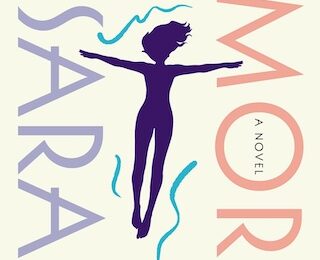
“Un Amor” by Sara Mesa and Katie Whittemore [Excerpt]
Today's #WITMonth post is an except from Un Amor by Sara Mesa and Katie Whittemore, coming out in October. This was the "book of the year" in Spain when it came out in 2o20, and was praised to the skies by all the major Spanish newspapers and media outlets. There's even a film version coming out this fall directed by Isabel ...
>
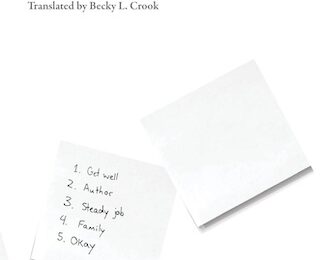
Revisiting “Monsterhuman” by Kjersti Skomsvold
As part of Women in Translation Month—and to shine a spotlight on some of our best Two Month Review seasons—I thought I would repost information about a few relevant TMR seasons that might be of interest. First up is Monsterhuman by Kjersti Skomsvold, translated from the Norwegian by B. L. Crook. Here's the jacket ...
>
Four Books for Women in Translation Month
Given that the posts over the past week plus have been very heavy on Open Letter and Dalkey Archive titles (*cough* and or exclusively about OL and DAP titles *cough*),, I thought I'd take a minute to point out a handful of Women in Translation books that I recently found out about and am adding to my "to read" ...
>
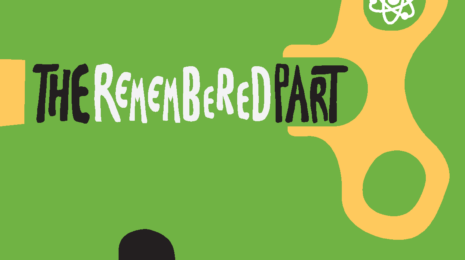
TMR 19.12: “Fill Up with Karmas” [THE REMEMBERED PART]
Brian returns to help breakdown the ending to Rodrigo Fresán's "Part Triptych." Is it earned? Is it sincere?? Is this all a Jacob's Ladder scenario??? Chad and Brian debate that along with concepts of time in fiction, the Karmas, the wetness of Latvian meat, Melvill and Mulligan Stew. Fun is had as this long, amazing ...
>
The Visual Success of Women in Translation Month [Translation Database]
Women in Translation Month is EVERYWHERE. Whenever I open Twitter (or X?), my feed is wall-to-wall WIT Month. Tweets with pictures of books to read for WIT Month, links to articles about WIT Month and various sub-genre lists of books to read during WIT Month, general celebratory tweets in praise of Meytal Radzinski for ...
>

“Year After Year” by Hwang Jungeun and Janet Hong [Excerpt]
To celebrate Women in Translation Month, we will be posting excerpts, readings, summaries from the Translation Database, former Two Month Review seasons, and various special offers—so stay tuned! Today's excerpt is from Year After Year by Hwang Jungeun, translated by Janet Hong as part of her Translator Triptych. ...
>
TMR 19.11 “Exit and No Return and Gone Forever” [THE REMEMBERED PART]
Kaija Straumanis guest stars on this episode in which we discuss brain tumors, memory loss, the true story behind the story of The Impossible Story sending the exwriter into exile, whether of not Saint George is a saint (and dragons), paternity, and the next Fresán book to come out from Open Letter, Melvill. This ...
>
“The Culture of Lies” by Dubravka Ugresic [Excerpt]
This fall, we'll be reissuing Dubravka Ugresic's The Culture of Lies, The death of the model Leafing long ago through an anthology of science-fantasy stories, in which authors from many countries were represented, I stumbled across an unusual sentence; “I stayed at a girlfriend’s house till the small hours ...
>
Re-Reading David Markson’s “Wittgenstein’s Mistress”
This piece by Philip Coleman first appeared in CONTEXT #23. To celebrate the recent release of Wittgenstein's Mistress as part of the Dalkey Archive Essentials series, it seems like the perfect time to revisit this re-reading of David Markson's classic novel about language, memory, grief, and possibly the end of the ...
>
“Not Even the Dead” by Juan Gómez Bárcena [Excerpt]
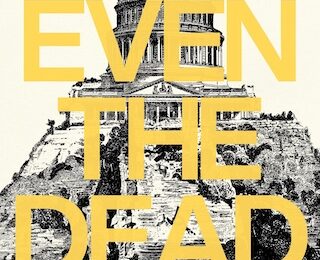
Officially out last Tuesday, Not Even the Dead is a throwback—an ambitious, philosophical, grand novel taking on nothing less than the history of progress over the past four hundred years. In it, Juan—at the bequest of the Spanish government—pursues "Juan the Indian" across time and Mexico, almost catching up to him ...
>
TMR 19.10: “The Fine Art of Leaving Something Out” [THE REMEMBERED PART]
For the first time in the history of the Two Month Review, Chad had to go it alone. He stuck in there, didn't get too crazy, and covered the last chunk of Part II of The Remembered Part. Illness, heartbreak, mental anguish, suicide, Ella, and a mission. It's all in this episode. This week's music is "Bloodletting (The ...
>
TMR 19.9: “The Dream of the Invention of the Memory, Etc.” [THE REMEMBERED PART]
Veeeeekingdor!!!!! This week's episode is pretty wild, with stories of Riga FC, stoic faces, Fresán's visit to the University of Rochester, Kurt Vonnegut, Andrei The Untranslated (follow his blog!, support his Patreon!), the purpose of book readings and the most uncomfortable ones, time and fiction, and much more! And ...
>
“Europeana” by Patrik Ouredník [Excerpt]
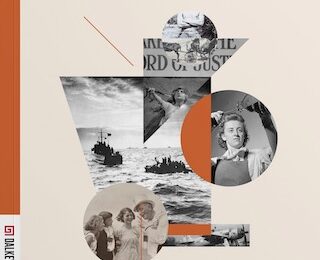
Forthcoming in a new "Dalkey Essentials" edition, Europeana: A Brief History of the Twentieth Century is an "eccentric overview of all the horrors, contradictions, and absurdities of the past century." It's a book that is mesmerizing in its curious patterns, which at times can sound like Snapple Fun Facts—but tend to be ...
>
The Book of Jokes [Reading the Dalkey Archive]
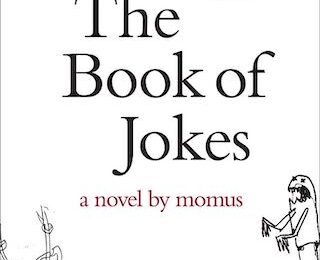
The Book of Jokes Momus Original publication: 2009 Original publisher: Dalkey Archive The Book of Jokes is first original Dalkey Archive title to be part of this series, and woo-boy is it a doozy. If you're playing “Offensive Dalkey Archive Content Bingo," you're all set! There are ...
>
TMR 19.8: “Notes for a Theory of the Fabric of Memory” [THE REMEMBERED PART]
Brian is back and Chad flubs the intro, so things are basically as they should be . . . They talk about fragmentation, big flawed double albums (and why they're so intriguing), how comedy works, Hey Uncle Walrus vs. Uncle Hey Walrus, memory and the losing of it, and much more. This week's music is "1979" and 'Tonight, ...
>
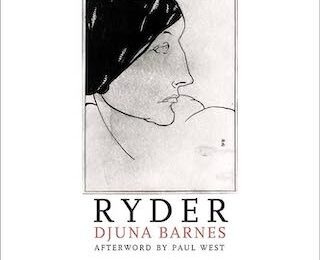
Ryder [Reading the Dalkey Archive]
Ryder Djuna Barnes Original Publication: 1928 Original Publisher: Boni & Liveright First Dalkey Archive Edition: 1990 This is a baggy novel of excess, and as someone who finds it nearly impossible to keep the thread—or develop a coherent thesis (any and all AI grading systems ...
>
“Diary of a Blood Donor” by Mati Unt [Excerpt]
Diary of a Blood Donor by Mati Unt translated from Estonian by Ants Eert (Dalkey Archive Press) AN UNEXPECTED INVITATION A crow was riding the wind that came in low over the beach. Sand blew through the window, landed on my papers, entered my mouth. A yellowish light tainted the room, even my ...
>
TMR 19.7: “The Good Rememberer (A How-To Guide)” [THE REMEMBERED PART]
Former TMR guest Patrick Smith returns to discuss his reread of the first two volumes of the trilogy, how Fresán's writing inspires him, hanging on to flights of prose, all of the wind in this book, what it means to fall, dogs, and much much more. It's a comprehensive, deep look into what it takes to be a good reader, ...
>
TMR 19.6: “The Impossibility of Painting with Watercolors in the Rain” [THE REMEMBERED PART]
Chad and Kaija break down the final bit of the first part of the third volume in Fresán's trilogy (phew), revisit the "is this difficult to read?" discussion, and talk about the articles about Fresán in the new issue of Latin American Literature Today. And at the very, very end, Chad makes a startling admission. This ...
>

Perfect Lives [Reading the Dalkey Archive]
Perfect Lives Robert Ashley Original Publication: 1991 Original Publisher: Archer Fields Press First Dalkey Archive Edition: 2011 Let’s start with the cover. When this first arrived in the mail, I was certain that Ingram had sent it to me on accident. It looks nothing like ...
>
TMR 19.5: “The Burning Gaze of Vladimir Nabokov” [THE REMEMBERED PART]
Separated by 10 hours—like podcasting jet lag?—Chad and Brian work through some observations and rants (specifically about a shitty NY Times list of the best American books between 1981 and 2006, which consists almost entirely of Philip Roth and John Updike and only two books by women), about this section of The ...
>
TMR 19.4: “Read like Dracula and write like Frankenstein!” [THE REMEMBERED PART]
From Nobel Prize favorites to Proust to competitive cliques on the mountain, this week's episodes is almost as sprawling as the ex-writer's airplane thoughts. Bit more plot dropped into this section of Fresán/Vanderhyden's book, but there's also a lot about IKEA, his death and rebirth, his insincerity, and his loathsome ...
>
TMR 19.3: “DREAM + MEMORY = INVENTION” [THE REMEMBERED PART]
Kaija Straumanis pinch hits this week for a discussion about Lost, airplanes, the past and nostalgia, writers vs. narrators, autofiction, how hard it is to sustain a rant, ghosts, pop culture references, where we are in Fresán's trilogy, and much more. The Remembered Part keeps gathering steam, and you'll want to catch up ...
>
TMR 19.2: “Now That Everything That Has To Happen Has Happened” [THE REMEMBERED PART]
And they're off! Brian and Chad start remembering all that they're supposed to remember about the first two volumes of the trilogy (green cows!) and get oriented with the ex-Writer on the plane (and in the desert reading and burning Ada, or Ardor), fall right back into Fresan's humor, cynicism, bits on love, and everything ...
>
TMR 19.1: Where Are We At? [THE REMEMBERED PART]
Maybe not the most informative of recaps, but Brian and Chad discuss what the love about Fresán's writing, things they recall from the first two volumes of the trilogy, ideas about what to maybe expect (Dracula + Proust), peppered with the usual amount of jokes and antics. This week's music is "Pontius Pilate's Home ...
>

TMR Fresán Relisten Ep. 22: “The Dream Ends” [THE DREAMED PART]
Welcome to the Great Fresan Relisten of 2023! Over the next four weeks, we'll be reissuing an episode a day from the The Invented Part and The Dreamed Part seasons of TMR so that you can catch-up, refresh your memory, have a few laughs, etc., before the May 10th launch of Season 19 on The Remembered Part. Here are the ...
>
TMR Fresán Relisten Ep. 21: “IKEA” [THE DREAMED PART]
Welcome to the Great Fresan Relisten of 2023! Over the next four weeks, we'll be reissuing an episode a day from the The Invented Part and The Dreamed Part seasons of TMR so that you can catch-up, refresh your memory, have a few laughs, etc., before the May 10th launch of Season 19 on The Remembered Part. Here are the ...
>
TMR Fresán Relisten Ep. 20: “Living in Pandemica” [THE DREAMED PART]
Welcome to the Great Fresan Relisten of 2023! Over the next four weeks, we'll be reissuing an episode a day from the The Invented Part and The Dreamed Part seasons of TMR so that you can catch-up, refresh your memory, have a few laughs, etc., before the May 10th launch of Season 19 on The Remembered Part. Here are the ...
>
TMR Fresán Relisten Ep. 19: “This Is a Bullshot” [THE DREAMED PART]
Welcome to the Great Fresan Relisten of 2023! Over the next four weeks, we'll be reissuing an episode a day from the The Invented Part and The Dreamed Part seasons of TMR so that you can catch-up, refresh your memory, have a few laughs, etc., before the May 10th launch of Season 19 on The Remembered Part. Here are the ...
>
TMR Fresán Relisten Ep. 18: “The Past Is a Broken Toy That Everyone Fixes in His Own Way” [THE DREAMED PART]
Welcome to the Great Fresan Relisten of 2023! Over the next four weeks, we'll be reissuing an episode a day from the The Invented Part and The Dreamed Part seasons of TMR so that you can catch-up, refresh your memory, have a few laughs, etc., before the May 10th launch of Season 19 on The Remembered Part. Here are the ...
>
TMR Fresán Relisten Ep. 17: “Adaptations” [THE DREAMED PART]
Welcome to the Great Fresan Relisten of 2023! Over the next four weeks, we'll be reissuing an episode a day from the The Invented Part and The Dreamed Part seasons of TMR so that you can catch-up, refresh your memory, have a few laughs, etc., before the May 10th launch of Season 19 on The Remembered Part. Here are the ...
>
TMR Fresán Relisten Ep. 16: “Wuthering Heights Is Weird” [THE DREAMED PART]
Welcome to the Great Fresan Relisten of 2023! Over the next four weeks, we'll be reissuing an episode a day from the The Invented Part and The Dreamed Part seasons of TMR so that you can catch-up, refresh your memory, have a few laughs, etc., before the May 10th launch of Season 19 on The Remembered Part. Here are the ...
>
TMR Fresán Relisten Ep. 15: “Tulpas” [THE DREAMED PART]
Welcome to the Great Fresan Relisten of 2023! Over the next four weeks, we'll be reissuing an episode a day from the The Invented Part and The Dreamed Part seasons of TMR so that you can catch-up, refresh your memory, have a few laughs, etc., before the May 10th launch of Season 19 on The Remembered Part. Here are the ...
>
TMR Fresán Relisten Ep. 14: “What We Talk About When We Talk About Dreaming” [THE DREAMED PART]
Welcome to the Great Fresan Relisten of 2023! Over the next four weeks, we'll be reissuing an episode a day from the The Invented Part and The Dreamed Part seasons of TMR so that you can catch-up, refresh your memory, have a few laughs, etc., before the May 10th launch of Season 19 on The Remembered Part. Here are the ...
>
TMR Fresán Relisten Ep. 13: “Who Dreams the Dreamer” [THE DREAMED PART]
Welcome to the Great Fresan Relisten of 2023! Over the next four weeks, we'll be reissuing an episode a day from the The Invented Part and The Dreamed Part seasons of TMR so that you can catch-up, refresh your memory, have a few laughs, etc., before the May 10th launch of Season 19 on The Remembered Part. Here are the ...
>
TMR Fresán Relisten Ep. 12: “We Remember Everything” [THE DREAMED PART]
Welcome to the Great Fresan Relisten of 2023! Over the next four weeks, we'll be reissuing an episode a day from the The Invented Part and The Dreamed Part seasons of TMR so that you can catch-up, refresh your memory, have a few laughs, etc., before the May 10th launch of Season 19 on The Remembered Part. Here are the ...
>

TMR Fresán Relisten Ep. 11: The Author Himself!
Welcome to the Great Fresan Relisten of 2023! Over the next four weeks, we'll be reissuing an episode a day from the The Invented Part and The Dreamed Part seasons of TMR so that you can catch-up, refresh your memory, have a few laughs, etc., before the May 10th launch of Season 19 on The Remembered Part. Here are the ...
>
TMR Fresán Relisten Ep. 10: THE INVENTED PART [Pgs. 441-552]
Welcome to the Great Fresan Relisten of 2023! Over the next four weeks, we'll be reissuing an episode a day from the The Invented Part and The Dreamed Part seasons of TMR so that you can catch-up, refresh your memory, have a few laughs, etc., before the May 10th launch of Season 19 on The Remembered Part. Here are the ...
>
TMR Fresán Relisten Ep. 9: THE INVENTED PART [Pgs. 405-440]
Welcome to the Great Fresan Relisten of 2023! Over the next four weeks, we'll be reissuing an episode a day from the The Invented Part and The Dreamed Part seasons of TMR so that you can catch-up, refresh your memory, have a few laughs, etc., before the May 10th launch of Season 19 on The Remembered Part. Here are the ...
>
TMR Fresán Relisten Ep. 8: THE INVENTED PART [Pgs. 361-404]
Welcome to the Great Fresan Relisten of 2023! Over the next four weeks, we'll be reissuing an episode a day from the The Invented Part and The Dreamed Part seasons of TMR so that you can catch-up, refresh your memory, have a few laughs, etc., before the May 10th launch of Season 19 on The Remembered Part. Here are the ...
>
TMR Fresán Relisten Ep. 7: THE INVENTED PART [Pgs. 301-360]
Welcome to the Great Fresan Relisten of 2023! Over the next four weeks, we'll be reissuing an episode a day from the The Invented Part and The Dreamed Part seasons of TMR so that you can catch-up, refresh your memory, have a few laughs, etc., before the May 10th launch of Season 19 on The Remembered Part. Here are the ...
>
TMR Fresán Relisten Ep. 6: THE INVENTED PART [Pgs. 231-300]
Welcome to the Great Fresan Relisten of 2023! Over the next four weeks, we'll be reissuing an episode a day from the The Invented Part and The Dreamed Part seasons of TMR so that you can catch-up, refresh your memory, have a few laughs, etc., before the May 10th launch of Season 19 on The Remembered Part. Here are the ...
>
TMR Fresán Relisten Ep. 5: THE INVENTED PART [Pgs. 208-230]
Welcome to the Great Fresan Relisten of 2023! Over the next four weeks, we'll be reissuing an episode a day from the The Invented Part and The Dreamed Part seasons of TMR so that you can catch-up, refresh your memory, have a few laughs, etc., before the May 10th launch of Season 19 on The Remembered Part. Here are the ...
>
TMR Fresán Relisten Ep. 4: THE INVENTED PART [Pgs. 99-207]
Welcome to the Great Fresan Relisten of 2023! Over the next four weeks, we'll be reissuing an episode a day from the The Invented Part and The Dreamed Part seasons of TMR so that you can catch-up, refresh your memory, have a few laughs, etc., before the May 10th launch of Season 19 on The Remembered Part. Here are the ...
>
TMR Fresán Relisten Ep. 3: THE INVENTED PART [Pgs. 46-98]
Welcome to the Great Fresan Relisten of 2023! Over the next four weeks, we'll be reissuing an episode a day from the The Invented Part and The Dreamed Part seasons of TMR so that you can catch-up, refresh your memory, have a few laughs, etc., before the May 10th launch of Season 19 on The Remembered Part. Here are the ...
>
TMR Fresán Relisten Ep. 2: THE INVENTED PART [Pgs. 1-45]
Welcome to the Great Fresan Relisten of 2023! Over the next four weeks, we'll be reissuing an episode a day from the The Invented Part and The Dreamed Part seasons of TMR so that you can catch-up, refresh your memory, have a few laughs, etc., before the May 10th launch of Season 19 on The Remembered Part. Here are the ...
>
TMR Fresán Relisten Ep. 1: THE INVENTED PART [Introduction]
Welcome to the Great Fresan Relisten of 2023! Over the next four weeks, we'll be reissuing an episode a day from the The Invented Part and The Dreamed Part seasons of TMR so that you can catch-up, refresh your memory, have a few laughs, etc., before the May 10th launch of Season 19 on The Remembered Part. This was our ...
>
To All the Posts I Didn’t Write Last Year
If I could control space-time (a resolution for 2023 that's about as likely as the others I've made), I would have put in an additional 10 hours of research and data entry into the Translation Database before posting this. But knowing that I'll surely be crunched for time all this week, and next, and the week after, I figure ...
>
Season 17 of the Two Month Review Brings the Fire
It's been a minute, but we're coming back on May 4th with the all new, all fire season of the Two Month Review. Before getting into the books for this season, we have a couple of announcements. First off, we now have a twitter account just for Two Month Review, so please please follow us. Also, following the trend of ...
>
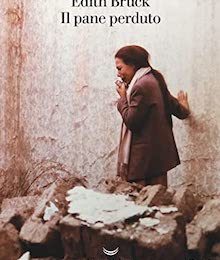
Edith Bruck: Recounting the Holocaust Until She Can’t
Il Pane Perduto by Edith Bruck (La Nave di Teseo, 2021) Review by Jeanne Bonner When Edith Bruck was 12 years old, she was deported to Auschwitz, and was immediately separated from her mother in a brutal scene. In her new memoir, Bruck writes that later, after being yanked away, another prisoner who had been at the camp ...
>
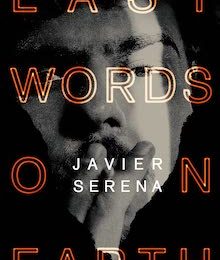
“Last Words on Earth” by Javier Serena and Katie Whittemore [Excerpt]
Last Words on Earth by Javier Serena, translated from the Spanish by Katie Whittemore (September 21, 2022) Eventually, the professor redirected the conversation toward more exotic subjects: he asked Funes to tell me about negacionismo, a poetic movement Funes had apparently founded as an adolescent in Mexico, where he ...
>
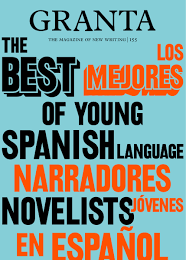
Three Percent #185: More Granta!
Veronica Esposito joined Chad and Valerie Miles to continue talking about Granta's second list of "Best Young Spanish-language Novelists." They talk about some of the recent Spanish reviews—and criticisms—of the list, about writing the periphery, about science-fiction and the differences between the 2010 list and the ...
>
The Predictive Success of Listmaking [Granta]
Let's start by saying what really shouldn't need to be said: Being included in one of Granta's "Best Young XXX Novelists" special issues is an incredible honor. These come out once a decade, with four iterations of "best young" British novelists, three for American writers, and, as of this month, two for Spanish-language ...
>

Three Percent #184: Valerie Miles on Granta’s Best of Young Spanish-Language Novelists 2
To kick off a month of features on the new Granta "Best of Young Spanish-Language Novelists" issue, Chad talked with editor/translator Valerie Miles about the process of selecting these 25 authors amid a pandemic, about the shifts in demographics between the first list (from 2010) and this one, about voice and the ...
>

“The Adventures and Misadventures of the Extraordinary and Admirable Joan Orpí, Conquistador and Founder of New Catalonia” by Max Besora and Mara Faye Lethem
In honor of the Catalan Fellowship organized by the Institut Ramon Lllul and taking place virtually this week, I thought I would share the opening of next Catalan title to come out from Open Letter: The Adventures and Misadventures of the Extraordinary and Admirable Joan Orpí, Conquistador and Founder of New Catalonia by Max ...
>
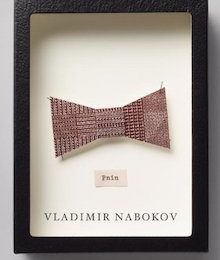
Let’s Try This Instead
Now that I've taught a few hybrid sessions of my "Intro to Literary Publishing" class, I can confirm that teaching during COVID is WEIRD. So weird. (And not just because I couldn't figure out the technology on day one, or because I can't hear the students very well without being able to see their faces. Although both of those ...
>
TMR Season Thirteen: “Ada, or Ardor” by Vladimir Nabokov
The public has spoken, and the next book to be featured in the Two Month Review is Ada, or Ardor by Vladimir Nabokov! Which is kind of perfect. We follow the thread of Anna Karenina from The Book of Anna by Carmen Boullosa to this novel, originally written in 1969, which opens: "All happy families are more or less ...
>
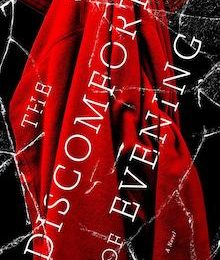
“The Discomfort of Evening” by Marieke Lucas Rijneveld [#WITMonth]
In an amazing coincidence, we were already planning on running this excerpt from The Discomfort of Evening today as part of our Women in Translation Month coverage, and lo and behold, the book just happened to win the International Man Booker this morning! Congrats to Marieke Lucas Rijneveld and Michele Hutchison, and to ...
>

Spanish-Language Speculative Fiction by Women in Translation. [#WITMonth]
Today's post is by Rachel Cordasco, founder and curator of Speculative Fiction in Translation, co-translator of Creative Surgery by Clelia Farris, and is working on a book about speculative fiction from around the world. Despite 2020 being a downright awful year, it has given us several excellent works of ...
>
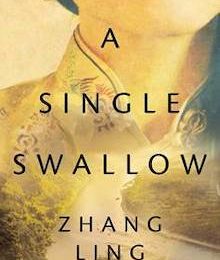
A SINGLE SWALLOW by Zhang Ling [#WITMonth]
A Single Swallow by Zhang Ling, translated from the Chinese by Shelly Bryant (AmazonCrossing) Forthcoming on October 1st from AmazonCrossing, A Single Swallow by Zhang Ling, the award-winning author of nine novels along with several short story collections. Here's the jacket copy: On the day of the historic 1945 ...
>
New Spanish Literature: 10 of 30 [#WITMonth]
As part of the buildup to being Guest of Honor at the Frankfurt Book Fair 2021, the Spanish government launched a program last year under the (possibly confusing) name of "10 of 30." The plan is that each year, a new anthology featuring ten authors in their 30s will be released—all of which are translated by Katie ...
>
Open Letter Sale [#WITMonth]
This post is a bit of a cheat so that I can get caught back up tomorrow with my "post a day" promise, but I want to make sure that everyone knows that for all of August we're offering 40% off on all Open Letter books written by women OR translated by women. All you need to do is use WITMONTH at checkout. Here's a complete ...
>

Polish Reportage [#WITMonth]
Starting in 2021, Open Letter will be launching a "Polish Reportage" series. This came out of a trip I made to Krakow back in 2017 (when the Astros cheated their way to a World Series, which, remember when that mattered?) to attend the Conrad Festival and meet with a variety of authors, editors, and the like. I've always been ...
>

Baudrillard in the Time of COVID / Baseball Is Back!
There are two types of people who read these posts: people into international literature who like baseball, and those who don’t. What follows is an experiment—one that might not work at all. Before you get started, you have a choice: 1) if you hate genuine writing about baseball, then click here, where I’ve edited ...
>
Baudrillard in the Time of COVID
There’s never been a better time to read Baudrillard. There’s also never been a worse. Thanks to quarantine, the unprecedented nature of this situation, Trump, government response to the protests—everything feels like an illusion. Not an illusion in the sense that “nothing is physically realm,” although one could ...
>
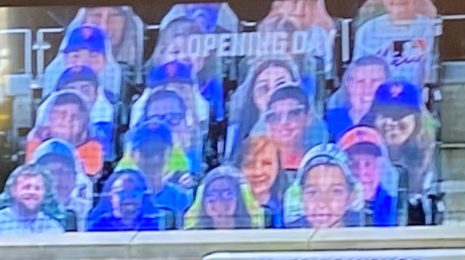
Baseball Is Back!
The other day, the Major League Baseball season—or, rather, “season,” given that it’s 60 games; given that instead of ten teams making the playoffs, sixteen will, which is more than half the league; that every extra inning starts with a runner on 2nd base, which is very weird; and, obviously, COVID protocols and a ...
>
TMR 12.6: “A Substitute’s Diary, Part II” [FOUR BY FOUR]
ALTA executive director and Arabic translator (Minor Detail), Lissie Jaquette joined Chad and Brian to talk about Bedragare's breakdown and all the events in the second half of his journal. They also wonder what the "mystery" of the novel is, and talk about various (possibly nutty) theories about who killed Lux and Ledesma. ...
>

Propose a Session or Reading for ALTA 43
Proposal Deadline: July 6 Click here to submit a proposal. The ALTA Conference Committee invites proposals for readings and sessions for ALTA's 43rd annual conference. ALTA43: "In Between" will take place virtually in fall 2020, and we’ve moved back our proposal deadline to give us all time to adapt to our new ...
>
Nothing Adds Up Until You Overthrow the System
It's weird trying to write this today, May 31st, with all that's going on across the country—and around the world—right now. The images of our overly-militarized, super aggro, disgusting police officers running unarmed people over, throwing women to the ground, shooting teenagers with pepper balls and rubber bullets (that ...
>
“The Wind That Lays Waste” by Selva Almada [Why This Book Should Win]
Check in daily for new Why This Book Should Win posts covering all thirty-five titles longlisted for the 2020 Best Translated Book Awards. Pierce Alquist has an MA in Publishing and Writing from Emerson College and currently works in publishing in Boston. She is a freelance book critic and writer. She is also the ...
>
BTBA 2020 Readings!
For the first time in the thirteen (!!) year history of the Best Translated Book Awards, we were able to host a reading for all fifteen of the finalists. With translators, authors, and editors participating, this event was incredibly fun and entertaining, and a perfect way to familiarize yourself with all of these ...
>
“Beyond Babylon” by Igiaba Scego [Why This Book Should Win]
Check in daily for new Why This Book Should Win posts covering all thirty-five titles longlisted for the 2020 Best Translated Book Awards. Barbara Halla is an Assistant Editor for Asymptote Journal. She works as a translator and independent researcher, focusing in particular on discovering and promoting the works of ...
>
“Aviva-No” by Shimon Adaf [Why This Book Should Win]
Check in daily for new Why This Book Should Win posts covering all thirty-five titles longlisted for the 2020 Best Translated Book Awards. Adriana X. Jacobs is the author of Strange Cocktail: Translation and the Making of Modern Hebrew Literature (University of Michigan, 2018) and associate professor of modern Hebrew ...
>
“Space Invaders” by Nona Fernández [Why This Book Should Win]
Check in daily for new Why This Book Should Win posts covering all thirty-five titles longlisted for the 2020 Best Translated Book Awards. Chris Clarke grew up in Western Canada and currently lives in Philadelphia. His translations include books by Ryad Girod, Pierre Mac Orlan, and François Caradec. His translation of ...
>

. . . At the End of the World
All below quotes are from The End of the World Might Not Have Taken Place by Patrik Ouredník, translated from the Czech by Alexander Hertich (Dalkey Archive Press) THE FUTURE OF THE WORLD The future isn’t what it used to be. You must have noticed this yourself: the future isn’t what it used to be. In the past, ...
>
We’re Still Here . . .
"We live in a world of randomness." —William Poundstone, The Doomsday Calculation It probably goes without saying, but publishing international literature is a precarious business in the best of times. On average, sales for translated works of fiction tend to be about one-third of the average sales for a mid-list author ...
>
“Territory of Light” by Yuko Tsushima [Why This Book Should Win]
Check in daily for new Why This Book Should Win posts covering all thirty-five titles longlisted for the 2020 Best Translated Book Awards. Kári Tulinius is an Icelandic poet and novelist. He and his family move back and forth between Iceland and Finland like a flock of migratory birds confused about the whole “warmer ...
>
“The Book of Collateral Damage” by Sinan Antoon [Why This Book Should Win]
Check in daily for new Why This Book Should Win posts covering all thirty-five titles longlisted for the 2020 Best Translated Book Awards. Tara Cheesman is a freelance book critic, National Book Critics Circle member & 2018-2019 Best Translated Book Award Fiction Judge. Her work has appeared in the Los Angeles Review ...
>
“Vernon Subutex 1” by Virginie Despentes [Why This Book Should Win]
Check in daily for new Why This Book Should Win posts covering all thirty-five titles longlisted for the 2020 Best Translated Book Awards. Dorian Stuber teaches at Hendrix College and blogs about books at www.eigermonchjungfrau.blog. His work has appeared in Numéro Cinq, Open Letters Monthly, and Words without ...
>
“Camouflage” by Lupe Gómez [Why This Book Should Win]
Check in daily for new Why This Book Should Win posts covering all thirty-five titles longlisted for the 2020 Best Translated Book Awards. Kelsi Vanada is a poet and translator from Spanish and sometimes Swedish. Her translations include Into Muteness (Veliz Books, 2020) and The Eligible Age (Song Bridge Press, 2018), ...
>
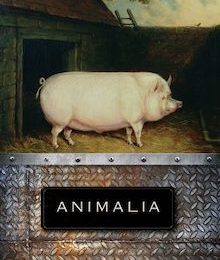
“Animalia” by Jean-Baptiste del Amo [Why This Book Should Win]
Check in daily for new Why This Book Should Win posts covering all thirty-five titles longlisted for the 2020 Best Translated Book Awards. Jeffrey Zuckerman is an editor at Music & Literature and a translator from French, most recently of Jean Genet's The Criminal Child (NYRB, 2020). A finalist for the ...
>

There Are Worse Timelines [An April 2020—Is It Still 2020?—Reading Journal]
Following the [Chernobyl] accident, physicists calculated that there was a ten percent risk that a nuclear explosion on an unimaginable scale would take pace within a fortnight. Such an explosion [. . .] would have been equivalent to forty Hiroshima bombs going off at the same time, and would have rendered Europe ...
>
“Drive Your Plow Over the Bones of the Dead” by Olga Tokarczuk [Why This Book Should Win]
Check in daily for new Why This Book Should Win posts covering all thirty-five titles longlisted for the 2020 Best Translated Book Awards. Louisa Ermelino is the author of three novels; Joey Dee Gets Wise; The Black Madonna (Simon and Schuster); The Sisters Mallone (St. Martin’s Press) and a story collection, ...
>
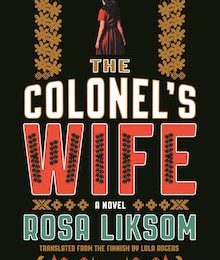
Lola Rogers on “The Colonel’s Wife” by Rosa Liksom [The Book That Never Was, Pt. 2]
You can find part one here. Finnish Literature LR: As you know, Finnish literature is just like the language. It's different. It's more different from English literature than, say, German literature is. CWP: What kind of things mark Finnish literature as “different”? LR: Well, I think The Colonel’s Wife is a ...
>
Lola Rogers on “The Colonel’s Wife” by Rosa Liksom [The Book That Never Was, Pt. 1]
The Colonel's Wife by Rosa Liksom, translated from the Finnish by Lola Rogers (Graywolf Press) BookMarks Reviews: Five total—Four Positive, One Mixed Awards: None Number of Finnish Works of Fiction Published in Translation from 2008-2019: 65 (5.42/year) Number of Those Translations Written by Women: 40 of the ...
>
“Labyrinth” by Burhan Sönmez [Why This Book Should Win]
Check in daily for new Why This Book Should Win posts covering all thirty-five titles longlisted for the 2020 Best Translated Book Awards. Tim Gutteridge is a Scottish literary translator, working from Spanish into English. His translation of Miserere de cocodrilos(Mercedes Rosende) will be published later this year by ...
>
“Tentacle” by Rita Indiana [Why This Book Should Win]
Check in daily for new Why This Book Should Win posts covering all thirty-five titles longlisted for the 2020 Best Translated Book Awards. Tobias Carroll is the author of the books Reel, Transitory, and the forthcoming Political Sign. Tentacle by Rita Indiana, translated from the Spanish by Achy ...
>

Jewels in Your Pocket [BTBA 2020]
This week's Best Translated Book Award post is from Christopher Phipps, a manager at City Lights Bookstore in San Francisco. We’ve all been warned repeatedly to never judge a book by its cover, a caution easily and often extended towards judgments based on size. Size matters not, counseled Yoda. Big things come in small ...
>
Is It Real? [A January 2020 Reading Diary with Charts & Observations]
It's been sooooo long since I actually wrote something for here . . . I'm not entirely sure how to start! Chad 1.0 would open with something like "$%*# agents" and then go off on a couple individuals who are currently driving me INSANE. Chad 2.0 would come up with some wacky premise that blends ideas behind sabermetrics ...
>
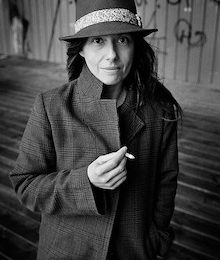
“Reading Christine Montalbetti” by Warren Motte
As part of a larger series of initiatives involving Open Letter and Dalkey Archive Press, over the next few months, we'll be running a number of articles from CONTEXT magazine, a tabloid-style magazine started by John O'Brien and Dalkey Archive in 2000 as a way of introducing booksellers and readers to innovative writers ...
>

“Italian Short Stories” ed. by Jhumpa Lahiri
Penguin Book of Italian Short Stories ed. Jhumpa Lahiri Translated from the Italian by Various 528 pgs. | hc | 9780241299838 | $30.00 Penguin Random House Review by Jeanne Bonner Novels and memoirs often become labors of love for the authors who birth them. But what about an anthology? How often do we imagine ...
>

“Ghachar Ghochar” by Vivek Shanbhag
Ghachar Ghochar by Vivek Shanbhag Translated from the Kannada by Srinath Perur 117 pgs. | pb | 9789352775057 | $15.00 Penguin Random House Review by Kira Baran What purpose does a book serve if its content can be neatly condensed onto, and thereby extracted from, its book jacket? Intentionally or not, author ...
>

“The Book of Disappearance: A Novel” by Ibtisam Azem
The Book of Disappearance: A Novel by Ibtisam Azem Translated from the Arabic by Sinan Antoon 256 pgs. | pb | 9780815611110 | $19.95 Syracuse University Press Review by Grant Barber This wonderful, important second novel by Ibtisam Azem in English translation came out just in time for the observance of Women ...
>
Dark, Strange Books by Women in Translation [BTBA 2020]
This week's Best Translated Book Award post is from Pierce Alquist, who has a MA in Publishing and Writing from Emerson College and currently works in publishing in Boston. She is a freelance book critic, writer, and Book Riot contributor. She is also the Communications Coordinator for the Transnational Literature Series ...
>

Book 6 [The No Context Project]
If you want the context for the "no context project," check out this post, which lays everything out and applies a 20-80 grading scale to "Book 7." Since I really want to get through these mystery books sooner rather than later--so that I can find out what they are and grade myself--I put aside my Charco reading for a bit ...
>

“Beasts Head for Home” by Abe Kōbō
Beasts Head for Home by Abe Kōbō Translated from the Japanese by Richard F. Calichman 191 pgs.| pb | 9780231177054 | $25 Columbia University Press Review by Brendan Riley Crisp, stark, pristine scenes of gaunt settlements, vast wilderness, and tense human encounters fill this 1957 novel by Abe Kōbō, the ...
>
Three Percent #172: ALTA 42 Preview
A bit of a disorienting podcast for anyone not attending ALTA, but in this episode, Chad addresses the recent ALTA book fair controversy, and then they go over the general schedule, highlighting a number of interesting-sounding panels, previewing some off-site events, and recommending non-ALTA bars for attendees to hang out ...
>
“Garden by the Sea” by Mercè Rodoreda
Garden by the Sea by Mercè Rodoreda Translated from the Catalan by Maruxa Relaño and Martha Tennent 230 pgs. | pb | 9781948830089 | $15.95 Open Letter Books Review by Kira Baran Originally published in 1967 in the Catalan, Garden by the Sea is just one of several works that has earned ...
>
Available Now: THE INCOMPLETES by Sergio Chejfec and Heather Cleary
“A masterfully nested narrative where writing—its presence on the page, its course through time, its prismatic dispersion of meaning—is the true protagonist.” —Hernan Diaz, author of In the Distance “Now I am going to tell the story of something that happened one night years ago, and the events of the ...
>
10 Anecdotes About the 2019 National Book Award Translated Literature Longlist
As you likely know already, the National Book Foundation announced the longlist for the 2019 National Book Award for Translated Literature yesterday. It's always hard for me to figure out what to say about something like this—it's exactly the sort of thing we should be presenting here on Three Percent, as part of our ...
>
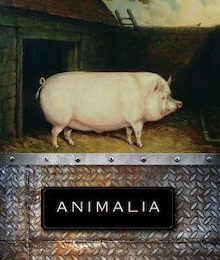
Smelling Books [BTBA 2020]
This week's BTBA post if from Justin Walls, a bookseller with Powell’s Books in Portland, Oregon who can be found on Twitter @jaawlfins. The conceptual artist Anicka Yi's olfactory-based installation Washing Away of Wrongs (2014, created in conjunction with French perfumer Christophe Laudamiel) consists of two ...
>
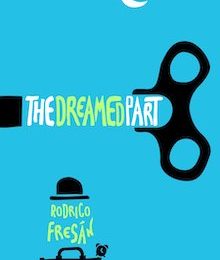
Flash Sale on Open Letter Preorders!
For a few different reasons—mainly that I wasn't able to get the new excerpt from Sara Mesa's Four by Four online until the WITMonth discount code had expired, but also to celebrate The Dreamed Part being on Kirkus's list of "30 Most Anticipated Fiction Books"—we've decided to have a flash sale on all of our ...
>

Thirty-One Books by Women in Translation [BTBA 2020]
This week's BTBA post is from Pierce Alquist, who has a MA in Publishing and Writing from Emerson College and currently works in publishing in Boston. She is also a freelance book critic, writer, and Book Riot contributor. She can be found on Twitter @PierceAlquist and on Book Riot. Women in Translation Month is nearing ...
>

“Cars on Fire” by Mónica Ramón Ríos [Excerpt]
Now you're really getting to preview our books . . . Although Cars on Fire by Mónica Ramón Ríos, translated from the Spanish by Robin Myers, is available for preorder from various online retailers, we don't even have this book up on our website yet and, as of yesterday, on our website as well. We haven't even presented ...
>
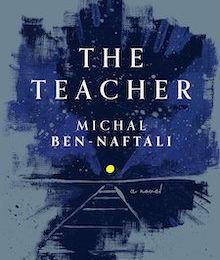
“The Teacher” by Michal Ben-Naftali [Excerpt]
There are three more forthcoming Open Letter titles by women that I want to share for Women in Translation Month. First up is The Teacher by Michel Ben-Naftali, translated from the Hebrew by Daniella Zamir. Here's the jacket copy: No one knew the story of Elsa Weiss. She was a respected English teacher at a Tel Aviv high ...
>
TMR 9.04: Monsterhuman by Kjersti Skomsvold (pgs 144-180)
Even though the first few seconds ("On today's Two Month Review we'll be talking about . . . ") got cut off, Chad gives his most professional podcast introduction to date, before he and Brian talk about the Nansen Academy, the cyclical nature of chronic illness, the idea of plot points vs. events, and reasons their respective ...
>
Women in Translation for BTBA 2020
It's time for weekly BTBA posts! First up is one by Louisa Ermelino, who is the author of three novels; Joey Dee Gets Wise; The Black Madonna (Simon and Schuster); The Sisters Mallone (St. Martin’s Press) and a story collection, Malafemmina (Sarabande). She has worked ...
>
40% Off All Open Letter Books Written or Translated by Women
Women in Translation Month is always an exciting time to discover, read, discuss, and celebrate books by women from around the world. It was created by Meytal Radzinski back in 2014 (who we're hoping to have on a podcast this month), and has since spawned numerous articles, events, and even the Warwick Prize for Women in ...
>
Embrace the Chaos
So, for the first time in, probably ever, when I didn't have an idea for this week's post, I didn't steal one of Sam Miller's ideas from the Effectively Wild podcast. Instead, in a real reversal, I went back to the podcasts I recorded last week and came up with two completely unrelated concepts that I'm going to jam ...
>
Publishers: Come to ALTA 42 in Rochester!
For all editors and publishers out there, we wanted to put make sure you knew about the American Literary Translators Association conference in Rochester on November 7-10 and some of the opportunities available to publishers. Nowadays the ALTA conference attracts ~450 literary translators to a conference featuring ...
>

The All or Nothing of Book Conversation
In theory, this is a post about Norwegian female writers in translation. I know it's going to end up in a very different space, though, so let's kick this off with some legit stats that can be shared, commented on, and used to further the discussion about women in translation. Back in the first post of July—Norwegian ...
>
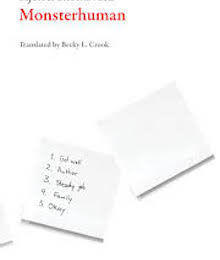
Season 9 of the Two Month Review: Monsterhuman by Kjersti Skomsvold
Now that I'm back from a week-long self-imposed retreat, it's time to overwhelm this site with posts about Norwegian literature. There are two special audio interviews in the works, a post about a few female Norwegian writers (and Shirley Jackson) that will go up on Monday, and the kick off of the new season of the Two Month ...
>
Jan Kjærstad [Sort of the Open Letter Author of the Month]
Prior to the start of July, my plan was to highlight Jan Kjæstad, author of the "Jonas Wergeland Trilogy" about a famous TV director who is jailed for murdering his wife. The three books present three different histories of Wergeland's life, which is interesting enough, but what's really great is how each one employs a ...
>
Three Percent #163: What Do You Want
Chad and Tom talk about a number of interrelated issues related to the costs of bookstore ownership and being a bookseller. They talk about the recent letter from Chris Doeblin at Book Culture, The Book Diaries, Human Rights for Translators, the Universal Declaration of Human Rights, the Internet and Book Culture, and the ...
>

“The Book of Collateral Damage” by Sinan Antoon
The Book of Collateral Damage by Sinan Antoon Translated from the Arabic by James Richardson 312 pgs. | hc | 9780300228946 | $24.00 Yale Margellos Press Review by Grant Barber Author Sinan Antoon is an Assoc. Professor at the Gallatin School of Individual Study of NYU. His undergraduate degree was in 1990 from ...
>
The Five Tools, Part I: Authors [Let’s Praise My Friends]
One of the most entertaining parts of my past three weeks of travel was the discovery that Norwegians refer to first-time authors as “debutants.” Which, OK, at first, is weird. The first time someone said it aloud, “she’s a debutant author,” I too had the urge to correct them. But then, like any great joke that's ...
>
Four Attempts at Approaches [Drawn & Quarterly]
This post comes to you thanks to a few different starting points: a box of translated graphic novels that Drawn & Quarterly sent me a couple of weeks ago, the fact that Janet Hong translated one of them (see last week’s interview), the fact that I don’t have time this month to read a ton of novels for these weekly ...
>
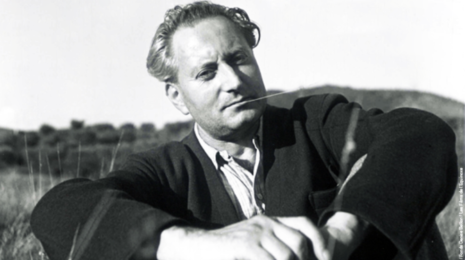
“Melville: A Novel” by Jean Giono
Melville by Jean Giono Translated from the French by Paul Eprile 108 pgs. | pb | 9781681371375 | $14.00 NYRB Review by Brendan Riley In The Books in My Life (1952), Henry Miller, devoting an entire chapter to French writer Jean Giono (1895-1970), boasts about spending “several years. . . . preaching the ...
>
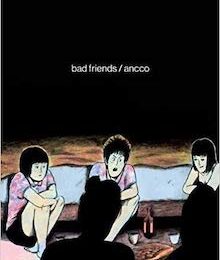
Interview with Janet Hong [Graphic Novels in Translation]
Off to a bit of a slow start here, but this month's focus on Three Percent is going to be graphic novels in translation. I'll have a post up on Monday about some Drawn & Quarterly titles I've been reading, then one on NYRB Comics later in the month. Also hoping to have another interview or two, but I'll keep those to ...
>
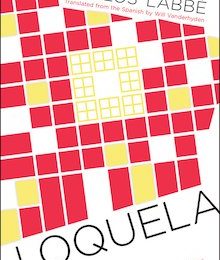
Carlos Labbé [Author of the Month]
In celebration of the release of Carlos Labbé's Spiritual Choreographies later this month--and because of a little surprise we'll unveil soon enough--we decided to make Carlos our "Author of the Month." From now until June 1st, you can use the code LABBE at checkout to get 30% off any and all of his books. (Including ePub ...
>
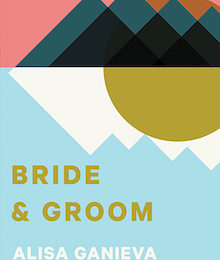
Bride and Groom [Why This Book Should Win]
Check in daily for new Why This Book Should Win posts covering all thirty-five titles longlisted for the 2019 Best Translated Book Awards. Ruchama Johnston-Bloom, who writes about modern Jewish thought and Orientalism. She has a PhD in the History of Judaism from the University of Chicago and is the Associate Director of ...
>
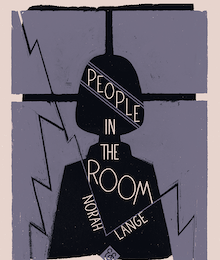
People in the Room [Why This Book Should Win]
Check in daily for new Why This Book Should Win posts covering all thirty-five titles longlisted for the 2019 Best Translated Book Awards. Tom Flynn is the manager/buyer for Volumes Bookcafe (@volumesbooks on all social sites) in Chicago. He can often be found interrupting others' work in order to make them read a ...
>
A Guesstimation of a Booklist Review-type Post
I alluded to this in an earlier post, but the main reason Three Percent has been light on this sort of content (and heavy on BTBA content, which is all stellar and worth checking out) isn't due to a lack of desire or interest, but a confluence of other events: deadlines for two pieces (one that should be available shortly, ...
>

“Dark Constellations” by Pola Oloixarac
Dark Constellations by Pola Oloixarac Translated from the Spanish by Roy Kesey 216 pgs. | pb | 9781616959234 | $22.00 Soho Press Reviewed by Grant Barber Dark Constellations, the second novel in translation by the author of Savage Theories, continues the intriguing, complex narratives of science, ...
>
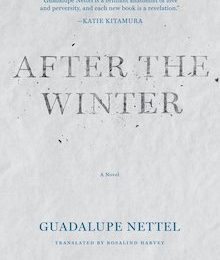
After the Winter [Why This Book Should Win]
Check in daily for new Why This Book Should Win posts covering all thirty-five titles longlisted for the 2019 Best Translated Book Awards. Rebecca Hussey is a community college English professor, a book reviewer, and a Book Riot contributor, where she writes a monthly round-up of indie press books, including many books ...
>
Interview with Damion Searls about Anniversaries [Part II]
I'm on a self-imposed hiatus from writing posts for this site until I finish two other articles for other publications (almost done!), but I am lifting this restriction for one post to share the next set of answers from Damion Searls in my (probably never-ending) interview with him about Uwe Johnson's Anniversaries. To ...
>
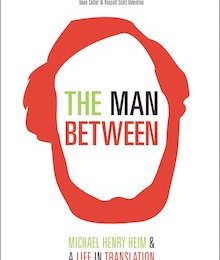
The Man Between [Genre of the Month]
I've been very lax in writing about the Open Letter author/genre of the month for April: nonfiction. But, there are still a couple of weeks left to share some info about our previously published and forthcoming works of nonfiction. And, as always, you can get 30% any of these books by using NONFICTION at ...
>
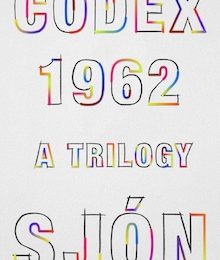
CoDex 1962 [Why This Book Should Win]
Check in daily for new Why This Book Should Win posts covering all thirty-five titles longlisted for the 2019 Best Translated Book Awards. George Carroll is a former bookseller and a West Coast representative for numerous publishers of translated literature. He is currently the curator ...
>
Meet the BTBA Judges!
Tomorrow morning at 10am the 2019 Best Translated Book Award longlists will be revealed over at The Millions. As a bit of a preview, the judges wanted to introduce themselves . . . Keaton Patterson, a lifelong Texan, has an MA in Literature from the University of Houston-Clear Lake. For the past five years, he has been ...
>
Interview with Damion Searls about Anniversaries [Part I]
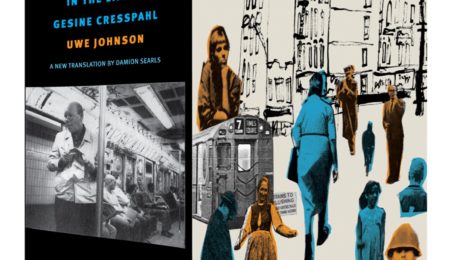
Assuming that I'll be reading Anniversaries slowly but surely over the next four months, I thought it would be fun to talk to translator Damion Searls about the book along the way. If all goes according to plan, these monthly installments will develop into a rich conversation about the book, translation issues, and much ...
>
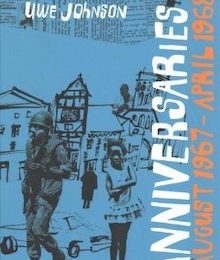
Blogging Like It’s 1967 [Anniversaries, Volume 1]
Tomorrow afternoon we'll run the first of several interviews with Damion Searls, translator of the first complete version of Anniversaries to appear in English. If things go according to plan, each month we'll dig deeper and deeper into this massive book, a twentieth-century masterpiece that weighs something ...
>
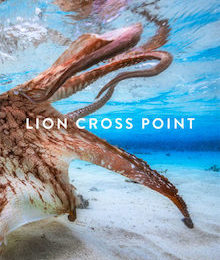
BTBA-Eligible Books from Japan [BTBA 2019]
We're exactly 24 days away from finding out which titles are on the 2019 BTBA longlist! (It will be announced at The Millions, and I [Chad] won't know what's on it until everyone else finds out. I'm so excited! I love being completely in the dark about this.) If you're interested in joining the conversation about which books ...
>
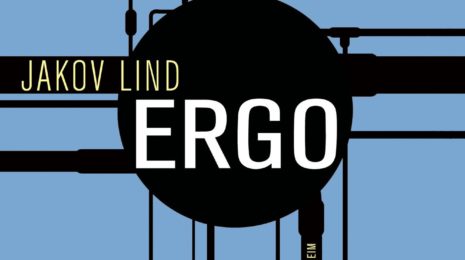
“Ergo” by Jakov Lind [Excerpt]
Slowly and heavily, a hippopotamus rising from the Nile, he rose from the paper mountain, beat the nightmare of virginal lewdness out of his clothes and stood there, a squat man of sixty with short gray hair and swollen lips, crossing his hands over his forehead, and looked around him darkly. Have you been watching me again ...
>
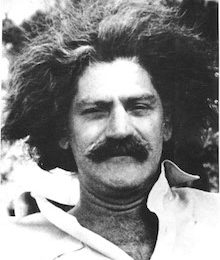
Joshua Cohen on Jakov Lind [Author of the Month]
Our featured author of the month is Jakov Lind, an author whose biography, as you'll read below, is absolutely fascinating. To celebrate his work, we're offering 30% off on Landscape in Concrete and Ergo all month—just use the code LIND at checkout. Joshua Cohen (The Book of Numbers, Witz) wrote an amazing ...
>
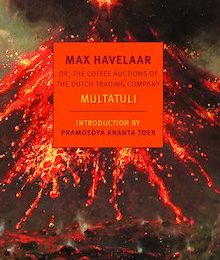
Which Living Writers Are Sure-Thing Hall of Famers?
Last Thursday, I must've sent two dozen people a variation on that question above, usually in the form "Name me ten living 'Hall of Fame' writers." No explanation, no context, nothing. I was curious as to who people would name, what biases would come through, which authors would start debates. And I figured I could get a ...
>
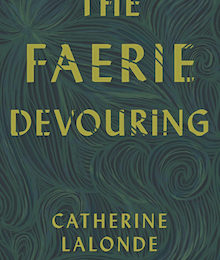
“The Faerie Devouring” by Catherine Lalond [Quebec Literature from P.T. Smith]
Before starting this month's focus on Quebec literature, I asked P.T. Smith to recommend a few books for me to read, since he's one of the few Americans I know who has read a lot of Quebec literature. But rather than hoard these recommendations or write silly things about them, we decided it would be best if P.T. wrote weekly ...
>
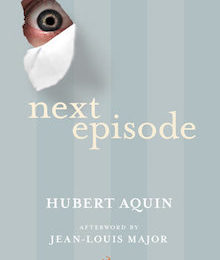
“Next Episode” by Hubert Aquin [Quebec Literature from P.T. Smith]
Before starting this month's focus on Quebec literature, I asked P.T. Smith to recommend a few books for me to read, since he's one of the few Americans I know who has read a lot of Quebec literature. But rather than hoard these recommendations or write silly things about them, we decided it would be best if P.T. wrote weekly ...
>

Interview with Dimitri Nasrallah of Esplanade Books
Continuing our month-long series of Quebec literature, below you'll find an interview with Dimitri Nasrallah, writer, translator, and editor of Esplanade Books, the fiction imprint of Véhicule Press. Later this afternoon we'll be running an excerpt from one of their forthcoming titles. Chad W. Post: I want to ask you ...
>
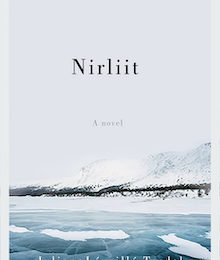
Véhicule Press/Esplanade Fiction & BookThug/Book*Hug [P.T. Smith Redux]
This really is the P. T. Smith-inspired post. As you likely know, Patrick has been writing weekly posts for Three Percent this month about some of his favorite works of Quebec literature. (See this post and this one.) He's one of the few Americans I know (maybe the only one?) who is deep into Quebec lit, so deep in fact that ...
>
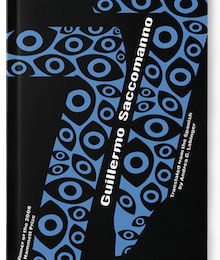
New Release! 77 by Guillermo Saccomanno
We're a few days late announcing this here, but Tuesday, February 12th was the official pub date for Guillermo Saccomanno's 77, translated from the Spanish by Andrea G. Labinger. And today, it was featured in Vanity Fair as one of "6 Must-Read Books from Around the World." Here's the full press release that Anthony put ...
>
Biblioasis [Catherine Leroux Redux]
Last December, when I was working on this post about Quebec fiction, I came up with the idea of having themed months running throughout 2019. Which is why January was all about Spain, February about Quebec, and March about Uwe Johnson's Anniversaries. (Which might kill me and/or lead me into an insane rabbit-hole of ...
>
“Gesell Dome” by Guillermo Saccomanno [Excerpt]
As we posted about last week, Guillermo Saccomanno is our featured author of the month. Throughout February, you can get 30% off both of his books by using the code SACCOMANNO at checkout. To entice you, below you'll find a excerpt from the first Saccomanno book we published, Gesell Dome. Like True Detective through ...
>
“Go Figure” by Réjean Ducharme [Quebec Literature from P.T.]
Before starting this month's focus on Quebec literature, I asked P.T. Smith to recommend a few books for me to read, since he's one of the few Americans I know who has read a lot of Quebec literature. But rather than hoard these recommendations or write silly things about this, we decided it would be best if P.T. wrote a ...
>
Interview with Peter McCambridge of QC Fiction
Following up on Monday's post, here's an interview with the founder of QC Fiction, Peter McCambridge. Since he goes into most of his bio below, I'm not going to preface this all that much, except to congratulate him on being a finalist for the Governor General’s Award for Translation and the Giller Prize for Songs for the ...
>
Guillermo Saccomanno [Open Letter Author of the Month]
In celebration of the release of 77 on Tuesday, February 12, we’ve decided to make Guillermo Saccomanno this month’s featured author. Like what we did for Volodine last month, we’re offering 30% all orders for Gesell Dome and 77 (use SACCOMANNO at checkout), and will be running a series of excerpts from his books. ...
>
Interview with Amaia Gabantxo
To finish off this month of Spanish literature, I talked to Amaia Gabantxo, translator of Twist and Blade of Light by Harkaitz Cano along with a half-dozen other Basque authors, including Bernardo Atxaga, Unai Elorriaga, and Kirmen Uribe, among others. She also moonlights as a flamenco singer and recently released an ...
>
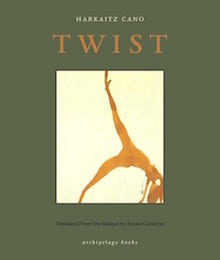
Why Are Patreon [Time for a Basque Rundown]
I promise I’ll be back on schedule soon—this computer situation is really taking it’s toll . . . I’m currently writing on my iPad, using a Bluetooth keyboard and feeling like a gross millennial working out of a third-wave coffee shop, saying NO! to Large Computer, and proving that Jobs is Genius and that 2019 is about ...
>

“Tell Them of Battles, Kings, & Elephants” by Mathias Énard
Tell Them of Battles, Kings, & Elephants Translated from the French by Charlotte Mandell 144 pgs. | pb |9780811227049 | $19.95 New Directions Publishing Reviewed by Grant Barber Énard is a Very Important Author indeed. He belongs on the stage with Pamuk, T Morrison, Morante, Okri, Delillo, J. Marías, ...
>
“Radiant Terminus” Two Month Review Reading Schedule
It's almost time for the next season of the Two Month Review—our seventh season. (That's a solid number.) This season we're returning to do an Open Letter title, Antoine Volodine's Radiant Terminus, translated from the French by Jeffrey Zuckerman. The most patently sci-fi work of Antoine Volodine’s to be ...
>
“The Gradual Disappearance of Jane Ashland” by Nicolai Houm
The Gradual Disappearance of Jane Ashland by Nicolai Houm Translated from Norwegian by Anna Paterson 228 pgs. | pb | 9781947793064 | $15.95 Tin House Books Review by David DeGusta Nicolai Houm’s novel “The Gradual Disappearance of Jane Ashland,” translated from the Norwegian by Anna Paterson, opens with ...
>
“Gustave and Maxime in Egypt (Or: The Metaphysics of Happening)” by Zsófia Bán
“. . . but an enormous part of our lives is taken up with everything that doesn’t happen.” —Péter Nádas Gustave and Maxime are traveling. “Et le petit chat,” dit Hélène, “partira-t-il aussi?” Maxime is taking pictures and Gustave is reading. Maxime is running around and Gustave is sitting ...
>
Pub Date for “Night School: A Reader for Grownups” by Zsófia Bán!
To celebrate today's release of Night School: A Reader for Grownups by Zsófia Bán we're giving away five copies. You can enter by emailing Anthony Blake with "Night School" in the subject line. But hurry! This contest ends tonight at midnight Eastern time. Now, onto the book itself! We'll be posting a excerpt ...
>
Post-Exoticism in Ten Lessons, Lesson Eleven [Excerpt]
In support of Antoine Volodine as our featured "Author of the Month," throughout the day we'll be posting excerpts from the three books of his Open Letter has already published. (Next week we'll run excerpts from forthcoming ones . . . ) First up is Post-Exoticism in Ten Lessons, Lesson Eleven, translated from the ...
>
Landmarks [BTBA 2019]
This week's Best Translated Book Award post is from Tara Cheesman of Reader at Large and BookRiot. This is my second year as a BTBA fiction judge and (please don’t @ me) the pages are all starting to run together. I’ve discovered that when reading books in rapid succession it helps to identify landmarks on the ...
>
“Four by Four” by Sara Mesa
Below is an excerpt from Four by Four by Sara Mesa, translated by Katie Whittemore. To give you a bit of context, I'm including the synopsis that Katie sent us with her original sample: The novel is composed of three sections, each written in a distinct narrative voice and style. In Part One, we are introduced to ...
>
Interview with Katie Whittemore
We're starting out this month's focus on Spanish literature with a look at a couple Castilian authors, especially Sara Mesa, whose works Open Letter will be publishing in 2020. Because I'm a bit impatient, I thought I'd introduce her to you now, via a sample of Four by Four (available on 1/9), a short piece on her ...
>

All the Cameras in Japan
As December rolled around and I started plotting out the end of this year-long series, I had a bunch of ideas for what the final few posts could be about. Knowing that 2019 will bring about some changes to Three Percent (has it ever really remained the same? over eleven-plus years, the one thing that's remained constant is my ...
>
Adam’s Sexy Post [BTBA 2019]
This week's Best Translated Book Post is from Adam Hetherington, a reader from Tulsa who also served on last year's jury. “Do you want to do it again?” he asks. Shit. He is my friend, P.T. Smith. We were both BTBA judges last year; this year he’s invented some sort of easy supervisory role for himself, and invited ...
>
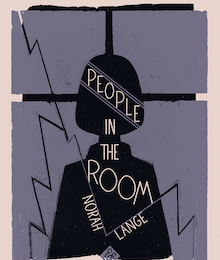
Women in Translation [BTBA 2019]
This week's Best Translated Book Award post is from Pierce Alquist of Book Riot. After a record-breakingly frigid Thanksgiving here in the northeast, I’m dreaming wistfully of August. BBQs, beaches, and bikinis are all good but I mostly just miss being able to go outside without wrapping multiple scarves around my face. ...
>
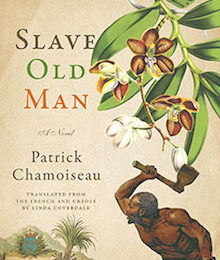
In the Borderlands [BTBA 2019]
Today's BTBA post is from Sofia Samatar, author of A Stranger in Olondria and Assistant Professor at James Madison University. We agreed to spend several months in the borderlands. Every few weeks, each of us would send off a dispatch describing our experiences there, a report that might take any form we liked, we were ...
>
So Many Books [BTBA 2019]
Today's BTBA post is from Keaton Patterson of Brazos Bookstore. As a first-time judge for the BTBA or any literary award for that matter, the question that pops into my mind as the books come flooding in is this—where to start? I’ve been the buyer for an Brazos for over six year now. I’m no stranger to sifting ...
>
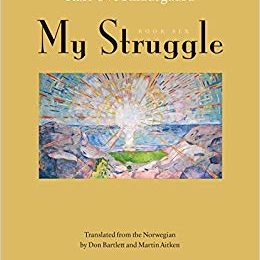
My Struggle, Part II: The 60% Post
Over the past two weeks I've been in NYC for the Words Without Borders gala (THANK YOU AGAIN FOR THE OTTAWAY!), then to LA for the PEN Gala (amazing time with Jessica St. Clair and Dan O'Brien and you too, Ross, I suppose), to Seattle (Amazon Spheres are a thing!), and Minneapolis (sales conference isn't sales conference ...
>
A Rat, a Labyrinth, “Ah Library TNT”?
What makes an Oulipian book Oulipian? Because my outline for this Deep Vellum post is approximate 17,000 words long, I'm going to condense my planned opening into eight bullet points. If you're not familiar with the Oulipo or their literary program, here's a quick-hitting introduction: Read this book by Warren ...
>
My Struggle, Part I: Confusion and Value
As part of my "Deep Vellum Month" experiment, I decided to move from the toponymy—and topography—of Iceland to geography. Or rather, "geography," as in the Geography of Rebels by Maria Gabriela Llansol. Like with most of the books I've been reading of late, I knew basically nothing about this book before picking it ...
>
A Frozen Imagination
Over the course of the eleven years that Three Percent has existed, we've published approximately 300 posts about Iceland. We even held a special "Icelandic Week" when Iceland was Guest of Honor at the 2011 Frankfurt Book Fair. In addition to highlighting a ton of authors and musicians, we tried to record a Brennivín ...
>
Season Six of the Two Month Review is Coming and It’s Pessoa [UPDATED]
UPDATE: I'm reposting this with the amended dates. We had to move everything back a week to ensure that our opening conversations are of the quality that you've come to expect from the Two Month Review. The first YouTube broadcast will be Wednesday, October 3 at 10am Eastern Time. The podcast version will be available here, ...
>
Missed Opportunities (Here’s the NBA Translation Post I Promised)
Per usual when I'm writing these posts, I'm standing in front of my TV with the St. Louis Cardinals game on in the background, dwelling on what this season could've been. Sure, as I type, they have a .5 game lead for the final wild-card slot, but their odds of making the playoffs are only at 68.1%—far from a ...
>
Publishing Strategies of Rediscovery
A few years ago, New Directions reissued three Clarice Lispector books (and one never-before translated one) with covers that combined into one giant portrait. Although it was preceded by the publication of a new translation of The Hour of the Star—by Ben Moser, who had recently written an all-encompassing biography of ...
>
Three Percent #143: The Cocky Pod
This week, Chad and Tom return to basics--more book talk than industry talk, a promise to release a new episode every other Wednesday--but start off with something that's very, very Three Percent: #Cockygate. Although the #Cockygate lawsuit is interesting in its own right, it's the breakdown of the seedy underworld of gaming ...
>
Dubravka Ugresic’s Complete U.S. Tour
For anyone who isn't a subscriber to our newsletter (you can sign up here), but is interested in seeing Dubravka Ugresic during her North American tour this fall, here's a complete list of all of her events: Saturday, September 15, 7pm (Long Island City) Reading with Nina Herzog Book Culture on Long Island ...
>
BTBA 2019: Juries, Dates, Request for Your Books
Earlier this week, Patrick Smith sent out the email below to as many publishers as possible, letting them know about this year's Best Translated Book Award juries. In case you didn't get this--or, if you're a translator or author who wants to make sure your book is submitted--I'm reposting it all here. (And, we will have a ...
>
“The Bottom of the Jar” by Abdellatif Laâbi
The Bottom of the Jar by Abdellatif Laâbi translated from the French by André Naffis-Sahely 220 pgs. | pb |9781935744603 | $17.00 Archipelago Books Reviewed by Brendan Riley For English language readers, like this reviewer, whose literary sense of North Africa is delimited by periodic forays into the ...
>
Two Month Review: #5.06: FOX by Dubravka Ugresic (“The Devil’s Garden”)
Pete Mitchell—who wrote this great review of Fox for Asymptote—joined Chad and Brian this week to talk about the heartbreaking (and semi-profane) ending to "The Devil's Garden," the third part of Dubrakva Ugresic's latest novel. From the idea of a small ping singling one's eventual crack-up to peeing on the side of the ...
>
August 2018 Newsletter
Celebrate Women in Translation Month with 40% Off All Open Letter Books Written by Women OR Translated by Women Women in Translation Month is always an exciting time to discover, read, discuss, and celebrate books by women from around the world. It was created by Meytal Radzinski back in 2014, and has since spawned ...
>
The Very Pleasant Post
Usually I try and make the first post of the month one that's based around some sort of statistical analysis of what's going on with literature in translation. Since this is Women in Translation Month (#WIT2018), it would make a great deal of sense to run a bunch of data about women writers in translation, women translators, ...
>

A Balance of Plot and Place (Two Month Review: #5.03-5.04: FOX by Dubravka Ugresic – Blog Post)
Last week, Chad and Brian were joined by Ellen Elias-Bursác, one of the Fox translators, for an incredible discussion on the second half of “A Balancing Art.” Ellen was enamored with the dynamics between the Widow and Ugresic’s narrator, the former finding success managing the works of her late husband and the latter ...
>
A Whole Lot of Blather
I'm back from Ireland! I was there for the past two weeks as part of a University of Rochester Travel Club trip for which I served as the "academic host" and gave four different lectures--two on Ulysses, one on Irish humor, and one on the relationship between contemporary Irish literature and language. I think they all went ...
>
The Best Female Chinese Novelist You’ve Never Heard Of
To say that Xiao Hong's life was rough is a serious understatement. She was born in 1911, during one of China's most turbulent periods, all leading up to the Second Sino-Japanese War. In addition to the cultural turmoil, Xiao's mother passed away when she was nine, leaving her to be raised by an abusive father whom ...
>

“Katalin Street” by Magda Szabó
Katalin Street by Magda Szabó translated from the Hungarian by Len Rix 248 pgs. | pb | 9781681371528 | $15.95 NYRB Classics Reviewed by Jason Newport What is a woman, or her ghost, to do for herself? This is the question that haunts Hungarian author Magda Szabó in her three novels ...
>
Is this All Fox-y Enough? (Two Month Review: #5.02: FOX by Dubravka Ugresic – Blog Post)
Last week, Chad, Brian, and returning special guest Tom Flynn of Volumes Bookcafe broke down some of the bigger elements of the introductory section of Dubravka Ugresic’s Fox, including the all-important question: is Ugresic’s fox metaphor fox-y enough? We’ll take our own look at some segments of this opening section ...
>
Two Month Review: #5.02: FOX by Ugresic (“A Story about How Stories Come to Be Written”)
This week's podcast is pretty fast and loose, with Fortnite disruptions, embarrassing pronunciations, lots of ribbing, and a deep dive into the various games going on in Part I of Dubravka Ugresic's Fox, "A Story about How Stories Come to Be Written." Starting from Pilnyak's story of the same name, this section revolves ...
>
9 Books Likely to Win the 2019 Best Translated Book Award
I'm just back from a poetry reading that's part of Rochester's The Ladder literary conference . . . actually, it was a poetry reading PLUS short stories (which are the poetry of novel writing), which is neither here nor there, except that a few of us played a sort of drinking game? Actually, we just straight up played a ...
>
New Two Month Review Season Starts 6/11!
After a bit of a hiatus, we're back! Starting tonight (Monday, June 11th) at 9pm, Brian and I are going to tackle Dubravka Ugresic's latest novel--Fox. Here's what Kirkus Reviews had to say about it in their STARRED review: Another tricky treasure from an internationally renowned author. Ugresic has been in exile from ...
>
9 Comp Authors for Dag Solstad, Or, How I Learned to Stop Worrying and Embrace the Listicle
So much has happened over the past two weeks! Given all that I want to say about Dag Solstad's books and the people who review them, I'm going to rush through a few general comments about recent publishing events. First off: the New York Rights Fair and BookExpo. This year marked the first ever NYRF and the "newly ...
>
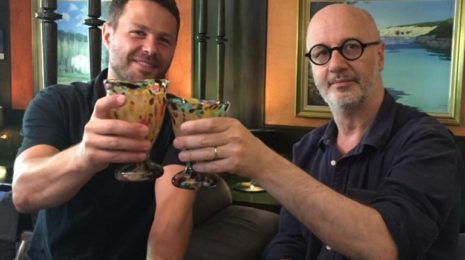
“Snatching Bodies” by Rodrigo Fresán [New Fiction]
To celebrate the release of The Bottom of the Sky (which happens to be Open Letter's 100th title!), we wanted to share this "bonus track" to the novel. He initially wrote this story as a sort of explanation for one paragraph in The Bottom of the Sky, and then had it anthologized in collection of “dysfunctional family” ...
>
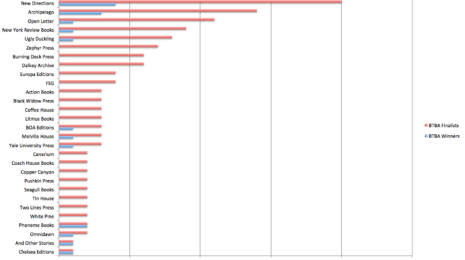
May Is a Month of Grading
The Best Translated Book Award Finalists were announced earlier this week, and following up on my earlier post looking at the representation of various languages on the BTBA longlists, I thought I'd take a second to highlight the publishing houses (#NameThePublisher) that have historically done the best on the BTBA ...
>
“The Magician of Vienna” by Sergio Pitol [Why This Book Should Win]
This entry in the Why This Book Should Win series is from P.T. Smith. A full-time writer of WTBSW entries. The Magician of Vienna by Sergio Pitol, translated from the Spanish by George Henson (Mexico, Deep Vellum) Books that are part of a series have a tough time getting the recognition they deserve, in general and ...
>

“Spiral Staircase” by Hirato Renkichi [Why This Book Should Win]
This entry in the Why This Book Should Win series is from poet, translator, and Asymptote editor Aditi Machado. Spiral Staircase: Collected Poems of Hirato Renkichi, translated from the Japanese by Sho Sugita (Japan, Ugly Duckling Presse) The seventh statement in Hirato Renkichi’s “Manifesto of the Japanese ...
>
“Savage Theories” by Pola Oloixarac [Why This Book Should Win]
This entry in the Why This Book Should Win series is from George Carroll, former and future BTBA judge, soccer fanatic, world literature correspondent for Shelf Awareness, and curator of litintranslation.com. Savage Theories by Pola Oloixarac, translated from the Spanish by Roy Kesey (Argentina, Soho Press) I would ...
>

“Suzanne” by Anaïs Barbeau-Lavalette [Why This Book Should Win]
The Why This Book Should Win entry for today is from literary translator Peter McCambridge, fiction editor at QC Fiction (a new imprint of the best of contemporary Quebec fiction in translation) and founding editor of Québec Reads. Suzanne by Anaïs Barbeau-Lavalette, translated from the French (Québec) by Rhonda ...
>
“Bergeners” by Tomas Espedal [Why This Book Should Win]
This entry in the Why This book Should Win series is from BTBA judge Patrick Smith, who is scrambling to finish covering all the books in this series. If you want to write about one of the remaining few, please get in touch! Bergeners by Tomas Espedal, translated from the Norwegian by James Anderson (Norway, Seagull ...
>
“Third-Millennium Heart” by Ursula Andkjær Olsen [Why This Book Should Win]
This entry in the Why This Book Should Win series is from poet, translator, editor, and BTBA judge, Aditi Machado. Third-Millennium Heart by Ursula Andkjær Olsen, translated from the Danish by Katrine Øgaard Jensen (Denmark, Broken Dimanche Press/Action Books) What’s a translated book got to do to ...
>
“Compass” by Mathias Énard [Why This Book Should Win]
This entry in the Why This Book Should Win series is from former BTBA judge and founder of the Literary License blog, Gwendolyn Dawson, who lives in Houston, TX and is a practicing lawyer. She is a longtime supporter of literature in translation and all literary arts. Compass by Mathias Énard, translated from the ...
>

Day of Giving at the University of Rochester
Today is the official “Day of Giving” at the University of Rochester—a 24-hour push to support any school, program, or area across the University and its Medical Center. It’s directed at the entire Rochester community including alumni, parents, patients, friends, faculty, staff, and students. ...
>
Tickets to Open Letter’s Ten-Year Celebration in NYC Are Going Fast!
On Thursday, May 10th, at 7pm, Open Letter will be hosting its first celebration in New York City in ten years. Some of you might remember our initial launch party at the German Consulate in New York way, way back in 2008. Well, ten years and one hundred books later, we’re coming back! A week from Thursday ...
>
“Chasing the King of Hearts” by Hanna Krall [Why This Book Should Win]
This entry in the Why This Book Should Win series is from Ruchama Johnston-Bloom, who writes about modern Jewish thought and Orientalism. She has a PhD in the History of Judaism from the University of Chicago and is the Associate Director of Academic Affairs at the London center of CAPA: The Global Education ...
>
“Return to the Dark Valley” by Santiago Gamboa [Why This Book Should Win]
Final entry today in the Why This Book Should Win series is from BTBA judge and curator of “Reader-at-Large,” Tara Cheesman. Return to the Dark Valley by Santiago Gamboa, translated from the Spanish by Howard Curtis (Colombia, Europa Editions) One of the characters in Return to the Dark Valley is a “crazy and ...
>
“Remains of Life” by Wu He [Why This Book Should Win]
This afternoon’s entry in the “Why This Book Should Win” series is from BTBA judge Adam Hetherington. Remains of Life by Wu He, translated from the Chinese by Michael Berry (China, Columbia University Press) I’m not sure how to define historical fiction. How true does regular fiction need to be to become ...
>
“The Invented Part” by Rodrigo Fresán [Why This Book Should Win]
Between now and the announcement of the BTBA finalists on May 15th, we’ll be highlighting all 37 longlisted books in a series we call “Why This Book Should Win.” The first post is from BTBA judge and Ebenezer Books bookseller P.T. Smith. The Invented Part by Rodrigo Fresán, translated from the Spanish by Will ...
>
“Odyssey” by Homer
The Odyssey by Homer Translated from the Greek by Emily Wilson 592 pgs. | hc | 9780393089059 | $39.95 W. W. Norton Reviewed by Peter Constantine Now goddess, child of Zeus, tell the old story for our modern ...
>
Open Letter is Hiring a Marketing Assistant
As mentioned on the most recent podcast, we are searching for a Marketing Assistant to help out with promoting our books to reviewers, booksellers, and individuals. The complete ad is posted below, and available here. And you have to apply through that link. Open Letter is part of the University of Rochester, so the ...
>
A Quantum Spiral by Another Name (Part VII, Pgs 201-236)
Last week, Chad and Brian were joined by Rachel S. Cordasco of Speculative Fiction in Translation as they discussed Part VII, “Global Autumn,” of Georgi Gospodinov’s Physics of Sorrow. This section hits us from too many angles, from the relatable hilarity of having a phobia of being asked “how are you?” to trying ...
>
Best Translated Book Award 2018: The Longlists!
April 10, 2018—Celebrating its eleventh consecutive year of honoring literature in translation, the Best Translated Book Awards is pleased to announce the 2018 longlists for both fiction and poetry. Announced at The Millions, the lists include a diverse range of authors, languages, countries, and publishers. On the ...
>
Catching up on Season Four of the Two Month Review
As you hopefully noticed, earlier this morning the eighth episode of the current season of the Two Month Review went live. This was the seventh straight week of talking about Georgi Gospodinov’s incredible novel, The Physics of Sorrow, which was translated from the Bulgarian by Angela Rodel. And the eighth write-up by ...
>
Thinking About Book Reviews
Clarice Lispector is undoubtedly one of the great writers of the past century. Her recent rediscovery—sparked off by the reissuing of The Hour of the Star in Ben Moser’s new translation—is definitely merited, and will hopefully usher in a time in which any number of very deserving female authors from the ...
>
A Myth with a Twist (Part V, Pgs 151-178)
Last week, Chad, Brian, and special guest Tom Flynn had a particularly boisterous discussion of Part V of The Physics of Sorrow that was as insightful towards the literature at hand as much as it was to learn sick burns for your friends with weak March Madness brackets. But between the trash talk and discussion of oysters, ...
>
This Headline’ll Make You MAD, MAD!
It’s fitting that I’m writing this post about a book called Trick as Stormy Daniels is on 60 Minutes? This is one of the daily reminders that life is not books, and that books aren’t as important as I make them out to be in my mind. Nothing matters, nothing makes sense. Guns and corruption are way more important than ...
>
Two Month Review: #4.06: The Physics of Sorrow (Part V: “The Green House”)
In addition to ripping on Chad and the poor showing by the Michigan State Spartans in the NCAA Tournament, Brian Wood and Tom Flynn (from Volumes Bookcafe) discuss the morality of animals, how this section of The Physics of Sorrow focuses more on the “animal” side of the minotaur, the mixture of lightness and sorrow in ...
>
Ties that Confine [BTBA 2018]
This week’s Best Translated Book Award post is from Lori Feathers, co-owner of Interabang Books in Dallas, TX. She’s also a freelance book critic and member of the National Book Critics Circle. Her recent reviews can be found at Words Without Borders, Full Stop, World Literature Today, Three Percent, Rain Taxi, and on ...
>
Gospodinov, the Curator; “The Physics of Sorrow,” the Time Capsule (Part IV, Pgs 119-150)
Last week, Chad, Brian, special guest Patrick Smith, and an insightful YouTube commentator discussed part IV of Georgi Gospodinov’s The Physics of Sorrow. This section, in many ways, brought us full circle to the nature of Gospodinov’s work by introducing us to the cultural phenomena of the time capsule, and the ...
>
9 Moments That Make “Tomb Song” the Frontrunner for the National Book Award in Translation
Tomb Song by Julián Herbert, translated from the Spanish by Christina MacSweeney (Graywolf Press) Moment Number One “Technique, my boy,” says a voice in my head. “Shuffle the technique.” To hell with it: in her youth, Mamá was a beautiful half-breed Indian who had five husbands: a fabled pimp, a ...
>
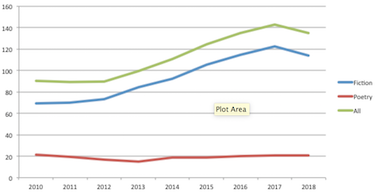
Context Is Everything
Given the length of yesterday’s post, I’m just going to jump right into things, starting with this handmade Excel spreadsheet showing the three-year rolling average of the total number of translations published in the first quarter (January-March) of every year since 2008. That’s not the most illuminating ...
>
We are Minotaur, or: Eat your Darlings (Part II)
This week we’re following up from Chad, Brian, special guest Caitlin Baker (University Book Store in Seattle), and their discussion of Part II of Georgi Gospodinov’s The Physics of Sorrow, “Against an Abandonment: The Case of M.” Here, Gospodinov throws us for another loop, as we move from the halls of memory ...
>
Sorrow-Maker Gospodinov (Part 1, Pgs 1-58)
This week we will be looking at the opening section of Georgi Gospodinov’s The Physics of Sorrow. If you didn’t already, you can catch the conversation between Chad Post, Tom Roberge, and Brian Wood on this section of the book at Three Percent or on YouTube for the unedited, behind the scenes full audio-visual experience ...
>
Less Than Deadly Serious
Every spring, I teach a class on “World Literature & Translation” in which we read ~10 new translations, talk to as many of the translators as possible, and then the students have to choose one of the books to win their imaginary “Best Translated Book Award.” It’s a great exercise—trying to explain why they ...
>
Georgi Gospodinov and The Physics of Sorrow (Introduction)
Throughout this season of the Two Month Review, Santiago Morrice will be writing weekly pieces about the section of the book discussed on the previous week’s podcast. These will likely go a bit more in depth into the style and content of the novel itself, nicely complementing the podcasts. On last week’s podcast, Chad ...
>
Noble Expectations
When I first decided to undertake this project of writing about one 2018 translation a week, I knew that there would come a week in which I didn’t finish the book that I had planned to write about. This might be due to time constraints, or simply because I didn’t feel like finishing the book in question. Well, it took ...
>
Making the List [BTBA 2018]
This week’s Best Translated Book Award post is from Tara Cheesman, a freelance book critic and National Book Critics Circle member whose recent reviews can be found at The Rumpus, Book Riot, Los Angeles Review of Books, and Quarterly Conversation. Since 2009 she’s written the blog Reader At Large (formerly BookSexy ...
>
An Imaginary Sabermetrics for Publishing
Empty Set by Verónica Gerber Bicecci, translated from the Spanish by Christina MacSweeney (Coffee House) Although five books is most definitely a small sample size of throwaway proportions, out of the books that I’ve written about for this weekly “column,” Empty Set by Verónica Gerber Bicecci and ...
>
The Translation Industry Is Frozen
Before getting into the February translations, data on what’s being published (or not being published), and all the random stuff, I wanted to point out a few modifications to the Translation Database at Publishers Weekly that were recently implemented. First off, when you’re entering a title, you can now ...
>
Never Fact-Check a Listicle
Back when I kicked off my 2018 Translations series I chose to include Frankenstein in Baghdad by Ahmed Saadawi as the fourth book from January I would read and review. And why not? It won the 2014 International Prize for Arabic Fiction1 and came with pretty high praise. “A haunting allegory of man’s savagery against man ...
>
I Remember Nightfall
I Remember Nightfall by Marosa di Giorgio (trans. From the Spanish by Jeannine Marie Pitas) is a bilingual poetry volume in four parts, consisting of the poems “The History of Violets,” “Magnolia,” “The War of the Orchards,” and “The Native Garden is in Flames.” Each of these prose poems is divided into ...
>
A Best-seller Should Be Divisive
When I came up with my plan of reading (and writing about) a new translation every week, I wanted to try and force myself to read books that I would normally just skip over. There are definitely going to be months filled with books by New Directions, Coffee House, Dalkey Archive, etc., but to write about just those titles ...
>
Tabucchi in Portugal: On Tabucchi’s “Viaggi e altri viaggi” [an essay by Jeanne Bonner]
Jeanne Bonner is a writer, editor and journalist, and translator from the Italian now based in Connecticut. In the fall, she began teaching Italian at the University of Connecticut where she is also working on several translation projects. You can find out more about Jeanne and her work at her website here. It’s a travel ...
>
Why Continue [BTBA 2018]
“Why am I reading this?” I ask myself this almost constantly. Sometimes the answer is obvious: when the book is a masterpiece, when the pleasure is so deep or constant that there’s little else I want. I treasure those books, but if it was the only reason I read a book, I wouldn’t read much. There are novels where the ...
>
It’s 2018 and Where Have the Translations Gone?
Now that the Translation Database is over at Publishers Weekly, and in a format that makes it both possible to update in real time1 and much easier to query, I want to use it as the basis of a couple new regular columns here at Three Percent. First off, I want to get back to running monthly previews of translations. But, ...
>
The Size of the World
The Size of the World by Branko Anđić translated from the Serbian by Elizabeth Salmore 208 pages | pb | 9788661452154 | $10.99 Reviewed by Jaimie Lau Three generations of men—a storyteller, his father and his son—encompass this book’s world. . . . it is a world of historical confusion, illusion, ...
>
BTBA Gift Guide [BTBA 2018]
This post was compiled by BTBA judge P.T. Smith. From now until the announcement of the long list, we’ll be running one post a week from a BTBA judge, cycling through the nine of us. To launch those posts, just in time for the holidays (just in time, yes), here’s a gift guide. These are books that have stood out to ...
>
Two Month Review LIVE at McNally Jackson Next Tuesday (12/12/17)
For our final episode of the Rodoreda season, Brian and I will be taking the early morning train to NYC (seriously, it leaves at 5:41am, which is a time that exists) so that we can talk about Death in Spring in front of a live audience. At 7pm at McNally Jackson (52 Prince St.) we’ll be joined by María Cristina ...
>
Myths, Rituals, Fears in Death in Spring [Two Month Review]
Coming up on this Thursday’s Two Month Review podcast I join Brian Wood, Meg Berkobien, and Anastasia Nikolis to talk about the opening section of Death in Spring, the first Rodoreda novel that Open Letter ever published. To preface that conversation (which is a lot of gushing over her prose and ideas, along with some ...
>
Two Month Review #3.6: Selected Stories (pgs. 208-255)
After yelling at Skype a bunch, Chad, Brian, and special guest Tom Flynn of Volumes Bookcafe discuss the merits of some of Rodoreda’s final stories, especially “The Thousand Franc Bill,” “Paralysis,” and “The Salamander.” Then they manage to slightly diss groups upon groups of ...
>
"Red, Yellow, Green": Alejandro Saravia and María José Giménez
Bolivian-Canadian writer Alejandro Saravia and poet and translator María José Giménez discuss his new novel, Red, Yellow, Green, the first to be translated into English, as well as the tumultuous existence of the exile, the crossings of language, and Latino-Canadian literature. When: Thursday, November 16 @ ...
>
Dominique Fabre at Green Apple Books
Join Green Apple Books when we welcome Dominique Fabre, French author and the latest participant in the French Consulate of San Francisco’s new “Room With A View” writer’s residency, discusses his work and his stay in S.F. When: Monday, October 30 @ 7:30pm Where: Green Apple Books at 9th ...
>
Three Observations and One Story [Two Month Review]
Coming up on this Thursday’s Two Month Review podcast Brian and I talk about the first six stories in Mercè Rodoreda’s Selected Stories : “Blood,” “Threaded Needle,” “Summer,” “Guinea Fowls,” “The Mirror,” and “Happiness.” Which is only the ...
>
"A Working Woman" Happy Hour with the CAT
Have a drink on us and learn about the newest release from Two Lines Press. Join us for happy hour at the CAT and Two Lines offices to celebrate the release of A Working Woman. Stop by after work for wine and tapas and hear readings from the book by Two Lines staff. A Working Woman by Elvira Navarro, translated by ...
>

“I Am a Season That Does Not Exist in the World” by Kim Kyung-Ju
I Am a Season That Does Not Exist in the World by Kim Kyung-Ju translated from the Korean by Jake Levine 144 pgs. | pb |9781939568144 | $14.95 Black Ocean Reviewed by Jacob Rogers Kim Kyung Ju’s I Am a Season That Does Not Exist in the World, translated from the Korean by Jake Levine, is a wonderful ...
>
Dominique Fabre & David Ulin in Conversation
The Last Bookstore is pleased to present French writer Dominique Fabre, author of Guys Like Me and The Waitress Was New, in conversation with noted book critic and author David Ulin. Join us to hear Ulin and Fabre talk about Paris lonelier than you’ve ever experienced it, and to hear Fabre read from his latest ...
>
Children’s Literature in Translation: Celebrating Elsewhere Editions with Roger Mello and Daniel Hahn
Translated by children’s literature guru Daniel Hahn, You Can’t Be Too Careful! explores an idea that author and illustrator Mello had as a child: that one small action can have marvelous consequences. Through wordplay, dreamlike images, and a playful lightness of touch, You Can’t Be Too Careful! expresses serious ...
>
 ``
``
Three Percent #134: The Books We Read and Why We Read Them
After an impassioned pitch for why you should support Open Letter’s annual campaign, Chad and Tom talk about ALTA, about how best to promote international literature to common readers, about the moral argument for reading translations, about Tim Parks and this article on Han Kang’s Human Acts, and about how ...
>
Wojciech Nowicki Tour!
This evening, at Volumes Bookcafe in Chicago, Wojciech Nowicki’s U.S. tour for Salki kicks off. A four-city tour spanning the next ten days, this is your one opportunity in 2017 to meet the author of the book about which Andrzej Stasiuk said, “Your skin will crawl with pleasure from ...
>
Two Month Review LIVE!!!
Over the next couple weeks, you’re going to hear me mess up this announcement on podcast after podcast, but on Saturday, September 30th at 3:30pm Lytton and I will be recording the final episode of the second season of the Two Month Review LIVE at Spoonbill & Sugartown in Brooklyn. This will be part of the ...
>
“Kingdom Cons” by Yuri Herrera
Kingdom Cons by Yuri Herrera translated from the Spanish by Lisa Dillman 220 pgs. | pb | 9781908276926 | $13.95 And Other Stories Reviewed by Sarah Booker Yuri Herrera is overwhelming in the way that he sucks readers into his worlds, transporting them to a borderland that is at once mythical in its ...
>
Perceived Humiliations, The Board, and the Dangers of Desire [Tómas Jónsson, Bestseller]
On this week’s Two Month Review podcast, we’ll be discussing the fifth composition book and VI (pages 69-139) from Tómas Jónsson, Bestseller. As a bit of preparation, below you’ll find some initial thoughts, observations, and quotes. You can also download this post as a PDF document. As always, ...
>
Best Translated Book Awards 2018: Judges, Dates, and More!
It’s that time again! Listed below are all the details for this year’s Best Translated Book Award juries! Award Dates In terms of dates, this is subject to change, but currently we’re planning on announcing the longlists for fiction and poetry on Tuesday, April 10th, the finalists on Tuesday, May ...
>
A Simple Story: The Last Malambo
Leila Guerriero’s A Simple Story: The Last Malambo chronicles the unique ferocity of a national dance competition in Argentina. The dance, called the malambo, pushes the physical and mental limits of male competitors striving to become champions of not only the historical craft of the dance, but for their families and ...
>
Interview with Jean-Marie Blas de Roblès
To celebrate the official pub date for Jean-Marie Blas de Roblès’s Island of Point Nemo, you’ll find an interview below between the translator, Hannah Chute (who received a Banff Translation Fellowship to work on this book) and the author himself. You can get the book now either through our website, or from ...
>
"Tómas Jónsson, Bestseller" Reading Schedule [Two Month Review]
The first episode in the new season of the Two Month Review will release on Thursday, and in case you haven’t already heard, for the next ten weeks we’ll be discussing Tómas Jónsson, Bestseller by Guðbergur Bergsson. We have a Goodreads group set up to talk about about this, so feel free to join in and ...
>
Agnes
The narrator of Peter Stamm’s first novel, Agnes, originally published in 1998 and now available in the U.S. in an able translation by Michael Hofmann, is a young Swiss writer who has come to Chicago to research a book on American luxury trains. In the reading room of the Public Library he meets Agnes, a graduate student in ...
>
Interview with Rodrigo Fresán (Part V)
If you’d rather read this podcast in one document, just dowload this PDF. Otherwise, click here to find all four of the earlier pieces along with a bunch of other Two Month Review posts about The Invented Part. Special thanks to Will Vanderhyden for conducting—and translating—this ...
>
Class
The thing about Class is that I don’t know what the hell to think about it, yet I can’t stop thinking about it. I’ll begin by dispensing with the usual info that one may want to know when considering adding the book to their “to read” list. Written by Francesco Pacifico. Translated by Francesco Pacifico. Published ...
>
Airplanes, Hyphellipses, and What's Next? [The Invented Part]
On this week’s Two Month Review podcast, we’ll be discussing the seventh, and final, part of The Invented Part (“The Imaginary Person,” pages 441-552). As a bit of preparation, below you’ll find some initial thoughts, observations, and quotes. You can also download this post as a PDF ...
>
I See You [The Invented Part]
On this week’s Two Month Review podcast, we’ll be discussing the sixth part of The Invented Part (“Meanwhile, Once Again, Beside the Museum Stairway, Under a Big Day,” pages 405-440). As a bit of preparation, below you’ll find some initial thoughts, observations, and quotes. You can also ...
>
"Tomás Jónsson, Bestseller" Release Day!
Fans of challenging, cerebral, modernist epics, rejoice! Today marks the official release date of Tómas Jónsson, Bestseller by Guðbergur Bergsson, a masterpiece of twentieth-century Icelandic literature, the fifth Icelandic work Open Letter has published to date. This is a book that is sure to launch a thousand ...
>
Structure, Time, Memory, and the Sadness of a Disillusioned Writer [The Invented Part]
On this week’s Two Month Review podcast, we’ll be discussing the fifth part of The Invented Part (“Life After People, or Notes for a Brief History of Progressive Rock and Science Fiction,” pages 361-404). As a bit of preparation, below you’ll find some initial thoughts, observations, and ...
>
The Inverted Part [Two Month Review: The Invented Part]
On this week’s Two Month Review podcast, we’ll be discussing the fourth part of The Invented Part (“Many Fêtes, or Study for a Group Portrait with Broken Decalogues,” pagest 301-360). As a bit of preparation, below you’ll find some initial thoughts, observations, and quotes. You can also ...
>
The Dispossessed
To be, or not to be? Hamlet’s enduring question is one that Szilárd Borbély, acclaimed Hungarian poet, verse-playwright, librettist, essayist, literary critic, short-story writer, and, finally, novelist, answered sadly in the negative, through his suicide in 2014, at the age of fifty. Loss of life, voluntary or ...
>
Let's Get Weird [Two Month Review: The Invented Part]
On last Thursday’s Two Month Review podcast we covered the opening to the second section of The Invented Part, and coming up later this week we’ll be covering pages 99-207—the second section of “The Place Where the Sea Ends So the Forest Can Begin.” As a bit of preparation, below you’ll ...
>
Interview with Rodrigo Fresán (Part II)
You can read the first part of this interview here, and you can click here for all Two Month Review posts. Special thanks to Will Vanderhyden for conducting—and translating—this interview. Will Vanderhyden: Now, this is a question that, in a way, the book takes as its point of departure—so it might make ...
>
Reflections and Mirrors [Two Month Review: The Invented Part]
On last Thursday’s Two Month Review podcast we covered the first forty-five pages of The Invented Part, and coming up later this week we’ll be covering pages 46-98—the first section of “The Place Where the Sea Ends So the Forest Can Begin.” As a bit of preparation, below you’ll find some ...
>
Interview with Rodrigo Fresán (Part I)
As you hopefully already know, for the next two months we’ll be producing a weekly podcast and a series of posts all about Rodrigo Fresán’s The Invented Part. All grouped under the title “Two Month Review,” this initiative is part book club, part exercise in slow reading, and part opportunity to ...
>
Some Notes on "The Real Character" [Two Month Review: The Invented Part]
The first Two Month Review podcast went up just over a week ago, and the next one—covering the first section of the book, “The Real Character” (pages 1-45)—will be posted next Thursday, June 1st. Prior to each week’s podcast, we hope to have at least some sort of overview post that offers some ...
>
The Worlds of João Gilberto Noll: Adam Morris in discussion with Scott Esposito
Join us at City Lights Booksellers on May 18 for a reading from Atlantic Hotel, along with an intriguing conversation delving into modern-day Brazil, Noll’s influences (including Clarice Lispector), his mysterious protagonists, and the challenges of translating his labyrinthine, twisty sentences into English. When: May ...
>
Win a Copy of "Tómas Jónsson, Bestseller" by Gudbergur Bergsson from GoodReads!
As you may already know, Tómas Jónsson, Bestseller, translated by Lytton Smith, is going to be the second Two Month Review title. This “season” will take place in August and September, but you can get a head start by winning a copy of the book through GoodReads. If you’re a GoodReads user, all you have to ...
>
"Bardo or Not Bardo" Wins the Inaugural Albertine Prize!
Antoine Volodine’s Bardo or Not Bardo, translated by J. T. Mahany has won the first ever Albertine Prize—a reader’s choice award celebrating contemporary French fiction. The book had to go through two rounds of public voting, moving from a longlist of ten titles, to a three title shortlist before eventually ...
>
Two Voices Salon: Translator Simon Wickhamsmith on Mongolian Poet Tseveendorjin Oidov
Join us for a conversation with Mongolian translator Simon Wickhamsmith and Scott Esposito about Wickhamsmith’s translation of Tseveendorjin Oidov’s The End of the Dark Era. Wickhamsmith was awarded a PEN/Heim Translation grant for his work on the book, and he’ll talk about how he became interested in Mongolian ...
>
Dick Cluster @ Oakland Public Library
Hear translator Dick Cluster read from Kill the Ámpaya! The Best Latin American Baseball Fiction. When: May 6, 2017, 2:30 pm Where: Oakland Public Library, Temescal branch, 5205 Telegraph Avenue, Oakland, CA 94609 For more information on the event, go ...
>
Auto-Fiction @ PEN World Voices
Each of these three authors has written work that falls on the spectrum of memoir – some is more fictionalized, and some stays truer to their authors’ lives and experiences. Each author will be reading from and speaking about their work. With Bae Suah, Marcelino Truong, and Oddný Eir. For more information on this ...
>
2017 BTBA Winners Announced
The winners of the 2017 BTBA for Fiction and Poetry will be announced on Thursday, May 4th at 7 p.m., simultaneously on The Millions and at a live event at The Folly (92 W. Houston Street, New York City). The event is free and open to the ...
>
Literary Quest: Westbeth Edition @ PEN World Voices
Residents open their homes for readings by authors and a party in their legendary gallery. With Moustafa Bayoumi, Rita Mae Brown (US), Farah Jasmine Griffin (US), Abeer Hoque (Nigeria/Bangladesh/American), Thomas Meinecke (Germany/US), Haroon Moghul, Tanwi Nandini Islam, Karolina Ramqvist, Idra Novey, Igor Stiks (UK), Han ...
>
Bae Suah @ East City Bookshop
Join us for a reading and signing by author Bae Suah. RSVP on Facebook or email rsvp@eastcitybookshop.com. RSVPs are appreciated but not required. When: Wednesday, May 3, 2017 – 6:30pm to 8:00pm Where: East City Bookshop 645 Pennsylvania Avenue SE Washington, DC 20003 For more information, go ...
>
Bae Suah @ Penn Book Center
Join us for a reading and discussion with South Korean poet and novelist Bae Suah! Ms. Bae is on tour around the United States in advance of her participation in the PEN World Voices Festival in New York, and will be stopping in Philadelphia to present her newly-translated novel “A Greater Music” and her new ...
>
Dick Cluster and Norman Zelaya @ San Fran Public Library
Dick Cluster and Norman Zelaya read from Kill the Ámpaya! The Best Latin American Baseball Fiction. When: May 2, 2017, 6:30 PM Where: San Francisco Public Library, Main Library, 100 Larkin St, SF CA 94102 For more information on the event, go ...
>
Reading the World Conversation Series: Bae Suah @ Nox
May 01, 2017 6:00 PM – 7:30 PM NOX Cocktail Lounge (302 N. Goodman, Rochester, NY) One of South Korea’s most highly acclaimed contemporary novelists, Bae Suah is the author of more than a dozen works, including A Greater Music, Recitation, Nowhere to Be Found, and North Station. Additionally, she has ...
>
2017 PEN World Voices Festival
For more information on the festival, including event schedules, please go
>
Andrés Barba @ Green Apple Books
Join Green Apple Books and Andres Barba as he discusses his new novel, Such Small Hands, with Yiyun Li, followed by a party sponsored by Transit Books. When: April 25, 7:00pm Where: Green Apple Books on the Park, 1231 9th Avenue, SF CA 94122 For more information on the event, go ...
>
Why These Fiction Finalists Should Win [BTBA 2017]
We’re just over a week away from the announcement of the Best Translated Book Award winners1, so it’s a good time to start ramping up the speculation. Tomorrow I’ll post about the poetry finalists, and give updated odds on the entire shortlist on Thursday, but for today, I thought it would be worthwhile to ...
>
An Evening of Catalan Poetry with Maria Cabrera @ El Born in NYC
Join us for an evening of Catalan poetry and the US debut of an exciting literary talent. Poet Maria Cabrera’s original and unconventional poems from La ciutat cansada (Tired City) earned her the prestigious Carles Riba Poetry Prize in 2016. At this special New York appearance, Cabrera and translator Mary Ann Newman will ...
>
2017 Best Translated Book Award Finalists [BTBA 2017]
April 18, 2017—Ten works of fiction and five poetry collections remain in the running for this year’s Best Translated Book Awards following the announcement of the two shortlists at The Millions website this morning. A wide range of languages and writing styles are represented on these shortlists, from the more ...
>
Two Lost Souls: on "Revulsion" and "Cabo De Gata"
The dislocation of individuals from the countries of their birth has long been a common theme in contemporary literature. These two short novels recently translated into English appear firmly rooted in this tradition of ex-pat literature, but their authors eschew the romanticism found in earlier works. In Revulsion, Eguardo ...
>
Reading the World Conversation Series with Bae Suah
On May 1st, South Korean author Bae Suah (Recitation, A Greater Music, Nowhere to Be Found, and the forthcoming North Station) will be in Rochester, NY for TWO Reading the World Conversation Series events. The first will take place in the Humanities Center at Rush Rhees Library on the University of Rochester’s ...
>
“Zama” by Antonio Di Benedetto [Why This Book Should Win]
Between the announcement of the Best Translated Book Award longlists and the unveiling of the finalists, we will be covering all thirty-five titles in the Why This Book Should Win series. Enjoy learning about all the various titles selected by the fourteen fiction and poetry judges, and I hope you find a few to purchase and ...
>
“Oblivion” by Sergi Lebedev [Why This Book Should Win]
Between the announcement of the Best Translated Book Award longlists and the unveiling of the finalists, we will be covering all thirty-five titles in the Why This Book Should Win series. Enjoy learning about all the various titles selected by the fourteen fiction and poetry judges, and I hope you find a few to purchase and ...
>
“Angel of Oblivion” by Maja Haderlap [Why This Book Should Win]
Between the announcement of the Best Translated Book Award longlists and the unveiling of the finalists, we will be covering all thirty-five titles in the Why This Book Should Win series. Enjoy learning about all the various titles selected by the fourteen fiction and poetry judges, and I hope you find a few to purchase and ...
>
“Among Strange Victims” by Daniel Saldaña París [Why This Book Should Win]
Between the announcement of the Best Translated Book Award longlists and the unveiling of the finalists, we will be covering all thirty-five titles in the Why This Book Should Win series. Enjoy learning about all the various titles selected by the fourteen fiction and poetry judges, and I hope you find a few to purchase and ...
>
Day of Translation @ George Mason
The Center for the Art of Translation is pleased to present our inaugural “Day of Translation” with the Alan Cheuse International Writers Center. All panels and events will take place on the George Mason University campus in Fairfax, VA. Writers and translators appearing include: Kareem Abdulrahman, Karen Emmerich, ...
>
“Night Prayers” by Santiago Gamboa [Why This Book Should Win]
Between the announcement of the Best Translated Book Award longlists and the unveiling of the finalists, we will be covering all thirty-five titles in the Why This Book Should Win series. Enjoy learning about all the various titles selected by the fourteen fiction and poetry judges, and I hope you find a few to purchase and ...
>
“On the Edge” by Rafael Chirbes [Why This Book Should Win]
Between the announcement of the Best Translated Book Award longlists and the unveiling of the finalists, we will be covering all thirty-five titles in the Why This Book Should Win series. Enjoy learning about all the various titles selected by the fourteen fiction and poetry judges, and I hope you find a few to purchase and ...
>
“Last Wolf and Herman” by László Krasznahorkai [Why This Book Should Win]
Between the announcement of the Best Translated Book Award longlists and the unveiling of the finalists, we will be covering all thirty-five titles in the Why This Book Should Win series. Enjoy learning about all the various titles selected by the fourteen fiction and poetry judges, and I hope you find a few to purchase and ...
>
“The Queue” by Basma Abdel Aziz [Why This Book Should Win]
Between the announcement of the Best Translated Book Award longlists and the unveiling of the finalists, we will be covering all thirty-five titles in the Why This Book Should Win series. Enjoy learning about all the various titles selected by the fourteen fiction and poetry judges, and I hope you find a few to purchase and ...
>
“Super Extra Grande” by Yoss [Why This Book Should Win]
Between the announcement of the Best Translated Book Award longlists and the unveiling of the finalists, we will be covering all thirty-five titles in the Why This Book Should Win series. Enjoy learning about all the various titles selected by the fourteen fiction and poetry judges, and I hope you find a few to purchase and ...
>
“Ladivine” by Marie NDiaye [Why This Book Should Win]
Between the announcement of the Best Translated Book Award longlists and the unveiling of the finalists, we will be covering all thirty-five titles in the Why This Book Should Win series. Enjoy learning about all the various titles selected by the fourteen fiction and poetry judges, and I hope you find a few to purchase and ...
>
Tenth Annual Best Translated Book Awards Longlists [BTBA 2017]
March 28, 2017—Celebrating its tenth iteration, the Best Translated Book Awards announced its longlists for fiction and poetry this morning, highlighting the best international works of literature published in the past year. Announced at The Millions, the lists include a diverse range of authors, from authors who have ...
>
The Hatred of Music
Pascal Quignard’s __The Hatred of Music_ is the densest, most arcane, most complex book I’ve read in ages. It’s also a book that covers a topic so basic, so universal—almost primordial—that just about any reader will be perversely thrilled by the intersections Quignard unearths between the mind and the world of ...
>
Two Voices Salon: Publisher Chad Post on Chinese Author Can Xue
The Center’s Scott Esposito will talk with publisher Chad Post via Skype about the latest book in translation from Chinese writer Can Xue, Frontier, “one of the most raved-about works of translated fiction this year.” Light snacks and drinks will be provided. Come prepared to join the conversation! When: 6 p.m. ...
>
Likes of the Future Are Shaped by Likes of the Past
As in past weeks here’s a PDF version of this post, which might be a lot easier to read. Two years ago, Yale University Press released The Dirty Dust, Alan Titley’s translation of Máirtín Ó Cadhain’s Cré na Cille, a supposedly “untranslatable” masterpiece of Irish literature. This past ...
>
BTBA 2017, This Issue: The Body
This week’s Best Translated Book Award post is by Lori Feathers, an Assistant Managing Editor at Asymptote, freelance book critic and member of the National Book Critics Circle. Follow her online @LoriFeathers. For more information on the BTBA, “like” our Facebook page and follow us on Twitter. And check back here ...
>
"Moonstone" by Sjón [BTBA 2017]
This week’s Best Translated Book Award post is by Mark Haber of Brazos Bookstore. For more information on the BTBA, “like” our Facebook page and follow us on Twitter. And check back here each week for a new post by one of the judges. Small in size and epic in scale, Moonstone is Sjón’s fourth ...
>
Tim Parks, Style, and Europanto
As in past weeks, here’s a PDF version of this post, which might be a lot easier to read. For a few years now, on the first day of my “Translation & World Literature” class, I give my students an impossible task—translating the first few paragraphs of Diego Marani’s Las Adventures des ...
>
Reader Selection and Market Acceleration: Are We Living in a Backward World?
Given the insane length of this post, I would recommend downloading the PDF version. Besides, it’s easier to read the footnotes that way. Some of which are pretty fun, I think. Much in the same way it’s impossible for me to choose a single part of Franco Moretti’s Distant Reading that I like the best, I ...
>
Recent Open Letter Publicity [Justine, Gessel Dome, Ugresic, and More]
I don’t post on social media all that often—unless I’ve been drinking—but do generally try and share all of the reviews and publicity pieces that come up about Open Letter. And as with anything else, this tends to come in waves, including the onslaught of pieces from the past few days that I’ve ...
>
Open Letter in 2016
Sure, the start of a new year is a good time to look to the future, make resolutions you’ll definitely break, and all of that, but it’s also a nice moment to reflect on the past twelve months. Rather than include all the things that happened with Open Letter last year—from the success of our 2nd Annual ...
>
Chronicle of the Murdered House by Lucio Cardoso [Biographical Note]
The pub date for Chronicle of the Murdered House by Lúcio Cardoso, which is translated from the Portuguese by Margaret Jull Costa and Robin Patterson, with a biographical note from Ben Moser officially came out on Tuesday, December 13th. To celebrate the release of this Brazilian masterpiece, we’ll be running a series ...
>
Chronicle of the Murdered House by Lucio Cardoso [Press Release]
The pub date for Chronicle of the Murdered House by Lúcio Cardoso, which is translated from the Portuguese by Margaret Jull Costa and Robin Patterson, with a biographical note from Ben Moser officially came out on Tuesday, December 13th. To celebrate the release of this Brazilian masterpiece, we’ll be running a series ...
>
Two Voices Salon with translator Chris Andrews
Presented by the Center for the Art of Translation Chris Andrews joins us to talk about his newest translation, Ema, the Captive, from the prolific Argentine writer César Aira. This event is free and open to the public. When: December 8, 2016; doors open at 5:30, event starts at 6:00 Where: Center for the Art of ...
>
Keeping the Foreign in Translated Literature: a Dispatch from the Oklahoma Prairie George Henson
George Henson is a translator of contemporary Latin American and Spanish prose, a contributing editor for World Literature Today and Asymptote, and a lecturer at the University of Oklahoma. For more information on the BTBA, “like” our Facebook page and follow us on Twitter. And check back here each week for a ...
>
``
Three Percent #120: Crime and Concept Stores
It’s been a few weeks since the last podcast, but Chad and Tom are back with a over-stuffed episode that starts with a recap of recent events before turning to Barnes & Noble’s plans for their concept stores followed by a lengthy discussion about international crime authors. Here’s a complete list of ...
>
Two Voices Salon with translator Donald Nicholson-Smith
Presented by the Center for the Art of Translation Join us at a special Two Voices Salon to celebrate the release of prize-winning Moroccan poet Abdellatif Laabi’s latest book, In Praise of Defeat, translated from the French by Donald Nicholson-Smith. This event is free and open to the public. When: November 10, ...
>
Handicapping Margaret Jull Costa's Odds at Winning the BTBA [BTBA 2017]
This week’s Best Translated Book Award post is by Jeremy Garber, events coordinator for Powells and freelance reviewer. For more information on the BTBA, “like” our Facebook page and follow us on Twitter. And check back here each week for a new post by one of the judges. Esteemed translator Margaret Jull ...
>
Andrés Neuman & Eduardo Rabasa @ Brazos Bookstore
Join the gang at Brazos Bookstore for a reading and chat with Andres Neuman on his How to Travel without Seeing and Eduardo Rabasa on his A Zero-Sum Game. When: Wednesday, November 2, 2016 – 7:00pm Where: 2421 Bissonnet StreetHouston, TX 77005 For more information, go ...
>
SCBWI Japan Translation Day 2016: Japanese Children's Literature in English
A day of presentations, critiques, and conversation for published and pre-published translators of Japanese children’s literature into English, including prose literature and manga. When: October 22 from 8:30 a.m. to 4:30 p.m. Where: at Yokohama International School, 258 Yamate-cho, Naka-ku – Yokohama, Kanagawa ...
>
Bae Suah @ Brazos Bookstore
Join Bae Suah in conversation with Deborah Smith at Brazos Bookstore. More information is available here. The event is open and free to the public. When: Thursday, October 13th, 7:00 pm Where Brazos Bookstore (2421 Bissonnet Street, Houston, TX ...
>
Celebration of Julio Cortázar @ Green Apple Books
Presented by the Center for the Art of Translation As part of our ongoing partnership with the annual Litquake literary festival and City Lights Books, the Center is delighted to be hosting a celebration of Julio Cortázar with our favorite Bay Area translators. Join Stephen Kessler, translator of the forthcoming Save ...
>
Bae Suah @ Volumes Bookcafe
Volumes is thrilled to announce have Bae Suah, one of the most lauded contemporary South Korean writers, along with her translator, Deborah Smith, in conversation about Bae Suah’s newly translated book, A Greater Music. Deborah Smith most recently translated the 2015 Man Booker Winning novel, The Vegetarian, by Han ...
>
Bae Suah @ Elliott Bay Book Company
Join Korean author Bae Suah in conversation with translator Deborah Smith. Bae Suah’s A Greater Music (Open Letter) is a heart-wrenching story of the two love affairs a young Korean writer experiences while living in Germany. A novel of memories and wandering, A Greater Music blends riffs on music, language, and ...
>
"Books that Make Demands of the Reader" w/ Can Xue
“Books that Make Demands of the Reader” Best Translated Book Award winner Can Xue (The Last Lover, Vertical Motion, Frontier) writes books that blend elements of the Western literary translation with those from Eastern philosophy. As a result, her books are less about the things that happen and more about the ...
>
Bae Suah @ Powell's Books
Join Korean author Bae Suah in conversation with translator Deborah Smith. Bae Suah’s A Greater Music (Open Letter) is a heart-wrenching story of the two love affairs a young Korean writer experiences while living in Germany. A novel of memories and wandering, A Greater Music blends riffs on music, language, and ...
>
Bae Suah @ Green Apple Books on the Park
Join translator Deborah Smith in conversation with South Korean writer Bae Suah about her novel, A Greater Music. More information is available here. The event is free and open to the public. When: Friday, October 7, 2016 @ 7:30pm Where: Green Apple Books on the Park, 1231 9th Avenue, SF CA ...
>
Josefine Klougart @ Green Apple Books
Danish writer Josefine Klougart reads from One of Us is Sleeping, the first of her novels translated into English. More information is available here. The event is free and open to the public. When: Tuesday, October 4, 2016 – 7:30pm Where: Green Apple Books on the Park, 1231 9th Avenue, SF CA ...
>
Buy Your Tickets for the Second Annual Celebration of Open Letter and Rochester
Last October, we put on our first ever celebration (or gala) here in Rochester. It was centered around the release of Rochester Knockings, which was translated from the French by local poet-translator Jennifer Grotz (who also runs the translation program at the University of Rochester). The local band The Fox Sisters played, ...
>
Josefine Klougart @ UC Berkley
Join the Department of Scandinavian and ScanGrads for a talk by Danish author Josefine Klougart. More information available here. When: Monday 3 October, 4:30 pm-6:00 pm Where: University of Berkley, Department of Scandinavian, 201 Moses ...
>
"One of Us Is Sleeping" by Josefine Klougart [An Open Letter Book to Read]
This is the third entry in a series that will eventually feature all of the titles Open Letter has published to date. Catch up on past entries by clicking here. Last week’s entry was a pretty solid Chad rant involving the incredible Maidenhair by Mikhail Shishkin. Definitely check that one out. By contrast, this ...
>
Josefine Klougart @ Powell's Books
Join Danish author Josefine Klougart and Powell’s books for a conversation and reading about her first novel to be translated into English, One of Us Is Sleeping. The event is free and open to the public. When: Thursday, September 29 @ 7:30 PM Where: Powell’s Books, 3723 SE Hawthorne Blvd, Portland, OR ...
>
Josefine Klougart @ Deep Vellum Books
Join Danish author Josefine Klougart at Deep Vellum Bookstore for a conversation and reading from her One of Us Is Sleeping. More information available here: http://deepvellum.org/event/josefine-klougart-u-s-tour-deep-vellum-books-dallas-texas/. The event is free and open to the public. When: Tuesday September 27 @ ...
>
"Neo-Noir, Violence, and Argentine Resort Towns" w/ Andrea G. Labinger
“Neo-Noir, Violence, and Argentine Resort Towns” Translator Andrea G. Labinger (recipient of a PEN Heim award for Gesell Dome) and Kaija Straumanis (editor, Open Letter Books) discuss the Dashiell Hammett Award-winning novel Gesell Dome, a neo-noir set in an Argentine resort town during the off-season. When the ...
>
Josefine Klougart @ Brazos Bookstore
Join Brazos Bookstore for a conversation and reading with Danish author Josefine Klougart. More information available here. When: Monday, September 26, 2016 – 7:00pm Where: Brazos Bookstore, 2421 Bissonnet StreetHouston, TX ...
>
Josefine Klougart @ 57th Street Books
Join author Josefine Klougart in conversation with Susan Harris of Words Without Borders. More information available here. The event is free and open to the public. When: Saturday, September 24, 2016 – 3:00pm Where: 57th Street Books, 1301 E. 57th Street, Chicago, IL ...
>
Maidenhair by Mikhail Shishkin [An Open Letter Book to Read]
This is the second entry in a series that will eventually feature all of the titles Open Letter has published to date. Catch up on past entries by clicking here. Last week’s entry was about Gesell Dome by Guillermo Saccomanno. Maidenhair by Mikhail Shishkin, translated from the Russian by Marian ...
>
Josefine Klougart @ Community Bookstore
Join author Josefine Klougart in conversation with Sarah Gerard. More information available here. The event is free and open to the public. When: Wednesday, September 21st, 7:00 pm Where: Community Bookstore (143 7th Ave, Brooklyn, ...
>
Interview with Rein Raud
Officially pubbing last Tuesday, The Brother by Rein Raud, translated from the Estonian by Adam Cullen, is a spaghetti western and “philosophical gem” (West Camel). It’s also Raud’s first novel to appear in English, following an appearance in the Best European Fiction 2015 anthology. The book has ...
>
Josefine Klougart @ Scandinavia House
Join Josefine Klougart in a reading and conversation with Maria Margvard Jensen at the Scandinavia House. More information on the event is here. The event is free and open to the public. When: Monday, September 19th, 7:00 pm Where: Scandinavia House (58 Park Ave, New York, ...
>

“Death by Water” by Kenzaburo Oe
Death by Water by Kenzaburu Oe translated from the Japanese by Deborah Boliver Boehm 432 pgs. | pb | 9781101911914 | $16.00 Grove Atlantic Reviewed by Will Eells Death by Water, Kenzaburo Oe’s latest novel to be translated into English, practically begs you to read it as autobiography. Like The ...
>
Bae Suah and Deborah Smith on Tour!
This fall, two Open Letter authors will be on tour: Josefine Klougart (whose tour we announced a few weeks ago) will be going cross-country starting next week to promote One of Us Is Sleeping. And then, just as her tour is wrapping up, Bae Suah will be arriving in San Francisco (along with her translator, Man Booker Prize ...
>

“Twenty-One Cardinals” by Jocelyne Saucier
Twenty-One Cardinals by Jocelyne Saucier translated from the French by Rhonda Mullins 176 pgs. | pb |9781552453070 | $19.95 Coach House Books Reviewed by Natalya Tausanovitch Jocelyne Saucier’s Twenty-One Cardinals is about the type of unique, indestructible, and often tragic loyalty only found in ...
>
Latest Review: "Twenty-One Cardinals" by Jocelyne Saucier
The latest addition to our Reviews section is a piece by Natalya Tausanovitch on Twenty-One Cardinals by Jocelyne Saucier, published by Coach House Books. Natalya was a student of Chad’s last school year, and is in her final year of studies at the university. This summer, she did an internship with the press and ...
>
Best Translated Book Award 2017: The Judges
Running a little bit late with the BTBA announcments for this year, but over the next week, expect to see the official page updated and an updated to the translation database. In the meantime, this post will give publishers, translators, and interested readers all the necessary information about who’s on the committee ...
>
Josefine Klougart's Fall Tour
Summer is on its way out and August is coming to an end, which means, for me, back to school (aka papers and not always reading for fun). With some time left, however, I plan on finishing off and enjoying a few books from my ever growing ‘To Read’ stack. A book that should be on everyone’s end of summer ...
>
Alejandro Zambra & The White Review
Author Alejandro Zambra will be speaking at New York’s Center for Fiction with Sophie Seita on Thursday, May 26 at 7pm. This event is in celebration of the launch of The White Review No. 16. When: Thursday, May 26 at 6 p.m. Where: Center for Fiction, 17 E 47th St, New York, NY 10017 For more information and to RSVP, go ...
>
2016 Best Translated Book Award Winners: "Signs Preceding the End of the World" and "Rilke Shake"
May 4, 2016—The ninth annual Best Translated Book Awards were announced this evening at The Folly in New York City, and at The Millions with Yuri Herrera’s Signs Preceding the End of the World, translated from the Spanish by Lisa Dillman, winning for fiction, and Angélica Freitas’s Rilke Shake, translated from the ...
>
2016 Best Translated Book Award Finalists!
Ten works of fiction and six poetry collections remain in the running for this year’s Best Translated Book Awards following the announcement of the two shortlists at The Millions website this morning. These sixteen finalists represent an incredible array of writing styles and reputation, and include the likes of ...
>
2016 Best Translated Book Award Fiction Finalists
As announced “earlier this morning at The Millions,”: these are the ten fiction finalists for this year’s Best Translated Book Award: A General Theory of Oblivion by José Eduardo Agualusa, translated from the Portuguese by Daniel Hahn (Angola, Archipelago Books) Arvida by Samuel Archibald, ...
>
2016 Best Translated Book Award Poetry Finalists
As announced “earlier this morning at The Millions,”: these are the six poetry finalists for this year’s Best Translated Book Award: Rilke Shake by Angélica Freitas, translated from the Portuguese by Hilary Kaplan (Brazil, Phoneme Media) Empty Chairs: Selected Poems by Liu Xia, translated from ...
>
“The Body Where I Was Born” by Guadalupe Nettel [Why This Book Should Win]
This entry in the Why This Book Should Win series is by Charlotte Whittle, translator, and editor at Cardboard House Press. We will be running two (or more!) of these posts every business day leading up to the announcement of the finalists. The Body Where I Was Born by Guadalupe Nettel, translated from the ...
>
“The Big Green Tent” by Ludmila Ulitskaya [Why This Book Should Win]
This entry in the Why This Book Should Win series is by Stacey Knecht, BTBA judge and translator from the Czech and Dutch. We will be running two (or more!) of these posts every business day leading up to the announcement of the finalists. The Big Green Tent by Ludmila Ulitskaya, translated from the Russian by ...
>
The BTBA Celebrations
To celebrate this year’s Best Translated Book Awards, we’re going to have two separate parties. The first is on Wednesday, May 4th at 6:30pm at The Folly (92 W Houston, NYC). That’s where we’ll announce the two winning titles. (For those of you who can’t make it in person, be sure and tune into ...
>
“The Story of My Teeth” by Valeria Luiselli [Why This Book Should Win]
This entry in the Why This Book Should Win series is by Amanda Bullock, BTBA judge and director of public programs at Literary Arts, Portland. We will be running two (or more!) of these posts every business day leading up to the announcement of the finalists. The Story of My Teeth by Valeria Luiselli, translated ...
>
“The Sleep of the Righteous” by Wolfgang Hilbig [Why This Book Should Win]
This entry in the Why This Book Should Win series is by Hal Hlavinka, bookseller at Community Bookstore. We will be running two (or more!) of these posts every business day leading up to the announcement of the finalists. The Sleep of the Righteous by Wolfgang Hilbig, translated from the German by Isabel Fargo ...
>
“A General Theory of Oblivion” by Jose Eduardo Agualusa [Why This Book Should Win]
This entry in the Why This Book Should Win series is by George Carroll, former BTBA judge, sales rep, and international literature editor for Shelf Awareness. We will be running two (or more!) of these posts every business day leading up to the announcement of the finalists. A General Theory of Oblivion by José ...
>
The Seven Good Years
It’s a rare and wonderful book that begins and ends with violence and humor. At the start of Etgar Keret’s The Seven Good Years, Keret is in a hospital waiting for the birth of his first child while nurses, in what seems a blasé manner, talk about how much they hate terrorist attacks. “They put a damper on ...
>
“I Refuse” by Per Petterson [Why This Book Should Win]
This entry in the Why This Book Should Win series is by Joseph Schreiber, who runs the website Rough Ghosts, and is a contributor at Numéro Cinq. We will be running two (or more!) of these posts every business day leading up to the announcement of the finalists. I Refuse by Per Petterson, translated from the ...
>
“The Meursault Investigation” by Kamel Daoud [Why This Book Should Win]
This entry in the Why This Book Should Win series, is by Gwen Dawson, founder of Literary License. We will be running two (or more!) of these posts every business day leading up to the announcement of the finalists. The Meursault Investigation by Kamel Daoud, translated from the French by John Cullen (Algeria, ...
>
“The Story of the Lost Child” by Elena Ferrante [Why This Book Should Win]
This entry in the Why This Book Should Win series, is by Betty Scott from Books & Whatnot. We will be running two (or more!) of these posts every business day leading up to the announcement of the finalists. The Story of the Lost Child by Elena Ferrante, translated from the Italian by Ann Goldstein (Italy, ...
>
“Berlin” by Aleš Šteger [Why This Book Should Win]
This entry in the Why This Book Should Win series, is by P.T. Smith, BTBA judge, writer, and reader. We will be running two of these posts every business day leading up to the announcement of the finalists. Berlin by Aleš Šteger, translated from the Slovene by Brian Henry, Forrest Gander, and Aljaž Kovac ...
>
Human Acts
Last year, Han Kang’s The Vegetarian was an unexpected critical hit. Now, it’s just been published in the U.S. and has already received a great deal of positive critical attention. The Vegetarian was a bold book to attempt as an author’s first translation into English, yet Han’s surreal story and the skillful ...
>
Latest Review: "Human Acts" by Han Kang
The latest addition to our Reviews section is a piece by J. C. Sutcliffe on Han Kang’s Human Acts, published by Portobello Books. Here’s the beginning of the review: Last year, Han Kang’s The Vegetarian was an unexpected critical hit. Now, it’s just been published in the U.S. and has already received a ...
>
“Murder Most Serene” by Gabriell Wittkop [Why This Book Should Win]
This entry in the Why This Book Should Win series, is by Ben Carter Olcott, who is a writer, editor of the KGB Bar Lit Magazine, and a bookseller at 192 Books. We will be running two of these posts every business day leading up to the announcement of the finalists. Murder Most Serene by Gabrielle Wittkop, ...
>
2016 BTBA Longlist Announcement!
This entry is the general press release about this year’s awards. If you want to skip ahead, you can find the poetry list here, and the fiction one here. Check back in later today—we’ll be kicking off the “Why This Book Should Win” series in the afternoon. March 29, 2016—Clarice ...
>
Two Weeks to the BTBA Longlists!
In just a couple of weeks—on Tuesday, March 29th at 10am to be precise—we’re going to announce the longlist for this year’s Best Translated Book Awards for fiction and poetry. Between now and then, I want to put up a few posts about the award, the titles that might make the list, other trends, etc. But ...
>
Introducing "The Vegetarian" by Han Kang [RTWBC]
As previously announced, the fiction book we’re reading for this month’s Reading the World Book Club is The Vegetarian by Han Kang, translated from the Korean by Deborah Smith. Since I already read this one—taught it in my class last year, more on that below—I thought I’d start out this ...
>
Lina Wolff @ ButaPub [RTWCS]
This first RTWCS of 2016 welcomes Swedish author Lina Wolff to discuss her new novel, Bret Easton Ellis and The Other Dogs, with Brian Wood, local author and fiction editor at POST magazine. When: Wednesday, March 2nd at 6:30 p.m. Where: ButaPub, 315 Gregory Street, Rochester NY This event is free and open to the ...
>
Lina Wolff in Rochester [Spring 2016 RTWCS]
Next Wednesday, March 2nd, at 6:30 pm, the amazing and local Rochester restaurant ButaPub will be hosting the first Reading the World Conversation Series (RTWCS) event for Spring 2016. This first RTWCS of 2016 welcomes Swedish author Lina Wolff to discuss her new novel, Bret Easton Ellis and The Other Dogs, with Brian ...
>
Alvaro Enrigue @ Green Apple Books
An event with Mexican author Alvaro Enrigue, whose novel Sudden Death (his first in English, translated by Natasha Wimmer), was just released by Riverhead Books. Enrigue will talk about the book with Two Lines’ Scott Esposito at Green Apple Books on the Park. When: Friday, February 19, 2016 Where: Green Apple Books ...
>
Toni Sala @ Malvern Books
Join us for an evening with award-winning writer Toni Sala, who will be reading from The Boys, an “altogether brilliant” novel that centers around the sudden deaths of two young men in a provincial town in the Catalonian countryside. Where: Malvern Books, 613 West 29th Street, Austin, TX 78705 When: Friday, Feb. 19 at 7 ...
>
Toni Sala @ Brazos Bookstore
Long known as one of Spain’s most powerful authors, Toni Sala is at his mischievous best here, delivering a sinister, fast-moving tale laced with intricate meditations on everything from social networks to Spain’s economic collapse to the mysterious end that awaits us all. THE BOYS is a startlingly honest vision of the ...
>
Variations on a Theme: Fiston Mwanza Mujila’s "Tram 83" [BTBA 2016]
This week’s Best Translated Book Award post is from Heather Cleary, translator of Sergio Chejfec, Oliverio Girondo, professor at Sarah Lawrence, and co-founder of the Buenos Aires Review. For more information on the BTBA, “like” our Facebook page and follow us on Twitter. And check back here each week for a ...
>
Carlos Labbé @ Community Bookstore
Join the folk of Community Bookstore for a conversation with Carlos Labbé, as he discusses his novel Loquela. When: Wednesday, February 3rd at 7:30pm Where: Community Bookstore, 143 7th Ave., Brooklyn, NY For more information, go ...
>

Updated 2014, 2015, & 2016 Translation Databases
I just uploaded new versions of 2014, 2015, and 2016 translation databases to our master translation database part of the website. There are two big updates worth noting here, before getting into some of the breakdowns: 1) I added over 150 titles to the 2016 database, so this is starting to look a little bit more robust ...
>
On Spoiling "The Weight of Things" [RTWBC]
I’m struggling with what to write about The Weight of Things for this week. Initially, I thought we’d have an interview with the translator ready by this point, but I suck at time management . . . Besides, what could I possible add after this interview between Adrian Nathan West and Kate Zambreno? BLVR: ...
>
Carlos Labbé @ 57th Street Books
Join the folk of 57th Street Books for an evening with Carlos Labbé to discuss his novel Loquela. Carlos will be joined in conversation by Victoria Saramago, assistant professor at the Department of Romance Languaes and Literature at the University of Chicago. For more information on the event, go here. When: Tuesday, ...
>
Why Are We Ignoring "Apocalypse Baby"'s Most Important Twist? [BTBA 2016]
This week’s Best Translated Book Award post is by Kate Garber, bookseller at 192 Books. For more information on the BTBA, “like” our Facebook page and follow us on Twitter. And check back here each week for a new post by one of the judges. I have yet to find a review of Apocalypse Baby by Virginie ...
>
"Loquela" Is the Book You Should Be Reading
This is another one of those posts. One in which I wrote a long-ass essay/diatribe that I decided to delete so as to “focus on the positive.” In this case, I was on a roll about how sick I am of the literary field anointing four-five international authors a year and writing endless articles/listicles about ...
>
Valeria Luiselli and the Transformative Power of Translated Storytelling [BTBA]
This week’s Best Translated Book Award post is from judge Kevin Elliott, bookseller at 57th Street Books in Chicago. As a reminder, you can stay up to date with all BTBA goings on by liking our Facebook page and by following us on Twitter. And by checking in regularly here at Three Percent. The Story Of My Teeth is ...
>
A Quote from "Twelve Stations" [RTWBC]
I was hoping to send Bill Johnston a bunch of questions about Tomasz Różycki’s Twelve Stations over the weekend, but the general exhaustion from MLA, Greyhound bus rides, and doing three events in three days won out. With a little luck I’ll have something from him to post next Thursday. In the meantime, I ...
>
Danielle Dutton on "The Weight of Things" [RTWBC]
As you probably know, this month’s Reading the World Book Club prose selection is The Weight of Things by Marianne Fritz, which is translated from the German by Adrian Nathan West and published by Dorothy. Danielle Dutton—a highly regarded author and founder of Dorothy, a publishing project—offered to ...
>
Book Club Breakdown for "The Weight of Things" [RTWBC]
Before getting to the main part of this post—which is admittedly a bit silly, but hopefully a good way to kick things off—I have a few quick notes. I’ve been thinking a lot about how to make it easy for people to share their thoughts and opinions about these books—to make this really a book club and ...
>
Carlos Labbé on Tour!
If you happened to read Laird Hunt’s “great review of Carlos Labbe’s Loquela in the LA Times”:http://www.latimes.com/books/la-ca-jc-carlos-labbe-20151220-story.html you’ll probably be interested in meeting the man behind this wild and wonderful book. Well, if you live in Dallas, Portland, ...
>
Six University Press Books [My Year in Lists]
I was hoping to have more time to write about the books on this list today, but after having technical problems recording the podcast, I’m going to have to rush through this so that I have enough time at the end of the day to mail out Loquela to all of our subscribers. Considering how many translations are coming out ...
>
Let's Talk about Lists
If you’ve been reading this blog for more than a few months, you’ve probably come across one rant or another about listicles and lists in general. Aside from the ones on the ROC in Your Mouth blog I think most of these things are pretty stupid. Actually, let me refine that a bit: “Best of” lists can ...
>
The Room
If you’ve ever worked in a corporate office, you’ve likely heard the phrase, “Perception is reality.” To Björn, the office worker who narrates Jonas Karlsson’s novel The Room, the reality is simple: there’s a door near the bathroom that leads to a tidy little room with a desk. Inside this room, he feels a ...
>
Latest Review: "On the Edge" by Rafael Chirbes
The latest addition to our Reviews section is by Jeremy Garber on On the Edge by Rafael Chirbes, translated by Margaret Jull Costa, and coming out from New Directions next January. Jeremy Garber is the events coordinator for Powell’s Books and also a freelance reviewer. He is also currently serving on the BTBA judging ...
>
"A Raskolnikoff" by Emmanuel Bove [BTBA 2016]
This week’s Best Translated Book Award post is from Jason Grunebaum, senior lecturer at the University of Chicago, and translator from the Hindi. For more information on the BTBA, “like” our Facebook page and follow us on Twitter. And check back here each week for a new post by one of the judges. When ...
>
Translation Database Updates: AmazonCrossing Is the Story
The other day, I posted about the Translation Databases, pointing out that the 2014, 2015, and 2016 databases have all be substantially updated. That post was a bit bleak, talking about a 15% reduction in the number of works of fiction and poetry published in 2015 when compared to 2014.1 Since that went live, a lot of ...
>
``
Three Percent #107: The Lost Episode
A couple weeks ago, Chad and Tom recorded a podcast about a slew of recent events, including ALTA 38, the Albertine Festival, the “New Literature from Europe Festival, Wordstock, and the Texas Book Festival. Unfortunately, that podcast—one of the best ever recorded—had to be tossed because of technical ...
>
Submission [BTBA 2016]
This week’s Best Translated Book Award post is from Tom Roberge from New Directions, Albertine Books, and the Three Percent Podcast. He’s not actually a BTBA judge, but since he’s helping run the whole process, he thought he’d weigh in and post as well. For more information on the BTBA, ...
>
Vermont Studio Center: Visiting Writer Jody Gladding
Reading with visiting author and translator Jody Gladding. Where: Vermont Studio Center, 80 Pearl Street, Johnson, VT 05656 When: Monday, November 16th, from 8-9pm For more information on the event, go ...
>
New Literature from Europe Festival
The New Literature from Europe Festival is an annual celebration of writing from across the European continent. Featuring readings and discussions between leading and emerging literary voices from Europe, and some of America’s foremost writers and critics, the Festival celebrates important new European literature in ...
>
Help Open Letter By Buying the Books for My Spring Class
As you probably know already, Open Letter Books is a non-profit publishing house. Which means that a) I go out of my way to help the field of translation/publishing as a whole (see: Best Translated Book Award, this blog, the translation database, and a dozen other things that don’t benefit us financially, but which I ...
>
LiT Forum: Translator Esther Allen with José Manuel Prieto
Reading with translator Esther Allen and author José Manuel Prieto. Where: Vermont Studio Center, 80 Pearl Street, Johnson, VT 05656 When: Friday, October 30th, from 8-9pm For more information on the event, go ...
>
Another Really "Important" Book We Publish: Guillermo Saccomanno's "Gesell Dome"
Last night I got a bunch of people excited on Twitter (my feed is a bit more . . . schizoid than the official Open Letter feed, although you should follow that one too!) about Guillermo Saccomanno’s Gesell Dome, so I thought I’d share a bit more about this book. We signed this on a while back, shortly after ...
>
Naja Marie Aidt @ Brazos Bookstore
Naja Marie Aidt’s long-awaited first novel is a breathtaking page-turner and complex portrait of a man whose life slowly devolves into one of violence and jealousy. Join the awesome folk at Brazos for a reading by Naja Marie Aidt. Where: Brazos Bookstore, 2421 Bissonnet StreetHouston, TX 77005 For more information, go ...
>
Reminder: Our First Gala is Only Ten Days Away
Next Friday (October 23rd), we’ll be hosting our first annual Celebration of Open Letter and Rochester. It’s our one and only fundraising event of the year, and is centered around _Rochester Knockings: A Novel of the Fox Sisters by Hubert Haddad and translated from the French by Jennifer Grotz. The gala will ...
>
Naja Marie Aidt @ The Wild Detectives
Join the good folk at The Wild Detectives for a reading with Naja Marie Aidt. Where: The Wild Detectives, 314 W. Eighth St., Dallas, TX Free and open to the public. More information forthcoming ...
>
Private Life
In Josep Maria de Sagarra’s Private Life, a man harangues his friend about literature while walking through Barcelona at night: When a novel states a fact that ties into another fact and another and another, as the chain goes on the events begin to seem more and more extraordinary, and the characters take on a ...
>
Naja Marie Aidt: A Reading and Conversation with CJ Evans at Litquake
Naja Marie Aidt’s Rock, Paper, Scissors (Open Letter Books), her long-awaited first novel, is a complex portrait of a man whose life slowly devolves into violence and jealousy. One of Denmark’s most decorated and beloved authors, Aidt will read from the newly released novel and share her thoughts on writing, being ...
>
Jennifer Grotz @ Barnes & Noble College Town
Join Jennifer Grotz who will lead a reading and discussion of her latest translation of Hubert Haddad’s book “Rochester Knockings: A Novel of the Fox Sisters”. An intriguing account of a house possesed, a clairvoyant and the emergence of the Spiritualist Movement. Sponsored by Open Letter Press. Don’t ...
>
Naja Marie Aidt @ Magers & Quinn
Naja Marie Aidt reads from Rock, Paper, Scissors Naja Marie Aidt’s long-awaited first novel is a breathtaking page-turner and complex portrait of a man whose life slowly devolves into one of violence and jealousy. Rock, Paper, Scissors opens shortly after the death of Thomas and Jenny’s criminal father. While trying ...
>
Svetlana Alexievich for the Nobel!
For the past few years, every time the Nobel Prize for Literature has been awarded, a certain number of journalists contact me about the winner, asking for information since, for the most part, they’ve never read or heard of these authors. Patrick Modiano. Herta Mueller. Mo Yan. Surprisingly, or maybe not so, I knew a ...
>
Words Without Borders & Naja Marie Aidt
Open Letter Books and Seminary Co-op Bookstores Present Danish author Naja Marie Aidt, reading from her long-awaited debut novel Rock, Paper, Scissors. Aidt will be joined in conversation by Susan Harris, editorial director of Words without Borders. Where: 57th Street Books, 1301 E. 57th St., Chicago, IL RSVP ...
>
Still Hating on DraftKings [3 Books]
Rather than reinvent the ranting wheel (I don’t know what that is, but it sounds fun), I’m going to preface this preview of three new books with a couple of updates from last week’s post. First off, DraftKings. I spend way too much of my mental time hating all over this stupid company. I should just stop. ...
>
Reading with Naja Marie Aidt & Valeria Luiselli
Join the folk at the Community Bookstore for a reading with authors Naja Marie Aidt and Valeria Luiselli. Where: Community Bookstore, 143 7th Ave., Brooklyn, NY Free and open to the public. For more information, go ...
>
We're Not Here to Disappear
Originally published in French in 2007, We’re Not Here to Disappear (On n’est pas là pour disparaître) won the Prix Wepler-Fondation La Poste and the Prix Pierre Simon Ethique et Réflexion. The work has been recently translated by Béatrice Mousli and comes out from Otis Books/Seismicity Editions next week. John ...
>
Latest Review: "We're Not Here to Disappear" by Olivia Rosenthal
The latest addition to our Reviews section is by Megan C. Ferguson on We’re Not Here to Disappear by Olivia Rosenthal, translated by Béatrice Mousli and published by Otis/Seismicity Editions. The books we get from Otis/Seismicity are always this beautiful matte black, with a simple title heading and author listing. ...
>
"One of Us Is Sleeping" by Josefine Klougart [Short Teaser]
I started reading Martin Aitken’s translation from the Danish of Josefine Klougart’s One of Us Is Sleeping yesterday and came across this passage that I wanted to share. I know I need to post a more comprehensive overview of our forthcoming books—both for the winter and next spring—but for now, ...
>
The Queen's Caprice
Even though the latest from Jean Echenoz is only a thin volume containing seven of what he calls “little literary objects,” it is packed with surprises. In these pieces, things happen below the surface, sometimes both literally and figuratively. As a result, his characters, as well as his readers, are faced with the ...
>
Latest Review: "The Queen's Caprice" by Jean Echenoz
The latest addition to our Reviews section is a piece by Christopher Iacono on The Queen’s Caprice by Jean Echenoz, translated by Linda Coverdale and published by The New Press. What I particularly liked about this review is the last paragraph. I’m one of those people who has a lot of peeves over readers ...
>
The Lasting Impact of Bolaño's Quotes [3 Books]
After a couple weeks of touring and hosting events, I finally have time to get back to my “weekly” write-ups of new and forthcoming books. Last time I talked about a couple Indonesian titles one of which, Home by Leila Chudori, I’m greatly enjoying. I also complained about school starting before Labor Day, ...
>
Georgi Gospodinov @ Community Bookstore
Join the cool cats of Community Bookstore for a reading and conversation with Georgi Gospodinov and Alberto Manguel. Where: Community Bookstore, 143 7th Ave., Brooklyn, NY For more information, go ...
>
BTBA 2016 Poetry: The Jury Is Out [BTBA 2016]
It’s taken longer than it should to announce this—blame my disorganization, all the other events that have been going on, etc.—but we’re finally ready to unveil this year’s jury for the Best Translated Book Award prize for poetry. Before listing the judges, I just want to remind you to check ...
>
Literature on Location: Part II [BTBA 2016]
This week’s Best Translated Book Award post is from Stacey Knecht and is basically a follow-up to her first post. For more information on the BTBA, “like” our Facebook page and follow us on Twitter. And check back here each week for a new post by one of the judges. I translate Hrabal. We work as a team. We ...
>
Andrés Neuman @ McNally Jackson
Join the radsters at McNally Jackson for a reading and conversation with Andrés Neuman and Heather Cleary. Where: McNally Jackson, 52 Prince St., New York, NY Free and open to the public. More information forthcoming ...
>
Open Letter Review Roundup!
Over the past few weeks, our books have received a bunch of great reviews. Each time this happens, I plan on posting about it on the blog, then I start answering emails, or teaching a class, or doing some mundane publishing related task (sales reports! metadata!) and don’t get around to it. So, here’s a huge ...
>
Brooklyn Book Festival
The Brooklyn Book Festival is the largest free literary event in New York City, presenting an array of national and international literary stars and emerging authors. One of America’s premier book festivals, this hip, smart diverse gathering attracts thousands of book lovers of all ages to enjoy authors and the festival’s ...
>
Georgi Gospodinov @ Seminary Co-op
Open Letter Books and Seminary Co-op Bookstores Present Bulgarian author Georgi Gospodinov, reading from his “quirky, compulsively readable” (New York Times) novel The Physics of Sorrow, with Angelina Ilieva (University of Chicago, Dept. of Slavic Languages and Literatures). Co-sponsored by The Center for East ...
>
Andrés Neuman @ Brazos Bookstore
With a variety of forms and styles, Neuman opens up the possibilities for fiction, calling to mind other greats of Latin American letters, such as Cortazar, Bolano, and Bioy Casares. Intellectually stimulating and told with a voice that is wry, questioning, sometimes mordantly funny, yet always generously humane, THE THINGS ...
>
Andrés Neuman @ 57th Street Books
Join the groovy folks at 57th Street Books for a reading and conversation with Andrés Neuman and Chad W. Post. Where: 57th Street Books, 1301 E. 57th Street, Chicago, IL For more information, go ...
>
RTWCS with Andrés Neuman & Chad W. Post
Come for the food, stay for the reading! The University of Rochester and Open Letter Books present a Reading the World Conversation Series event with author Andrés Neuman, in discussion with Chad W. Post. Where: Buta Pub, 315 Gregory St., Rochester, NY Free and open to the ...
>
French Concession
Who is this woman? This is the question that opens Xiao Bai’s French Concession, a novel of colonial-era Shanghai’s spies and revolutionaries, police and smugglers, who scoot between doorways, walk nonchalantly down avenues, smoke cigars in police bureaus, and lounge in expensive European hotels. The woman is Therese ...
>
Latest Review: "French Concession" by Xiao Bai
The latest addition to our Reviews section by Emily Goedde on French Concession by Xiao Bai, translated by Chenxin Jiang and published by Harper Collins. Emily Goedde received an MFA in literary translation from the University of Iowa. She is now a PhD candidate in the Department of Comparative Literature at the University ...
>
National Book Festival: Presentation with Andrés Neuman
Andrés Neuman discusses “Talking to Ourselves: A Novel” (Farrar, Straus & Giroux). For more information, go ...
>
Three Articles on Three Great Indie Presses: Graywolf, Coffee House, Europa
Yesterday I posted a little summary on two great translators, so it’s only appropriate that today I post about three great pieces that have come out about three of my favorite presses over the past few days. First up was this Vulture piece by Three Percent favorite Boris Kachka (BORIS!!) on Graywolf Press. ...
>
Complete Brooklyn Book Fair Schedule
I mentioned a few Brooklyn Book Fair Events in my post about all forthcoming Open Letter events (which I just updated), but the full schedule went up yesterday and, damn. If I were going, and if these were all taking place at different times, here are the panels I would attend: Twisted Fables. Fiction has come a long way ...
>
Anna Karenina
For the past 140 years, Anna Karenina has been loved by millions of readers all over the world. It’s easy to see why: the novel’s two main plots revolve around characters who are just trying to find happiness through love. Even though it’s a very Russian novel that occasionally addresses problems in that country during ...
>
Latest Review: "Anna Karenina" by Leo Tolstoy
The latest addition to our Reviews section is by Christopher Iacono on one of the great Russian classics, Leo Tolstoy’s Anna Karenina, translated by Marian Schwartz and published by Yale University Press. I recently had a brief correspondence with Marian about [epic] classic literature and the mediums in which one can ...
>
Two Great Translators: K. E. Semmel & Amanda DeMarco
I guess both of these articles are a couple of weeks old now—but do things really count if they happen in August while all of Europe is on vacation?—but I still want to share them since both are really interesting and feature two great translators and friends. First up, Asymptote has a nice profile of Danish ...
>
First Annual Celebration of Open Letter Books & Rochester
This has been in the works for a number of months now, but we’re finally ready to unveil some of the details about the first annual celebration of Open Letter and Rochester, including how you can buy tickets and support all of our programs. (Spoiler alert: Buy the tickets here.) The celebration is set to take place at ...
>
A Dilemma
In Joris-Karl Hyusmans’s most popular novel, À rebours (Against Nature or Against the Grain, depending on the which translated edition you’re reading), there is a famous scene where the protagonist, the decadent Jean des Esseintes, starts setting gemstones on the shell of a tortoise. The tortoise, of course, is ...
>
Latest Review: "A Dilemma" by Joris-Karl Hyusmans
The latest addition to our Reviews section is by Christopher Iacono on A Dilemma by Joris-Karl Hyusmans, translated by Justin Vicari, and out from Wakefield Press. (We love you, Wakefield!!!) Here’s the beginning of Chris’s piece: In Joris-Karl Hyusmans’s most popular novel, À rebours (Against Nature ...
>
Latest Review: "The Nightwatches of Bonaventura" by Bonaventura
The latest addition to our Reviews section is by J. T. Mahany on The Nightwatches of Bonaventura by Bonaventura, translated by Gerald Gillespie, and published by University of Chicago Press. J. T. is a graduate of the University of Rochester’s MALTS program, and is currently in the MFA program at Arkansas. He’s ...
>
The Nightwatches of Bonaventura
Imagine the most baroque excesses of Goethe, Shakespeare, and Poe, blended together and poured into a single book: That is The Nightwatches of Bonaventura. Ophelia and Hamlet fall in love in a madhouse, suicidal young men deliver mournful and heartfelt soliloquies in miasmic graveyards, a pregnant nun is entombed alive for ...
>
Pavane for a Dead Princess
In 1899, Maurice Ravel wrote “Pavane pour une infante défunte” (“Pavane for a Dead Princess”) for solo piano (a decade later, he published an orchestral version). The piece wasn’t written for a particular person; Ravel simply wanted to compose a pavane (a slow procession) that a princess would have danced to in the ...
>
Latest Review: "Pavane for a Dead Princess" by Park Min-Gyu
The latest addition to our Reviews section is by Christopher Iacono on Pavane for a Dead Princess by Park Min-Gyu, translated by Amber Hyun Jung Kim, and published by Dalkey Archive Press. Here’s the beginning of Chris’s review: In 1899, Maurice Ravel wrote “Pavane pour une infante défunte” (“Pavane ...
>
Asymptote Summer 2015 Issue
This post is from current intern, soon to be Literary Translation grad student, Daniel Stächelin. From Mexican poet José Eugenio Sánchez and Danish poet Naja Marie Aidt, to Albanian author Ismail Kadare, among others, Asymptote’s Summer 2015 issue features some mind-bendingly vivid nuggets of literary and existential ...
>
Literature on Location: Part I [BTBA 2016]
As with past years, every week one of the Best Translated Book Award judges will be posting their thoughts and observations on some of the books that they’re reading for this year’s award. Stacey Knecht agreed to kick things off today with this post. Yes, I live in the Netherlands. No, I don’t live in ...
>
Best Translated Book Award 2016: The Fiction Judges
It’s only been a a month and a half since Can Xue’s The Last Lover and Rocio Ceron’s Diorama won the 2015 Best Translated Book Award, but given the number of eligible titles (over 550 last year), we’re getting the process started as early as possible this year, which is why, today, we’re ready to ...
>
Canada vs. Germany [Women's World Cup of Literature: CHAMPIONSHIP]
OK, here we are, at the final match of the first ever Women’s World Cup of Literature. If you missed any of the earlier games, or just want to read about all the incredible books that were included in this tournament, just click here. The Championship pits two very different books against one another. On one side ...
>
4 Dangerous & Immigrant Books: A Fundraising Party
Carlos Labbé, author of the excellent novels Navidad & Matanza (available now) and Loquela (forthcoming), sent me this information about a fundraising event he’s putting on this Saturday for Sangría Legibilities, a nonprofit publisher that he helped found. Since Sangría is the sort of press a lot of Three Percent ...
>
Australia vs. Cameroon [Women's World Cup of Literature: Quarterfinals]
From here on out, multiple judges will be voting on each of the matches and the “score” will be an accumulation of these votes. Just to recap, Burial Rites by Hannah Kent (Australia) got here by first beating Sweden and Camilla Läckberg’s The Stranger and then upending Nigeria and Chimamanda Ngozi ...
>
Spain vs. Costa Rica [Women's World Cup of Literature: Second Round]
This match was judged by Katrine Øgaard Jensen, blog editor at Asymptote. You can follow her on Twitter at @kojensen. For more information on the Women’s World Cup of Literature, click here or here. Also, be sure to follow our Twitter account and like our Facebook page. And check back here daily! This match ...
>
Germany vs. Côte d'Ivoire [Women's World Cup of Literature: Second Round]
This match was judged by Kalah McCaffrey, a Young Adult literary scout at Franklin & Siegal. You can follow her on Twitter at @moheganscout. For more information on the Women’s World Cup of Literature, click here or here. Also, be sure to follow our Twitter account and like our Facebook page. And check back ...
>
Canada vs. New Zealand [Women's World Cup of Literature: Second Round]
This match was judged by Lizzy Siddal. You can keep up with her literary adventures at Lizzy’s Literary Life or on Twitter at @LizzySiddal. For more information on the Women’s World Cup of Literature, click here or here. Also, be sure to follow our Twitter account and like our Facebook page. And check back ...
>
Translator Ginny Tapley Takemori: On Whales, Blue Glass, War and Young People
Translator Ginny Tapley Takemori will discuss two children’s books she translated from Japanese into English, both of which are due out from Pushkin Children’s Books this year: The Whale That Fell In Love With a Submarine by Akiyuki Nosaka and The Secret of the Blue Glass by Tomiko Inui. Both titles explore ...
>
Germany vs. Thailand [Women's World Cup of Literature: First Round]
This match was judged by Emily Ballaine from Green Apple Books in San Francisco. For more information on the Women’s World Cup of Literature, click here or here. Also, be sure to follow our Twitter account and like our Facebook page. And check back here daily! In a David and Goliath style match up, these two ...
>
South Korea vs. Spain [Women's World Cup of Literature: First Round]
This match was judged by Mythili Rao, producer for The Takeaway at WNYC. For more information on the Women’s World Cup of Literature, click here or here. Also, be sure to follow our Twitter account and like our Facebook page. And check back here daily! What a brutal match. These two novels hold nothing back. Read ...
>
USA vs. Nigeria [Women's World Cup of Literature: First Round]
This match was judged by Sal Robinson, a graduate student in library science and co-founder of the Bridge Series. For more information on the Women’s World Cup of Literature, click here or here. Also, be sure to follow our Twitter account and like our Facebook page. And check back here daily! It seems hardly fair ...
>
Brazil vs. Costa Rica [Women's World Cup of Literature: First Round]
This match was judged by Meredith Miller, a Foreign Rights Agent at Trident Media Group. You can follow her on Twitter at @merofthemillers. For more information on the Women’s World Cup of Literature, click here or here. Also, be sure to follow our Twitter account and like our Facebook page. And check back here ...
>
England vs. Colombia [Women's World Cup of Literature: First Round]
This match was judged by Rhea Lyons, a scout at Franklin & Seigal. For more information on the Women’s World Cup of Literature, click here or here. Also, be sure to follow our Twitter account and like our Facebook page. And check back here daily! Judging this match up between Life After Life and Delirium was ...
>
Canada vs. Netherlands [Women's World Cup of Literature: First Round]
This match was judged by Hannah Chute, recent recipient of her MA in literary translation from the University of Rochester. For more information on the Women’s World Cup of Literature, click here or here. Also, be sure to follow our Twitter account and like our Facebook page. And check back here daily! Oryx & ...
>
Australia vs. Sweden [Women's World Cup of Literature: First Round]
This match was judged by Rachel Crawford, graduate of the University of Rochester and former Open Letter intern. You can follow her rants online at @loveyourrac. For more information on the Women’s World Cup of Literature, click here or here. Also, be sure to follow our Twitter account and like our Facebook page. ...
>
Energize Your Happy [Or: Why It's Important for Literary Translators to Go Do Stuff]
This is a bit of a risk, posting something among all the commotion surrounding the Women’s World Cup of Literature, but I’ve been thinking a lot about this lately and wanted to finally write about it. I’m writing this post from Venstpils, Latvia, where I’ve had the pleasure to spend these first two ...
>
Côte d'Ivoire vs. Norway [Women's World Cup of Literature: First Round]
This match was judged by Hal Hlavinka, bookseller and events coordinator at Community Bookstore in Park Slope. For more information on the Women’s World Cup of Literature, click here or here. Also, be sure to follow our Twitter account and like our Facebook page. And check back here daily! I’ll be up front and ...
>
My Best BEA Moment [Some June Translations]
Every May, 20,000 or so publishing professionals gather at BookExpo America to a) try and create buzz for their fall books, b) court booksellers and librarians, c) attend panels of minimal import, and d) bitch and moan. Mostly it’s just d, to be honest. Publishing people love to complain about everything. The Javitz ...
>
France vs. Mexico [Women's World Cup of Literature: First Round]
This match, the first of the tournament, was judged by P.T. Smith, a freelance critic. You can follow him on Twitter at @PTSmith_Vt. For more information on the Women’s World Cup of Literature, click here or here. Also, be sure to follow our Twitter account and like our Facebook page. And check back here ...
>
Switzerland vs. Cameroon [Women's World Cup of Literature: First Round]
This match, the first of the tournament, was judged by Lori Feathers, a freelance critic and Vice President of the Board of Deep Vellum Publishing. You can follow her on Twitter at @LoriFeathers. For more information on the Women’s World Cup of Literature, click here or here. Also, be sure to follow our Twitter ...
>
Translation Breadloaf and My Copyright Talk
As if three trips to New York and one to Torino weren’t enough, I just a few minutes ago arrived in Ripton, VT, where I have the honor of being able to participate in (and generally witness) the first ever Bread Loaf Translators’ Conference. (A.K.A. Translation Loaf.) Since this was organized by Jen ...
>
BEA Translation "Buzz" Panels: Adult Fiction
So, this year, for the first time ever, BookExpo America is sponsoring two panels highlighting forthcoming works of fiction: one featuring general fiction, the other focusing on crime and thrillers. (Naturally, I’m moderating the first one and Tom Roberge is doing the other.) The one on general adult fiction will ...
>
"Chasing Lost Time" and "The Man Between" at Albertine
This Thursday, May 21st at 7pm, I’ll be moderating a conversation at Albertine Book Store (972 Fifth Ave., NYC) with Jean Findlay and Esther Allen about the life and work of two celebrated translators: C. K. Scott Moncrieff and Michael Henry Heim. You should come! While C. K. Scott Moncrieff’s work has shaped ...
>
What Makes a Reader Good at Reading? [Some May Translations]
In a couple weeks, the IDPF Digital Book Conference will take place in New York under the theme of “Putting Readers First.” As part of this Ed Nawokta (Publishing Perspectives founder and international publishing guru of sorts), Boris Kachka (Hothouse author and former BEA frond-waver [sorry, inside joke]), Andrew ...
>
Life Embitters
Last year, NYRB Classics introduced English-language readers to Catalan writer Josep Pla with Peter Bush’s translation of The Gray Notebook. In that book, Pla wrote about life in Spain during an influenza outbreak soon after World War I, when he was a young law student and aspiring writer. Readers got to meet many of the ...
>
The Physics of Sorrow
“Your bile is stagnant, you see sorrow in everything, you are drenched in melancholy,” my friend the doctor said. bq. “Isn’t melancholy something from previous centuries? Isn’t some vaccine against it yet, hasn’t medicine taken care of it yet?” I ask. Georgi Gospodinov’s The Physics of Sorrow was an ...
>
Who We Talk About When We Talk About Translation: The Bloggers
Who We Talk About When We Talk About Translation: The Bloggers* Bloggers increasingly lead in reviewing international literature, as column inches for book reviews in traditional outlets have shrunk. Prominent bloggers discuss their role and how it’s evolving. Where: Albertine Books, 972 Fifth Avenue (at 79th ...
>
Who We Talk About When We Talk About Translation: Women's Voices
Who We Talk About When We Talk About Translation: Women’s Voices Where are the women authors in translation? A panel of experts—writers, translators, editors—will consider the gender bias in literary translations published in the United States. Where: Albertine Books, 972 Fifth Avenue (at 79th Street), New ...
>
Translation Slam
What happens when a poem migrates into another language, not just once but twice? Find out when poets, translators, and audience square off in a smart and spirited exchange over meaning, choice, and freedom at this perennial Festival favorite. Where: Nuyorican Poets Cafe, 236 East 3rd Street, New York When: Friday, May 8, ...
>
Vano and Niko
What to make of Vano and Niko, the English translation of Erlom Akhvlediani’s work of the same name, as well as the two other short books that comprise a sort of trilogy? Quick searches will inform the curious reader that these short pieces (what contemporary writers would call flash fiction) resemble fables and that ...
>
Why This Book Should Win – "Paris" by Guest Critic Chad W. Post
Paris – Marcos Giralt Torrente, Translated from the Spanish by Margaret Jull Costa, Spain, Hispabooks 1. Marcos Giralt Torrente is a literary descendent of Javier Marías. Similar to a Marías novel, the plot of Paris advances by one step forward, two steps sideways. The prose is interior, probing, less concerned ...
>
Why this Book Should Win – The Author and Me by BTBA Judge Michael Orthofer
Michael Orthofer runs the Complete Review – a book review site with a focus on international fiction – and its Literary Saloon weblog. The Author and Me – Éric Chevillard, translated from the French by Jordan Stump, France Dalkey Archive Press Obviously, two-time, back-to-back winner László ...
>
Why This Book Should Win: Q&A with Annelise Finegan Wasmoen about The Last Lover
Annelise Finegan Wasmoen is an editor and a literary translator. She is pursuing a PhD in Comparative Literature at Washington University in St. Louis. Daniel Medin teaches at the American University of Paris, where he helps direct the Center for Writers and Translators and is Associate Series Editor of The Cahiers ...
>
ASIA Publishers celebrating 110 Korean Classics
ASIA Publishers celebrating 110 Korean Classics in Bilingual Editions: “빨간 책 어디까지 읽었니?” This panel will present the triumphs of the previous two years, plans for ASIA Publishing, Authors, and Translators to keep this sort of project going strong in the future. When: Apr 25, 2015, 4pm to ...
>
Why This Book Should Win – Things Look Different in the Light by BTBA Judge Madeleine LaRue
Madeleine LaRue is Associate Editor and Director of Publicity of Music & Literature. Things Look Different in the Light and Other Stories – Merdardo Fraile, Translated from the Spanish by Margaret Jull Costa, Spain Pushkin Press For most of us, Things Look Different in the Light arrived late in the game. My ...
>
Why This Book Should Win – Faces in the Crowd by Guest Critic Tom Roberge
Tom Roberge is the Deputy Director of Albertine Books and Bookstore Liaison for New Directions. Faces in the Crowd – Valeria Luiselli, translated from the Spanish by Christina MacSweeney, Mexico Coffee House Press Early in Valeria Luiselli’s Faces in the Crowd, she offers an explanation — of sorts — for ...
>
RTWCS: Jón Gnarr with Lytton Smith
Come join Open Letter Books for another Reading the World Conversation Series event, featuring Jón Gnarr and translator Lytton Smith! Jón Gnarr is an actor, punk rocker, comedian, and author who created the satirical Best Party in Iceland and, against all odds, rose to became major of Reykjavík. He is one of the ...
>
Latest Review: "The Indian" by Jón Gnarr
The latest addition to our Reviews section is a piece by P. T. Smith on Jón Gnarr’s The Indian, translated by Lytton Smith and out this month from Deep Vellum. Jón Gnarr is an actor, punk rocker, comedian, and author who created the satirical “Best Party” in Iceland and, against all odds, rose to become major of ...
>
The Indian
The opening of Jón Gnarr’s novel/memoir The Indian is a playful bit of extravagant ego, telling the traditional story of creation, where the “Let there be light!” moment is also the moment of his birth on January 2nd, 1967. Then comes sly awareness of the flow from preconsciousness to consciousness, “Murmuring ...
>
Why This Book Should Win – Talking to Ourselves by BTBA Judge Jeremy Garber
Jeremy Garber is the events coordinator for Powell’s Books and also a freelance reviewer. Talking to Ourselves – Andrés Neuman, Translated from the Spanish by Nick Caistor and Lorenza Garcia, Argentina Farrar, Straus and Giroux Perhaps the question shouldn’t be why Andrés Neuman’s Talking to Ourselves ...
>
Latest Review: "Mother of 1084," "Old Women," and "Breast Stories" by Mahasweta Devi
The latest addition to our Reviews section is by Christopher Iacono on three works by Mahasweta Devi, and published by Seagull Books: Mother of 1084 (trans. by Samik Bandyopadhyay), Old Women (trans. by Gayatri Chakravorty Spivak), and Breast Stories (trans. by Gayatri Chakravorty Spivak). Is everyone back on two feet after ...
>
Mother of 1084; Old Women; Breast Stories
Mahasweta Devi is not only one of the most prolific Bengali authors, but she’s also an important activist. In fact, for Devi, the two seem to go together. As you can probably tell from the titles, she writes about women and their place in Indian society. Some of the characters in her stories are old women living in poverty, ...
>
Why This Book Should Win – Pushkin Hills by BTBA Judge James Crossley
James Crossley is a bookseller at Island Books. He writes regularly for the store’s Message in a Bottle blog and for the website of the Pacific Northwest Booksellers Association. Pushkin Hills – Sergei Dovlatov, Translated from the Russian by Katherine Dovlatov, Russia Counterpoint Press Pushkin Hills is ...
>
Why This Book Should Win – Adam Buenosayres by BTBA Judge Michael Orthofer
Michael Orthofer runs the Complete Review – a book review site with a focus on international fiction – and its Literary Saloon weblog. Adam Buenosayres – Leopoldo Marechal, Translated from the Spanish by Norman Cheadle and Sheila Ethier McGill-Queen’s University Press Leopoldo Marechal’s Adam ...
>
Why This Book Should Win – Monastery by BTBA Judge Jeremy Garber
Jeremy Garber is the events coordinator for Powell’s Books and also a freelance reviewer. Monastery – Eduardo Halfon, translated from the Spanish by Lisa Dillman and Daniel Hahn Bellevue Literary Press One of three titles on this year’s Best Translated Book Award longlist to feature more than one translator ...
>
2015 Best Translated Book Award Poetry Longlist
The 2015 Best Translated Book Award festivities kick off today with the announcement below of the seventeen titles that made this year’s Poetry Longlist. The finalists will be announced the morning of Tuesday, May 5th, and the winner will be announced at a panel during BEA on Wednesday, May 27th. As always, thanks to ...
>
Best Translated Book Award 2015: Clues to the Fiction Longlist [Part One]
On Tuesday, April 7th, one week from tomorrow, we’ll be announcing this year’s Best Translated Book Award longlists for both Fiction and Poetry. I’m going to unveil the poetry longlist at 10am, and the fiction one precisely at noon. (Eastern time. Because as much as I dislike East Coast Bias, our time zone ...
>
ALTA 2015 Travel Fellowships
OK, now that we have the ALTA 2015 location set (Tucson), the dates (October 28-31), hotel (Marriott University Park), and keynote speakers (Stephen Snyder and Jerome Rothenberg), it’s time to send out the call for Travel Fellowships. Each year, between four and six $1,000 fellowships are awarded to emerging ...
>
The History of Silence
Pedro Zarraluki’s The History of Silence (trans. Nick Caistor and Lorenza García) begins with the narrator and his wife, Irene, setting out to write a book about silence, itself called The History of Silence: “This is the story of how a book that should have been called The History of Silence never came to be written. ...
>
Latest Review: "The History of Silence" by Pedro Zarraluki
The latest addition to our Reviews section is by P. T. Smith on The History of Silence by Pedro Zarraluki, translated by Nick Caistor and Lorenza Garcia, and published by Hispabooks Publishing. Here’s the beginning of Patrick’s review: Pedro Zarraluki’s The History of Silence (trans. Nick Caistor and ...
>
Flesh-Coloured Dominoes
There are plenty of reasons you can fail to find the rhythm of a book. Sometimes it’s a matter of discarding initial assumptions or impressions, sometimes of resetting oneself. Zigmunds Skujiņš’s Flesh-Coloured Dominoes was a defining experience in the necessity of attempting the latter. It has quite possibly the most ...
>
The Fringe Elements by BTBA Judge Monica Carter
Monica Carter is a freelance critic. Discerning how one should approach a written work for translation is a challenging task. The approach of some publishers is to accept the writer’s work as is, with no editorial input, which means the translation is as close to the original text as it can be, disregarding cultural, ...
>
Things I'm Over, Things That Are Interesting [Some March Translations]
For the handful of people who read these posts every month (I hope there are at least three of you), unfortunately, this one is going to be pretty short. I’m really strapped for time right now, with four trips (to New York, Bennington, Toronto, Seattle-Portland) and at least seven different events scheduled for the next ...
>
Adventures in Literary Translation on Saturday, March 14th
I’m going to be in NY most of this week for a number of events—a special seminar for publishing professionals on “Publishing Spanish Writers in English,” the National Book Critics Circle Awards—including the NY Circle of Translators Adventures in Literary Translation conference on Saturday, March ...
>
The Little Horse
The last five days of the eleventh-century Icelandic politician, writer of sagas, and famous murder victim Snorri Sturleleson (the Norwegian spelling, Snorre, is preserved in the book) make up Thorvald Steen’s most recently translated historical fiction, The Little Horse. Murdered on his own property for overdue political ...
>
Latest Review: "The Little Horse" by Torvald Steen
The latest addition to our Reviews section is by P. T. Smith on Torvald Steen’s The Little Horse, translated by James Anderson and published by Seagull Books. Here’s the beginning of Patrick’s review: The last five days of the eleventh-century Icelandic politician, writer of sagas, and famous murder ...
>
Best Translated Book Award Winners to Be Announced at BookExpo America
So, this has been percolating for some time, but yesterday BookExpo America sent out the official press release (copied below) about how this year’s Best Translated Book Award winners will be announced on Wednesday, May 27 at 2:30 as part of BEA’s programming: Norwalk, CT, February 25, 2015: BookExpo America ...
>
Bookselling in Carolina [Some February Translations]
Last week, the tenth version of the American Booksellers Association’s Winter Institute took place in Asheville, NC, at a resort straight out of The Shining. I know! You should’ve seen the main lobby with it’s 40’ ceilings, giant fireplaces, and hidden passages. It was like something out of ...
>
Festival Neue Literatur 2015
This year’s edition of the Festival Neue Literatur, which features new writing from Austria, Germany, Switzerland, and the U.S., will take place this upcoming weekend (February 19-22) and is loaded with interesting events. Here’s a video overview of the festival itself: You can find the complete schedule ...
>
Q&A with Hannah Johnson
This month, Wilkins Farago is publishing the translation of an award-winning children’s book, One Red Shoe by Karin Gruss with illustrations by Tobias Krejtschi, in the US (the book can be purchased both at the publisher’s website, and at Amazon.com). The story is a look at the impact of conflict on children who ...
>
The Frontrunners, Part Two by BTBA Judge Jeremy Garber
Jeremy Garber is the events coordinator for Powell’s Books and also a freelance reviewer. Monastery (Bellevue Literary Press) Eduardo Halfon, translated from the Spanish by Lisa Dillman and Daniel Hahn Like a companion volume or literary reverberation, Eduardo Halfon’s Monastery continues the itinerant ...
>
The Frontrunners, Part One by BTBA Judge Jeremy Garber
Jeremy Garber is the events coordinator for Powell’s Books and also a freelance reviewer. With the start of spring (for those of us in the Northern Hemisphere, that is) less than six weeks away, the BTBA longlist announcement draws ever closer (early April!) – and, as such, we judges continue our evaluation of the ...
>
Birth of a Bridge
One hundred pages into Birth of a Bridge, the prize-winning novel from French writer Maylis de Kerangal, the narrator describes how starting in November, birds come to nest in the wetlands of the fictional city of Coca, California, for three weeks. While this may seem insignificant in a novel about the construction of a ...
>
Fantomas Versus the Multinational Vampires: An Attainable Utopia
Fantomas Versus the Multinational Vampires: An Attainable Utopia (narrated by Julio Cortázar) is, not disappointingly, as wild a book as its title suggests. It is a half-novella half-graphic novel story about . . . what, exactly? A European tribunal, Latin American literary figures, a comic book superhero, international ...
>
Daniel Medin on The White Review and BTBAs Past, Present and Future
Daniel Medin teaches at the American University of Paris, where he helps direct the Center for Writers and Translators and is Associate Series Editor of The Cahiers Series. The January 2015 Translation Issue that I edited for The White Review recently went live. Nearly a year in the making, it gathers various kinds of ...
>
Let Me Watch Crap! [Some January 2015 Translations]
This past weekend, my kids and I finally watched The Incredible Hulk—the final Marvel Cinematic Universe movie that we had to see to be all caught up before Avengers 2 comes out in May. After the ultimately disappointing Hulk ended, my son wanted to binge on the new season of Doctor Who, which is available through ...
>
FIVE NOIR NOVELS by BTBA Judge George Carroll
George Carroll is the World Literature Editor of Shelf Awareness and an independent publishers’ representative based in the Pacific Northwest. My day job is publishers’ representative, which is a snottier way of saying “traveling book salesman.” I present thousands (low thousands) of books twice a year to book ...
>
The Madmen of Benghazi
Reading a genre book—whether fantasy, science fiction, crime, thriller, etc.—which begins to seem excessively, stereotypically bad, I have to make sure to ask myself: is this parodying the flaws of the genre? Usually, this questioning takes its time coming. In Gerard de Villiers The Madmen of Benghazi, it happened on the ...
>
In Translation But Off the List by BTBA Judge Jeremy Garber
Jeremy Garber is the events coordinator for Powell’s Books and also a freelance reviewer. As the calendar draws to a close, annual lists of the year’s best books begin to proliferate. However subjective these literary lineups may be, it should come as no surprise to readers of translated fiction that titles originating ...
>
New Literature from Europe 2014 [Weekend Work Getaways and then Some]
This past weekend, I had the pleasure of heading down to NYC for the 2014 New Literature from Europe festival, which primarily took place at the slightly Escherian, but beautiful Austrian Cultural Forum NY building. Even if you don’t read beyond this point, let me just say that this was a great festival, short and ...
>
Crossing Borders: Europe Through the Lens of Time
Join us for a celebration of the most exciting voices in European Literature today, guided by some of America’s top writers and critics. New Literature from Europe 2014 Crossing Borders: Europe Through the Lens of Time Austrian Cultural Forum New York 11 E 52nd St, New York More information and the event schedule is ...
>
CHILDREN OR SOVIETS OR BOTH: THE BOOKS THAT HAVE MADE ME LAUGH By Madeleine LaRue
Madeleine LaRue is Associate Editor and Director of Publicity of Music & Literature. The news has been worse than usual this year, so I’ve been particularly thankful for books that make me laugh. Here are some of the funniest contenders – in what I’m sure is just a coincidence, they all take place in the 1980s ...
>
Jeff Waxman's Rep Nights, Kramerbooks, and the Necessity of Face-to-Face Meetings
I’ve been incredibly discouraged over the past few weeks about the place of Open Letter in book culture. Part of this discouragement comes from traveling for twenty of the past twenty-four days (to Sharjah, Minneapolis, Milwaukee, L.A., and DC), but also, Open Letter didn’t get a single book on this Flavorwire ...
>
The Wild Detectives: Valerie Miles, in discussion with Prof. George Henson
Join us for readings and a discussion with Valerie Miles, editor of “A Thousand Forests in One Acorn,” a collection featuring twenty-eight of the greatest Spanish-language writers – with George Henson, Senior Lecturer of Spanish at UTD, this Wednesday at 7:00 pm. This event is free and open to the public. ...
>
Malvern Books: A Thousand Forests in One Acorn
Join us for readings and a discussion with Valerie Miles, editor of A Thousand Forests in One Acorn, a collection featuring twenty-eight of the greatest Spanish-language writers. And we’ll start the night in fine style with live Flamenco music from guitarist David Córdoba. This event is free and open to the public. For ...
>
Acorns in Texas
For those of you in the Austin and Dallas, Texas, areas, you’re in for a literary treat this week. Valerie Miles will be in Austin tonight (Tuesday), November 18th, at Malvern Books, and in Dallas tomorrow (Wednesday), November 29th, at The Wild Detectives to chat about A Thousand Forests in One Acorn. More ...
>
Bigger than the Burj Khalifa [Some November Translations]
This post is being written under extreme jet lag. Last Saturday I flew out to attend the Sharjah International Book Fair (the slogan for which is “A Book for Every Person,” which is not to be confused with Dubai’s Film Festival slogan, “A Movie for Every Person”) and then, yesterday, flew for ...
>
FEAR OF THE LONGLIST by George Carroll
George Carroll is the World Literature Editor of Shelf Awareness and an independent publishers’ representative based in the Pacific Northwest. None of the San Francisco Giants spoke with pitcher Madison Bumgartner in the dugout before he took the mound in the ninth inning of the seventh game of the World Series except for ...
>
DANIEL MEDIN’S BTBA FAVORITES: FALL 2014
Daniel Medin teaches at the American University of Paris, where he helps direct the Center for Writers and Translators and is Associate Series Editor of The Cahiers Series. Can Xue: The Last Lover, trans. from Chinese by Annelise Finegan Wasmoen, Yale/Margellos The strangest and by far most original work I read this ...
>
The Best Translated Books So Far
James Crossley is a bookseller at Island Books. He writes regularly for the store’s Message in a Bottle blog and for the website of the Pacific Northwest Booksellers Association. Having talked about books that I think other people will probably like, it seems like I should talk at least a bit about the ones I ...
>
Miruna, a Tale
Miruna is a novella written in the voice of an adult who remembers the summer he (then, seven) and his sister, Miruna (then, six) spent in the Evil Vale with their grandfather (sometimes referred to as “Grandfather,” other times as “Niculae Berca”). The Evil Vale is located in the region of Wallachia (southern ...
>
Latest Review: "Miruna, a Tale" by Bogdan Suceavă
The latest addition to our Reviews section is by Alta Ifland on Miruna, a Tale by Bogdan Suceavă, translated by Alistair Ian Blyth and out from Twisted Spoon Press. Fun fact! Bogdan and Chad were at MSU during the same time, where they became friends. Here’s the beginning of Alta’s review: Miruna is a ...
>
A Corner of the World: Interview with Author Mylene Fernández Pintado [Part I]
Mylene Fernández Pintado has been writing and publishing in Cuba, winning prizes and readers, since 1994. Her latest novel, La esquina del mundo, has just been published by City Lights as A Corner of the World, translated by Dick Cluster. Cluster’s other new Cuban translation is Pedro de Jesús’s Vital Signs, released ...
>
SCBWI Japan Translation Day 2014
SCBWI Japan Translation Day 2014: Japanese Literature in English for Young Adults A day of presentations, critiques, and conversation for published and pre-published translators of Japanese children’s literature into English, with a focus on young adult (YA) literature. The event will take place Saturday, October 18, ...
>
Part Two of BTBA Judge Jeremy Garber's Faves for 2015
Jeremy Garber is the events coordinator for Powell’s Books and also a freelance reviewer. Valeria Luiselli ~ Faces in the Crowd As sinuous and singular a novel as Valeria Luiselli’s Faces in the Crowd (los ingrávidos) is (translated from the Spanish by Christina MacSweeney), it is all the more remarkable on ...
>
Judge Jeremy Garber Shares Two of His Favorites So Far of BTBA 2015
Jeremy Garber is the events coordinator for Powell’s Books and also a freelance reviewer. With so much reading left to do (as submissions continue to fill our mailboxes daily), a handful of books already stand out as some of the year’s finest original translations. Although it remains to be seen whether any of the ...
>
Judge Jeremy Garber Sums Up His Thoughts for BTBA 2015
Jeremy Garber is the events coordinator for Powell’s Books and also a freelance reviewer. It is quite an honor (to say nothing of a responsibility) to be invited to adjudicate the creative output of others. In merely thinking of the myriad ways one might go about arbitrating the many facets that comprise a finished work ...
>
Kamal Jann
Kamal Jann by the Lebanese born author Dominique Eddé is a tale of familial and political intrigue, a murky stew of byzantine alliances, betrayals, and hostilities. It is a well-told story of revenge and, what’s more, a serious novel that contemplates what it means to accept your past. It is 2010. Kamal Jann, a ...
>
Latest Review: "Kamal Jann" by Dominique Eddé
The latest addition to our Reviews section is a by Lori Feathers on Kamal Jann by Dominique Eddé, translated by Ros Schwartz and published by Seagull Books. Lori helped us out in the World Cup of Literature round for the U.S. vs. Belgium, and is also a member of the Board of Dallas-based Deep Vellum ...
>
Abilio Estévez and His Exile from Cuba [Month of a Thousand Forests]
Abilio Estévez is next up in the Month of a Thousand Forests series. Arcade brought out a couple of his books a decade ago, but the piece he chose as his “aesthetic highpoint” (excerpted below) has never appeared in English translation. Just a reminder, you can buy A Thousand Forests in One Acorn for only $15 ...
>
Alfredo Bryce Echenique and a Microcosm of Peru [Month of a Thousand Forests]
Up next in the Month of a Thousand Forests series is Alfredo Bryce Echenique, whose entry in A Thousand Forests includes a bit from his novel A World for Julius and a previously untranslated story, “Manzanas.” One of the most intriguing things about Echenique’s life is the plagiarism case that he was ...
>
Kafka dreaming: Two contemporary fabulists
Madeleine LaRue is Associate Editor and Director of Publicity of Music & Literature. My strategy for BTBA reading is very simple and very biased: I read the books by women first, and if there are no books by women, then I read the shortest ones first. I start with the women because there are fewer of them, and with ...
>
Simply Put, Marian Schwartz Is Bad Ass
Our love for Marian Schwartz—translator from the Russian of Mikhail Shishkin’s Maidenhair along with Mikhail Bulgakov’s The White Guard and all the Andrei Gelasimov books that AmazonCrossing has been bringing out, and dozens of other works—runs deep, which is why we’re all really excited that she ...
>
I Called Him Necktie
While looking back at an episode in his life, twenty-year-old Taguchi Hiro remembers what his friend Kumamoto Akira said about poetry. Its perfection arises precisely from its imperfection . . . . I have an image in my head. I see it clearly before me. Its colors are glaring and harsh in their brightness. But as soon as ...
>
Rafael Sánchez Ferlosio and His Precise Prose [Month of a Thousand Forests]
The first author in today’s Month of a Thousand Forests entry is Rafael Sánchez Ferlosio, who has a couple books available already in English, both translated by superstar Margaret Jull Costa. What’s most interesting about his work—at least to me—is his obsession with words, grammar, precise ...
>
Return to Killybegs
The central concern of Sorj Chalandon’s novel Return to Killybegs appears to be explaining how a person of staunch political activism can be lead to betray his cause, his country, his people. Truth be told, the real theme of the book is the importance and artifice of myths and legends. In this sense, the novel’s plot, ...
>
Latest Review: "Return to Killybegs" by Sorj Chalandon
The latest addition to our Reviews section is by Vincent Francone on Return to Killybegs by Sorj Chalandon, translated by Ursula Meany Scott and published by The Lilliput Press. All I have to say before we get to Vince’s review is that “Killybegs” sounds like something one might yell after a pint too many ...
>
Scott Cheshire on Plotless Novels
Electric Literature has a lengthy piece by Scott Cheshire on “plotless novels” that a lot of Three Percent readers would probably appreciate. Especially Max Frisch fans. The article is worth reading in its entirety, and excerpting it doesn’t do it justice, but here are a few paragraphs to draw you ...
>
Carlos Fuentes and Nationalist Writing [A Month of a Thousand Forests]
I’m going to start off today’s Month of a Thousand Forests entries with Carlos Fuentes—one of the greatest writers of all time. When I was at Dalkey Archive, we reprinted a few of his novels, including Where the Air Is Clear and Terra Nostra, which is excerpted below. I don’t love all of ...
>
The Last Days
Spoiler alert: acclaimed writer Stefan Zweig and his wife Lotte kill themselves at the end of Lauren Seksik’s 2010 novel, The Last Days. It’s hard to avoid spoiling this mystery. Zweig’s suicide actually happened, in Brazil in 1942, and since then his fans have wondered what life must have been like for him in his ...
>
Selected Stories
To call Kjell Askildsen’s style sparse or terse would be to understate just how far he pushes his prose. Almost nothing is explained, elaborated on. In simple sentences, events occur, words are exchanged, narrators have brief thoughts. As often as translators are praised for their work with complex, tangled sentences, I ...
>
Latest Review: "Selected Stories" by Kjell Askildsen
The latest addition to our Reviews section is a piece by P. T. Smith on Kjell Askildsen’s Selected Stories translated by Seán Kinsella and out from Dalkey Archive Press. Welcome back from the weekend, everyone! Kjell Askildsen has a neato name. That is all. Here’s the beginning of Patrick’s ...
>
Juan Marsé and French Women [A Month of a Thousand Forests]
Today’s entry in the Month of a Thousand Forests series is Juan Marsé, who has a few book available in English translation: Golden Girl, Lizard Tails, and Shanghai Nights. In this excerpt he talks a bit about this background and his time in Paris, which led to Últimas tardes con Teresa. __All this month, if you ...
>
BTBA Blog Returns with Judge Michael Orthofer
Michael Orthofer runs the Complete Review – a book review site with a focus on international fiction – and its Literary Saloon weblog. Getting started There’s no real official start date for the judging of the Best Translated Book Award – though maybe the announcement finalizing who the judges actually are is a ...
>
Murakami Can Not Be Stopped!
Right on the heels of the recent release of Murakami’s Colorless Tsukuru Tazaki and His Years of Pilgrimage (see our review here), Murkami has another book coming out. From the New York Times: Haruki Murakami’s next book, “The Strange Library,” sounds surreal and experimental even for an author whose work ...
>
Colorless Tsukuru and His Years of Pilgrimage
Floating around the internet amid the hoopla of a new Haruki Murakami release, you may have come across a certain Murakami Bingo courtesy of Grant Snider. It is exactly what it sounds like, and it’s funny because it’s true, to a certain extent: Murakami, for better or worse, has a particular style, and with it come the ...
>
The End of Half-Day Fridays [Some September Translations]
And just like that, school’s back in session. Having students back on campus brings up so many complicated feelings. Annoyance being the first and more obvious. It’s super irritating that from one day to the next it becomes infinitely more difficult to find a parking place for you bike, that you have to wait in ...
>
"A Thousand Forests in One Acorn" with Valerie Miles
Join the Spain-USA Foundation and Open Letter Books for a presentation by Valerie Miles on A THOUSAND FORESTS IN ONE ACORN, as well as a signed copy of the book. The event will take place from 10-2 at the Special Programs Pavilion, Walter E. Washington Convention Center. The event is free and open to the public. More ...
>
Fear: A Novel of World War I
One hundred years have passed since the start of World War I and it is difficult to believe that there are still novels, considered classics in their own countries, that have never been published in English. Perhaps it was the overwhelming number of novels in English in the years following the war that prevented their ...
>
Latest Review: "Fear: A Novel of World War I" by Gabriel Chevallier
The latest addition to our Reviews section is by Paul Doyle on Gabriel Chevallier’s Fear: A Novel on World War I, translated by Malcolm Imrie, and published by New York Review Books. Here’s the beginning of Paul’s review: One hundred years have passed since the start of World War I and it is ...
>
A 14-Hour Zen Koan Shoved Though My Soul [Some August Translations]
Another month, another preview that’s late. This month caught me a bit by surprise though—how is it possible that the new academic year starts in three weeks? It just doesn’t seem right. So in the spirit of “How I Spent My Summer Vacation” essays, I thought I’d kick off this ...
>
A Few Good Reviews
Over the past few days, a few great reviews for Open Letter authors popped up online, all of which are worth sharing and reading. First up is P.T. Smith’s review for Full Stop of Sölvi Björn Sigurðsson’s The Last Days of My Mother, translated from the Icelandic by Helga Soffía Einarsdóttir: As a ...
>
Astragal
Upon completing Albertine Sarrazin’s Astragal I was left to wonder why it ever fell from print. Aside from the location, Astragal could pass as the great American novel. Its edginess and rawness capture the angst and desires we all had in our 20s, while still bearing a literary feel that is more thought provoking than The ...
>
Latest Review: "Astragal" by Albertine Sarrazin
The latest addition to our Reviews section is by Tiffany Nichols on Astragal by Albertine Sarrazin, translated by Patsy Southgate, published by New Directions. There’s some kind of summer flu-plague bug going around at the office here, so we’re short on humor and personal anecdotes. Also, Rochester is a city of ...
>
Translation, A Reciprocal Process [Interview with Kareem James Abu-Zeid on "Nothing More to Lose" by Najwan Darwish]
It’s always interesting to read a translator’s commentary on his or her translation process. For me personally, hearing how other translators think and work only adds to my personal work and experience, alternately showing me approaches or tactics that don’t work for me and showing me approaches and tactics ...
>
Conversations
In Conversations, we find ourselves again in the protagonist’s conscious and subconscious, which is mostly likely that of Mr. César Aira and consistent with prototypical Aira style. This style never fails because each time Aira is able to develop a uniquely bogus set of facts that feels as realistic as waking up each ...
>
Latest Review: "Conversations" by César Aira
The latest addition to our Reviews section is by Tiffany Nichols on César Aira’s Conversations, translated by Katherine Silver and out from New Directions. After a wild World Cup of Literature ride, what better way to wind down or frustrations or victorious cries than to talk about them (or bite each other over ...
>
Mexico vs. USA [World Cup of Literature: Semifinals]
Yesterday’s semifinal—which saw Roberto Bolaño secure a place in the WCL Championship with By Night in Chile —is a tough one to top, but I think we did it. Today’s match features upstart Valeria Luiselli from Mexico, whose first novel, Faces in the Crowd, is up against David Foster Wallace and his ...
>
Argentina vs. France [World Cup of Literature: Second Round]
This match was judged by Tom Roberge. For more info on the World Cup of Literature, read this, and download the updated bracket. I genuinely love the World Cup. And yet every four years I’m reminded why I haven’t picked an English Premier League team to support, why in the end I’m glad it’s over, why I have no ...
>
Mexico vs. Australia [World Cup of Literature: Second Round]
This match was judged by Chad W. Post. For more info on the World Cup of Literature, read this, and download the updated bracket. First off, let it be said that Barley Patch doesn’t even deserve to be playing in this match. Sure, Mauro had his reasons for choosing Gerald Murnane’s self-conscious masterpiece over ...
>
Honduras vs. Bosnia & Herzegovina [World Cup of Literature: Second Round]
This match was judged by Stephen Sparks. For more info on the World Cup of Literature, read this, and download the updated bracket. The battle between Honduras and Bosnia and Herzegovina is a contrast in style. This is obvious as the two teams line up for pre-match ceremonies: on one side, Horacio Castellanos Moya’s ...
>
Germany vs. Ghana [World Cup of Literature: First Round]
This match was judged by James Crossley. For more info on the World Cup of Literature, read this, and download the bracket. It’s an alliterative pair of nations facing off in the final match of the first round, as Ghana takes on Germany. On grass this is a bit of a mismatch, with the European squad ranked second in ...
>
Uruguay vs. Costa Rica [World Cup of Literature: First Round]
This match was judged by Kaija Straumanis. For more info on the World Cup of Literature, read this, and download the bracket. One of my personal concerns going into the World Cup of Literature was ending up with a book I had already read—something that quickly became not an issue at all, since out of the 32 ...
>
Latest Review: "The Pendragon Legend" by Antal Szerb
The latest addition to our Reviews section is by P.T. Smith on The Pendragon Legend by Antal Szerb, translated by Len Rix, and published by Pushkin Press. If there’s one thing you should know immediately about Pushkin Press, it’s that their latest Pushkin Series covers are some of the coolest things I’ve ...
>
The Pendragon Legend
Literature in translation often comes with a certain pedigree. In this little corner of the world, with so few books making it into this comforting nook, it is often those of the highest quality that cross through, and attention is paid to these books. Put out by presses more focused on quality than profit, it is a definition ...
>
Bosnia & Herzegovina vs. Iran [World Cup of Literature: First Round]
This match was judged by Hal Hlavinka. For more info on the World Cup of Literature, read this, and download the bracket. “Welcome on this glorious summer evening to another match in the 2014 World Cup of Literature! We’re here in beautiful Brazil, where Bosnia and Herzegovina faces off against Iran. I’m Chaz ...
>
Greece vs. Ivory Coast [World Cup of Literature: First Round]
This match was judged by Laura Radosh. For more info on the World Cup of Literature, read this, and download the bracket. Artist-activist Maria is on the playing field of her current job when the sudden appearance of the daughter of her ex-best friend, Anna, sends her on a fragmented journey through her life and their ...
>
Portugal vs. USA [World Cup of Literature: First Round]
This match was judged by Will Evans. For more info on the World Cup of Literature, read this, and download the bracket. The result came to me as a shock, more of a shock to me even than to you: the US pulled out a 3-2 stunner of a victory over Portugal in the 2014 World Cup of Literature: David Foster Wallace’s final, ...
>
Bombay Stories
I must admit upfront that I went into reading Saadat Hasan Manto’s Bombay Stories almost entirely blind. I have not read Salman Rushdie. I have read, perhaps, two short stories by Jhumpa Lahiri. I might shamefully add that I really only remember the barest details of Gandhi’s life and deeds. I can say, in the ...
>
Latest Review: "Bombay Stories" by Saadat Hasan Manto
The latest addition to our Reviews section is by Will Eells on Bombay Stories, translated by Matt Reeck and Aftab Ahmad, and out from Vintage International. For those of you who are regulars, you may remember Will’s name—he’s a former student of Chad’s at the University of Rochester, budding translator ...
>
Oxford-Weidenfeld Translation Prize Winner Announced
The winner of the Oxford-Weidenfeld Translation Prize 2014 is Susan Wicks for her translation of Valérie Rouzeau’s Talking Vrouz (Arc publications). From the judges: “Talking Vrouz is a wonderfully inventive and yet faithful translation of poems which are already at an oblique angle to their own language ...
>
Spain vs. Australia [World Cup of Literature: First Round]
This match was judged by Mauro Javier Cardenas. For more info on the World Cup of Literature, read this, and download the bracket. In the year 2010, seventeen years after I stopped watching soccer, I wrote a paean to Your Face Tomorrow, claiming that “here’s the wonderfully parenthetical operations of a human mind in ...
>
Russia vs. Algeria [World Cup of Literature: First Round]
This match was judged by Chris Schaefer. For more info on the World Cup of Literature, read this, and download the bracket. This first-round match pits a futuristic fantasy of reborn Russian czardom against a present-day fantasy of repressed Algerian Islamism in Paris. Male author against female. Slav against Arab. ...
>
The Gray Notebook
Throughout his work The Gray Notebook, Josep Pla mentions many different authors, some of whom have inspired him to pick up a pen. One of them is Marcel Proust. Even though Pla normally prefers nonfiction, he lauds the French novelist as “the greatest realist writer of all time.” Proust resolves the childish ...
>
Baltic Adventures [Some June 2014 Translations]
June started a few days ago, which means that my rambling monthly overview of forthcoming translations is overdue. It also means that World Cup 2014 is about to start, which means that for the next month my brain will be as filled with soccer tactics and outcomes as literary ideas . . . But sticking with the now: For the ...
>
2014 ALTA Travel Fellowships
If you’re an emerging literary translator and want to attend the 2014 American Literary Translators Association conference in Milwaukee but are short on cash, then you should definitely apply for this year’s travel fellowships. From the ALTA website: Each year, between four and six $1,000 fellowships are ...
>
The Guest Cat
In a story of two emotionally distant people, Japanese author Takashi Hiraide expertly evokes powerful feelings of love, loss, and friendship in his novel The Guest Cat. The life of the unnamed narrator and his wife, both writers, is calm and simple until the appearance of their neighbors’ cat, Chibi. Warmth and caring ...
>
Stacey Knecht and Alex Zucker in conversation @ WORD Bookstore
Join Stacey Knecht and Alex Zucker as they discuss the art of translation and Knecht’s translation of Harlequin’s Millions by Bohumil Hrabal, forthcoming May 2014. WORD Bookstore is located at 126 Franklin Street, Brooklyn, 11222. More information on the event can be found at ...
>
“Happy Birthday, Hrabal!”: A Launch Party & Anniversary Celebration
Please join translator Stacey Knecht at DumboSky to celebrate the release of Harlequin’s Millions & the 100th anniversary of Bohumil Hrabal‘s birth. The event will take place at Dumbosky, located at 10 Jay Street, Brooklyn, NY 11201. More information on the event can be found ...
>
Metropole II: Rats and Comedy @ Asian American Writers' Workshop
Please join Hindi fiction writer Uday Prakash (The Walls of Delhi, The Girl with the Golden Parasol) and translator Jason Grunebaum for a bilingual reading and conversation with Amitava Kumar and Jonathan Shainin at 7 p.m. on May 7th at the Asian American Writers Workshop (AAWW). The Walls of Delhi will be read in Hindi by ...
>
Hrabal Night @ 192 Books
Join 192 Books Tuesday, May 6th at 7 P.M., along with Caleb Crain and Stacey Knecht. This event, dedicated to the first English publication of Harlequin’s Millions by the Czech writer Bohumil Hrabal, brings together Stacey Knecht, the translator, and the author Caleb Crain. The event is free to the public. 192 Books is ...
>
Retranslations in 2064 [Some May 2014 Translations]
Welcome back to my monthly ramble about forthcoming works of literature in translations, which, as always, is punctuated by jokes, rants, and whatever else comes to mind. Even more so than usual, I’m really excited about this month’s offerings—and I actually have some things to say about the books ...
>
Uday Prakash @ City Lit Books
To celebrate Seven Stories Press’s publication of the DSC Prize for South Asian Literature-shortlisted The Walls of Delhi, please join Hindi writer Uday Prakash and translator Jason Grunebaum for an afternoon reading and conversation at City Lit Books on Sunday, May 4th at 3:00pm. The event is free and open to the ...
>
"Translating on the Edge" @ PEN World Voices Festival
Translation can be dangerous and subversive from a literary perspective. It can also take on a political or ideological dimension. Join panelists Robyn Creswell, Bonnie Huie, Sara Khalili and moderator Heather Cleary for a discussion of how dangerous texts meet translation. The event will be held at the Frederick P. Rose ...
>
Translation Slam @ PEN World Voices
What happens when a poem migrates into another language, not just once but twice? Find out at the Translation Slam, a perennial Festival favorite, where poets, translators, and audience square off in a smart and spirited exchange over meaning, choice, and freedom. Join Baba Badji, Kerri Pierce, Michael Moore, K.E. Semmel, ...
>
A Discussion on Works in Translation and International Literature
A panel on translation & international literature with translators Stacey Knecht and Richard Sieburth, writer Chuck Wachtel, and Archipelago founder Jill Schoolman. The discussion, which will take place at the Lillian Vernon Creative Writers House, is free and open to the public. The Lillian Vernon Creative Writers ...
>
Amanda Michalopoulou @ NYU
Join the folks at NYU at 6 p.m. on Wednesday, April 30th, for a reading and conversation with Greek author Amanda Michalopoulou. The event is free and open to the public. Venue location TBA ...
>
Uday Prakash and Jason Grunebaum Reading @ University of Chicago
Join the University of Chicago for a reading by Hindi writer Uday Prakash and translator Jason Grunebaum from The Walls of Delhi (Seven Stories Press), shortlisted for the 2013 Prize for South Asian Literature. Q&A + Reception to follow. The event will take place at 4:30 p.m. in Room 802 of the Logan Center for the ...
>
Peter Platt and the Center for Translation Studies @ Barnard College
“From Translation All Science Had Its Offspring” : The Florio Translation of the Essays of Michel de Montaigne Join Barnard College and the Center for Translation Studies at 6:30 p.m. on Monday, April 28th, in the James Room at Barnard Hall for a conversation with Peter Platt of Barnard College and Phillip John ...
>
Jason Grunebaum and Uday Prakash: A Bilingual Reading of Stories @ Northwestern University
Join the folk at Northwestern University for a bilingual reading of stories by eminent Hindi author Uday Prakash of his 2104 collection The Walls of Delhi (Seven Stories Press), translated by Jason Grunebaum. The reading will be followed by a discussion, moderated by Laura Brueck, engaging both author and translator in a ...
>
BTBA 2014: Poetry and Fiction Winners
László Krasznahorkai becomes the first repeat winner, and Elisa Biagini and her three translators take home the poetry award in this year’s Best Translated Book Award. After much deliberation, Seiobo There Below, Krasznahorkai’s follow-up to last year’s BTBA winner, Satantango, won the 2014 BTBA for ...
>
"The Oasis of Now" by Sorab Sepehri [Why This Book Should Win]
We’re only hours away from announcing the two winners of this year’s BTBA awards, but it’s never too late to promote one of the finalists. The piece below was written by BTBA poetry judge, Bill Martin. The Oasis of Now by Sorab Sepehri, translated from the Persian by Kazim Ali and Mohammad Jafar ...
>
Sant Jordi 2014 / International Books & Roses Day
Join the Catalan Institute of America from 1-4 p.m. on Saturday, April 26th, for a literary crawl through Brooklyn’s DUMBO community in celebration of La Diada de Sant Jordi, also known as “International Books & Roses Day” and UNESCO’s “World Book Day.” The event, which will highlight literature in ...
>
Nominations for the 2014 Ottaway Award for the Promotion of International Literature
The deadline to nominate people for this year’s Ottaway Award for the Promotion of International Literature (run by Words Without Borders) is coming up fast . . . If you want to nominate someone, you have to fill out the form below and email it to Karen Phillips (karen [at] wordswithoutborders.org) before Friday, May ...
>
In Times of Fading Light
The historian John Lukacs observed, “Fictitious characters may represent characteristic tendencies and potentialities that existed in the past” and thus “may serve the historian under certain circumstances—when, for example, these are prototypical representations of certain contemporary realities.” Eugen Ruge’s In ...
>
Amanda Michalopoulou @ Brown University
Join the folk at Brown University at 5:30 p.m. on Wednesday, April 23, in Room 108 of the Rhode Island Hall for a reading and discussion with Greek author Amanda Michalopoulou on her novel Why I Killed My Best Friend (translated by Karen Emmerich). The event is free and open to the public. The Rhode Island Hall is located ...
>
BTBA 2014 Celebrations: In Paris, In New York
Less than one week from today—at 2pm East Coast time on Monday, April 28th to be exact—we’ll be announcing the winners of this year’s Best Translated Book Award. Over the next few days, I’ll be posting write-ups on the Poetry Finalists, along with uninformed speculation and other fun and ...
>
Reading for Works by Vsevolod Nekrasov @ Barker Center
Stop by the Barker Center at 6 p.m. on Tuesday, April 22, for a reading of translations of Vsevolod Nekrasov by Ainsley Morse and Bela Shayevich. The event is free and open to the public. The Barker Center is located at 12 Quincy Street, Cambridge MA, ...
>
City Lit Books: Amanda Michalopoulou
Join City Lit Books on Sunday, April 20th, at 3 P.M. for a reading event with Greek author Amanda Michalopoulou. City Lit is located at 2523 N. Kedzie Blvd., Chicago , IL 60647. The event is free and open to the ...
>
CAT: An Evening with Amanda Michalopoulou and Karen Emmerich
Join the Center for the Art of Translation and Two Lines Press on Friday, April 18th, at 6:00 P.M. to meet Greek sensation Amanda Michalopoulou and her talented translator Karen Emmerich for an intimate, alcohol-drenched reading from her latest novel, Why I Killed My Best Friend, at The Book Club of California. The event is ...
>
Celebrating Bulgarian Literature @ The Seminary Co-op Bookstore
Join CEERES and The Seminary Co-op on Friday, April 18th, at 6 P.M. for an event and reading with Bulgarian authors Virginia Zaharieva (Nine Rabbits) and Albena Stambolova (Everything Happens as It Does). The event is free and open to the public, and co-sponsored with The Center for East European and Russian/Eurasian ...
>
Talented Women of Indie Presses @ Hopleaf Bar
Join Curbside Splendor Publishing and the good folk at Hopleaf Bar at 7 P.M. on Thursday April 17th for an event celebrating the talented women of indie presses, featuring Daniela Olszweska (Cloudfang::Cakedirt) along with Albena Stambolova (Everything Happens as It Does) and Virginia Zaharieva (_Nine Rabbits). The event is ...
>
UO Eugene: Greek Author Amanda Michalopoulou and Translator Karen Emmerich
Join the University of Oregon at 4 p.m. Thursday, in Browsing Room at Knight Library. The event will feature Greek author Amanda Michalopoulou and translator Karen Emmerich as they read and discuss Why I Killed My Best Friend, a political coming-of-age tale set in post-dictatorship Athens. The event is free and open to the ...
>
Powell's Books: Amanda Michalopoulou with translator Karen Emmerich
Join Powell’s on Hawthorn on Wednesday, April 16th, at 7:30 P.M. for a conversation and book signing with Greek author Amanda Michalopoulou and translator Karen Emmerich for Why I Killed My Best Friend. From ’70s, post-dictatorship Greece to the present, Michalopoulou’s Why I Killed My Best Friend charts ...
>
``
Three Percent #73: The David Peace Episode
In this week’s podcast, Tom and Chad talk about the works of British writer David Peace. Peace was part of the 2003 version of Granta’s Best of Young British Novelists (along with Toby Litt, Nicola Baker, David Mitchell, Adam Thirlwell—really solid list), and is the author of nine novels, including the ...
>
Why This Book Should Win: The 10 Fiction Finalists
Now that the ten finalists for the 2014 BTBA in Fiction have been announced, it’s worth taking a look back at the reasons “why these books should win” according to the judges and other readers. Below is a list of all ten finalists, with links to their individual write ups along with a key quote from each. ...
>
Celebrating Bulgarian Writers with Elizabeth Kostova @ Malaprop's Bookstore
Join Malaprop’s Bookstore at 3 P.M. on Sunday, April 13th, for a celebration of Bulgarian writers. Authors Virginia Zaharieva and Albena Stambolova will be joined by Elizabeth Kostova for a conversation and reading. This event is free to the public and is co-sponsored by Black Balloon Publishing, the Elizabeth Kostova ...
>
The Devil’s Workshop by Jáchym Topol trans. By Alex Zucker – Why This Book Should Win
Michael Stein is a writer and journalist in the Czech Republic and runs a blog on Central European writing called literalab. He is an editor at B O D Y. Reading The Devil’s Workshop you come up against a remarkable and frightening historical reality: that the memory of the mass killings of World War II is most flawed, ...
>
Exhibit X: Amanda Michalopoulou
Join Exhibit X at the University of Buffalo on Thursday, April 10th, at 7 P.M. as they host an event with Greek author Amanda Michalopoulou. Michalopoulou’s story collection, I’d Like ,was longlisted for the Best Translated Book Award. Her novel, Why I Killed My Best Friend, is her second book translated into English, ...
>
Tirza by Arnon Grunberg, Trans. by Sam Garrett [Why This Book Should Win]
Casey O’Neil is a bookseller at the Elliott Bay Book Company in Seattle. His writing has appeared in the Los Angeles Review of Books. These days, he most often reads standing up, with a small sleeping daughter strapped to his torso. How to describe a book as affecting and unusual as Tirza I could cobble together a few ...
>
The Hen Who Dreamed She Could Fly
Early in Sun-mi Hwang’s novel The Hen Who Dreamed She Could Fly, the main character, a hen named Sprout, learns about sacrifice. After refusing to lay any more eggs for the farmer who owns her, she becomes “culled” and released from her chicken coop. However, she soon discovers that her new freedom comes with a loss of ...
>
Latest Review: "The Hen Who Dreamed She Could Fly" by Sun-mi Hwang
The latest addition to our Reviews section is by Chris Iacono on Sun-mi Hwang’s The Hen Who Dreamed She Could Fly, translated by Chi-Young Kim, and out last fall from Penguin. This is a review I’ve been sitting on a while and I apologize for that—but after a quick trip to NYC for a fantastic evening with Bulgarian ...
>
City of Angels: Or, the Overcoat of Dr. Freud by Christa Wolf, Trans. by Damion Searls – Why This Book Should Win
Sarah Gerard’s novel Binary Star is forthcoming from Two Dollar Radio in January 2015. Her essay chapbook, Things I Told My Mother, was published by Von Zos this past fall. Other fiction, criticism and personal essays have appeared in the New York Times, New York Magazine, Bookforum, the Paris Review Daily, the Los ...
>
An Evening of Bulgarian Fiction @ 192 Books
Join 192 Books Tuesday, April 8th at 7 P.M. with Kaija Straumanis, the Editorial Director of Open Letter Books, for a discussion about contemporary Bulgarian fiction with Virginia Zahrieva and Olga Nikolova. Two of Bulgaria’s most important and celebrated contemporary authors, Albena Stambolova (Everything Happens as It ...
>
Sankya
When Sankya was published in Russia in 2006, it became a sensation. It won the Yasnaya Polyana Award (bestowed by direct descendants of Leo Tolstoy) and was shortlisted for the Russian Booker and the National Bestseller Award. Every member of the cultural elite had an opinion on it. There was even a hatchet job by the ...
>
Latest Review: "Sankya" by Zakhar Prilepin
The latest addition to our Reviews section is a piece by Kseniya Melnik on Zakhar Prilepin’s Sankya, translated by Mariya Gusev and Jeff Parker, out from Dzanc Books. In addition to being a new name in our reviewer pool, Kseniya was one of Granta’s “New Voices” ...
>
How to Become a Pessimist [Some April 2014 Translations]
Every semester I tell my publishing students about the time I was walking around BEA with Jerome Kramer and he pointed out how the whole fair was “filled with failure.” Mostly I want to shock and break them—every good professor needs to upend his/her student’s expectations and their latent belief that ...
>
McNally Jackson: Reading with Carlos Labbé
Join McNally Jackson tonight at 7 P.M. for a reading and conversation with Carlos Labbé on the English translation of his Navidad & Matanza. The event is open and free to the public. The McNally Jackson store is located at 52 Prince St., New York, NY ...
>
Two Crocodiles
This pearl from New Directions contains one short story from Russian literary master Fyodor Dostoevsky (translated by Constance Garnett) and one short story from Uruguayan forefather of magical realism Felisberto Hernández (translated by Esther Allen). Both pieces are entitled “The Crocodile,” hence Two Crocodiles. The ...
>
Navidad & Matanza
I’m talking about pathological individuals; six twisted people taking part in an unpredictable game. Carlos Labbé’s Navidad & Matanza is the story of two missing children and the journalist trying to find them. Actually. it’s the story of a group of scientists who are working on a top-secret project, and pass the ...
>
Latest Review: "Navidad & Matanza" by Carlos Labbé
The latest addition to our Reviews section is a piece by J.T. Mahany on Navidad & Matanza by Carlos Labbé, translated by Will Vanderhyden, and out next month from Open Letter. Carlos Labbé was one of Granta’s The Best of Young Spanish-Language Novelists, and has quickly become a Name to Know in the world ...
>
Seiobo There Below by László Krasznahorkai – Why This Book Should Win
Judge Daniel Medin hands over the reins to Madeleine LaRue, Social Media Manager for Music and Literature. If, on the one hand, the BTBA aims to bring attention to a neglected work of international fiction, then I’m afraid Seiobo There Below is a poor candidate. Neither the book nor its author, László Krasznahorkai, ...
>
My Struggle: Book Two by Karl Ove Knausgaard – Why This Book Should Win
This post is courtesy of BTBA judge, Scott Esposito. Scott Esposito blogs at Conversational Reading and you can find his tweets here. I’ve read three volumes of My Struggle so far, and I’m almost certain that I like Vol 2 the best. I hate comparisons of My Struggle to Proust because they always end up being ...
>
The AWP of Bubbles, Balloons, and Lonely Hipsters [Some March 2014 Translations]
Last weekend, over 14,000 writers, publishers, agents, translators, reviewers, professors, and readers swarmed the Washington State Convention Center in Seattle for the annual Associated Writing Programs conference—four days of heavy drinking, pot-chocolate (it’s legal in Washington!), endless craft panels, a ...
>
BTBA 2014: Fiction Longlist Predictions!
At this moment in time, I have no idea what books are on the Best Translated Book Award longlist. The judges are still conferring—in fact, I’m not even certain that the list of 25 has been finalized . . . Which means that it’s a great time to start spreading rumors about what books are in and which are out. ...
>
My Fathers' Ghost is Climbing in the Rain
Though far from the most convincing reason to read literature in translation, one common side effect is learning of another culture, of its history. Within that, and a stronger motivation to read, is the discovery of stories not possible within your own culture, or that live in a certain parallel universe version of a ...
>
Finalists for Bookstore of the Year
I was probably asleep at the wheel in years past, but I think it’s really cool that Publishers Weekly announced the names of the five finalists for 2014 Bookstore of the Year. Here’s the list of the finalists with some commentary on why they should win: The Elliott Bay Book Company (Seattle, ...
>
Ukraine: Everybody's Business
One of the most common clichés about international literature in America states that we, as reader-citizens, only become interested in a country’s literature once we start bombing in. Go to war with Saddam Hussain; publish a ton of Arabic works. It’s sad that this might be true—it feels a bit ...
>
Reading, "True Detective," and Twitter
The other day, a popular site on the Internet posted an article on True Detective and the various theories surrounding the show. I had a very bad reaction to this article, claiming on Twitter (the World’s Most Reliable Opinion Source!) that it was “anti-reading/anti-thought.” People got upset. Very upset. ...
>
Michael Orthofer's Final Selections
Michael Orthofer runs the Complete Review – a book review site with a focus on international fiction – and its Literary Saloon weblog. Final selections The deadlines approach – well, that one first, big deadline: with the Best Translated Book Award longlist due to be announced March 11 we judges have to decide what ...
>
"Why I Killed My Best Friend" by Amanda Michalopoulou [GoodReads Giveaway]
Our latest GoodReads Giveaway is for Amanda Michalopoulou’s Why I Killed My Best Friend, which may well win the prize for the best Open Letter title ever. And, along with Navidad & Matanza, it’s in the running for one of the best blurbs: “Flawlessly translated, Amanda Michalopolou’s WIKMBF uses ...
>
Daniel Medin’s BTBA Favorites: Winter Reading
Daniel Medin teaches at the American University of Paris, where he helps direct the Center for Writers and Translators, is an editor of The Cahiers Series ,and co-hosts the podcast entitled That Other Word. He has authored a study of Franz Kafka in the work of three international writers (Northwestern University Press, 2010) ...
>
To the Spring, by Night
“I was small. And my village was small, I came to know that in time. But when I was small it was big for me, so big that when I had to cross it from one end to the other, I was afraid. . . . Fears are a bit like fog, as are memories. On the one hand, one dreads to go forward and plunge into a future without end, and on the ...
>
Reason #387 Why Publishing Is a Thankless, Frustrating Business
Last year we brought out Tirza by Arnon Grunberg, one of my favorite books of the past few years. (And a title that deserves to at least be shortlisted for this year’s BTBA . . .) At the time I talked to Arnon about doing two of his other books—The Man without Illness and The Asylum Seekers—since we all ...
>
Ten White Geese
A few weeks after moving into a farm house in the Welsh countryside, Emilie, an expatriate from the Netherlands, starts to think about her uncle. This uncle tried to drown himself in a pond in front of the hotel where he worked. Even though he stuffed his pockets with heavy objects from the hotel, the pond was too shallow, ...
>
The Mongolian Conspiracy
Noir is not an easy genre to define—or if it once was, that was a long time ago, in a galaxy far, far away; as a quick guess, maybe Silver Lake, Los Angeles, 1935. When two books as different as Rafael Bernal’s The Mongolian Conspiracy (Mexico, 1969) and César Aira’s Shantytown (originally published in 2001 in ...
>
Latest Review: "The Mongolian Conspiracy" by Rafael Bernal
The latest addition to our Reviews Section is a piece by Owen Rowe on The Mongolian Conspiracy by Rafael Bernai, translated by Katherine Silver, and out from New Directions. Owen (Matt) Rowe is a writer, editor, and translator (from Portuguese and Italian) based in Port Townsend, Washington. Stay tuned for his upcoming ...
>
Latest Review: "Talking to Ourselves" by Andrés Neuman
The latest addition to our Reviews Section is a piece by Jeremy Garber on Talking to Ourselves by Andrés Neuman, translated by Nick Caistor and Lorenza Garcia, out from FSG. Andrés Neuman has quickly become an in-house name here at Open Letter/Three Percent, and, as Jeremy hints at in his review, everyone either ...
>
A Fairy Tale
It is destined that we will all become our parents. Some try to avoid it while others embrace the metamorphosis. Either way, it never fails— children eventually become their parents. A Fairy Tale is a psychological novel told through day-to-day activities that appear mostly normal from the narrator’s point of view and ...
>
Latest Review: "A Fairy Tale" by Jonas T. Bengtsson
The latest addition to our Reviews Section is a piece by Tiffany Nichols on A Fairy Tale by Jonas T. Bengtsson, translated by Charlotte Barslund and out from Other Press. This is Bengtsson’s third novel, though his first published in English—the book is actually already available from House of Anansi Press in ...
>
Relocations: 3 Contemporary Russian Women Poets
Two women dominate the history of Russian poetry: Anna Akhmatova and Marina Tsvetaeva. Both authors transcended the label of “woman poet” and live in the realm of the eternal untouchable legends of Russian poetry. To wit, I remember a Russian professor in college correcting a short essay I wrote on an Akhmatova poem ...
>
American Literature Is "Massively Overrated" [How to Turn a Positive Article into a Rant]
This morning, the Guardian: ran an interesting piece recapping a session on the “global novel” at the Jaipur Festival—a session that got a bit heated when Xiaolu Guo called out, well, contemporary American writing1: “Our reading habit has been stolen and changed” said Guo. “For example ...
>
The Black Spider
In The Black Spider (Die schwarze Spinne —here newly translated by Susan Bernofsky), Jeremias Gotthelf—the pseudonym of Swiss pastor Albert Bitzius—spins a morality tale of evil in a Swiss hamlet. Originally published in 1842, The Black Spider illustrates with terrifying vividness a village tormented by deadly spiders ...
>
Latest Review: "The Black Spider" by Jeremias Gotthelf
The latest addition to our Reviews Section is SUPER EFFING CREEPY, and is by Phillip Koyoumjian on Jeremias Gotthelf’s The Black Spider, newly translated by Susan Bernofsky, who god only knows how didn’t need therapy after translating this, and out from New York Review Books, who will be responsible for my ...
>
``
Chad's 2013 Books
As I mentioned in an earlier post—or two—I ended up reading 111 books last year. A lot of South Korean titles—as part of my judging their biannual translation contest—and a random assortment of other things, both that Open Letter is publishing, or that I wanted to review/think might be BTBA longlist ...
>
On Leave
In 1957, Daniel Anselme published On Leave, a novel about three soldiers on leave from the Algerian War. At that point during the war, only two of its eight years had passed and the full savagery and politically instability that would mark latter years of the conflict had yet to occur. Yet despite the national trauma of the ...
>
2014 Longlist for the International Prize for Arabic Fiction
From the official Arab Fiction website: The International Prize for Arabic Fiction has today (Tuesday 7 January) announced the longlist of 16 novels in contention for the 2014 prize. Those selected were chosen from 156 entries from 18 countries, all published within the last 12 months. The 2014 longlisted authors ...
>
The Faint-hearted Bolshevik
Let’s say you’re in a car accident. It’s not a bad one. You rear-end someone on a busy highway where traffic is crawling. And let’s say the person you hit happens to be a wealthy woman who leaps from her vehicle and berates you in language unfit for the ears of small children. What would you do? Javier, the supposed ...
>
The Expedition to the Baobab Tree
In the beginning of The Expedition to the Baobab Tree by Afrikaans author Wilma Stockenström, the narrator, a former slave, walks on the path from the hollow trunk of the baobab tree in which she dwells to a water source that she shares with animals. As she collects her water using two “gifts” (a clay pot and an ostrich ...
>
Latest Review: "The Expedition to the Baobab Tree" by Wilma Stockenström
The latest addition to our Reviews Section is by Christopher Iacono on Wilma Stockenström’s The Expedition to the Baobab Tree, forthcoming in April from Archipelago Books. Chris is a writer, copy editor, and proofreader from Methuen, MA; he also runs the Good Coffee Book Blog, and has a new coffee mug that aptly ...
>
The Hare
“I should say at the outset that there is a lot of absurdity in the whole thing.” As the shaman Mallén prepares to explain to Clarke the legend of the Legibrerian hare, I can’t help but read “the whole thing” as not simply the legend, but indeed the entire novel. At nearly 300 pages, The Hare is a great deal ...
>
Latest Review: "The Hare" by César Aira
The latest addition to our Reviews Section is by Emily Davis on César Aira’s The Hare, from New Directions. Emily is a graduate of the University of Rochester’s MA in Literary Translation Studies program, and now lives in India, rubbing elbows with other awesome translators, and is also one of the contributing ...
>
Dutch Treats
Michael Orthofer runs the Complete Review – a book review site with a focus on international fiction – and its Literary Saloon weblog. One of the many interesting things about judging the Best Translated Book Award is the sense it gives you of what (and how much) is actually being translated into English (and ...
>
A Burnt Child
The recent reissuing of several of Stig Dagerman’s novels by University of Minnesota Press has rekindled interest in his works, which have until now been little-known outside Sweden. Just twenty-four when he wrote A Burnt Child (here newly translated by Benjamin Mier-Cruz) in the summer of 1948, Dagerman was regarded at ...
>
Latest Review: "A Burnt Child" by Stig Dagerman
The latest addition to our Reviews Section is a piece by Phillip Koyoumjian on Stig Dagerman’s A Burnt Child, from Zephyr Press. Phillip is a Rochester native with a background in European history and literature. He has an MS In Library and Information Science from the University of Illinois and is looking forward to ...
>
Why Literature in Translation is SUPER SUPER IMPORTANT
Most everyone who reads this blog has a good grasp on the importance of literature in translation. You learn about other cultures, their writing styles, what drives them spiritually and politically, what kinds of house pets they may or may not eat or wear occasionally as clothing, how they really feel about things like ...
>
Pixy Stick Infused Candy Canes [Some December Translations]
So, my 9-year-old daughter recently moved to a new school—one that encourages its students to participate in something called Odyssey of the Mind. If you’re not familiar with this, which I totally wasn’t, it’s basically a competition in which teams perform different tasks that highlight ...
>
Four Titles from the Big Stacks
Sarah Gerard is a writer who used to work at McNally Jackson Books, but recently took a job at BOMB Magazine. Her work has appeared in the New York Times, New York Magazine, Bookforum, the Paris Review Daily, the Los Angeles Review of Books, Slice Magazine, and other publications. Her new book, “Things I Told My ...
>
Thanksgiving Weekend (and Hanukkah Week) Is a Weekend (Week) for Reading
Thanks to a blown out tire, which forced me to spend most of last Friday riding in a tow truck and sitting in a tire shop, I didn’t have a chance to write my weekly Weekend Reading post.1 So this week, I’m going to triple up on the normal post and write about the three books I hope to spend the next four days ...
>
Giving Thanks for This Review of "The Dark" by Sergio Chejfec
Yesterday, P. T. Smith’s insightful review of Chejfec’s new novel The Dark was published on BOMB’s website: Much of the response to Sergio Chejfec’s English-language debut, My Two Worlds, published in 2011 by Open Letter, placed him squarely in a Sebaldian camp. The narrator is on a walk, reminiscing ...
>
Seiobo There Below
In Seiobo There Below, Lázló Krasznahorkai is able to succeed at a task at which many writers fail: to dedicate an entire novel to a single message, to express an idea over and over again without falling into repetition or didacticism. His novel is an insistence that the rapturous does exist, can be met, and that, although ...
>
Zachary Karabashliev and the Texas Book Festival
Zachary Karabashliev, author of the wildly fun 18% Gray recently participated in the Texas Book Festival in Austin. According to the dozen or so friends I know who attended, it sounded like a real blast. So I thought I’d ask Zach a few questions about his experience, and share some of his photographs. (If you’ve ...
>
This Is Not Going to Go Over Well (But Will Help Me Teach My Class Today)
So, this morning, Amazon announced something called Amazon Source, a program to sell Kindles through participating independent booksellers. Yes, seriously. No, really, this isn’t one of my weird jokes. We created Amazon Source to empower independent bookstores and other small retailers to sell Kindle e-readers and ...
>
Every Good Heart is a Telescope
Poetry always has the feel of mysticism and mystery, or maybe this feeling is a stereotype left over from high school literature class. It is generally the result of confusion, lack of time committed to consuming the poetry, and the general difficulty poetry imposes on the reader. In Víctor Rodríguez Núñez’s ...
>
Latest Review: Every Good Heart is a Telescope
The latest addition to our Reviews Section is by Tiffany Nichols on Victor Rodríguez Núñez’s Every Heart is a Telescope, from Toad Press. Here’s a bit about Toad Press from their blog site: “The Toad Press International Chapbook Series publishes contemporary, exciting, beautiful, odd, and avant-garde ...
>
Mia Couto Wins 2014 Neustadt International Prize for Literature
As announced Friday, Mia Couto has won this year’s Neustadt International Prize for Literature: Gabriella Ghermandi, who nominated Couto for the Neustadt Prize, said of him, “He is an author who addresses not just his country but the entire world, all human beings.” Couto is the first Mozambican author ...
>
Gail Hareven in Asymptote
The new issue of the always spectacular Asymptote includes Good Girl, a short story by Gail Hareven. Hareven is an Israeli author who is most well-known for The Confessions of Noa Weber, an absolutely brilliant book that won the Best Translated Book Award in 2009. It was translated by the also brilliant Dalya Bilu and is ...
>
Ineligible Books
Stephen Sparks is a buyer at Green Apple Books. He lives in San Francisco and blogs at Invisible Stories. The fine print attached to the Best Translated Book Award states that in order to be eligible, a work cannot have been previously translated. I don’t disagree with the rule, especially as we already over 350 books to ...
>
CONTENDERS FOR DANIEL MEDIN’S SHORTLIST (SUMMER READS)
Daniel Medin teaches at the American University of Paris, where he helps direct the Center for Writers and Translators, is an editor of The Cahiers Series ,and co-hosts the podcast entitled That Other Word. He has authored a study of Franz Kafka in the work of three international writers (Northwestern University Press, 2010) ...
>
October 2013 Translations Worth Checking Out: The "Our Flight to Frankfurt Is Delayed" Edition
As mentioned last month, I decided to start this monthly round-up for two reasons—to highlight a few interesting books in translation that other venues likely won’t, and because I think there’s more to literature that the monthly Flavorwire listicles. (One more Flavorwire thing: It’s totally fine that ...
>
Nobel Considerations
BTBA blog post – Michael Orthofer Michael Orthofer runs the Complete Review – a book review site with a focus on international fiction – and its Literary Saloon weblog. This Thursday or next the Swedish Academy will likely announce who will receive the 2013 Nobel Prize in Literature – still considered the ultimate ...
>
Denmark Recap
With the Frankfurt Book Fair literally around the corner, it seemed appropriate to post something about the most recent trip (don’t worry, Iceland, Chad’s got your back for a recap) we took in the name of bringing great world literature to an international audience. Just over a week ago, Chad and I had the ...
>
Latest Review: "Under this Terrible Sun" by Carlos Busqued
The latest addition to our Reviews Section is by Will Evans on Carlos Busqued’s Under This Terrible Sun, from e-book publisher Frisch & Co. Will Evans—known to many as The Apprentice of Summer 2012 here at Open Letter—is the publisher behind the still-relatively-new Deep Vellum, a translated literature press ...
>
Under This Terrible Sun
Equal parts stoner pulp thriller and psycho-physiological horror story, a pervasive sense of dread mixes with a cloud of weed smoke to seep into every line of the disturbing, complex Under This Terrible Sun. Originally published by illustrious Spanish publishers Editorial Anagrama, Under This Terrible Sun is Argentine ...
>
Wigrum
From the start, Daniel Canty’s Wigrum, published by Canadian press Talonbooks, is obviously a novel of form. Known also as a graphic designer in Quebec, Canty takes those skills and puts them towards this “novel of inventory” and creates a framework from which to hang the inventories. We get a table of contents, where ...
>
Latest Review: "Wigrum" by Daniel Canty
The latest addition to our Reviews Section is a piece by P. T. Smith on Daniel Canty’s Wigrum, from Talonbooks. Patrick, who is one of our regular reviewers, not only has a heightened interest in) and geographical proximity to) Montreal and its literature scene, but also shares the amusement and probable giggles at ...
>
Interview with Can Xue from the Reykjavik International Literary Festival
Last week I had the opportunity to interview Can Xue as part of the Reykjavik International Literary Festival. We ended up writing out our interview ahead of time, so I thought I would share it here. Enjoy! Born in China, where her parents were persecuted as being “ultra-rightists” by the Anti-rightest Movement of ...
>
Sarah Gerard's Three Longlist Contenders
Sarah Gerard is a writer and a bookseller at McNally Jackson Books. Her work has appeared in the New York Times, New York Magazine, Bookforum, the Paris Review Daily, the Los Angeles Review of Books, Slice Magazine, and other publications. She holds an MFA from The New School and lives in Brooklyn. I’m only going to talk ...
>
2013 Clifford Symposium
Entitled Translation in a Global Community: Theory and Practice, the 2013 Clifford Symposium at Middlebury College kicks off tomorrow, runs through Saturday evening, and features a number of interesting talks and discussions about translation. Here’s the Middlebury summary: You’re translating right now. We all ...
>
Reviews in Translation
This post is courtesy of BTBA judge, Scott Esposito. Scott Esposito blogs at Conversational Reading and tweets. So here are some things that I’ve reviewed, will review, or will do something with in some way at some point that I think are strong contenders for the 2013 BTBA. First up: The Ingenious Gentleman and Poet ...
>
High Tide for $3.99!
I mentioned this in my September translation overview post, but for those who missed it, we’re currently selling the ebook version of High Tide for $3.99. The book itself—which is amazing, more on that below—officially releases on September 26th. So, this week the ebook is $3.99, next week it’ll be ...
>
RTWCS Fall 2013
I’m proud to announce that we have two great events lined up for this fall’s iteration of our annual Reading the World Conversation Series, which all of you should fly into Rochester to attend. A Conversation with Jean-Marie Blas de Roblès Tuesday, September 24th, 6:00pm Welles-Brown Room, Rush Rhees ...
>
The Corpse Washer
Antoon gives us a remarkable novel that in 184 pages captures the experience of an Iraqi everyman who has lived through the war with Iran in the first half of the 1980s, the 1991 Gulf War over the Kuwaiti invasion, and then the 2003 war. Jawad is the youngest child from a Baghdad family. His father, like his father before ...
>
BTBA: What I've Liked So Far
Monica Carter, one of the ten judges for the Best Translated Book Awards and curator of Salonica, gives her thoughts on some of the books she’s read so far this year. School is back in swing, a war with Syria looms and the new iPhone 5s is about to take over the world. Yet, let’s not forget the simple joys in ...
>
Starlite Terrace
Every fictional work set in L.A. begins with a slow crawl through its streets in the early hours of the morning right after sunrise. Maybe it’s always done this way to emphasize the vast sprawl of the city and highlight the loneliness of its inhabitants, or maybe it’s intended to emphasize that L.A., like New York, is ...
>
Weekend Reading: "Hothouse" by Boris Kachka
If you’re looking for a book to read this weekend, one worth checking out is Boris Kachka’s Hothouse: The Art of Survival and the Survival of Art at America’s Most Celebrated Publishing House, Farrar, Straus and Giroux. Coincidentally, my copy is supposed to arrive today, AND, more relevantly, ...
>
MatchBook is NOT a Dating Service for Readers
Amazon made a couple of announcements yesterday that, as Amazon announcements tend to do, set the book world atwitter. They announced the next version of the Kindle, but the news that really generated the headlines was the announcement of “MatchBook.”1 Amazon has unveiled a new US initiative to bundle print ...
>
The Arabic Sterne?
Thanks to a Three Percent fan who sends me periodic updates on titles I’ve left out of the translation database, I just found out about Humphrey Davies’s first-ever English translation on of Leg over Leg by Ahmad Faris al-Shidyaq. Originally published in 1855, this sounds like the sort of crazy, ...
>
Loving the Polish: Grzegorz Wróblewski's "Kopenhaga"
Recently I found out that, contrary to my past belief, I’m not 1/4 Polish, but 3/4 Polish (or Prussian, or whatever—most everywhere my family is from has changed hands over and over and over) and have since been on a bit of a Polish pride kick, mostly related to soccer players like Robert Lewandowski ...
>
LARB Interview with Brendon O'Kane
Over at the Los Angeles Review of Books, Jeffrey Wasserstrom (author of China in the 21st Century: What Everyone Needs to Know and co-editor of Chinese Characters: Profiles of Fast-Changing Lives in a Fast-Changing Land) has an interview with Brendan O’Kane, who, well, I’ll let Wasserstrom explain his importance ...
>
What Darkness Was
Of all the Holocaust novel genres, the most interesting is often the one that doesn’t describe clearly defined horrors, written with a clarity that brings the events into the present, whether written in present tense or not, but the one grasping at memories, personal or cultural, and even more so the ones of shadow ...
>
Latest Review: "What Darkness Was" by Inka Parei
The latest addition to our Reviews Section is from P. T. Smith on Inka Parei’s What Darkness Was, from Seagull Books. This book was another one several of our reviewers jumped at, and yet another strong and insanely fascinating sounding piece of German literature, and German literature in translation. That, and Inka ...
>
The Infatuations
“What happened is the least of it. It’s a novel, and once you’ve finished a novel, what happened in it is of little importance and soon forgotten. What matters are the possibilities and ideas that the novel’s imaginary plot communicates to us and infuses us with, a plot that we recall far more ...
>
Latest Review: "The Infatuations" by Javier Marías
The latest addition to our Reviews Section is a piece from Jeremy Garber on Javier Marías’s The Infatuations, translated from the Spanish by Margaret Jull Costa and available from Knopf. I could take a year off of work just to read, and at the end of that year, my “to read” bookshelves would still be ...
>
Words Without Borders is Looking for a New ED
For the right person, this is such a great opportunity, which is why I thought I’d just post the whole listing: Executive Director, Words Without Borders Full time, From Home (May change in future) Reports to: Board of Directors Words without Borders (wordswithoutborders.org) promotes cultural understanding ...
>
Dark Company
If you open Gert Loschütz’s new novel Dark Company expecting a clear answer as to who the titular dark company are, and why the protagonist’s grandfather warned him against them, you are sadly doomed to disappointment. Indeed, if you want a clear linear plotline neatly laid out, a consistent character set, or a ...
>
Latest Review: "Dark Company: A Novel in Ten Rainy Nights" by Gert Loschütz
The latest addition to our Reviews Section is by Rachael Daum on Dark Company: A Novel in Ten Rainy Nights by Gert Loschütz, from Seagull Books. Rachael (with an “A-E”, thankyouverymuch) I believe it’s been mentioned before, is a former intern-student of Open Letter, and a great friend to and advocate for ...
>
Preview of Brazilian Literature at Frankfurt
You may have already read this, but last week, Publishing Perspectives ran a piece I wrote about Brazil being the Guest of Honor at the Frankfurt Book Fair this fall. Below is that article in full with extra links to all the books mentioned. (And as a sidenote, in addition to the review of João Almino’s The Book of ...
>
Interview with Kazim Ali and Libby Murphy about Duras's "L'Amour"
Over at the Fiction Writers Review, Jennifer Solheim has posted a great interview with the two translators of Duras’s L’Amour, which just pubbed this past Tuesday. You can read the whole thing here, but here are a few highlights. Jennifer Solheim: In your beautiful introduction, Kazim, you write, ...
>
Kafka's Hat
Quebecois author Patrice Martin’s first book, translated into English by Chantal Bilodeau as Kafka’s Hat and published by Talon, is strongly influenced by Italo Calvino, Jorge Luis Borges, and Paul Auster. I’m putting this up front because it is something Martin really, really wants you to know. These authors are named ...
>
Latest Review: "Kafka's Hat" by Patrice Martin
The latest addition to our Reviews Section is by P.T. Smith on Kafka’s Hat by Patrice Martin, from Talon. Patrick is pumping out these book reviews for us, and has much to say about Kafka’s Hat, the title of which, I’ll admit, makes me want to giggle. As does Wigrum. I don’t think I can explain why. ...
>
For a Song and a Hundred Songs: A Poet's Journey through a Chinese Prison
With two previous versions confiscated by Chinese authorities before being published in Germany in 2011, and coming now into English with an introduction by 2009 Nobel Prize winner Herta Müller, Liao Yiwu’s memoir of years spent in a human rights–violating Chinese prison comes with immediate political and social ...
>
Another Megan McDowell Post
The second book from Frisch & Co. has just been released— Under this Terrible Sun by Carlos Busqued and translated by Megan McDowell. Cetarti spends his days in a cloud of pot smoke, watching nature documentaries on television. A call from a stranger, informing him that his mother and brother have been ...
>
Eduardo Galeano on Soccer and Brazil
More about this on Friday, but I’m going to be in Rio all next week for the Confederations Cup Final 2013 Brazilian Publishers Experience. As I’m sure you all know, there’s been a bit of unrest in Brazil as of late (one of the protests on Sunday was staged on the beach right in front of the hotel where ...
>
And the Hippies Came (Llegaron los hippies)
Kids these days. They think they’ve invented everything. The McOndo writers and Crack Generation, who so proudly buck the Magic Realist tendencies of García Márquez, who seek to find a place within Latin American letters sans spirits . . . they’ve got their heads in the right place even if their books aren’t always ...
>
"Post-Exoticism in Ten Lessons: Lesson Eleven" by Antoine Volodine [A Sample]
As promised, here’s an excerpt from Post-Exoticism in Ten Lessons: Lesson Eleven which we’ll be bringing out next year. It’s a pretty amazing text, which, as you’ll see, is filled with intertextuality, literary games, and horrible smells. Enjoy! Lutz Bassmann passed his final days as we all did, ...
>
New New Books in German
The new issue of New Books in German has been out for a little while, but it’s pretty loaded and deserving of a mention for anyone who might have missed it. I am delighted to introduce issue 33 of New Books in German: spring is finally springing here in London and our bright yellow plumage captures the vernal ...
>
Polyglossia and Jose Manuel Prieto's "Encyclopedia of a Life in Russia" [Part I]
This article is a transcript of a presentation Esther Allen gave at Boston University on Friday, February 22, 2013. Earlier this month I was invited to be on a panel about translation at a Brooklyn bookstore. The announcement promised potential audience members they would “Find out what it takes to make sure the ...
>
Around the World with SPD
For all of you who like to buy your indie press books from an indie press distributor, you should head over to Small Press Distribution to take advantage of their Around the World Sale. All this month, select translation (click above to see the complete list) are available for 40% off. All you have to do is use the promo ...
>
Open Letter at Book Expo America 2013
As the week comes to a close, we at Open Letter Books are getting ready to join the masses of publishers, agents, authors, translators, and book people in general in for Book Expo America 2013. In addition to getting ramped up to see familiar faces and meet new ones, we’ll be toting around a copies of a few of our ...
>
Latest Review: "There Once Lived a Girl Who Seduced Her Sister’s Husband, and He Hanged Himself: Love Stories" by Ludmilla Petrushevskaya
The latest addition to our Reviews Section is by Brendan Riley on There Once Lived a Girl Who Seduced Her Sister’s Husband, and He Hanged Himself: Love Stories by Ludmilla Petrushevskaya, from Penguin. Brendan has written reviews for Three Percent in the past, and has worked for many years as a teacher, translator, ...
>
There Once Lived a Girl Who Seduced Her Sister's Husband, and He Hanged Himself: Love Stories
This slender, uncanny volume—the second, best-selling collection of stories by Russian author Ludmilla Petrushevskaya to appear in the U.S.—has already received considerable, well-deserved praise from many critics and high profile publications. Its seventeen short tales, averaging ten pages each, are grouped into four ...
>
"The Black Spider" by Jeremias Gotthelf [Books I'm Excited About]
I think it was two summers ago that I was last in Chicago for the annual Goethe Institut Helen and Kurt Wolff Translation Prize Extravaganza. (I love these gatherings. The award ceremony, the people involved with German literature, the panels, etc. It always seems to be a beautiful couple days weather-wise as well, which ...
>
The Buenos Aires Review [New Cool Things, Part I]
I’ve been a bit checked out the past few weeks with event upon event, travels to London and L.A. and New York (twice), final papers to grade, illnesses to overcome, soccer to geek out about, etc., etc. But now that it’s summertime (I only have one grade left to enter), it’s about time to get back into ...
>
Basti
The Urdu word basti refers to any space, intimate to worldly, and is often translated as “common place” or “a gathering place.” This book by Intizar Husain, who is widely regarded as one of the most important living Pakistani writers, traverses a number of cities, the connections between them, and the people who live ...
>
The Whispering Muse
The Whispering Muse, one of three books by Icelandic writer Sjón just published in North America, is nothing if not inventive. Stories within stories, shifting narration, leaps in time, and characters who transform from men to birds and back again—you’ve seen this sort of thing before in Ovid, Bulgakov, Kafka, and ...
>
2013 BTBA Winners: Satantango and Wheel with a Single Spoke
If you use the Facebook or the Twitter, you probably already know this, but the 2013 Best Translated Book Awards were handed out on Friday as part of the PEN World Voices/CLMP “Literary Mews” series of events.1 And you probably know that Wheel with a Single Spoke by Nichita Stanescu, translated from the Romanian ...
>
``
Three Percent #58: Richard Nash.
We’re back! With our newest and semi-delayed installment of the Three Percent Podcast. This week is a two-parter. First, Chad and Tom run down the list of fiction and poetry finalists for the 2013 Best Translated Book Awards. Yes, it’s true that these were announced a couple weeks ago, but, as luck would have it, ...
>
2013 Best Translated Book Award Ceremony
For whatever reason, PEN World Voices doesn’t have this event listed on their event calendar (at least not clearly), so let this post serve as the official announcement of the event, and a personal invitation from me to all of you to come out, celebrate the winners, and get drunk in the street. First, the specifics: ...
>
Mundo Cruel by Luis Negrón
Luis Negrón’s debut collection Mundo Cruel is a journey through Puerto Rico’s gay world. Published in 2010, the book is already in its fifth Spanish edition. Here in the U.S., the collection has been published by Seven Stories Press and translated from the Spanish by Suzanne Jill Levine, winner of the 2012 PEN Center USA ...
>
Why This Book Should Win: "Almost 1 Book / Almost 1 Life" by Elfriede Czurda [BTBA 2013]
Over the course of this week, we will be highlighting all 6 BTBA Poetry Finalists one by one, building up to next Friday’s announcement of the winners. All of these are written by the BTBA poetry judges under the rubric of “Why This Book Should Win.” You can find the whole series by clicking here. Stay tuned ...
>
Selected Translations by W. S. Merwin
“South” To have watched from one of your patios the ancient stars from the bank of shadow to have watched the scattered lights my ignorance has learned no names for nor their places in constellations to have heard the ring of water in the secret pool known the scent of jasmine and honeysuckle the silence ...
>
Latest Review: "Selected Translations" by W. S. Merwin
The latest addition to our Reviews Section is by Grant Barber on Selected Translations by W. S. Merwin, from Copper Canyon Press. Selected Translations is a collection of Merwin’s greatest translations, representing authors from all over the world and languages from almost every corner. Grant Barber is a regular ...
>
LoveStar
When Icelandic author Andri Snær Magnason first published LoveStar, his darkly comic parable of corporate power and media influence run amok, the world was in a very different place. (This was back before both Facebook and Twitter, if you can recall such a time.) He noted as much himself in a recent interview with The ...
>
Latest Review: "LoveStar" by Andri Snær Magnason
The latest addition to our Reviews Section is by Larissa Kyzer on LoveStar by Andri Snær Magnason, translated from the Icelandic by Victoria Cribb and published by Seven Stories Press. Larissa is a regular contributor to Three Percent, and with this continues her streak of Nordic lit reviews. LoveStar is a book I’ve ...
>
Why This Book Should Win: "The Hunger Angel" by Herta Müller [BTBA 2013]
As in years past, we will be highlighting all 25 titles on the BTBA Fiction Longlist, one by one, building up to the announcement of the 10 finalists on April 10th. A variety of judges, booksellers, and readers will write these, all under the rubric of “Why This Book Should Win. You can find the whole series by clicking ...
>
Why This Book Should Win: "Atlas" by Dung Kai-Cheung [BTBA 2013]
As in years past, we will be highlighting all 25 titles on the BTBA Fiction Longlist, one by one, building up to the announcement of the 10 finalists on April 10th. A variety of judges, booksellers, and readers will write these, all under the rubric of “Why This Book Should Win. You can find the whole series by clicking ...
>
City of Angels, or, The Overcoat of Dr. Freud
Christa Wolf’s newly-translated City of Angels is a novel of atonement, and in this way the work of art that it resembles most to me is not another book, but the 2003 Sophia Coppola film Lost in Translation. Like that movie, its perched-on-the-shoulder meandering through a foreign city (Los Angeles in Wolf’s case, Tokyo ...
>
Latest Review: "City of Angels, or, The Overcoat of Dr. Freud" by Christa Wolf
The latest addition to our Reviews Section is by Josh Billings on City of Angels, or, The Overcoat of Dr. Freud by Christa Wolf, translated from the German by Damion Searls and published by Farrar, Straus and Giroux. Josh Billings has reviewed for The Literary Review in the past, and is also a writer and a translator from ...
>
Where Tigers Are at Home
French author—philosopher, poet, novelist—de Roblès writes something approaching the Great (Latin) American Novel, about Brazilian characters, one of whom is steeped in the life of the seventeenth century polymath (but almost always erroneous) Jesuit Athanasius Kircher. Eleazard von Wogau, a French journalist lives in a ...
>
Latest Review: "Where Tigers Are at Home" by Jean-Marie Blas de Roblès
The latest addition to our Reviews Section is a piece by Grant Barber on the mammoth Where Tigers Are at Home by Jean-Marie Blas de Roblès, which is translated from the French by Mike Mitchell and published by Other Press. Grant Barber is a regular reviewer for Three Percent, a keen bibliophile, and an Episcopal priest ...
>
Why This Book Should Win: "The Island of Second Sight" by Albert Vigoleis Thelen [BTBA 2013]
As in years past, we will be highlighting all 25 titles on the BTBA Fiction Longlist, one by one, building up to the announcement of the 10 finalists on April 10th. A variety of judges, booksellers, and readers will write these, all under the rubric of “Why This Book Should Win. You can find the whole series by clicking ...
>
Mikhail Shishkin's April Tour
I think I’ve mentioned this once or twice in recent posts, but although Mikhail Shishkin won’t be attending BookExpo America this year he WILL be touring throughout the U.S. this April, starting in San Francisco and hitting up Austin, Boston, and New York City. Below is a list of all the dates and general ...
>
Why This Book Should Win: "My Father's Book" by Urs Widmer [BTBA 2013]
As in years past, we will be highlighting all 25 titles on the BTBA Fiction Longlist, one by one, building up to the announcement of the 10 finalists on April 10th. A variety of judges, booksellers, and readers will write these, all under the rubric of “Why This Book Should Win. You can find the whole series by clicking ...
>
Why This Book Should Win: "Joseph Walser's Machine" by Gonçalo Tavares [BTBA 2013]
As in years past, we will be highlighting all 25 titles on the BTBA Fiction Longlist, one by one, building up to the announcement of the 10 finalists on April 10th. A variety of judges, booksellers, and readers will write these, all under the rubric of “Why This Book Should Win. You can find the whole series by clicking ...
>
Shishkin's Rejection and Gender Priviledge
This is a guest post from Tanya Paperny, a writer, translator, event planner, and adjunct professor of journalist and composition. Her translations of Andrei Krasnyashykh have recently appeared in The Massachusetts Review and _The Literary Review. You can read more of her writing at Culturally Progressive, her personal ...
>
The Miracle Cures of Dr. Aira
Maybe I’ve been watching too much Doctor Who lately, and I’m therefore liable to see everything through science-fiction-colored glasses. But when the pages of The Miracle Cures of Dr. Aira refer to “the totality of the present and of eternity” and the narrator drops phrases like “all possible ...
>
Latest Review: "The Miracle Cures of Dr. Aira" by César Aira
The latest addition to our Reviews Section is a piece by Emily Davis on The Miracle Cures of Dr. Aira, the most recent Aira book to come out from New Directions, and which is translated from the Spanish by Katherine Silver. Emily is a graduate of the University of Rochester’s Master of Arts in Literary Translation, ...
>
"Where State Television Has Become a Prostitute" [Mikhail Shishkin & the Russian Government]
So, our author Mikhail Shishkin (whose Maidenhair is the most important book I’ve ever published) cause a bit of a stir over the weekend, when he decided against participating in the Read Russia delegation to BookExpo America this summer. Here’s the complete text of his letter declining the invitation, as ...
>
BTBA 2013: "Pow!" [The Books that DIDN'T Make It]
I’m pretty bummed about this one. And my secret hope of hopes is that Mo Yan’s Pow! didn’t make the list because everyone is so enamored with Sandalwood Death, which we officially decided to make eligible for the 2014 BTBA. I reviewed this novel a couple months back, and will be using it in my ...
>
BTBA 2013: "The Canvas" [The Books that DIDN'T Make It]
This one is a bitter pill to swallow . . . Way back in July of 2010, I wrote a post about “The Next German Book I Want to See Translated” featuring this video: Well, two-plus years later, on my birthday, Open Letter brought out Benjamin Stein’s The Canvas, a unique, very readable book about three main ...
>
BTBA 2013: "The Obscene Madame D" [The Books that DIDN'T Make It]
Next Tuesday, March 5th, at 10 am(ish), we will be unveiling this year’s BTBA Fiction Longlist. This year’s judges—click here for the complete list—did a spectacular job selecting the 25 best works of fiction in translation published last year. In contrast to years past, this time I recommended that ...
>
The New Gerbrand Bakker Novel [Weekend Reading]
I hate to admit it, but a few years ago, when Archipelago first sent me a copy of Gerbrand Bakker’s The Twin, I assumed that it was a book that I was probably never going to read. I mean, it’s a book about a farmer. A quiet book about a farmer. An introspective aging farmer taking care of his invalid father. ...
>
Blindly
A few pages into Claudio Magris’s Blindly, the reader begins to ask the same question posed by the book’s jacket: “Who is the mysterious narrator of Blindly?” Who indeed. At times the narrator is Tore, an inmate in a mental health facility. Other times, the narration is handled by Jorgen Jorgenson, king of Iceland, ...
>
Things to Attend . . .
For all of you lucky people living in the great city of New York, here are two fantastic upcoming events that you should try and attend. First off, next Thursday, February 21st at 7pm at McNally Jackson, Stephen Snyder and Allison Markin Powell (both of whom make me swoon) will be talking about Japanese literature in ...
>
Revenge
One of the most pleasant surprises of the literary world in the past few years, at least in my opinion, is the success that Japanese author Yoko Ogawa has seen in the United States. Her breakout, modest hit The Housekeeper and the Professor received national attention and, more anecdotally, was a top-selling book for years ...
>
Latest Review: "Revenge" by Yoko Ogawa
This is the week of Will Eells reviews. In addition to writing about Persona on Tuesday, today he has a piece on Yoko Ogawa’s Revenge, translated from the Japanese by Stephen Snyder and published by Picador. Here’s a bit from his review: One of the most pleasant surprises of the literary world in the past ...
>
Open Letter Love from the West Coast, Part I
A couple weeks ago, we released Zachary Karabashliev’s 18% Gray, which looks like this: and should not be confused with Anne Tenino’s 18% Gray and looks like this: Anyway, Zack’s book, which was the co-winner of the 2012 Contemporary Bulgarian Writers Contest (sponsored by the ever-wonderful ...
>
ALTA Travel Fellowships
Just found this on Arabic Literature (in English): The American Literary Translators Association is pleased to announce that applications are now being accepted for the 2013 ALTA Travel Fellowship Awards.1 Each year, four to six fellowships in the amount of $1,000 are awarded to beginning (unpublished or minimally ...
>
Latest Review: "Persona" by Naoki Inose with Hiroaki Sato
The latest addition to our Reviews Section is a piece by Will Eells on Persona, a biography of Yukio Mishima available from Stone Bridge Press. Mishima is a huge figure in Japanese literature, and this is a huge biography, so let’s just let Will get into it: ukio Mishima is about as famous as he is infamous. The ...
>
Persona: A Biography of Yukio Mishima
Yukio Mishima is about as famous as he is infamous. The enormous body of work left behind almost outshines his shocking public suicide after taking hostages with the help of his personal nationalist militia at a Self-Defense Forces base. In Persona, the first biography of Mishima to appear in English in over thirty years and ...
>
Sin
Zakhar Prilepin is one hell of a writer, and an interesting figure to boot. Sin is an exciting debut in English for one of one of Russia’s most popular and critically-acclaimed writers. Though this is his first novel published in English, Prilepin has written a lot: four novels, three books of short stories, plus a ...
>
Latest Review: "Sin" by Zakhar Prilepin
The latest addition to our Reviews Section is a piece by Will Evans (aka Bromance Will) on Zakhar Prilepin’s Sin, translated from the Russian by Simon Patterson and Nina Chordas and published by the quasi-mysterious Glagoslav Publications. This has been an angry week at Three Percent. First, I dissed Alejandro ...
>
Ways of Going Home
Ways of Going Home, Alejandro Zambra’s third book to be published in English (and second translated by Megan McDowell), packs a lot of themes—historical memory, difficulties of love, honesty in art—into a brief 139 page novel set between the two great Chilean earthquakes in 1985 and 2010. It’s an ...
>
The Story of My Purity
I have long lamented the lack of literature translated from Italy, the country of my grandparents. The span between Dante and Umberto Eco is wide, populated with fine writers, though it seems few of them get translated, much less read. Thus, it was with great interest that I approached Francesco Pacifico’s novel, The Story ...
>
Latest Review: "The Story of My Purity" by Francesco Pacifico
The latest addition to our Reviews Section is a piece by Vincent Francone on the forthcoming novel The Story of My Purity, written by Francesco Pacifico, translated from the Italian by Stephen Twilley, and published by FSG. The Story of My Purity is the first of Pacifico’s books to make its way into English. ...
>
The Camera Killer
The Camera Killer by Austrian writer Thomas Glavinic, translated by John Brownjohn, is a psychological thriller that was first published in 2003 as Der Kameramörde. The unnamed narrator travels to the region of West Styria over Easter weekend with his “partner” Sonja to stay with their friends, Eva and Heinrich ...
>
Latest Review: "The Camera Killer" by Thomas Glavinic
The latest addition to our Reviews Section is a piece by Lisa Boscov-Ellen on Thomas Glavinic’s The Camera Killer, which is translated from the German by John Brownjohn and published by AmazonCrossing. Lisa Boscov-Ellen is another MA student here at the University of Rochester, and translates from Spanish. She was ...
>
More 2013 Previewing!
We’re having some catastrophic minor computer issues preventing us from being able to upload the new Three Percent podcast, but as soon as the website computer stops restarting every three seconds and every three seconds and every three seconds, you’ll be able to hear an hour of Tom and I chatting up the 2013 ...
>
We Monks & Soldiers
Lutz Bassman’s We Monks & Soldiers is a post-exoticist collection of several interrelated stories set during the final shallow breaths of humanity. An exorcism is performed that may or may not have resulted in the slaughter of an innocent family. An agent carries out a strange mission with varying levels of success. A ...
>
The Millions 2013 (Although Mostly Spring) Book Preview
The Millions just released it’s Most Anticipated: The Great 2013 Book Preview, and although there’s not a single Open Letter book included on this list, which, honestly makes it pretty damn suspect in my mind, since, if they’re skipping books like Tirza and the never-before translated L’Amour by ...
>
2013 Resolutions!
One of my favorite 2012 posts to write was this one in which I got to ramble unchecked about stuff I wanted to do in the New Year. Since that was so fun, I’m going to keep up the tradition with some looking back, some new resoluting, and some stupid jokes. So here goes! Resolution #1: Drink More Mimosas Seriously. ...
>
Pow!
The first book by recent Nobel Laureate, Mo Yan, to come out in English translation, Pow! is guaranteed to get a lot of attention, especially considering the recent hubbub about his relationship to the Chinese Communist Party, to censorship, to the plight of fellow writer Liu Xiaobo. A lot of reviewers will scrutinize Pow! ...
>
Raised from the Ground
One of the late nobel laureate’s earlier novels, Raised from the Ground (Levantado do chão) was originally published in Saramago’s native portuguese in 1980 but has only now been posthumously translated into English by Saramago’s long-time translator, Margaret Jull Costa. Set in the Alentejo region of ...
>
More Mo Yan and the "C" Word
Mo Yan accepted the Nobel Peace Prize for Literature the other day, giving this acceptance speech: In the fall of 1984 I was accepted into the Literature Department of the PLA Art Academy, where, under the guidance of my revered mentor, the renowned writer Xu Huaizhong, I wrote a series of stories and novellas, ...
>
Riffle. Oh, Riffle
So, a couple weeks ago, Publishers Weekly ran an article on Riffle, asking whether it could be “the Pinterest for Books.” A social media tool powered by Odyl, Riffle takes its name from the word for thumbing through a book.1 And that’s exactly the sense of discovery that Odyl founder and CEO Neil Baptista ...
>
Quarterly Conversation #30 [The Reviews]
The reviews are one of the standard features in every issue of Quarterly Conversation. and there’s a ton of great pieces in this new issue. These are just a few of the highlights. Taylor Davis-Van Atta on Stig Sæterbakken’s Siamese, translated from the Norwegian by Sean Kinsella and Self-Control, translated ...
>
Quarterly Conversation #30 [The Author Interviews]
Most of today’s content is brought you by Scott Esposito and Daniel Medin and the spectacular new issue of Quarterly Conversation, which, as always, features a lot of great international lit related content. Generally, when a new issue comes out, I post a summary piece linking off to all of the various articles of ...
>
Archipelago Books Year End Auction on Nov 29
Every year, Archipelago Books—one of the country’s finest independent presses—hosts a mindblowingly incredible1 fundraising auction. This year’s event, which Don DeLillo, Rick Moody, and Nicole Krauss would like to invite you to, is taking place this Thursday at Poets House (10 River Terrace), starting ...
>
Bistra Andreeva: Winner of the 2012 Bulgarian Fellowship Award
In addition to supporting the publication of one Bulgarian book a year through the “Contemporary Bulgarian Writers Contest,” the Elizabeth Kostova Foundation also supports an annual fellowship opportunity, allowing one Bulgarian-to-English translator to spend a few weeks in Rochester, NY, learning about the ...
>
Albena Stambolova Wins the 2012 Contemporary Bulgarian Writers Contest
Albena Stambolova’s novel, This Being How, translated by Olga Nikolova, has been selected as the winner of the third iteration of the Elizabeth Kostova Foundation’s annual novel contest supporting Bulgarian literature. Open Letter will be publishing this book in October 2013, making it the fourth Bulgarian ...
>
Brenner and God
Brenner and God is the first book in the “Brenner” series to come out in English, and only the second Wolf Haas title overall. The Weather Fifteen Years Ago came out from Ariadne Press a few years back and blew away the BTBA fiction committee—one reason why I was really excited to pick up this novel. ...
>
Latest Review: "Brenner and God" by Wolf Haas
The latest addition to our Reviews Section is a piece that I wrote about Wolf Haas’s Brenner and God, which is translated from the German by Annie Janusch and available from Melville House. This is the first Brenner book to come out in English, but actually the seventh in the series. I believe that Melville House has ...
>
I'll Take Some of It Back [IMPAC 2013]
Every year, the insanely long longlist is announced for the International IMPAC Dublin Literary Award and every year I make fun of the award, mainly for the number of titles in contention (154 this year), and the aesthetic shittiness of their website. Until now. There are still about 100 titles too many on the longlist, ...
>
The Poems of Octavio Paz
This collection of poems spanning Paz’s writerly life also spans the historical events of the twentieth century and a significant arc of modernism. The book presents the original Spanish on the left, with the English translation on the opposing page. Translations are principally by Eliot Weinberger, but include other ...
>
Down the Rabbit Hole
Around the midpoint of Down the Rabbit Hole, the debut novel by Juan Pablo Villalobos (translated by Rosalind Harvey, recently published by FSG, and not to be confused with the mystery novel by Peter Abrahams), the narrator, Tochtli, the young son of a Mexican drug tsar, states: Books don’t have anything in them about ...
>
Latest Review: "Down the Rabbit Hole" by Juan Pablo Villalobos
The latest addition to our Reviews Section is a piece by Vincent Francone on Juan Pablo Villalobos’s Down the Rabbit Hole, which is translated from the Spanish by Rosalind Harvey and available from FSG. This is a book I first heard about a while back when the innovative and amazing And Other Stories announced that ...
>
Vox Tablet and The Canvas
For those of you unable to make any of the upcoming Benjamin Stein & Brian Zumhagen events (they’re in NY at the Deutsches Haus tomorrow night at 6:30, then at Columbia University Bookstore on Thursday at 6pm, and at 57th Street Bookstore in Chicago on Sunday, October 28th at 3pm), you can listen to them talk about ...
>
The Book of Emotions
At its inauguration in 1960, Brasília was baptized “The Capital of Hope.” It is a city that was carved out from scratch in the cerrado, a woodland savannah in the middle of Brazil, in just 41 months of construction. It is also a city completely planned out, a city born without any residents. When Clarice Lispector, one ...
>
2013 Best Translated Book Award: Fiction Update
OK, now that ALTA is over and the new catalog doesn’t come out for two months, I have a bit of time to concentrate on this year’s Best Translated Book Awards. Over the next couple weeks I’ll be posting information about the fiction and poetry panelists, along with an updated list of all translations ...
>
Rosalind Harvey on Translation
The new issue of FSG’s Work in Progress weekly newsletter (which is maybe the best publisher newsletter out there), has an interview with Rosalind Harvey, co-translator with Anne McLean of Oblivion by Hector Abad and Dublinesque by Enrique Vila-Matas, and solo translator of Juan Pablo Villalobos’s Down the Rabbit ...
>
Mo Yan Wins the 2012 Nobel Prize for Literature
In case you’re just getting up and haven’t heard the news, Mo Yan was awarded this year’s Nobel Prize for Literature. The Nobel Prize in Literature 2012 was awarded to Mo Yan “who with hallucinatory realism merges folk tales, history and the contemporary”. Admittedly, I’ve never ...
>
No One Even Died! [ALTA 2012]
I’m still going to need a few days to process this year’s ALTA conference before I write something more substantial, but I just wanted to say that the conference went even better than expected. The panels were brilliant, David Bellos was incredible, the parties were drunken, and the conversations were stimulating. ...
>
Michael Henry Heim (1943-2012)
I’m really not sure how to write this post . . . I didn’t know Michael Henry Heim as well as a lot of other people, such as Esther Allen, Susan Bernofsky, Sean Cotter, and the like, but I did have a number of really amazing interactions with him, and his passing is incredible sad and hitting me pretty hard. ...
>
ALTA 2012 Preview: Friday Afternoon, October 5th
And now here’s the second half of Friday’s events. Remember, you can read the whole ALTA preview by clicking here. Friday, October 5th 3:15 – 4:30 pm Humor & Speculative Fiction What are some of the challenges specific to translating humor in speculative fiction? Panelists will discuss examples ...
>
ALTA 2012 Preview: Friday Morning, October 5th
Couple more days of ALTA to preview, to help all of you decide which panels you might want to attend. Today we’ll highlight all of Friday’s events, cover Saturday on Monday, and then do all the special events and readings on Tuesday. It’s unbelievable that after a year of preparing for this conference, ...
>
Canvas Release Date! And a Special Offer . . .
So, yesterday was the official release date for Benjamin Stein’s The Canvas, one of the most curiously designed Open Letter books to date. With two openings, and myriad ways to read it, you can read a totally different Canvas at the same time as your friend: The novel consists of two narratives: Amnon ...
>
ALTA 2012 Preview: Thursday Afternoon, October 4th
Continuing the series of ALTA preview posts (for those of you who are coming, or who wish you could be here), here’s a list of choice events from Thursday afternoon (which is only one week from now!). Also, just as a reminder, we’ll be videotaping a bunch of these events, so if you see one that intrigues you, stay ...
>
Seven Houses in France
I want to do a podcast sometime about the difficulties of reading. Everything from the amount of time it takes to read a book (and where that time comes from) to what makes a particular book (Finnegans Wake for example) tricky to get into, to books that one avoids because they “seem” like they’d be a bit of ...
>
ALTA 2012 Preview: Thursday Morning, October 4th
This year’s ALTA kicks off officially on Wednesday night with the special opening event celebrating Open Letter’s poetry series—in particular Eduardo Chirinos’s Smoke of Distant Fires, translated by Gary Racz, and Juan Gelman’s Dark Times Filled with Light, translated by Hardie St. ...
>
``
Three Percent #46: The Greatest ALTA of All ALTAs
This week’s podcast features special guest Kaija Straumanis to help preview the upcoming American Literary Translators Conference. (Click here for more information about the conference.) Every fall, approx. 350 translators get together for three days of panels, discussions, readings, movies, and drinking. (Oh, and ...
>
ALTA Preview: "A Thousand Morons"
One of the fall Open Letter titles that I’m most jacked about is Quim Monzó’s A Thousand Morons. I’ve been a huge fan of Monzó’s for a while now (maybe since I read, The Enormity of the Tragedy, I guess) and am so proud that we have him on our list. (If you want to check him out, I STRONGLY recommend ...
>
"That Other Word": Episode 5
The new episode of “That Other Word”—a podcast sponsored by the Center for Writers and Translators and the Center for the Art of Translation and co-hosted by Daniel Medin and Scott Esposito—is now available online. Sometimes marketing copy is all the copy you need . . . I’ll just let this ...
>
Are You Ready for the Greatest ALTA Ever? [ALTA 2012]
I know that I’ve mentioned the fact that Rochester is hosting this year’s American Literary Translators Association conference before, but now that the dates are creeping up on us (October 3 is only 16 days away), it’s time to really start promoting this and filling you in on all of the insanely awesome ...
>
Reading in Reverse [Part I of III]
As you may have noticed I’m a big fan of Daniel Levin Becker’s Many Subtle Channels a book about the Oulipo and potential literature. Which is why I asked Matt Rowe to review this for us. Well, he did. But in epic, multi-part style. (Matt Rowe is a true Three Percenter in that regard.) Today I’m posting Part ...
>
Dubravka Ugresic Wins the Jean Améry Award for Essay Writing
Following the earlier post about the 2012 PEN Literary Awards, here’s another awards announcement—one that hits a bit closer to home. According to Boersenblatt, Dubravka Ugresic has been awarded the Jean Améry Award for Essay Writing for the German version of Karaoke Culture. Here’s the official ...
>
Graywolf and Per Petterson in Shelf Awareness
Today’s Shelf Awareness is basically one long love-letter to Norwegian author Per Petterson (Out Stealing Horses) and his U.S. publisher Graywolf celebrating the release of Petterson’s new novel, It’s Fine By Me, which is translated by Don Bartlett and available in better bookstores everywhere on October ...
>
The Thief
Fuminori Nakamura is no stranger to the world of literature; his works have received much critical praise throughout Japan and have been honored by various literary awards. Nakamura’s The Thief, however, is the first of his novels to be published in English. Winner of the prestigious Oe Prize, The Thief follows a ...
>
A Muslim Suicide
It is a well-known phenomenon that widespread condemnation of a book will only serve to increase its allure. It then follows that when Ibn Khaldun (a Fourteenth Century historian) attempted to ban Escape of the Gnostic, he may have been doing the text a favor. In a legal opinion, Ibn Khaldun wrote, “the decision regarding ...
>
Latest Review: "A Muslim Suicide" by Bensalem Himmich
The latest addition to our Reviews Section is a piece by Sarah Two, on Bensalem Himmich’s A Muslim Suicide, which is translated from the Arabic by Roger Allen and is available from Syracuse University Press. Here is part of her review: It is a well-known phenomenon that widespread condemnation of a book will only ...
>
As Though She Were Sleeping
Elias Khoury’s As Though She Were Sleeping (Archipelago, 2012) is a love story, a family tragedy, and a journey through Levantine cultural history. Considering the radical stance of Khoury’s other works – notably, Gate of the Sun, the first “magnum opus” of the Palestinian people – this novel is a more ...
>
``
Three Percent #43: This Is Spoilers
I’m just back from family vacation, so this week we decided to take things easy and talk about The Dark Knight Rises (which we sort of spoil for anyone who either hasn’t seen it, or thinks it’s great), the Olympics, books we’ve read recently, and J. K. Rowling and her misguided attempt to prevent ...
>
Spring 2012 issue of The Literary Review
WHAT: Live readings from the Spring 2012 issue of The Literary Review, “Encyclopedia Britannica” WHO: Cindy Cruz, Geoffrey Nutter, Tanya Paperny, Martha Witt WHERE: Unnameable Books at 600 Vanderbilt Avenue, Brooklyn, NY (near the B, Q, 2, 3, and C trains) WHY: Because you love literature and you enjoy free ...
>
Maidenhair
“Mikhail Shishkin’s Maidenhair is the type of novel that professors of Russian literature can hold up as a shining example in their classrooms that no, Russian literature is not dead (nor has it ever been), while those who might not know their Pushkin from their Shishkin can read and enjoy Maidenhair as a standalone ...
>
NEA 2012 Translation Fellowships
The NEA announced the recipients of this year’s translation fellowships yesterday, and, as always, there’s a number of interesting projects being supported. You can read about all of them here, and listed below are some of the ones that caught my eye: Daniel Brunet ...
>
2012 Primo Strega
This post is from Kathryn Longenbach, another of our summer interns. (But one that I haven’t set up with her own account, which is why I’m posting on her behalf. As a fan of Italian literature, she wanted to write up something about this year’s Primo Strega award, which was announced recently. Since 1947, ...
>
"Creative Constraints: Translation and Authorship"
Even if Peter Bush hadn’t have sent along the copy of his essay that’s in this collection, I think I would’ve been interested in checking out Creative Constraints: Translation and Authorship, which just came out from Monash University Press in Australia. The essays in this volume address one of the ...
>
Satantango
Susan Sontag called László Krasznahorkai the “Hungarian master of the apocalypse,” which would make Satantango his magnum opus of the apocalypse. The end of the world is coming in a deluge of rain that is turning the world into a muddy wasteland that mirrors the spiritual condition of its inhabitants. Satantango ...
>
Near to the Wild Heart
“He was alone. He was unheeded, happy, and near to the wild heart of life.” This is the epigraph, borrowed from Joyce’s Portrait of the Artist as a Young Man, that captures the modernist spirit so essential to Clarice Lispector’s revolutionary novel, Near to the Wild Heart. As her fierce and precocious protagonist ...
>
2012 PEN Translation Fund Winners
The twelve recipients of this year’s PEN Translation Fund were announced last week, and since I can’t find it on their website, I’m just posting the complete list below. Bunch of interesting sounding projects—Hillary Gulley’s and Bonnie Huie’s caught my eye (the latter for the use of the ...
>
Kickstart My (Translation) Heart
Our pals over at Publishing Perspectives have an interesting couple of pieces up this morning on the fantastic Russian writer Master Chen (the penname of Dmitry Kosyrev): one is an interview with the author, and the other about a Kickstarter campaign started by Russian Life Magazine to fund the translation and publication of ...
>
Second Person Singular
Like the two protagonists of his most recent novel, Second Person Singular (translated from the Hebrew by Mitch Ginsburg), Sayed Kashua is a Jerusalem-educated Arab Israeli. He is a columnist for Haaretz, a liberal newspaper, and the creator of the hit sitcom, Arab Labor. Kashua’s work is often controversial, especially ...
>
Latest Review: "Second Person Singular" by Sayed Kashua
The latest addition to our Reviews Section is a piece by Sarah Young, aka Sarah Two, on Sayed Kashua’s Second Person Singular, which is translated from the Hebrew by Mitch Ginsburg and is available from Grove Press. This is Sarah Two’s first review for threepercent. Her introduction can be found here. Later this ...
>
Susan Sontag 2012 Prize for Translation
The Susan Sontag Foundation recently announced Julia Powers and Adam Morris as the winners of their 2012 Prize for Translation. Every June, the $5,000 prize is awarded to a literary translator under the age of 30 over the course of five months, during which the proposed project must be completed. The award was established to ...
>
The End of the Story
Sparking major controversy in its home country upon publication in 1996, Liliana Heker’s The End of the Story chronicles the atrocity of the Argentinean “Dirty War” not on the grand scale of historical generalization, but on the infinitely more stunning and painful level of personal tragedy. The story is told through ...
>
The Zafarani Files
The Zafarani Files, a book with a misleadingly objective-sounding title, is, in short, a book full of all the deliciously taboo restrictions of traditional Arabic society, namely sex and lust. Despite having firsthand experience with Arabic culture, this reader, for one, was certainly surprised with the sheer lack of ...
>
Dublinesque
“The funeral march has begun, and it is futile for those of us who remain loyal to the printed page to protest and rage in the midst of our despair.” Samuel Riba, Dublinesque’s depressive and narcissistic protagonist, stumbles upon this and other similarly prophetic sentiments in an online article ...
>
The Russian Library Initiative: For Better or Worse
At the Read Russia event at Book Expo America last week (was it really only last week!?), Overlook Press announced a new project, the Russian Library initiative, supported by Read Russia and the Russian government that is going to result in the publication of 125 works over the next ten years that span all a thousand years of ...
>
The Letter Killers Club
The Letter Killers Club, by Sigizmund Krzhizhanovsky, follows the meetings of a secret society of men who believe that committing words to paper has “crushed the reader’s imagination.” The men, self-labeled as “Conceivers” and known by nonsense syllables instead of their given names, meet every Saturday in a firelit ...
>
Latest Review: "The Letter Killers Club" by Sigizmund Krzhizhanovsky
The latest review to our Reviews Section is a piece by Aleksandra Fazlipour on Sigizmund Krzhizhanovsky’s The Letter Killers Club, which is available from NYRB Classics. Here is part of her review: The Letter Killers Club, by Sigizmund Krzhizhanovsky, follows the meetings of a secret society of men who believe ...
>
Javier Calvo's "The Hanging Garden"
Javier Calvo—the author of Wonderful World which was published by HarperCollins a couple years ago—is in the States for a few events, including this one with Edith Grossman that’s taking place on Saturday at McNally Jackson in New York. To mark this, and to bring attention to an interesting young Spanish ...
>
HHhH
There is no such thing as nonfiction. Without a doubt, someone will disagree with that statement, though they would be hard pressed to compile sufficient evidence to support their position. Even the most skilled biographer or historian must confront the reality that it is never possible to accurately recreate an event ...
>
Latest Review: "HHhH" by Laurent Binet
The latest review to our Reviews Section is a piece by Vincent Francone on Laurent Binet’s HHhH, which Sam Taylor translated from the French and is available from Farrar, Straus and Giroux. Laurent Binet was born in Paris, France, in 1972. He is the author of La Vie professionnelle de Laurent B., a memoir of his ...
>
Children in Reindeer Woods
In Children in Reindeer Woods, Kristín Ómarsdóttir, who is also a playwright, presents an interesting reflection on war. On what is introduced as a peaceful day, three paratroopers invade the temporary home for children where Billie lives and kill everyone except Billie right in front of her. Unexpectedly, one soldier ...
>
Russian Big Book Prize Shortlist Announced
Friend of Three Percent, Lisa Hayden Espenschade, who runs the incredible Russian literature blog Lizok’s Bookshelf posted the shortlist for the über-prestigious Big Book (Bol’shaya Kniga) Prize. Big Book is one of the “big three” Russian literary prizes, along with the Russian Booker and the National ...
>
Scars, Scars, and More Scars
Over at Numéro Cinq (“A Warm Place on a Cruel Web”) there’s a great feature on Scars by Juan José Saer, a book that I recently claimed in an interview was my “favorite Open Letter book ever.” (And which I qualified by saying that my mind will change by the time the interview is over . . . My ...
>
Read Russia at BEA 2012
Next week, Book Expo America, “North America’s premier meeting of book trade professionals,” will take over the Javits Center in NYC. This year’s guest of honor at BEA is none other than RUSSIA, your humble author’s area of beloved expertise, and Russia will be the focus of a TON of super-cool ...
>
Will Evans: An Introduction
I’ve been reading the Three Percent blog for over a year now, and now here I am, sitting in Chad’s office, writing a blog post for Three Percent to introduce myself to the Three Percent Army – the cult of translated literature, the gang of literary ruffians who make up the core audience of Three Percent, Open Letter, ...
>
The Brummstein
By examining the minute connections, unlikely coincidences, and painstaking natural processes that give shape to the daily world, the work of Danish author Peter Adolphsen encapsulates—both in form and content—Blake’s image of “a world in a grain of sand.” This has never been more literally true than in his most ...
>
World in Translation Month Redux [And a Book Suggestion for You!]
Earlier this month I posted about World in Translation Month, and asked everyone to buy one Open Letter book to a) celebrate this special month and b) save our fiscal year (which is Quite Bad). I want to take a minute to thank all of you who have helped out by buying a book directly from us (a lot of you did!), or from ...
>
The Intricacies of Translating a Single Sentence
At this year’s ALTA Conference (which will take place October 3-6 here in Rochester and will be the Best ALTA Ever . . . get more info here and if you come, I promise you a good time), we’re going to have a roundtable organized by Aron Aji to investigate the difficulties of translating a single sentence. ...
>
A Book You Should Read: "The Little Red Guard" by Wenguang Huang
Two of my friends have memoirs coming out this spring (the other being Gideon Lewis-Kraus’s A Sense of Direction), which is a sort of interesting phenomenon. I don’t typically read a lot of memoirs, but when it’s someone you know? . . . That’s extra intriguing. I don’t know either Gideon or Wen ...
>
PEN World Voices 2012 and Beyond
So, as with years past, Publishing Perspectives asked me to write up something about this year’s PEN World Voices Festival. I did so, but unlike years past, I wasn’t as effusively complimentary . . . I feel bad criticizing PEN WV because the festival has been such a huge boon for book culture over the years and ...
>
Purgatory
Emilia Dupuy is haunted by the memory of her missing husband, Simon Cardoso. During what seemed like a routine mapping expedition in Argentina for the couple (both of whom were cartographers), Simon vanished without a trace. A thread of hope is preserved in Emilia thirty years after his disappearance in spite of testimonies ...
>
``
Three Percent Podcast Featured on the Picador Tumblr
Tom and I answered a bunch of questions for Gabrielle Gantz and the Picador Book Room tumblr. I think this makes for a fun and interesting read, and it actually became the basis for a good part of our discussion on this week’s podcast (which will be up tomorrow). Here’s an excerpt: What do you look for ...
>
Copenhagen Noir
Although the current social and political landscape of Denmark make it a natural setting for contemporary crime writing, the country has, until recently, remained in the shadow of its Nordic neighbors in this respect. This is not to say that Denmark is lacking authors of mysteries, crime stories, and thrillers of all ...
>
The BTBA 2012 Award Ceremony
I want to publicly thank David Goldfarb of the Polish Cultural Institute for recording the video below of Friday’s BTBA announcements. The event went really well, and was better attended than the PEN reception for international authors that proceeded it. (Take that! BTBA FTW!) Anyway, there’s also a great write ...
>
The 2012 Best Translated Book Award Winners: Wiesław Myśliwski’s "Stone Upon Stone" and Kiwao Nomura’s "Spectacle & Pigsty"
The winning titles and translators of this year’s Best Translated Book Award were announced earlier this evening at McNally Jackson Books as part of the PEN World Voices Festival. In poetry, Kiwao Nomura’s Spectacle & Pigsty, translated from the Japanese by Kyoko Yoshida and Forrest Gander, took the top honor, and ...
>
Overview/Review of Daniel Levin Becker's "Many Subtle Channels"
To supplement this week’s podcast, I thought I would post the review I wrote of Daniel Levin Becker’s Many Subtle Channels on GoodReads. Matt Rowe is planning on writing up a full review of this book for Three Percent, but for the time being, here you go: In reading this charming book, I tried to recall how I ...
>
Why the Child Is Cooking in the Polenta
Why the Child Is Cooking in the Polenta by Aglaja Veteranyi cartwheels through the childhood exploits of the unnamed daughter of circus performers: Romanian refugees caravanning through Europe with dreams of fame, fortune, and a big house with a swimming pool. Veteranyi’s (almost) memoir and literary debut is told from the ...
>
Latest Review: Why Is the Child Cooking in the Polenta
The latest addition to our Reviews Section is a piece by Heather Simon on Aglaja Veteranyi’s Why the Child Is Cooking in the Polenta, which is translated from the German by Vincent Kling and published by Dalkey Archive Press. Heather Simon is another of Susan Bernofsky’s students who kindly offered to write a ...
>
Two New Translation-Centric Websites Worth Checking Out
Over the past month, two new websites have launched that will likely be of great interest to Three Percent readers . . . First up is the Biblioasis International Translation Series, which is updated every week or so with interesting translation-related content. For example, their first post is an essay by Stephen ...
>
The Truth about Marie
In The Truth about Marie, Belgian writer Jean-Philippe Toussaint takes us on a journey from Paris to Tokyo, with a sensuous detour to the island of Elba. It’s a book that begins with a thunderstorm and ends in massive forest fires, a love story examined through the lens of a tumultuous breakup. When the novel opens, Marie ...
>
Dukla
Andrej Stasiuk, one of Poland’s foremost contemporary authors and founder of Wydawnictwo Czarne press, has led a life as complex and colorful as his writing. He was born in Warsaw in 1960 but left his hometown at age 26 to reside in the secluded city of Czarne, where he discovered the provincial beauty of rural Poland—a ...
>
Quarterly Conversation #27: Saer, Lispector, Rodoreda, and More . . .
OK, granted, this came out a couple weeks ago, which is basically a million eons in Internet time, but the new(est) issue of the Quarterly Conversation is now online and is loaded with great translation-centric material. (And great reviews of Open Letter titles, and Open Letter favorites . . .) Here are short highlights of ...
>
Blue Metropolis Preview
On Thursday morning, I’ll be taking off to attend (and participate in) this year’s Blue Metropolis festival in Montreal. In case you haven’t heard of it, the Blue Met is one of the (or maybe just the?) largest literary festivals in Quebec. It runs from April 18th through the 23rd, and features a ton of ...
>
2012 Best Translated Book Award Finalists: Fiction and Poetry
April 10, 2012—On Tuesday evening, the poetry and fiction finalists for the 2012 Best Translated Book Awards were announced during a special event at the University of Rochester, and on Three Percent, the university’s translation-centric website (www.rochester.edu/threepercent). “In previous years, there was much less ...
>
Fifty Shades of Grey
So, this past weekend, Salon ran this article about Amazon’s “$1 million secret”—their recently created giving program, which has benefitted a large number of literary nonprofits.. Key word there being “nonprofit,” but I’ll get to that in a minute . . . On the whole, the article is ...
>
BTBA Finalist Announcement Tuesday at 6pm
With only one book left to cover, we’re reaching the end of the “25 Days of the BTBA” series, which means that the announcement of the finalists is right around the corner. Literally. Next Tuesday, April 10th, fiction panelists Jeff Waxman will be here in Rochester for a special Reading the World ...
>
"Kafka's Leopards" by Moacyr Scliar [25 Days of the BTBA]
As with years past, we’re going to spend the next week highlighting the rest of the 25 titles on the BTBA fiction longlist. We’ll have a variety of guests writing these posts, all of which are centered around the question of “Why This Book Should Win.” Hopefully these are funny, accidental, ...
>
"I Am a Japanese Writer" by Dany LaFerrière [25 Days of the BTBA]
As with years past, we’re going to spend the next week highlighting the rest of the 25 titles on the BTBA fiction longlist. We’ll have a variety of guests writing these posts, all of which are centered around the question of “Why This Book Should Win.” Hopefully these are funny, accidental, ...
>
Dream of Ding Village
Dream of Ding Village tells the story of a village destroyed by unregulated blood selling. Gloomily enough, the novel is narrated by a 12 year-old-boy who died without ever having sold his blood; instead, the narrator, Ding Quiang, was murdered by villagers with a grudge against his father, Ding Hui, the local blood head. ...
>
"Leeches" by David Albahari [25 Days of the BTBA]
As with years past, we’re going to spend the next two weeks highlighting the rest of the 25 titles on the BTBA fiction longlist. We’ll have a variety of guests writing these posts, all of which are centered around the question of “Why This Book Should Win.” Hopefully these are funny, accidental, ...
>
RTWCS: Ben Moser on Clarice Lispector
A couple weeks ago, Ben Moser was in town for the unfortunately acronymed NeMLA conference. We took advantage of this to host a special RTWCS event to talk to Ben about his biography of Lispector (Why This World, Oxford University Press), his new translation of The Hour of the Star, and the four Lispector books he’s ...
>
"Seven Years" by Peter Stamm [25 Days of the BTBA]
As with years past, we’re going to spend the next three weeks highlighting the rest of the 25 titles on the BTBA fiction longlist. We’ll have a variety of guests writing these posts, all of which are centered around the question of “Why This Book Should Win.” Hopefully these are funny, accidental, ...
>
"Demolishing Nisard" by Eric Chevillard [25 Days of the BTBA]
As with years past, we’re going to spend the next three weeks highlighting the rest of the 25 titles on the BTBA fiction longlist. We’ll have a variety of guests writing these posts, all of which are centered around the question of “Why This Book Should Win.” Hopefully these are funny, accidental, ...
>
"Kornél Esti" by Dezsö Kosztolányi [25 Days of the BTBA]
As with years past, we’re going to spend the next three weeks highlighting the rest of the 25 titles on the BTBA fiction longlist. We’ll have a variety of guests writing these posts, all of which are centered around the question of “Why This Book Should Win.” Hopefully these are funny, accidental, ...
>
"Upstaged" by Jacques Jouet [25 Days of the BTBA]
As with years past, we’re going to spend the next three weeks highlighting the rest of the 25 titles on the BTBA fiction longlist. We’ll have a variety of guests writing these posts, all of which are centered around the question of “Why This Book Should Win.” Hopefully these are funny, accidental, ...
>
"The Truth about Marie" by Jean-Philippe Toussaint [25 Days of the BTBA]
As with years past, we’re going to spend the next four weeks highlighting the rest of the 25 titles on the BTBA fiction longlist. We’ll have a variety of guests writing these posts, all of which are centered around the question of “Why This Book Should Win.” Hopefully these are funny, accidental, ...
>
"Purgatory" by Tomás Eloy Martínez [25 Days of the BTBA]
As with years past, we’re going to spend the next four weeks highlighting the rest of the 25 titles on the BTBA fiction longlist. We’ll have a variety of guests writing these posts, all of which are centered around the question of “Why This Book Should Win.” Hopefully these are funny, accidental, ...
>
"Suicide" by Edouard Levé [25 Days of the BTBA]
As with years past, we’re going to spend the next four weeks highlighting the rest of the 25 titles on the BTBA fiction longlist. We’ll have a variety of guests writing these posts, all of which are centered around the question of “Why This Book Should Win.” Hopefully these are funny, accidental, ...
>
"Funeral for a Dog" by Thomas Pletzinger [25 Days of the BTBA]
As with years past, we’re going to spend the next five weeks highlighting all 25 titles on the BTBA fiction longlist. We’ll have a variety of guests writing these posts, all of which are centered around the question of “Why This Book Should Win.” Hopefully these are funny, accidental, entertaining, and ...
>
NBCC Awards Ceremony Tonight (and, especially, Dubravka Ugresic)
So, last night was the National Book Critics Circle Awards Finalists Reading—a pre-awards-ceremony event at the Tishman Auditorium at The New School, where many of the NBCC Awards Finalists gave readings from their nominated works. Among the authors in attendance last night was our own Dubravka Ugresic, who is a ...
>
Kamchatka
Kamchatka: a remote peninsula in the Russian Far East. However, to the ten-year-old narrator in Marcelo Figueras’s novel Kamchatka, it represents much more. It is a territory to be conquered in his favorite game of Risk, it is “a paradox, a kingdom of extremes, a contradiction in terms,” and it is the last thing ...
>
Latest Review: "Kamchatka" by Marcelo Figueras
The latest addition to our Reviews Section is a piece by Lian Law on Marcelo Figueras’s Kamchatka that came out from Black Cat/Grove Press back last year. Lian Law was an intern and in my “Intro to Literary Publishing” class last semester, which is when she wrote this review. (And yes, we are that far ...
>
2012 ALTA Travel Fellowship Awards
So, ALTA just sent out the following info about applying for a fellowship for this year’s conference, which will take place from October 3-6 right here in Rochester. If you’re a young translator, you really have to apply for this for a few reasons: 1) ALTA will introduce you to mentors and contacts that will ...
>
"Lightning" by Jean Echenoz [25 Days of the BTBA]
As with years past, we’re going to spend the next five weeks highlighting all 25 titles on the BTBA fiction longlist. We’ll have a variety of guests writing these posts, all of which are centered around the question of “Why This Book Should Win.” Hopefully these are funny, accidental, entertaining, and ...
>
In Spite of the Dark Silence
With In Spite of the Dark Silence, Jorge Volpi puts a new spin on a classic tale of obsession, following the fictional narrator who is consumed with his research of actual Mexican poet and chemist, Jorge Cuesta. The fictionalized biography, in its slightly bizarre nature, weaves the narrator’s research of Cuesta with the ...
>
Latest Review: "In Spite of the Dark Silence" by Jorge Volpi
The latest addition to our Reviews Section is a piece by Kaitlyn Brady on Jorge Volpi’s In Spite of the Dark Silence, which is translated from the Spanish by Olivia Maciel and available from Swan Isle Press. Kaitlyn was in my “Introduction to Literary Publishing/Open Letter Internship” class last ...
>
Call for ALTA 2012 Panels
As you likely know, we’re going to be hosting the ALTA 2012 Conference up here in Rochester this fall. Although that may seem like a ways off, it’s really not that long in conference planning time, so if you would like to propose a panel, follow the instructions below and send it my way . . . (And if you’re ...
>
Sample of "High Tide" by Inga Ābele
The sample below is from Kaija Straumanis’s translation of Latvian author Inga Ābele’s Paisums (High Tide) which we discuss in this week’s podcast. Even if you don’t listen to the podcast (and if you don’t, why not?), you should take a look at this—it’s a really interesting ...
>
RTWCS: Sergio Chejfec and Margaret Carson
OK, this took place a few months back, but because of Apple updates, program incompatibilities, forgetfulness, and other excuses Nate generated, it took until now to produce the video from the Reading the World Conversation Series event with Sergio Chejfec and Margaret Carson, and moderated by E.J. Van Lanen. Sergio’s ...
>
A Book I Can't Wait to Read: "Many Subtle Channels" by Daniel Levin Becker
I don’t read a lot of critical/academic books, but I can’t wait to get my hands on Daniel Levin Becker’s Many Subtle Channels: In Praise of Potential Literature, which is coming out from Harvard University Press next month: What sort of society could bind together Jacques Roubaud, Italo Calvino, Marcel ...
>
``
Three Percent #27: The Night of a Million Books
In this week’s podcast, Tom and I talk about the ABA’s Winter Institute, which just took place in New Orleans. We also go on about World Book Night, which you should volunteer for by clicking here. We also talked about my daughter and her “letter of hate” to the awful Dan Borislow, who, ...
>
The Roving Shadows
In 2002, Les Ombres Errantes won the Prix Goncourt—possibly the most prestigious award a French literary work can receive—despite the fact that it is not a novel. Before considering The Roving Shadows in its own right, it is worth pausing to reflect on the significance of that and its subsequent publication in English. ...
>
Latest Review: "The Roving Shadows" by Pascal Quignard
The latest addition to our Reviews Section is a piece by Brian Libgober on Pascal Quignard’s The Roving Shadows, which is coming out this month from Seagull Books in Chris Turner’s translation from the French. Brian Ligboer is a new reviewer for us. (Jeff Waxman made the introduction.) In his own words, he ...
>
About Time
From this PW piece on BookExpo America and changes to the show: Reed is already looking to bigger changes in 2013. In a blog post yesterday Rosato discussed a move to B2C, enabling publishers to connect directly with consumers. The show would move to Thursday to Saturday with the general public invited to attend author ...
>
Because "Quinquennial" Is Such a Cool Word [Nordic Conference]
Just received this call for papers for the 2013 Nordic Translation Conference taking place at the University of East Anglia next April and thought I’d share it, since a) some of you might be interested in attending, and b) because this is a quinquennial event, and that sounds awesome. Deadline is in August, so you ...
>
This Is So Stupid, Part I
Apparently, Putin wants to create a 100-title Russian Literary Canon- that every schoolchild would be required to read as a form of “subtle cultural therapy.” At the same time, everyone outside of Russia will freak out and quote 1984 at each other. But seriously, this is totally stupid: Putin’s ...
>
Do You Need More Reasons to Read Raymond Roussel?
One of the precursors to the Oulipo, and cult-author extraordinaire, Raymond Roussel is one of those authors that everyone of a certain aesthetic leaning likes to rave about. He is the admiration of many a literary fan-boy, and if there was an international fiction cosplay festival, his hat, cane, and ‘stach would adorn ...
>
Mister Blue
The fictional world of Québécois novelist Jacques Poulin can, poetically speaking, be likened to a snow globe: a minutely-detailed landscape peppered with characters who appear to be frozen in one lovely, continuous moment. Mister Blue, recently published in a new English translation, captures this timelessness in a fluid ...
>
2012 Festival Neue Literatur
The lovely and energetic Riky Stock just sent me a ton of information about this year’s Festival Neue Literatur, which will take place in NYC from February 10th-12th and is curated by the also lovely and energetic Susan Bernofsky. Here’s all the info you need: The Festival of New Literature (February ...
>
Leeches
“Memory is the greatest liar.” – Leeches, David Albahari For his follow-up to Götz and Meyer, Serbian David Albahari plunges forward in time to Belgrade, 1998. Another war is going on, although the nameless narrator is not directly involved, he becomes increasingly aware of the proximity of the ...
>
Latest Review: "Leeches" by David Albahari
The latest addition to our “Reviews Section”: is a piece by contributing reviewer Monica Carter on David Albahari’s Leeches, which came out last year from Houghton Mifflin Harcourt1 in Ellen Elias-Bursac’s translation. Monica Carter is a regular reviewer for Three Percent. She also runs Salonica ...
>
Arabic Booker Shortlist 2012
The shortlist for the International Prize for Arabic Fiction (better know as the Arabic Booker) was announced earlier today. According to Chair of Judges, Georges Tarabichi, In these novels the authors’ show an innovative use of new styles to describe the social and historical variety of the Arab world, as well as ...
>
The Shadow-Boxing Woman
Fiction post-Berlin Wall (and I am referring to immediately post-Berlin Wall) is rarely told in the way that Inka Parei has done in The Shadow-Boxing Woman. The prose imitates the dark, crumbling and ravaged atmosphere of East Berlin as well as the psychological state of the narrator, aptly named Hell. Parei sets out to write ...
>
Russia's Best-Kept Literary Secret is an Open Letter Author [We Rule]
Russia Beyond the Headlines has a great piece about (and interview with) Mikhail Shishkin, the only Russian novelist to have won have won the Russian Booker, Big Book, and National Bestseller awards, and whose Maidenhair is coming out from Open Letter this summer in Marian Schwartz’s translation. Shishkin has been ...
>
Keep Up the Good Work. And Please Go Bankrupt. [Some Publishers Are D*cks]
This is likely to be the first of two or three “socialist-leaning” posts I’m going to write this week in honor of the New Hampshire primary. . . . Anyway, to get to the point, I just read this PW piece and am feeling the rage. A recently introduced bill in the House of Representatives would bar the ...
>
Rocking MLA Like It's 2004
The MLA conference starts today in Seattle, and I’ll be there all weekend manning the booth that Open Letter is sharing with Archipelago and Counterpath. If you happen to be attending, stop on by. I’ll have copies of a bunch of our books AND the brand-new uber-cool Spring/Summer 2012 catalog, which you have to see ...
>
Great Publishing Jobs
Over the break, I heard about two great publishing jobs that might interest some of you (and many of my students, former students, and colleagues). First up, the phenomenal Melville House is hiring a publicist. Duties include performing all aspects of book publicity, including: designing campaigns; writing press ...
>
It's 2012–Time for Some Resoluting!
Back when I was a kid, I used to love the start of every New Year. A fresh calendar, new journal to write in every day for a week before forgetting it in the back corner of a desk, dedicated routines (read for an hour a day! only watch TV once a week!), promises of better health and finally talking to that girl I’d been ...
>
The Secret of Wilhelm Storitz
Jules Verne was a French master of fictional works portraying the fantastical that were primarily geared toward young readers, literary escapists/adventure seekers, and adults who want to experience a taste of their childhoods. Three of his best-known works are probably Around the World in 80 Days, 20,000 Leagues under the ...
>
Ten Albums from 2011 [Will Cleveland's List]
Here’s guest podcaster turned guest blogger Will Cleveland’s list of best albums of 2011. He’s a bit more sincere and straightforward than I am, which is why these are presented in countdown fashion. Click here for the Spotify playlist with a bunch of songs from both of our lists. I present my top 10 ...
>
Thirst
Gelasimov embraces the “show, don’t tell” dictum effectively throughout this short novel from the unique start. The first person narrator, later identified as Constantine or Kostya, has just returned to his home and is trying to fit a lot of bottles of vodka into his refrigerator, and on the window sill, on the ...
>
Thanks, Donors, Donating, and Free Books.
We’re in the midst of our Three Percent/Open Letter Annual Campaign (don’t worry, this won’t go on forever), and we just want to say “thank you” to those you who have already contributed by making a donation. We’re not done, though, and we’re still a ways from our goal . . ...
>
Farhad Manjoo, Amazon, and Independent Bookstores [Controversies]
Following on my post from yesterday, which was following on Richard Russo’s op-ed piece, which was following on Amazon’s “Price Check special,” today Slate’s tech guy, Farhad Manjoo, has his own piece about Amazon and indie bookstores—one that has seemingly pissed off everyone I know. If ...
>
Angel Igov's "A Short Tale of Shame"
Following up on the announcement from a few weeks back of the co-winners for this year’s Contemporary Bulgarian Novel contest, below you’ll find a long excerpt from Angel Igov’s A Short Tale of Shame. I would try and summarize this, but the summary would be long and confusing and much broader than what I ...
>
1Q84
Like many an English-speaking Murakami fan, I have been waiting to read 1Q84 for almost three years. That’s right, three years, since around January 2009, when news reports from Japan were just announcing that Murakami had finished his latest novel, one still without a title and rumored to be twice as long as Kafka on the ...
>
Bulgarian Translation Fellowship
In addition to the Bulgarian Contemporary Novel contest, Open Letter and the Elizabeth Kostova Foundation also sponsor a special fellowship that allows for one Bulgarian translator to stay in Rochester for three weeks and learn about the American publishing scene and interact with the literary translation students at the ...
>
``
Three Percent #21: This Title Is Not Plagiarized
This week, Tom and I discuss Q.R. Markham and the plagiarism scandal surrounding his novel Assassin of Secrets. Our conversation spins outwards from the event itself, to postmodern recontextualizing, Girl Talk, addiction, and why James Frey still sucks. Things get a bit crazy from there, especially since we recorded this ...
>
RTWCS: Ledig House 2011
Every year we include a special Ledig House event as part of our Reading the World Conversation Series. This is one of our most popular events every season, in part because it includes such a diverse range of speakers, writing in a range of genres. The three guests that participated in this year’s event were: ...
>
Making the Translator Visible: Edward Gauvin
Edward Gauvin is simply awesome. I first met him when he was working at the French Publishers’ Agency. Actually, that’s not exactly accurate. I first corresponded with him when he was at the FPA, but I first met him in person when he was visiting Rochester. See? People do visit Rochester. Edward’s ...
>
Making the Translator Visible: Gary Racz
Gary is another great example of the hyperactively funny male translator. He’s incredibly fun, warm, and without going into any ALTA politics, one of the important people on ALTA’s board and committees who is liked by all sides. In addition to his ALTA work, and serving as review editor for Translation Review, ...
>
Until the Dawn's Light
The violence in the fiction of Aharon Appelfeld—often anti-Semitic, frequently represented by the Holocaust itself—usually occurs after, or prior to, his novels’ main action. Thus the novels typically occupy one of two psychic spaces: the period of rising tension in the months or years before Hitler’s advent ...
>
Latest Review: "Until the Dawn's Light" by Aharon Appelfeld
The latest addition to our Reviews Section is a piece by Dan Vitale on Aharon Appelfeld’s Until the Dawn’s Light, which is translated from the Hebrew by Jeffrey M. Green, and available from Schocken Books. Dan is one of our contributing reviewers, and has written a ton of great pieces for us. Most recently, he ...
>
Sometimes I Don't Think Academics Quite Get It
So, today’s Inside Higher Ed has a piece about “OccupyMLA” the “newest Occupy movement,” which is currently only in Twitter form. My knowledge of this is based almost entirely on personal prejudices and this IHE article, but for any number of reasons, this bugs me immensely.1 First off, ...
>
Interview with Sergio Chejfec
Over at Guernica there’s a fantastic interview with Argentine author Sergio Chejfec, whose My Two Worlds (translated by Margaret Carson) is getting a lot of great publicity, and whose The Planets and The Dark (both translated by Heather Cleary Wolfgang) will be coming out from Open Letter in the next couple years. ...
>
Time for An Announcement [ALTA 2012]
With this year’s American Literary Translators Association conference just around the corner (Kansas City better prepare itself), this seems like a good time to announce that the 2012 conference will take place from October 3-6 right here in Rochester, NY. We’ll be posting a lot of details about this over the ...
>
CONTEXT #23 [Back!]
After an absurdly extended hiatus, Dalkey Archive Press’s tri-ennial quarterly occasional tabloid magazine, CONTEXT is back! For anyone familiar with it, this is great news . . . CONTEXT is consistently interesting, and one of the best ways to discover and learn about “experimental,” “strange,” ...
>
Man Asian Literary Prize Longlist
The 12-title longlist for this year’s Man Asian Literary Prize has just been announced. You can watch the “breaking news” style announcement below, and below that you can read the whole list and get summaries of the more interesting titles (in my opinion). Before getting into the list though, it’s ...
>
New NEA Director of Literature is Ira Silverberg
This is just fantastic news all around. I really like Ira, and I think he’ll be great for the NEA. Well done. Washington, DC—The National Endowment for the Arts welcomes Ira Silverberg as its new director of literature on December 5, 2011. Silverberg brings 26 years of experience in book publishing and literary ...
>
Parallel Stories
Most of the books I have reviewed for this site were only reviewed in one or two other places: small journals, literary blogs, a paragraph in Publishers Weekly, perhaps . . . This is, of course, the norm for literature in translation, and the discrepancy between the quality and coverage of these books has been bemoaned enough ...
>
"Parallel Stories" by Peter Nadas [Read This Next]
After a bit of a hiatus, Read This Next is back, with a book of truly massive proportions. This week’s title is Parallel Stories by Hungarian author Peter Nadas, which is translated by Imre Goldstein and just out from FSG. It’s impossible to mention this book without talking about its size and scope. The ...
>
TyPA Editor's Week in Buenos Aires
A few years back, I was lucky enough to participate in TyPA’s annual Editor’s Week in Buenos Aires. It was an absolutely amazing experience (which I wrote about here) that involved meeting lots of interesting publishers and writers, learning even more about Argentine literature than I thought possible, and ...
>
Amazon Funds Ledig House
Following on yesterday’s spectacular Ledig House event (we’ll have the video up soon), it only seems appropriate to spread the word about Amazon’s latest grant to this admirable organization. From the press release: Writers Omi at Ledig House, a part of Omi International Arts Center, has been awarded a ...
>
International Writers from the Ledig House
Our big Reading the World Conversation Series events for the fall are just about to start, with our first event happening next Tuesday. If you’re near the Rochester (NY) area, please come and check it out. Here are the intoxicating details on event #1: Reading the World Conversation Series: International Writers ...
>
``
Three Percent #18: Occupy Everything
This week’s podcast is a mixed bag of stuff. Our main focus is on book events—why from a publisher’s perspective they can be frustrating, what makes them interesting (or not), etc. But we also talk a bit about Occupy Wall Street and books that we hope are in the OWS library. Oh, and as can only be ...
>
Occupy Writers
Not surprisingly, we at Open Letter/Three Percent are pretty big supporters of Occupy Wall Street and the whole Occupy Movement in general. So, although it’s not exactly translation related, I thought it would be worth mentioning the Occupy Writers site that writer Jeff Sharlet started and which now boasts a pretty ...
>
Sjonni's Friends, "Coming Home" [Icelandic Music]
So after highlighting a number of great Icelandic performers, it may seem a bit odd to end the week with a Eurovision song, but, well, it actually seems sort of fitting at the same time. If you’re not familiar with Eurovision, you must read this. (And then get ready for next year’s ...
>
Útúrdur Gives Iceland What it Wants [Icelandic Culture]
Here’s one last guest post from the wonderful Amanda De Marco. I want to publicly thank her for all of her contributions this week. I would send her a bottle of Brennivin as a token of my appreciation, but that shit is DEATH. For more of Amanda’s writings, be sure to check out Readux: Reading in Berlin. ...
>
"The Greenhouse" by Audur Ava Olafsdottir [Icelandic Literature]
Audur Ava Olfasdottir’s The Greenhouse, translated by Brian FitzGibbon, is one of only three Icelandic translations coming out in 2011, so it deserves a special bit of attention. This also happens to be the first Icelandic title to be published by AmazonCrossing, the relatively new imprint that’s dedicated to ...
>
The Artists Formerly Known as Nýhil [Icelandic Culture]
This is another guest post by Amanda De Marco. Quick correction to her bio: She’s actually not currently in Iceland. But she was. Recently. Now she’s in Frankfurt enjoying the awesome that is the Book Fair. The seventh annual Reykjavik International Poetry Festival just took place last weekend. Thor Steinarsson ...
>
"The Ambassador" by Bragi Olafsson [Icelandic Literature]
Since we publish two of his novels, and since we featured his band yesterday, I thought today would be a perfect day to excerpt Bragi Olafsson’s The Ambassador, which is translated by Lytton Smith. (FYI: Lytton is the one responsible for providing me with the bottle of Brennivin featured in my upcoming “Black ...
>
The Iowa Review Forum on Literature and Translation
The Iowa Review is up to a lot of cool things . . . First off, as you can see in the ad below, they’re sponsoring a writing contest for poetry, fiction, and nonfiction, with the winners each receiving $1,500 and the first runners-up getting $750. That’s pretty solid. But more to the point of this website, ...
>
"Karaoke Culture" by Dubravka Ugresic [Read This Next]
This week’s Read This Next title is Karaoke Culture by Dubravka Ugresic, which is translated from the Croatian by David Williams, Celia Hawkesworth, and Ellen Elias-Bursac, and is coming out from Open Letter at the end of the month. I’m really excited about this book—in my opinion, it’s one of the ...
>
The New Book I Can't Wait To Read
Scott Esposito’s been on about Daniel Sada for a while now, and I’ve heard nothing but fantastic things about his work, especially the “Joycean,” “Rabelaisian,” novel Almost Never, which wont he prestigious Herralde Prize for Fiction, and which Graywolf is bringing in April in Katherine ...
>
New Issue of Portuguese Literary & Cultural Studies: Facts and Fictions of Antonio Lobo Antunes
Since every day is a good day to talk about how great Antonio Lobo Antunes’s works are, I was really excited to get a copy of the new double-sized issue of Portuguese Literary & Cultural Studies in the mail today and find that it’s dedicated to Antunes. There are a lot of articles in here that sound really ...
>
Good Offices
Evelio Rosero’s first novel to be translated into English since his award-winning The Armies takes place on a much smaller scale than that hallucinatory story about the damaging effects of civil war in Colombia. Good Offices, lighter in tone and slighter than The Armies, documents the events of a single day in a single ...
>
"Good Offices" by Evelio Rosero [Read This Next]
This week’s Read This Next title is Good Offices by Evelio Rosero, translated from the Spanish by Anne McLean and Anna Milsom, and coming out from New Directions next week. Good Offices is the second novel by Evelio Rosero (after The Armies, 2009) to be published by New Directions. It’s also the first to be ...
>
Reading Translations Makes You Smarter
Well, OK, that’s not exactly what’s implied in these passages from Eli Pariser’s The Filter Bubble, but both of these studies are very interesting and point to a oft-underplayed reason for “why translations matter,” namely that things outside of your mental comfort zone spark creativity and other ...
>
25 Best Kept Secrets in Latin America
In celebration of it 25th anniversary, FIL Guadalajara (aka the Guadalajara Book Fair) has announced the 25 Best Kept Secrets in Latin America program: 25 writers. Narrators. All invited to Guadalajara to be part of The 25 Best Kept Secrets in Latin America. With this project, the Guadalajara International Book Fair ...
>
Translator Receives "Genius Grant"
This morning, the MacArthur Foundation announced the 22 recipients of this year’s “Genius Grants.” There’s always a creative writer or two included among the physicists, neuropathologists, organometallic chemists, and the like, but this year, along with poet Kay Ryan, translator A. E. Stallings will be ...
>
Zero and Other Fictions
Zero and Other Fictions is a collection that displays a unique range. Huang Fan has been writing for over 30 years and it shows (though he may have been secluded for nearly a decade during this time, studying Buddhism and not writing much fiction). The “other fictions” included in this collection include a satirical tale ...
>
PEN's Literary Pub Quiz
To celebrate the Brooklyn Book Festival (which is taking place this weekend), PEN is hosting a Literary Pub Quiz tomorrow at St. Ann’s Warehouse, 38 Water Street in Dumbo, Brooklyn, from 7 to 9. PEN American Center is pleased to announce the return of our popular Literary Pub Quiz! This Brooklyn Book Festival Bookend ...
>
Some Reasons on Why We Fight
Over at the New Yorker’s Book Bench blog, Macy Halford has a post entitled “Should We Fight to Save Indie Bookstores?” The basis for her post is the petition to Save St. Mark’s Bookshop that’s going round the Internets and is focused on the difficult the store is having paying market rent in the ...
>
The Bridge: Sergio Chejfec + Margaret Carson + E.J. Van Lanen
The next event in The Bridge Series will take place this Thursday, September 15th at 7pm at McNally Jackson, and will consist of a discussion about the writing, translation, and editing of Sergio Chejfec’s My Two Worlds. We just brought out My Two Worlds, the first of three Chejfec books that we’re planning on ...
>
Liao Yiwu's First U.S. Appearance
Liao Yiwu, author of The Corpse Walker and one of China’s “most exciting and most censored writers” is making his first U.S. appearance tomorrow night. In and of itself, this is pretty cool—The Corpse Walker is a damn fine book, and he’s going to be appearing with Philip Gourevitch and Salman ...
>
Lunar Savings Time
Becka Mara McKay is slowly becoming one of our most reliable translators from the Hebrew. Her most recent translation, Lunar Savings Time (2011) comes as a counterpart to Blue Has no South (2010), both by Alex Epstein, and available from Clockroot Books. The two books complement each other not only physically, but also ...
>
Splendor in Portugal
Splendor of Portugal is the tenth book by Antonio Lobo Antunes to appear in English translation, and the seventh that I’ve reviewed. Which, in some ways, makes this difficult to write. Not to mention, I just wrote an epically long piece on Antunes for a forthcoming issue of Quarterly Conversation. It was one of those ...
>
Dutch Guest of Honor at the Beijing International Book Fair
The Beijing Book Fair kicks off this week, and The Netherlands is this year’s Country of Honor. In order to celebrate this, the always industrious Dutch have put together Open Landscape-Open Book a pretty sizable program to promote Dutch literature. Although the Netherlands is the guest of honour this year, we ...
>
My Two Worlds
“In general, I know that when speaking of private and opposing worlds, one tends to refer to divided, sometimes even irreconcilable facets of personality or of the spirit, each with it corresponding secret value and in psychological, metaphysical, political or simply practical—even pathological—content. But in my ...
>
Latest Review: "My Two Worlds" by Sergio Chejfec
The latest addition to our Reviews Section is a short review by Julianna Romanazzi of Sergio Chejfec’s My Two Worlds, translated from the Spanish by Margaret Carson and coming out this month from Open Letter. My Two Worlds was a Read This Next selection a couple months back, so please click here to read an extended ...
>
Cain
I keep coming back to that basic question, “Why do people tell stories, and others pay attention?” Answers range from creating entertainment (Patterson or Siddons), to engaging in reflections of human nature by a writer such as Conrad or Greene, to intellectual play in novels by Barbary or Murdoch. Some novels can ...
>
Thomas Beebee on "Kafka's Leopards"
In support of this week’s Read This Next title—Kafka’s Leopards by Moacyr Scliar—translator Thomas Beebee wrote this essay about the man and the novel: The extended European setting of Kafka’s Leopards is adventuresome for Scliar, but Kafka’s Leopards is a frame-tale connecting Porto Alegre in ...
>
"Kafka's Leopards" by Moacyr Scliar [Read This Next]
This week at Read This Next we’re featuring Kafka’s Leopards, a short book by celebrated and prolific Brazilian author Moacyr Scliar that’s translated from the Portuguese by Thomas Beebee and forthcoming from Texas Tech University Press. This book is one of strange misunderstandings, attributions of vital ...
>
Vertical Motion
The word that continues to come to mind as I read Can Xue’s short stories in Vertical Motion is uncanny. Her stories summon the feeling of the familiar as unfamiliar, of the known as unknown. The uncanny, Freud’s unheimlisch, is often described as having to do with a return, a repetition of the known which reveals an ...
>
"There Are Things I Want You to Know" About Stieg Larsson and Me
I will admit, right off the bat, that I have never read anything by Stieg Larsson. Not a word, not a page, not even the back of a book cover. Yes, I am aware of the existence of the Millennium Trilogy, with the movies and the books and the commercials and whatnot, and I have perhaps eavesdropped on a few hushed, excited ...
>
The Ermine of Czernopol
The Ermine of Czernopol is the first of Gregor von Rezzori’s semi-autobiographical novels about growing up in what was Austria-Hungary. In it, childhood is the conduit through which we must understand everything. The thing about a being a child is an unorthodox and oftentimes uncanny mode of perception, due to the foreign ...
>
Job
Job, recently published by the consistently incredible Archipelago Press in a new translation by Ross Benjamin, is the first, and still only, book by Joseph Roth—a household-canon-grade writer in Europe—I have read. (I did have to get this review out in a timely fashion, and his other, more infamous masterpiece, ...
>
Two Friends
One of the beautiful things about translation, to my mind, is that it polemicizes the easy notion of the complete and whole work of art, of the perfect and sacred original. Translation is a subjective reading, a series of choices made by an individual with their own background, experience and politics. It’s a common adage ...
>
Latest Review: "Two Friends" by Alberto Moravia
This week’s Read This Next title is Alberto Moravia’s Two Friends, which is forthcoming from Other Press, and which Acacia O’Connor reviewed for us. Translated from the Italian by Marina Harss, Two Friends is a collection of three posthumously discovered Moravia novellas. You can read a sample here. And ...
>
Richard Nash on Borders, Bookselling
Nice piece by Cursor founder, Red Lemonade publisher, former Soft Skull director Richard Nash on CNN’s website about the fall of Borders and the role of booksellers: There are many reasons why the tiny, scrappy independent publisher I ran from 2001 to 2009, Soft Skull Press, became a publisher with a Pulitzer ...
>
2011 PEN Translation Fund Winners
Still catching up post-vacation, so this is somewhat old news, but still worth mentioning . . . Last week, PEN announced the recipients of this year’s Translation Fund awards. Winning translators receive $3,000 to support their work, and hopefully via the attention generated by the award, will find a publisher for their ...
>
Catching the Prize in Klagenfurt: Leif Randt and the Ernst Willner
After a three day marathon of reading a seven-person panel of judges for the Festival of German-Language Literature announced Leif Randt as the winner of the Ernst Willner Prize for his novel Schimmernder Dunst uber CobyCounty (The Haze Over Coby County), translated by Stefan Tobler. The Festival, formerly known as the ...
>
Latest Review: "The Last Brother" by Nathacha Appanah
The latest addition to our Reviews Section is a piece by Taylor McCabe on The Last Brother by Nathacha Appanah, which is translated from the French by Geoffrey Strachan and available from Graywolf Press. Taylor McCabe (aka “Intern #1”) is a student here at the University of Rochester where she’s majoring ...
>
Asian Anthologies, Part III: Digital Geishas and Talking Frogs, The Best 21st Century Short Stories from Japan
Digital Geishas and Talking Frogs: The Best 21st Century Short Stories from Japan Edited by Helen Mitsios Foreword by Pico Iyer There are some pretty wild support groups out there. Acne support groups, jealousy support groups, lactose intolerance and tooth grinding. (And yes, these really do exist. I looked them up.) But ...
>
Asian Anthologies, Part I: Another Kind of Paradise, Short Stories from the New Asia-Pacific
Another Kind of Paradise: Short Stories from the New Asia-Pacific Edited by Trevor Carolan Foreword by Frank Stewart and Pat Matsueda (from Manoa: A Pacific Journal of International Writing ) It is generally agreed upon that, in general, short stories are…nice, like novels for those of us with short attention spans. They ...
>
Man Booker International vs. Translated Literature
The following piece was written by Ángel Gurría-Quintana, a freelance journalist, editor and translator. He is a regular contributor to the books pages of the Financial Times. His writing has also appeared in The Observer, The Economist, Prospect, The Paris Review and Brick. Ángel lives in Cambridge, U.K. This piece of ...
>
From the Observatory by Julio Cortazar [Read This Next]
This week’s Read This Next book is From the Observatory by Julio Cortazar. Wonderfully translated from the Spanish by Anne McLean, this will be available from Archipelago Books in early August. In the words of Complete Review’s Michael Orthofer, this book is “striking, odd,” which is just about ...
>
Margaret Carson and Sergio Chejfec in Conversation [Read This Next]
As part of this week’s Read This Next focus on Sergio Chejfec’s My Two Worlds (translated from the Spanish by Margaret Carson), we’re going to be running two interviews with Chejfec. Up first is a conversation he had with Margaret Carson about My Two Worlds. This is a great intro to the book, it’s ...
>
The Lake
“The first time Nakajima stayed over, I dreamed of my dead mom.” This is the first sentence of Banana Yoshimoto’s latest novel to be translated into English, The Lake. I vaguely recall learning or reading somewhere some sort of creative writing related piece of wisdom—or maybe it’s just some advice, or simply ...
>
Interview with Linda Coverdale [Read This Next]
To supplement the advance preview of Jean Echenoz’s Lightning — this week’s Read This Next — book, I talked with translator Linda Coverdale about Echenoz, and the three “Eccentric Genius” books of his that she’s translated. You can read the entire interview here, but for now, ...
>
Lightning
There’s something fundamentally compelling about Nikola Tesla’s life. The fact that he was born either right before midnight on July 9th, or right after on July 10th. His ability to visual things in 3-D and then create them exactly how he saw them. His photographic memory. The “War of Currents.” How he ...
>
Italian Fiction and The Bridge
The next event in The Bridge series—a reading and discussion series for literary translation that takes place at McNally Jackson in NYC and is organized by Bill Martin and Sal Robinson—is tied into the Chicago Review special issue on New Italian Writing that we wrote about yesterday. Taking place on Wednesday at ...
>
European Book Club: Spanish
Where: Instituto Cervantes, Amster Yard Gallery, 211 East 49th St (between Second and Third Avenues) The book discussed will be The Truth About the Savolta Case, by Eduardo Mendoza. Click here for more information about this book. The discussion will be moderated by Alejandro Alonso-Nogueira, professor of Contemporary ...
>
The Nine-Eyed Agate: A Conversation with Jangbu
Where: Trace Foundation’s Latse Library, 132 Perry Street, 2nd Floor, New York, NY 10014 Join us as we celebrate the publication of the most recent work by one of Tibet’s most influential poets, Jangbu (Dorjicering Chenaktsang), and catch a sneak preview of his upcoming documentary Yartsa. The Nine-Eyed Agate: Poems ...
>
Tyrant Memory
Contemporary Latin American literature in translation abounds with words of posthumous support from Roberto Bolaño, a blurber par excellence for a generation of writers only now being ushered into the Anglo-American canon, in some cases two decades after first being published. The mild absurdity of this gold standard, ...
>
Introducing Julianna Romanazzi
In 17 minutes, Julianna Romanazzi will become the newest Three Percent blogger. Julianna is here all summer gaining invaluable publishing experience, such as “how to mail review copies,” “why we don’t edit Chad’s reviews,” and “why snarky blog titles are popular.” She goes to ...
>
A Life on Paper: Stories
In reading this marvelous selection of Georges-Olivier Châteaureynaud’s short fiction, I could not help but reminisce about childhood nights spent huddled near a campfire, seated at the feet of an elder and listening, enraptured, to ghost stories. Like those master storytellers whose haunting tales were exaggerated by the ...
>
Piracy NOT Evil?!?! [Sane Academic Publishers]
In another case of we’ve-been-writing-about-this-for-years-and-now-it’s-happening, Inside HigherEd has a report from the Association of American University Presses conference called Could Pirates Be Your Friends? In a session titled “Is Piracy Good for Sales,” [Garrett Kiely] the Chicago press director ...
>
Open Letter Ebooks: Available and Only $4.99
Maybe I’ll write something about publishing business models and pricing and whatnot later, but for now here’s the press release about our ebooks. Which I think you should rush to your nearest device and purchase immediately. June 7, 2011—Open Letter is proud to announce the launch of a new ebook series for ...
>
Video of Horacio Castellanos Moya [Read This Next]
As part of this week’s Read This Next focus on Tyrant Memory, here’s a link to the recording of Horacio Castellanos Moya’s appearance here in Rochester. This took place last year, so it predates Tyrant Memory, but touches on some similar themes and is one of the best RTWCS events we’ve put on. (In ...
>
Ice Trilogy
Back a few years ago, New York Review Books released Ice, one of the first books by Russian literati bad boy Vladimir Sorokin to make its way into America. After all the hype surrounding Sorokin—for being the star of post-Glasnost Russian literature, for being well hated by the Putin Youth, for writing fairly offensive ...
>
Latest Review: "Ice Trilogy" by Vladimir Sorokin
The latest addition to our Reviews Section is an insane piece that I wrote about Vladimir Sorokin’s Ice Trilogy, which is translated from the Russian by Jamey Gambrell and available from New York Review Books. I am aware of how crazily self-indulgent and odd this review is, but after writing about Sorokin so many ...
>
The Hottest Dishes of the Tartar Cuisine
“Sulfia wasn’t very gifted. In fact, to be honest, I’d say she was rather stupid. And yet somehow she was my daughter—worse still, my only daughter.” As her seventeen-year-old daughter sobs on a kitchen stool after confessing she is pregnant with an unknown man’s child, all Rosa can think about is how stupid, ...
>
Latest Review: "The Hottest Dishes of the Tartar Cuisine" by Alina Bronsky
The latest addition to our Reviews Section is a piece by Adelaide Kuehn on Alina Bronsky’s The Hottest Dishes of the Tartar Cuisine, which is translated from the German by Tim Mohr and available from Europa Editions. Adelaide is a former intern and translation student, who has written for Three Percent a couple times ...
>
I Can't Keep Writing Posts about Cutting You Up
So the last time I went to BookExpo America, I ended up writing a five-part series that was basically about how everything sucked, the publishing industry was imploding, BEA’s focus was fuzzy at best, etc., etc. Well, last week BEA took place in the fairly dysfunctional Jacob Javits Center in NY and the mood was . . ...
>
Olga Slavnikova Reading
Where: Jerry Orbach Theater (entrance on the south side of West 50th Street), 1627 Broadway, Third Floor, New York, NY 10019 Causa Artium is proud to announce a Reading, Meeting and Discussion with Olga Slavnikova, one of the Crucial Figures in Russian Literature. Marian Schwartz, award winning translator – and the ...
>
European Book Club: Polish
Where: New York Institute for the Humanities at NYU, 20 Cooper Square, 5th Floor The book discussed will be Primeval and Other Times, by Olga Tokarczuk. Click here for more information about this book. If you would like to register for this event, send us an email at poland.nyc@europeanbookclub.org. McNally Jackson ...
>
Olga Slavnikova Reading
Where: Brooklyn Public Library’s Central Library building in the Dweck Center, 10 Grand Army Plaza, Brooklyn, NY 11238 Causa Artium is proud to announce a Reading, Meeting and Discussion with Olga Slavnikova, one of the Crucial Figures in Russian Literature. Event is free and open to the public. Both English and ...
>
Olga Slavnikova Reading
Where: Museum of Russian Art (MoRA), 80 Grand Street, Jersey City, NJ 07302 Causa Artium is proud to announce a Reading, Meeting and Discussion with Olga Slavnikova, one of the Crucial Figures in Russian Literature. Event is free and open to the public. Both English and Russian speakers are encouraged to ...
>
Hocus Bogus
Romain Gary was an immigrant from Russia, writer of the heroic Depression and World War II generation. He came to France with his mother in the 1930s. He attended law school in Provence and joined the Air Force in that decade. When the war broke out and France was occupied, he escaped and joined the free French army of ...
>
European Book Club Reads "Primeval and Other Times"
If I was on last year’s BTBA fiction panel, I would have lobbied hard for Olga Tokarczuk’s Primeval and Other Times, a fascinating book about a small Polish village, its inhabitants, and all that happens to them over the course of the twentieth century. It’s a wonderful book that’s built out of small, ...
>
The Troubles of Advocating for Literary Publishing [Yes, Things Are That Bad]
This past Monday I participated in LitTAP’s 2011 Facing Pages Convening, a day-long event dedicated to helping nonprofit literary organizations to better “Tell Their Story” in fundraising documents and marketing materials. My main role in the conference was to serve as the Simon Cowell of the ...
>
With Dance Shoes in Siberian Snows
With Dance Shoes in Siberian Snows is an ambitious and uniquely constructed work of literary nonfiction. Published as a part of the Baltic Literature Series by Dalkey Archive Press, this moving and eloquent book tells the story of author Sandra Kalniete’s Latvian family, and the harrowing hardships they endured over the ...
>
Funeral for a Dog
Thomas Pletzinger doesn’t waste any time. In the first paragraph of his stunning debut novel Funeral for a Dog, his central character Daniel Mandelkern tells exactly what to expect: “I’m sending you seven postcards and a stack of paper, XXX pages. This stack is about me. And about memory and the future.” Sure enough, ...
>
Latest Review: "Funeral for a Dog" by Thomas Pletzinger
The latest addition to our Reviews Section is Jennifer Bratovich’s piece on Thomas Pletzinger’s Funeral for a Dog, available from W. W. Norton in Ross Benjamin’s translation. I’ve been holding onto this review for months, waiting first for the book to come out, then for Ross and Thomas to come here, ...
>
From the Sublime to the Ridiculous [FuckyeahEurovision!]
As anyone with a heightened sense of irony already knows, tomorrow the 2011 Eurovision Song Contest Finals will take place. For the poor few out there who aren’t keyed into this annual event of epic nationalist absurdity, basically, this is Europe’s version of American Idol, but with even shittier songs ...
>
On Translating for the Stage
Click here for Joanne Pottlitzer’s introduction to her essay. This piece was delivered last month at an event at the Americas Society in NYC. It is my pleasure to share a few words with you on translating for the stage and on the journey of translating José Triana’s Palabras comunes. One of the ongoing debates ...
>
Intro to "On Translating for the Stage"
Jon Peede, formerly of the NEA, put Joanne Pottlitzer in touch with me in hopes that we could help publicize her recent essay “On Translating for the Stage.” The essay—which will go up in about 10 minutes—is very interesting, and discusses one of the singular challenge of translating drama. In order to ...
>
RTWCS: Thomas Pletzinger & Ross Benjamin
A couple weeks back we held our final Reading the World Conversation Series event of the season, featuring Thomas Pletzinger (author of Funeral for a Dog) and German translator Ross Benjamin (translator of Funeral for a Dog, Roth’s Job, and others). The event was really interesting—Thomas and Ross have a great ...
>
Stigmata
I am an ambivalent reader of graphic novels. I’m of a generation that remembers when Superman was less muscled, and hadn’t yet died or been cloned. “Adult graphic novel” designated the rumored underground works about Fritz the cat. The amazing boom of the last couple decades of literary versions has led me to ...
>
Latest Review: "Stigmata" by Lorenzo Mattotti and Claudio Piersanti
The latest addition to our Reviews Section is a piece by Grant Barber on Stigmata, a new graphic novel from Fantagraphics by Lorenzo Mattotti and Claudio Piersanti, translated from the Italian by Kim Thompson. Unless I’m totally forgetting something, this is the first review of a translated graphic novel that ...
>
Europa Editions Celebrates 100
Where: Lolita Bar, 266 Broome Street, New York, NY 10002 Please join us for a night of literary trivia to celebrate the launch of Alina Bronsky’s The Hottest Dishes of the Tartar Cuisine. Europa Editor-in-Chief Michael Reynolds and translator Tim Mohr will be hosting the event. Prizes and giveaways galore! Including ...
>
Latest Review: "Day of the Oprichnik" by Vladimir Sorokin
The latest addition to our Reviews Section is a piece that I wrote on Vladimir Sorokin’s Day of the Oprichnik, which just came out from FSG in Jamey Gambrell’s translation. Since this is a day of Sorokin (the event write-up, the discussion in the podcast), I’m going to skip all the normal author and ...
>
Vladimir Sorokin's Coming Out Party
As mentioned on last week’s podcast, and further elaborated on in this week’s one (BTW, you can subscribe to the Three Percent podcast at iTunes), Vladimir Sorokin was one of the authors I was most interested in seeing at the PEN World Voices Festival. Way back when, I read his short, early novel The Queue in a ...
>
``
Three Percent #2: So, about that revolution . . .
As you may have noticed, last week, we launched a new Three Percent podcast featuring myself and Tom Roberge of New Directions. Our goal with this is to talk every week about books, events, some industry stuff, and so on. Hopefully these will be around 20 minutes long (we both talk a lot) and will provide a nice preview of ...
>
Sex in a Trunk
I think it might have been because Kim Young-ha is such an earnest entertainer. Or maybe because Bruce Fulton was such an even-spoken and perceptive moderator. Or maybe the fact that the stories in Susan Choi’s books surprised me with their violence and destruction. But for whatever reason, out of all the events ...
>
PEN Tour: Washington DC
Where: The Writer’s Center, 4508 Walsh Street, Bethesda, MD 20815 Hosted by Lisa Page, President of the Pen Faulkner Board of Directors, writers from Sudan (Leila Aboulela), the United States (Daniel Orozco), and Sweden (Jonas Hassen Khemiri) stop by for what will be a memorable evening of world literature. For more ...
>
PEN Tour: Rochester
Where: Writers & Books, 740 University Ave., Rochester, NY Open Letter Books and Writers & Books are joining together to bring three up-and-coming international authors to Rochester: Carsten Jensen, Najat El Hachmi, and Marcelo Figueras. Carsten Jensen (Denmark) is the author of We, The Drowned a seafaring novel ...
>
PEN Tour: Iowa City
Where: Iowa City Public Library, 123 S. Linn St., Meeting Room A A panel discussion with David Bezmozgis, Hervé Le Tellier, and Kyung-Sook Shin, as well as IU faculty. This event is open to the public. Contact: Jeanette Pilak, jeanette@cityofliteratureusa.org Co-sponsored by Prairie Lights Bookstore & UNESCO ...
>
Eating Enough to Keep Drinking [PEN Receptions]
Totally stealing this title from Geoff Dyer via Joshua Furst, so thanks to both of you . . . But it really is the perfect description for what the first couple days of the PEN World Voices Festival was for me. My PEN experience started at 5:30am, when I picked up Thomas Pletzinger and Ross Benjamin from their hotel in ...
>
PEN: Russia in Two Acts
Where: The Morgan Library & Museum, Lehrman Hall, 225 Madison Ave., New York City Watch a World Champion chess player, now journalist, unravel the complexities of Russia’s cultural and geopolitical landscape. In Part One of this event, Garry Kasparov will offer his personal spin on the state of contemporary Russian ...
>
PEN: Giacomo Leopardi’s Canti
Where: New York Public Library, South Court Auditorium, 5th Ave. at 42nd St., New York City President of the venerable publishing house, Farrar, Straus and Giroux, Jonathan Galassi goes head-to-head with the illustrious German-poet translator and artistic director of Germany’s acclaimed Berliner Festspiele, Joachim ...
>
PEN: An Interview Project for Young Journalists
Where: Westbeth Center for the Arts, Community Room, 57 Bethune St., New York City Are you a teen who aspires to become a journalist? Learn the art of interviewing with seasoned reporters and writers. This workshop will also allow you to practice your new skill set by interviewing acclaimed writers from around the world. ...
>
PEN: Best Translated Book Awards
Where: Bowery Poetry Club, 308 Bowery St., New York City Established writers and translators such as David Grossman and Susan Bernofsky go up against relative newcomers such as Julia Franck and Edward Gauvin in this contest naming the Best Translated Books from 2010. Sponsored by the Three Percent web site, this event will ...
>
PEN: Translation Slam
Where: Bowery Poetry Club, 308 Bowery St., New York City Back for the fourth year running, the Translation Slam puts different translations of the same text side by side and invites the translators, poets, and audience members to join in a lively critical debate of how each version meets its creative challenges. Borrowed ...
>
PEN: Brainwave, The Dreamers
Where: Rubin Museum of Art, K2 Lounge, 150 West 17th St., New York City Ever wonder about the stuff of poets’ dreams? Don’t miss the last day of the Rubin Museum’s Brainwaves Series at an unprecedented event, where distinguished bards linger in gallery spaces throughout the Museum, sharing their dreams. In an intimate ...
>
PEN: Cocktail Hour Reading
Where: Bowery Poetry Club, 308 Bowery St., New York City Wind your week down with a reading by a stellar line-up of Festival authors. With David Bezmozgis, Rahul Bhattacharya, Tomas Espedal, Pierre Guyotat, Shin Kyung- Sook, and Irvine Welsh Tickets: $10/$5 PEN Members, students with valid ID. Call (866) 811-4111 or ...
>
PEN: The REAL Literacies that Young Adults Need
Where: Instituto Cervantes, 211 East 49th St., New York City Does literacy just extend to the world of letters? Aren’t real-life literacies like those involving interpersonal skills, financial smarts, cultural sensitivity and media savvy just as important? Those adept at easing between multiple literacies fair best at ...
>
PEN: Lunchtime Literary Conversations
Where: La Maison Française, 16 Washington Mews, New York City Since her debut on the French literary scene more than a decade ago, Belgian novelist Amélie Nothomb has published a novel a year. Her edgy fiction, unconventional thinking, and public persona have combined to transform her into a worldwide literary sensation. ...
>
PEN: Writing Wrongs, Righting Wrongs
Where: High Line near 17th St., 10th Ave. Square, New York City (Rain location: Westbeth Center for the Arts) Two sets of on-stage conversations between authors who integrate key themes of coming-of-age: Missing Persons: Authors consider missing men, women, children, telling stories of individual lives—and of ...
>
PEN: WikiLeaks
Where: The Cooper Union, Great Hall, 7 E. 7th St. , New York City All interesting conversation begins after the dinner-hour, and the WikiLeaks roundtable, which starts promptly at 9:15 p.m., is no exception. Spend the best part of the evening at one of the most anticipated (and controversial) events of the Festival with a ...
>
PEN: China in Two Acts
Where: The Cooper Union, Great Hall, 7 E. 7th St. , New York City Born in Beijing and educated in the United States, New Yorker contributor Zha Jianying has a unique insight into the rapidly changing world inside China. She will be joined by Ian Buruma and David Rieff to discuss the plight of the country’s best-known ...
>
PEN: A Working Day: Keynote Addresses
Where: The Desmond Tutu Center Refectory, 180 10th Ave., New York City The Writer’s Imagination and the Imagination of the State: Writers Respond to What’s Gone Wrong and How to Fix Things In 1986, Norman Mailer, PEN American Center’s then-president, organized a legendary conference titled, The Writer’s ...
>
PEN: Lunchtime Literary Conversations
Where: La Maison Française, 16 Washington Mews, New York City Take a respite from the day’s activity with the second event of our lunchtime conversations and enjoy a tête-à-tête between two bestselling French authors: Laurence Cossé, the author of The Corner of the Veil, Prime Minister’s Woman, and most recently, ...
>
PEN: Written on Water
Where: The Lighthouse at Chelsea Piers, Pier 61, W. 23rd St. & Hudson River, New York City Join us for the opening of the Seventh Annual PEN World Voices Festival on Manhattan’s waterfront and get a glimpse of the week-long celebration of world literature. Taking place in the stunning Lighthouse at Chelsea Piers, the ...
>
PEN: The Public Intellectual
Where: The Standard, New York, High Line Room, 848 Washington St., New York City For Ralph Waldo Emerson the public intellectual was the preserver of the past’s great ideas. For Edward Said, his or her mission was to advance human freedom through political engagement. Both believed the thinker’s interaction with a ...
>
Handicapping the BTBA Fiction Award, Part I [Last Thoughts]
So, the BTBA Ceremony is taking place this Friday, where we will crown the kings & queens of the 2011 translation universe and provide them with $5,000 cash prizes courtesy of Amazon.com. Taking place at the Bowery Poetry Club at 8:45 and lasting till the wee hours, this promises to be an incredible event—one that ...
>
RTWCS: Bill Martin + Piotr Sommer = Polish Poetry
Last week, the penultimate event in this year’s Reading the World Conversation Series took place and featured Bill Martin (former Literary Program Manager at the Polish Cultural Institute and translator of Lovetown) and poet Piotr Sommer (Continued) discussion Piotr’s work, some general Polish poetry trends, etc. ...
>
Monkey Business [APS's Japanese Expansion]
A Public Space has always been dedicated to promoting international literature, so it’s not all that surprising that Brigid Hughes has joined forces with Roland Kelts (author of Japanamerica), Ted Goossen (professor of Japanese lit) and Motoyuki Shibata (translator into Japanese of Pynchon [!] and a number of other ...
>
The FSG Book of 20th-Century Latin American Poetry: A Bilingual Reading
Where: McNally Jackson Books, New York, NY Come out for this bilingual reading with editor Ilan Stavans and poets Odi Gonzales, Maria Negroni, and Elicura Chihuailaf to celebrate the publication of the anthology of twentieth century Latin American poetry. For more information, visit the McNally Jackson event page. ...
>
In Europe
In Europe is a heart wrenching, historically priceless, and utterly fascinating work of nonfiction. Part travelogue, part historical narrative, and part autobiography, it chronicles Dutch journalist Geert Mak’s year-long sojourn from January 1999–December 1999 around the European continent as a sort of “final ...
>
Latest Review: "In Europe" by Geert Mak
The latest addition to our Reviews Section is a piece by Jessica LeTourneur on Geert Mak’s In Europe, which came out a few years back in Sam Garrett’s translation from the Dutch. In Europe is a book that’s been on my “to read” pile since 2007 or so. As Jessica mentions, it’s a huge book, ...
>
We, the Drowned
We who are alive in the age of the eBook may not be used to reading 675 page sea adventure tales. When we think of such novels—at least here on these shores—we probably think of James Fenimore Cooper and Herman Melville, venerable writers who penned some of the most enduring American classics of the genre. Though Denmark ...
>
Latest Review: "We, the Drowned" by Carsten Jensen
The latest addition to our Reviews Section is a piece by K.E. Semmel on Carsten Jensen’s We, the Drowned, now available from Houghton Mifflin Harcourt in Charlotte Barslund and Emma Ryder’s translation from the Danish. Jensen’s book has been getting a lot of good attention—especially from ...
>
Cons and Quests; Things and Violence [Life A User's Manual: Part 2]
A few weeks back, I posted about the first section of Life A User’s Manual (TRANSLATED BY DAVID BELLOS), which is the Spring Big Read over at Scott Esposito’s Conversational Reading blog. As mentioned, I love Life, haven’t read it in years, and had every intention of keeping up with this reading group and ...
>
Iowa Review Interview with Thomas Pletzinger
Thomas Pletzinger’s Funeral for a Dog (translated from the German by Ross Benjamin) has been getting a ton of great attention recently. It was praised in the New York Times and a Powells.com Review-a-Day. The mysterious forces behind the iBookstore chose it as the “Book of the Week.” We’re going to be ...
>
2011 Nordic Council Literature Prize [Other Awards: Part III]
As announced yesterday, Icelandic author Gyrðir Elíasson has won the 2011 Nordic Council Literature Prize for his short story collection Milli trjánna. From the Adjudicating Committee (! — great name . . . we don’t use the word “adjudicating” near enough in our modern vernacular): “The ...
>
2011 IFFP Shortlist [Some Other Awards: Part II]
The Shortlist for the 2011 Independent Foreign Fiction Prize was announced on Monday and is a really interesting group of six titles: Visitation by Jenny Erpenbeck, translated by Susan Bernofsky from the German Kamchatka by Marcelo Figueras, translated by Frank Wynne from the Spanish The Museum of Innocence ...
>
I Know You All Want a Copy of "Lodgings" . . .
Last month, Open Letter published its first work of poetry in translation:1 Andrzej Sosnowski’s Lodgings, translated from the Polish by Benjamin Paloff. It recently received a very nice review by E. C. Belli in Words Without Borders: With Lodgings, translator Benjamin Paloff has made an important contribution to ...
>
Let Us Now Praise Texas Tech's "The Americas" Series
Now that the 8th book in the Americas Series from Texas Tech has arrived, it seems like an opportune time to bring some attention to Irene Vilar’s exciting project. Irene used to run this series out of the University of Wisconsin Press back in the early 2000s, but after leaving and writing a memoir (Impossible ...
>
The Chukchi Bible
A bird flies around, takes a few shits, the shit turns into land and, voilà, the world is created. That may sound like a summary of a terrible animated short or a 1970s acid trip, but it’s simply my poorly hyper-abridged version of one of many truly beautiful Chukchi folk tales that mark the beginning of time and man ...
>
2010 French-American Translation Prizes
The Florence Gould Foundation and the French-American Foundation recently announced the finalists for this, the 24th annual, French Translation Prizes. Winners will be announced in May at a swanky event, and they’ll each receive $10,000. You can find more details about the history of the prize, etc., by clicking ...
>
The Bridge: Christopher Middleton and Susan Bernofsky
Last month we mentioned the first Bridge event (Steve Dolph and Edith Grossman) at the very last minute, so this month I thought I’d give everyone a heads up 22 hours ahead of time . . . Tomorrow at 1pm at the Swiss Institute (495 Broadway, 3rd Floor, NYC), Edwin Frank will be moderating a discussion with Susan ...
>
Readux
Seeing that we already referenced Amanda DeMarco once today, it seems like the perfect time to mention Readux the new Berlin-based online literary magazine that she’s running. Here’s how they describe the magazine on their about page: Readux is a Berlin-based literary website with reviews, interviews, ...
>
Cool Guardian Series
The Guardian is one of my favorite newspapers for any number of reasons, but I particularly like their series and their overall international focus. For instance, earlier this month they launched their New Europe Series, which features an in-depth look at four European countries: Germany, France, Spain, and Poland. (The ...
>
An Answer from the Silence: A Story from the Mountains
Ah, the storied Swiss Alps: snow capped mountains, fields of wild flowers, burbling streams of clean water, simple folks out doing what simple folks do in such settings. Take for example the flock of sheep accompanied by blond haired girl along a winding path. Especially of note is how she picks up a rock and wings it at ...
>
Latest Review: "An Answer from the Silence" by Max Frisch
The latest addition to our Reviews Section is a piece by Grant Barber on Max Frisch’s An Answer from the Silence: A Story from the Mountains, an early work of Frisch’s just now translated into English for the first time by Mike Mitchell, and published this month by Seagull Books. Along with Robert Walser, Max ...
>
1Q84: The Cover
One of the most anticipated books of the year has to be Murakami Haruki’s (or Haruki Murakami’s) 1Q84, an epically long book that Random House is bringing out in October.1 And to warm up the publicity machine, they just released an image of the cover and a blog post from Chip Kidd discussing the ...
>
PEN World Voices 2011: Quick Overview
This morning, PEN updated their World Voices page with info about this year’s festival, including a list of participants and a daily schedule listing all the planned events. We’ll give this more coverage as the time grows closer, but for now, here are a few of the highlights from each of the days of the ...
>
Remote Control
I’m just going to fess up right now: I’m a bit of a culture snob. I can’t help it. I don’t know what happened in my upbringing that led me to be this way – that I can’t check out a summer blockbuster without reading the reviews first, that I prefer listening to the local college or independent radio station to ...
>
Hocus Bogus [Why This Book Should Win the BTBA]
Similar to years past, we’re going to be featuring each of the 25 titles on the BTBA Fiction Longlist over the next month plus, but in contrast to previous editions, this year we’re going to try an experiment and frame all write-ups as “why this book should win.” Some of these entries will be absurd, ...
>
Agaat [Why This Book Should Win the BTBA]
Similar to years past, we’re going to be featuring each of the 25 titles on the BTBA Fiction Longlist over the next month plus, but in contrast to previous editions, this year we’re going to try an experiment and frame all write-ups as “why this book should win.” Some of these entries will be absurd, some more ...
>
A Celebration of Czeslaw Milosz
Where: The Unterberg Poetry Center, 1395 Lexington Avenue, New York, NY 10128 Tickets: $19/$10 age 35 and under, $10 online with discount code “POLE”, Tel. 212.415.5550 WITH CLARE CAVANAGH, ROBERT HASS, AND ADAM ZAGAJEWSKI Czeslaw Milosz’s “trust in the delicious joy-bringing potential of art ...
>
CYCLOPS [Why This Book Should Win the BTBA]
Similar to years past, we’re going to be featuring each of the 25 titles on the BTBA Fiction Longlist over the next month plus, but in contrast to previous editions, this year we’re going to try an experiment and frame all write-ups as “why this book should win.” Some of these entries will be absurd, some more ...
>
Festival of New French Writing: Pascal Bruckner
Following up on last week’s post about the Festival of New French Writing that took place in NY last month, today we have the second of JK Fowler’s write-ups and interviews, this time on Pascal Bruckner. According to the Festival’s website, “Pascal Bruckner belongs to that venerable lineage of ...
>
On Elegance While Sleeping [Why This Book Should Win the BTBA]
Similar to years past, we’re going to be featuring each of the 25 titles on the BTBA Fiction Longlist over the next month plus, but in contrast to previous editions, this year we’re going to try an experiment and frame all write-ups as “why this book should win.” Some of these entries will be absurd, some more ...
>
Pornografia
Darkly humorous, witty and terrifying, Witold Gombrowicz’s Pornographia translated for the first time into English out of the original Polish by Danuta Borchardt, captures the tense and surreal lives of two men looking for an escape from city life in 1943 Warsaw. The narrator, Witold Gombrowicz, and his companion, Fryderyk, ...
>
Life A User's Manual and LOST and Pynchon [Perec Reading Group: Week 1]
As mentioned a couple of times already, Conversational Reading is currently hosting a Group Read of Life A User’s Manual. This project officially kicked off yesterday with the first Part (up to page 89), and since I’m actually on schedule with this (although with nothing else), I thought I’d participate by ...
>
Quarterly Conversation 23 [What to Read This Weekend]
The new issue of the Quarterly Conversation went live recently and is definitely worth checking out. Every issue of the QC is great, but holy crap is this issue STUFFED with interesting pieces. Here’s a list of some of the essays and reviews that worth checking out: Notes Toward an Understanding of Thomas ...
>
Sebald Lecture: Ali Smith
The 2011 Sebald Lecture, which was given by Ali Smith on January 31st and entitled “Loosed in Translation,” is now available to listen to online thanks to the British Centre for Literary ...
>
Festival of New French Writing: Atiq Rahimi
As I mentioned earlier, I participated in the Festival of New French Writing that took place in NYC a couple weeks back. It was a great festival, and I had every intention of writing up most of the panels . . . but, well. Thankfully, freelance writer and audio engineer JK Fowler1 interviewed a couple of the French writers ...
>
The Blindness of the Heart [Why This Book Should Win the BTBA]
Similar to years past, we’re going to be featuring each of the 25 titles on the BTBA Fiction Longlist over the next month plus, but in contrast to previous editions, this year we’re going to try an experiment and frame all write-ups as “why this book should win.” Some of these entries will be absurd, some more ...
>
Quim Monzo's "Gregor" at Numero Cinq
Back when I was at Dalkey, we published a fantastic short story collection entitled Bad News of the Heart by Douglas Glover. The stories in there are touching, very funny, and incredibly well-crafted. Douglas went on to “win the Governor General’s ...
>
Edith Grossman & Steve Dolph
Where: McNally Jackson Books, 52 Prince Street, (between Lafayette & Mulberry), New York, NY 10012 Edith Grossman is a translator, critic, and teacher of literature in Spanish. She was born in Philadelphia, attended the University of Pennsylvania and the University of California at Berkeley, completed a PhD at New York ...
>
The Bridge!!!
As noted yesterday, I’m way behind with web stuff right now, but I wanted to take a minute out of my NEA grant (almost done . . . almost . . .) to point out the awesome new Bridge Series, “the first independent reading and discussion series in New York City devoted to literary translation.” Bill Martin and ...
>
Festival of New French Writing
The Second Annual Festival of New French Writing kicks off this Thursday in NYC and will take place through Saturday afternoon. I’m actually moderating the first event and planning on attending most (if not all) of these, so I should be able to write this up in full all next week. In the meantime, here’s the ...
>
Eugenio Montale and Italian Poetry in the Twentieth Century
Where: American Academy in Rome (Metropolitan Club), 7 East 60th Street, (between Fifth Ave and Madison Ave), New York, NY Reading: February 15 at 6:00 PM Conference: February 16 at 10:00 AM-5:30 PM The Italian Cultural Institute of New York and the American Academy in Rome present a reading of the work of Italian Nobel ...
>
Eugenio Montale and Italian Poetry in the Twentieth Century
Where: American Academy in Rome (Metropolitan Club), 7 East 60th Street, (between Fifth Ave and Madison Ave), New York, NY Reading: February 15 at 6:00 PM Conference: February 16 at 10:00 AM-5:30 PM The Italian Cultural Institute of New York and the American Academy in Rome present a reading of the work of Italian Nobel ...
>
The Fat of My Heart: Expressions of Love & Desire in Tibetan Literature
Where: Trace Foundation’s Latse Library, 132 Perry Street, 2nd Floor, New York, NY 10014 Celebrate the month of love at The Fat of My Heart at Trace Foundation’s Latse Library. Join us Friday, February 11th for an exploration of expressions of love and desire in Tibetan literature, historical documents, and ...
>
Think and Drink Happy Hour
Where: Goethe-Institut New York, 72 Spring Street, 11th Floor, New York, NY Come meet the participants of the Festival Neue Literatur 2011, and enjoy wine and refreshments provided by the cultural partners. This opening reception kicks off the Festival that features six young German, Austrian and Swiss writers along with ...
>
Herve Le Tellier & PEN World Voices [Sensible Pricing]
I’ll post about this again as the time grows closer, but I wanted to announce that on Monday, May 2nd, Herve Le Tellier, Amelie Nothomb, and Carsten Jensen will be here in Rochester for our annual PEN World Voices event. For this year’s event, we’ve partnered with the admirable Writers & Books who will ...
>
One Hundred Bottles
When Z. was a child in Havana she learned how to disassemble and reassemble the engines of classic American cars. Z., the narrator of Ena Lucía Portela’s One Hundred Bottles, describes this skill as the most useful thing she knows, and her aptitude at the art of reconstruction is made beautifully clear in this compact but ...
>
Bad Nature, or With Elvis in Mexico [Why This Book Should Win the BTBA]
Similar to years past, we’re going to be featuring each of the 25 titles on the BTBA Fiction Longlist over the next month plus, but in contrast to previous editions, this year we’re going to try an experiment and frame all write-ups as “why this book should win.” Some of these entries will be absurd, some more ...
>
2011 Best Translated Book Awards: Fiction Longlist
Commentary and analysis will go in another post . . . for now, here’s the official press release. January 27, 2011—The 25-title fiction longlist for the 2011 Best Translated Book Awards was announced this morning at Three Percent—a resource for international literature at the University of Rochester. According to ...
>
Vita Nuova
Vita Nuova is the second volume in a trilogy of autobiographical novels based on Bohumil Hrabal’s courtship of and marriage to Eliška Plevová (nicknamed Pipsi) and the first decade or so of his fame as one of Czechoslovakia’s most beloved writers. Originally published in samizdat in Prague in 1986, not long before ...
>
Latest Review: "Vita Nuova" by Bohumil Hrabal
The latest addition to our Reviews Section is a piece by Dan Vitale on Bohumil Hrabal’s Vita Nuova, which is translated from the Czech by Tony Liman and available from Northwestern University Press. Dan Vitale is a regular contributor to Three Percent—a program sponsored in party through a grant from ...
>
Non-Fiction Conference 2011 [Amsterdam!]
As mentioned in the previous post, I’m going to be gone basically all next week to participate in this year’s Non-Fiction Conference, which is taking place in Amsterdam and is put together by the Dutch Foundation for Literature. This is a pretty amazing opportunity—not just to see Amsterdam, but because ...
>
Antoine Gallimard in NY
For all you French speakers out there living in NY, this sounds like a really interesting event: The 100th anniversary of Gallimard Monday, January 24, 7:00 p.m. Antoine Gallimard in conversation with Olivier Barrot (in French) In 1988, Antoine Gallimard became the head of the Editions Gallimard, one of the ...
>
PEN America #13 [New Issue III]
Also arriving in yesterday’s mail was the new issue of PEN America, making it a pretty big day in literary magazines . . . Anyway, this issue is entitled “Lovers,” a theme backed up on the PEN website with this forum, which you can participate in, and which currently features various authors writing about ...
>
World Lit Today: January 2011 [New Issues I]
The new issue of World Literature Today is now available, and the focus is on one of my favorite topics: “The Crosstalk between Science and Literature.” (Did I mention that I have a Thomas Pynchon related tattoo? And that I rushed out of MLA to see Jonah Lehrer speak about neuroscience and creativity? ...
>
The Downfall of Borders According to Peter Osnos
As you may have heard, Borders is in a bit of trouble. Not that they haven’t been on the brink of disaster for years, but with the announcements of the past couple weeks—including the suspension of payments to some publishers, resignation of several execs, closing of a distribution center, etc.—it sounds ...
>
The Sixty-Five Years of Washington
It is a sunny spring day in the city you have recently moved to, and on your way to work in the morning, you decide on a whim to get off the bus and walk instead. You are on a major boulevard, but at the point where you begin walking, removed from the city center, it is fairly empty. Your thoughts begin to wander, as they ...
>
Welcome to the Wonderful World of the MLA
This year’s MLA convention starts tomorrow, and for once, Open Letter will be exhibiting. (We’re sharing a booth with Counterpath. Number 237 in case you’re going to be there.) MLA isn’t necessarily the most uplifting of conventions, although as with anything else that’s social, I love the ...
>
Imprint on Open Letter
Over at Imprint there’s an interview with me, Nathan Furl, and E.J. Van Lanen on Open Letter, in particular our book design. J. C. Gabel of the excellent Stop Smiling magazine and books put this all together. Here’s a bit from Nate and E.J. about our covers: What immediately struck me about Open Letter ...
>
Latest Review: "Hotel Europa" by Dumitru Tsepeneag
The latest addition to our Reviews Section is a piece by Monica Carter on Dumitru Tsepeneag’s Hotel Europa, which was recently published by Dalkey Archive Press in Patrick Camiller’s translation from the Romanian. Dalkey has published several Tsepeneag novels, including the wonderfully complex Vain Art of the ...
>
Hotel Europa
After reading any of Dumitru Tsepeneag’s works, the one foregone conclusion that a reader understands is that he is undoubtedly a writer of remarkable innovation and skill. This is evident in his work Vain Art of the Fugue and Pigeon Post, both highly original yet very different. In Hotel Europa, his latest novel, we are ...
>
Let's Us Praise and Ponder Houghton Mifflin Harcourt
Over the years, Houghton Mifflin Harcourt’s website has been a go-to for jokes about the disconnect between the publishing industry and how the Internet works. I really don’t think I can come up with enough insults about the total disfunction of HMH’s website. Basically, it looks like something an MBA put ...
>
Rodrigo Hasbun [Granta's Best of Young Spanish-Language Novelists]
As we mentioned an eternity ago, we’ve been highlighting all of the authors selected for Granta’s _“Best of Young Spanish-Language Novelists” special issue. Today is the final post in this series, the entirety of which can be found by clicking here.   Our final entry is by Emily Davis and ...
>
Thanks, Donors, Donating, and Free Books.
We’re in the midst of our Three Percent/Open Letter Annual Campaign (don’t worry, this won’t go on forever), and we just want to say “thank you” to those you who have already contributed by making a donation. We’re not done, though, and we’re still a ways from our goal . . ...
>
Sonia Hernandez [Granta's Best of Young Spanish-Language Novelists]
As we mentioned a few Fridays ago, we’re going to spend the next 3 days highlighting all of the authors selected for Granta’s _“Best of Young Spanish-Language Novelists” special issue. All past and future posts related to this issue can be found by clicking here. Today we’re featuring ...
>
Latest Review: "For Grace Received" by Valeria Parrella
The latest addition to our Reviews Section is a piece by Acacia O’Connor on Valeria Parrella’s For Grace Received, which was published by Europa Editions last fall (which is approximately 7 catalogs in “Publishing Time”) in Antony Shugaar’s translation. Acacia is one of the MALTS (Masters in ...
>
For Grace Received
They say “See Naples and die” (Vedi Napoli e poi mori). I once thought this meant that Naples, bordered on one side by a still-active volcano and the sparkling sea on the other, is so breathtaking that there’s no use searching for anything more beautiful. Not so, a southern Italian corrected me. In Naples you notice ...
>
Javier Montes [Granta's Best of Young Spanish-Language Novelists]
As we mentioned a couple Fridays ago, we’re going to spend the next 5 days highlighting all of the authors selected for Granta’s _“Best of Young Spanish-Language Novelists” special issue. All past and future posts related to this issue can be found by clicking here. Today’s featured Granta ...
>
A Special Message from Three Percent & Open Letter Books
Dear Readers, Over this past year we’ve been working so hard that we sometimes forget to look up and take stock of all we’ve accomplished. The year started with an exceptional profile in the New York Times that nurtured, more than we could have imagined, a widespread awareness of Three Percent and Open ...
>
"In Praise of Reading and Fiction" [Vargas Llosa's Nobel Prize Speech]
Although the video version isn’t available yet, the full transcript of Mario Vargas Llosa’s Nobel Prize speech is now available online. Below is the opening, and if you’re interested in reading a Vargas Llosa book because of this, I’d highly highly highly recommend Conversations in the Cathedral. ...
>
Visitation
Jenny Erpenbeck has already received a great deal of well-deserved critical acclaim in the wake of her third novel, Visitation (New Directions, translated by Susan Bernofsky), which Vogue has called “a remarkable achievement.” Such a response (especially coming from the mainstream, one is tempted to say) is very exciting ...
>
Museum of Eterna's Novel (The First Good Novel)
Prologue to the Review Macedonio Fernandez is little known outside Argentina. Unfortunately I foresee this remaining the case for some time. Even with the recent translation and publication of his posthumous novel, The Museum of Eterna’s Novel: The First Good Novel (Museo de la Novela de la Eterna), by Open Letter Books ...
>
Alejandro Zambra [Granta's Best of Young Spanish-Language Novelists]
As we mentioned a couple Fridays ago, we’re going to spend the next 15 days highlighting all of the authors selected for Granta’s _“Best of Young Spanish-Language Novelists” special issue. All past and future posts related to this issue can be found by clicking here. Today’s featured author is ...
>
European Book Club: Norwegian Session
Where: Norwegian Seamen’s Club, 317 E 52nd St (between Second and First Avenues), NY, NY The Book: Siamese, by Stig Sæterbakken Edwin Mortens is almost blind, but has good hearing; his wife Erna is hard of hearing, but has excellent eyes. Paralyzed from the waist down, Edwin sits locked in his bathroom all day, every ...
>
Oliverio Coelho [Granta's Best of Young Spanish-Language Novelists]
As we mentioned a couple Fridays ago, we’re going to spend the next 16 days highlighting all of the authors selected for Granta’s _“Best of Young Spanish-Language Novelists” special issue. All past and future posts related to this issue can be found by clicking here. Today’s featured author is ...
>
Andres Neuman [Granta's Best of Young Spanish-Language Novelists]
As we mentioned last Friday, we’re going to spend the next 18 days highlighting all of the authors selected for Granta’s _“Best of Young Spanish-Language Novelists” special issue. All past and future posts related to this issue can be found by clicking here. Today: Argentine novelist Andres Neuman, ...
>
The Princess, the King, and the Anarchist
The Princess, the King, and the Anarchist by Robert Pagani follows the three characters in the title during a royal marriage turned violent. The novella is based on the assassination attempt of Spanish King Alfonso XIII and Victoria Eugenia on their wedding day in 1906, winding its way through the thoughts of the three main ...
>
Latest Review: "The Princess, the King, and the Anarchist" by Robert Pagani
The latest addition to our Reviews Section is a sharp critique by Adelaide Kuehn of Robert Pagani’s The Princess, the King, and the Anarchist, which was translated from the French by Helen Marx and published by Helen Marx Books. Adelaide Kuehn is one of our interns this semester (and will be next semester as well, so ...
>
Carlos Labbe [Granta's Best of Young Spanish-Language Novelists]
As we mentioned last Friday, we’re going to spend the next 19 days highlighting all of the authors selected for Granta’s _“Best of Young Spanish-Language Novelists” special issue. All past and future posts related to this issue can be found by clicking here. As a Thanksgiving Day special, we’re ...
>
22 Days of Awesome [Granta's Best of Young Spanish-Language Novelists]
I’ve always had a thing for Spanish literature. Not sure exactly why or how this started, although I do remember struggling my way through Cortazar’s “A Continuity of Parks,” thinking holy s— this can’t actually be what’s happening, then reading the English version, finding myself ...
>
Mischief + Mayhem + Belarus
If you watch the RTWCS Ledig House event video that was posted yesterday, you’ll hear me try and introduce the wonderful, and ever mysterious, DW Gibson. DW is one of the most active people I know in the literary world, running Ledig House, scouting, writing novels, writing pirate books, helping run a publishing house . ...
>
Eight European Voices: Reading and Reception
Where: The Czech Center , 321 E. 73rd Street, New York, NY Readings in English and in the original featuring all 8 authors, followed by a reception. Today’s Europe is a fascinating convergence of old and new, with high speed trains roaring past thousand-year-old towns. The past and present are never far away from each ...
>
RTWCS Video: Ledig House Readings
OK, as I found out yesterday, this is the only other recording we have for this season’s RTWCS. Unfortunately—really effing unfortunately—we had some technical difficulties with the Barbara Epler & Susan Bernofsky Walser event (which was one of the best events EVER) and didn’t capture either the ...
>
Haunting the Present: A Conversation with the Authors
Where: The Center for Fiction, 17 East 47th Street, New York, NY The Center for Fiction welcomes all eight New Literature from Europe authors for two conversations with distinguished writer and Professor André Aciman. 6:30 pm Featuring Radka Denemarková, Jenny Erpenbeck, Olga Tokarczuk, Kirmen Uribe. 7:45 pm ...
>
RTWCS: The State of International Publishing
It’s taken us a while, but below is the first of three recordings from this season’s Reading the World Conversation Series. (It’s been suggested that we change this to the Reading Around the World, so that the acronym would be RAWCuS . . . Not bad, not bad.) This was actually the second event of the ...
>
Haunting the Present: A Reading with Eight European Writers
Where: McNally-Jackson Books , 52 Prince St. at Lafayette, New York, NY 10017 Today’s Europe is a fascinating convergence of old and new, with high speed trains roaring past thousand-year-old towns. The past and present are never far away from each other, and this year’s New Literature from Europe festival explores ...
>
New Literature from Europe 2010
Just a reminder that the New Literature from Europe festival kicks off tonight with an event at McNally Jackson at 7pm. This year’s festival is called “Haunting the Present,” and here’s a brief intro from the site: Today’s Europe is a fascinating convergence of old and new, with high speed ...
>
International Prize for Arabic Fiction 2011 Longlist [International Prizes, Take Three]
Out of 123 total entries, the judges for the International Prize for Arabic Fiction (aka the Arab Booker), selected 16 books for the longlist. It’s interesting to note that, according to the press release, of the 16, seven of the books are written by women (yay!), and that “religious extremism, political and ...
>
Am I a Redundant Human Being?
The Austrian actress, writer, and painter Mela Hartwig (1893–1967) published relatively little during her lifetime: a collection of stories, a novel, a novella, and a book of poems. She did most of this work between 1921, when she married and retired from acting, and 1938, when she and her husband moved to London to escape ...
>
Latest Review: "Am I a Redundant Human Being?" by Mela Hartwig
The latest addition to our Reviews Section is a piece by Dan Vitale on Mela Hartwig’s Am I a Redundant Human Being?, which was translated from the German by Kerri A. Pierce and published earlier this year by Dalkey Archive Press. I remember first hearing about this book while on an editorial trip with John ...
>
Petition for Portuguese Translation Support
Just received this call for support of the Portuguese translation programs and thought some of you might be interested in knowing about this and/or signing the petition. It goes without saying that this sort of support is invaluable. Without organizations and programs like this, the publication of literature in translation ...
>
RTWCS: Ledig House Special
Our next Reading the World Conversation Series event takes place tomorrow and features four international authors currently at the Ledig House, a wonderful residency program for international writers. The event takes place at 6 p.m. in the Hawkins-Carlson room in University of Rochester’s Rush Rhees library. Totally ...
>
Unedited Foreword to Granta's "Best of Young Spanish Language Novelists" Issue (Part I)
This is really cool . . . Over the weekend, Aurelio Major sent me a copy of the foreword that he and Valerie Miles wrote for the special “Young Spanish Novelists” issue of Granta that’s coming out in a couple weeks. According to Aurelio, this foreword—which appears in full in the Spanish language ...
>
The Wrong Blood
When you imagine a typical “war novel,” what do you think of? Most people would answer bloody battlefields and brother-against-brother dramatics, lack of supplies and bleak outlooks. However, The Wrong Blood is undeniably a novel that is centered around war, and yet these things are only minimally addressed. Instead, de ...
>
Latest Review: "The Wrong Blood" by Manuel de Lope
The latest addition to our Reviews Section is a piece by Erika Howard on Manuel de Lope’s The Wrong Blood, which was translated from the Spanish by John Cullen and available from Other Press. Manuel de Lope has published fourteen books in his native Spain, but this is the first of his works to be translated into ...
>
Melville House Discourages Translators from Trying to Win Cash Prize, Recognition
As we announced last week, both here and at the American Literary Translators Association annual conference, Amazon.com is underwriting the 2011 Best Translated Book Awards to the tune of $25,000, allowing each winning translator and author receive a $5,000 cash prize. (And the leftover $5K will allow all of our 14 judges to ...
>
RTWCS: The State of International Publishing
Just a reminder for everyone in the Greater Rochester Metro Area (which is apparently the tenth smartest city in the U.S.?) that today at 6pm the next Reading the World Conversation Series event will take place. This one is entitled “The State of International Publishing” and will feature translator Steve Dolph ...
>
Congrats to Kate and Daniel!
This is more of public congratulations post than anything else, but I think it’s exciting that Kate Griffin and Daniel Hahn have been named as interim co-directors of the British Centre for Literary Translation at the University of East Anglia. The BCLT is one of the coolest translation centers in the world, and does ...
>
Ledig House Fundraiser and Online Auction
One of my favorite literary organizations in the country has to be the Ledig House. I could go on and on about how beautiful Omi, NY is, what a great host DW Gibson is, how cool the international authors and translators are that visit, so on and forth. (And for those of you in the CNY region, you can come find out more on ...
>
State of Emergency: Censorship by Bullet in Mexico [Special Offer!]
This is pretty last minute, but at 7pm tomorrow night (Tuesday) there’s an interesting PEN event going on at Cooper Union exploring violence in Mexico. AND because PEN loves YOU, they’re giving a special discount on tickets to Three Percent readers . . . (See details below.) The State of Emergency: Censorship by ...
>
Publishing French Women Authors: A Dialogue
Where: CUNY Graduate Center, Room 9204/05, 365 5th Ave (between 34th/35th Streets), NY, NY Martine Reid, Professor of French at Lille III, and Domna C. Stanton, Distinguished Professor of French at The Graduate Center, CUNY, will talk about their respective experiences in publishing the texts of French women writers, as ...
>
Song of His Disappeared Love
To the betterment of our cultural landscape, a number of works by Raúl Zurita have been recently translated into English. Much of this work centers on the nightmare of Chile’s Pinochet era. While other writers have tackled this subject, mostly while in exile, Zurita remained in Chile, a direct witness to the terror that ...
>
Latest Review: "Song for His Disappeared Love" by Raul Zurita
The latest addition to our Reviews Section is a piece by Vincent Francone on Raul Zurita’s collection Song for His Disappeared Love, which was translated from the Spanish by Daniel Borzutzky and published by Action Books. I don’t read much poetry, so I wasn’t familiar with Zurita until Vincent Francone ...
>
NEA's Writers' Corner
This is cool . . . The NEA recently posted this page featuring links to samples from all the recipients of this year’s Translation Fellowships. Here’s just a sampling of the samples: Esther Allen’s translation from Zama by Antonio Di Benedetto (Spanish): The governor remitted an incomprehensible ...
>
It Helps to Have a Sense of Humor [Frankfurt, Day One]
Although today is the first day in which all eight halls are buzzing with excitement (or hangovers . . . whatever), the 2010 Frankfurt Book Fair officially kicked off yesterday with the TOC Frankfurt conference, the International Digital Rights Symposium, the Opening Ceremony, dozens of agent meetings at the Frankfurt Hof, ...
>
Broken Glass Park
“Sometimes I think I’m the only one in our neighborhood with any worthwhile dreams. I have two, and there’s no reason to be ashamed of either one. I want to kill Vadim. And I want to write a book about my mother.” So begins Broken Glass Park, the achingly beautiful debut novel by Russian-born Alina Bronsky (a ...
>
Latest Review: "Broken Glass Park" by Alina Bronsky
The latest addition to our Reviews Section is a piece by Catherine Bailey on Alina Bronsky’s Broken Glass Park, which was published by Europa Editions in Tim Mohr’s translation. Catherine Bailey is a new reviewer for us—she’s a writer, artist, and activist from Seattle, WA who is currently pursuing a ...
>
Lit&Lunch with Writer and Translator Carolina de Robertis
Where: Center for the Art of Translation at 111 Minna Gallery, 111 Minna St., San Francisco, CA 94105 (Minna @ 2nd) Last year, Carolina de Robertis’ translation of a slender, award-winning Chilean novel called Bonsai became a cult favorite after the book received notable praise, particularly in The Nation. At the same ...
>
Symposium on Literary Translation: Part One
This past weekend, the University of Western Sydney hosted a Symposium on Literary Translation featuring a ton of great speakers and interesting panels. Since I couldn’t be there—not only wasn’t I invited (sigh), but I was in Scranton for the very fun Pages & Places Festival—I asked Joel Scott to ...
>
A Novel Bookstore
“Who should we see at the police to denounce attacks against literature?” Such is the question that two bookstore owners—one an elegant heiress, the other a self-educated, solitary, bohemian bookseller—solemnly pose at the opening of French author Laurence Cossé’s satirical biblio-thriller, A Novel ...
>
What Happens in Scranton . . .
Tomorrow kicks off a killer 11-day trip for me: first to NYC to pick up a rental car and three authors/transltors (Bragi Olafsson, Margaret Carson, and Sergio Chejfec) and drive them to Scranton, PA, then from there to Frankfurt, and then back in Rochester on October 11th . . . I’ll still be posting on occasion (mostly ...
>
Ebooks, Literary Fiction, and the WSJ
OK, so typically I like—or at least highly respect—Jeffrey Trachtenberg’s Wall Street Journal articles about publishing. He’s one of the better book reporters out there, and it’s nice that the WSJ covers our little industry. But his new piece, Authors Feel Pinch in Age of E-Books, is a bit ...
>
PEN's New World Voices Director
Been a few months since the energetic and charming Caro Llewellyn announced her departure from PEN, where she was the director of the World Voices Festival. Well, at long last, PEN has named a replacement: PEN American Center, the largest branch of the world’s oldest literary and human rights organization, named ...
>
Quarterly Conversation: Issue 21
Running a bit behind with the news here, but the Fall 2010 issue of the Quarterly Conversation is now available online. As always, there’s a lot of great content here, including an essay on Nicholson Baker as the missing link between Updike and DFW, a piece on Helene Cixous’s So Close, and tons of interesting book ...
>
Paul Auster in Rochester
This is for all the CNY folks: Paul Auster will be on campus on September 30th to give a George H. Ford Lecture on “Fiction and Translation.” This event is being co-sponsored by the George H. Ford Lecture Fund, the Department of English, and the Reading the World Conversation Series. Very cool opportunity to ...
>
Milosz 365
And from one Polish poet to another . . . The Polish Book Institute has named 2011 “Milosz Year,” a year long celebration marking the centennial of Czeslaw Milosz’s birth, and featuring dozens of events and other initiatives. A key part of this celebration is Milosz 365, a newly launched website where you ...
>
First Annual Literature in Translation Forum at Vermont Studio Center
Another to add to the long list of events I wish I could attend . . . This Friday, the Vermont Studio Center is hosting the First Annual Literature in Translation Forum featuring Polish poet Adam Zagajewski and his translator Clare Cavanaugh. Polish poet Adam Zagajewski (who will be at VSC for the week as a Visiting ...
>
The Rescue of Hans Fallada
Where: Goethe Institue, 150 N. Michigan Avenue, Chicago, Illinois 60601 Dennis Johnson, publisher of Melville House Press, and Julia Keller, Pulitzer Prize winner and Culture Critic for the Chicago Tribune, will discuss the career of Hans Fallada. Having fallen into literary obscurity, Fallada’s works, including Every ...
>
Obituary: Rodolfo Fogwill
Although it hasn’t been covered in the U.S. papers (at least to the best of my knowledge), Argentine author Rodolfo Fogwill passed away at the end of last month. He published a ton of stuff in Argentina—around 20 books—but only one—Malvinas Requiem—has been published in English translation. ...
>
Horacio Castellanos Moya and Sampsonia Way
If you haven’t already come across it, Sampsonia Way is a relatively new web magazine, with a really cool back story: In the summer of 2004, Huang Xiang became the first writer in City of Asylum/Pittsburgh’s exiled writer-residency program. He immediately made his mark on the city, figuratively and literally, by ...
>
How Much We Love "Love German Books" (& Susan Bernofsky)
Love German Books is rocking my world today . . . In addition to the German Book Prize roundup we wrote about earlier, Katy also has an interview with Susan Bernofsky about her translation of Jenny Erpenbeck’s Visitation, a novel that sounds really curious . . . Here’s the description from the New Directions ...
>
NEA Literature Translation Fellowships
The National Endowment for the Arts just announced this year’s recipients of their Literature Translation Fellowships, and wow is this a loaded group. It’s very exciting to see so many friends and colleagues on this list, and a lot of the projects sound really amazing . . . Below is the list of winners with ...
>
New Center for the Art of Translation Website
The Center for the Art of Translation recently redesigned its website, which provides a perfect opportunity to reiterate just how awesome CAT is. Lots of amazing stuff on here, including a killer list of upcoming events, an interview with Susan Bernofsky about translating Robert Walser, and information about Two Lines. So ...
>
Comedy in a Minor Key and The Death of the Adversary
Farrar, Straus and Giroux has just released translations of two remarkable short novels by the German writer Hans Keilson, who turns 101 in December. Comedy in a Minor Key (1947) is appearing in the U.S. for the first time, while The Death of the Adversary (1959) is a reprint of an English translation first published here in ...
>
Latest Review: "Comedy in a Minor Key" and "The Death of the Adversary" by Hans Keilson
The latest addition to our Reviews Section is a piece by Dan Vitale on both Hans Keilson books that FSG recently brought out: The Death of the Adversary (translated by Ivo Jarosy and originally published in 1962) and Comedy in a Minor Key (translated into English for the first time ever by Damion Searls). This rediscovery ...
>
New Issue of World Literature Today
The September/October issue of World Literature Today is apparently now available. (Stealing from Michael Orthofer’s playbook, I say apparently because I actually subscribed to WLT a couple years ago and received exactly one issue . . . which is pretty much what happened with my subscription to The Nation. What the ...
>
23rd Annual French-American Foundation Translation Prizes
I just received an invitation to the award ceremony for the French-American Foundation & Florence Gould Foundation Annual Translation Prizes, and since I think I missed the announcement of the finalists, I thought I’d take this chance to congratulate all ten translators being honored. Fiction: John Cullen for ...
>
The Sexual Life of an Islamist in Paris
In four novels and a collection of short stories, Leïla Marouane has become a voice for the Algerian women’s rights movement, exploring themes of marriage, sex, and identity in the context of the religious and cultural divide of the Maghreb/Western Europe region. She fearlessly takes on the taboo, as her skill with comedy ...
>
RTWCS: Robert Walser & His "Microscripts"
Just so happened that a copy of Walser’s Microscripts arrived in the mail this morning from the wonderful people at New Directions, so I thought I’d follow up on the last post with a bit more info about the first event in the fall RTWCS. On September 23rd, Barbara Epler of New Directions will talk with Susan ...
>
Publishing Perspectives Editorial (Redux)
Because of how this was broken up over two weeks, and because I’m still recovering from my vacation in Ohio with my family, I thought I’d rerun the editorial I wrote for Publishing Perspectives. I’ll stick with the two-part format, since that pretty much makes sense, so here’s Part One: “What we ...
>
The Homecoming Party
This short novel (171 pages) continues Europa’s practice of bringing interesting contemporary fiction from writers of Europe. What commends this novel most is the author’s voice underlying the first person accounts of Marco, a 13 year old Albanian- Italian boy living in a small southern Italy town, and his father who is a ...
>
Latest Review: "The Homecoming Party" by Carmine Abate
The latest addition to our Reviews Section is a piece by Grant Barber on Carmine Abate’s The Homecoming Party, translated from the Italian by Antony Shugaar and published by Europa Editions. In his own words, Grant Barber is “an Episcopal priest living on the south shore of Boston and a keen bibliophile. Maybe by ...
>
Prose
Anyone familiar with Thomas Bernhard’s work can call forth a string of adjectives, one more off-putting than the last: bleak, anguished, splenetic, death-obsessed. Correction is about a scientist who kills himself after spending six years constructing a bizarre monument to his sister. The Loser focuses on a musician so lost ...
>
Internal Promotion and Blurbs
Over the weekend, in addition to proofing Mathias Enard’s Zone and rereading Julio Cortazar’s Cronopios and Famas, I started reading Justin Cronin’s The Passage. Now don’t judge—I’m a single guy in frickin’ Rochester who doesn’t own a TV and might possibly be spending too much ...
>
"Zone": An Excerpt of a Sentence
In some ways, the books we publish are like having children—the newest one always smells the best, is the most EXCITING THING EVER, and is that much more aesthetically refined, er, more adorable, or whatever. But seriously, when I read our titles for the final proof, I frequently fall in love all over again, getting all ...
>
Ebooks and Numbers and Little Girls in Rochester Suburbs [Random Digital Stuff]
A number of interesting e-book related articles and news items came out over the past few days, and rather than try and make something coherent out of all this, I’m just going to post a smattering of links . . . So: The big news this week was Jeff Bezos’s announcement that Amazon.com is now selling more e-books ...
>
New York Review Books Has an Amazing Forthcoming List
I’ve been a huge fan of NYRB for years. I think I even have copies of the first twelve/thirteen books in those very unfortunately designed covers. Every season I drool when their catalog arrives. I’ve been planning a post for weeks entitled “Albert Cossery is Effing Awesome,” which is due in part to ...
>
Translation Preview: September 2010
Following up on last week’s post about the various summer/fall 2010 previews that came out from The Millions and elsewhere, I thought that over the next few days, we’d highlight some forthcoming titles that sound pretty interesting to me. Sure I’m missing things and whatnot, so feel free to overload the ...
>
Translation Preview: August 2010
Following up on last week’s post about the various summer/fall 2010 previews that came out from The Millions and elsewhere, I thought that over the next few days, we’d highlight some forthcoming titles that sound pretty interesting to me. Sure I’m missing things and whatnot, so feel free to overload the ...
>
Summer/Fall Previews
One of the best literary blogs out there has be The Millions. Consistently good features. Excellent writing. Interesting aesthetic taste. Et cetera. As proof, here’s a link to their Great 2010 Book Preview column that highlights a lot of interesting books coming out this summer and beyond. And although these ...
>
Pratilipi Kicks off the Storm of Saer Hype
Although Argentina disappointed the world me greatly by choking—choking!—against the well-oiled and efficient German soccer army, I still heart the hell out of this country. When I retire (yeah, real funny, like, I’m sure I’ll receive a Genius grant right around that same time), I want to move to ...
>
Where People Talk about Books
The other week, the first Future of Reading conference took place at the Rochester Institute of Technology. It was a fantastic few days, very interesting, with a range of great speakers. Rather than summarize each panel or person, I want to try and explore a few of the topics that came up. A lot of these posts will be simply ...
>
The Collaborators
The Collaborators is a novel about a novel. The book in question is called Dancing the Brown Java, volume one of a sprawling epic set in Resistance-era France, and perhaps the greatest French work since Louis-Ferdinand Céline’s Voyage to the End of the Night.1 The reader doesn’t learn too much about the content of this ...
>
Latest Review: "The Collaborators" by Pierre Siniac
The latest addition to our Reviews Section is Tim Nassau’s piece on Pierre Siniac’s The Collaborators, which is translated from the French by Jordan Stump and came out earlier this year from Dalkey Archive Press. This is kicking off a few weeks of Dalkey reviews . . . We already have a piece on Toussaint’s ...
>
Tim Parks on Literature in Translation
Really interesting article called “America First?” in the new issues of the New York Review of Books. In this piece, Tim Parks looks at four recent books: Best European Fiction 2010 edited by Aleksandar Hemon, Why Translation Matters by Edith Grossman, The Novel: An Alternative History, Beginnings to 1600 by ...
>
The Winter 2010 Open Letter Catalog
As some people have noticed, our new Winter 2010 catalog is now available and listed on the Open Letter website.. Totally biased, but I think this is one of our strongest seasons yet, what with Zone, the new Bragi Olafsson novel, the first of a million or so Juan Jose Saer books (one of my absolute favorites! If you ...
>
Chip Rossetti on Translating "Saint Theresa and Sleeping with Strangers" by Bahaa Abdelmegid
In our ongoing effort to both make translators more visible, and to provide as much interesting information about international literature as possible, we’re launching a new semi-regular series in which translators talk about something they recently worked on. This could take a few different forms—why they chose ...
>
FOUND IN TRANSLATION Book Group / Alejandro Zambra's BONSAI
Where: 1644 Haight Street, San Francisco, California 94117 A prizewinning sensation in Chile, Bonsai is the lightest, yet also the most complex, 90 pages you will read this year. Part story of a love affair (yet on the very first page Zambra informs us “in the end she dies and he remains alone”), part ...
>
RIT's "The Future of Reading" Conference: A Recap and a Prelude
So last week (was it really just last week?), Rochester Institute of Technology hosted a three-day (and four-night) conference on the “future of reading.” I meant to write about it after seeing Margaret Atwood’s speech (which was surprisingly funny—though the weird thing was, it actually seems funny to ...
>
Purge
Although still much an unknown in the English-speaking world, Finnish-Estonian playwright, novelist, and activist Sofi Oksanen has become something of a household name in northern and central Europe. Declared Estonia’s “Person of the Year” in 2009, Oksanen is the first to win both of Finland’s prestigious literary ...
>
The Year in Translations (So Far): "The Literary Conference" by Cesar Aira
Last week I was on the Wisconsin Public Radio show Here On Earth to make some international literature summer reading recommendations. We weren’t able to cover the full list of books I came up with, so I thought I’d post about them one-by-one over the next couple weeks with additional info, why these titles sound ...
>
Lind Book Club–Tomorrow!
Another day, another announcement about a cool event taking place in the immediate future . . . Tomorrow at 7pm at El Beit on Bedford and North 8th in Williamsburg, Josh Cohen (the author of the critically acclaimed Witz) will be leading a discussion about “Jakov Lind, absurdist literature, war, and Jewish writing about ...
>
"The Mythology of László Krasznahorkai"
Over at the Quarterly Conversation, David Auerbach discusses the work of Hungarian writer László Krasznahorkai: In the post-war years, many European authors, especially those from Communist states, engaged in surrealism, parable, and allegory as a way of containing the mid-century chaos that spilled over from the war, ...
>
The Year in Translations (So Far): "In the Train" by Christian Oster
Earlier this week I was on the Wisconsin Public Radio show Here On Earth to make some international literature summer reading recommendations. We weren’t able to cover the full list of books I came up with, so I thought I’d post about them one-by-one over the next couple weeks with additional info, why these ...
>
Sozopol Fiction Seminar 2010
Before heading off to Bulgaria to participate in the special translation panels at this year’s Sozopol Fiction Seminars, I knew next to nothing about Sozopol. I knew that we had to fly in Sofia and take a bus for something like eternity 8 hours to get to Sozopol and the Black Sea. From Wikipedia I found out that Brad ...
>
The PEN Translation Fund Announces the 2010 Grant Recipients
Daniel Brunet for The Last Fire, a play by Dea Loher that examines the devastation wrought on a small community by the accidental death of a child. Following its premiere in Hamburg in 2008, it won both the 2008 Play of the Year award from Theater Heute and the 2008 Mülheim Drama Prize. (No publisher) Alexander ...
>
Reminder: Alejandro Zambra Party Tonight
If you’re in New York—for BEA, or simply because you live there—you should definitely come out to tonight’s party in honor of Alejandro Zambra, author of Bonsai (Melville House, finalist for 2009 Best Translated Book Award) and The Private Lives of Trees (Open Letter). The event is at Melville ...
>
Alejandro Zambra's mini-tour
Alejandro Zambra is in New York this week, supporting the sort-of-forthcoming-sort-of-just-published The Private Lives of Trees. On Monday, he was at the lovely Greenlight Books in Fort Greene, Brooklyn on a panel that Dennis Johnson put together to celebrate Melville House’s The Art of the Novella Series. Here he his ...
>
Off to Bulgaria . . .
Taking off in just a few minutes for Bulgaria to participate in the translation related part of this year’s Sozopol Fiction Workshop, which is sponsored by the Elizabeth Kostova Foundation for Creative Writing. This seminar brings together English and Bulgarian writers for three days of workshops, guest lectures, and ...
>
Greenlight celebrates Melville House’s Art of the Novella Series
Where: Greenlight Bookstore, 686 Fulton Street, Brooklyn, NY Introduction by publisher Dennis Johnson Featuring Lore Segal, author of Lucinella Alejandro Zambra, author of Bonsai Margarita Shalina, translator of Chekov’s The Duel Ian Dreiblatt, translator of Tolstoy’s The Death of Ivan Ilych Brooklyn-based ...
>
A Final Post about Lost
So the other week when I joked about how Lexiophiles referred to Three Percent as containing “random, unrelated informational debris”? Well, this post sort of proves their point . . . At 2:30am this morning, I finished what I think will be the last real piece that I’ll ever write about Lost. (Not counting ...
>
Readings, Conversations & Parties with Alejandro Zambra
There are a number of reasons I’m disappointed to be missing BEA this year . . . I’d love to see how this mid-week idea works out (or fails), I’d love to see who actually shows up (or doesn’t), love to see all my friends (hello!), and would love to be able to attend all the various events we’re ...
>
Almost Dead
Big publishing houses have a lot going for them. They’ve got money and media access and the power to bring a book to the forefront of a very noisy culture, if only for a moment. And, like the small presses, they have some outstanding people working for them—publishers, editors, and publicists trying their ...
>
Penguin's Central European Classics Series
Penguin sure is loaded with amazing series. Penguin Classics is an obvious standard, but the Great Ideas collection is both incredibly beautiful and intellectually stimulating. Now, Simon Winder, the editor responsible for the Great Ideas series, is launching Central European Classics: This series originates in a visit I ...
>
RIT Future of Reading Conference
One of the The only Rochester summer event that I’m really excited about is the Future of Reading Conference which is taking place at the Rochester Institute of Technology from June 9th through the 12th. It promises to be a pretty awesome conference (here’s a link to the official press release) and the line-up ...
>
PEN World Voices 2010: Some Cool Things to Watch
OK, so another PEN World Voices Festival is now in the books. As usual, all the people at PEN (especially festival director Caro and her amazing staff of employees and interns) did a spectacular job putting this all together and making sure everything came off with a hitch. (Or at least without too many noticeable hitches.) ...
>
I've Learned Not to Believe in Things [PEN World Voices]
Yesterday was one of the busiest days I’ve had in a long time. I interviewed three authors—Sofi Oksanen, Rodrigo Fresan, and Quim Monzo—I had a brunch with some people from the Villa Gillet in Lyon, France, I attended three panels, wrote one blog post, went to the Grove dinner party, headed to Brooklyn for ...
>
New European Fiction [PEN World Voices]
This post originally appeared here on the official PEN World Voices blog. I still have 2-3 to write . . . Granta editor and former NBCC president John Freeman opened up this event talking about how Best European Fiction 2010 served as a sort of print version of the PEN World Voices Festival. Containing something like 40 ...
>
Love Is Being Horny in a Tie [PEN World Voices]
This originally appeared on the PEN World Voices blog. I’ll be writing for them all weekend, as will a bunch of other correspondents. So if you can’t be here, you can always check out these posts. A number of years ago, when I was working for a different publishing house, Robert Coover suggested I take a look at ...
>
RTWCS: A Celebration of Open Letter
This past Monday we celebrated the third year of Open Letter with a very special event at which ten different University of Rochester faculty members, deans, and students read short bits from ten different Open Letter books. One of the most entertaining, rapid, enjoyable events we’ve ever hosted. And in contrast to some ...
>
Houghton Mifflin Harcourt Brings the Translations
OK, so longtime readers of Three Percent have probably noticed that I make fun of HMH a lot. Mainly because their website is a total pile of shit, and also because of how they treated Drenka Willen. (Seriously, even though the situation was rectified—thanks to the support of Saramago, Grass, etc.—someone’s ...
>
The Scientific Days for the Custodian of the Two Holy Mosques International Award for Translation
Where: University of Manouba, Manouba, Tunisia The event’s theme is “The Role of the the Custodian of the two Holy Mosques International Award for Translation in promoting translation in the Arab Wrold and enhancing Dialogue among cultures”. The program includes six sessions (two hours and four presenters ...
>
Reading the World Conversation Series: An Open Letter Celebration
Where: Hawkins-Carlson Room, Rush Rhees Library, University of Rochester, Rochester, NY To celebrate the third anniversary of Open Letter Books, ten participants—UR faculty members, Open Letter interns, and fans—will read 3–5 minute segments from ten different Open Letter titles. You’ll hear a wide range of voices ...
>
Reminder: Open Letter Celebration Today
If you’re near the University of Rochester at 6:00 p.m., today is our Open Letter Celebration—our final Reading the World event of the spring. We’ll have ten participants doing ten micro-readings from ten different Open Letter books (also, there will be food and an after-party/get-together at Tapas 177 to ...
>
2010 PEN World Voices Festival
The PEN World Voices Festival of International Literature will bring together more than 130 writers from across the globe for an exciting week of cross-cultural literary exchange, April 26–May 2, 2010. A stellar line-up of established and emerging authors will take the stage in venues across New York City for ...
>
WHAM Morning News: The Sixth Time's the Charm
For the sixth time in under three years, Chad has appeared on the preeminent local morning news show in Rochester, NY—clearly breaking/setting a record of some sort. In today’s video, Chad’s talking about Open Letter hitting the three-year mark, and our celebration on Monday, April 26, (featuring 10 ...
>
The Brige of the Golden Horn
“Since their beginning, stories have pretended to take place far away. Faraway and once-upon-a-time are code words for Here and Now.” When these words from John Berger’s introduction are applied to this moving novel by Turkish playwright and actress Emine Sevgi Ozdamar, they ring inordinately true. The Bridge of the ...
>
Sofi Oksanen, Christos Tsiolkas, and Tommy Wieringa
Where: First Congregational Church of Berkeley, Channing Way at Dana, Berkeley, CA PEN WORLD VOICES FESTIVAL OF INTERNATIONAL LITERATURE BERKELEY SATELLITE EVENT presented by Berkeley Arts & Letters, The Believer, and the Center for the Art of Translation SOFI OKSANEN, TOMMY WIERINGA, and CHRISTOS TSILOKAS in ...
>
L’école belge de l’étrange
So this fall, much to the merriment of French friends, I’ll be on a Fulbright to Belgium. Why Belgium? they are apt to snicker. Though little known on a world stage, a national literature of astonishing coherence and vitality arose in 20th century Francophone Belgium, its chief feature the use of fantastical elements. It is ...
>
Fado
The Polish novelist and essayist Andrzej Stasiuk owns a century-old travel map of Austro-Hungary. Aside from its fragility, he writes, its most notable feature is its level of detail: “[E]very village of half a dozen cottages, every godforsaken backwater where the train stops—even only the slow train, even only once a ...
>
RTWCS: Horacio Castellanos Moya and Chad W. Post
This past Monday’s RTWCS event—featuring Horacio Castellanos Moya (author of Senselessness, The She-Devil in the Mirror, and Dance with Snakes among many other untranslated books)—was easily one of the best events of the series. Castellanos Moya is engaging, hilarious, and extremely interesting, and I think ...
>
April 26, 2010 – Reading the World: A Celebration of Open Letter
Last night we hosted our second Reading the World event of the spring, featuring a really engaging reading and conversation between leading Latin American author Horacio Castellanos Moya and Chad Post. As always, video will be posted soon. But, now, we have an cool change in programing for our final Reading the World event ...
>
Quim Monzo: "Gasoline" and PEN World Voices [Part II]
Following up on this post, here’s the excerpt from Quim Monzo’s Gasoline that’s going to be read at the April 26th “Celebration of Open Letter” event. In terms of set-up: Heribert is supposed to be preparing for a massive two-gallery show of new work. Instead, he couldn’t care less about ...
>
Quim Monzo: "Gasoline" and PEN World Voices [Part I]
Not a lot going on in terms of publishing news today, so I thought I’d take a break from the usual posts about ebooks, Zen wisdom, and disturbing novels to bring you a bit of information about Catalan author Quim Monzo, whose Gasoline recently arrived from the printer. (If you’re an Open Letter subscriber, ...
>
"I Am Not Complete in the Mind"
This is not a post about my mental state—which is quite fine, thanks for asking—but a long-winded intro to next Monday’s event with Horacio Castellanos Moya. The event is at 6:30 in the Rush Rhees Library in Rochester, so everyone in CNY should come out. Horacio is an incredible writer whose work has been ...
>
Siamese
Since his literary debut at the age of 18, Norwegian author Stig Sæterbakken has made a name for himself by challenging convention. At times, this challenge has manifested as an interrogation of the Norwegian nation’s sense of identity and its relationship to Europe. At others, it has revealed itself more questionably, ...
>
Latest Review: "Siamese" by Stig Sæterbakken
The latest addition to our Reviews Section is a piece Larissa Kyzer wrote on Stig Sæterbakken’s Siamese, translated from the Norwegian by Stokes Schwartz and published earlier this year by Dalkey Archive Press. Larissa Kyzer is one of our regular reviewers, in part because of her great interest in Scandinavian lit. ...
>
To Everyone in South Florida
Becka McKay just sent me some info on a roundtable discussion entitled “World Literature in the United States Today,” which will take place a week from Friday (April 16th) at the University of Miami and sounds really interesting. These sorts of events are only as good as their participants, and this is one hell ...
>
Nobody said it was going to be fun: Etgar Keret
Where: Columbia University, Dodge 501, New York, NY On Transcending Politics, Translating Politics, Israeli Politics, Bus Driver Politics, and Grandmas with Guns Join the Center for Literary Translation for an evening with Israeli author and filmmaker Etgar Keret. One of the most successful Israeli writers today, ...
>
Hotel Iris
Reading Hotel Iris, the latest Yoko Ogawa book to be published in English, may be quite a jarring experience for those who have read Ogawa’s last novel, The Housekeeper and the Professor. Although they share a common theme of unconventional love, the two works could not be more dissimilar in tone and atmosphere. The ...
>
Latest Review: "Hotel Iris" by Yoko Ogawa
The “latest addition”: to our “Reviews Section” is a piece by Will Eells on Yoko Ogawa’s Hotel Iris, which is translated from the Japanese by superstar Stephen Snyder and published by Picador. This is the third Ogawa book available in English, and we’ve actually reviewed all three. (I ...
>
Reading and conversation with Valerio Massimo Manfredi and Dino de Laurentils
The Italian Cultural Institute of Los Angeles, 1023 Hilgard Avenue Los Angeles, CA Free, open to the public Internationally bestselling author Valerio Massimo Manfredi will present his latest novel, “The Ides of March,” set during the tempestuous final days of Julius Caesar’s Rome, and also discuss the process of ...
>
Museum Giveaway on Facebook
As a way of rewarding out Open Letter Facebook Fans (if you’re not one, click this link to fan us), we’re giving away 10 copies of Macedonio Fernandez’s The Museum of Eterna’s Novel (The First Good Novel) to randomly selected fans who either “like” or “comment” on the post about ...
>
Reading and conversation with Valerio Massimo Manfredi and panel
Where: Auditorium of the Embassy of Italy, 3000 Whitehaven Street NW, Washington, DC Free, open to the public Internationally bestselling author Valerio Massimo Manfredi will present his latest novel, “The Ides of March,” set during the tempestuous final days of Julius Caesar’s Rome, along with a panel of experts ...
>
RTWCS: Helen Anderson and Konstantin Gurevich on Ilf & Petrov's "The Golden Calf"
Last Monday we kicked off the spring season of the Reading the World Conversation Series with an event featuring the husband and wife translating team of Konstantin Gurevich and Helen Anderson. They talked with Open Letter editor E.J. Van Lanen about the process of translating Ilf & Petrov’s The Golden Calf, which ...
>
April 12, 2010 – Reading the World Conversation Series: Horacio Castellanos Moya
Our first Reading the World Conversation event was Monday, and it featured Helen Anderson & Konstantin Gurevich—the translators of our recently released edition of the Russian comedic classic The Golden Calf by Ilf & Petrov. Video of whole, engaging discussion will be posted soon, but, now, it’s time to ...
>
Rossica Young Translators Prize
I feel like I’m always posting about these awards/fellowships/prizes six seconds before the deadline (curses on the limits of 24-hour days!), but here’s a really interesting prize for translators under the age of 25: Rossica Young Translators Prize 2010 Now in its second year, the Rossica Young ...
>
Reading and Conversation with Valerio Massimo Manfredi
Where: The Italian Cultural Institute of Chicago, 500 North Michigan Avenue, Suite 1450 Chicago, Illinois Free, open to the public The Italian Cultural Institute has the great pleasure of hosting the internationally best- selling author Valerio Massimo Manfredi, who will present his latest novel, “The Ides of March,” ...
>
Reading and Conversation with Valerio Massimo Manfredi
Where: The Townsend Hotel, 100 Townsend Street, Birmingham, MI $35 adult, $28 members, $10 student Reading, Q&A and signing with hors d’oeuvres and cash bar. More info at: ...
>
ADIBF and the Future of Book Culture
Over the next day and a half, while everyone watching basketball I’m going to repost a number of the things that I wrote for the Abu Dhabi International Book Fair. The ADIBF is the premiere professional fair for the Arab world, thanks in part to an arrangement with the Frankfurt Book Fair. Everyone involved with the ...
>
The Book Market in Algeria [ADIBF 2010]
Over the next day and a half, while everyone watching basketball I’m going to repost a number of the things that I wrote for the Abu Dhabi International Book Fair. The ADIBF is the premiere professional fair for the Arab world, thanks in part to an arrangement with the Frankfurt Book Fair. Everyone involved with the ...
>
Best-Sellers: Creation, Publication, Promotion [ADIBF 2010]
Over the next day and a half, while everyone watching basketball I’m going to repost a number of the things that I wrote for the Abu Dhabi International Book Fair. The ADIBF is the premiere professional fair for the Arab world, thanks in part to an arrangement with the Frankfurt Book Fair. Everyone involved with the ...
>
The Translation of Heidi [ADIBF 2010]
Over the next day and a half, while everyone watching basketball I’m going to repost a number of the things that I wrote for the Abu Dhabi International Book Fair. The ADIBF is the premiere professional fair for the Arab world, thanks in part to an arrangement with the Frankfurt Book Fair. Everyone involved with the ...
>
Literary Agents and the Arab World [ADIBF 2010]
Over the next day and a half, while everyone watching basketball I’m going to repost a number of the things that I wrote for the Abu Dhabi International Book Fair. The ADIBF is the premiere professional fair for the Arab world, thanks in part to an arrangement with the Frankfurt Book Fair. Everyone involved with the ...
>
The Impact of International Literary Awards [ADIBF 2010]
Over the next day and a half, while everyone watching basketball I’m going to repost a number of the things that I wrote for the Abu Dhabi International Book Fair. The ADIBF is the premiere professional fair for the Arab world, thanks in part to an arrangement with the Frankfurt Book Fair. Everyone involved with the ...
>
PEN World Voices Festival schedule announced
They’ve just announced the official line-up for this year’s PEN World Voices Festival. If you want the whole run-down, click here. One of our authors, Quim Monzó, is attending this year. And in addition to the event he’s doing here in Rochester with his translator Mary Ann Newman on April 26th, he’s ...
>
Five Minutes with Azar Nafisi [ADIBF 2010]
Over the next day and a half, while everyone watching basketball I’m going to repost a number of the things that I wrote for the Abu Dhabi International Book Fair. The ADIBF is the premiere professional fair for the Arab world, thanks in part to an arrangement with the Frankfurt Book Fair. Everyone involved with the ...
>
Everybody Loves Google. Except When They Don't. [ADIBF 2010]
Over the next day and a half, while everyone watching basketball I’m going to repost a number of the things that I wrote for the Abu Dhabi International Book Fair. The ADIBF is the premiere professional fair for the Arab world, thanks in part to an arrangement with the Frankfurt Book Fair. Everyone involved with the ...
>
March 22, 2010 – Reading the World Conversation Series: Helen Anderson & Konstantin Gurevich
And below is some more info the first new Reading the World event, coming up very soon on Monday, March 22. Click to enlarge: MARCH 22, 2010 6:00 p.m. Hawkins-Carlson Room (in Rush Rhees Library) University of Rochester (free and open to the public) Sponsored by the Friends of the University of Rochester ...
>
Jo Nesbo Launch Party
Where: Idlewild Books, 12 W. 19th St., New York, NY The U.S. launch event for the Norwegian noir master’s latest novel, The Devil’s ...
>
European Book Club Breakfast
Where: Romanian Cultural Institute in New York, 573-577 3rd Avenue (at 38th Street), New York, NY Join the European Book Club partners for a special breakfast on March 10 to learn more about this cross-country collaboration project dedicated to promoting contemporary European literature among NYC readers. The event will ...
>
Preface to a Prologue of an Idea of a Thought (Part V)
While I’m tanning doing journalism at the Abu Dhabi International Book Fair, I thought it would be interesting to totally overload everyone on Macedonio Fernandez. Museum of Eterna’s Novel ranks right up there as one of the books that I’m most proud to be associated with. It’s unique, strange, ...
>
Preface to a Prologue of an Idea of a Thought (Part IV)
While I’m tanning doing journalism at the Abu Dhabi International Book Fair, I thought it would be interesting to totally overload everyone on Macedonio Fernandez. Museum of Eterna’s Novel ranks right up there as one of the books that I’m most proud to be associated with. It’s unique, strange, ...
>
Preface to a Prologue of an Idea of a Thought (Part III)
While I’m tanning doing journalism at the Abu Dhabi International Book Fair, I thought it would be interesting to totally overload everyone on Macedonio Fernandez. Museum of Eterna’s Novel ranks right up there as one of the books that I’m most proud to be associated with. It’s unique, strange, ...
>
"Scenes" from the Arab Booker Announcement
The Abu Dhabi International Book Fair officially kicked off this morning with a slew of professional and cultural events, including a conversation with Azar Nafisi and the announcement of a new distribution company serving the Arab World. (More on that later. Much later.) Fair aside though, the big news of the evening was ...
>
Preface to a Prologue of an Idea of a Thought (Part II)
While I’m tanning doing journalism at the Abu Dhabi International Book Fair, I thought it would be interesting to totally overload everyone on Macedonio Fernandez. Museum of Eterna’s Novel ranks right up there as one of the books that I’m most proud to be associated with. It’s unique, strange, ...
>
Preview of the 2010 International Prize for Arabic Fiction
I hate reposting Abu Dhabi blog entries while the fair is still going on (or, to be more accurate, just starting), since everyone should be visiting the official ADIBF blog for info about all the goings on. That said, since I will be attending the award ceremony for this year’s Arab Booker later tonight, and since with ...
>
Preface to a Prologue of an Idea of a Thought (Part I)
While I’m tanning doing journalism at the Abu Dhabi International Book Fair, I thought it would be interesting to totally overload everyone on Macedonio Fernandez. Museum of Eterna’s Novel ranks right up there as one of the books that I’m most proud to be associated with. It’s unique, strange, ...
>
BTBA 2010 and McNally Jackson
Last week I sent out a brief message to our indie bookseller mailing list (which all booksellers can easily join by e-mailing me at chad.post [at] rochester.edu) about the Best Translated Book Award Finalists and how we’d be willing to run pictures of any displays that the stores put together for the award. (To be ...
>
"In Such Hard Times" by Wei Ying-wu [BTBA 2010 Poetry Finalists]
Over the next nine days, we’ll be featuring each of the ten titles from this year’s Best Translated Book Award poetry shortlist. Click here for all past write-ups. In Such Hard Times by Wei Ying-wu. Translated from the Chinese by Red Pine. (China, Copper Canyon) Poetry judge Matthew Zapruder — ...
>
BTBA 2010 Fiction Finalists: A Recap
A commenter asked the other day for links to all of the daily summaries for this year’s BTBA fiction finalists. Well, I’ll do you one better . . . Below are all ten shortlisted books with links to AND excerpts from the overview pieces: César Aira, Ghosts. Translated from the Spanish by Chris Andrews. ...
>
World's End
It’s incredibly difficult to imagine that there is anything new to say about Pablo Neruda. But Neruda, probably the most prolific poet of the twentieth century, provides endless opportunities for his readers, scholars and critics to re-evaluate his oeuvre. World’s End (Copper Canyon, 2009) is a treasure-trove of intimate ...
>
BTBA 2010: The Fiction Finalists
Man, was it tricky to come up with a top 10 for this year’s BTBA fiction award. This was a really deep list—due in part to the added judges, the fact that we were more focused on reading books for the award all year, and the high quality of stuff that came out in 2009—and any of the twenty-five books on the ...
>
BTBA 2010: The Poetry Finalists
As mentioned before, we didn’t announce a poetry longlist mainly because there were only 50-some-odd books eligible for this year’s award, and name-checking half of them would seem to dilute the award . . . That’s not to say that there weren’t a ton of great collections in translation that came out ...
>
"Desert" by J.M.G. Le Clézio [BTBA 2010 Fiction Longlist]
We did it! Here’s the final featured title from this year’s Best Translated Book Award fiction longlist. Click here for all past write-ups. Desert by J.M.G. Le Clézio. Translated from the French by C. Dickson. (France, David R. Godine) Below is a guest post from Monica Carter, a member of the BTBA ...
>
The Year of Jakov Lind
Today marks the third anniversary of Jakov Lind’s death. It was the occasion of his death that first brought Lind to our attention—I’m pretty sure I first read about him on Ready, Steady, Book, where Mark posted a link to his obituary. I did a little investigating at the time, and I discovered that his books ...
>
"News from the Empire" by Fernando del Paso [BTBA 2010 Fiction Longlist]
Over the next six days, we’ll be highlighting a book a day from the Best Translated Book Award fiction longlist. Click here for all past write-ups. News from the Empire by Fernando del Paso. Translated from the Spanish by Alfonso Gonzalez and Stella T. Clark. (Mexico, Dalkey Archive) I can’t do half the ...
>
The Changeling
Kenzaburo Oe, who won the Nobel Prize for Literature in 1994, has always been a novelist concerned with big, important ideas and big, important problems, and yet his works are always written on a much smaller scale, focusing on that one individual character and how he is affected by the world around him. One may never read a ...
>
Latest Review: "The Changeling" by Kenzaburo Oe
The “latest addition” to our Reviews Section is a piece on Nobel Prize winning author Kenzaburo Oe’s The Changeling, which was translated from the Japanese by Deborah Boliver Boehm and comes out from Grove Press in March. Will Eells—who is a former Open Letter intern and did a fantastic job ...
>
"Anonymous Celebrity" by Ignacio de Loyola Brandao [BTBA 2010 Fiction Longlist]
Over the next thirteen days, we’ll be highlighting a book a day from the Best Translated Book Award fiction longlist. Click here for all past write-ups. Anonymous Celebrity by Ignacio de Loyola Brandao. Translated from the Portuguese by Nelson H. Vieira. (Brazil, Dalkey Archive) When I picked up Anonymous ...
>
"The Weather Fifteen Years Ago" by Wolf Haas [BTBA 2010 Fiction Longlist]
Over the next fourteen days, we’ll be highlighting a book a day from the Best Translated Book Award fiction longlist. Click here for all past write-ups. The Weather Fifteen Years Ago by Wolf Haas. Translated from the German by Stephanie Gilardi and Thomas S. Hansen. (Austria, Ariadne) Wolf Haas’s The ...
>
"Ghosts" by Cesar Aira [BTBA 2010 Fiction Longlist]
Over the next three weeks, we’ll be highlighting a book a day from the Best Translated Book Award fiction longlist. Click here for all past write-ups. Ghosts by Cesar Aira. Translated from the Spanish by Chris Andrews. (Argentina, New Directions) During a late night phone conversation last night, I mentioned ...
>
"Rex" by Jose Manuel Prieto [BTBA 2010 Fiction Longlist]
Over the next three weeks, we’ll be highlighting a book a day from the Best Translated Book Award fiction longlist. Click here for all past write-ups. Rex by Jose Manuel Prieto. Translated from the Spanish by Esther Allen. (Cuba, Grove Press) I’m about to give away the game in relation to this novel . . ...
>
So Translation Is Having a Moment . . . (Part II)
When I was in New York last week for sales calls and publicity meetings (which is why the blog has been so slow . . . But I’m back! And excited about life, the BTBAs, books, and everything, so expect an onslaught of material for the next few days . . . ), everyone was all abuzz about the fact that the New Yorker ran an ...
>
So Translation Is Having a Moment . . . (Part I)
I know E.J. posted Jennifer Howard’s article on translation in the academy last Monday, but because it’s such an interesting—and charged—topic, and because it’s just one of a few cool translation-related articles that came out in the past week. The recent MLA convention—where the focus ...
>
Monsieur Pain
According to Roberto Bolaño’s introductory note, the original title of Monsieur Pain was The Elephant Path—a term for those well-worn shortcuts that pedestrians tread, say, across a grassy area between two paved sidewalks, examples of the human tendency to blaze our own trails heedless of the city planners’ best ...
>
"The Skating Rink" by Roberto Bolaño [BTBA 2010 Fiction Longlist]
Over the next four weeks, we’ll be highlighting a book a day from the Best Translated Book Award fiction longlist. Click here for all past write-ups. The Skating Rink by Roberto Bolaño. Translated from the Spanish by Chris Andrews. (Chile, New Directions) Well, 2009 wasn’t nearly the “Year of ...
>
"Wonder" by Hugo Claus [BTBA 2010 Fiction Longlist]
Over the next five weeks, we’ll be highlighting a book a day from the Best Translated Book Award fiction longlist. Click here for all past write-ups. Wonder by Hugo Claus. Translated from the Dutch by Michael Henry Heim. (Belgium, Archipelago) I might be wrong about this, but it seems like Hugo Claus is one ...
>
"The Mighty Angel" by Jerzy Pilch [BTBA 2010 Fiction Longlist]
Over the next five weeks, we’ll be highlighting a book a day from the Best Translated Book Award fiction longlist. Click here for all past write-ups. The Mighty Angel by Jerzy Pilch. Translated from the Polish by Bill Johnston. (Poland, Open Letter) The Mighty Angel is a difficult book to talk about. ...
>
"The Twin" by Gerbrand Bakker [BTBA 2010 Fiction Longlist]
Over the next five weeks, we’ll be highlighting a book a day from the Best Translated Book Award fiction longlist. Click here for all past write-ups. The Twin by Gerbrand Bakker. Translated from the Dutch by David Colmer. (Netherlands, Archipelago) Archipelago has done an amazing job of creating a brand for ...
>
"The Tanners" by Robert Walser [BTBA 2010 Fiction Longlist]
Over the next five weeks, we’ll be highlighting a book a day from the Best Translated Book Award fiction longlist. Click here for all past write-ups. The Tanners by Robert Walser. Translated from the German by Susan Bernofsky. (Switzerland, New Directions) Thanks to New York Review Books, University of ...
>
Edward Hopper
Edward Hopper (Graywolf, 2009) is a complex and striking work of narrative-lyrical poetry, skirting on the epic, that is also one of the more interesting books of poetry to be recently published in English. There are a number of things that make Lawrence Venuti’s translation of Ernest Farrés’s book of poems in the voice ...
>
Latest Review: "Edward Hopper" by Ernest Farrés
The latest addition to our Reviews Section is a piece by Erica Mena on Edward Hopper, a poetry collection by Catalan author Ernest Farrés, translated by Lawrence Venuti and published by Graywolf Press. I’ve been interested in this collection for a while—partly because I love Catalan lit, but also because Quim ...
>
Unpacking Galassi's Op-Ed Piece
On the surface, the op-ed piece that FSG publisher Jonathan Galassi wrote for the Tiimes this past weekend seems pretty mundane. His main point seems to be that good editors at good publishing houses make good books better. Or more directly: publishers do more than simply print and sell books. They have special knowledge ...
>
Back from MLA and Goodbye to 2009
Sorry that things have been a bit quiet around here. A couple days after Christmas I drove down to Philadelphia for this year’s Modern Language Association Convention, which had a special focus on Translation. (Jen Howard wrote a great summary piece about this for the Chronicle of Higher Education that’s worth ...
>
The She-Devil in the Mirror
At last year’s Best Translated Book Award ceremony, there were three novels cited as the best of the best: eventual winner Attila Bartis’s Tranquility, Roberto Bolano’s 2666, and Horacio Castellanos Moya’s Senselessness. All the judges agreed that Moya’s book was really tight and amazing. ...
>
Latest Review: "The She-Devil in the Mirror" by Horacio Castellanos Moya
The latest addition to our Reviews Section is a piece on Horacio Castellanos Moya’s The She-Devil in the Mirror that I wrote. Katherine Silver translated this, and New Directions published it a couple months ago. Senselessness was one of my favorite books from last year, and She-Devil is up there on my Best of 2009 ...
>
The Rumpus International Rivers Interviews
The International Rivers Interview Series was born of two unrelated events. The first was a Roni Horn exhibit I saw some years back in New York featuring the work Still Water (The River Thames, For Example). Horn framed multiple close-up shots of the Thames passing through central London and approached the river with a ...
>
Running
Jean Echenoz’s Running is a fictional investigation of the life and athletic genius of Emil Zátopek, a Czech long-distance runner who is widely regarded as one of the great runners of the 20th Century. The novel opens in World War II, with the German invasion of Moravia. Emil, a teenager at the time, is working at ...
>
Latest Review: "Running" by Jean Echenoz
The latest addition to our Reviews Section is a piece by our own E.J. Van Lanen on Jean Echenoz’s Running, which was recently released by The New Press in Linda Coverdale’s translation. Personally, I’m a big Echenoz fan—especially of his earlier noir-detective books like Cherokee—and this is ...
>
If We Don't Publish It, People Won't Steal It
Every time I feel like I’ve said all I really want to say about e-books and digital revolution (see all of these pieces from my recent trip to Paris), some crazy announcement or other is made, feathers are ruffled, barbs are traded, and I feel the insane itch to comment . . . And no matter how much I try and resist ...
>
Interview with Amelie Nothomb
The Winter issue of Tin House is now available, and includes an interesting interview Heather Hartley conducted with French Belgian Japanese cosmopolitan writer Amelie Nothomb. Hartley’s intro does a great job in pointing out the huge difference between Nothomb’s popularity in the States (despite being published ...
>
Open Letter/University of Rochester MLA Reception
December isn’t just about gifts, year-end lists1, and tax-deductible donations2—it’s also about academics getting together at the Modern Languages Assocation conference to present papers, interview for jobs, and drink.3 This year’s convention takes place in Philadelphia from the 27th until the 30th, ...
>
Best Translated Book Award: Poetry!
A few weeks back, I posted about the 2010 Best Translated Book Award and included all of the dates and information for the Fiction selections. (To recap: We’ll announce the 25-title longlist on Tuesday, January 5th, the ten finalists on Tuesday, February 16th, and the winner at a TBD day in mid-March.) In terms of ...
>
Herta Müller Celebration
Where: Goethe-Institut Wyoming Building, 5 E. 3rd St. / Bowery, NY, NY 10003 (6 train to Bleecker St.; B, D, F, V trains to Broadway/Lafayette) In celebration of the awarding of the 2009 Nobel Prize for Literature to Herta Müller, the Goethe-Institut, the German Book Office, the Consulate General of Germany and the ...
>
Nordic Council Literature Prize 2010 Nominations
The nominations for the Nordic Council Literature Prize 2010 were announced yesterday: Denmark Peter Laugesen Fotorama (Photorama) Poetry collection, Forlaget Borgen 2009 Ida Jessen Børnene (The Children) Novel, Forlaget Gyldendal 2009 Finland Sofi Oksanen Puhdistus (Purge) Novel, WSOY 2008 Monika ...
>
Coverage of the Guadalajara Book Fair
Still wish I had the money/time to attend the ongoing Guadalajara Book Fair, but instead, the coverage at Hermano Cerdo will have to suffice. They’re posting day-by-day rundowns of events, observations, etc., complete with great pictures. Definitely worth checking out—especially if you read Spanish. ...
>
International Literary Quarterly: November Issue
The International Literary Quarterly is consistently good, but I think this month’s issue will be of extra special interest to Three Percent readers: Volta: A Multilingual Anthology This unusual anthology contains seventy-five poems in seventy-five languages. Seventy-four of these poems are ...
>
2009 Finlandia Prize Nominees
FILI just announced the finalists for this year’s Finlandia Prize—a 30,000 euro award given every year to the best Finnish works of fiction, nonfiction, and children’s literature. Personally, I’m most interested in the fiction, so here’s the complete list with descriptions of each title from ...
>
"You Have Nothing to Lose but Your Spoons" [ALTA Conference]
As if it isn’t obvious from my earlier posts about ALTA, I’m a huge fan of the conference, the people, the panels. (To riff on the nature of the panels for a second: these are almost anti-MLA type events. It’s an unwritten—or maybe even written—rule that you don’t read a paper on an ALTA ...
>
Brazilian Literary Networks: Translation
Where: Pyle Center, University of Wisconsin-Madison, 702 Langdon St., Madison, WI With: Elizabeth Lower (University of Illinois, Urbana-Champaign), Aileen El-Kadi (University of Texas at El Paso), Alison Entrekin (Literary Translator), Elizabeth Jackson (Wesleyan ...
>
"Glory Is a Drag" [ALTA Conference]
OK, so I may have cocked up the title of yesterday’s ALTA post—my typing/hearing skills are pretty suspect . . . It should’ve read “Short Stop Only While Getting It Off,” although “short drop” might be a bit more, um, dirty—but I’m positive I have today’s right. It ...
>
The Future of Latin American Fiction (Part IV)
To celebrate the recent release of Jorge Volpi’s Season of Ash, all this week we’re going to serialize a speech that Jorge gave this past summer on the Future of Latin American Fiction. And, as a special offer, for the next 20 people who subscribe to Open Letter—either a 5 book or 10 book ...
>
The Wall in My Head Reading and Q&A
Where: Idlewild Books, 12 W 19th Street, New York, NY Words without Borders will host a short reading followed by a discussion and Q&A, featuring a group of writers from its new anthology The Wall in My Head and from its November issue on German writing from the years after 1989. The readers will include Dorota ...
>
Video: Reading the World w/ International Writers and Translators from Ledig House
Last Thursday, we held our final Reading the World Conversation Series event of the fall, featuring a group of four international writers and translators in residence at Ledig House — an international writers residency in New York that specializes in hosting authors and translators from around the world. Now, the ...
>
LIT&LUNCH: Re-translating a Masterpiece: Breon Mitchell on Günter Grass
Where: 111 Minna Gallery, 111 Minna St, San Francisco, CA Bring a lunch and join the Center for this LIT&LUNCH event! 2009 sees the publication of one of the most important re-translations in decades: Breon Mitchell’s re-translation of The Tin Drum by Günter Grass, only the second time this novel has been translated ...
>
From Bande Dessinée to Graphic Novel: Drawing Two Traditions Together
Where: La Maison Française of NYU, 16 Washington Mews, at the corner of University Place, New York, NY Panel participants will include Sylvain Coissard, Copyright Consultant, Sylvain Coissard Agency Dan Frank, Editorial Director, Pantheon Books Thierry Groensteen, Publisher, Critic, Comics Historian Mark Siegel, ...
>
Crossing Borders: Translation of Place
Where: Prairie Lights Bookstore, 15 S. Dubuque St., Iowa City, IA Live from Prairie Lights event in Iowa City with Robin Hemley, Christopher Merrill, Cole Swenson, and Russell ...
>
The Housekeeper and the Professor
Contemporary Japanese literature is all too easy to stereotype. As far as the American reading public goes, the only books that come out of Japan seem to be under one of three genres. The first is the “bizarre things happening in an otherwise normal setting” in the mold of Haruki Murakami. As one of the most successful ...
>
Latest Review: "The Housekeeper and the Professor" by Yoko Ogawa
Before she left Picador to be an editor at Free Press, Amber Quereshi acquired a few books by Japanese author Yoko Ogawa. The first, The Diving Pool came out last year, The Housekeeper and the Professor is the second and released earlier this spring, and there’s one more in the works. (Can’t remember the title, ...
>
The Future of Latin American Fiction (Part I)
To celebrate the recent release of Jorge Volpi’s Season of Ash, all this week we’re going to serialize a speech that Jorge gave this past summer on the Future of Latin American Fiction. And, as a special offer, for the next 20 people who subscribe to Open Letter—either a 5 book or 10 book ...
>
Hey There, I'm an Author, You're a Reader . . . (Part V of the French Study Trip)
This isn’t the easiest of series to wrap up. In part because of today’s schedule (I have meetings/class from 10am until 1pm, so god only knows when this post will actually go live), and in part because there are no real conclusions that can be drawn. Well, except maybe one: Coming at it from a publishing ...
>
Open Letter RSS
By the way, we sometimes post here the highlights of goings-on at Open Letter, but if you really want to keep up-to-date on Open Letter news, events, reviews, releases, the occasional book giveaway, and etc., don’t forget that Open Letter has it’s own RSS news feed to which you may happily subscribe . . ...
>
RTWCS: International Writers in Residence at Ledig House
Where: University of Rochester, Wilson Commons, Gowen Room, Rochester, NY Ledig House is one of the only international writer residences in the U.S. This event features readings and discussion from Tom Dreyer, South Africa, Pravda Miteva, Bulgaria, Kathrin Aehnlich, Germany, and Linda Gaboriau, Canada. Free and open to ...
>
Open Letter Books Receives Grant from Amazon.com
We’re interrupting the longest posts known to bloggers to officially announce a grant that we received from Amazon.com to support The Wall in My Head. Here’s the official press release: Open Letter Books has been awarded a $20,000 grant from Amazon.com to support the publication and promotion of The Wall in My ...
>
The Wall in My Head
I was born in the final decade of communism’s flailing grasp on the Eastern Bloc, and so what I know of the fall of the Berlin Wall and the collapse of communism has long been relegated to what I learned from middle school textbooks, and teachers who had to explain to us why those maps we were so diligently studying were ...
>
Latest Review: "The Wall in My Head" by Words Without Borders (eds.)
I know we’ve been pretty quiet on the book reviewing front (but soon—I really want to recommend the new Brandao book . . .), but at long last, we’ve added a piece on The Wall in My Head to our Review section. I would be tempted to apologize for the self-promotional nature of posting a review of one of our ...
>
How to Sell Books in France (Part III of the Study Trip Posts)
OK, so despite my best efforts, I don’t really have an overarching design to all of these posts about the study trip. I do have ideas about what I’m going to write about tomorrow (good/bad of eBooks and pricing) and on Friday (authors and business models), but I can’t actually imagine that reading these from ...
>
French Study Trip
We’ll have a few other sorts of posts going up this week (like maybe, finally, a few new book reviews—this fall has been rather rough on our schedule, but I have pieces in the works on Anonymous Celebrity by Ignacio de Loyola Brandao, The Informers by Juan Gabriel Vasquez, and Running Away by Jean-Philippe Toussaint), but ...
>
Nov. 5: Reading the World w/ Four International Writers from Ledig House
Our final Reading the World Conversation Series event of the fall is already upon us. Next week, four international writers and translators—all in residence at Ledig House International Writers Residency—are visiting the University of Rochester. Here are all the details: Nov. 5, 2009 6:00 p.m. Gowen ...
>
Video: Reading the World w/ Jorge Volpi and Alfred Mac Adam
The video is now available of last week’s (and, dare we say, our best to date) Reading the World Conversation Series event with the internationally bestselling author Jorge Volpi and preeminent translator Alfred Mac Adam. Parts 1-3 are Jorge’s reading, and parts 4-8 are the questions/answers between Jorge, Alfred, ...
>
Why You Should Attend the ADIBF
This post originally appeared on the Frankfurt Book Fair blog. I highly recommend visiting the official blog for interesting posts from Richard Nash, Alex Hippisley-Cox, and Arun Wolf Over the past few years, the Abu Dhabi International Book Fair has grown substantially, taking on a more professional focus and serving as ...
>
RTWCS: Jorge Volpi and Alfred Mac Adam
If you happen to be here in Rochester, you should definitely come to U of R’s Plutzik Library at 6:30 for tonight’s Reading the World Conversation Series event with Jorge Volpi and Alfred Mac Adam. Jorge is one of the founding members of the “Crack” group—a collection of young Mexican ...
>
Blaft! Or the Sound of a 20kg Weight Crushing a Pomegranate
This post originally appeared on the Frankfurt Book Fair blog. I highly recommend visiting the official blog for interesting posts from Richard Nash, Alex Hippisley-Cox, and Arun Wolf While I’m crushing on India, I thought I’d take a post to introduce Blaft, a very young, very hip, very successful Indian press ...
>
GlobalLocal: New Directions in Publishing
This post originally appeared on the Frankfurt Book Fair blog. I highly recommend visiting the official blog for interesting posts from Richard Nash, Alex Hippisley-Cox, and Arun Wolf Back in February, a publishers’ roundtable took place in New Delhi to talk about opportunities of new markets, new models, new ...
>
Juergen Boos on Attendance, China, and the Future of Publishing
This post originally appeared on the Frankfurt Book Fair blog. I highly recommend visiting the official blog for interesting posts from Richard Nash, Alex Hippisley-Cox, and Arun Wolf Prior to the start of the Book Fair there was a lot of speculation about what might happen: would attendance fall down thanks to economically ...
>
Four Big Ideas
This post originally appeared on the Frankfurt Book Fair blog. I highly recommend visiting the official blog for interesting posts from Richard Nash, Alex Hippisley-Cox, and Arun Wolf As part of the Education Forum taking place in Hall 4.2, there was a CEO roundtable this afternoon to discuss “Four Big Ideas that Will ...
>
Russian Book Market
This post originally appeared on the Frankfurt Book Fair blog. I highly recommend visiting the official blog for interesting posts from Richard Nash, Alex Hippisley-Cox, and Arun Wolf The long term impact of being the Guest of Honor at the Frankfurt Book Fair has been demonstrated time and again. Not only does this honor ...
>
Video: Reading the World w/ Charlotte Mandell
Video is now up from our Reading the World Conversation Series event with the acclaimed French-to-English translator Charlotte Mandell. It’s in seven parts, and there’s interesting stuff throughout—with parts 1-3 comprising the reading and parts 4-7 comprising the questions/answer portion (conducted with ...
>
Oct. 20, 2009 – Reading the World Conversation Series: Jorge Volpi w/ Alfred Mac Adam
Our second Reading the World event in Rochester, NY, is right around the corner, and it’s going to be a great one featuring internationally best-selling author Jorge Vopli and Spanish translator Alfred Mac Adam. One and all should come. Here are the details: OCT. 20, 2009 6:30 p.m. Plutzik Library (in Rush Rhees ...
>
The Discoverer by Jan Kjaerstad (Part IV of V)
The Frankfurt Book Fair is going all week, so rather than vanish for a few days, all this week we’re serializing the opening of Jan Kjaerstad’s _The Discoverer, translated from the Norwegian by Barbara Haveland. This is the follow-up to The Conqueror (although each book in the Wergeland Trilogy can be read ...
>
The Discoverer by Jan Kjaerstad (Part III of V)
The Frankfurt Book Fair is going all week, so rather than vanish for a few days, all this week we’re serializing the opening of Jan Kjaerstad’s _The Discoverer, translated from the Norwegian by Barbara Haveland. This is the follow-up to The Conqueror (although each book in the Wergeland Trilogy can be read ...
>
Rhyming Life & Death
The short novel is a form in which writers typically exercise great control over their material, accepting the abbreviated length as a kind of challenge, working within that limitation to craft a tight, jewel-like story in which all the elements of the piece—plot, tone, imagery—work together to create a unified ...
>
More Walser
Over at the New Directions blog there’s a fascinating interview with translator Susan Bernofsky (one of my favorite translators) on Robert Walser (one of my favorite authors). Number of interesting comments on the process and art of translation, but this bit about Walser’s Microscripts was what caught my ...
>
Five Dials, Number 8: The Paris Issue
Published by Hamish Hamilton in pdf format and distributed free of charge through their website, Five Dials is a pretty amazing publication that doesn’t seem to get nearly as much attention as it deserves. I mean, in just this 45-page issue there are pieces by Ali Smith, Geoff Dyer, Susan Sontag (on Camus), John Updike, ...
>
Today: Reading the World w/ Charlotte Mandell
To all those in the Rochester area, don’t forget that—today at 5:00 p.m. at the University of Rochester—celebrated French translator Charlotte Mandell (Balzac, Flaubert, Proust, et al.) will be reading from her new translation of Zone by Mathias Énard (a 517-page, one-sentence novel, forthcoming from Open ...
>
Scandinavian Literature in Translation
This is a bit of a self-indulgent post, but yesterday I received a copy of the Bog Markedet, a Danish book trade magazine, that contains an article I wrote on the surprising success of Scandinavian literature in English translation. Since most of the people I know can’t actually read Danish, I thought I’d reprint ...
>
Oct. 6, 2009 – Reading the World Conversation Series: Charlotte Mandell
I know we just announced the new RTWCS events, but we’re already on the heels of the first one next week(!), featuring the incredible French translator Charlotte Mandell. Anyone and everyone is welcome to attend. Here’s all the info: OCT. 6, 2009 5:00 p.m. Sloan Auditorium (in Goergen Hall) University of ...
>
Publsihing Perspectives and the Frankfurt Show Daily
Just wanted to mention that I’m going to be writing a number of articles for the Publishing Perspectives Show Daily at this year’s Frankfurt Book Fair. Actually, I’m working on a bunch of them right now . . . But that said, if you have an interesting announcement/story/event related to the FBF, please feel ...
>
Dream of Reason
Rosa Chacel (1898-1994) sculptor, novelist, poet, essayist, feminist was born and died in Spain, with Brazil as a second home. She was a contemporary with the Generation of ’27, which included Garcia Lorca and Ramon Jaminez, and she was familiar with the writings of Freud and James Joyce and the philosophies of Nietzsche ...
>
For Everyone in New Delhi . . .
Next month, the German Book Office in New Delhi is putting on two interesting events: The first is a Translators Meeting on Tuesday the 6th at the German Book Office featuring a discussion on literary translations: Literary translation is an art that takes time, talent and determination to develop, but it is also a ...
>
Hoppla! 1 2 3
As frequently occurs, a few days ago I was browsing through a bookstore when something caught my eye. The book was Negative Horizon by Paul Virilio, which “sets out [his] theory of dromoscopy: a means of apprehending speed and its pivotal—and potentially destructive—role in contemporary global ...
>
The Confessions of Noa Weber
For years now, Melville House has been one of the most exciting independent presses out there. The political books they’ve done are fantastic, the Art of the Novella Series is arguably one of the most genius marketing/editorial publishing projects of the past decade, and the return of the Moby Lives blog (I still wear ...
>
Latest Review: "The Confessions of Noa Weber" by Gail Hareven
The latest addition to our review section is a review of Gail Hareven’s The Confessions of Noa Weber, which came out from Melville House Press earlier this year in Dalya Bilu’s stunning translation. (I didn’t mention her translation in the actual review, but wow, to capture this voice so convincingly, so ...
>
Crushing on Iceland and Another Interesting Author
First off, I can’t believe that I managed to leave Hallgrimur Helgason off of yesterday’s list of contemporary Icelandic authors. His novel 101 Reykjavik was published a few years back by Scribner, and was also made into a movie. The book of his that always sounded most interested to me though is The Author of ...
>
Editor's Week in Buenos Aires
I went on this trip a couple of years ago (and wrote about it and the U.S. Embassy back in the early days of Three Percent), and can’t recommend it highly enough. Amazing experience and the best opportunity I know of to really find out about Argentine literature. Not to mention, Gabriela Adamo does a brilliant job ...
>
The Mighty Angel Book Club
For any of you Jerzy Pilch fans, Chad is hosting an evening tomorrow at Solas Bar in NYC (232 E. 9th Street, around the corner from St. Mark’s Bookshop) to discuss Pilch’s The Mighty Angel. It’s a part of the excellent European Book Club series. The event starts at 7 PM, and I bet you could even talk Chad ...
>
Good Books, "Difficulty," and Plot
I think blogs were created for the very reason of attacking articles like Lev Grossman’s Good Novels Don’t Have to Be Hard, which appeared in the Wall Street Journal over the weekend. This article is so annoying and so preposterous that it’s actually dangerous. It opens with Grossman’s praising ...
>
Open Letter Books on FB, again . . .
You may (or may not) already be a member of the Open Letter group on Facebook (which is great), but we’re quickly migrating the fun(!) over to our Facebook fan page, where we’ll be able to better keep you up-to-date during your daily Facebooking, and (importantly) we can better hear back from you, give out free ...
>
Friendly Fire
The subtitle of A. B. Yehoshua’s Friendly Fire is A Duet, but its most distinguishing characteristic is the dissonance between its two voices. In the novel’s series of brief alternating sections we are shuttled between the perspectives of a gently controlling husband, Amotz Ya’ari, an engineer; and his increasingly ...
>
NY Times on "Woman from Shanghai"
Earlier in the month we posted a piece by Chinese translator—and amazingly nice guy—Wen Huang about Xianhui Yang’s collection of “stories” Woman from Shanghai. And no, those aren’t unnecessary quotes—these pieces are based on real-life events, with added fictional/literary aspects in ...
>
Bragi Olafsson in the L.A. Times
While I was gone last week, Michael Shaub blogged about Bragi Ólafsson’s The Pets for Jacket Copy: With its 99.9% literacy rate (seriously), and a roster of great authors (Halldór Laxness, Hallgrímur Helgason) that belies the fact that it has a smaller population than Bakersfield, the nation of Iceland could ...
>
Center for the Art of Translation Blog
The Center for the Art of Translation in San Francisco has (finally?) started a weblog. It’s called Two Words, and Scott Esposito, who, you know, has some experience in the field, is running it. According to an e-mail they sent out yesterday: We’re eager to make the blog a resource for people who love ...
>
Selçuk Altun
Total broken record moment, but if you haven’t subscribed to the Publishing Perspectives daily newsletter, you definitely should. The pieces are always interesting, and very well done. Anyway, a couple months back I was planning on writing a long piece on Turkish fiction coming out this year, including Ahmet Hamdi ...
>
Retranslated Classics
Sticking with PW for another post, Lynn Andriani has a great piece about three “iconic 20th-century novels being released in new translations” this fall: Solzhenitsyn’s In the First Circle (translated by Harry T. Willetts, and which restores nine chapters missing from the “lightened version” ...
>
BEA + The Public?
From Publishers Weekly: Adding a public component to BookExpo America has been one of the most hotly debated topics regarding possible changes to the annual event. BEA officials have discussed it internally and with their customers, and the concept has now received a major boost from Penguin, whose CEO, David Shanks, and ...
>
Laish
The opening sentences of Laish, the Israeli writer Aharon Appelfeld’s fourteenth novel to be published in English translation, are deceptively like those of a typical first-person confessional story: “My name is Laish, and those who like me call me Laishu. I have yet to run into anyone with such a strange name. . ...
>
Lance Fensterman on Cons vs. Trade Shows
Today’s Publishing Perspectives (which everyone in the universe should subscribe to), has a great piece by Lance Fensterman, the man behind BookExpo America, the New York Comic Con, the New York Anime Fest, and the soon-to-be-launched Chicago Comic and Entertainment Expo. The interaction (or lack thereof) between ...
>
Cursor
The new issue of PW, has a lengthy article by Richard Nash about his new venture (in collaboration with Dedi Felman), which is called Cursor: After months of work, with Dedi’s help I outlined my vision for a new venture at this year’s BookExpo America. Then called Round Table, now tentatively called Cursor, ...
>
Predatory Pricing, or, What Happens in a Country Without a Fixed Book Price Agreement
Following on last week’s post about the benefits (or in the eyes of Kim Heijdenrijk, the non-benefits) of a Fixed Book Price Agreement, I found this article by Stacy Mitchell about the shift in book sales from B&N and Borders to Costco, Target, Wal-Mart, etc. It’s a pretty interesting piece about the impact ...
>
Anti-Fixed Book Price Essay
Generally speaking, I’m a fan of the “fixed book price agreement” that’s in place in a number of countries around the world. (At least 18, according to Wikipedia, aka America’s Best Source of Information.) I’ve mentioned a few times in posts here on Three Percent, always emphasizing the way ...
>
Once Again, the Center for the Art of Translation Rocks
Jose Manuel Prieto’s Rex is one of my favorite books so far from 2009, and Esther Allen is one of my favorite translation people. Which is why I’m thrilled that CAT just made available this series of audio clips from a discussion between Prieto and Allen from earlier this year. ...
>
Natasha Wimmer and Jeffrey Yang to Edit Next Two Lines
Two Lines (and the Center for the Art of Translation as a whole) is one of the most impressive annual anthologies of literature in translation being published today. (Actually, most of those qualifiers can be eliminated: it’s one of the best annual publications in the world.) One of the reasons for the ...
>
Vincent Kling on Gert Jonke
CALQUE has an excellent piece by translator Vincent Kling on the recent death of Austrian writer Gert Jonke. Kling’s piece and the five short pieces he translated are all worth reading, but here are a few highlights: Parody is alive and well: a rough parallel from the 2008 election in the United States is found in ...
>
The Wall in My Head Blog
Back a few weeks ago when The Guardian was running its series of short stories from Eastern Europe, I mentioned our forthcoming anthology, The Wall in My Head: Words and Images from the Fall of the Iron Curtain, which releases on November 9th, marking the twentieth anniversary of the fall of the Berlin Wall. Well, to build ...
>
Interview with Susan Bernofsky
Very interesting interview with Susan Bernofsky (“widely considered to be one of the best English translators of German literature today,” who has translated Robert Walser, Jenny Erpenbeck, and Yoko Tawada, among others) in The Brooklyn Rail. Theoretically, this interview is supposed to be about her forthcoming ...
>
Kahn & Engelmann
Hans Eichner’s first novel (and last—he passed away earlier this year), originally published in 2000 in Austria, was released in English last month, directly after the eminent German scholar’s death. Kahn & Engelmann opens with a joke: a traveling joke and a Jewish joke. In the summer of 1938, a Jewish ...
>
Editors Speak Piece on Merce Rodoreda's Death in Spring
Jeff Waxman from The Front Table was kind enough to let me write a pretty long piece on Merce Rodoreda’s Death in Spring, a book that I absolutely love. Rodoreda’s something special, and the book (which is paper-over-board—get it while it’s hot!) has one of the most intricate, fitting, and cool covers ...
>
Paper-Over-Board and a Bit of an Announcement
My first article for Publishing Perspectives went live this morning and is all about the advantages (and disadvantages) of the paper-over-board format. I have a visceral hatred for dust jackets – I strip them off, I crinkle them, I lose them. So in 2007, when in the process of launching Open Letter (a new ...
>
Calling All Infinite Jest Fans
Infinite Summer officially kicks off this week, with participants reading and discussing the first 63 pages of David Foster Wallace’s masterpiece, Infinite Jest. Covering approximately 75 pages a week (the entire reading schedule can be found here) , this group will read one of the longest novels of our generation by ...
>
"Mustafa" by Nikolai Grozni [Guardian Short Stories from Eastern Europe]
Today’s installment in “The Guardian‘s” week of Eastern European stories is Mustafa by Nikolai Grozni. By far the funniest piece of the week, “Mustafa” centers around a funereal gone awry: In any event, questioning the authenticity of my grandmother’s body at her funeral was not ...
>
A River & A Sound and an Interesting Danish Writer
A River & A Sound is a brand new online magazine published in association with the Rainier Writing Workshop at Pacific Lutheran University that grew out of a one-of-a-kind, literary entertainment program designed to make literary events more exciting. You can check out the rest of the magazine at the link above, but ...
>
Dream of Reason by Rosa Chacel
Going through all my BEA catalogs, Rosa Chacel’s Dream of Reason (University of Nebraska Press, translated from the Spanish by Carol Maier) was one of the books that really caught my eye. And not just because it’s long (like 776-pages long), or because the author is compared to Joyce, Proust, and Woolf ...
>
Bookstore of the Month: The Booksmith (San Francisco)
We’re a couple days behind, but this month’s featured bookstore is The Booksmith in San Francisco’s historic Haight Ashbury neighborhood. The store opened in 1976 by Gary Frank, who recently sold the store to Christin Evans and Praveen Madan. The Booksmith has a long history of hosting great events, and ...
>
Gunter Grass and the New Translation of The Tin Drum
Over the past couple weeks, I’ve been gorging myself on Gunter Grass novels in preparation for the panel I’m moderating tomorrow with Krishna Winston (Crabwalk), Breon Mitchell (The Tin Drum), and Michael Henry Heim (My Century, Peeling the Onion)—arguably three of the best German-English translators working ...
>
Here's the Future? (Random BEA Thoughts, Part V)
Follow these links for Part I, Part II, Part III, and Part IV. If you’ve read the first four parts of this post (or this piece I wrote a few months ago), you pretty much know where this is headed. After X years of keeping BEA confined to the “trade,” I think things have to open up to the ...
>
We're Not Who We Think We Are (Random BEA Thoughts, Part IV)
Follow these links for Part I, Part II, and Part III. Over the past few years the debate between print and online reviewers has been one of the more contentious in all of the book business. Similar to publishing, this is an area where technology has outstripped the prevailing model, where with a couple bucks, a smart ...
>
"Bookishness Goes Marginal": A Report from the Bookishness Symposium
A few weeks back we mentioned the then upcoming symposium at the University of Michigan on the “future of reading.” Well, the amazing Karl Pohrt was able to attend and wrote this comprehensive piece on the somewhat bleak gathering. Bookishness: The New Fate of Reading in the Digital Age is the title of a ...
>
Bringing Corn to the Chickens (Random BEA Thoughts, Part II)
Part I of this BEA-roundup can be found here. Attendance (and foot traffic on the floor) tends to become the primary evaluative criteria. And the show was crowded on Friday. (Although Saturday afternoon was a bit bleak, and on Sunday, it was damn near post-apocalyptic.) But one interesting thing—and I’m sure ...
>
So, Was It Good for You? (Random BEA Thoughts, Part I)
If there’s one thing publishing people like more than complaining about how bad business is, it’s analyzing whether or not BookExpo America was successful. Which isn’t easy to determine . . . Lance Fensterman (who runs the show for Reed Exhibitions) has pointed out before how difficult it is to quantify the ...
>
New Bookforum Website
Late last week, Bookforum launched their new website, which has all of the great features of the previous one (the daily round up blog, articles from the print version, etc.), but has also added a couple of cool things, like a daily review section and a syllabi section containing lists of recommendations within a particular ...
>
A Mind at Peace
In his novel A Mind at Peace, Ahmet Hamdi Tanpınar asks if it’s possible for a culture that is tied so closely and intimately to its past to survive in a trying time of change. The novel begins in Istanbul the morning of the declaration of World War II and ends with the same announcement, framing the story while we learn ...
>
Latest Review: A Mind at Peace by Ahmet Hamdi Tanpinar
The latest addition to our review section is a piece by Emily Shannon on Ahmet Hamdi Tanpinar’s A Mind at Peace, which was translated from the Turkish by Erdag Göknar, published by Archipelago Books late last year, and most famously given as a gift to President Obama by Deniz Baykal, a member of the Turkish ...
>
The 2009 FAF Translation Prize Winners . . .
Last night the French-American Foundation and Gould Foundation held their annual translation prize ceremony, honoring Jody Gladding & Elizabeth Deshays in the fiction category for their translation of Small Lives by Pierre Michon (Archipelago) and Matthew Cobb & Malcolm Debevoise in nonfiction for their translation of ...
>
The 2009 FAF Translation Prize Winners . . .
Last night the French-American Foundation and Gould Foundation held their annual translation prize ceremony, honoring Jody Gladding & Elizabeth Deshays in the fiction category for their translation of Small Lives by Pierre Michon (Archipelago) and Matthew Cobb & Malcolm Debevoise in nonfiction for their translation of ...
>
Summer Issue of Bookforum
Just in time for BookExpo, the summer fiction issue of Bookforum is now available in print and online. This year’s special fiction issue is all about fiction forward: We invited dozens of publishers to submit excerpts from books that will be published in the fall and winter, and we selected six of the very best. ...
>
BookExpo America's Cultural Program
Over the next few days, we’re going to highlight a few of the goings on at this year’s BookExpo America, the parties, the panels, etc. I thought I’d start out by highlighting the two events taking place next Friday and Saturday featuring the Arab world, this year’s Global Market Forum focus. Both of ...
>
Latest Review: The Ninth by Ferenc Barnas
As you may remember, Hungarian lit dominated last year’s Best Translated Book Award with three titles on the longlist, including Attila Bartis’s Tranquility, the eventual winner. Not sure that’s ever going to happen again, but the literary buzz around Ferenc Barnas’s The Ninth proves that Hungarian ...
>
Four Korean Authors
Tim Nassau is interning at Open Letter over the summer, researching books we should have translated and writing some posts for the blog, such as the one below that gives a brief overview of a few interesting Korean authors. The Korea Literature Translation Institute has the expressed goal “of contributing to global ...
>
Book Launch Party with Alvaro Uribe and Cristina Rivera-Garza
Chronicle Books lobby, San Francisco Join the Center for the Art of Translation and the Consulate General of Mexico to celebrate the release of BEST OF CONTEMPORARY MEXICAN FICTION, recently published by Dalkey Archive Press. Edited by Alvaro Uribe, with translations edited by Olivia Sears, the bilingual anthology collects ...
>
European Book Club: Margherita Dolce Vita
Where: Brooklyn Public Library, Trustees’ Room, Grand Army Plaza, Brooklyn, NY For more information about the Brooklyn Public Library’s session of Margherita Dolce Vita, go to: http://www.brooklynpubliclibrary.org/events/eurobookclub.jsp. To register for the Brooklyn Public Library’s session, please e-mail ...
>
Nigle Beale, John Metcalf, and Negative Reviewing
In the third of today’s three Canadian-centric posts, I thought I’d highlight this interview Nigel Beale did recently with John Metcalf, a Canadian book critic and fiction editor at Biblioasis. The focus of the interview is on “negative reviewing,” and I have to admit, Metcalf’s defense of ...
>
Hans Eichner's Kahn & Engelmann
(This post could be subtitled, “The Beginning of a Canadian Bender . . .” but more on that over the next couple days.) One of the most exciting Canadian presses that I’ve come across in recent times is Biblioasis, in part because of their International Translation series, and in part because of Joshua ...
>
Karen Emmerich and Greek Literature
Scott Esposito at Conversational Reading has a wonderfully detailed write up of the Center for the Art of Translation Event that took place last week where Karen Emmerich read from the work of four of her favorite Greek authors. You should really read Scott’s complete write-up, but here’s are the brief ...
>
Wiki for Reading Series
Carrie Olivia Adams just announced a new online tool that could be of great use to authors/publicists/translators interested in finding places to present their work: I am excited to announce a new updatable, searchable Wiki for curated reading series and independent bookstores eager to host events throughout the country ...
>
Interpretive Perspective and Translation
Every summer, in honor of the Helen and Kurt Wolff Prize, the Goethe-Institut in Chicago also hosts the Helen and Kurt Wolff Translation Symposium. This year’s symposium is Interpretive Perspective and Translation and should be really interesting. I’m moderating a panel with Krishna Winston, Breon Mitchell, and ...
>
A Romanian Bookstore in Manhattan
Last year, the first foreign-language edition of the Book Review launched in Romania. Now, in another unexpected bit of cultural turnabout, Midtown Manhattan has gotten what must be its only Romanian bookstore. (ed: look for one of Open Letter’s board members in the photo) Well, sort of. From now until July ...
>
Mighty Angel Giveaway
For anyone who’s not a subscriber to the Open Letter newsletter, here’s this week’s entry. (You can sign up by entering your e-mail into the box on the upper right hand side of the Open Letter homepage.) This week’s Open Letter update is pretty simple and straightforward. To celebrate the release of ...
>
Pretend This Post Appeared Yesterday . . .
As pointed out at Moby Lives yesterday marked the 93rd year after the death of Sholem Aleichem. (No, I don’t think 93 has any real numerological significance, but anniversaries are a nice reason for writing about someone’s work/life. And this does happen to be the 150th year after Aleichem’s birth . . . ...
>
The Zafarani Files
I picked this book up at the Abu Dhabi International Book Fair, the day after attending the Sheikh Zayed Book Awards, where Gamal al-Ghitani (aka Jamal Al Ghitani) won the award for Literature. I wasn’t quite sure what to expect, based on the description of al-Ghitani’s work given at the event and on the above ...
>
A Tribute to the Chinese Earthquake Victims
My friend Wen Huang — translator of Liao Yiwu’s The Corpse Walker and Xianhui Yang’s Woman from Shanghai — contacted me this morning about the article below that Liao Yiwu wrote in remembrance of the one year anniversary of the devastating Beichuan earthquake. As referenced in passing in the piece ...
>
Karen Emmerich: Acclaimed New Talent on Contemporary Greek Writing
Where: 111 Minna Gallery, San Francisco, CA Join the Center for the Art of Translation for this special event in honor of World in Translation Month as Karen Emmerich reads from her award-winning translations of modern and contemporary Greek poetry and prose, including I’D LIKE, a collection of linked stories by Amanda ...
>
Poetry Translation Workshop with Karen Emmerich: Impossible Things?: Poetry in Translation
Where: Mechanics’ Institute Library, San Francisco Award-winning Greek translator Karen Emmerich will lead a hands-on workshop in the art of literary translation, designed both for those new to the field and for those more experienced with the undertaking. This session will focus on issues common to the translation of ...
>
Video of Jan Kjærstad & Mark Binelli
Last week we hosted another Reading the World Conversation Series event at the University of Rochester (co-sponsored by PEN World Voices). This time we brought together the internationally renown Norwegian author Jan Kjærstad and fab American author and Rolling Stone contributing editor Mark Binelli. For your reference, ...
>
Arab World and BEA's Global Market Forum
As the focus of this year’s Global Market Forum at BookExpo, the Arab publishing world will be highlighted through a series of panels and cultural event kicking off the morning of Friday, May 29th with a ribbon cutting by Lance Fensterman and His Excellency M. Amr Moussa, General Secretary of the Arab League. All of ...
>
Rain Taxi Love for Vilnius Poker
The new issue of Rain Taxi has a really nice review by Alex Starace of Ricardas Gavelis’s Vilnius Poker: As Vilnius Poker begins, the main character, Vytautus Vargalys, has to go to work just like any other citizen in 1970s Lithuania—no matter that he is plagued by sustained paranoia, psychotic visions and ...
>
Zubaida's Window
Iqbal Al-Qazwini, author of Zubaida’s Window, writes a story that reflects a life of her own. She now lives in East Berlin and is an Iraqi Exile herself, which brings a heightened creditability to the first novel that she has written. As an active member of the Iraqi Women’s League, the largest Arabic Women’s Rights ...
>
Recommendation for Next Year's PEN World Voices
Looking back on World Voices, I realized that there are two things that I would’ve liked more of: opportunities to talk informally with the authors and a better system for being able to buy their books. I don’t think I’m alone in this either. The authors are the reason so many people attend the festival, ...
>
Catalan Days: Rodoreda and Jessica Lange
Catalan Days — a month-long festival celebrating the arts, food, and literature of Catalonia and the Balearic Islands — really got underway on Saturday with a performance by Jessica Lange of Merce Rodoreda’s The Time of the Doves. This event was arranged in part to celebrate our release of Death in Spring, ...
>
PEN World Voices: Recap
The fifth annual PEN World Voices Festival ended on Sunday, and based on the attendance at the few events I went to, it was pretty successful. I wasn’t able to attend as many panels as I would’ve liked, which is sort of a plus and minus for the festival—there’s a lot to choose from and you really do ...
>
Death in Spring and The Time of the Doves: Mercè Rodoreda
Where: Baryshnikov Arts Center, 450 West 37th Street, New York, NY Mercè Rodoreda is the major Catalan novelist of the 20th century, and Death in Spring is one of her most complex and beautifully constructed works written in stunningly poetic prose over a period of twenty years in exile following the Spanish Civil War. Her ...
>
Where Truth Lies: A Conversation on the Art of Fiction
Where: FIAF, Tinker Auditorium, 55 East 59th Street, New York, NY Participants: Marlon James, Jan Kjærstad, Horacio Castellanos Moya, and Roxana Robinson; moderated by Noreen Tomassi This conversation between writers dealing with challenging subject matter explores the human need to tell stories, why fiction seems to be ...
>
Your Morning News Show Pales in Comparison to Ours
News This Morning on 13WHAM Rochester has, yet again, proven itself to be the news leader when it comes to local morning news shows that feature literature and international authors. If this seems familiar, that’s because it is. This time, Chad went on with Mark Binelli (Author of Sacco & Vanzetti Must Die!, ...
>
TONIGHT – On the Edge: Writing in Post-Reunified Germany
In last last-minute switcheroo (sp?), Chad will be moderating-and-more at a PEN World Voices Festival event tonight in NYC. Title: On the Edge – Writing in Post-Reunified Germany When: Friday, May 1, 6–7:30 p.m. Where: Deutsches Haus, 42 Washington Mews You can get the full info here, but what that page ...
>
Reading the World Conversation Series: Jan Kjaerstad with Mark Binelli
When: Thursday, April 30, 2009, 6:00 pm to 7:30 pm Where: Rush Rhees Library Welles-Brown Room, Rochester, NY Come see one of Europe’s foremost and most popular novelists, Jan Kjaerstad—author of The Conqueror and The Discoverer, winner of the Nordic Prize for Literature in 2001—in a conversation with the ...
>
What Makes a Good Panel?
This was the question that Leon Neyfakh from the New York Observer asked a few people at the recent PEN Foundation annual gala. The answers aren’t all that provocative or surprising: Edmund White points out how most panels are “an exercise of competing egos rather than an effort to communicate or focus on the ...
>
Black Beach and Other Plays: Catalan Drama
With Catalan Days quickly approaching (the festival kicks off on Saturday with the Merce Rodoreda/Jessica Lange event at the Baryshnikov Arts Center) this seems like an appropriate time to mention Black Beach and Other Plays a collection of three works of contemporary Catalan drama by Jordi Coca, Joan Casas, and Lluisa ...
>
Women Translating Women
Where: Mercantile Library Center for Fiction, 17 E 47th St., New York, NY The Center for Literary Translation at Columbia University will host an event at the Merc on the art of translation. Participants will include Esther Allen on translating New Yorker writer Alma Guillermoprieto and Mexican novelist Rosario Castellanos; ...
>
Every Man Dies Alone
Hans Fallada, née Rudolph Ditzen, led a tumultuous, short life, producing several great works even under the crushing hand of the Nazi Regime. Fallada’s own life, itself worthy of several novels, was plagued by drugs, alcohol, stints in sanatoriums, and most importantly, artistic integrity as a writer. At eighteen, he ...
>
Latest Review: Every Man Dies Alone by Hans Fallada
Hans Fallada’s Every Man Dies Alone, translated from the German by Michael Hoffmann and published by Melville House earlier this year, has been receiving a ton of good attention, such as this review in the New Yorker and this bit for the daily Very Short List e-mail. Never before published in English, this novel is a ...
>
Jan Kjaerstad at the Norwegian Seaman’s Church
Where: The Norwegian Seamen’s Church, 317 East 52nd Street (betw. 1st & 2nd Aves.), New York, NY Meet the Norwegian author Jan Kjærstad at the Norwegian Seamen’s Church as he presents his latest novel published in the United States, “The Conqueror”. The event takes place on Tuesday April 28, ...
>
Marketing Translations and Other "Difficult" Books
That was the name of the panel that I moderated at this year’s London Book Fair, and which featured Abby Blachly of LibraryThing, Lance Fensterman of Reed Exhibitions (in particular, BookExpo America and New York Comic Con), Bob Stein of the Institute for the Future of the Book, and Mark Thwaite of ReadySteadyBook.com, ...
>
2009 Blue Metropolis Festival
Montreal’s 11th annual Blue Metropolis (or rather, Metropolis Bleu) took place this last weekend, featuring a huge number of international writers, events, readings, and languages. According to an article in the Montreal Gazette, the Metropolis Bleu Festival was the “world’s first multilingual literary ...
>
And We Exhale . . .
OK, after ten days of book fairs and festivals in three countries, I’m finally back in Rochester . . . for the time being. The PEN World Voices Festival kicks off today in New York, and after our event here in Rochester on Thursday—a Reading and Conversation with Norwegian author Jan Kjaerstad (The Conqueror, The ...
>
Blue Metropolis Montreal International Literary Festival
Where: Montreal, Canada Theme 2009: Words that Matter Words do matter, today more than ever. Times of turmoil are times of danger, as we lose much of what we have valued. These are times of opportunity as well, as we rethink what we have taken for granted, discriminate between what matters more and what matters less, and ...
>
Katherine Silver wins NCBA Translation Award
The 28th Northern California Book Awards were held in San Francisco last weekend, and, in conjunction with the Center for the Art of Translation, they awarded a Translation Award “to bring attention to all the wonderful translations coming out of the Bay Area and to encourage local audiences to read more international ...
>
Espresso Book Machine–Live!
So right before leaving for the London Book Fair (and Free the Word! festival), I talked to a class at the University of Rochester about e-books, print on demand, and the digital future of publishing. Of course, during this discussion the Espresso Book Machine came up, and I made everyone watch this video, which we posted ...
>
International PEN's Free the Word! Festival
The second annual Free the Word! festival has been a great success, due in no small part to the work of Sarah Sanders, Caroline McCormick, Sharmilla Beezmohun, and everyone else from International PEN who helped organize and run these events. I was able to attend three of the discussions, all of which took place in the ...
>
Suzane Adam and Becka Mara McKay—Laundry
Where: Magers and Quinn Booksellers, 3038 Hennepin Avenue S, Minneapolis, MN 55408 Israeli author Suzane Adam is joined by her translator Becka Mara McKay for a reading from her novel Laundry and a conversation about the translation process. Laundry is a novel of psychological suspense that focuses on family ...
>
Latest Review: Pluriverse by Ernesto Cardenal
In honor of today’s Ernesto Cardenal event in Ann Arbor, we thought we’d post a review of Pluriverse that Vincent Francone wrote for us. The collection—which came out from New Directions earlier this year—covers Cardenal’s entire career, and Vincent has nothing but positive things to say about ...
>
European Book Club in May: Stefano Benni's Margherita Dolce Vita
Registration is open for next month’s European Book Club, in which Italy is the focus country, and the title being discussed is Stefano Benni’s Margherita Dolce Vita, which was translated by Anthony Shugaar and published by Europa Editions. Stefano Benni’s enormously popular and distinctive mix of the ...
>
Robert Hass: The Poet as Translator
Where: 111 Minna Gallery, San Francisco, CA Join the Center for the Art of Translation for this special event in honor of National Poetry Month as former Poet Laureate Robert Hass reads and discusses his world-renowned translations. A long-time translator of Polish poet Czeslaw Milosz, Hass has also translated the haiku of ...
>
Free the Word!
The British equivalent to the PEN World Voices Festival, the Free the Word! festival kicks off on Thursday night with a discussion on the main stage of Shakespeare’s Globe featuring Nadine Gordimer, Tariq Ali, Samir El-youssef and Tahmima Anam. Put on by International PEN, the festival runs through Sunday and ...
>
Gods and Soldiers
This anthology of both fiction and non-fiction features thirty pieces from a wide variety of African writers from across the continent—from the West, Sub-Saharan, North, East, and ending in the Southern Regions. Editor Rob Spillman (the editor of Tin House) claims in his introduction that “this anthology is intended ...
>
Latest Review: Laundry
The most recent addition to our review section is Jenna Furman’s piece on Suzane Adam’s Laundry, a recent release from Autumn Hill Books translated by Becka Mara McKay. Jenna is an intern with Open Letter, a former intern for literary agent Meredith Bernstein, and an incredibly good proofreader. Her review ...
>
Laundry
Suzane Adam is an renowned author in Israel and received the Kugel Prize in 2006 for her novel, Janis’s Mother. Adam’s first novel, Laundry, her first novel to be translated from Hebrew into English, is a novel that captivates from the first page with a mysterious narrator and even more elusive plot. The novel ...
>
A PEN World Voices Special
On Friday, finished copies of Merce Rodoreda’s Death in Spring arrived at our office (along with the equally gorgeous and well-written The Mighty Angel by Jerzy Pilch), and since the PEN World Voices events for Jan Kjaerstad and for Merce Rodoreda are right around the corner, we thought we’d make a special offer ...
>
2009 Best Translated Book Award Winner in Conversation
This event is not to be missed . . . On Thursday, April 9th at 7pm, Attila Bartis—author of Tranquility, which won this year’s Best Translated Book Award—will be appearing at Idlewild Books (12 West 19th St., NY) with author and translator Brian Evenson. You can find our overview of Tranquility by ...
>
GBO Giveaway: Hans Fallada's Every Man Dies Alone
One of the biggest books this spring—at least in terms of general coverage and growing hype—has to be Hans Fallada’s rediscovered masterpiece, Every Man Dies Alone. It’s based on a true story of a working class couple living in Berlin during WWII who launch a “simple, clandestine resistance ...
>
Harvard Crimson on Three — Yes, Three — Open Letter Titles
Last Thursday was “Open Letter Day” at the Harvard Crimson, as the university daily newspaper covered three new Open Letter books: The Mighty Angel by Jerzy Pilch, Death in Spring by Merce Rodoreda, and Landscape in Concrete by Jakov Lind. (Typically, these links would be to our Indie Bookstore of the Month, but ...
>
Interesting Job Opportunity
We don’t usually post job opportunities on the blog (maybe because there aren’t that many translation related job openings out there?), but this sounds really interesting: The Center for the Art of Translation seeks a Director of Marketing with publishing experience to take the lead in promoting its programs ...
>
April's Indie Bookstore: Shaman Drum
As you can see on the right side of the page, our featured indie bookstore for the month of April is Shaman Drum Bookshop in Ann Arbor, Michigan. Karl Pohrt and I are good friends (he’s actually on the advisory committee for Open Letter as well), and worked together to help launch the Reading the World program. ...
>
The New Look Three Percent
As you probably noticed, we underwent a pretty significant redesign over the weekend. E.J. could explain this a lot better than I can, but basically, over the past two years, we’ve come to use the site is a slightly different way than initially conceived. When launched, we had no idea Three Percent would come to host ...
>
PEN World Voices Festival Schedule
Over at the PEN website they’ve announced the full schedule for this year’s World Voices festival. It’s hard to believe, but this year they’re celebrating the 5th anniversary of the festival. After the first one, I wondered if they’d ever be able to pull it off again—it’s an ...
>
Jeremy Davies on Roubaud's The Loop
Over at the always interesting Front Table, editor Jeremy Davies has a nice piece about the forthcoming release of Jacques Roubaud’s The Loop, (click to pre-order from Seminary Co-op) the second “branch” in his “Great Fire of London cycle.” At some point I’d become aware that The Great ...
>
To any of you who aren’t yet part of the Open Letter group on Facebook, take a second to join, won’t you? The group is on its way to becoming a much more active place with invites to upcoming events, info about new books and the publishing world, and probably a few contests for free stuff, too . . ...
>
Publishing Translations Into (and out of) Arabic
This post originally appeared at the Abu Dhabi International Book Fair blog. One of the most admirable aspects of the UAE is how much money is spent on cultural activities. The Abu Dhabi Authority for Culture & Heritage does a remarkable job funding events (such as the book fair) and helping to cultivate the apperception ...
>
39 under 39 in Beirut
This post originally appeared at the Abu Dhabi International Book Fair blog. To celebrate Beirut being the UNESCO World Book Capital 2009, the Hay Festival has created Beirut39, a three-day festival celebrating 39 of the best Arab writers under the age of 39. Nominations for the 39 will come from publishers, literary ...
>
Professionalizing the Arab Publishing Industry
This post originally appeared at the Abu Dhabi International Book Fair blog. One of the larger topics at the ADIBF is the professionalization of the Arab publishing world. As I’ve mentioned earlier, there is no pan-Arab distribution system, there’s a good deal of piracy and copyright infringement, etc. The “Spotlight ...
>
ADIBF: The Fair, The Awards, The Parties
What’s interesting to me about the Abu Dhabi International Book Fair is how it manages to address a number of different constituencies in a variety of ways. Whenever I attend a book fair, I always end up placing it into some imaginary book fair constellation: BEA is for booksellers and publishers, London is all about ...
>
Zoetrope Latin American Fiction Issue
The latest Zoetrope: All Story is out now, and it’s dedicated to Latin American Fiction and was edited by Daniel Alarcón and Diego Trelles Paz. The Spring 2009 edition is a special release dedicated to the best emerging writers in Latin America—all under the age of forty and most previously untranslated. We’re ...
>
Translators' Roundtable
With our Politics of Translation event coming up next Monday, this seems like a good time to post the video of a different event that we hosted last fall. As part of the Reading the World Conversation Series, this “Translators’ Roundtable” brought together four literary translators—who work in a variety ...
>
This Week
Things might be a little slow here at Three Percent this week. I’m going to be in Abu Dhabi attending—and writing about—the book fair. I’m not sure where exactly my articles/reports will appear, but as soon as I have the link, I’ll post it here. As a mini-preview of things to come, after I get ...
>
Charlotte Mandell on Translating The Kindly Ones
To complement all the review coverage that Jonathan Littell’s The Kindly Ones has been receiving, Ron Hogan from Beatrice, has posted a piece by Charlotte Mandell about translating this controversial novel: People talk about ‘free translation’—and they usually mean something that I’d judge sloppy or ...
>
Discussion of Review of Brothers
Thanks to Literary Saloon for bringing this to our attention. Over at Paper Republic there’s an ongoing discussion of the recent New York Times review by Jess Row of Yu Hua’s Brothers. It all starts when Bruce Humes raises a few questions about the review: —-Does Jess Row know Chinese? This is never ...
>
Five Spice Street
Recently, I happened to be on the same flight as super-translator Michael Henry Heim (who literally speaks more than a dozen languages). We got to talking about books (naturally) and about what we were currently reading, and as it turns out, we had both brought along Can Xue titles for our trip. He was reading Blue Light in ...
>
Latest Review: Five Spice Street
Our latest review is of Can Xue’s Five Spice Street (click here to order from Harvard Book Store; click here for the review), which was recently released by Yale University Press as part of the Margellos World Republic of Letters Series. Before getting into the review itself, I want to mention that Can Xue and Isabel ...
>
Lance Fensterman on BEA's Future
Over at MediumAtLarge, Lance Fensterman has started a short series of posts entitled “Who Is BEA?” on what BookExpo America is and how it should evolve. Ultimately I believe the event’s success is measured by the demand and buzz publishers create for their book(s) and how meaningfully they impact the ...
>
Manual Labor
Continuing my series of posts about the Salzburg Global Seminar on Translation (earlier posts available here) I wanted to share the most depressing study about translation I’ve ever heard about—the CEATL Survey of Translator Working Conditions. CEATL—the Conseil Européen des Associations de Traducteurs ...
>
Pictures from the Best Translated Book Party
It feels like the award party for the 2009 Best Translated Book Award took place ages ago, and although we posted about the two winners (Hiraide’s For the Fighting Spirit of the Walnut and Bartis’s Tranquility), we never actually put up any photos of the event . . . Monica Carter actually recorded the entire ...
>
Five Against One
Continuing my random recollections of last week’s Salzburg Global Seminar on Translation in a Global Culture, I thought that today I’d write about Anuvela, a really interesting “translation collective” that I learned about at the seminar. In brief, Anuvela is a collective of seven translators (six ...
>
Translation Journals
This started a while ago, but Rose Mary Salum of Entre los espacios has been interviewing a number of translation journals/magazines about issues of readership, editing, etc., with pretty interesting results. Each question is a separate post, so here are links to the four already online, along with a quote from one of the ...
>
More Devastating Statistics
One of the interesting people I met at the Salzburg Seminar last week was Ruediger Wischenbart, who now runs a consulting firm, analyzes the global publishing market, and is working with Three Percent favorite Lance Fensterman on developing the program for the Arab World to be Guest of Honor at this year’s BEA. ...
>
Sunday's NY Times Book Review is Filthy with Translations
Hard to say that the New York Times doesn’t review translations after this week . . . In addition to Kakutani’s possibly insane review of The Kindly Ones, this weekend’s Book Review includes articles on four works of literature in translation. First off, Liesl Schillinger reviews the Melville House ...
>
Life at the Frankfurt Book Fair
Following on his hilarious (and spot-on) piece on the MLA convention, Gideon Lewis-Kraus has an article in the new Harper’s on life and the Frankfurt Book Fair. As is evident from the title—“The Last Book Party”—Gideon’s piece is more about the people, the social aspects, the scene of ...
>
The Future of BEA
Today’s Publishers Weekly Daily included a pretty big announcement about the future of BookExpo America, which includes some significant changes, and some interesting/disturbing implications. First off, the specific changes: The annual meeting, set for New York May 29-31, will now also be held at New York’s ...
>
Going . . . to . . . stay . . . calm
From the Alliance of NYS Arts Organizations daily e-mail: Although the U.S. House of Representatives passed their version of the Economic Recovery Package on January 28 by a vote of 244 to 188 which successfully included $50 million in supplemental grants funding for the National Endowment for the Arts (NEA), now the ...
>
You're All Invited
The Best Translated Book of 2008 Award Party will take place on Thursday, February 19th from 7 to 9:00pm, and you’re all invited. We’re having the party at Melville House Books at 145 Plymouth St. in Brooklyn. (To get there take the F train to York Street, the first stop in Brooklyn.) Francisco Goldman will ...
>
Bookselling and Bloggers
In a post picking up on the whole “future of book reviewing” discussion, Kassia Krozser brings up a point that’s crossed my mind at times: Booksellers Should Hand-Sell on the Internet: One of the great things about new technology is that it opens up the conversation in multiple direction. [. . ...
>
Global Correspondences: A Benefit Reading for PEN America
On Tuesday, February 24th, PEN America will put on the first ever event specifically for the magazine. If you’re not familiar with it, PEN America is definitely worth checking out. Lots of great fiction, nonfiction, poetry, drama in every issue, including a number of pieces from international authors. (The most recent ...
>
Best Translated Book of 2008: Fiction Finalists
I think I speak for all the panelists when I say that this was a pretty difficult task. I think we all had 13-15 books that we felt deserved to be in the top 10 . . . But in the end, I think we came up with a very solid list. For additional info about any of these titles, click on the links below, or visit the pretty minisite ...
>
Best Translated Books of 2008: Poetry Anthologies
This post is giving away something about the make-up of the ten “Best Translated Book of 2008” poetry finalists . . . But whatever, there were four great poetry anthologies that came out this past year that deserve a bit of extra recognition, so in advance of tomorrow’s announcement, here are a few extra ...
>
National Book Critics Circle Award Finalists
On Saturday, the NBCC announced the finalists for the series of awards they hand out every year. As always, all of the finalists are pretty strong, and there are two works in translation up for prizes. Bolano’s 2666 is a fiction finalist, and Pierre Martory’s The Landscapist is a poetry finalist. I must say, ...
>
Best Translated Book 2008 Longlist: Khirbet Khizeh by S. Yizhar
We’re into the home stretch now . . . For the next three days we’ll be highlighting a book-a-day from the 25-title Best Translated Book of 2008 fiction longlist, leading up to the announcement of the 10 finalists. Click here for all previous write-ups. Khirbet Khizeh by S. Yizhar, translated from the ...
>
Best Translated Book 2008 Longlist: Voice Over by Celine Curiol
We’re into the home stretch now . . . Over the next four days we’ll be highlighting a book-a-day from the 25-title Best Translated Book of 2008 fiction longlist, leading up to the announcement of the 10 finalists. Click here for all previous write-ups. Voice Over by Celine Curiol, translated from the ...
>
Best Translated Book 2008 Longlist: Yalo by Elias Khoury
We’re into the home stretch now . . . Over the next five days we’ll be highlighting a book-a-day from the 25-title Best Translated Book of 2008 fiction longlist, leading up to the announcement of the 10 finalists. Click here for all previous write-ups. Yalo by Elias Khoury, translated from the Arabic ...
>
The Life and Times of Cody's Bookstore
Stacy Perman of Business Week wrote an excellent article about the downfall of Cody’s Books in San Francisco. Cody’s was always one of Dalkey’s greatest accounts (and probably would’ve been for Open Letter had they been around when we started selling our books), in part because of a bookseller name ...
>
News of Open Letter Reaches Batavia!
I feel bad laughing at this, but we just found out that on Saturday, the Daily News published this article about the release of our first title . . . which came out last September. Dubbed the “break-out” book for fall 2008 by Publishers Weekly, Nobody’s Home, by Croation author Dubravka Ugresic, is the ...
>
Best Translated Book 2008 Longlist: Homage to Czerny: Studies in Virtuoso Technique by Gert Jonke
We’re into the home stretch now . . . For the next two weeks we’ll be highlighting a book-a-day from the 25-title Best Translated Book of 2008 fiction longlist, leading up to the announcement of the 10 finalists. Click here for all previous write-ups. Homage to Czerny: Studies in Virtuoso Technique by ...
>
Obituary: Richard Seaver
One of the legends of publishing, Richard Seaver died from a heart attack on Tuesday. The New York Times has a very nice obituary that highlights his stint at Grove Press, and a bit about what he did at Arcade over the past twenty years. For the past 20 years, Mr. Seaver and his wife ran Arcade Publishing, which has ...
>
Robert Giroux and Publishing
The recent issue of New York magazine has a great article by Boris Kachka about Robert Giroux that includes these choice bits: Consider what brought Giroux to FSG in the first place: The same frustration with bottom-line publishing that drives literary editors to drink today. Giroux had spent the decade after World War ...
>
Best Translated Book 2008 Longlist: Senselessness by Horacio Castellanos Moya
For the next several weeks we’ll be highlighting a book-a-day from the 25-title Best Translated Book of 2008 fiction longlist, leading up to the announcement of the 10 finalists. Click here for all previous write-ups. Senselessness by Horacio Castellanos Moya, translated from the Spanish by Katherine Silver. ...
>
Best Translated Book 2008 Longlist: The Taker and Other Stories by Rubem Fonseca
For the next several weeks we’ll be highlighting a book-a-day from the 25-title Best Translated Book of 2008 fiction longlist, leading up to the announcement of the 10 finalists. Click here for all previous write-ups. The Taker and Other Stories by Rubem Fonseca, translated from the Portuguese by Clifford ...
>
Open Letter Spring 09 Catalog: The Discoverer by Jan Kjaerstad
I referenced this book in my earlier post about “The Conqueror galley giveaway”: but in introducing the spring Open Letter titles, it definitely deserves it’s own entry. The Discoverer is the final volume in the “Wergeland Trilogy,” a collection of three books—The Seducer and The ...
>
Latest Review: Close to Jedenew
We’re all about Melville House . . . in addition to the forthcoming post about Alejandro Zambra’s Bonsai, we also just posted this new review of Kevin Vennemann’s Close to Jedenew another book from Melville House’s Contemporary Art of the Novella Series. This review was written by Douglas Carlsen, ...
>
Close to Jedenew
“We do not breathe.” So begins Kevin Vennemann’s Close to Jedenew. The story of an event. A day in July, 1941. A moment between evening and night. Between “what was” and “nothing remaining.” A survivor’s tale—of movement from the “we” to the “I.” A story ...
>
Best Translated Book 2008 Longlist: Nazi Literature in the Americas by Roberto Bolano
For the next several weeks we’ll be highlighting a book-a-day from the 25-title Best Translated Book of 2008 fiction longlist, leading up to the announcement of the 10 finalists. Click here for all previous write-ups. Nazi Literature in the Americas by Roberto Bolano, translated from the Spanish by Chris ...
>
Best Translated Book 2008 Longlist: 2666 by Roberto Bolano
For the next several weeks we’ll be highlighting a book-a-day from the 25-title Best Translated Book of 2008 fiction longlist, leading up to the announcement of the 10 finalists. Click here for all previous write-ups. 2666 by Roberto Bolano, translated from the Spanish by Natasha Wimmer. (Chile, FSG) What ...
>
Best Translated Book 2008 Longlist: The Lemoine Affair by Marcel Proust
For the next several weeks we’ll be highlighting a book-a-day from the 25-title Best Translated Book of 2008 fiction longlist, leading up to the announcement of the 10 finalists. Click here for all previous write-ups. The Lemoine Affair by Marcel Proust, translated from the French by Charlotte Mandell. (France, ...
>
Bit of Love from Barnes & Noble
Not too terribly long ago, Barnes & Noble.com started Barnes & Noble Review a weekly web magazine featuring reviews of books, CDs, DVDs, etc. Pretty interesting strategy—rather than compete with Amazon on price, provide compelling editorial content. B&N has attracted a nice line of reviewers, including John Freeman ...
>
Best Translated Book 2008 Longlist: The Enormity of the Tragedy by Quim Monzo
For the next several weeks we’ll be highlighting a book-a-day from the 25-title Best Translated Book of 2008 fiction longlist, leading up to the announcement of the 10 finalists. Click here for all previous write-ups. The Enormity of the Tragedy by Quim Monzo, translated from the Catalan by Peter Bush. (Catalonia, ...
>
December Frankfurt Book Fair Newsletter
The December Issue of the Frankfurt Book Fair Newsletter is now available online and includes a number of interesting pieces. The article on the 10th Anniversary of the German Book Office, which highlights the difficulties of getting German titles published in English translation and the job the GBO is doing to make this ...
>
Le Clezio's Nobel Prize Lecture
Jean-Marie Gustave Le Clezio’s Nobel Prize lecture, In the Forest of Paradoxes, (also available as a pdf file) was released last night. It takes its title and starting point from a provocative passage from Stig Dagerman’s Essaer och texter: How is it possible on the one hand, for example, to behave as if ...
>
Best Translated Book 2008 Longlist: Camera by Jean-Philippe Toussaint
For the next several weeks we’ll be highlighting a book-a-day from the 25-title Best Translated Book of 2008 longlist, leading up to the announcement of the 10 finalists. Click here for all previous write-ups. Camera by Jean-Philippe Toussaint, translated from the French by Matthew B. Smith. (France, Dalkey Archive ...
>
Knopf, Black Wednesday, and More Publishing Struggles
Seems like every day there’s more bad publishing news . . . Yesterday was declared Black Wednesday by Media Bistro as Random House restructured, essentially consolidating within themselves, Houghton Mifflin Harcourt’s publisher Becky Saletan abruptly resigned, HMH fired executive editor Ann Patty along with ...
>
Things To Do Tonight in New York
I usually don’t post things like this, but there are two great events happening tonight that I wish I could be at. First off, Archipelago Books is having their “third biennial fundraising auction” tonight at the Cultural Services of the French Embassy at 972 Fifth Ave. from 6:30 to 8:30. Lots of great ...
>
Publishing Models, Translations, and the Financial Collapse (Part 11–The End)
_This is the eleventh and final part of a presentation I gave to the German Book Office directors a couple weeks ago. Earlier sections of the speech can be found here, or collected in a single pdf file. On a more personal level, editors—real, living breathing people, not just the faceless corporation—can reach ...
>
Some End of the Year Reading Lists
In anticipation of announcing the fiction longlist for the “Best Translated Book of 2008” on Thursday, here are a couple other “year end” lists worth checking out. I don’t remember The Guardian using this format for its year end lists in the past, but then again, I have a hard time remembering ...
>
Salzburg Global Seminar on Translation
This February, a very interesting seminar on translation is taking place as part of the Salzburg Global Seminars, an organization that “convenes imaginative thinkers from different cultures and institutions, organizes problem-focused initiatives, supports leadership development, and engages opinion-makers through active ...
>
Skunk: A Life
Written after the fall of the Soviet Union, the novel, Skunk: A Life paints a picture as to what life was like during the 1950s in Soviet Russia from a post-Soviet perspective. The themes in Peter Aleshkovsky’s novel are classically Russian: he illustrates the internal moral battle that everyone must endure in a ...
>
Publishing Models, Translations, and the Financial Collapse (Part 7)
This is the seventh part of a presentation I gave to the German Book Office directors a couple weeks ago. Earlier sections of the speech can be found here. There are still a number of parts left to post, but these should all be up before the end of the month. Stage Three: Financial Collapse, the Borders Situation, ...
>
New Frankfurt Book Fair Newsletter
The November Issue of the Frankfurt Book Fair Newsletter is now available online. There are a few interesting pieces in here, including one about China’s new program to fund translations: Dr. Jing Bartz: The minister from the General Administration of Press and Publication (GAPP) approved the first list of ...
>
Latest Review: The Tsar's Dwarf
Larissa Kyzer’s write-up of Danish author Peter Fogtdal’s The Tsar’s Dwarf is the latest addition to our review section. It’s fitting that Larissa would be the one to review this—in addition to reviewing for The L Magazine and working towards her Master’s in Library Science, she’s ...
>
The Tsar's Dwarf
During a recent reading at the Scandinavia House in New York City, Danish author Peter Fogtdal explained some of the circumstances that led to the creation of his twelfth novel (and first to be translated into English), The Tsar’s Dwarf. Having set out to write an account of the ill-fated meeting between Denmark’s ...
>
Graphic Novels from Europe
This week, the fifth New Literature from Europe with a special focus on graphic novels: Celebrating its fifth anniversary, the literary series New Literature from Europe this year takes on the burgeoning world of graphic novels. Graphic Novels from Europe presents five days of discussions, exhibits and book signings, to ...
>
Blaft Publications and Zero Degree
One translated book I recently had to add to the 2008 translation database is Zero Degree by Charu Nivedita (translated from the Tamil by Pritham K. Chakravarthy and Rakesh Khanna), which was published by Blaft Publications earlier this year. I have to admit that until reading Rakesh Khanna’s comment on an earlier ...
>
2009 IMPAC Dublin Literary Award
The immense longlist for the 2009 IMPAC award was announced yesterday. As always with the IMPAC, the list is all over the place and almost too long (146 novels!) to really mean something. The process for awarding the IMPAC goes on for almost a year, with the shortlist being announced on April 2nd, and the winner on June ...
>
New Directions: Spring & Summer 2009 Catalog
Barbara Epler gave me a copy of the new New Directions catalog at the 2666 party on Friday, and it’s so amazing that it deserves its own post. There are a ton of translations coming out from ND next year—well, OK, nine—a good mix of classic authors (Walser, Borges, Bolano) and some new (like Guillermo ...
>
2666: The NY Times Review
On the same day as the 2666 Launch Party (which, thanks to the d-bags curators of myopenbar.com was crowded with non-literary folk [seriously, we should all prank them by submitting hundreds of fake events featuring free booze], although Zadie Smith, Natasha Wimmer, Michael Miller, Craig Teicher, Mark Binelli, and many more ...
>
The Howling Miller
The Howling Miller is just the second of Arto Paasilinna’s thirty-plus books to be translated into English, the really excellent The Year of the Hare being the other. Before I start in on the book, however, I want to issue a complaint, which is maybe also a warning: The Howling Miller is not translated into English ...
>
An interview with Idlewild Books' David Del Vecchio
Bookslut has an interview with David Del Vecchio, the owner of Idlewild Books: At Idlewild, “International Literature” is not hidden away, but is featured and celebrated. To uncover a particular niche that is missing in the independent bookselling business is rare and exciting. To successfully open a ...
>
Of Kids & Parents
It’s a banal thing to say, but Twisted Spoon Press is one of the most under-appreciated small publishers. For years—sixteen according to its website—TSP has been producing beautiful editions of books by Central and Eastern European authors. Some of the names on their list are ...
>
Books and Booze Totally Mix
In order to draw more customers to their (relatively) new downtown Grand Rapids location, Schuler Books & Music is trying to get a liquor license: Fehsenfeld envisions adding beer and wine to his cafe’s extensive coffee menu, so bookstore patrons could have a glass with dinner, browse the books, relax by the ...
>
One Last Frankfurt Post
Over at Beyond Hall 8 there’s a piece by Edward Nawotka about a protest by GWARA (Georgian Writers Against Russian Aggression) featuring four Georgian authors. Each of the four authors wrote an essay for the event, and the one by David Tursashvilli that Nawotka includes is brilliant: I feel ashamed yet I have to ...
>
Slice Magazine #3: In Translation
Slice is a relatively new magazine that focuses on new voices—this issue contains pieces by a number of seventh graders—while also containing some more established writers and a number of interviews. I first came across Slice over the summer and thought that it had a lot of potential. In terms of design (and to ...
>
Ross Benjamin on Kevin Vennemann's Close to Jedenew
Over at Love German Books is a very interesting interview with Ross Benjamin about his translation of Kevin Vennemann’s Close to Jedenew for the Melville House Art of the Contemporary Novella series. Ross, tell us about the book . . . It’s an account of a pogrom against a Jewish family by their ...
>
Quotation Marks and Literature
I completely agree with Scott Esposito, Lionel Shriver’s diatribe against writers who don’t use quotation marks is certifiably batty: Literature is not very popular these days, to put it mildly. According to the National Endowment for the Arts, nearly half of Americans do not read books at all, and those who ...
>
PEN America #9: Checkpoints
The new issue of PEN America arrived earlier this week and has a ton of interesting articles, interviews, fiction, and poetry. The pieces by Yousef Al-Mohaimeed and Anya Ulinich look great, but the real highlight to me is the transcripts from some of the PEN World Voices events. There’s no way one can attend all the ...
>
Catalan Literature: One Year Later
This post originally appeared on the Frankfurt Book Fair blog. Catalan Culture was last year’s Guest of Honor at the Fair, and put on a huge display of Catalan culture, and producing a number of slick publications and presentations to help make people aware of their rich literary tradition. (It’s sad, but I think a lot ...
>
Book Piracy!
This post originally appeared on the Frankfurt Book Fair blog. As Richard Nash and I agreed, the only thing that needs to be said about book piracy is that there’s no where near enough of it. Anyway, here goes: The possibilities of the internet and our increasingly-connected culture can make a publisher’s eyes ...
>
Book Piracy!
This post originally appeared on the Frankfurt Book Fair blog. As Richard Nash and I agreed, the only thing that needs to be said about book piracy is that there’s no where near enough of it. Anyway, here goes: The possibilities of the internet and our increasingly-connected culture can make a publisher’s eyes ...
>
International Congress of Young Booksellers
This post originally appeared on the Frankfurt Book Fair blog. (There was also talk of an International Society of Young Publishers—more on that in the near future.) Athough most of the talk at Frankfurt is about the publishers, editors, agents, and authors, it’s also a great place for booksellers to connect with ...
>
Intro to Russia's Publishing Scene
This post originally appeared on the Frankfurt Book Fair blog, and drew a comment . . . At the urging of the Frankfurt Book Fair and the German Book Office in Moscow, Russian representatives put on a special “Look at Russia” seminar earlier today. Vladimir Grigoriev, the deputy head of the Federal Agency for Press and ...
>
Publishing Argentina
This originally appeared on the Frankfurt Book Fair blog. This past spring I was fortunate enough to be able to participate in a Editors’ Week in Buenos Aires. It was an amazing experience, solidifying my lifelong interest in Argentine literature, and giving me a once-in-a-lifetime chance to visit the place where many of ...
>
Global Innovations and Market Opportunities for Educational Publishers
This post originally appeared on the Frankfurt Book Fair blog. (And this is one of the most serious ones I wrote.) Today’s EPP (Educational Publishing Pavilion) panel on “Global Innovations and Market Opportunites,” blended together two of the primary focuses running throughout this year’s Frankfurt Book ...
>
Bit More on Frankfurt
One of the coolest things that happened last night was when, in the middle of the Berlin Verlag party, everyone went dead silent to watch the announcement of the Booker Prize. (_The White Tiger_ by Aravind Adiga won.) For one thing, it was interesting to see people freaking out over a book award. Of course, people from ...
>
Daniel Hahn on Translating
Daniel Hahn’s new blog at Booktrust’s Translated Fiction site is a pretty interesting experiment: About to embark on translating a fourth Agulausa book, Estação das Chuvas, Daniel has kindly agreed to write a diary about the process from start to finish, which will appear exclusively on this ...
>
More Nobody's Home Reviews
As Dubravka Ugresic’s reading tour winds down—her final event is a conversation with Brigid Hughes on Tuesday at 7pm at Melville House Press—her review coverage continues to expand. Most recently Booklit gave the book a long, thoughtful, positive review, my favorite part of which is the ...
>
The Great Weaver from Kashmir
If the international community recognizes Iceland for something other than Björk, vikings, and glaciers, it is undeniably the country’s historic and richly diverse literary tradition. Deemed by the Swedish Academy to be the “cradle of narrative art here in the North,” Iceland not only has the legacy of the ...
>
Twin Cities Book Festival
One of these days I’ll be able to a) sleep in and b) write some posts . . . Right now I’m in Minnesota for tomorrow’s Twin Cities Book Festival. Bragi Olafsson will be speaking with Bill Holm tomorrow at 11:30am, and for a complete list of readings and events, click here. The list of exhibitors is ...
>
Bragi on the Morning News
Once again, Rochester’s local morning news proved to be one of the most unique TV programs in American history, following a visit by a Croatian literary writer with a visit by an Iceland literary writer. (Has there ever been a case when a general news show interviewed two international authors over a two-week ...
>
Translation Prizes 2008
Over at the Literary Saloon Michael Orthofer has a great summary about the 2008 “Translation Prizes,” lamenting the generic name and overall lack of coverage: We realise it’s sort of an umbrella-designation — the six prizes do come with their own names and/or sponsors — but it still seems ...
>
Recent Reviews of Literature in Translation
There are a couple of decent reviews of works in translation from the Sunday papers that are worth mentioning. The first is a review of Carlos Fuentes’s Happy Families that appeared in the San Francisco Chronicle: In his latest short-story collection, “Happy Families,” Mexican author Carlos Fuentes ...
>
Antonio Lobo Antunes at the NYPL
Last week, Antonio Lobo Antunes appeared at the New York Public Library as part of the “Live from the NYPL” series. He was in conversation with Paul Holdengräber, the Director of Public Programs (a.k.a. Live from the NYPL). I’ve been watching the Live from the NYPL website every day for the audio file to ...
>
The State of Publisher-Reader Relations
Yesterday, E.J. and I were talking about the presentation on the “state of publishing in the U.S.” that he has to give as a Frankfurt Fellow. I thought it would be funny—and totally unexpected—if instead of giving the usual doom and gloom speech1, he provided a vision of an ideal book culture, one ...
>
Tranquility
In the world of Hungarian literature, of Kertész and Krúdy, of Konrád and Krasznahorkai, how can a writer stand out? Attila Bartis answers that question with his foul masterwork, Tranquility. First published in 2001 and in English for the first time this month, Bartis’s Tranquility is a book of unfathomable ...
>
Bryten Brytenbach on The World
South African writer, painter, and political activist Breyten Breytenbach talks to World Books editor Bill Marx about what his new book, “All One Horse.” says about his schizophrenic creative career. Breytenbach also reads a selection from the volume. Bryten Brytenbach will be appearing with Dubravka ...
>
Publishing in Russia
Not too far removed from the New York article, is this piece from the Moscow News about the recent Moscow International Book Fair. The Moscow International Book Fair (MIBF), which takes place every September, is considered the biggest event in the domestic publishing area, and a benchmark for conclusions about ...
>
Going to Be a Slow Week . . .
This is probably going to be a slow week for Three Percent. Dubravka Ugresic arrives in Rochester tonight and we have a packed weeks of events, interviews, classroom appearances, etc., lined up for her. Specifically, tomorrow morning she’ll be on WHAM-13’s morning show (a local TV-station, whose previous guests ...
>
I Love Dollars
Zhu Wen’s book of stories, I Love Dollars, established him as a pivotal figure in Chinese literature of the 1990s. As a part of the New Generation, these writers seek to produce a new literature in the post-Mao era, one that conveys nihilistic characters in a hedonistic society and reflects the capitalistic society of ...
>
Another Cool Bookstore Blog
The Front Table has gone through a few changes over the years. Dedi Felman—who, until recently, worked with Words Without Borders—helped found this publication, which Seminary Co-op (in Chicago) distributed to all of their members. At one point in time, Philip Leventhal—now an editor at Columbia University ...
>
Interview with Translator Michael Stein
The Japanese Literature Publishing Project recently updated their website to include a RSS feed, which, to me, is absolutely fantastic and essential. I live through my Google Reader, rarely checking in on sites that I don’t subscribe to. Now, it’s much, much easier to keep up with the JLPP folks, who are ...
>
Full Interview with Bragi Olafsson
We conducted this interview a few months ago, but thought we’d run it in its entirety today, since his book is now available and will be shipping to bookstores in the very near future. Bragi Ólafsson was born in Reykjavik, and may be most well known for playing bass in The Sugarcubes, Björk’s first band. After ...
>
And Now There Are Two
This morning, the second Open Letter book arrived — The Pets by Bragi Olafsson. Just last week, Kirkus reviewed this, giving it the most positive review I’ve read in quite some time: Icelandic novelist Ólafsson’s English-language debut is part Beckettian or even Kafkaesque black comedy, part ...
>
More September Translations
As an update, at this moment I have records for 314 original translations of adult fiction and poetry coming out in 2008, and 28 for 2009. (I’ve barely started entering 2009 info . . .) As part of our goal to highlight as many of these titles as possible, below are capsules on a few more translations coming out this ...
>
Interview with Peter Pistanek
A couple of months ago, Robert Buckeye reviewed Peter Pistanek’s Rivers of Babylon, a novel about Racz, a stoker in the Hotel Ambassador whose power quickly expands when he realizes that “he who puts the heat on can control things.” Rivers of Babylon was on the Independent Foreign Fiction Prize longlist ...
>
Peter Mayer on the Frankfurt Book Fair
To celebrate the 60th anniversary of the Frankfurt Book Fair (the history of which actually dates back hundreds of years, although the modern version started shortly after WWII), the FBF newsletter is focusing each month on another decade of the fair. This month they look at the 1980s and talk to Peter Mayer, who, at the ...
>
NEA Translation Fellowships
This morning the NEA announced the new round of Translation Fellowships, awarding these gifted translators $10-$20,000 for their projects. Complete descriptions of all the projects, along with translator bios, are available on the NEA site. Congratulations to everyone who received a fellowship—this is one of my favorite ...
>
It's Not Surprising
That publishers would employ BzzAgent to generate sales, but I was surprised to find out that a book was behind the first “Bzz” campaign—and that this campaign actually worked. From the fascinating and incredible Buying In by Rob Walker: The first full-fledged Bzz campaign was for a book called The ...
>
Open Letter August Newsletter
The August Open Letter Newsletter is now available and was just mailed out to all subscribers. Aside from hoping you’re interested in reading this, I’m also mentioning it here because we ran into some problems getting out subscribers registered with Google Groups. (Google decided that we were ...
>
Non-profit Bookstores
The other day NPR ran this segment about Wordsmiths in Decatur, Georgia, and the store’s recent decision to ask for donations from customers in order to stay in business. In its typical middle-of-the-road objective, NPR’s focus is on whether it’s good or bad for people to donate to a for profit business, ...
>
Niloufar Talebi and Belonging: New Poetry by Iranians Around the World
I had the pleasure of spending a couple of days with Niloufar Talebi at an American Literary Translators Conference in Montreal a few years back, when she was still translating the poems for Belonging and looking for a publisher. (To be frank, I knew immediately that I was going to like Niloufar, when, after an ALTA ...
>
Sun, Stone, and Shadows: 20 Great Mexican Short Stories
It can be tricky reviewing an anthology. Especially a general anthology that strives to introduce the literature of a particular country or region, since in an attempt to be all-encompassing, these anthologies can seem too diffuse, without anything linking the included pieces. When I first picked up Sun, Stone, and Shadows ...
>
Interview with Gilbert Alter-Gilbert
Over at A Journey Round My Skull, Will Schofield has a fascinating interview with the translator Gilbert Alter-Gilbert. Alter-Gilbert has translated a number of interesting authors, including Miguel Angle Asturias, Vincente Huidobro, Oliverio Girondo, Marie Redonnet, and Leopoldo Lugones. Since Alter-Gilbert is also a ...
>
NY Sun on Muñoz Molina
The New York Sun review’s A Manuscript of Ashes and this time Ben Lytal lets someone else get in on the fun: Now, with the publication of “A Manuscript of Ashes” (Harcourt, 305 pages, $25), we have the chance to read the book that launched Mr. Muñoz Molina’s career as a novelist. First published ...
>
TypeCon 2008
This may not seem related to what normally blog about, but trust us, there was at least one translator at the conference: It’s true, a font conference in Buffalo doesn’t exactly sound like a thrilling way to spend a weekend in July, but for those who’ve already joined the Ban Comic Sans campaign, seen ...
>
HALMA Literary Network
cafebabel points out something that’s new to us—the HALMA network: HALMA is a network of European literary institutions which helps to connect European cultural and literary scenes. HALMA provides with a platform for the exchange of European writers, translators and literary promoters. Via projects of HALMA ...
>
The Editing of Translations
Today on the Calque blog, there’s a fascinating exchange between translators Daniela Hurezanu and Michael Emmerich regarding the editing of Matsuura Rieko’s The Apprenticeship of Big Toe P, which Emmerich translated and is forthcoming from Seven Stories. In the last issue of Calque—one of, if not the, ...
>
Really Cool Pessoa Translation Exercise
LanguageHat brought our attention to this essay by Margaret Jull Costa on the difficulties of translating emotion. She uses a short piece by Fernando Pessoa to illustrate this. Before getting to the really cool thing, here’s a bit of info on Pessoa, who—along with all of his heteronyms—really was an ...
>
Children of Heroes
Every so often, a tiny corner of the world, little seen and little heard in recent times by the rest of the globe, produces an artist whose voice speaks out to all of us, whose work displays such competence and quality as demands immediate attention. Lyonel Trouillot of Haiti is a novelist of such caliber. He is also a poet ...
>
German Book Office Pick for July
The German Book Office recently chose Eros by Helmut Krausser as its book pick for July. Krausser’s book—which doesn’t actually release until mid-August, though you could pre-order copies now—is coming out from Europa Editions and sounds pretty interesting: Alexander von Brücken, an ageing ...
>
Early Reviews of Dubravka Ugresic and Her Tour
A couple of the early reviews for Dubravka Ugresic’s i>Nobody’s Home came out recently, with Library Journal stating that she “leaves no stone unturned and no thought contained, doing what she does best: writing about the human condition through her own experience” and Kirkus calling this collection ...
>
Espresso Book Machine at Northshire Books
Today’s Shelf Awareness points to an interview on Vermont Public Radio with Lucy Gardner Carson of Northshire Books, one of the few places in the country with an Espresso Book Machine. The EBM was hailed as a way of creating an “unlimited backlist” where customers could come and print out any title they ...
>
Reading the World 2008: Serve the People! by Yan Lianke
This is the seventeenth Reading the World 2008 title we’re covering. Write-ups of the other titles can be found here. And information about the Reading the World program—a special collaboration between publishers and independent booksellers to promote literature in translation throughout the month of June—is ...
>
Reading the World 2008: Celestial Harmonies by Peter Esterhazy
This is the sixteenth Reading the World 2008 title we’re covering. Write-ups of the other titles can be found here. And information about the Reading the World program—a special collaboration between publishers and independent booksellers to promote literature in translation throughout the month of June—is ...
>
Magdalena Tulli's Flaw
Daniel Green’s post on Magdalena Tulli’s Flaw makes this book sound incredibly intriguing: Flaw relates what happens on this square over the course of a single day. And it is an eventful day. Most dramatically, a large group of “refugees” emerges from the streetcar and crowds into the square, to ...
>
Peter Nadas
A number of people are raving about Deborah Eisenberg’s essay on Peter Nadas from the current New York Review of Books, and for good reason. The main occasion for the article is the release of Fire and Knowledge: Fiction and Essays, which came out last year from FSG, and is now available in paperback from Picador. (As ...
>
Looking for Chinese Translators
I just got this e-mail from PEN America about their Freedom to Write program and a special event they’re hosting on August 7th in support of jailed Chinese dissidents. All the info is below, but the bottom-line is that PEN is seeking Chinese translators to help work on this project. The date is coming up quick, so ...
>
As If It's Not Hard Enough Selling Translations
Michael Orthofer has a great rant over at Literary Saloon about “how not to publish translations.” His piece centers around Serbian Classics Press, a press that I’ve personally never heard of (neither had Michael, so I feel like my ignorance is excusable), but one that is bringing out Mansarda, Danilo ...
>
Words Without Borders Job Opening
We usually don’t post things like this, but this is a fantastic opportunity that I’m sure some 3P readers will be interested in: Literary Website Editor Words Without Borders, publisher of international modern literature in translation on the Internet, seeks a web-wise editor with managerial abilities ...
>
Seven Japanese Authors
I finished reading Contemporary Japanese Writers, Vol. 2 over the weekend, and found seven writers/books that I wish were translated into English: Yoshikichi Furui Asagao (Rose of Sharon) is a masterpiece from Furui’s middle period. In a commentary to the paperback edition, writer Hisaki Matsuura remarks on the ...
>
New Absinthe
The new issue of Absinthe arrived the other day and looks like another solid issue. According to Dwayne D. Hayes’s editor’s note, this issue could be considered the “humor” issue, with stories such as Jens Blendstrup’s “The New Deceased Member of the Mikkelsen Family.” Wilhelm ...
>
Bragi Olafsson's The Pets and Open Letter Subscriptions
Yesterday, over at Booksquare there was an interesting post on “Why Publishers Should Blog,” that generated a bit of discussion: Just as authors need to better market themselves and their books, so do publishers. While the audience for a publisher website is diverse — authors, booksellers, journalists, ...
>
Reading the World 2008: Nazi Literature in the Americas by Roberto Bolano
This is the eleventh Reading the World 2008 title we’re covering. Write-ups of the other titles can be found here. And information about the Reading the World program—a special collaboration between publishers and independent booksellers to promote literature in translation throughout the month of June—is ...
>
La Follia Improvvisa di Ignazio Rando
Ignazio Rando had been a model employee at the Land Registry Office of Ferrara for 37 years, 5 months and 4 days – a few months short of his pensionable age – when one day he climbs onto the table and walks out, leaving his colleagues and the public staring in open-mouthed amazement. The theme of Dario Franceschini’s ...
>
Two Notes on the Future of Books
The first is from The Guardian: Blackwell’s is to become the first high-street bookseller in the UK to offer print-on-demand books while customers wait. The innovation will be delivered by an “Espresso Book Machine” (EBM), which can print and bind any one of a million titles. Set to be piloted ...
>
Another Reason Ubuweb is So Cool
I really don’t check up on Ubuweb as often as I should . . . It’s only thanks to a link via Gary Westmoreland that I was able to find this fascinating documentary on Jorge Luis Borges. Here’s part of Orlando Archibeque’s review of the documentary: This documentary’s major strength (others ...
>
NEA's Big Read
As reported in PW yesterday, the NEA just announced the next round of Big Read grants and will be giving $2.8 million to 208 libraries and other organizations across the country to put together Big Read events in their community. (Including Writers & Books here in Rochester.) There are now 23 titles eligible for selection, ...
>
Reading the World 2008: Beijing Coma by Ma Jian
This is the ninth Reading the World 2008 title we’re covering. Write-ups of the other titles can be found here. And information about the Reading the World program—a special collaboration between publishers and independent booksellers to promote literature in translation throughout the month of June—is ...
>
Helen and Kurt Wolff Symposium
Although it seems like I just got back from Los Angeles, I’m actually about to take off again for Chicago to participate in the Helen and Kurt Wolff symposium. This day of discussions is being held in conjunction with the 13th Annual Helen and Kurt Wolff Prize ceremony, which honors outstanding translation from German ...
>
BookExpo America: Business of Bookselling
One of the big events at BEA was the announcement of the new IndieBound program of the American Booksellers Associaton. This will take the place of BookSense, a special marketing program that started ten years ago as a way of helping brand independent bookstores across the country. As mentioned in the Publishers Weekly ...
>
BookExpo America: Party People
Everyone loves themselves a little BEA party. Outside of New York—and really, maybe even in NY—there’s rarely a chance for so many diverse book people from across the country to get together to mingle and drink and exchange business cards and all that stuff. Hanging out with so many intelligent, well-read ...
>
Life A User’s Manual
1 The life of the Perec family (the family name was originally Peretz) was one of removals. The Perecs moved from one city to another in Poland before leaving Poland for France. Georges was born in France in 1936 and against the background of troubled times the exact details of his early life are lost. His father was one of ...
>
BookExpo America: Panels
I participated in two translation panels on Saturday at BEA—one on funding for translations and the other on marketing. The morning session on funding was organized and moderated by Caro Llewellyn from PEN America (and director of the PEN World Voices Festival) and included star translator Michael Henry Heim, Michael ...
>
BookExpo America: Day One
BEA—at least the exhibition hall part of it—hasn’t even started yet and I’m already dehydrated and losing my voice. And I realize that when I drink, I spend way too much time talking about the recent New Yorker on hang overs. But anyway. Thursday is BEA’s educational day. So throughout the day ...
>
Lillehammer Day One
Good news on two fronts from Lillehammer: the internet is free, and they have free coffee in the lobby of the hotel via a Nespresso machine—I’ll have to get one for myself soon. The festival started off for us yesterday with a lecture by Kjell Ivar Skjerdingstad at the Lillehammer Kunstmuseum. The overall theme ...
>
BookExpo America and the Reading the World Party
I’m leaving tomorrow morning for BookExpo America (aka BEA, aka ABA, well, OK, ABA is more than a bit outdated, but I think some people still say this), and with E.J. in Norway things might be a little quiet around here for the next few days. This year BEA is in L.A., which is always nice and sunny. And somewhat ...
>
Reading the World 2008: The Days of Abandonment by Elena Ferrante
This is the seventh Reading the World 2008 title we’re covering. Write-ups of the other titles can be found here. And information about the Reading the World program—a special collaboration between publishers and independent booksellers to promote literature in translation throughout the month of June—is ...
>
Center for the Art of Translation "Lit & Lunch"
Ari Messer — who works at Stone Bridge Press and freelances for the San Francisco Bay Guardian — is going to be covering some West Coast translation related events for us. (And possibly some interviews as well.) Here to kick things off is a write-up of a recent “Lit & Lunch” event put on by the Center ...
>
Moran Meis on Esterhazy
Morgan Meis introduced a conversation between Peter Esterhazy and Wayne Koestenbaum (who was fabulous at the Walser event) at PEN World Voices a few weeks ago. He was kind enough to put his introduction online today: Esterházy is trying to make it work. It is a literary approach that comes down directly from that ...
>
Reading the World 2008: The Assistant by Robert Walser
This is the third entry in our series covering all twenty-five Reading the World 2008 titles. Write-ups of the other titles can be found here. And information about the Reading the World program—a special collaboration between publishers and independent booksellers to promote literature in translation throughout the ...
>
Let Us Now Praise the New York Sun
It’s no secret that we’re huge fans of the New York Sun “Arts+” section and most of the reviewers who write for it. (Especially Ben Lytal, who, in my opinion, has the sweetest gig in all book reviewing.) Since the Sun has yet to penetrate the Rochester market, we usually resort to reading this online. ...
>
PEN World Voices: Saturday
Well, I didn’t make it to as many PEN events as I had hoped to on Saturday—there are so, so many, and with things starting right after one another it’s really kind of tricky—but the ones I attended were amazing. It actually was an “all German” sort of day . . . First off was a conversation between Ingo Schulze ...
>
PEN World Voices Festival: Friday
Post-Rusdie/Eco—and post a few celebration drinks—I caught a 6am flight down to New York to attend the rest of the PEN World Voices Festival. (And meet with reviewers and bookstores about our first list, but that’s boring, um, business.) E.J. and I made it to three events yesterday, and have a ton lined ...
>
PEN World Voices Festival: Eco/Rushdie
Well, after a couple days of silence, we’re back with a mini-report from the fourth annual PEN World Voices Festival in New York City. Mainly New York City, that is. On Thursday, University of Rochester/Open Letter hosted one of the first festival events to take place outside of NYC when we had a special reading and ...
>
America, oh, America
After a week of writing about how much I loved the editors week in Argentina I hate to do this, but I have to go on a bit of a rant about the U.S. Embassy in Argentina. It’s important to provide a bit of background first: Fundacion TyPA supports a number of artistic activities in Argentina, including this ...
>
You're Blocking the Culture!
That’s the phrase that attendees of the Guadalajara Book Fair scream when they can’t get into overbooked events . . . Having attended Guadalajara a couple of times, I can attest to the passion for literature among those who go to the book fair. It’s pretty amazing to witness, and completely unlike anything ...
>
Argentine Literature and its Monsters (Part 1/2)
Below is the text of the speech that Carlos Gamerro gave earlier in the week on the history of Argentine literature. I found this really interesting, and am very glad that Carlos is allowing us to publish it here. Tomorrow we’ll publish part 2, which includes a list of all the authors and books mentioned in the ...
>
Couple Quick BsAs Notes
(Now that I’ve cottoned on to the BsAs abbreviation for Buenos Aires, I want to use it as much as possible . . .) I have a number of roundup thoughts to write out over the next few days—and a rant about the U.S. Embassy that includes a picture from the Book Fair that will make any rational American ...
>
Some LBF Coverage from American Booksellers
I just found this roundup from a delegation of American Booksellers who attended the London Book Fair. Not that extensive of a post, but there are a few interesting observations. First about the fair itself: The London Book Fair is an interesting counterpart to America’s Book Expo America. In the most critical ...
>
In Case You're Going to Be in the Area
From Amsterdam World Book Capital: On 18 May, 2008, Amsterdam’s historic centre is the location of the world’s biggest book market. No fewer than 1,000 stalls with books will wind through the city centre. The World Book Market is being held in the context of Amsterdam World Book Capital, a title of great distinction ...
>
The End of CONTEXT?
I’m not sure if this is accurate or not, but a reader just alerted us to the new Dalkey Archive website pointing out that the “blog” is called the CONTEXT Blog, possibly signaling the end of CONTEXT magazine. This may just be speculation on their part, though it is true that the last issue of which came out ...
>
Where's the American Coverage of the LBF?
The London Book Fair has always been one of my favorite conventions. London by itself is always fantastic—although way too expensive these days (thank you depressed American economy for making my dollars completely worthless)—and the fair is a more calm, friendly version of Frankfurt. (And, on a personal sidenote, ...
>
Harold Augenbraum on the Future of Literary Culture
Harold Augenbraum—Executive Director of the National Book Foundation, whose blog Reading Ahead is one of the most thoughtful, intelligent literary blogs out there—recently gave a very interesting speech at Concordia College about The Future of Literary Culture. Basically, Augenbraum is of the “digital ...
>
The Blue Metropolis Montreal International Literary Festival
The Blue Metropolis Montreal International Literary Festival, which has apparently been going on for a while now, was just brought to our attention: The 10th annual edition of the Blue Metropolis Montreal International Literary Festival will take place April 30–May 4, 2008 at the Delta-Centre-Ville Hotel as over 350 ...
>
Latest Review: Secret Weapon
Our latest review is of Romanian poet Eugen Jebeleanu’s Secret Weapon:Selected Late Poems (recently released by Coffee House) and was written by Annie Horanyi, who has been interning with Open Letter and has serving as the managing editor for the review section. This collection sounds really interesting, and if ...
>
Perfect RTW Bookstore
Thanks to Literary Rapture for bringing Idlewild Books to our attention. According to its sparse website, Idlewild is a beautiful new store and event space near Union Square, is New York City’s only bookshop specializing in travel and international literature. A bookstore organized by country rather than ...
>
Reading the World 2008 Website
The Reading the World website for 2008 is now online, complete with info about all 25 titles (from 15 different presses), info about participating bookstores, how to sign up, how to get on the mailing list, etc. In case you’re not already familiar with this, RTW is an innovative collaboration between publishers and ...
>
Association of Asian Studies Conference in Atlanta
This past weekend, I was able to attend the AAS conference in Atlanta and speak on a roundtable about “The Translation and Publication of Contemporary Japanese Literature: Strategies and Resources” put together by the Japanese Literature Publishing and Promotion Center. I’ve written about J-Lit a few times ...
>
Barcelona and Merce Rodoreda
Barcelona is celebrating the centenary of the birth of Mercè Rodoreda, author of well-known works like La Plaça del Diamant (The Time of the Doves) and Mirall Trencat (Broken Mirror), with a programme of events that does not focus on the writer we all know but on her less well-known works. As culture councillor ...
>
Knowledge of Hell
Antonio Lobo Antunes’s books contain many of the things that are fantastic about contemporary literature; at the same time, these books exemplify a lot of the traits that scare people off from literature in translation. This may sound stupid, but even his name is a problem. Where to shelve it in the bookstore—under ...
>
Get your kicks with HermanoCerdo
Although a number of literary blogs populate the web, HermanoCerdo is almost certainly unlike anything else floating around cyberspace. Its “Colaboraciones” page invites the following contributions: “HermanoCerdo acepta colaboraciones de cuentos, reseñas, ensayos, crónicas, traducciones y textos ...
>
Graduate Student Translation Conference Recap
This past weekend Columbia University (and the Center for Literary Translation) hosted the Graduate Student Translation Conference. E.J. and I were lucky enough to be there, and with so many great translators attending and events taking place, it’s worth recapping some of the activities. First off, in case ...
>
The Have-Nots
At the outset, I didn’t particularly care for this book. Yet, as a work of fiction, The Have-Nots bears no great deficiencies and has, in fact, a certain charm to it. In spite of this, or, perhaps, because of it, I can’t love this book. Perhaps my heart is too small to embrace the multitude of characters, or perhaps my ...
>
David Bergelson: From Modernism to Socialist Realism
Literature written in Yiddish has been one of the unluckiest in modern history. The language was regarded for several centuries as a kind of kitchen patois, spoken by people towards the lower end of Jewish society in Eastern and Central Europe. Just as it was emerging as a serious literary language, those writing in it were ...
>
2008 Translations: Fiction
Following up on last week’s post about the Translation Database (downloadable version available via that same link), here’s the next set of capsule reviews of recently released and forthcoming literature in translation. (All previous posts and reviews available here.) Oliver VII, Antal Szerb, translated from ...
>
Los Angeles Times Festival of Books
The schedule for the upcoming L.A. Times Festival of Books (which takes place April 26th and 27th) is now available online. There are a number of interesting panels scheduled, including: West Coast Publishing: Rethinking the Model Moderator: Mr. David L. Ulin Panelists: Mr. Eli Horowitz, Ms. Elaine ...
>
PEN World Voices Festival
The complete schedule for this year’s PEN World Voices Festival is now available online. Taking place from April 29th through May 4th, the festival includes almost 80 events and over 170 participants. Funny to think that this has only been around for four years . . . It’s quickly become the festival to attend, ...
>
Eco/Rushdie Simulcast
As some of you may have noticed, there’s been an overwhelming response to the Umberto Eco/Salman Rushdie event taking place here on May 1st from 6-8pm. In fact, we had over 1,000 people register to attend in the first five days after this was announced—completely selling out the UR Alumni and Advancement ...
>
PEN International's Free the Word! Festival
Back in December, we mentioned the celebration of world literature that PEN International was putting together to take place just prior to the London Book Fair. At that time, there weren’t many details, but now, they have a name—“Free the Word!”—and an impressive schedule of events. Running ...
>
Open Letter Forum: The Ecosystem of Translation
Probably should’ve posted this earlier in the week, but for anyone in Rochester, tomorrow afternoon, we’re hosting a special event from 3-5pm in the Rare Books and Special Collections Room of the Rush Rhees Library. This event is a roundtable discussion on “The Ecosystem of Translation,” featuring ...
>
Chris Anderson and Giving Things Away
I’m sure a number of other people have already discussed this, but I just got my hands on the new issue of Wired, which has an article by Chris Anderson called Free! Why $0.00 is the Future of Business. Aside from being editor-in-chief of Wired, Anderson is the author of The Long Tail: Why the Future of Business is ...
>
National Grad Student Translation Conference
Since I referenced this earlier, and since it’s just a few weeks away, I feel like I should post some information about the National Grad Student Translation Conference that the Center for Literary Translation at Columbia University will be hosting From March 28th through the 30th. As stated in this press release this ...
>
Cervantes Institute TV
A few months back I was on a panel about new technologies (mainly the internet) and translation. The panel was fine, but what was most interesting was a discussion afterwards in which a group of us suddenly realized that none of the day’s events were being taped . . . It seems like such a missed opportunity—here ...
>
Writing in Public: A Celebration of Karl Pohrt
I don’t have a lot to report on this conference that took place last week, except to say that the whole thing was pretty amazing and that it’s wonderful to see such a public celebration for a bookseller and his store. Karl is one of the giants in terms of independent bookselling and one of the most ...
>
Interesting What Someone Else's Success Can Do To You
Penguin’s audio plans circa October 22, 2007 (via PW): In other Penguin news, the New York Times reported today that the publisher has pulled out of its deal with eMusic to sell its audio titles through the online music retailer. Penguin Audio publisher Dick Heffernan told the paper that the issue came down to ...
>
Umberto Eco and Salman Rushdie in Rochester for PEN World Voices
We’ve been planning this for the past few months (basically ever since the NYSCA sponsorted Facing Pages retreat last October), but we’re really pleased to finally be able to publicly announce that on May 1st, Open Letter will be hosting a PEN World Voices event here in Rochester featuring Umberto Eco and Salman ...
>
Serve the People!
Serve the People! is the story of Wu Dawang, a peasant from the countryside who has joined the Red Army, and who, after distinguishing himself in his division as a politically proper soldier, has achieved the relatively privileged rank of Sergeant of the Catering Squad. Wu Dawang is assigned to be General Orderly for the ...
>
To Be Translated or Not To Be: Case Studies — France
The last case study in the PEN/Ramon Llull To Be Translated or Not To Be report was written by Anne-Sophie Simenel when she was Program Director for the Cultural Services of the French Embassy in New York. Before getting into specifics of the case study, I think it’s worthwhile pointing out some of the oddities of ...
>
To Be Translated or Not To Be: Case Studies — Germany
Germany is the next country covered in the PEN/Ramon Llull To Be Translated or Not To Be report. (For anyone interested, all the earlier posts about this report can be found by clicking here.) This section was written by Riky Stock, who is the director of the admirable and ambitious German Book Office. Putting aside the ...
>
To Be Translated or Not To Be: Case Studies — Argentina
Part of our ongoing look at the PEN/Ramon Llull To Be Translated or Not To Be report, this week we’re looking at the included case studies from countries around the world. Yesterday it was The Netherlands, today Argentina. The story in Argentina is almost tragic. As Gabriela Adamo—the author of this case study ...
>
To Be Translated or Not To Be: Case Studies — The Netherlands
Continuing the ongoing series on PEN/Ramon Llull’s To Be Translated or Not To Be report, over the next few days I’m going to post about each of the Case Studies included in Part III. These were written by various experts in their respective countries (frequently associated with the local PEN center) in response to ...
>
Two or Three Years Later: Forty-Nine Digressions
Two or Three Years Later is a unique collection of short stories, many only half a page long. Each sentence has been distilled down to only the essential words, yet Wolf’s stories retain a very conversational quality. He often speaks directly to the reader, saying he is sure that the reader is curious to hear this or that ...
>
January/February Translations: Fiction
Listed below is the latest addition to the ongoing project of documenting all works of translated fiction and poetry published in the U.S. in 2008. Earlier posts can be found here, and in a couple weeks I’ll post the current spreadsheet of all titles (currently around 150 going through Apr/May for a host of presses) and ...
>
Yalo
Elias Khoury’s new novel, Yalo—out earlier this month from Archipelago—is a deep examination of truth and memory set against the gritty backdrop of post-war Lebanon. The book’s premise appears to be simple: in the first pages, it becomes apparent that the title character has been arrested for rape. Rape is ...
>
NBCC's Good Reads Winter List
The Winter List of the NBCC’s Good Reads program—where NBCC members recommend the best fiction, nonfiction, and poetry they’ve read recently—is now available online. In addition to simply promoting this list, the NBCC is arranging 15 events in 15 cities to discuss this list and the recent NBCC ...
>
Karl Pohrt in China: Post-Visit Update (Part 2)
Along with a few other independent booksellers and librarians, Karl Pohrt—owner of the amazing Shaman Drum Bookshop to China to attend the Beijing Book Fair, and give this speech on independent bookselling in America. Additionally, he’s wrote a daily blog about the trip, which can be found in its entirety ...
>
Doris Lessing gets her Nobel
Doris Lessing last night formally received her Nobel prize for literature, saying: “Thank you does not seem enough.” Ill health prevented Lessing, 88, from travelling to Sweden for a Nobel presentation in December. Instead, a ceremony took place for the prolific author at the Wallace Collection in ...
>
And Now, Congrats to Karl Pohrt
This morning is chock full of good news—all via Shelf Awareness: In honor of Karl Pohrt, founder and owner of Shaman Drum Bookshop, Ann Arbor, Mich., the University of Michigan’s department of English is holding a conference March 6-7 called Writing in Public: A Celebration of Karl Pohrt that consists of a ...
>
Minneapolis Book Culture Part II
Meant to post this earlier, but it’s been a crazy day . . . In addition to the presses (Graywolf, Coffee House, and Milkweed), the review publication (Rain Taxi), the literary center (The Loft), and the building for literature (Open Book), the other thing Minn-St. P has are a couple really stellar bookstores. This ...
>
A Short Guide to Literary Minneapolis
Early this week I took a trip to Minneapolis-St. Paul to visit the various literary organizations located there (which should explain why I haven’t posted much the past few days). For those who don’t know, MSP is a hotbed of nonprofit literary publishing and literary culture in general. Reservations cast aside, ...
>
Independent Foreign Fiction Prize
In today’s Independent, Boyd Tonkin has the complete longlist for the 2007 Independent Foreign Fiction Prize. Before getting to the list itself, Tonkin makes a case for the publication of literature in translation: The annual list of the bestselling paperbacks in Britain made, as ever, a more enlightening read than ...
>
Politkovskaya's A Russian Diary
Over at Critical Mass, they’re doing a series of blog posts about the NBCC finalists. The first is about Anna Politkovskaya’s A Russian Diary... “A Russian Diary” is a posthumous testimonial to Politkovskaya’s reportorial skills and her despair about what has happening to her country. Drawn ...
>
Vargas Llosa's The Bad Girl
The Guardian has a ‘digested read’ of Vargas Llosa’s The Bad Girl: The most notable event of the summer of 1950 was the arrival in Miraflores of two flamboyant Chilean sisters. I was just 15 and fell in love with the older one, Lily, like a calf. We were inseparable; we held hands, though she teased me ...
>
Wolves of the Crescent Moon
Wolves of the Crescent Moon—the first of Yousef Al-Mohaimeed’s works to be translated into English—tells the stories of three men at the fringes of Saudi Arabian society, all missing a crucial body part. The first is the narrator Turad, a coffee boy at ministry who lost his ear and is taunted mercilessly ...
>
Quim Monzo
Scott Esposito of Conversational Reading, reviewed Quim Monzo’s The Enormity of the Tragedy in the Philadelphia Inquirer, hitting upon the fascinating way Monzo takes the setup for a lewd joke (the main character has a permanent erection that’s actually a symptom of a disease leaving him with seven weeks to live) ...
>
Today's Arts Council England Funding Update
This morning, I received a couple interesting e-mails regarding the ACE funding cuts that we’ve been talking about for the past couple weeks. As most everyone has heard, a number of independent publishers—including Dedalus and Arcadia, two presses that do a lot of work in translations—have had the funding ...
>
Lots of Love for Archipelago
One of our favorite presses, Archipelago’s been getting a lot of good attention for a couple of their recent titles: Yalo by Elias Khoury and Autonauts of the Cosmoroute by Julio Cortazar. Specifically, the Khoury book received a great review by Laila Lalami in this weekend’s L.A. Times: bq, With Yalo, Khoury ...
>
Funding Controversy Continues to Rage in England
There have been a few interesting things happen since last week’s post on the Arts Council England funding cuts to almost 200 organizations. First off, I got a message from Arcadia that the protest letter we posted about was signed by over 500 people, including Doris Lessing, John Berger, Alan Hollinghurst, James ...
>
Karl Pohrt in China: January 11
Along with a few other independent booksellers and librarians, Karl Pohrt—owner of the amazing Shaman Drum Bookshop in China for the Beijing Book Fair, where he’ll be giving this speech on independent bookselling in America. Additionally, he’s writing a daily blog about the trip, which we’ll be ...
>
Bonzai and The Private Lives of Trees
There is a series of popular literature in Chile that you can still buy in used book fairs, which color-coded books according to World literature (beige), Spanish Literature (red), and Chilean Literature (brown). There was no Latin American literature. This conception of things made an impression on Alejandro Zambra, who ...
>
Karl Pohrt in China: January 7th
Along with a few other independent booksellers and librarians, Karl Pohrt—owner of the amazing Shaman Drum Bookshop in China for the Beijing Book Fair, where he’ll be giving this speech on independent bookselling in America. Additionally, he’s writing a daily blog about the trip, which we’ll be ...
>
January Translations: Fiction (Update)
After posting the initial list of January translations yesterday, I got info about three titles I missed (see below). I’m sure there are a few more, so if you know of anything, please feel free to post it here or contact me. Also, I’ll put up the poetry translations later today, and literary nonfiction tomorrow, ...
>
Karl Pohrt in China
That would make a good title for a movie . . . Actually, the title of this post is in reference to the group of independent booksellers attending the Beijing Book Fair right now. As previously mentioned Reed Exhibitions/BookExpo America arranged this cultural exchange and organized a special panel on bookselling to take place ...
>
Nordic Translation Conference
This sounds like it could be an interesting conference: The Nordic Translation Conference will take place March 6, 7, and 8, 2008, at the Institute of Germanic and Romance Studies in London. This will be the first conference of its kind, the first to focus solely on the Nordic languages and their translation. The ...
>
2008 PEN World Voices Festival
PEN announced the first event of the 2008 PEN World Voices Festival. There isn’t any news about other participants, or events, yet, but we’ll keep you posted. The Three Musketeers Reunited: Umberto Eco, Salman Rushdie and Mario Vargas Llosa When: Friday, May 2 bq. Where: 92nd St. Y: New York City bq. ...
>
International PEN Festival of World Literature
Not sure when this was actually announced, but the most recent International PEN Newsletter (which yes, arrived last week, but we’re still taking it a bit easy here . . . ) has a mention of the International PEN Festival of World Literature scheduled for April 11-13 in London. The festival—which seems to be a ...
>
Sounds Like Dubravka Ugresic
From The Guardian post about singer and songwriter Lily Allen being named a judge for the Orange Prize: Well, fair enough. We will let this one pass. But only because Ms Allen has demonstrated that she has a way with words. Leaving that aside, we note that this is part of an inexorable trend: that in order for any ...
>
One of the Best Translation Hoaxes
Tony O’Neill at The Guardian has a nice recap of the hoax and controversy surrounding Boris Vian’s I Shall Spit on Your Graves, which was originally published back in 1947 and is still one of the greatest (and most tragic) literary hoaxes. In late 1946 Vian announced that he had found the perfect American ...
>
Biblioasis International Translation Series
Biblioasis a Canadian press based in Windsor, has recently launched an “International Translation Series,” the first book of which is Ryszard Kapuscinski’s I Wrote Stone. To celebrate the series and book, an event was held at the intriguingly named This Ain’t the Rosedale Library in Toronto. All of ...
>
Selfdivider covers a Sebald Panel
Went to the Sebald panel that the Mercantile Library hosted to kick off the publication of The Emergence of Memory: Conversations with W. G. Sebald (Seven Stories), edited by Lynne Sharon Schwartz. First of all, the library is beautiful, and I can’t believe I didn’t even know about its existence prior to last night. It ...
>
The Barcelona Book Fair
El Salón del libro de Barcelona (The Barcelona Book Fair) concluded this past Sunday after five days of events. While no one from Open Letter traveled to Barcelona for the fair, we are certainly interested in coverage of the event. The SLB site , available in Catalan or Spanish, has lots of useful information for both ...
>
Amazon Kindle
Amazon launched their sinfully ugly e-book reader, the Kindle, today. Click here to get the complete list of books available for the $400 device, which is saddled, sadly, with DRM. Newsweek was nice enough to allow them to advertise their Kindle on its cover this week, if you want to read about it. I was following the ...
>
PEN Day of the Imprisoned Writer
Today is PEN’s Day of the Imprisoned Writer. On November 15 each year International PEN stages the Day of the Imprisoned Writer. PEN members do what they can to “raise public awareness of the plight of their colleagues worldwide,” writing protest appeals, staging events, and calling attention to ...
>
Daniil Kharms in the NY Sun
It seems like a while since my last Ben Lytal post . . . Thankfully today in the NY Sun he has an interesting review of Daniil Kharms’s Today I Wrote Nothing, edited and translated by Matvei Yankelevich. Kharms was part of the OBERIU—a group of avant-garde, Russian writers, who are often categorized as ...
>
Translation Centers
There’s never a lack of interesting panels at ALTA, but “The Role of Translation Centers” was one of the best that I’ve ever attended. This panel brought together representatives from a number of different programs/centers to talk about the different things they’re doing, and the roles these ...
>
Preaching to the Choir — AKA Hating on Book-TV
I frequently complain about how far behind the times the publishing field is when it comes to technology. I’m not talking about e-books or single-copy pod machines (although there is that), but simply about the fact that there’s a frickin’ TV station for cats, yet when it comes to books there’s ...
>
Suggestions for Next Year
Overall, I think the inaugural Translation Marketplace at the Miami Book Fair International was a huge success. Similar to what happens at fairs like BEA and Frankfurt, I came away re-energized, feeling like what we’re doing is important, vital, and exciting. Aside from Martin Riker’s joke about not wanting his ...
>
Translation Buzz — Finally, a Panel about Books
When I was out in Iowa with Dedi Felman from Words Without Borders, we talked about how rare it was to have a panel about translations in which people actually talked about the books they’re reading. Usually panelists wax on and on about “obstacles” and “problems” and about “losing ...
>
The Opening Session in Miami — Gloomy, Yet Optimistic
For those who aren’t familiar with the Miami Book Fair International, it’s the brainchild of Mitchell Kaplan, one of the smartest booksellers in America, and owner of Books and Books. The fair is one of the largest and liveliest in America and started in 1984 with the mission to “promote reading, encourage ...
>
Three Days of Literary Translation Paradise
As I mentioned earlier, I was fortunate enough to attend both The Translation Market at the Miami Book Fair and the American Literary Translators Association Conference last week. I promised to blog about both of these events for PEN America and for Three Percent, but because all three days were chock full of interesting ...
>
Off to Miami and Dallas
I’ll be gone for the next few days, first to the Miami Book Fair International for the Translation Market. A complete list of events can be found here and from the Opening Session to the closing reception, I think this will be an amazing day of panels and events. And then I’m off to Dallas for the American ...
>
The Sketchy Side of Publishing
For anyone at the University of Rochester who reads this blog, the subject of this post is the subject of a speech I’ll be giving tomorrow night for the Undergraduate English Council. The event starts at 8pm at the Friel Lounge in Susan B. Anthony. Hopefully my stories about Lost, The Third Policeman. John Calder, ...
>
Taking Newspapers to Task
The Literary Saloon has a nice diatribe this morning about the pervasive “lazy-ass reporting” of translation prizes. Specifically, Orthofer takes the Guardian to task for yesterday’s article on Farouk Mustafa winning the Saif Ghobash Banipal prize for his translation of Khairy Shalaby’s novel The ...
>
Penguin Not as Cool as Radiohead
Just a month after the eMusic shindig announcing the addition of ebooks to their site, Penguin has decided to back out of the arrangement. According to PW In other Penguin news, the New York Times reported today that the publisher has pulled out of its deal with eMusic to sell its audio titles through the online music ...
>
"Facing Pages" Conference and Transitions
This past weekend, I attended Facing Pages 2007 a statewide literary conference organized by LitTAP and sponsored by the New York State Council on the Arts. The entire weekend of activities was fantastic, due in part to the natural beauty of the Adirondacks (the conference took place at the Minnowbrook Conference Center ...
>
"Facing Pages" Conference and Transitions
This past weekend, I attended Facing Pages 2007 a statewide literary conference organized by LitTAP and sponsored by the New York State Council on the Arts. The entire weekend of activities was fantastic, due in part to the natural beauty of the Adirondacks (the conference took place at the Minnowbrook Conference Center ...
>
Quim Monzo's Opening Speech
The opening speech Quim Monzo gave at the Frankfurt Book Fair is now available as a pdf in German, Catalan, Spanish, and English. It’s a very fun, self-referential speech about a writer trying to write his opening address. . . . Won’t reading the names of all these writers (most of whom are unknown to the ...
>
Off to Frankfurt
A majority of the staff are off to the Frankfurt Book Fair today, so don’t expect too much activity on Three Percent this week. We’ll try to do a little blogging from the Fair, but we don’t know how much time we’ll have to dedicate to covering the week’s events. Cross your fingers that the ...
>
International Writing Program 40th Anniversary
Starting Sunday, the University of Iowa will be celebrating the 40th anniversary of the International Writing Program with a host of interesting events. Everything kicks off Sunday at 5:00 at Prairie Lights where Daniel Weissbort, Matvei Yankelevich, and Michael Judd will be reading. The complete list of events is ...
>
The Unforeseen
In Small Worlds, Warren Motte categorizes Christian Oster as a “minimalist,” placing him in a group with other young French writers such as Jean Echenoz, Jean-Philippe Toussaint, Marie Redonnet, and Eric Chevillard, who “exploit the principle of formal economy in their writing.” Each does so it his/her ...
>
The State of Publishing
Although the actual event took place last fall, Ed Champion pointed out that the Virginia Quarterly Review now has a podcast and transcript online of “The Business of the Book” panel that was part of LWC}NYC. This event featured four major publishing figures (Jonathan Burhnam, publisher of HarperCollins; Morgan ...
>
Jon Evans on E-books
It seems like the e-book discussion is becoming something of a cause celebre here. Apologies if you find it boring, but here’s another take from Jon Evans at The Walrus. There isn’t much new here (except for the fantastic word ‘onpaper’, which I love), but it’s worth a read anyway. A few ...
>
Miami Book Fair Translation Market
The Miami Book Fair International has just announced a The Translation Market: A World Literature and Translation Summit. In its launch year, the event will offer professional seminars and panel discussions as well as invaluable networking opportunities among an exclusive collection of professionals in this critical, ...
>
The Vanishing Book Review
This took place a few days ago, but The House of Mirth has a fantastic write up (complete with video!) of the CJR panel on the state of book reviews that took place last week. Sounds like a lively panel—like this exchange between Carlin Romano (on the populist side) and Steve Wasserman (on the intellectual criticism ...
>
Editors Buzz Panel
The one panel from Monday that hasn’t gotten a lot of coverage online is the Editors Buzz Panel. Consisting of French, German, and American editors (and Scott Moyers from Wylie—lot more below), this panel was an opportunity to highlight some really interesting forthcoming books. Paul Otchakovsky-Laurens talked ...
>
Promoting International Literature Online
E.J. already posted about this yesterday, but on Monday there were a series of events at the Deutsches Haus in New York about French and German literature and related to the Editors Trip that took place earlier this year. Anyway, I was on the Promoting International Literature Online panel, which was pretty interesting, ...
>
Literary Saloon at the Editors Exchange
The Literary Saloon has some coverage of a panel that Chad was on, called ‘Promoting Literature in Translation Online’: While familiar with the sites, it was interesting to hear what they were doing and what they had planned, especially as several of the sites are in the process of being overhauled (or, in ...
>
Day In Day Out
Day In Day Out was Terézia Mora’s debut novel, and it won the prestigious Leipzig Book Fair Prize in 2004, the year of its release in Germany. At the beginning of the novel, Abel Nema lives with his mother in an unnamed Balkan country. His father has abandoned them, and after a fruitless search, his mother ...
>
Reykjavík International Literature Festival 2007
The Reykjavik Lit Festival runs from September 9th through the 15th, and the full schedule of events is available online. As pointed out in this overview, the “biggest” international name is Coetzee, but personally I’d love to see the events with Bragi Olafsson (Open Letter will be publishing his novel ...
>
A Bit More on the Sony Reader
At The Book Depository, Mark Thwaite has a longish post on the Sony Reader. Most of it is a recap of this review, which E.J. wrote about last week. Mark does make a couple of interesting comments though: I’d like to question why [Google Books and the Sony Reader] dominate publishers’ thoughts so much. ...
>
Fernando del Paso to Receive FIL Literature Prize
Fernando del Paso—author of several novels, including Palinuro of Mexico, Jose Trigo, and Noticias del Imperio—will receive this year’s FIL Literature Prize. The $100,000 FIL Literature Prize is presented as recognition for lifetime achievement in any literary genre. Past winners include: Nicanor Parra ...
>
E-book follow-on
There were a couple of news items this weekend that are related to my e-book rant of the other day, and which shed a bit more light on the ‘why don’t we give it away’ argument. In The Guardian, Jon Evans tells us why he gives away his books online: Why? Because to quote the publisher Tim ...
>
NEA's Big Read on XM
From Publishers Weekly: The NEA has partnered with XM Satellite Radio to bring its national community-based reading program, the Big Read, to an even larger audience. An audio version of the program, dubbed The Big Read on XM, will debut September 10 on Sonic Theater, a channel about audiobooks and theater. Hoping ...
>
Red Lights
In her introduction to this new New York Review Books edition, Anita Brookner nails the Simenon “formula”: The formula is simple but subtle. A life will go wrong, usually because of an element in the protagonist’s make-up which impels him to self-destruct, to willfully seek disgrace, exclusion, ruin in his search ...
>
The Future of Book Reviewing
For anyone in the New York area, the National Book Critics Circle will be hosting a week-long symposium on the Future of Book Reviewing. Officially entitled “The Age of Infinite Margins: Book Critics Face the 21st Century,” panel discussions will take place at Housing Works on Thursday, September 13th and ...
>
Non-return
Set shortly after World War II in London, the book’s narrator is a young man who works as a draughtsman at a prosperous firm, but who dreams of writing poetry about, and for, the working class. His father has simply given up on work following a shipwreck in the Mediterranean in which he was one of the few survivors, and ...
>
Criticsm of Google's Book Search
Using this essay by Paul Duguid as a basis, if:book takes a look at quality control problems surrounding Google’s Book Search program. As Ben Vershbow asks, “Does simply digitizing these—books, imprimaturs and all—automatically result in an authoritative bibliographic resource?” Duguid’s ...
>
Just to Pile On a Bit
So after commenting on the ridiculous LongPen a couple of times in the past week, I sat down to read the September issue of Harper’s last night and found this item in the “Readings” section from the LongPen website: Where did the idea come from? As I was whizzing around the U.S. on yet another ...
>
GeoGraphia — Catalan and German Literary Exchange
As the Frankfurt Book Fair grows closer, there’s sure to be more and more articles and events promoting Catalan literature, and as a big fan of the Ramon Llull Institut and Barcelona, I’ll try and share as many as possible. One interesting program I came across today is GeoGraphia: Literary ...
>
A Broken Mirror
Although most of Mercè Rodeoreda’s novels have been translated and published in English, and although she’s become one of—if not the—most important Catalan writers of the twentieth century, it still feels like her work is greatly overlooked in this country. Which is a shame, since her writing is fantastic, and ...
>
Still Not a Believer
Despite Bookninja’s report that over 700 people lined up to get books signed by the LongPen at the Edinburgh International Book Festival, I still refuse to believe this thing is going to catch on. For those unfamiliar few, the LongPen is a huge machine that allows readers in one place to “communicate” ...
>
The Enormity of the Tragedy
As described in the jacket copy, the plot of The Enormity of the Tragedy reads like a start to a dirty joke: Ramon-Maria, an aging trumpet player, wakes up with an indefatigable erection. Hilarity ensues. But actually it doesn’t. Not to say the book isn’t funny, or that the set-up couldn’t be treated as ...
>
Really Shouldn't Get Involved
But man, Robert Olen Butler needs some p.r. intervention asap. In case you haven’t been following this story with baited breath (how could one resist? this is some of the craziest shit I’ve seen in a long time), the other day, Robert Olen Butler sent out a pretty insane e-mail to all his grad students ...
>
International Literaturfest Berlin
Impressive list of authors for this year’s International Literaturfest Berlin which runs from September 4th through the 16th. This festivals may be one of the inspirations for the PEN World Voices Festival, but I wish the ILB folks would learn from PEN and make audio/video files of the events available through their ...
>
The Beauty of History
As a teenager, I watched on TV the crushing of the Prague Spring by Soviet tanks. The year was 1968. The Soviet Union put an end to an attempt by a purportedly sovereign state to introduce a milder brand of Communism. Conscripts from the Baltic republics were also forced to take part in this blatant act of Soviet ...
>
Swedish Academy Intrigues
Literary Saloon has an interesting piece about the recent passing of Swedish poet Lars Forssell (1928-2007). The loss of Forssell is one thing, the fact that he was Chair No. 4 on the committee that decides the Nobel Prize for Literature is another . . . All of this is recapped in the article mentioned above, which ...
>
Notebooks of Marguerite Duras
P.O.L. has published an edition of the notebooks of Marguerite Duras, someone who I have only recently begun to read. I feel ambivalent about reading ostensibly private material, although, truthfully, if it’s an author I care about, I invariably seek out their notebooks or journals. I suppose once an author opens up ...
>