
Frances Riddle Reading Martín Felipe Castagnet [Granta]
In addition to a series of posts about the 25 pieces in the new Granta, I asked a handful of the translators to provide short videos introducing the piece they worked on for the issue and reading a section from it. Up today is Frances Riddle, who translated Martín Felipe Castagnet's "Our Windowless Home." ...
>

Polish Reportage [#WITMonth]
Starting in 2021, Open Letter will be launching a "Polish Reportage" series. This came out of a trip I made to Krakow back in 2017 (when the Astros cheated their way to a World Series, which, remember when that mattered?) to attend the Conrad Festival and meet with a variety of authors, editors, and the like. I've always been ...
>

Three Percent #178: This Podcast Is Not Contagious
Today's episode is all about small presses. Chad and Tom breakdown, discuss, elaborate on, and praise, Matvei Yankelevich's recent Poetry post 'The New Normal: How We Gave Up the Small Press." This is a rather wide-ranging conversation about grant applications, distribution for small presses, AWP, professionalization, how ...
>

Three Percent BONUS EPISODE: Antonia Lloyd-Jones and Sean Bye on Polish Reportage
As part of Nonfiction in Translation Month at Three Percent, Polish translators Antonia Lloyd-Jones and Sean Bye came on the podcast to explain Polish Reportage, talk about some key figures and forthcoming books, and more or less introduce Open Letter's new nonfiction line. Some of the titles mentioned on this podcast ...
>

“Ebola 76” by Amir Tag Elsir [Why This Book Should Win]
Today’s first entry into the Why This Book Should Win series is from Riffraff co-owner, Three Percent podcast co-host, and French translator, Tom Roberge. Ebola 76 by Amir Tag Elsir, translated from the Arabic by Chris Bredin and Emily Danby (Sudan, Darf Publishers) Sudanese writer (and doctor) Amir Tag Elsir’s ...
>
 ``
``
Three Percent #135: Polish Reportage and a Lot of Sci-Fi Talk
After discussing the incredibly long Dublin Literary Prize longlist, Chad and Tom discuss Polish Reportage, Stanislaw Lem’s book covers, ordering books for Riffraff, and a serial killer. UPDATE: Here’s a link to all of the new Polish Lem covers. And the one for His Master’s Voice. This week’s ...
>

“French Perfume” by Amir Tag Elsir [Why This Book Should Win]
This entry in the Why This Book Should Win series is by Najeebah Al-Ghadban. We will be running two (or more!) of these posts every business day leading up to the announcement of the finalists. French Perfume by Amir Tag Elsir, translated from the Arabic by William M. Hutchins (Sudan, Antibookclub) It may be ...
>

2013 Susan Sontag Prize for Translation
The 2013 Susan Sontag Prize for Translation was just announced, with Nathaniel Rudavsky-Brody receiving this year’s honors for his translation of Benjamin Fondane’s Ulysse. Not much info up on the Sontag site yet, although I think this literally just went online. (I’ve been refreshing that page like a ...
>
Susan Sontag 2012 Prize for Translation
The Susan Sontag Foundation recently announced Julia Powers and Adam Morris as the winners of their 2012 Prize for Translation. Every June, the $5,000 prize is awarded to a literary translator under the age of 30 over the course of five months, during which the proposed project must be completed. The award was established to ...
>
"Upstaged" by Jacques Jouet [25 Days of the BTBA]
As with years past, we’re going to spend the next three weeks highlighting the rest of the 25 titles on the BTBA fiction longlist. We’ll have a variety of guests writing these posts, all of which are centered around the question of “Why This Book Should Win.” Hopefully these are funny, accidental, ...
>
Juan Gabriel Vasquez's "The Secret History of Costaguana"
This may be thanks to Bolano and his massive appeal, but it seems (to me at least), like Spanish literature is going through a sort of a “Second Boom.” Not so much in terms of a shared aesthetic, but in terms of having captured the imaginations of American publishers. In addition to standards like Javier Marias ...
>
On Translating for the Stage
Click here for Joanne Pottlitzer’s introduction to her essay. This piece was delivered last month at an event at the Americas Society in NYC. It is my pleasure to share a few words with you on translating for the stage and on the journey of translating José Triana’s Palabras comunes. One of the ongoing debates ...
>
Intro to "On Translating for the Stage"
Jon Peede, formerly of the NEA, put Joanne Pottlitzer in touch with me in hopes that we could help publicize her recent essay “On Translating for the Stage.” The essay—which will go up in about 10 minutes—is very interesting, and discusses one of the singular challenge of translating drama. In order to ...
>
PEN: Get Super Lit: Comic Books Come Alive on Stage
Where: The Cooper Union, Frederick P. Rose Auditorium, 41 Cooper Sq., New York City Critics like to point out “comic books are not just superheroes,” that they’re also heartrending memoirs, important nonfiction, and even avant-garde art. True. But you can’t throw this baby out with the bathwater because it’s got ...
>
2011 Susan Sontag Prize for Translation [Young Italian Translators]
I’ve been meaning to post this for a month now . . . At least there’s still some time before the March deadline: THE 2011 SUSAN SONTAG PRIZE FOR TRANSLATION $5,000 grant for a literary translation from Italian into English: PLEASE POST & DISTRIBUTE PLEASE NOTE: The deadline is March 1, ...
>
Susan Sontag Prize Award Winners
Another day, another post that should’ve been written weeks ago . . . (In case you haven’t noticed, today is themed. And this extends beyond the blog to responding to dozens of e-mails I should’ve responded to way back when.) Last month, the Susan Sontag Foundation announced that Benjamin Mier-Cruz won the 2010 award ...
>
Genres, Tags, and Why Don't We Subcategorize Books?
Today’s piece in the New York Times on indie rock sub-categorization isn’t particularly interesting . . . although when you apply what’s been happening in music to the world of books, there are a few intriguing outcomes. The main thrust of Ben Sisario’s Times piece is that indie music has atomized ...
>
Susan Sontag Foundation Crushes on My Crushes
The call for submissions for the 2010 Susan Sontag Prize for Translation was posted last week, and this year the focus is on translations from Swedish, Norwegian, Danish, and Icelandic. This prize was launched two years ago to encourage the development of young literary translators. Applicants must be under the age of 30 ...
>
Susan Sontag Award: Year Two
I don’t think I received a press release about this, but the 2009 Susan Sontag Prize for Translation has been awarded to Roanne Sharp for her proposed translation of La Mayor by Juan Jose Saer. Which is fantastic—we’re actually publishing three Saer books over the next few years, but not this one. . . . At ...
>
Sebald on Stage
Thanks to Conversational Reading (and Vertigo before that) for bringing “i-witness” to our attention. From Wales Online Like most of us, Paul Davies and Fern Smith enjoy immersing themselves in a good book. [Ed. Note: That use of “like most of us” signals that we’re not reading a U.S. ...
>
Susan Sontag Translation Prize
The Susan Sontag Foundation recently released information about their 2009 translation prize, this time awarding young translators working on Spanish into English projects: This $5,000 grant will be awarded to a proposed work of literary translation from Spanish into English and is open to anyone under the age of 30. The ...
>
Susan Sontag Prize for Translation
We posted about the Susan Sontag Prize for Translation when the call for submissions went out, and it was just announced that Kristin Dickinson (who did her undergrad work at the University of Rochester), Robin Ellis, and Priscilla Layne won for their collaborative translation of Koppstoff: Kanaka Sprak vom Rande der ...
>
2008 Susan Sontag Prize for Translation
We actually posted about the Susan Sontag Prize for Translation back before Three Percent went live, but with the deadline approaching, I think it’s worth bringing up again, especially since it’s such a cool prize. One of the first activities of the newly-established Susan Sontag Foundation, this Prize for ...
>
Hispanic Heritage Month Reading Program
From GalleyCat The Association of American Publishers announced that it has joined forces with Las Comadres Para Las Americas, an informal internet-based group that meets monthly in over 50 US cities and growing, to build connections and community with other Latinas, to launch Reading with Las Comadres. The program is ...
>

Two Month Review Season 23: “Lanark” by Alasdair Gray
Before we get into the selection for next season, I want to remind everyone to vote in our poll for the Best TMR Class. The hypothetical is that you have to sign up for one of these courses being offered based on the books included. "Let the Bodies Hit the Floor" Death in Spring by Mercè Rodoreda; The Physics of ...
>
TMR 22.4: “Devotion to Off-Grid Religions” [Praiseworthy]
Emmett Stinson (Murnane) joins Chad W. Post and Kaija Straumanis this week to educate us about Australian culture and literature and things we should keep in mind while reading Praiseworthy. He also participates in a round of the world-famous trivia game: "Australian Baseball Player or Indigenous Australian Writer?" There ...
>
A Venn Diagram of Not Reading
“If I actually finish a book, I feel like I deserve a Nobel Prize.” “I can't even guess when I last read a book. But I'd watch movies all day if I could. Especially Marvel ones.” Overheard on a University of Rochester Shuttle “In the last decade, she says, history has toppled from the king of disciplines to a ...
>
Eleven Books, Selected
My parents are straight-up hoarders. Not of foodstuffs or other animal attractant stuff; nothing that will quite land them on a nightmare HGTV show (one that airs right after Flipanthropy), but hoarders nonetheless. Of paper, mostly. Checklists from the early 80s show up on the regular. I currently have a gym bag ca. 1993 ...
>
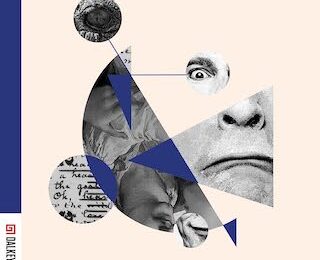
TMR 20.1: “Then You Do Not Approve of Nabokov?” [MULLIGAN STEW]
Chad and Brian kick off the new season in near hysterics over the first little chunk of Gilbert Sorrentino's Mulligan Stew. From talking about the rejection letters—and near batshit reader's report—prefacing the book, to all the bad writing about the "flawless blue" sky, to the ever-changing dialog tags in Anthony ...
>
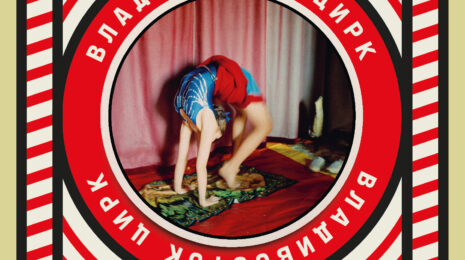
“Vladivostok Circus” by Elisa Shua Dusapin & Aneesa Abbas Higgins [Excerpt]
Today's #WITMonth post is a really special one—with a special offer. What you'll find below is an excerpt from the very start of Vladivostok Circus by Elisa Shua Dusapin & Aneesa Abbas Higgins. You might remember Dusapin & Higgins as the winners of the 2021 National Book Award for Literature in Translation ...
>
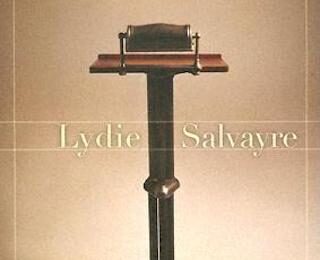
“The Lecture” by Lydie Salvayre and Linda Coverdale [Excerpt]
Today's #WITMonth post is an excerpt from The Lecture by Lydie Salvayre, translated by Linda Coverdale, a wonderfully funny and playful French writer who Dalkey published for quite a while (The Power of Flies, Everyday Life, The Company of Ghosts, Portrait of the Writer as a Domesticated Animal), and might again! Warren ...
>
Season Twenty of the Two Month Review: “Mulligan Stew” by Gilbert Sorrentino
As mentioned in this Reading the Dalkey Archive post, Mulligan Stew by Gilbert Sorrentino is going to be the next book featured on the Two Month Review podcast. For anyone new to this podcast, episodes drop weekly—recorded live on YouTube, then disseminated as a traditional podcast through Apple, Spotify, etc.—and ...
>
The Visual Success of Women in Translation Month [Translation Database]
Women in Translation Month is EVERYWHERE. Whenever I open Twitter (or X?), my feed is wall-to-wall WIT Month. Tweets with pictures of books to read for WIT Month, links to articles about WIT Month and various sub-genre lists of books to read during WIT Month, general celebratory tweets in praise of Meytal Radzinski for ...
>

Anatomy. Monotony. [Reading the Dalkey Archive]
Anatomy. Monotony. Edy Poppy Original Publication: 2005 Original Publication in English Translation: 2018 Original Publisher in English: Dalkey Archive Press Although I’m filing this as a “Reading the Dalkey Archive” post, it’s actually about two books: Anatomy. Monotony. by Norwegian ...
>
Re-Reading David Markson’s “Wittgenstein’s Mistress”
This piece by Philip Coleman first appeared in CONTEXT #23. To celebrate the recent release of Wittgenstein's Mistress as part of the Dalkey Archive Essentials series, it seems like the perfect time to revisit this re-reading of David Markson's classic novel about language, memory, grief, and possibly the end of the ...
>
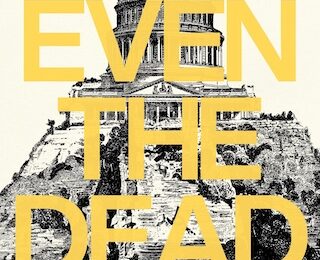
“Not Even the Dead” by Juan Gómez Bárcena [Excerpt]
Officially out last Tuesday, Not Even the Dead is a throwback—an ambitious, philosophical, grand novel taking on nothing less than the history of progress over the past four hundred years. In it, Juan—at the bequest of the Spanish government—pursues "Juan the Indian" across time and Mexico, almost catching up to him ...
>
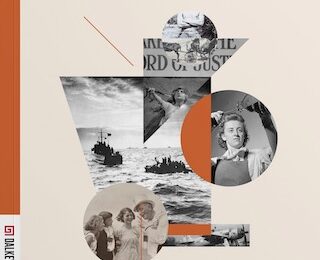
“Europeana” by Patrik Ouredník [Excerpt]
Forthcoming in a new "Dalkey Essentials" edition, Europeana: A Brief History of the Twentieth Century is an "eccentric overview of all the horrors, contradictions, and absurdities of the past century." It's a book that is mesmerizing in its curious patterns, which at times can sound like Snapple Fun Facts—but tend to be ...
>
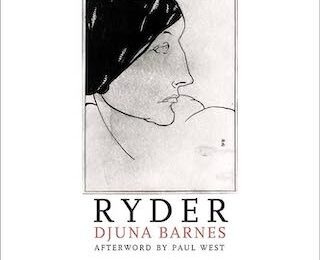
Ryder [Reading the Dalkey Archive]
Ryder Djuna Barnes Original Publication: 1928 Original Publisher: Boni & Liveright First Dalkey Archive Edition: 1990 This is a baggy novel of excess, and as someone who finds it nearly impossible to keep the thread—or develop a coherent thesis (any and all AI grading systems ...
>
“Diary of a Blood Donor” by Mati Unt [Excerpt]
Diary of a Blood Donor by Mati Unt translated from Estonian by Ants Eert (Dalkey Archive Press) AN UNEXPECTED INVITATION A crow was riding the wind that came in low over the beach. Sand blew through the window, landed on my papers, entered my mouth. A yellowish light tainted the room, even my ...
>

Mati Unt (1944-2005)
This piece originally appeared in CONTEXT 18, shortly after Mati Unt's passing. It was written by the translator Eric Dickens, Unt's translator, who also left us in 2017. Mati Unt was born in Estonia and lived there all his life. He spent his early years in the village of Linnamäe near the university town of Tartu. His ...
>
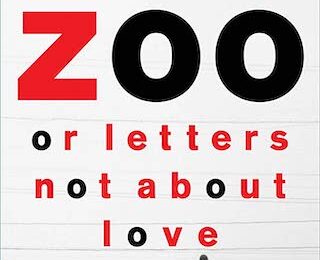
Zoo, or Letters Not about Love [Excerpt]
Forthcoming in a new "Dalkey Archive Essentials" version (with a different cover than the one depicted to the right), Zoo, or Letters Not about Love, translated from the Russian by Richard Sheldon, is one of Viktor Shklovsky's most beloved works. An epistolary novel written while Shklovsky was in exile in Berlin—and in ...
>

Perfect Lives [Reading the Dalkey Archive]
Perfect Lives Robert Ashley Original Publication: 1991 Original Publisher: Archer Fields Press First Dalkey Archive Edition: 2011 Let’s start with the cover. When this first arrived in the mail, I was certain that Ingram had sent it to me on accident. It looks nothing like ...
>

An Echo Chamber of One [Sustainability]
Hello! I am ChadGPT, an AI chat generator that has been asked to produce a blog post in the style of Chad W. Post, about the future of publishing. After ingesting over a thousand articles from this website, literally hundreds of thousands of (mostly coherent) text messages, and zero email responses (apparently Chad is 100% ...
>
To All the Posts I Didn’t Write Last Year
If I could control space-time (a resolution for 2023 that's about as likely as the others I've made), I would have put in an additional 10 hours of research and data entry into the Translation Database before posting this. But knowing that I'll surely be crunched for time all this week, and next, and the week after, I figure ...
>

Time Must Have a Stop
I haven't been feeling much like myself lately. Doubt anyone has, what with COVID time making everything take twice as long and be four times as frustrating, with Putin being, well, a massive, invasive dick, with inflation the highest it's been since I was five years old, and with no spring baseball. [UPDATE: Baseball is ...
>
TMR 16.1: “Roberto Bolaño Overview” [2666]
Season 16 is here! At long last, Bolaño's 2666 takes center stage, and Chad and Brian are joined by translator and Bolaño enthusiast, Katie Whittemore. In this opening episode, they discuss the myth-making of Bolaño's biography, they talk about sudden fame, the grind of the artist, and of the way that everything is ...
>
Translation Jobs [Granta]
Following on the first two posts about the latest Granta issue of "Best Young Spanish-language Novelists," I thought I'd take another crack at trying to define success, this time through the lens of the translators included in the two issues. This might be the most controversial approach to date (I do have two more that ...
>
“Last Words on Earth” by Javier Serena and Katie Whittemore [Excerpt]
Last Words on Earth by Javier Serena, translated from the Spanish by Katie Whittemore (September 21, 2022) Eventually, the professor redirected the conversation toward more exotic subjects: he asked Funes to tell me about negacionismo, a poetic movement Funes had apparently founded as an adolescent in Mexico, where he ...
>
Statistical Noise [Granta]
It took a few more days than I had hoped, but I have officially read all twenty-five pieces included in this new Granta issue. (I wonder how many people actually do read it from cover to cover. And what percentage that is of all the copies in circulation. God, I'll bet that number is depressing, whether it's Granta, ...
>
The Predictive Success of Listmaking [Granta]
Let's start by saying what really shouldn't need to be said: Being included in one of Granta's "Best Young XXX Novelists" special issues is an incredible honor. These come out once a decade, with four iterations of "best young" British novelists, three for American writers, and, as of this month, two for Spanish-language ...
>
Writing about Granta’s “Best of Young Spanish-Language Novelists 2”
Just about a decade ago, Granta released their first ever list of "young Spanish-language novelists." This was a momentous occasion for a number of reasons, starting with the point that, until then, only young British and American writers had been featured by the magazine. (There had been three lists of best British ...
>
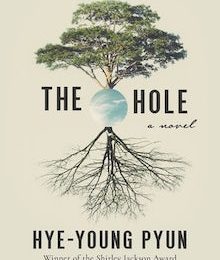
The Hole vs. The Hole vs. Algorithms vs. Booksellers
Although it's still hard to get truly excited about writing—and harder to imagine anyone reading this, given all that's going on in the world—it was pretty fun working on that last post about October titles that I wish I had the time and attention to read. So, why not do it again? Even if these posts are shambolic and ...
>
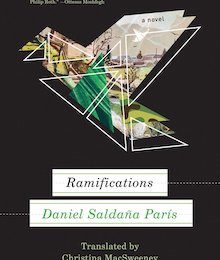
Why I Haven’t Written Any of My Posts
The other night, when I first attempted to write this post, I was shocked to find that the last "real" post I'd written (the nutty Baudrillard in the Time of COVID/Baseball is Back! experiment), posted on July 29th. July! That was almost three months ago. Where did the time go? And why haven't I written anything since ...
>
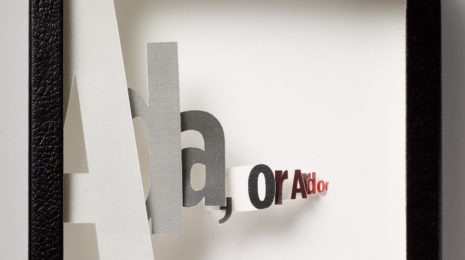
TMR 13.5: “The Accursed Children” [ADA, OR ARDOR]
A family dinner, a picnic in the woods—what could be more innocent? Well, in Ada, or Ardor, everything is tinged with a baseline feeling of "kind of creepy," especially the "passionate pump-joy exertions." Chad and Brian break it all down, talking about Demon, unraveling Nabokovian puns, finding subtle hints about Van's ...
>
Five Questions with Michael Holtmann about HOME
As part of our ongoing series of short interviews featuring the people who helped bring great new translations to the reading public, we talked to Michael Holtmann, the executive director and publisher of the Center for the Art of Translation and Two Lines. Before getting into the interview, I wanted to point out ...
>

“The Adventures and Misadventures of the Extraordinary and Admirable Joan Orpí, Conquistador and Founder of New Catalonia” by Max Besora and Mara Faye Lethem
In honor of the Catalan Fellowship organized by the Institut Ramon Lllul and taking place virtually this week, I thought I would share the opening of next Catalan title to come out from Open Letter: The Adventures and Misadventures of the Extraordinary and Admirable Joan Orpí, Conquistador and Founder of New Catalonia by Max ...
>
TMR Season Thirteen: “Ada, or Ardor” by Vladimir Nabokov
The public has spoken, and the next book to be featured in the Two Month Review is Ada, or Ardor by Vladimir Nabokov! Which is kind of perfect. We follow the thread of Anna Karenina from The Book of Anna by Carmen Boullosa to this novel, originally written in 1969, which opens: "All happy families are more or less ...
>

Spanish-Language Speculative Fiction by Women in Translation. [#WITMonth]
Today's post is by Rachel Cordasco, founder and curator of Speculative Fiction in Translation, co-translator of Creative Surgery by Clelia Farris, and is working on a book about speculative fiction from around the world. Despite 2020 being a downright awful year, it has given us several excellent works of ...
>
New Spanish Literature: 10 of 30 [#WITMonth]
As part of the buildup to being Guest of Honor at the Frankfurt Book Fair 2021, the Spanish government launched a program last year under the (possibly confusing) name of "10 of 30." The plan is that each year, a new anthology featuring ten authors in their 30s will be released—all of which are translated by Katie ...
>

A Very Incomplete List of Books by Women in Translation in 2020 [#WITMonth]
I know that I'm a day behind—trying to make up for that right now—but my goal for Women in Translation Month 2020 is to post something each and every day of the month related to this topic. I'm inviting any and all readers, translators, publishers to contribute to this and, with a lot of luck a bit of work, we should have ...
>

Baudrillard in the Time of COVID / Baseball Is Back!
There are two types of people who read these posts: people into international literature who like baseball, and those who don’t. What follows is an experiment—one that might not work at all. Before you get started, you have a choice: 1) if you hate genuine writing about baseball, then click here, where I’ve edited ...
>
Baudrillard in the Time of COVID
There’s never been a better time to read Baudrillard. There’s also never been a worse. Thanks to quarantine, the unprecedented nature of this situation, Trump, government response to the protests—everything feels like an illusion. Not an illusion in the sense that “nothing is physically realm,” although one could ...
>

Baseball Is Back!
The other day, the Major League Baseball season—or, rather, “season,” given that it’s 60 games; given that instead of ten teams making the playoffs, sixteen will, which is more than half the league; that every extra inning starts with a runner on 2nd base, which is very weird; and, obviously, COVID protocols and a ...
>
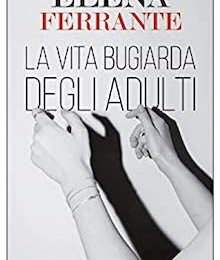
“La vita bugiarda degli adulti” by Elena Ferrante
La vita bugiarda degli adulti by Elena Ferrante 283 pgs. | pb | 9788833571683 | €19,00 edizioni e/o Review by Jeanne Bonner If all had gone as planned—which is to say if a global pandemic hadn’t bulldozed our normal lives—this summer, you might have been reading Ann Goldstein’s English translation of La vita ...
>
“The Erotics of Restraint: Essays on Literary Form” by Douglas Glover
The Erotics of Restraint: Essays on Literary Form by Douglas Glover 203 pgs. | pb | 9781771962919 | $21.95 Biblioasis Review by Brendan Riley The Erotics of Restraint is an excellent companion—with a no less provocative title—to Mr. Glover’s previous collection, Attack of the Copula Spiders, published in ...
>
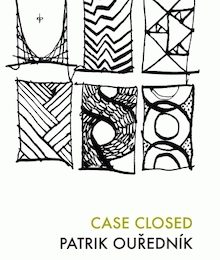
Nothing Adds Up Until You Overthrow the System
It's weird trying to write this today, May 31st, with all that's going on across the country—and around the world—right now. The images of our overly-militarized, super aggro, disgusting police officers running unarmed people over, throwing women to the ground, shooting teenagers with pepper balls and rubber bullets (that ...
>
“The Cheffe: A Cook’s Novel” by Marie NDiaye [Why This Book Should Win]
Check in daily for new Why This Book Should Win posts covering all thirty-five titles longlisted for the 2020 Best Translated Book Awards. Marcel Inhoff is completing a doctoral dissertation at the University of Bonn. He is the author of the collection Prosopopeia (Editions Mantel, 2015), and Our Church Is Here (Pen and ...
>
“The Wind That Lays Waste” by Selva Almada [Why This Book Should Win]
Check in daily for new Why This Book Should Win posts covering all thirty-five titles longlisted for the 2020 Best Translated Book Awards. Pierce Alquist has an MA in Publishing and Writing from Emerson College and currently works in publishing in Boston. She is a freelance book critic and writer. She is also the ...
>
Three Percent #182: BTBA 2020 Readings
On this special edition of the Three Percent Podcast, you can hear short readings of all fifteen finalists for this year's Best Translated Book Awards. You can find all of the titles here on Bookshop.org (fiction, poetry), and you can still RSVP to see the live awards ceremony on Friday, May 29th at 6pm eastern. This ...
>
“Beyond Babylon” by Igiaba Scego [Why This Book Should Win]
Check in daily for new Why This Book Should Win posts covering all thirty-five titles longlisted for the 2020 Best Translated Book Awards. Barbara Halla is an Assistant Editor for Asymptote Journal. She works as a translator and independent researcher, focusing in particular on discovering and promoting the works of ...
>
“Aviva-No” by Shimon Adaf [Why This Book Should Win]
Check in daily for new Why This Book Should Win posts covering all thirty-five titles longlisted for the 2020 Best Translated Book Awards. Adriana X. Jacobs is the author of Strange Cocktail: Translation and the Making of Modern Hebrew Literature (University of Michigan, 2018) and associate professor of modern Hebrew ...
>
“The Boy” by Marcus Malte [Why This Book Should Win]
Check in daily for new Why This Book Should Win posts covering all thirty-five titles longlisted for the 2020 Best Translated Book Awards. Lara Vergnaud is a literary translator from the French. She was the recipient of the 2019 French Voices Grand Prize and a finalist for the 2019 BTBA. Her work has appeared in The ...
>
“The Catalan Poems” by Pere Gimferrer [Why This Book Should Win]
Check in daily for new Why This Book Should Win posts covering all thirty-five titles longlisted for the 2020 Best Translated Book Awards. Henry N. Gifford is a writer, emerging translator from German to English, and Assistant Editor at New Vessel Press. The Catalan Poems by Pere Gimferrer, translated from the ...
>
“Space Invaders” by Nona Fernández [Why This Book Should Win]
Check in daily for new Why This Book Should Win posts covering all thirty-five titles longlisted for the 2020 Best Translated Book Awards. Chris Clarke grew up in Western Canada and currently lives in Philadelphia. His translations include books by Ryad Girod, Pierre Mac Orlan, and François Caradec. His translation of ...
>
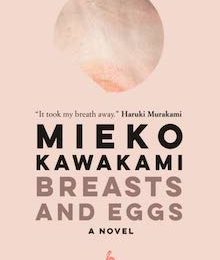
. . . The Underappreciated Masses . . .
Half of this post is inspired by comments Sam Miller made about this article he wrote about the mystery surrounding Don Mattingly's birthdate and his Topps 1987 baseball card. I'm not sure if these are immutable truths per se, but if you talk to enough people in the book industry, you're likely to encounter two strains of ...
>
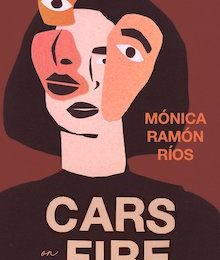
We’re Still Here . . .
"We live in a world of randomness." —William Poundstone, The Doomsday Calculation It probably goes without saying, but publishing international literature is a precarious business in the best of times. On average, sales for translated works of fiction tend to be about one-third of the average sales for a mid-list author ...
>
“The Next Loves” by Stéphane Bouquet [Why This Book Should Win]
Check in daily for new Why This Book Should Win posts covering all thirty-five titles longlisted for the 2020 Best Translated Book Awards. Laura Marris is a writer and translator from the French. Recent projects include Paol Keineg’s Triste Tristan (co-translated with Rosmarie Waldrop for Burning Deck Press) and In ...
>
Three Percent #181: Unraveling Women and Hard-Working Peasants
A bit of an experimental episode, Chad is joined by five indie booksellers to talk about the "new normal," fears of reopening, what booksellers are doing now, and—most importantly—actual books. The complete rundown of recommendations is below, but one note: please buy these titles from the bookseller who recommended them. ...
>
“Territory of Light” by Yuko Tsushima [Why This Book Should Win]
Check in daily for new Why This Book Should Win posts covering all thirty-five titles longlisted for the 2020 Best Translated Book Awards. Kári Tulinius is an Icelandic poet and novelist. He and his family move back and forth between Iceland and Finland like a flock of migratory birds confused about the whole “warmer ...
>

“The Way Through the Woods” by Long Litt Woon
The Way Through the Woods by Long Litt Woon Translated from the Norwegian by Barbara J. Haveland 320 pgs. | hc | 9781984801036 | $26.00 Spiegel & Grau Review by Hana Kallen How does one heal after the death of a loved one? How does define oneself again after tragedy? Author and anthropologist Long Litt ...
>
“The Book of Collateral Damage” by Sinan Antoon [Why This Book Should Win]
Check in daily for new Why This Book Should Win posts covering all thirty-five titles longlisted for the 2020 Best Translated Book Awards. Tara Cheesman is a freelance book critic, National Book Critics Circle member & 2018-2019 Best Translated Book Award Fiction Judge. Her work has appeared in the Los Angeles Review ...
>
The Winter Garden Photograph by Reina María Rodríguez [Why This Book Should Win]
Check in daily for new Why This Book Should Win posts covering all thirty-five titles longlisted for the 2020 Best Translated Book Awards. Anastasia Nikolis recently received her PhD in twentieth and twenty-first century poetry and poetics from the University of Rochester. She is the Poetry Editor for Open Letter Books ...
>
“Vernon Subutex 1” by Virginie Despentes [Why This Book Should Win]
Check in daily for new Why This Book Should Win posts covering all thirty-five titles longlisted for the 2020 Best Translated Book Awards. Dorian Stuber teaches at Hendrix College and blogs about books at www.eigermonchjungfrau.blog. His work has appeared in Numéro Cinq, Open Letters Monthly, and Words without ...
>
“Camouflage” by Lupe Gómez [Why This Book Should Win]
Check in daily for new Why This Book Should Win posts covering all thirty-five titles longlisted for the 2020 Best Translated Book Awards. Kelsi Vanada is a poet and translator from Spanish and sometimes Swedish. Her translations include Into Muteness (Veliz Books, 2020) and The Eligible Age (Song Bridge Press, 2018), ...
>
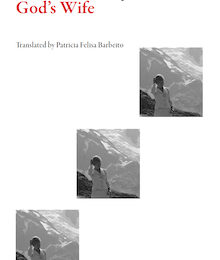
“God’s Wife” by Amanda Michalopoulou
God's Wife by Amanda Michalopoulou Translated from the Greek by Patricia Felisa Barbeito 144 pgs. | pb | 9781628973372 | $16.95 Dalkey Archive Press Review by Soti Triantafyllou Why do people get married? Maybe because they need a witness to their lives, someone to watch them do whatever it is that they do. In Amanda ...
>
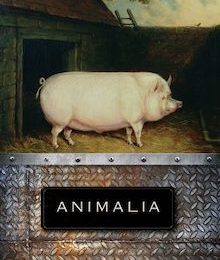
“Animalia” by Jean-Baptiste del Amo [Why This Book Should Win]
Check in daily for new Why This Book Should Win posts covering all thirty-five titles longlisted for the 2020 Best Translated Book Awards. Jeffrey Zuckerman is an editor at Music & Literature and a translator from French, most recently of Jean Genet's The Criminal Child (NYRB, 2020). A finalist for the ...
>
“Good Will Come from the Sea” by Christos Ikonomou [Why This Book Should Win]
Check in daily for new Why This Book Should Win posts covering all thirty-five titles longlisted for the 2020 Best Translated Book Awards. Julia Sanches is a translator working from Portuguese, Spanish, and Catalan into English. She has translated works by Susana Moreira Marques, Daniel Galera, Claudia Hernández, and ...
>
Three Percent #180: Bookfinity Is the Dumbest Name
Stacie Williams joins Chad and Tom this week to talk about the role of sales reps at this moment in time and then, after she bolts, Chad and Tom poke fun at Bookfinity (which, really, WOW), the confused messaging of #BooksAreEssential as a hashtag, why bookshops shouldn't open, and how Publishers Weakly is funny AND NOT RUN ...
>
“Welcome to America” by Linda Boström Knausgård [Why This Book Should Win]
Check in daily for new Why This Book Should Win posts covering all thirty-five titles longlisted for the 2020 Best Translated Book Awards. Katarzyna (Kasia) Bartoszyńska is a former BTBA judge (2018 and 2017), a translator (from Polish to English), and an academic (at Monmouth College, and starting this Fall, at Ithaca ...
>
“Drive Your Plow Over the Bones of the Dead” by Olga Tokarczuk [Why This Book Should Win]
Check in daily for new Why This Book Should Win posts covering all thirty-five titles longlisted for the 2020 Best Translated Book Awards. Louisa Ermelino is the author of three novels; Joey Dee Gets Wise; The Black Madonna (Simon and Schuster); The Sisters Mallone (St. Martin’s Press) and a story collection, ...
>
Three Percent #179: “Hey! What’s New?”
How is COVID-19 impacting bookstores, publishers, translators, and our general sanity? These are the questions Tom and Chad talk about on this episode—the first in a while, but also the longest ever—along with minor jokes, an appeal to authors and publishers to "read the room," a rant that will likely get Chad in ...
>
TMR 11.6: “Adaptations” [THE DREAMED PART]
Chad and Brian go deep into the underlying structure of the second section of Fresan's The Dreamed Part, talking about Penelope's story, her relationship to her parents and the Karmas, and the moment in which she lost her son. We finally get to read about her wrecking house (literally) and see how everything circles back to ...
>
“Death Is Hard Work” by Khaled Khalifa [Why This Book Should Win]
Check in daily for new Why This Book Should Win posts covering all thirty-five titles longlisted for the 2020 Best Translated Book Awards. Tony Messenger is an Australian writer, critic and interviewer who has had works published in many places including Overland Literary Journal, Southerly, Mascara Literary ...
>
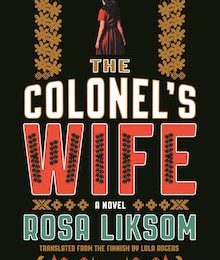
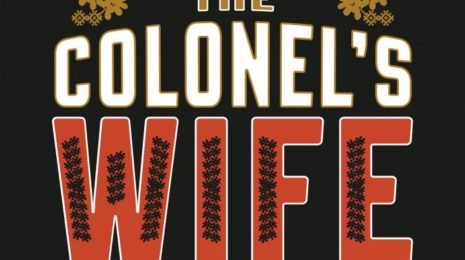
Lola Rogers on “The Colonel’s Wife” by Rosa Liksom [The Book That Never Was, Pt. 1]
The Colonel's Wife by Rosa Liksom, translated from the Finnish by Lola Rogers (Graywolf Press) BookMarks Reviews: Five total—Four Positive, One Mixed Awards: None Number of Finnish Works of Fiction Published in Translation from 2008-2019: 65 (5.42/year) Number of Those Translations Written by Women: 40 of the ...
>
“Labyrinth” by Burhan Sönmez [Why This Book Should Win]
Check in daily for new Why This Book Should Win posts covering all thirty-five titles longlisted for the 2020 Best Translated Book Awards. Tim Gutteridge is a Scottish literary translator, working from Spanish into English. His translation of Miserere de cocodrilos(Mercedes Rosende) will be published later this year by ...
>
“Tentacle” by Rita Indiana [Why This Book Should Win]
Check in daily for new Why This Book Should Win posts covering all thirty-five titles longlisted for the 2020 Best Translated Book Awards. Tobias Carroll is the author of the books Reel, Transitory, and the forthcoming Political Sign. Tentacle by Rita Indiana, translated from the Spanish by Achy ...
>
“A Dream Come True” by Juan Carlos Onetti [Why This Book Should Win]
Check in daily for new Why This Book Should Win posts covering all thirty-five titles longlisted for the 2020 Best Translated Book Awards. Spencer Ruchti is an intern at Tin House Books and formerly a bookseller at Harvard Book Store in Cambridge. His writing has appeared in The Adroit Journal, The Rumpus, and ...
>
TMR 11.5: “Wuthering Heights Is Weird” [THE DREAMED PART}
Chad reaches a new quarantine low at the beginning of this week's episode (highly recommend checking out the video version), but after a lot of banter and deep dives into international speculative fiction, The Invention of Morel, Lost, and more, Chad and special guest Rachel Cordasco break down the first part of the ...
>
“Will and Testament” by Vigdis Hjorth [Why This Book Should Win]
Check in daily for new Why This Book Should Win posts covering all thirty-five titles longlisted for the 2020 Best Translated Book Awards. Elisa Wouk Almino is a Los Angeles-based writer and literary translator from Portuguese. She is the translator of This House(Scrambler Books, 2017), a collection of poetry by Ana ...
>
“Book of Minutes” by Gemma Gorga [Why This Book Should Win]
Check in daily for new Why This Book Should Win posts covering all thirty-five titles longlisted for the 2020 Best Translated Book Awards. Nancy Naomi Carlson is a poet, translator, and editor, whose latest book was called "new & noteworthy" by the New York Times. Recipient of two NEA literature translation grants ...
>
“The Memory Police” by Yoko Ogawa [Why This Book Should Win]
Check in daily for new Why This Book Should Win posts covering all thirty-five titles longlisted for the 2020 Best Translated Book Awards. Tony Malone is an Australian reviewer of fiction in translation, whose site, Tony’s Reading List, has been providing reviews continuously since 2009. His main focus is on Japanese ...
>
“China Dream” by Ma Jian [Why This Book Should Win]
Check in daily for new Why This Book Should Win posts covering all thirty-five titles longlisted for the 2020 Best Translated Book Awards. Justin Walls is a bookseller based in the Pacific Northwest and can be found on Twitter @jaawlfins. China Dream by Ma Jian, translated from the Chinese by Flora Drew ...
>
“Die, My Love” by Ariana Harwicz [Why This Book Should Win]
Check in daily for new Why This Book Should Win posts covering all thirty-five titles longlisted for the 2020 Best Translated Book Awards. Josh Cook is the author of the novel An Exaggerated Murder, published by Melville House in March 2015. His fiction and other work has appeared in The Coe Review, Epicenter ...
>
“Time” by Etel Adnan [Why This Book Should Win]
Check in daily for new Why This Book Should Win posts covering all thirty-five titles longlisted for the 2020 Best Translated Book Awards. Brandon Shimoda is the author of several books, most recently The Grave on the Wall (City Lights), which received the PEN Open Book Award, The Desert(The Song Cave), and Evening ...
>
TMR 11.4: “Tulpas” [THE DREAMED PART]
This episode got off to a rough start, with Chad losing his shit over the May IndieNext list [ed. note: he still has not recovered] before Streamyard crashed and the whole episode had to be recorded. In the new, much calmer episode, Chad, Brian, and special guest Patrick Smith talk about tulpas, the night, Fresán writing in ...
>
Season 11 of the Two Month Review: “The Dreamed Part” by Rodrigo Fresán
After a slightly longer hiatus than expected, the Two Month Review is coming back! In fact, we're coming back TOMORROW, Thursday, March 5th at 1:30pm. We'll be recording an introductory episode in which Chad and Brian combine their weakened, time-ravaged memories to recap The Invented Part, the first volume in Rodrigo ...
>
Three Percent #177: Eight Books
After a bit of banter about how baseball front offices might be as bad at naming things as book people, and a plug for Paul Vidich's The Coldest Warrior, Chad and Tom each draft four forthcoming books from a total of eight different presses that they've both agreed to read and discuss in future episodes. How could this ...
>

Jewels in Your Pocket [BTBA 2020]
This week's Best Translated Book Award post is from Christopher Phipps, a manager at City Lights Bookstore in San Francisco. We’ve all been warned repeatedly to never judge a book by its cover, a caution easily and often extended towards judgments based on size. Size matters not, counseled Yoda. Big things come in small ...
>
Is It Real? [A January 2020 Reading Diary with Charts & Observations]
It's been sooooo long since I actually wrote something for here . . . I'm not entirely sure how to start! Chad 1.0 would open with something like "$%*# agents" and then go off on a couple individuals who are currently driving me INSANE. Chad 2.0 would come up with some wacky premise that blends ideas behind sabermetrics ...
>
Three Percent #176: Dirty Bookshop
After a bit of a hiatus, Chad and Tom return to talk about the two biggest things to happen during Winter Institute: The American Dirt controversy and the launch of Bookshop.org. If you haven't been following the American Dirt debacle, here are a couple pieces to read: Laura Miller's piece in Slate, Rebecca Alter's ...
>
“Reading Christine Montalbetti” by Warren Motte
As part of a larger series of initiatives involving Open Letter and Dalkey Archive Press, over the next few months, we'll be running a number of articles from CONTEXT magazine, a tabloid-style magazine started by John O'Brien and Dalkey Archive in 2000 as a way of introducing booksellers and readers to innovative writers ...
>
Open Letter Books to Receive $40,000 Grant from the National Endowment for the Arts
Rochester, NY—Open Letter Books at the University of Rochester has been approved for a $40,000 Art Works grant to support Open Letter's Emerging Voice project. This project will result in the publication and promotion of six works of literature in translation from authors with no more than one title already available in ...
>
Homestead Horror and Genealogical Angst [BTBA 2020]
This week's Best Translated Book Award post is from Justin Walls, a bookseller with Powell’s Books in Portland, Oregon who can be found on Twitter @jaawlfins. Psychological horror/thriller/chiller/etc.—you know the sort, taut with spring-loaded tension and positively oozing dread—is tricky to pull off in a work of ...
>
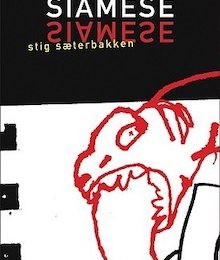
What Did We Have to Talk About, Now That He Was Dead? [CONTEXT]
As part of a larger series of initiatives involving Open Letter and Dalkey Archive Press, over the next few months, we'll be running a number of articles from CONTEXT magazine, a tabloid-style magazine started by John O'Brien and Dalkey Archive in 2000 as a way of introducing booksellers and readers to innovative writers ...
>
Three Percent #175: Biggest News Stories of 2019
On this week's episode, Chad and Tom discuss Tom's recent piece on Jean-Patrick Manchette for LARB and talk about which of his books are best to start with, and why there haven't been more breakout international noir authors. Then they pivot to this Publishers Weekly article on the "Top News Stories of 2019," discussing ...
>

“The Book of Disappearance: A Novel” by Ibtisam Azem
The Book of Disappearance: A Novel by Ibtisam Azem Translated from the Arabic by Sinan Antoon 256 pgs. | pb | 9780815611110 | $19.95 Syracuse University Press Review by Grant Barber This wonderful, important second novel by Ibtisam Azem in English translation came out just in time for the observance of Women ...
>
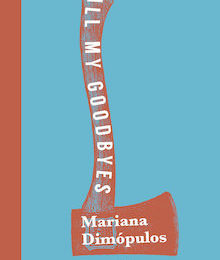
Dark, Strange Books by Women in Translation [BTBA 2020]
This week's Best Translated Book Award post is from Pierce Alquist, who has a MA in Publishing and Writing from Emerson College and currently works in publishing in Boston. She is a freelance book critic, writer, and Book Riot contributor. She is also the Communications Coordinator for the Transnational Literature Series ...
>
Three Percent #174: Devil’s Bargains
Chad and Tom play a short game on this podcast—when Tom isn't ranting about Amazon. They also discuss Bookshop, when the decade officially ends, favorite translations of the past ten years, Chad's upcoming hiatus from writing for Three Percent, and much more. Next episode Chad and Tom will discuss Tom's recent article on ...
>

Book 6 [The No Context Project]
If you want the context for the "no context project," check out this post, which lays everything out and applies a 20-80 grading scale to "Book 7." Since I really want to get through these mystery books sooner rather than later--so that I can find out what they are and grade myself--I put aside my Charco reading for a bit ...
>
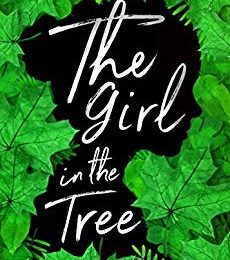
A Couple Turkish Authors [BTBA 2020]
This week's Best Translated Book Award pose is from Louisa Ermelino, who is the author of three novels; Joey Dee Gets Wise; The Black Madonna (Simon and Schuster); The Sisters Mallone (St. Martin’s Press) and a story collection, Malafemmina (Sarabande). She has worked atPeople, Time International, and InStyle magazines ...
>

“Beasts Head for Home” by Abe Kōbō
Beasts Head for Home by Abe Kōbō Translated from the Japanese by Richard F. Calichman 191 pgs.| pb | 9780231177054 | $25 Columbia University Press Review by Brendan Riley Crisp, stark, pristine scenes of gaunt settlements, vast wilderness, and tense human encounters fill this 1957 novel by Abe Kōbō, the ...
>
Three Percent #173: The Poetry in Translation Episode
Anastasia Nikolis (poetry editor for Open Letter Books) and Emma Ramadan (translator, co-owner of Riffraaff) join Chad and Tom to breakdown ALTA 42, talk about poetry in translation, and go on a handful of minor rants—and one major one. (Thanks, Emma!) The Sarah Dessen controversy pops up, as does this article about ...
>
TMR 10.7: “Blossom, Stasis, Spiral, Whoa” [DUCKS, NEWBURYPORT]
This week's Two Month Review was recorded pretty late (on the east coast), so things are a bit loopy. Nevertheless, James Crossley from Madison Books joins Chad and Brian to talk about pages 429-487 of Ducks, Newburyport. They talk a bit about the cultural references in this section—the old movies, Blossom—flip ahead to ...
>

Book 7 [The No Context Project]
A couple months ago, while writing about Suzanne Jill Levine and Jessica Powell's translation of Silvina Ocampo's The Promise, I came up with a sort of crazy scheme: But this gave me a grand idea: What if I could review twenty books from twenty publishers in as blind as a fashion as possible? I wouldn’t know ...
>
How to Launch a Publishing House [Charco Press]
It's Charco Press month! After stepping away from these "monthly themes" for a minute (or, well, actually, a full month), I'm excited to get back to this, and have a bunch of posts planned out for November. If all goes according to plan (spoiler: HA!) I'd like to post a couple interviews with Charco Press translators, a ...
>
Three Percent #172: ALTA 42 Preview
A bit of a disorienting podcast for anyone not attending ALTA, but in this episode, Chad addresses the recent ALTA book fair controversy, and then they go over the general schedule, highlighting a number of interesting-sounding panels, previewing some off-site events, and recommending non-ALTA bars for attendees to hang out ...
>
Perversity’s Politics [BTBA 2020]
Today's Best Translated Book Award post is from Hal Hlavinka, a writer and critic living in Denver. His work has appeared in BOMB Magazine, Music & Literature, Tin House, and others. Some books are made of fucking—of cum and cumming, cocks, twats, and tongues, desires of all kinds. A la Gass, literature may arrive ...
>
TMR 10.4: “Is it Translatable” [Ducks, Newburyport]
Rhett McNeil (translator of Machado de Assis, Gonçalo Tavares, Antonio Lobo Antunes, and more) joins Chad and Brian to talk about the way in which Ducks, Newburyport is less of a single-sentence and more of a never-ending list, about how it is and isn't like Ulysses, about time in the novel, about Ellmann's playfulness, ...
>
Three Percent #171: Can We Go a Week Without an Award Controversy?
This week's podcast is about two kerfuffles: the Booker Prize one and the one between King County Library and Macmillan. There's also some discussion as to why UK book culture allows for critique and small voices to be heard (vs. the American way in which everything is fine), Chad goes on and on about On Becoming a God in ...
>
TMR 10.3: “How Do I Promote This?” [Ducks, Newburyport]
Vanessa Stauffer from Biblioasis came on this episode to talk about the Booker Prize, about the jacket copy she wrote for the Ducks galley, about types of moms, about things in the book that pay off and mysteries that remain mysteries, about the ways in which Ellmann is breaking form and the strong feminist perspective ...
>
Time Does Not Bring Relief
"History is written by the victors" is one of those cliches that's so obviously true that it requires next to no explanation. But the ability to provide evidence for what the victors do when writing history is usually a bit more circumspect and tricky to get ahold of . . . Last Thursday, the Nobel Prize for Literature was ...
>
Three Percent #170: Don’t Give a Million Dollars to a Fascist
This podcast comes in HOT. Lots of talk about how Peter Handke doesn't deserve any award, much less the Nobel Prize. (And if you don't know why, just listen for his quote at the end denying Serb atrocities at Srebrenica by saying "You can stick your corpses up your arse.") Then things transition to an existential conversation ...
>
TMR 10.2: “The Fact That” [Ducks, Newburyport]
Due to an unforeseen illness, Chad and Brian ended up going this one alone, and focus mostly on the way that "the fact that" functions, both in building the character and impacting the reader. Chad asks Brian some craft questions, they debate what makes a book "difficult" (and whether this is difficult or just long), more ...
>
TMR 10.1: “Brave Publishing” [Ducks, Newburyport]
The tenth season of the Two Month Review gets underway with special guest Dan Wells of Biblioasis talking about how they came to publish Lucy Ellmann's Ducks, Newburyport, and the risks involved in doing a 1,020-page book. They also introduce Ellmann--who has one of the greatest bios ever--and the novel itself. Conversation ...
>
TMR 9.10: Monsterhuman by Kjersti Skomsvold (pgs 407-448)
And just like that, season nine of the Two Month Review comes to an end. But first, we have a very nice discussion with Kjersti Skomsvold herself about Monsterhuman, trends in Norwegian writing, autofiction vs. creative nonfiction vs. memoir, authors to read, and much more. (Spoiler: She's just as interesting and charming in ...
>
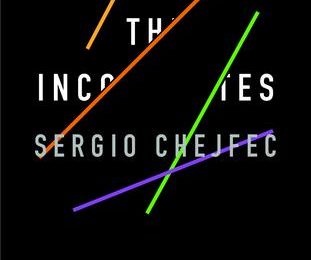
Available Now: THE INCOMPLETES by Sergio Chejfec and Heather Cleary
“A masterfully nested narrative where writing—its presence on the page, its course through time, its prismatic dispersion of meaning—is the true protagonist.” —Hernan Diaz, author of In the Distance “Now I am going to tell the story of something that happened one night years ago, and the events of the ...
>
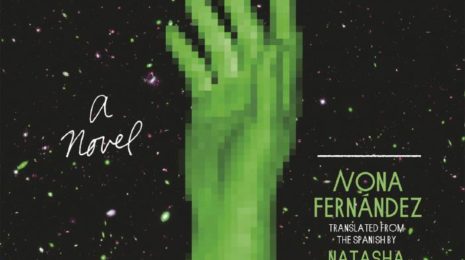
Three Percent #169: Year Two of the NBA for Translated Literature
After an update from Chad about his trip to London and Amsterdam, he and Tom break down the National Book Award for Translated Literature longlist, exposing their general ignorance along the way. (They've read, combined, like two of the ten titles?) Also, sure are a lot of Penguin Random House books on these longlists! They ...
>
TMR 9.09: Monsterhuman by Kjersti Skomsvold (pgs 360-406)
Translator Becky Crook comes on this week's podcast to talk about the process of working on Monsterhuman, all the things that she couldn't quite get in there, ones she's very proud of, the reasons why she thinks the book works, and much much more! Only one episodee left! You can watch the Wednesday, September 25 episode ...
>
TMR 9.08: Monsterhuman by Kjersti Skomsvold (pgs 316-360)
This week, Brian is AWOL BUT Patrick Smith brings his A-game. He and Chad talk about the self-conscious humor in Monsterhuman, awkward interactions, the shape and evolution of the narrative as a whole, some info about The Faster I Walk, the Smaller I Am, and much more. A very fun episode that opened as awkwardly as ever . . ...
>
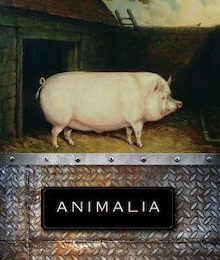
Smelling Books [BTBA 2020]
This week's BTBA post if from Justin Walls, a bookseller with Powell’s Books in Portland, Oregon who can be found on Twitter @jaawlfins. The conceptual artist Anicka Yi's olfactory-based installation Washing Away of Wrongs (2014, created in conjunction with French perfumer Christophe Laudamiel) consists of two ...
>
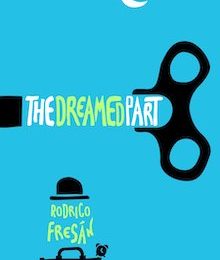
Flash Sale on Open Letter Preorders!
For a few different reasons—mainly that I wasn't able to get the new excerpt from Sara Mesa's Four by Four online until the WITMonth discount code had expired, but also to celebrate The Dreamed Part being on Kirkus's list of "30 Most Anticipated Fiction Books"—we've decided to have a flash sale on all of our ...
>
Three Percent #168: The 6% Improvement
On this episode, Chad shares some interesting data about the number of books by women in translation before and after the creation of Women in Translation Month, Tom talks about the most recent Amazon controversy, they breakdown the National Translation Award for Prose Longlist (they'll talk poetry in a future episode), and ...
>

“The Nocilla Trilogy” by Agustín Fernández Mallo
The Nocilla Trilogy by Agustín Fernández Mallo Translated from the Spanish by Thomas Bunstead pb | 9780374222789 | $30.00 FSG Review by Vincent Francone Most reviews of The Nocilla Trilogy (written by Agustín Fernández Mallo, recently translated into English by Thomas Bunstead, beautifully packaged by ...
>
Three Percent #167: We Could All Do Better
Meytal Radzinski joins Chad and Tom to talk about Women in Translation Month, depressing statistics, Virginie Despentes, nonfiction in translation, hopes for the future, and much more. As always, feel free to send any and all comments or questions to: threepercentpodcast@gmail.com. Also, if there are articles you’d like ...
>

Women in Translation by Country
Since I skipped last week, I'm going to post a few WITMonth infographics this week, starting with the three charts below. But first, a bit of methodology and explanation. I was curious about which countries were the most balanced in terms of books in translation written by men and women. We know from the earlier ...
>
TMR 9.04: Monsterhuman by Kjersti Skomsvold (pgs 144-180)
Even though the first few seconds ("On today's Two Month Review we'll be talking about . . . ") got cut off, Chad gives his most professional podcast introduction to date, before he and Brian talk about the Nansen Academy, the cyclical nature of chronic illness, the idea of plot points vs. events, and reasons their respective ...
>
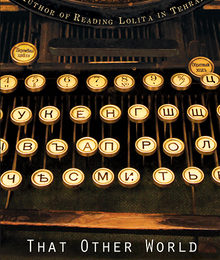
Reread, Rewrite, Repeat
Some years ago, I was invited on an editorial trip to Buenos Aires, where we were given a walking tour of the more literary areas of the city, including a bar where Polish ex-pat Witold Gombrowicz used to hang out. The tour guide told us a story about how Gombrowicz hated Borges and would frequently, drunkenly, ...
>
Percent of Translations Originally Written by Women, 2008-2019
I was planning on posting one of these each week with next to no context, but just to explain what's above, this is a year-by-year breakdown of the percentage of works of fiction in translation originally written by men, by women, and anthologies including both genders. The biggest gap was in 2008 (54.61% ...
>
TMR 9.03: Monsterhuman by Kjersti Skomsvold (pgs 92-143)
In this episode, Chad and Brian applaud Kjersti for not getting back together with her ex-boyfriend, talk about circular structures, about the evolution of her written voice, about Antony and the Johnsons, the myth-making behind Babe Ruth, and much more. This week's music is "Patterns Prevail" by Young Guv. Next episode ...
>
Three Percent #166: Women in Translation Month 2019
Chad and Tom drop a number of recommendations for Women in Translation month, some that they've read, some that they're planning on reading. They also discuss possible infographics that Three Percent can produce over the course of the month (if you have any other suggestions, please email), and discuss Chad's new plan to try ...
>
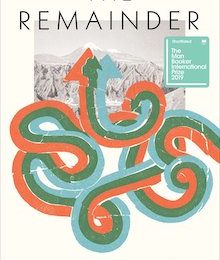
Two Spanish Books for Women in Translation Month
Like usual, this post is a mishmash of all the thoughts I've had over the past week, mostly while out on a 30-mile bike ride. (I need to get in as many of these as possible before winter, which is likely to hit Rochester in about a month.) Rather than try and weave these into one single coherent post, I'm just going to throw ...
>
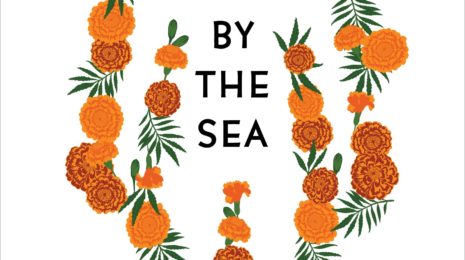
40% Off All Open Letter Books Written or Translated by Women
Women in Translation Month is always an exciting time to discover, read, discuss, and celebrate books by women from around the world. It was created by Meytal Radzinski back in 2014 (who we're hoping to have on a podcast this month), and has since spawned numerous articles, events, and even the Warwick Prize for Women in ...
>
TMR 9.02: Monsterhuman by Kjersti Skomsvold (pgs 46-92)
One of the funniest TMR episodes in weeks, Chad and Brian crack each other up over writerly anxieties, the sharp wit Kjersti displays in this section, the White Claw Phenomenon, writer vs. author vs. journaler, Kjersti's distain for bad poetry (and TV) about chronic fatigue syndrome, pop culture references from the ...
>
Info on the 2020 Best Translated Book Awards
We're happy to announce the 2020 Best Translated Book Award! All the relevant information is below. Please let me know if you have any questions. Award Dates In terms of dates, this is subject to change, but currently we’re planning on announcing the longlists for fiction and poetry on Wednesday, April 1st, the finalists ...
>
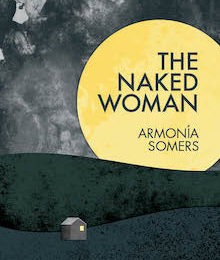
“The Naked Woman” by Armonía Somers
The Naked Woman by Armonía Somers Translated from the Spanish by Kit Maude 168 pgs. | pb | 9781936932436 | $16.95 Feminist Press Review by Rachel Crawford A woman turns thirty, decapitates herself, and after repositioning her severed head onto her neck, wanders through the woods stark naked. In part, this is ...
>
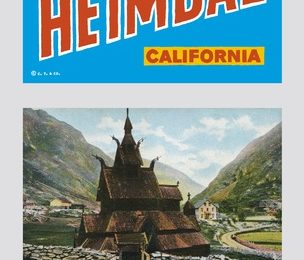
Three Percent Bonus: John Erik Riley
To celebrate Norwegian Month at Three Percent, Chad talked with John Erik Riley, author, photographer, editor of Norwegian literature for Cappelen Damm, and member of the "Blindness Circle." They talk about current trends in Norwegian literature, American comparisons for various authors, a couple really long books, Norwegian ...
>

TMR 9.01: Monsterhuman by Kjersti Skomsvold (pgs 1-45)
The new season of the Two Month Review starts here! Through the end of September we'll be discussing Kjersti Skomsvold's Monsterhuman, translated from the Norwegian by Becky L. Crook. Marius Hjeldnes from Cappelen Damm joins Chad and Brian to provide a bit of background on Skomsvold, on trends in Norwegian literature, on ...
>
Three Percent #165: Disorder in the Book Shelves
This episode of the Three Percent Podcast never gets to its actual topic, but includes minor disagreements about ebooks in libraries and its impact on ebook revenue, more questions about Book Culture's situation, a general sense of malaise, trying to make sense of Dean Koontz, Audible's "Caption" program, a wild idea about ...
>

The All or Nothing of Book Conversation
In theory, this is a post about Norwegian female writers in translation. I know it's going to end up in a very different space, though, so let's kick this off with some legit stats that can be shared, commented on, and used to further the discussion about women in translation. Back in the first post of July—Norwegian ...
>
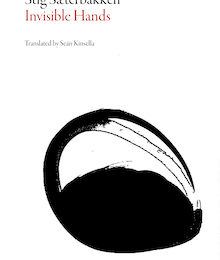
Dalkey Archive and Graywolf Press [Norway Month]
I initially had some fun ideas for this post—mostly trying to work in my theory of the "2019 Sad Dad Movement" and Elisabeth Åsbrink's forthcoming Made in Sweden, the pitch for which is "How the Swedes are not nearly so egalitarian, tolerant, hospitable or cozy and they would like to (have you) think"—but I think I'm ...
>
Three Percent #164: Rapid Expansion
Chad shares his stupid dreams, Tom questions translators who work for AmazonCrossing and then want indie bookstores to help them out, and they both marvel over Deep Vellum's acquisition of Phoneme Media and A Strange Object (and the launching of the La Reunion imprint). It's a short episode, but filled with great moments, ...
>

Three Percent Bonus: Becky Crook
As part of "Norwegian Month" here at Three Percent, translator Becky Crook (The Black Signs, Monsterhuman, Silence: In the Age of Noise, and many more) came on the podcast to talk about her first cover letter, in which ways she's become a better translator over the past half-decade, what to watch out for in contracts, the ...
>
Three Percent #163: What Do You Want
Chad and Tom talk about a number of interrelated issues related to the costs of bookstore ownership and being a bookseller. They talk about the recent letter from Chris Doeblin at Book Culture, The Book Diaries, Human Rights for Translators, the Universal Declaration of Human Rights, the Internet and Book Culture, and the ...
>
Three Percent Bonus: Ben Lindbergh
In this special bonus episode, Ben Lindbergh of The Ringer and Effectively Wild talks with Chad about his new book, The MVP Machine. They talk about the premise of the book—how player development is the new "Moneyball" and is being driven by players and technology—about the process of co-writing, feedback loops for ...
>

“The Book of Collateral Damage” by Sinan Antoon
The Book of Collateral Damage by Sinan Antoon Translated from the Arabic by James Richardson 312 pgs. | hc | 9780300228946 | $24.00 Yale Margellos Press Review by Grant Barber Author Sinan Antoon is an Assoc. Professor at the Gallatin School of Individual Study of NYU. His undergraduate degree was in 1990 from ...
>
Three Percent #162: I Am a Wild Rose
Chad and Tom are joined by Mark Haber from Brazos Bookstore and author of the forthcoming Reinhardt's Garden (October 1, Coffee House Press). They talk a bit about Translation Bread Loaf (two thumbs up) and about a special poster for anyone who buys the First 100 from Open Letter, before trying their best to breakdown a ...
>
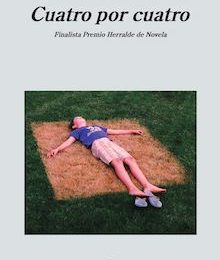
The Five Tools, Part II: Translators [Let’s Praise More of My Friends]
. . . poor translations, he asserted, were the worst crimes an academic or a writer could commit, and a translator shouldn't be allowed to call themselves a translator until their translation had been read by hundreds of scholars and for hundreds of years, so that, in short, a translator would never know if they were a ...
>
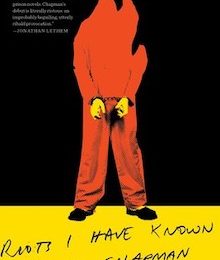
The Five Tools, Part I: Authors [Let’s Praise My Friends]
One of the most entertaining parts of my past three weeks of travel was the discovery that Norwegians refer to first-time authors as “debutants.” Which, OK, at first, is weird. The first time someone said it aloud, “she’s a debutant author,” I too had the urge to correct them. But then, like any great joke that's ...
>
Three Percent #161: Will a French Book Win the BTBA?
Chad and Tom took some time off on Memorial Day to bring you this little podcast about the Best Translated Book Award finalists (winner will be announced at 5pm on 5/29 at BEA/NYRF, and there will be an informal afterparty at The Brooklyneer on Houston starting at 7), about the Man Booker International winner, about the ...
>
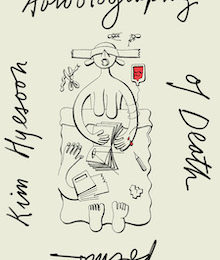
Autobiography of Death [Why This Book Should Win]
Check in daily for new Why This Book Should Win posts covering all thirty-five titles longlisted for the 2019 Best Translated Book Awards. Katrine Øgaard Jensen is a founding editor of EuropeNow Journal at Columbia University and the recipient of several awards, most recently the 2018 National Translation Award in ...
>
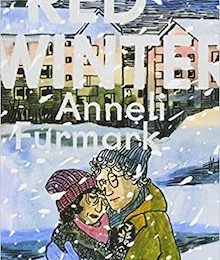
Four Attempts at Approaches [Drawn & Quarterly]
This post comes to you thanks to a few different starting points: a box of translated graphic novels that Drawn & Quarterly sent me a couple of weeks ago, the fact that Janet Hong translated one of them (see last week’s interview), the fact that I don’t have time this month to read a ton of novels for these weekly ...
>
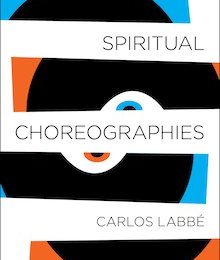
Spiritual Choreographies [Excerpt]
As mentioned last week, in celebration of the imminent release of Carlos Labbé's Spiritual Choreographies, we decided to make Carlos our "Author of the Month." From now until June 1st, you can use the code LABBE at checkout to get 30% off any and all of his books. (Including ePub versions. And preorders.) And to try and ...
>
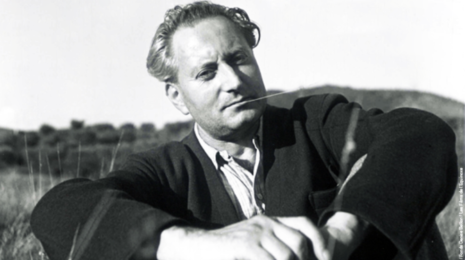
“Melville: A Novel” by Jean Giono
Melville by Jean Giono Translated from the French by Paul Eprile 108 pgs. | pb | 9781681371375 | $14.00 NYRB Review by Brendan Riley In The Books in My Life (1952), Henry Miller, devoting an entire chapter to French writer Jean Giono (1895-1970), boasts about spending “several years. . . . preaching the ...
>
Three Percent #160: Double Controversy
One of the calmest podcasts to date featuring two controversial topics: the new Open Letter cover design, and the side-effects of suddenly doubling (or quadrupling) the number of translations published every year. In terms of recommendations, this week Chad is all about the completely wild Bred from the Eyes of a Wolf by ...
>
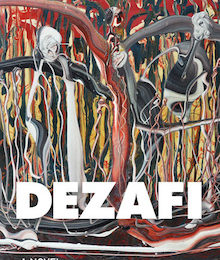
Dezafi [Why This Book Should Win]
Check in daily for new Why This Book Should Win posts covering all thirty-five titles longlisted for the 2019 Best Translated Book Awards. P.T. Smith reads, writes, and lives in Vermont. Dezafi by Frankétienne, translated from the French by Asselin Charles (Haiti, University of Virginia) Every year, the BTBA ...
>
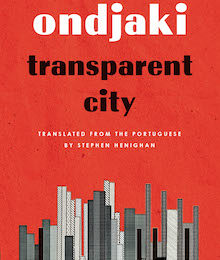
Transparent City [Why This Book Should Win]
Check in daily for new Why This Book Should Win posts covering all thirty-five titles longlisted for the 2019 Best Translated Book Awards. Tobias Carroll is the managing editor of Vol.1 Brooklyn and the author of the books Reel and Transitory. He writes the Watchlist column for Words Without Borders. Transparent ...
>

Negative Space [Why This Book Should Win]
Check in daily for new Why This Book Should Win posts covering all thirty-five titles longlisted for the 2019 Best Translated Book Awards. Tess Lewis is a writer and translator from French and German. She is co-chair of the PEN America Translation Committee and serves as an Advisory Editor for the Hudson Review. Her ...
>
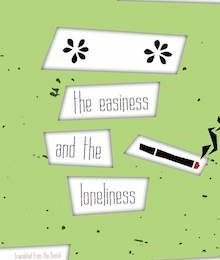
the easiness and the loneliness [Why This Book Should Win]
Check in daily for new Why This Book Should Win posts covering all thirty-five titles longlisted for the 2019 Best Translated Book Awards. Laura Marris is a writer and translator. Her poems and translations have appeared in The Yale Review, The Brooklyn Rail,The Cortland Review, The Volta, Asymptote, and elsewhere. ...
>
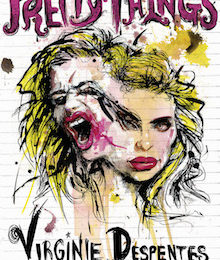
Pretty Things [Why This Book Should Win]
Check in daily for new Why This Book Should Win posts covering all thirty-five titles longlisted for the 2019 Best Translated Book Awards. Giselle Robledo is a reader trying to infiltrate the book reviewer world. You can find her on Twitter at @Objetpetit_a_. Pretty Things by Virginie Despentes, translated from ...
>
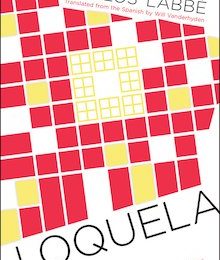
Carlos Labbé [Author of the Month]
In celebration of the release of Carlos Labbé's Spiritual Choreographies later this month--and because of a little surprise we'll unveil soon enough--we decided to make Carlos our "Author of the Month." From now until June 1st, you can use the code LABBE at checkout to get 30% off any and all of his books. (Including ePub ...
>
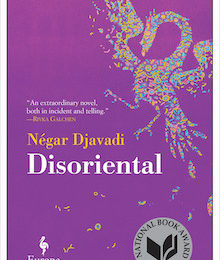
Disoriental [Why This Book Should Win]
Check in daily for new Why This Book Should Win posts covering all thirty-five titles longlisted for the 2019 Best Translated Book Awards. James Crossley has stood behind the counter of one independent bookstore or another for more than fifteen years and is currently the manager of brand-new Madison Books in Seattle. ...
>
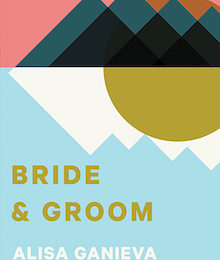
Bride and Groom [Why This Book Should Win]
Check in daily for new Why This Book Should Win posts covering all thirty-five titles longlisted for the 2019 Best Translated Book Awards. Ruchama Johnston-Bloom, who writes about modern Jewish thought and Orientalism. She has a PhD in the History of Judaism from the University of Chicago and is the Associate Director of ...
>
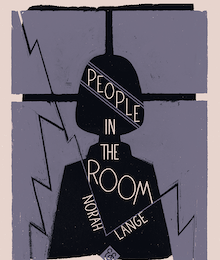
People in the Room [Why This Book Should Win]
Check in daily for new Why This Book Should Win posts covering all thirty-five titles longlisted for the 2019 Best Translated Book Awards. Tom Flynn is the manager/buyer for Volumes Bookcafe (@volumesbooks on all social sites) in Chicago. He can often be found interrupting others' work in order to make them read a ...
>
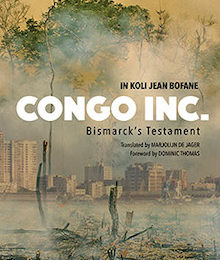
Congo Inc.: Bismarck’s Testament [Why This Book Should Win]
Check in daily for new Why This Book Should Win posts covering all thirty-five titles longlisted for the 2019 Best Translated Book Awards. Noah M. Mintz is a translator, a former bookseller, and a PhD student at Columbia University. Congo Inc.: Bismarck’s Testament by In Koli Jean Bofane, translated from the ...
>
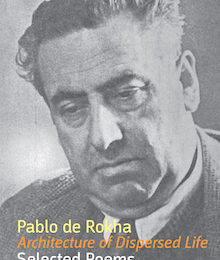
Architecture of Dispersed Life: Selected Poetry [Why This Book Should Win]
Check in daily for new Why This Book Should Win posts covering all thirty-five titles longlisted for the 2019 Best Translated Book Awards. Aditi Machado is the author of Some Beheadings and the translator of Farid Tali’s Prosopopoeia. She is the former poetry editor at Asymptote and the visiting poet-in-residence ...
>
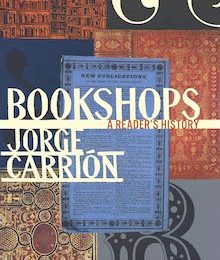
A Guesstimation of a Booklist Review-type Post
I alluded to this in an earlier post, but the main reason Three Percent has been light on this sort of content (and heavy on BTBA content, which is all stellar and worth checking out) isn't due to a lack of desire or interest, but a confluence of other events: deadlines for two pieces (one that should be available shortly, ...
>
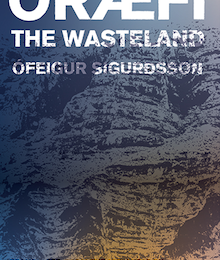
Öræfi: The Wasteland [Why This Book Should Win]
Check in daily for new Why This Book Should Win posts covering all thirty-five titles longlisted for the 2019 Best Translated Book Awards. Keaton Patterson buys books for a living at Brazos Bookstore in Houston, Texas. Follow him on Twitter @Tex_Ulysses. Öræfi: The Wasteland by Ófeigur Sigurdsson, translated ...
>
Three Percent #159: Publishing in 2025?
Chad and Tom are back to talk about Independent Bookstore Day (and Free Comic Book Day and Record Store Day), the Indie Playlist Initiative, fascists storming Politics & Prose, Alex Shephard's Mueller Report article, how much money Stanford (the Duke of the West?) is wasting on their crappy football program instead of ...
>
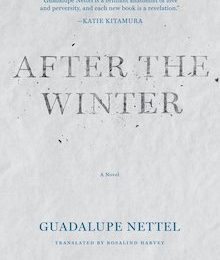
After the Winter [Why This Book Should Win]
Check in daily for new Why This Book Should Win posts covering all thirty-five titles longlisted for the 2019 Best Translated Book Awards. Rebecca Hussey is a community college English professor, a book reviewer, and a Book Riot contributor, where she writes a monthly round-up of indie press books, including many books ...
>
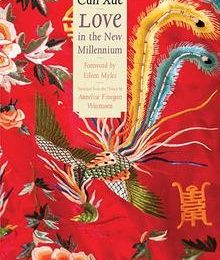
Love in the New Millennium [Why This Book Should Win]
Check in daily for new Why This Book Should Win posts covering all thirty-five titles longlisted for the 2019 Best Translated Book Awards. Rachel Cordasco has a PhD in literary studies and currently works as a developmental editor. She also writes reviews for publications like World Literature Today and Strange Horizons ...
>
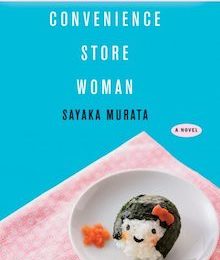
Convenience Store Woman [Why This Book Should Win]
Check in daily for new Why This Book Should Win posts covering all thirty-five titles longlisted for the 2019 Best Translated Book Awards. Elijah Watson is a bookseller at A Room of One’s Own Bookstore. He can be found on Twitter @wavvymango. Convenience Store Woman by Sayaka Murata, translated from the ...
>
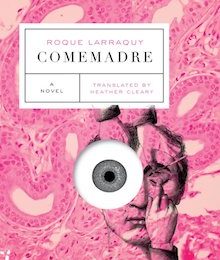
Comemadre [Why This Book Should Win]
Check in daily for new Why This Book Should Win posts covering all thirty-five titles longlisted for the 2019 Best Translated Book Awards. Aaron Bell is a wage laborer and Doctor of Philosophy. Comemadre by Roque Larraquy, translated from the Spanish by Heather Cleary (Argentina, Coffee House Press) Comemadre ...
>
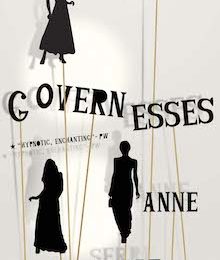
The Governesses [Why This Book Should Win]
Check in daily for new Why This Book Should Win posts covering all thirty-five titles longlisted for the 2019 Best Translated Book Awards. Pierce Alquist has a MA in Publishing and Writing from Emerson College and currently works in publishing in Boston. She is also a freelance book critic, writer, and Book Riot ...
>
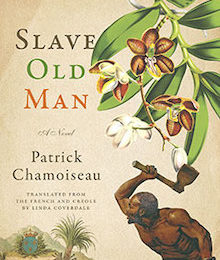
Slave Old Man [Why This Book Should Win]
Check in daily for new Why This Book Should Win posts covering all thirty-five titles longlisted for the 2019 Best Translated Book Awards. Sofia Samatar is the author of the novels A Stranger in Olondria and The Winged Histories, the short story collection, Tender, and Monster Portraits, a collaboration with her ...
>
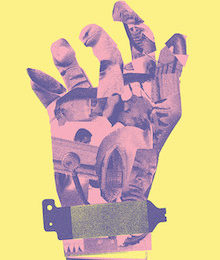
The Hospital [Why This Book Should Win]
Check in daily for new Why This Book Should Win posts covering all thirty-five titles longlisted for the 2019 Best Translated Book Awards. Justin Walls is a bookseller with Powell’s Books in Portland, Oregon and can be found on Twitter @jaawlfins. The Hospital by Ahmed Bouanani, translated from the French by ...
>
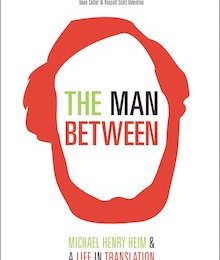
The Man Between [Genre of the Month]
I've been very lax in writing about the Open Letter author/genre of the month for April: nonfiction. But, there are still a couple of weeks left to share some info about our previously published and forthcoming works of nonfiction. And, as always, you can get 30% any of these books by using NONFICTION at ...
>
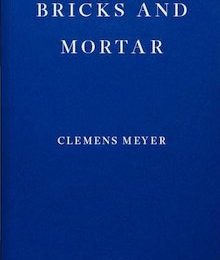
Bricks and Mortar [Why This Book Should Win]
Check in daily for new Why This Book Should Win posts covering all thirty-five titles longlisted for the 2019 Best Translated Book Awards. Tony Messenger is an Australian writer, critic and interviewer who has had works published in Overland Literary Journal, Southerly Journal, Mascara Literary Review, Burning House ...
>
Season Eight of the Two Month Review: CODEX 1962 by Sjón
If you're a long-time listener to the Two Month Review podcast, or even a part-time follower of the Open Letter twitter, you've probably already heard that the next season of the podcast (it's eighth?!) is going to be all about Sjón's CoDex 1962. "Spanning eras, continents, and genres, CoDex 1962—twenty years in ...
>
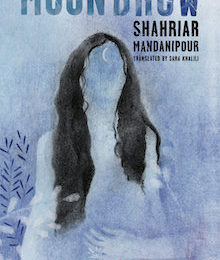
Moon Brow [Why This Book Should Win]
Check in daily for new Why This Book Should Win posts covering all thirty-five titles longlisted for the 2019 Best Translated Book Awards. Tara Cheesman is a blogger turned freelance book critic, National Book Critics Circle member & 2018 Best Translated Book Award Fiction Judge. Her reviews can be found online at ...
>
Three Percent #158: 2019 Best Translated Book Award Longlists
Best Translated Book Award fiction judge Kasia Bartoszynska joins Chad and Tom to talk about the recently released longlists. After providing some insight into the committee's thinking and discussions (and confirming that Chad had no knowledge of the lists beforehand, while not 100% confirming that Chad isn't Adam ...
>
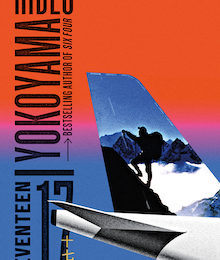
Seventeen [Why This Book Should Win]
Check in daily for new Why This Book Should Win posts covering all thirty-five titles longlisted for the 2019 Best Translated Book Awards. Adam Hetherington is a reader and a BTBA judge. Seventeen by Hideo Yokoyama, translated from the Japanese by Louise Heal Kawai (Japan, FSG) In August of 1985, Japan Airlines ...
>
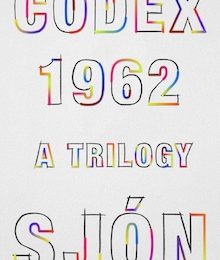
CoDex 1962 [Why This Book Should Win]
Check in daily for new Why This Book Should Win posts covering all thirty-five titles longlisted for the 2019 Best Translated Book Awards. George Carroll is a former bookseller and a West Coast representative for numerous publishers of translated literature. He is currently the curator ...
>
Meet the BTBA Judges!
Tomorrow morning at 10am the 2019 Best Translated Book Award longlists will be revealed over at The Millions. As a bit of a preview, the judges wanted to introduce themselves . . . Keaton Patterson, a lifelong Texan, has an MA in Literature from the University of Houston-Clear Lake. For the past five years, he has been ...
>
Mike Trout Floats All Boats
Let's start with what this post isn't going to be. It's not going to be a post about nonfiction in translation even though I declared, just yesterday, that this is "Nonfiction in Translation Month" at Three Percent. That's really going to kick off next week with a post about two true crime books in translation and a weird ...
>
Are These Clues? [BTBA 2019]
We are days away from finding out which titles made the 2019 BTBA longlist! In the meantime, here's a post from Katarzyna (Kasia) Bartoszyńska, an English professor at Monmouth College, a translator (from Polish to English), and a former bookseller at the Seminary Co-op Bookstore in Chicago. There are simply too many good ...
>
Three Percent #157: Post-Portland AWP
On this atypically subdued episode, Chad recounts some of his adventures in Portland at the AWP conference, and speculates about why this was his favorite one to date. Tom helps illuminate some of the mysteries behind IndieBound and what might be next for independent stores trying to capture some online sales. (And how this ...
>

Interview with Damion Searls about Anniversaries [Part I]
Assuming that I'll be reading Anniversaries slowly but surely over the next four months, I thought it would be fun to talk to translator Damion Searls about the book along the way. If all goes according to plan, these monthly installments will develop into a rich conversation about the book, translation issues, and much ...
>
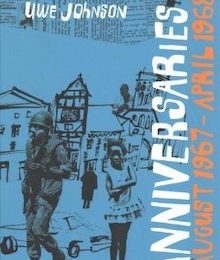
Blogging Like It’s 1967 [Anniversaries, Volume 1]
Tomorrow afternoon we'll run the first of several interviews with Damion Searls, translator of the first complete version of Anniversaries to appear in English. If things go according to plan, each month we'll dig deeper and deeper into this massive book, a twentieth-century masterpiece that weighs something ...
>
Three Percent #156: The Netflix of Titles
On this week's podcast, Chad and Tom talk laugh about how HarperVia conceives of itself, praise this year's National Book Award for Translation judges, give some spotty analysis of the Man Crankstart (?) Booker International longlist, the idea of an International Writers Hall of Fame (vote here), the one NCAA Basketball ...
>
BTBA-Eligible Books from Japan [BTBA 2019]
We're exactly 24 days away from finding out which titles are on the 2019 BTBA longlist! (It will be announced at The Millions, and I [Chad] won't know what's on it until everyone else finds out. I'm so excited! I love being completely in the dark about this.) If you're interested in joining the conversation about which books ...
>
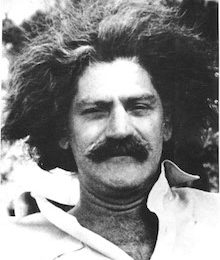
Joshua Cohen on Jakov Lind [Author of the Month]
Our featured author of the month is Jakov Lind, an author whose biography, as you'll read below, is absolutely fascinating. To celebrate his work, we're offering 30% off on Landscape in Concrete and Ergo all month—just use the code LIND at checkout. Joshua Cohen (The Book of Numbers, Witz) wrote an amazing ...
>
Three Percent BONUS EPISODE: Interview with Edwin Frank of NYRB
Following a trip to India to speak at the Seagull School of Publishing, Edwin Frank sat down to talk about Uwe Johnson's Anniversaries and NYRB's overall editorial history, including surprise hits, books he wishes more people read, and much more. A brilliant reader, publisher, and thinker, this episode will be of great ...
>
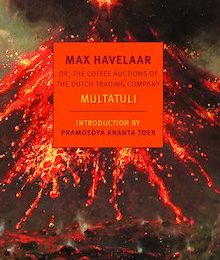
Which Living Writers Are Sure-Thing Hall of Famers?
Last Thursday, I must've sent two dozen people a variation on that question above, usually in the form "Name me ten living 'Hall of Fame' writers." No explanation, no context, nothing. I was curious as to who people would name, what biases would come through, which authors would start debates. And I figured I could get a ...
>
Three Percent BONUS EPISODE: Interview with Nick During of NYRB
To supplement NYRB month on Three Percent, Chad and Anthony talked to Nick During, publicist for New York Review Books, about the marketing of Anniversaries by Uwe Johnson, the struggles to get attention for reprints, Henry Green's eternal rediscovery, and much more. (Including Nick's ratings of the impact of various ...
>
Three Percent #155: All Statistics Are Baseball Statistics
After a brief foray into Baseball Prospectus 2019 and Power Ball by Rob Neyer, Chad and Tom get down to business, analyzing Chad's statistically-based, very lukewarm take on translation production in 2018. They come up with innumerable, very rational reasons for the dip in translations that tend to revolve around ideas ...
>
NYRB Classics: Some Stats [Strategies for Publishers]
This month, I'm going to switch things up a bit. Initially, I was going to leave Canada behind and focus on one single book: Uwe Johnson's Anniversaries. But, well, this is 1,600 pages long, and I have to proof a couple things this month, and reread some books for my class, and go to AWP, and catch up on Deadly ...
>
“The Faerie Devouring” by Catherine Lalond [Quebec Literature from P.T. Smith]
Before starting this month's focus on Quebec literature, I asked P.T. Smith to recommend a few books for me to read, since he's one of the few Americans I know who has read a lot of Quebec literature. But rather than hoard these recommendations or write silly things about them, we decided it would be best if P.T. wrote weekly ...
>
Coach House Books & Marie-Claire Blais [2018 Redux]
I've really, really enjoyed Quebec Month here at Three Percent. I had the chance to read the Catherine Leroux book I've been wanting to read, encountered some other really great books and presses I probably would've missed if I hadn't forced this on myself, and got to run a few really cool interviews and excerpts. On top of ...
>
“The Employee” by Guillermo Saccomanno [Excerpt]
You have three days left to take advantage of Guillermo Saccomanno's status as "Open Letter Author of the Month." Through Thursday night, you can get 30% off both of his books via the Open Letter website by using the code SACCOMANNO at checkout. With so many positive comments coming in about 77, I thought I'd give you a ...
>
“Next Episode” by Hubert Aquin [Quebec Literature from P.T. Smith]
Before starting this month's focus on Quebec literature, I asked P.T. Smith to recommend a few books for me to read, since he's one of the few Americans I know who has read a lot of Quebec literature. But rather than hoard these recommendations or write silly things about them, we decided it would be best if P.T. wrote weekly ...
>

Interview with Dimitri Nasrallah of Esplanade Books
Continuing our month-long series of Quebec literature, below you'll find an interview with Dimitri Nasrallah, writer, translator, and editor of Esplanade Books, the fiction imprint of Véhicule Press. Later this afternoon we'll be running an excerpt from one of their forthcoming titles. Chad W. Post: I want to ask you ...
>
Three Percent #154: Celebrity Translators
After an update about Chad's computer files and subscriptions, Tom talks about Amazon leaving NYC and they both get into a long discussion about translator Molly Ringwald (who you might also recognize from Riverdale). Chad tries to order a book from IndieBound (where do these books process from?) and then they talk a bit ...
>
Véhicule Press/Esplanade Fiction & BookThug/Book*Hug [P.T. Smith Redux]
This really is the P. T. Smith-inspired post. As you likely know, Patrick has been writing weekly posts for Three Percent this month about some of his favorite works of Quebec literature. (See this post and this one.) He's one of the few Americans I know (maybe the only one?) who is deep into Quebec lit, so deep in fact that ...
>
Biblioasis [Catherine Leroux Redux]
Last December, when I was working on this post about Quebec fiction, I came up with the idea of having themed months running throughout 2019. Which is why January was all about Spain, February about Quebec, and March about Uwe Johnson's Anniversaries. (Which might kill me and/or lead me into an insane rabbit-hole of ...
>
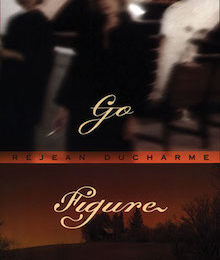
“Go Figure” by Réjean Ducharme [Quebec Literature from P.T.]
Before starting this month's focus on Quebec literature, I asked P.T. Smith to recommend a few books for me to read, since he's one of the few Americans I know who has read a lot of Quebec literature. But rather than hoard these recommendations or write silly things about this, we decided it would be best if P.T. wrote a ...
>
Three Percent #153: Winter Beats and Breaks
At the top of this episode, Tom explains why he and Chad fell off the biweekly schedule for a bit, but then they come back strong, talking about Winter Institute, the Independent Publishers Caucus, minimum wage, this wild New Yorker article that doesn't quite do enough, but makes Chad angry, and Hanif Abdurraqib's Go Ahead ...
>
QC Fiction [Canada Redux]
I think I might have mentioned this in an earlier post, but now that we’ve put Spain to bed with a week dedicated to each of the four major languages—Castilian, Catalan, Galician, and Basque—we’re turning our attention to the North. As in the Great White. Canada: home of poutine, reasonable political leaders (now that ...
>
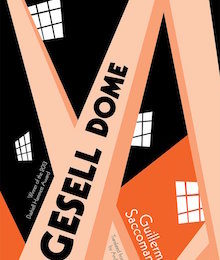
Guillermo Saccomanno [Open Letter Author of the Month]
In celebration of the release of 77 on Tuesday, February 12, we’ve decided to make Guillermo Saccomanno this month’s featured author. Like what we did for Volodine last month, we’re offering 30% all orders for Gesell Dome and 77 (use SACCOMANNO at checkout), and will be running a series of excerpts from his books. ...
>
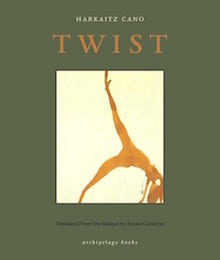
Why Are Patreon [Time for a Basque Rundown]
I promise I’ll be back on schedule soon—this computer situation is really taking it’s toll . . . I’m currently writing on my iPad, using a Bluetooth keyboard and feeling like a gross millennial working out of a third-wave coffee shop, saying NO! to Large Computer, and proving that Jobs is Genius and that 2019 is about ...
>
Three Percent BONUS EPISODE: Interview with Jonathan Dunne
As part of this month's ongoing series of posts about literature from Spain, I talked to author, translator, and publisher Jonathan Dunne, whose Small Stations Press has produced more translations of Galician literature into English than anyone else. On this bonus episode of the Three Percent Podcast, we talk about how to ...
>
Why Are Preview Lists [Galician Literature + Positivity]
I've been trying sooooooo hard to be positive in 2019. So hard. Stay optimistic in light of distribution issues. Don't worry about sales too much, because I'm 250% certain Anthony is going to take us to the next level. Ignore the fact that Lit Hub listed Night School as one of the best reviewed "nonfiction" books of the ...
>

“Tell Them of Battles, Kings, & Elephants” by Mathias Énard
Tell Them of Battles, Kings, & Elephants Translated from the French by Charlotte Mandell 144 pgs. | pb |9780811227049 | $19.95 New Directions Publishing Reviewed by Grant Barber Énard is a Very Important Author indeed. He belongs on the stage with Pamuk, T Morrison, Morante, Okri, Delillo, J. Marías, ...
>
“Eleven Sooty Dreams” by Manuela Draeger [Excerpt]
As we posted about last week, in honor of Radiant Terminus being the next featured Two Month Review title, Antoine Volodine is our "Author of the Month." So, if you want to buy any of his books, you can get 30% off by using the code VOLODINE at checkout. (And yes, that applies to print AND ebooks.) Last friday we ...
>
“The Gradual Disappearance of Jane Ashland” by Nicolai Houm
The Gradual Disappearance of Jane Ashland by Nicolai Houm Translated from Norwegian by Anna Paterson 228 pgs. | pb | 9781947793064 | $15.95 Tin House Books Review by David DeGusta Nicolai Houm’s novel “The Gradual Disappearance of Jane Ashland,” translated from the Norwegian by Anna Paterson, opens with ...
>
Three Percent #152: Seven (Or So) Insights
Getting back on schedule for the new year, Chad and Tom convene to talk about two articles: "7 Publishing Insights Revealed by Last Year's Top 100 Bestselling Books," and "Virginia Woolf? Snob! Richard Wright? Sexist! Dostoyevsky? Anti-Semite!" They also talk a bit about YA books and the precipitous decline in reading as ...
>
Post-Exoticism in Ten Lessons, Lesson Eleven [Excerpt]
In support of Antoine Volodine as our featured "Author of the Month," throughout the day we'll be posting excerpts from the three books of his Open Letter has already published. (Next week we'll run excerpts from forthcoming ones . . . ) First up is Post-Exoticism in Ten Lessons, Lesson Eleven, translated from the ...
>
Why Are Meritocracy [Two Castilian Books]
I have two books that I want to talk about this week, and one related publishing/cultural issue, but before I get into all of that, I thought it would be interesting to dig a bit into some of the data from last week's "Spain By the Numbers" post. As I mentioned in that same post, over the course of this month, I'm going to ...
>
Books from Spain [By the Numbers]
I alluded to this in an earlier post (or two?), but one of the things I'd like to do on Three Percent this year is highlight a different group of books every month. It could be a particular country—like this month—or a set of publishers, or a single publisher, or single author. Regardless of the specifics of a particular ...
>
9 x 9 x 9: Everything Comes to an End
The other day I saw someone on Twitter asking haters of "best of" lists what changes they would institute to make these things more palatable. I thought about this for longer than I'd like to admit because a) circa-2001, I used to love year-end recaps. This was the era of "Best Week Ever" and other clip shows that were ...
>
Three Percent #151: A Time for Gifting
After a long conversation about a rather strange Rochester gathering of arts organizations, Chad and Tom get down to business: recommending their favorite books of 2018. Except, rather than just make a list, they decide which of their friends or relatives should receive each of these titles. Then they talk about a couple ...
>
Books about Death [BTBA 2019]
Today's Best Translated Book Award post is from George Carroll, retired publisher rep living in Seattle, rooting for the Sounders, and kicking ass in our Fantasy Premier League league. In his preface to Best European Fiction 2016, Jon Fosse wrote “But crime fiction is not literature; it is the opposite of it . . . for ...
>

“Quo Vadis, Baby?” by Grazia Verasani
Quo Vadis, Baby? by Grazia Verasani Translated from the Italian by Taylor Corse and Juliann Vitullo 180 pgs. | pb | 9781599103662 | $15.00 Italica Press Review by Jeanne Bonner The last time I wrote about Grazia Verasani’s Quo Vadis, Baby? (Mondadori, 2007) I was researching an article for Literary Hub ...
>
Three Percent #150: Canadian Publishing
This week, Kevin Williams of Talonbooks out of Vancouver, British Columbia joins Tom and Chad to talk about the state of publishing in Canada. He recaps his career in the book business—as a bookseller, distributor, agent, and publisher—and provides a lot of insight into the Canadian funding structures, the not-so-great ...
>
The Fault in Our Numbers
the cigarette consumed itself inside her body, her extraordinary body, 70 percent water, 30 percent smoke, and I could not understand it —The Nocilla Lab (Sales(S) x List Price(P)) x Readership® – Fixed Operating Expenses(FOE) – Printing(PR) – Author Payment(AP) – Translator Payment(TP) – Marketing Costs(MC) = ...
>
Three Percent #149: I Have Some Advice
LIVE PODCAST! Well, sort of. Tom was in Rochester, so he and Chad recorded a spontaneous podcast while being in the same room as one another. (And with eight-month-old Aleks, who makes an appearance.) They talk about bookstores Tom visited on this trip, the National Book Awards, and J Franz's now infamous "rules for writers." ...
>
Three Percent #148: The Hottest Trend
Sticking more or less to their biweekly schedule, Chad and Tom reconvene to talk about a couple recent articles, the challenges of being a literary nonprofit, interesting books they're reading, humblebrags about the Words Without Borders and PEN galas, and more. Surprising lack of sports talk this week, although there is a ...
>
Holiday BTBA Overview [BTBA 2019]
It's Best Translated Book Award build-up time, which lasts, like four months . . . Anyway, here's Kasia Bartoszynska's overview of a number of exciting titles vying for the BTBA 2019! The holiday season is not yet upon us, but for us judges, there’s an exciting new gift in the mail almost daily, in the form of packages ...
>
Three Percent #147: Helping Listeners One Translation Heuristic at a Time
This week's episode is mostly inspired by an email from a listener about evaluating translations, and although Tom and Chad don't provide the hardest and fastest rules, they do have an interesting conversation about how they read and judge translated books. They also follow up on a few different threads from earlier episodes ...
>
“Mamma’s Boy” by David Goudreault
Mamma's Boy by David Goudreault Translated from the French by JC Sutcliffe 192 pgs. | pb | 9781771663823 | $20.00 Book*hug Review by Rafael Sanchez Montes This incredibly fun novel is a first-person account and confession by the unnamed protagonist, who offers his side of the story to what he ...
>
My Struggle, Part I: Confusion and Value
As part of my "Deep Vellum Month" experiment, I decided to move from the toponymy—and topography—of Iceland to geography. Or rather, "geography," as in the Geography of Rebels by Maria Gabriela Llansol. Like with most of the books I've been reading of late, I knew basically nothing about this book before picking it ...
>
Three Percent #146: The Conspiracy Theory Episode
An all-banter episode that touches on an array of topics, from ranking ideas on how to save indie bookstores, to The Great American Read's (embarrassing) top 10 vote getting books (are we sure Outlanders doesn't include people riding on dragons?), the Frankfurt Book Fair, self-censorship, QAnon + Marlins Man, a book scam, ...
>
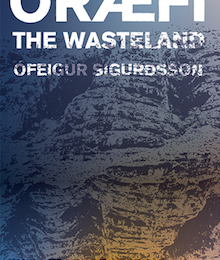
The Icelandic Connection
If you're a long time reader of Three Percent and/or literature in translation, I'm sure you've heard of Deep Vellum, and probably know most of their history. But to kick off my series of posts about their September/October books—and to put the numbers below in context—it's probably worth a quick recap. Back in the ...
>
Two Month Review #6.2: The Book of Disquiet (sections 1-39)
This is one of the most Two Month Review podcasts yet. Chad, Brian, and Tom Flynn (Volumes Books in Chicago) come together to discuss the first forty-six pages (sections 1-39) of the complete version of Fernando Pessoa's The Book of Disquiet. In addition to breaking down the philosophy and literary style representing ...
>
It’s the Postseason! [Welcome to October]
It's been too long since I last posted a comprehensive update of where we are with translations this year. Which is why I spent most of today updating the Translation Database. There are probably still a number of books to be added before the year is out, but we're getting close to having a pretty stable—and pretty ...
>
A Frozen Imagination
Over the course of the eleven years that Three Percent has existed, we've published approximately 300 posts about Iceland. We even held a special "Icelandic Week" when Iceland was Guest of Honor at the 2011 Frankfurt Book Fair. In addition to highlighting a ton of authors and musicians, we tried to record a Brennivín ...
>
Missed Opportunities (Here’s the NBA Translation Post I Promised)
Per usual when I'm writing these posts, I'm standing in front of my TV with the St. Louis Cardinals game on in the background, dwelling on what this season could've been. Sure, as I type, they have a .5 game lead for the final wild-card slot, but their odds of making the playoffs are only at 68.1%—far from a ...
>
Publishing Strategies of Rediscovery
A few years ago, New Directions reissued three Clarice Lispector books (and one never-before translated one) with covers that combined into one giant portrait. Although it was preceded by the publication of a new translation of The Hour of the Star—by Ben Moser, who had recently written an all-encompassing biography of ...
>
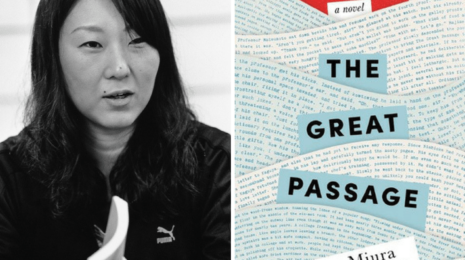
“The Great Passage” by Shion Miura
The Great Passage by Shion Miura translated from the Japanese by Juliet Winters Carpenter 222 pgs. | pb |9781477823071 | $14.95 AmazonCrossing Reviewed by Talia Franks Shion Miura’s The Great Passage chronicles the construction of a dictionary also called The Great Passage, which is a comprehensive catalog ...
>
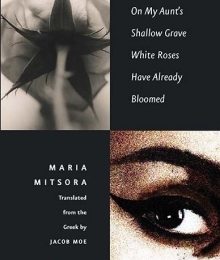
The Simple Pleasures of Reading
My initial plan for this post was to do a huge data dump for Women in Translation Month, but Meytal Radzinski already went and totally crushed it. She has all the best graphs, pie charts, breakdowns, overviews, recommendations, and more. Go click on that link and spend a day reading everything she has to say. I looked over ...
>
BTBA 2019: Juries, Dates, Request for Your Books
Earlier this week, Patrick Smith sent out the email below to as many publishers as possible, letting them know about this year's Best Translated Book Award juries. In case you didn't get this--or, if you're a translator or author who wants to make sure your book is submitted--I'm reposting it all here. (And, we will have a ...
>
“The Bottom of the Jar” by Abdellatif Laâbi
The Bottom of the Jar by Abdellatif Laâbi translated from the French by André Naffis-Sahely 220 pgs. | pb |9781935744603 | $17.00 Archipelago Books Reviewed by Brendan Riley For English language readers, like this reviewer, whose literary sense of North Africa is delimited by periodic forays into the ...
>
August 2018 Newsletter
Celebrate Women in Translation Month with 40% Off All Open Letter Books Written by Women OR Translated by Women Women in Translation Month is always an exciting time to discover, read, discuss, and celebrate books by women from around the world. It was created by Meytal Radzinski back in 2014, and has since spawned ...
>
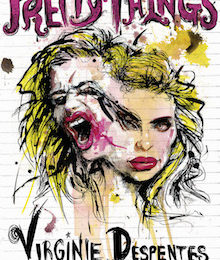
The Very Pleasant Post
Usually I try and make the first post of the month one that's based around some sort of statistical analysis of what's going on with literature in translation. Since this is Women in Translation Month (#WIT2018), it would make a great deal of sense to run a bunch of data about women writers in translation, women translators, ...
>
A Whole Lot of Blather
I'm back from Ireland! I was there for the past two weeks as part of a University of Rochester Travel Club trip for which I served as the "academic host" and gave four different lectures--two on Ulysses, one on Irish humor, and one on the relationship between contemporary Irish literature and language. I think they all went ...
>

“Katalin Street” by Magda Szabó
Katalin Street by Magda Szabó translated from the Hungarian by Len Rix 248 pgs. | pb | 9781681371528 | $15.95 NYRB Classics Reviewed by Jason Newport What is a woman, or her ghost, to do for herself? This is the question that haunts Hungarian author Magda Szabó in her three novels ...
>
Selection Bias, Best Translations, and Where Are the Women in Translation From?
A couple weeks ago, Boyd Tonkin, the excellent critic and founder of the Independent Foreign Fiction Prize--the inspiration for the Best Translated Book Award, and now the Man Booker International--released a rather unattractive looking book called The 100 Best Novels in Translation. It's pretty obvious what's ...
>
Is this All Fox-y Enough? (Two Month Review: #5.02: FOX by Dubravka Ugresic – Blog Post)
Last week, Chad, Brian, and returning special guest Tom Flynn of Volumes Bookcafe broke down some of the bigger elements of the introductory section of Dubravka Ugresic’s Fox, including the all-important question: is Ugresic’s fox metaphor fox-y enough? We’ll take our own look at some segments of this opening section ...
>
9 Books Likely to Win the 2019 Best Translated Book Award
I'm just back from a poetry reading that's part of Rochester's The Ladder literary conference . . . actually, it was a poetry reading PLUS short stories (which are the poetry of novel writing), which is neither here nor there, except that a few of us played a sort of drinking game? Actually, we just straight up played a ...
>
9 Comp Authors for Dag Solstad, Or, How I Learned to Stop Worrying and Embrace the Listicle
So much has happened over the past two weeks! Given all that I want to say about Dag Solstad's books and the people who review them, I'm going to rush through a few general comments about recent publishing events. First off: the New York Rights Fair and BookExpo. This year marked the first ever NYRF and the "newly ...
>
The Crime in the Data
A couple weeks ago, writer Kári Tulinius asked me for some information on how prevalent crime novels are in what gets translated. As with most statistics related to literature in translation (and/or the book industry in general), the correct answer was, "uh . . . no idea. Maybe a lot? Sure seems like it . . . So, yeah." I ...
>
“Snatching Bodies” by Rodrigo Fresán [New Fiction]
To celebrate the release of The Bottom of the Sky (which happens to be Open Letter's 100th title!), we wanted to share this "bonus track" to the novel. He initially wrote this story as a sort of explanation for one paragraph in The Bottom of the Sky, and then had it anthologized in collection of “dysfunctional family” ...
>
“Paraguayan Sea” by Wilson Bueno [Why This Book Should Win]
And with this post, we're done! All the longlisted titles have been featured in the Why This Book Should Win series. Thanks to everyone who contributed, and for this particular post, thanks to Raluca Albu from BOMB. Paraguayan Sea by Wilson Bueno, translated from the Portunhol and Guarani by Erin Moure ...
>
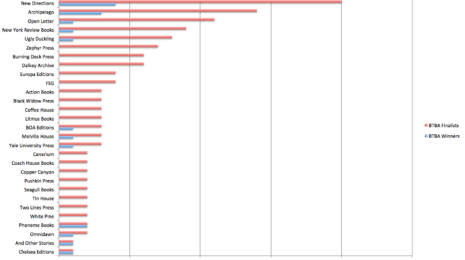
May Is a Month of Grading
The Best Translated Book Award Finalists were announced earlier this week, and following up on my earlier post looking at the representation of various languages on the BTBA longlists, I thought I'd take a second to highlight the publishing houses (#NameThePublisher) that have historically done the best on the BTBA ...
>
2018 Best Translated Book Award Finalists
May 15, 2018—Ten works of fiction and six poetry collections remain in the running for this year’s Best Translated Book Awards following the announcement of the two shortlists at The Millions website this morning. Featuring a blend of contemporary writers and modern classics, of writers from cultures around the world, ...
>
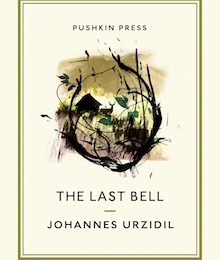
“The Last Bell” by Johannes Urzidil [Why This Book Should Win]
This entry in the Why This Book Should Win series (almost done!) is from Abe Nemon who writes essays and reviews of old and out-of-print books at OldBookAppreciator.com, as well as daily bios of obscure authors on their birthdays on Twitter at the handle @bookappreciator. The Last Bell by Johannes Urzidil, translated ...
>
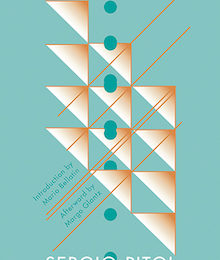
“The Magician of Vienna” by Sergio Pitol [Why This Book Should Win]
This entry in the Why This Book Should Win series is from P.T. Smith. A full-time writer of WTBSW entries. The Magician of Vienna by Sergio Pitol, translated from the Spanish by George Henson (Mexico, Deep Vellum) Books that are part of a series have a tough time getting the recognition they deserve, in general and ...
>
“August” by Romina Paula [Why This Book Should Win]
This entry in the Why This Book Should Win series is from BTBA judge and University Bookstore bookseller Caitlin Baker. August by Romina Paula, translated from the Spanish by Jennifer Croft (Argentina, Feminist Press) I initially picked up August because of its beautiful cover and then I read the first ...
>
“Beyond the Rice Fields” by Naivo [Why This Book Should Win]
This entry in the Why This Book Should Win series is from reader, reviewer, and BTBA judge P.T. Smith. Beyond the Rice Fields by Naivo, translated from the French by Allison M. Charette (Madagascar, Restless Books) Naivo’s Beyond the Rice Fields is the first Malagasy novel ever translated into English. That’s ...
>
“Savage Theories” by Pola Oloixarac [Why This Book Should Win]
This entry in the Why This Book Should Win series is from George Carroll, former and future BTBA judge, soccer fanatic, world literature correspondent for Shelf Awareness, and curator of litintranslation.com. Savage Theories by Pola Oloixarac, translated from the Spanish by Roy Kesey (Argentina, Soho Press) I would ...
>
“I Am the Brother of XX” by Fleur Jaeggy [Why This Book Should Win]
This entry in the Why This Book Should Win series is from BTBA judge, reader, and reviewer P.T. Smith. I Am the Brother of XX by Fleur Jaeggy, translated from the Italian by Gini Alhadeff (Switzerland, New Directions) Instant love is well and good. Confident and rejection is the same, if you’re the one doing the ...
>

“Suzanne” by Anaïs Barbeau-Lavalette [Why This Book Should Win]
The Why This Book Should Win entry for today is from literary translator Peter McCambridge, fiction editor at QC Fiction (a new imprint of the best of contemporary Quebec fiction in translation) and founding editor of Québec Reads. Suzanne by Anaïs Barbeau-Lavalette, translated from the French (Québec) by Rhonda ...
>
What if Writers Were Treated Like Soccer Players?
Told you I'd be back soon to catch up on these weekly posts! Next week I'll put together a recap linking to all of the posts in the series so far, and including a line or two about what they cover. And then, in addition to writing about one (or two) new books, next week I'll also post a May overview with some more data, a ...
>
“Bergeners” by Tomas Espedal [Why This Book Should Win]
This entry in the Why This book Should Win series is from BTBA judge Patrick Smith, who is scrambling to finish covering all the books in this series. If you want to write about one of the remaining few, please get in touch! Bergeners by Tomas Espedal, translated from the Norwegian by James Anderson (Norway, Seagull ...
>
“Iron Moon: An Anthology of Chinese Worker Poetry” [Why This Book Should Win]
This Why This Book Should Win entry is from Raluca Albu, BTBA judge, and editor at both BOMB and Guernica. Iron Moon: An Anthology of Chinese Worker Poetry, translated from the Chinese by Eleanor Goodman (China, White Pine Press) “Iron Moon” is an anthology of Chinese migrant worker poetry that transports ...
>

“Incest” by Christine Angot [Why This Book Should Win]
Today's second Why This Book Should Win post is from Bradley Schmidt, a translator of contemporary German literature, most recently of Philipp Winkler’s Hooligan (Arcade), who also teaches writing and translation at Leipzig University. More at bradley-schmidt.com. Incest by Christine Angot, translated from the ...
>
“Fever Dream” by Samanta Schweblin [Why This Book Should Win]
This entry in the Why This Book Should Win series is from former BTBA judge and founder of the Literary License blog, Gwendolyn Dawson, who lives in Houston, TX and is a practicing lawyer. She is a longtime supporter of literature in translation and all literary arts. Fever Dream by Samanta Schweblin, translated from ...
>
“My Heart Hemmed In” by Marie NDiaye [Why This Book Should Win]
With the May 15th announcement of the finalists just over a week away, these Why This Book Should Win entries are coming fast and furious. This one is by Lori Feathers, BTBA judge and co-owner of Interabang Books. My Heart Hemmed In by Marie NDiaye, translated from the French by Jordan Stump (France, Two ...
>
“The Iliac Crest” by Cristina Rivera Garza [Why This Book Should Win]
First Why This Book Should Win entry for today is from Tim Horvath. Tim Horvath is the author of Understories (Bellevue Literary Press) and Circulation (sunnyoutside), as well as fiction in Conjunctions, AGNI, Harvard Review, and elsewhere. He teaches in the Creative Writing BFA/MFA programs at the New Hampshire ...
>
“Third-Millennium Heart” by Ursula Andkjær Olsen [Why This Book Should Win]
This entry in the Why This Book Should Win series is from poet, translator, editor, and BTBA judge, Aditi Machado. Third-Millennium Heart by Ursula Andkjær Olsen, translated from the Danish by Katrine Øgaard Jensen (Denmark, Broken Dimanche Press/Action Books) What’s a translated book got to do to ...
>
“Old Rendering Plant” by Wolfgang Hilbig [Why This Book Should Win]
Now that the new website is up and working, we can start catching up on the Why This Book Should Win series. (And I can go back to writing my unhinged weekly missives about literature in translation.) Today's first post is from Joseph Schreiber, writer, editor at 3:AM Magazine, maintains literary blog, ...
>
“Hackers” by Aase Berg [Why This Book Should Win]
This entry in the Why This Book Should Win series is from BTBA judge and Greenlight Bookstore bookseller Jarrod Annis. Hackers by Aase Berg, translated from the Swedish by Johannes Göransson (Sweden, Black Ocean) Stark and minimal, Hackers thrums with a biology inherent to Berg's poetics, an exoskeleton of ...
>
“Compass” by Mathias Énard [Why This Book Should Win]
This entry in the Why This Book Should Win series is from former BTBA judge and founder of the Literary License blog, Gwendolyn Dawson, who lives in Houston, TX and is a practicing lawyer. She is a longtime supporter of literature in translation and all literary arts. Compass by Mathias Énard, translated from the ...
>
“I Remember Nightfall” by Marosa di Giorgio [Why This Book Should Win]
This entry in the Why This Book Should Win series is from BTBA judge and Greenlight Bookstore bookseller Jarrod Annis. I Remember Nightfall by Marosa di Giorgio, translated from the Spanish by Jeannine Marie Pitas (Uruguay, Ugly Duckling Presse) Dark, ethereal, and sensuous, Marosa di Giorgio's prose ...
>

“For Isabel: A Mandala” by Antonio Tabucchi [Why This Book Should Win]
This entry in the Why This Book Should Win series is from BTBA judge Jeremy Keng. For Isabel: A Mandala by Antonio Tabucchi, translated from the Italian by Elizabeth Harris (Italy, Archipelago Books) The photographer shifted positions and lit another cigarette in his long ivory holder. He seemed uneasy. Silent, he ...
>
“Chasing the King of Hearts” by Hanna Krall [Why This Book Should Win]
This entry in the Why This Book Should Win series is from Ruchama Johnston-Bloom, who writes about modern Jewish thought and Orientalism. She has a PhD in the History of Judaism from the University of Chicago and is the Associate Director of Academic Affairs at the London center of CAPA: The Global Education ...
>
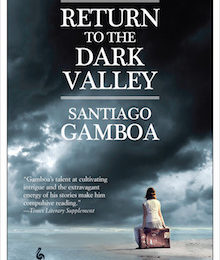
“Return to the Dark Valley” by Santiago Gamboa [Why This Book Should Win]
Final entry today in the Why This Book Should Win series is from BTBA judge and curator of “Reader-at-Large,” Tara Cheesman. Return to the Dark Valley by Santiago Gamboa, translated from the Spanish by Howard Curtis (Colombia, Europa Editions) One of the characters in Return to the Dark Valley is a “crazy and ...
>
“Directions for Use” by Ana Ristović [Why This Book Should Win]
Today’s poetry entry into the Why This Book Should Win series is from BTBA judge—and Riffraff co-owner—Emma Ramadan. Directions for Use by Ana Ristović, translated from the Serbian by Steven Teref and Maja Teref (Serbia, Zephyr Press) Very occasionally, reading a book in translation can feel like I’m ...
>
“You Should Have Left” by Daniel Kehlmann [Why This Book Should Win]
This entry in the “Why This Book Should Win” series is from Jenny Zhao, an undergrad student here at the University of Rochester. You Should Have Left by Daniel Kehlmann, translated from the German by Ross Benjamin (Germany, Pantheon) The premise of You Should Have Left is a familiar one, not all that different ...
>

“Radiant Terminus” by Antoine Volodine [Why This Book Should Win]
Today’s “Why This Book Should Win” fiction entry is from Rachel Cordasco, former BTBA judge, and curator of Speculative Fiction in Translation. Radiant Terminus by Antoine Volodine, translated from the French by Jeffrey Zuckerman (France, Open Letter Books) In Radiant Terminus, we have a novel that disturbs ...
>
Spanish Literature Is Our Favorite Scene
Last week, the 2018 longlists for the Best Translated Book Award were released and were loaded with books translated from the Spanish. Eight works of fiction and one poetry collection. Nine titles total out of the thirty-seven on the combined longlists. That’s just a smidge under 25%. Twenty-five percent! One-quarter of the ...
>
“Astroecology” by Johannes Heldén [Why This Book Should Win]
This morning’s poetry entry into the Why This Book Should Win series is from BTBA judge—and Riffraff co-owner—Emma Ramadan. Astroecology by Johannes Heldén, translated from the Swedish by Kirkwood Adams, Elizabeth Clark Wessel, and Johannes Heldén (Sweden, Argos Books) Johannes Heldén’s Astroecology is an ...
>
“Affections” by Rodrigo Hasbún [Why This Book Should Win]
Mark Haber of the BTBA jury and Brazos Bookstore has today’s fiction entry in the “Why This Book Should Win” series. Affections by Rodrigo Hasbún, translated from the Spanish by Sophie Hughes (Bolivia, Simon & Schuster) There is a lot to be said for subtlety, the quiet ability to tackle the heavy ...
>
“Remains of Life” by Wu He [Why This Book Should Win]
This afternoon’s entry in the “Why This Book Should Win” series is from BTBA judge Adam Hetherington. Remains of Life by Wu He, translated from the Chinese by Michael Berry (China, Columbia University Press) I’m not sure how to define historical fiction. How true does regular fiction need to be to become ...
>
“Before Lyricism” by Eleni Vakalo [Why This Book Should Win]
This morning’s entry in the “Why This Book Should Win” series is from BTBA judge and Riffraff co-owner, Emma Ramadan. Before Lyricism by Eleni Vakalo, translated from Greek by Karen Emmerich (Greece, Ugly Duckling Presse) I would happily and readily make the argument that of all the books on the BTBA poetry ...
>
“Tómas Jónsson, Bestseller” by Guðbergur Bergsson [Why This Book Should Win]
This afternoon’s entry in the “Why This Book Should Win” series is from writer and Russian translator, Andrea Gregovich. She also interviews literary translators about their new books for the Fiction Advocate blog. Tómas Jónsson, Bestseller by Guðbergur Bergsson, translated from Icelandic by Lytton Smith ...
>

“The Invented Part” by Rodrigo Fresán [Why This Book Should Win]
Between now and the announcement of the BTBA finalists on May 15th, we’ll be highlighting all 37 longlisted books in a series we call “Why This Book Should Win.” The first post is from BTBA judge and Ebenezer Books bookseller P.T. Smith. The Invented Part by Rodrigo Fresán, translated from the Spanish by Will ...
>

A Quantum Spiral by Another Name (Part VII, Pgs 201-236)
Last week, Chad and Brian were joined by Rachel S. Cordasco of Speculative Fiction in Translation as they discussed Part VII, “Global Autumn,” of Georgi Gospodinov’s Physics of Sorrow. This section hits us from too many angles, from the relatable hilarity of having a phobia of being asked “how are you?” to trying ...
>
Best Translated Book Award 2018: Fiction Longlist
Incest by Christine Angot, translated from the French by Tess Lewis (France, Archipelago) Suzanne by Anaïs Barbeau-Lavalette, translated from the French by Rhonda Mullins (Canada, Coach House) Tómas Jónsson, Bestseller by Guðbergur Bergsson, translated from the Icelandic by Lytton Smith (Iceland, ...
>
Best Translated Book Award 2018: The Longlists!
April 10, 2018—Celebrating its eleventh consecutive year of honoring literature in translation, the Best Translated Book Awards is pleased to announce the 2018 longlists for both fiction and poetry. Announced at The Millions, the lists include a diverse range of authors, languages, countries, and publishers. On the ...
>
Two Month Review: #4.08: The Physics of Sorrow (Part VII: “Global Autumn”)
This week, Rachel Cordasco from Speculative Fiction in Translation and the Wisconsin Historical Society Press joined Chad and Brian for a fun conversation about part VII of Georgi Gospodinov’s The Physics of Sorrow. They talked about how this book invokes a variety of memories, hotel rooms, Eastern European self-deprecating ...
>
Two Month Review: #4.06: The Physics of Sorrow (Part V: “The Green House”)
In addition to ripping on Chad and the poor showing by the Michigan State Spartans in the NCAA Tournament, Brian Wood and Tom Flynn (from Volumes Bookcafe) discuss the morality of animals, how this section of The Physics of Sorrow focuses more on the “animal” side of the minotaur, the mixture of lightness and sorrow in ...
>
9 Moments That Make “Tomb Song” the Frontrunner for the National Book Award in Translation
Tomb Song by Julián Herbert, translated from the Spanish by Christina MacSweeney (Graywolf Press) Moment Number One “Technique, my boy,” says a voice in my head. “Shuffle the technique.” To hell with it: in her youth, Mamá was a beautiful half-breed Indian who had five husbands: a fabled pimp, a ...
>
Two Month Review: #4.05: The Physics of Sorrow (Part IV, Pgs 119-150)
This week, Patrick Smith joined Chad and Brian to talk about time capsules and their potential danger, nostalgia and the urge to collect, aliens, Chernobyl, and more. It was a very fun part of the book to discuss, and the three of them made the most of it, really digging into how The Physics of Sorrow is constructed, while ...
>
Pathways to Discovering the Obscure?
The Life and Opinions of Zacharias Lichter by Matei Calinescu, translated from the Romanian by Adriana Calinescu and Breon Mitchell (New York Review Books) When I first started reading The Life and Opinions of Zacharias Lichter by Matei Calinescu, translated from the Romanian by Adriana Calinescu and Breon ...
>
Obsessive Empathetic-Somatic Syndrome and You (Part III)
On this week’s Two Month Review blog post, we’re exploring Part III: “The Yellow House” from Georgi Gospodinov’s The Physics of Sorrow. As was unanimous from the conversation between Chad, Brian, and Nick last week, this is where the magic of the book and the skill of Gospodinov as a writer truly start to shine. And ...
>
Two Month Review: #4.04: The Physics of Sorrow (Part III, Pgs 73-118)
To up the Bay Area sports content, we invited Nick Buzanski of Book Culture to come on and talk about one of his favorite sections of Georgi Gospodinov’s The Physics of Sorrow. They talk about community and storytelling, seeing movies in person, Gospodinov’s humor and beautiful writing, Gaustine’s wild ideas, sexy books ...
>
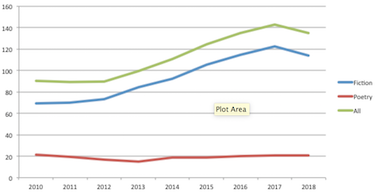
Context Is Everything
Given the length of yesterday’s post, I’m just going to jump right into things, starting with this handmade Excel spreadsheet showing the three-year rolling average of the total number of translations published in the first quarter (January-March) of every year since 2008. That’s not the most illuminating ...
>
Everyone Needs an Editor
Before I get into the meat of this post—which is basically just a bunch of quotes and a handful of observations—I wanted to check back in on something from an earlier essay. Back in January, I wrote about Leïla Slimani’s The Perfect Nanny and basically assumed that it would be a best-seller. (There was also a lot of ...
>
Two Month Review: #4.03: The Physics of Sorrow (Part II, Pgs 59-72)
Caitlin Baker of the University Book Store in Seattle joined Chad and Brian to talk about this very short section of Georgi Gospodinov’s The Physics of Sorrow. Mostly they talk about the constant conflicts between kids and their parent in myths. And eating children. But it’s not as gruesome as all that! Mostly they have a ...
>
Less Than Deadly Serious
Every spring, I teach a class on “World Literature & Translation” in which we read ~10 new translations, talk to as many of the translators as possible, and then the students have to choose one of the books to win their imaginary “Best Translated Book Award.” It’s a great exercise—trying to explain why they ...
>
Two Month Review: #4.02: The Physics of Sorrow (Part I, Pgs 1-58)
Chad and Brian are joined by Tom Roberge of Riffraff (and the Three Percent Podcast) to discuss the first section of Georgi Gospodinov’s The Physics of Sorrow. They talk about the book’s general conceit, the minotaur myth, Percy Jackson and the Lightning Thief, Eastern European history, fascism and communism, and much ...
>
Noble Expectations
When I first decided to undertake this project of writing about one 2018 translation a week, I knew that there would come a week in which I didn’t finish the book that I had planned to write about. This might be due to time constraints, or simply because I didn’t feel like finishing the book in question. Well, it took ...
>
Making the List [BTBA 2018]
This week’s Best Translated Book Award post is from Tara Cheesman, a freelance book critic and National Book Critics Circle member whose recent reviews can be found at The Rumpus, Book Riot, Los Angeles Review of Books, and Quarterly Conversation. Since 2009 she’s written the blog Reader At Large (formerly BookSexy ...
>
Two Month Review: #4.01: The Physics of Sorrow (Introduction)
The new season of the Two Month Review kicks off now with a general overview Georgi Gospodinov’s The Physics of Sorrow, one of the most beloved books Open Letter has ever published. Brian’s on the lam, or in witness protection, or something, so Open Letter senior editor Kaija Straumanis stepped in to talk about one of the ...
>
Interview with Madame Nielsen
The following is an excerpt from an interview that was conducted by David Damrosch and Delia Ungureanu—both of Harvard University—with Madame Nielsen in Copenhagen this past July. If you would like to see the entire piece, email me at chad.post [at] rochester.edu David Damrosch: Across your career, your several ...
>
The Translation Industry Is Frozen
Before getting into the February translations, data on what’s being published (or not being published), and all the random stuff, I wanted to point out a few modifications to the Translation Database at Publishers Weekly that were recently implemented. First off, when you’re entering a title, you can now ...
>
Never Fact-Check a Listicle
Back when I kicked off my 2018 Translations series I chose to include Frankenstein in Baghdad by Ahmed Saadawi as the fourth book from January I would read and review. And why not? It won the 2014 International Prize for Arabic Fiction1 and came with pretty high praise. “A haunting allegory of man’s savagery against man ...
>
The Best Sports Novels Match Sport and Style
On some old episode of NPR’s All Songs Considered, Robin Hilton and Bob Boilen talked about their unique irresistible song elements. Those bits in songs that aren’t the main hook, or even an integral part of the song itself, but, when they appear, automatically make you like a particular song. Like, for me, if ...
>
A Best-seller Should Be Divisive
When I came up with my plan of reading (and writing about) a new translation every week, I wanted to try and force myself to read books that I would normally just skip over. There are definitely going to be months filled with books by New Directions, Coffee House, Dalkey Archive, etc., but to write about just those titles ...
>
In Favor of Translator Afterwords
As dumb as the content might be, there’s something to be said for hot takes in the sports world. Or maybe not the takes themselves—again, always dumb, always misguided, always loaded with bad suppositions and overly confident writing—but rather the situation in which you get to dissect and dismantle a hot take. It’s ...
>
Tabucchi in Portugal: On Tabucchi’s “Viaggi e altri viaggi” [an essay by Jeanne Bonner]
Jeanne Bonner is a writer, editor and journalist, and translator from the Italian now based in Connecticut. In the fall, she began teaching Italian at the University of Connecticut where she is also working on several translation projects. You can find out more about Jeanne and her work at her website here. It’s a travel ...
>
It’s 2018 and Where Have the Translations Gone?
Now that the Translation Database is over at Publishers Weekly, and in a format that makes it both possible to update in real time1 and much easier to query, I want to use it as the basis of a couple new regular columns here at Three Percent. First off, I want to get back to running monthly previews of translations. But, ...
>
I Don’t Know If Hilbig Actually Uses the Word “Pace” Anywhere in His Novel Old Rendering Plant [BTBA 2018]
This week’s BTBA post is from Adam Hetherington. He lives and works in Tulsa, Oklahoma and is the author of the forthcoming novel Ontogeny Is Beautiful. My clever idea was to very briefly quote him in the title of this blog, then claim that any extended quotation does him a disservice. I was going to tell you ...
>
Two Month Review #3.10: Death in Spring (pgs. 119-150)
Here it is, the infamous live recording at McNally Jackson! There was a great turnout to hear Brian, María Christina, and I work our way through our thoughts about Death in Spring, Rodoreda’s overall stature, the banning of the color yellow, and much more. We had a great time doing this, and thanks again to McNally ...
>
The Size of the World
The Size of the World by Branko Anđić translated from the Serbian by Elizabeth Salmore 208 pages | pb | 9788661452154 | $10.99 Reviewed by Jaimie Lau Three generations of men—a storyteller, his father and his son—encompass this book’s world. . . . it is a world of historical confusion, illusion, ...
>
BTBA Gift Guide [BTBA 2018]
This post was compiled by BTBA judge P.T. Smith. From now until the announcement of the long list, we’ll be running one post a week from a BTBA judge, cycling through the nine of us. To launch those posts, just in time for the holidays (just in time, yes), here’s a gift guide. These are books that have stood out to ...
>
Two Month Review #3.9: Death in Spring (pgs. 69-118)
Mara Faye Lethem joins us this week to talk about Catalonia’s scatological obsession, the challenges of the current political situation, Max Besora’s wild novel, and Rodoreda’s triumphant return to the best-seller list. Then they get into a more autobiographical reading of this section of Death in Spring, a section ...
>
Two Month Review #3.8: Death in Spring (pgs. 28-68)
This week, fresh off a publication in the Boston Review, Jess Fenn (JR Fenn) joins Chad, Brian, and Best Translated Book Award judge Patrick Smith (P.T. Smith) to talk about the second part of Death in Spring. They trace a few motifs, talk about dystopias and literary world-building, and much more. Another very informative ...
>
Two Month Review #3.7: Death in Spring (pgs. 1-27)
Welcome to one of the strangest villages in all of fiction! Now that Chad and Brian have gone through the stories, they turn their attention to Rodoreda’s Death in Spring, which was published posthumously in 1986. They’re joined by Catalan researcher and translator Meg Berkobien and Anastasia Nikolis, who you ...
>
Two Month Review #3.6: Selected Stories (pgs. 208-255)
After yelling at Skype a bunch, Chad, Brian, and special guest Tom Flynn of Volumes Bookcafe discuss the merits of some of Rodoreda’s final stories, especially “The Thousand Franc Bill,” “Paralysis,” and “The Salamander.” Then they manage to slightly diss groups upon groups of ...
>
Two Month Review #3.5: Selected Stories (pgs. 144-207)
After doing a bit of a deeper dive into the situation in Catalonia—and discussing the LIVE recording that will take place on December 12th at the new McNally Jackson—Chad and Brian are joined by George Carroll to talk about this batch of Rodoreda’s stories. Although a couple of the stories discussed in this ...
>
Looking at Some Rodoreda Criticism [Two Month Review]
Coming up on this Thursday’s Two Month Review podcast I join Brian Wood and George Carroll to talk about some of the stranger, more war influenced, Rodoreda stories. Specifically, we talk about “Before I Die,” “Ada Liz,” “On a Dark Night,” “Night and Fog,” and ...
>
Two Month Review #3.4: Selected Stories (pgs. 103-143)
Things are a bit rough for Chad the morning after the Open Letter gala, but he powers through and talks about this new phase of Rodoreda’s stories. He and Brian break down some of the more challenging of her stories, including “Noctural” and “The Bath,” and talk about what does and doesn’t ...
>
Trying to Understand "Nocturnal" [Two Month Review]
Coming up on this Thursday’s Two Month Review podcast Brian and I go it alone and talk about six Rodoreda stories: “The Beginning,” “Nocturnal,” “The Red Blouse,” “The Fate of Lisa Sperling,” “The Bath,” and “On the Train.” On that podcast, we ...
>
Two Month Review #3.3: Selected Stories (pgs. 51-102)
This week, Mark Haber of Brazos Bookstore and the Best Translated Book Award committee joins Chad and Brian to talk about the next seven stories in Mercè Rodoreda’s collection. Although they touch on a number of them, a lot of time is spent focusing on “Carnival” and the literary antecedents to Rodoreda. ...
>
Two Month Review #3.2: Selected Stories (pgs. 1-50)
This week, Chad and Brian dive into the first six stories in Mercè Rodoreda’s Selected Stories and call up Quim Monzó, arguably the most important contemporary Catalan author, to talk about the precision and emotionality in her work. They also talk about Catalan literature as a whole, A Thousand Morons, Catalan ...
>
Two Month Review #3.1: Reunited! (Intro to Mercè Rodoreda)
Brian Wood is BACK. Complete with a poem he wrote in his time away from the Two Month Review . . . In the introduction to season three, Chad and Brian talk about Catalan literature (briefly), Mercè Rodoreda’s career and comps, possible approaches to discussing Rodoreda’s stories, and more. As noted ...
>
Two Month Review #2.10: 17, composition book (Tómas Jónsson, Bestseller, Pages 361-411)
Here it is—the infamous LIVE recording of the Two Month Review! Chad and Lytton travelled all the way to Brooklyn to record this episode as part of the “Taste of Iceland Festivities.” As a result, they recap the book as a whole and reflect on the speech from Iceland’s First Lady that prefaced the ...
>
Two Month Review #2.9: fourteen, fifteenth book, 16. notebook (Tómas Jónsson, Bestseller, Pages 306-360)
Icelandic novelist and poet Kári Tulinius joins Chad and Lytton this week to talk about three of the darkest sections of Tómas Jónsson, Bestseller and the history of this novel’s reception in Iceland. They also talk about the recent scandal that brought down the Icelandic government—and how it ties into Tómas ...
>
Wojciech Nowicki Tour!
This evening, at Volumes Bookcafe in Chicago, Wojciech Nowicki’s U.S. tour for Salki kicks off. A four-city tour spanning the next ten days, this is your one opportunity in 2017 to meet the author of the book about which Andrzej Stasiuk said, “Your skin will crawl with pleasure from ...
>
Two Month Review #2.8: this is the eleventh book, my 12th composition book, book 13 (Tómas Jónsson, Bestseller, Pages 282-305)
CORRECTION: Throughout this podcast, we joke about having recorded the final episode of the season live at Spoonbill & Sugartown last weekend. This is a lie! The live event will take place THIS SATURDAY (September 30, 2017) as part of the Taste of Iceland events. Eliza Reid, Iceland’s First Lady, will start things ...
>
Two Month Review #2.7: tenth composition book (Tómas Jónsson, Bestseller, Pages 238-281)
This week Patrick Smith (Best Translated Book Award judge, The Scofield) joins Chad and Lytton to talk about this incredibly powerful section of the book, which raises all sorts of topical ideas about adhering to national myths and the problems of masculinity. This is also the section where Hitler shows up, and where a ...
>
Two Month Review #2.6: IX. class A, tenth composition book (Tómas Jónsson, Bestseller, Pages 200-238)
This week Norwegian translator and ALTA Fellowship recipient David Smith joins Chad and Lytton to talk about the next forty pages of Tómas Jónsson, Bestseller. The two sections covered this week are wildly different from one another, opening with a much more fragmented, poetic bit then transitioning through a hilarious, yet ...
>

“Kingdom Cons” by Yuri Herrera
Kingdom Cons by Yuri Herrera translated from the Spanish by Lisa Dillman 220 pgs. | pb | 9781908276926 | $13.95 And Other Stories Reviewed by Sarah Booker Yuri Herrera is overwhelming in the way that he sucks readers into his worlds, transporting them to a borderland that is at once mythical in its ...
>
Two Month Review #2.5: tómas's seventh composition book, 8. (Tómas Jónsson, Bestseller, Pages 140-199)
This week author and translator Idra Novey joins Chad and Lytton to talk about one of the most challenging sections of the book so far. Not only is there a proliferation of children whose voices constantly interrupt Tómas’s thoughts, but there are a few more unsettling bits that raise questions about what we should ...
>

Another take on “The Invented Part” by Rodrigo Fresán
The Invented Part by Rodrigo Fresán translated from the Spanish by Will Vanderhyden 552 pgs. | pb | 9781940953564 | $18.95 Open Letter Books Reviewed by Tiffany Nichols Imagine reading a work that suddenly and very accurately calls out you, the reader, for not providing your full attention to the act of ...
>
Two Month Review #2.4: fifth composition book, VI. (Tómas Jónsson, Bestseller, Pages 69-139)
This week, Jacob Rogers—translator from the Galician and bookseller at Malaprop’s in Asheville, North Carolina—joins Chad and Lytton to talk about Tómas Jónsson’s next two “composition books.” Included in these sections are a long bit about the “board” and the general ...
>
Perceived Humiliations, The Board, and the Dangers of Desire [Tómas Jónsson, Bestseller]
On this week’s Two Month Review podcast, we’ll be discussing the fifth composition book and VI (pages 69-139) from Tómas Jónsson, Bestseller. As a bit of preparation, below you’ll find some initial thoughts, observations, and quotes. You can also download this post as a PDF document. As always, ...
>
Two Month Review #2.3: IV composition book (Tómas Jónsson, Bestseller, Pages 32-68)
In this episode—covering Tómas Jónsson’s fourth composition book—a number of the themes of the overall novel are put on display: Tómas’s relationship to his body, the way he tries to create a narrative for himself, possible injustices he’s suffered during his life, the way his lodgers are like ...
>
The Body, Biographies, and Workplace Injustice! [Tómas Jónsson, Bestseller]
On this week’s Two Month Review podcast, we’ll be discussing the IV composition book (pages 32-68) from Tómas Jónsson, Bestseller. As a bit of preparation, below you’ll find some initial thoughts, observations, and quotes. You can also download this post as a PDF document. As always, you can get ...
>
Women in Translation Month [Throwback No.2]
As many of you may have noticed already, August is widely considered Women in Translation Month (look for the #WITMonth hashtag basically anywhere). Since Open Letter has published its fair share of baller women authors over the past ten years, we thought we’d take a few posts to highlight a handful of our all-time favorite ...
>
Two Month Review #2.2: Biography through Third Composition Book (Tómas Jónsson, Bestseller, Pages 1-31)
This week, Ph.D. candidate Anastasia Nikolis joins Chad and Lytton to talk about the real meat of Tómas Jónsson, Bestseller—chamber pot usage! They also discuss the way our grumpy narrator’s mind works, the way he finds beauty in ambiguity, how Lytton translated a very specific word game, and a couple cues to ...
>
A Simple Story: The Last Malambo
Leila Guerriero’s A Simple Story: The Last Malambo chronicles the unique ferocity of a national dance competition in Argentina. The dance, called the malambo, pushes the physical and mental limits of male competitors striving to become champions of not only the historical craft of the dance, but for their families and ...
>

The Biggest Update to the Translation Databases Ever (And Some More Women in Translation Data)
OK, I’m supposed to be packing for my summer vacation right now, so this is going to be a lot shorter than it otherwise would be. But! I just updated the Translation Databases! Not just the spreadsheets for 2016 and 2017, but every spreadsheet I’ve ever run. There’s up to date info on 2008-2018 AND new ...
>
Women in Translation Month [Throwback No.1]
As many of you may have noticed already, August is widely considered Women in Translation Month (look for the #WITMonth hashtag basically anywhere). Since Open Letter has published its fair share of baller women authors over the past ten years, we thought we’d take a few posts to highlight a handful of our all-time ...
>
Where (and When) Are We? [Tómas Jónsson, Bestseller]
On this week’s Two Month Review podcast, we’ll be discussing the Biography, first composition book, second book, and third composition book (pages 1-31) from Tómas Jónsson, Bestseller. As a bit of preparation, below you’ll find some initial thoughts, observations, and quotes. You can also download this ...
>
Two Month Review #2.1: Introduction to Tómas Jónsson, Bestseller
And with this episode, we launch the second season of the Two Month Review! Over a ten-week period, we will be breaking down Tómas Jónsson, Bestseller by Guðbergur Bergsson, helping explain and explore what makes this book (often referred to as “Iceland’s Ulysses”) so influential and interesting. This ...
>
Women in Translation Month 2017
I just finished entering in all the data for the Translation Database (super huge mega astonishing absolute extreme update to come), I thought I’d run a few quick reports for Women in Translation Month. First off, the big one: For the data I’ve collected between 2008-20181 only 28.7% of the translations in the ...
>
"Tómas Jónsson, Bestseller" Reading Schedule [Two Month Review]
The first episode in the new season of the Two Month Review will release on Thursday, and in case you haven’t already heard, for the next ten weeks we’ll be discussing Tómas Jónsson, Bestseller by Guðbergur Bergsson. We have a Goodreads group set up to talk about about this, so feel free to join in and ...
>
The Little Buddhist Monk & The Proof
Aira continues to surprise and delight in his latest release from New Directions, which collects two novellas: the first, The Little Buddhist Monk, a fairly recent work from 2005, and The Proof, an earlier work from 1989. There are a number of similarities to be sure—they both revolve around the sudden but intense ...
>
Two Month Review #12: The Author Himself!
As a special bonus episode, both Rodrigo Fresán and Will Vanderhyden joined Chad and Brian to talk about The Invented Part as a whole, the first season of the Two Month Review, what’s next in the trilogy, technology’s revenge on Rodrigo, David Lynch, and, how to write jacket copy. Feel free to comment on ...
>
Two Month Review #11: "The Imaginary Person" (The Invented Part, Pages 441-552)
We did it! After two months, eleven episodes, and a half dozen different guests, Brian and Chad finished their discussion of Rodrigo Fresán’s The Invented Part! Joining them this week to wrap things up is Valerie Miles, translator, publisher, co-founder of Granta en Español, and editor of A Thousand Forests in One ...
>
Interview with Rodrigo Fresán (Part V)
If you’d rather read this podcast in one document, just dowload this PDF. Otherwise, click here to find all four of the earlier pieces along with a bunch of other Two Month Review posts about The Invented Part. Special thanks to Will Vanderhyden for conducting—and translating—this ...
>
Class
The thing about Class is that I don’t know what the hell to think about it, yet I can’t stop thinking about it. I’ll begin by dispensing with the usual info that one may want to know when considering adding the book to their “to read” list. Written by Francesco Pacifico. Translated by Francesco Pacifico. Published ...
>
Airplanes, Hyphellipses, and What's Next? [The Invented Part]
On this week’s Two Month Review podcast, we’ll be discussing the seventh, and final, part of The Invented Part (“The Imaginary Person,” pages 441-552). As a bit of preparation, below you’ll find some initial thoughts, observations, and quotes. You can also download this post as a PDF ...
>
Two Month Review #10: "Meanwhile, Once Again, Beside the Museum Stairway, Under a Big Sky" (The Invented Part, Pages 405-440)
It’s another 2MR review with just Chad and Brian! Similar to the last guest-less podcast, this one goes a bit off the rails . . . Although this time around it gets a lot darker, as they talk about Chekov, Girl, Night, Swimming Pool, Etc., a scream descending from the skies, John Cheever’s writing prompt, and much ...
>
I See You [The Invented Part]
On this week’s Two Month Review podcast, we’ll be discussing the sixth part of The Invented Part (“Meanwhile, Once Again, Beside the Museum Stairway, Under a Big Day,” pages 405-440). As a bit of preparation, below you’ll find some initial thoughts, observations, and quotes. You can also ...
>
Two Month Review #9: "Life After People, or Notes For a Brief History of Progressive Rock and Science Fiction" (The Invented Part, Pages 361-404)
On this week’s Two Month Review, Tom Roberge from Riffraff and the Three Percent Podcast joins Chad and Brian talk about 2001: A Space Odyssey, Pink Floyd, potential errors and non-errors, cultural touchstones that serve to define friendships, the overall structure of this chapter of The Invented Part, and Tom’s ...
>
Interview with Rodrigo Fresán (Part IV)
This is the fourth of a five-part interview with Rodrigo Fresán. Earlier parts are all avialble on the Three Percent website (I, II, and III), as are all other Two Month Review posts. Special thanks to Will Vanderhyden for conducting—and translating—this interview. Will Vanderhyden: The narrator of ...
>
"Tomás Jónsson, Bestseller" Release Day!
Fans of challenging, cerebral, modernist epics, rejoice! Today marks the official release date of Tómas Jónsson, Bestseller by Guðbergur Bergsson, a masterpiece of twentieth-century Icelandic literature, the fifth Icelandic work Open Letter has published to date. This is a book that is sure to launch a thousand ...
>
Structure, Time, Memory, and the Sadness of a Disillusioned Writer [The Invented Part]
On this week’s Two Month Review podcast, we’ll be discussing the fifth part of The Invented Part (“Life After People, or Notes for a Brief History of Progressive Rock and Science Fiction,” pages 361-404). As a bit of preparation, below you’ll find some initial thoughts, observations, and ...
>
Two Month Review #8: "Many Fêtes, or Study for a Group Portrait with Broken Decalogues" (The Invented Part, Pages 301-360)
On this week’s Two Month Review, Chad and Brian talk about F. Scott Fitzgerald and Tender Is the Night, puzzles, how to properly introduce the show, the Modern Library list of top 100 novels of the twentieth century, Booth Tarkington, and much more more. Feel free to comment on this episode—or on the book in ...
>
The Inverted Part [Two Month Review: The Invented Part]
On this week’s Two Month Review podcast, we’ll be discussing the fourth part of The Invented Part (“Many Fêtes, or Study for a Group Portrait with Broken Decalogues,” pagest 301-360). As a bit of preparation, below you’ll find some initial thoughts, observations, and quotes. You can also ...
>
Two Month Review #7: "A Few Things You Happen to Think About When All You Want Is to Think About Nothing" (The Invented Part, Pages 231-300)
This week, Jonathan Lethem (Motherless Brooklyn, Chronic City) joins Chad and Brian to talk about The Writer’s trip to a hospital, where he assumes something horrible is happening, which is countered by a gushing forth of new story ideas. Jonathan tells of his own experience coming up with one of his most famous books ...
>
Portraits of Rage and Mortality [Two Month Review: The Invented Part]
On this week’s Two Month Review podcast, we’ll be discussing the third part (“A Few Things You Happen to Think About When All You Want Is to Think About Nothing”) of The Invented Part . As a bit of preparation, below you’ll find some initial thoughts, observations, and quotes. You can also ...
>
Two Month Review #6: "The Place Where the Sea Ends So the Forest Can Begin: Part 3" (The Invented Part, Pages 208-230)
This week, Speculative Fiction in Translation founder and Best Translated Book Award judge Rachel Cordasco joins Chad and Brian to talk about the nature of time, deals with the devil, conflagrations, and writerly desires, or, in other words, the third part of “The Place Where the Sea Ends So the Forest Can Begin” ...
>
Interview with Rodrigo Fresán (Part III)
You can read the first part of this interview here, the second here, and you can click here for all Two Month Review posts. Special thanks to Will Vanderhyden for conducting—and translating—this interview. Will Vanderhyden: Your fiction wears its influences on its sleeve, but not only do you fully ...
>
Who Wants to Be a Writer? [Two Month Review: The Invented Part]
On this week’s Two Month Review podcast, we’ll be discussing the third chapter of the second part (“The Place Where the Sea Ends So the Forest Can Begin”) of The Invented Part . As a bit of preparation, below you’ll find some initial thoughts, observations, and quotes. You can also download ...
>
Two Month Review #5: "The Place Where the Sea Ends So the Forest Can Begin: Part 2" (The Invented Part, Pages 99-207)
This week’s episode is all about Penelope and her experiences with the Karmas. (And a Big Green Cow.) A lot of the Odyssey, Wuthering Heights, and William Burroughs are in this section, which is hilariously dissected by Brian, Chad, and their guest, Tom Flynn, the manager of Volumes Bookcafe in Chicago. One of the ...
>
Let's Get Weird [Two Month Review: The Invented Part]
On last Thursday’s Two Month Review podcast we covered the opening to the second section of The Invented Part, and coming up later this week we’ll be covering pages 99-207—the second section of “The Place Where the Sea Ends So the Forest Can Begin.” As a bit of preparation, below you’ll ...
>
Two Month Review #4: "The Place Where the Sea Ends So the Forest Can Begin: Part 1" (The Invented Part, Pages 46-98)
This week, author and journalist Mark Binelli joins Chad and Brian to discuss the first part of the second section of Rodrigo Fresán’s The Invented Part. In “The Place Where the Seas Ends So the Forest Can Begin,” we meet The Young Man and The Young Woman, who are making a movie about The Writer after his ...
>
Interview with Rodrigo Fresán (Part II)
You can read the first part of this interview here, and you can click here for all Two Month Review posts. Special thanks to Will Vanderhyden for conducting—and translating—this interview. Will Vanderhyden: Now, this is a question that, in a way, the book takes as its point of departure—so it might make ...
>
Two Month Review #3: "The Real Character" (The Invented Part, Pages 1-45)
This week, Jeremy Garber from Powells Books joins Chad and Brian to discuss the first section of Rodrigo Fresán’s The Invented Part. This section, entitled “The Real Character,” introduces us to the main character of the book—known here as The Boy, and later as The Writer—as well as some of the ...
>
Interview with Rodrigo Fresán (Part I)
As you hopefully already know, for the next two months we’ll be producing a weekly podcast and a series of posts all about Rodrigo Fresán’s The Invented Part. All grouped under the title “Two Month Review,” this initiative is part book club, part exercise in slow reading, and part opportunity to ...
>
The Worlds of João Gilberto Noll: Adam Morris in discussion with Scott Esposito
Join us at City Lights Booksellers on May 18 for a reading from Atlantic Hotel, along with an intriguing conversation delving into modern-day Brazil, Noll’s influences (including Clarice Lispector), his mysterious protagonists, and the challenges of translating his labyrinthine, twisty sentences into English. When: May ...
>

“The Invented Part” by Rodrigo Fresán
The Invented Part by Rodrigo Fresán translated from the Spanish by Will Vanderhyden 552 pgs. | pb | 9781940953564 | $18.95 Open Letter Books Reviewed by Chad W. Post Given all the Two Month Review posts and everything else, hopefully you’ll have heard of Rodrigo Fresán’s The Invented Part by now. But ...
>
Two Month Review #2: Introducing Rodrigo Fresán's "The Invented Part"
Translator Will Vanderhyden joins Chad and Brian to provide an overview of Rodrigo Fresán’s work—especially The Invented Part. They discuss some of his earlier works (including Kensington Gardens, which is available in an English translation), different pop culture touchstones running throughout his oeuvre, ...
>
Three Percent Podcast Launches "Two Month Review"
After six years and almost one hundred and thirty episodes, the Three Percent Podcast is expanding to include new weekly “Two Month Review” mini-episodes. Each “season” of the Two Month Review podcasts will highlight a different Open Letter book, reading it slowly over the course of eight to nine episodes. ...
>
Why These Fiction Finalists Should Win [BTBA 2017]
We’re just over a week away from the announcement of the Best Translated Book Award winners1, so it’s a good time to start ramping up the speculation. Tomorrow I’ll post about the poetry finalists, and give updated odds on the entire shortlist on Thursday, but for today, I thought it would be worthwhile to ...
>
Win a Copy of "Salki" by Wojiech Nowicki from GoodReads!
As you can see below, we’re giving away 15 copies of Nowicki’s Salki via GoodReads. Translated by University of Rochester graduate Jan Pytalksi, Nowicki’s book has been praised by the likes of such literary luminaries as Andrzej Stasiuk, who said, “It all blends here unexpectedly: that past and memory ...
>
“A Spare Life” by Lidija Dimkovska [Why This Book Should Win]
Between the announcement of the Best Translated Book Award longlists and the unveiling of the finalists, we will be covering all thirty-five titles in the Why This Book Should Win series. Enjoy learning about all the various titles selected by the fourteen fiction and poetry judges, and I hope you find a few to purchase and ...
>
“Extracting the Stone of Madness” by Alejandra Pizarnik [Why This Book Should Win]
Between the announcement of the Best Translated Book Award longlists and the unveiling of the finalists, we will be covering all thirty-five titles in the Why This Book Should Win series. Enjoy learning about all the various titles selected by the fourteen fiction and poetry judges, and I hope you find a few to purchase and ...
>
“tasks” by Víctor Rodríguez Núñez [Why This Book Should Win]
Between the announcement of the Best Translated Book Award longlists and the unveiling of the finalists, we will be covering all thirty-five titles in the Why This Book Should Win series. Enjoy learning about all the various titles selected by the fourteen fiction and poetry judges, and I hope you find a few to purchase and ...
>
“War and Turpentine” by Stefan Hertmans [Why This Book Should Win]
Between the announcement of the Best Translated Book Award longlists and the unveiling of the finalists, we will be covering all thirty-five titles in the Why This Book Should Win series. Enjoy learning about all the various titles selected by the fourteen fiction and poetry judges, and I hope you find a few to purchase and ...
>
“Moshi Moshi” by Banana Yoshimoto [Why This Book Should Win]
Between the announcement of the Best Translated Book Award longlists and the unveiling of the finalists, we will be covering all thirty-five titles in the Why This Book Should Win series. Enjoy learning about all the various titles selected by the fourteen fiction and poetry judges, and I hope you find a few to purchase and ...
>
“Doomi Golo: The Hidden Notebooks” by Boubacar Boris Diop [Why This Book Should Win]
Between the announcement of the Best Translated Book Award longlists and the unveiling of the finalists, we will be covering all thirty-five titles in the Why This Book Should Win series. Enjoy learning about all the various titles selected by the fourteen fiction and poetry judges, and I hope you find a few to purchase and ...
>
“Eve Out of Her Ruins” by Ananda Devi [Why This Book Should Win]
Between the announcement of the Best Translated Book Award longlists and the unveiling of the finalists, we will be covering all thirty-five titles in the Why This Book Should Win series. Enjoy learning about all the various titles selected by the fourteen fiction and poetry judges, and I hope you find a few to purchase and ...
>
Reading the World Conversation Series with Bae Suah
On May 1st, South Korean author Bae Suah (Recitation, A Greater Music, Nowhere to Be Found, and the forthcoming North Station) will be in Rochester, NY for TWO Reading the World Conversation Series events. The first will take place in the Humanities Center at Rush Rhees Library on the University of Rochester’s ...
>
“Zama” by Antonio Di Benedetto [Why This Book Should Win]
Between the announcement of the Best Translated Book Award longlists and the unveiling of the finalists, we will be covering all thirty-five titles in the Why This Book Should Win series. Enjoy learning about all the various titles selected by the fourteen fiction and poetry judges, and I hope you find a few to purchase and ...
>
“The Young Bride” by Alessandro Baricco [Why This Book Should Win]
Between the announcement of the Best Translated Book Award longlists and the unveiling of the finalists, we will be covering all thirty-five titles in the Why This Book Should Win series. Enjoy learning about all the various titles selected by the fourteen fiction and poetry judges, and I hope you find a few to purchase and ...
>
“Oblivion” by Sergi Lebedev [Why This Book Should Win]
Between the announcement of the Best Translated Book Award longlists and the unveiling of the finalists, we will be covering all thirty-five titles in the Why This Book Should Win series. Enjoy learning about all the various titles selected by the fourteen fiction and poetry judges, and I hope you find a few to purchase and ...
>
“Angel of Oblivion” by Maja Haderlap [Why This Book Should Win]
Between the announcement of the Best Translated Book Award longlists and the unveiling of the finalists, we will be covering all thirty-five titles in the Why This Book Should Win series. Enjoy learning about all the various titles selected by the fourteen fiction and poetry judges, and I hope you find a few to purchase and ...
>
“In Praise of Defeat” by Abdellatif Laâbi [Why This Book Should Win]
Between the announcement of the Best Translated Book Award longlists and the unveiling of the finalists, we will be covering all thirty-five titles in the Why This Book Should Win series. Enjoy learning about all the various titles selected by the fourteen fiction and poetry judges, and I hope you find a few to purchase and ...
>
Some Recent Open Letter Publicity
We don’t post these updates near as frequently as we should, but here’s a rundown of some interesting recent publicity pieces for our books. Frontier by Can Xue, translated from the Chinese by Karen Gernant and Chen Zeping Interview between Can Xue and Porochista Khakpour (Words Without ...
>
“Why This Book Should Win” So Far . . .
Unless someone surprises me with a new write-up, we don’t have any Why This Book Should Win posts for today. That leaves fifteen books to be covered next week, leading us right into the April 18th announcement of the BTBA fiction and poetry finalists. But for today, I thought I’d just post links to all twenty of the ...
>
“Thus Bad Begins” by Javier Marías [Why This Book Should Win]
Between the announcement of the Best Translated Book Award longlists and the unveiling of the finalists, we will be covering all thirty-five titles in the Why This Book Should Win series. Enjoy learning about all the various titles selected by the fourteen fiction and poetry judges, and I hope you find a few to purchase and ...
>
“Berlin-Hamlet” by Szilárd Borbély [Why This Book Should Win]
Between the announcement of the Best Translated Book Award longlists and the unveiling of the finalists, we will be covering all thirty-five titles in the Why This Book Should Win series. Enjoy learning about all the various titles selected by the fourteen fiction and poetry judges, and I hope you find a few to purchase and ...
>
“The Thief of Talant” by Pierre Reverdy [Why This Book Should Win]
Between the announcement of the Best Translated Book Award longlists and the unveiling of the finalists, we will be covering all thirty-five titles in the Why This Book Should Win series. Enjoy learning about all the various titles selected by the fourteen fiction and poetry judges, and I hope you find a few to purchase and ...
>
“Among Strange Victims” by Daniel Saldaña París [Why This Book Should Win]
Between the announcement of the Best Translated Book Award longlists and the unveiling of the finalists, we will be covering all thirty-five titles in the Why This Book Should Win series. Enjoy learning about all the various titles selected by the fourteen fiction and poetry judges, and I hope you find a few to purchase and ...
>
“Night Prayers” by Santiago Gamboa [Why This Book Should Win]
Between the announcement of the Best Translated Book Award longlists and the unveiling of the finalists, we will be covering all thirty-five titles in the Why This Book Should Win series. Enjoy learning about all the various titles selected by the fourteen fiction and poetry judges, and I hope you find a few to purchase and ...
>
“On the Edge” by Rafael Chirbes [Why This Book Should Win]
Between the announcement of the Best Translated Book Award longlists and the unveiling of the finalists, we will be covering all thirty-five titles in the Why This Book Should Win series. Enjoy learning about all the various titles selected by the fourteen fiction and poetry judges, and I hope you find a few to purchase and ...
>
“In the Café of Lost Youth” by Patrick Modiano [Why This Book Should Win]
Between the announcement of the Best Translated Book Award longlists and the unveiling of the finalists, we will be covering all thirty-five titles in the Why This Book Should Win series. Enjoy learning about all the various titles selected by the fourteen fiction and poetry judges, and I hope you find a few to purchase and ...
>
“Last Wolf and Herman” by László Krasznahorkai [Why This Book Should Win]
Between the announcement of the Best Translated Book Award longlists and the unveiling of the finalists, we will be covering all thirty-five titles in the Why This Book Should Win series. Enjoy learning about all the various titles selected by the fourteen fiction and poetry judges, and I hope you find a few to purchase and ...
>
“Of Things” by Michael Donhauser [Why This Book Should Win]
Between the announcement of the Best Translated Book Award longlists and the unveiling of the finalists, we will be covering all thirty-five titles in the Why This Book Should Win series. Enjoy learning about all the various titles selected by the fourteen fiction and poetry judges, and I hope you find a few to purchase and ...
>
“Instructions Within” by Ashraf Fayadh [Why This Book Should Win]
Between the announcement of the Best Translated Book Award longlists and the unveiling of the finalists, we will be covering all thirty-five titles in the Why This Book Should Win series. Enjoy learning about all the various titles selected by the fourteen fiction and poetry judges, and I hope you find a few to purchase and ...
>
“Umami” by Laia Jufresa [Why This Book Should Win]
Between the announcement of the Best Translated Book Award longlists and the unveiling of the finalists, we will be covering all thirty-five titles in the Why This Book Should Win series. Enjoy learning about all the various titles selected by the fourteen fiction and poetry judges, and I hope you find a few to purchase and ...
>
“Moonstone: The Boy Who Never Was” by Sjón [Why This Book Should Win]
Between the announcement of the Best Translated Book Award longlists and the unveiling of the finalists, we will be covering all thirty-five titles in the Why This Book Should Win series. Enjoy learning about all the various titles selected by the fourteen fiction and poetry judges, and I hope you find a few to purchase and ...
>
“The Queue” by Basma Abdel Aziz [Why This Book Should Win]
Between the announcement of the Best Translated Book Award longlists and the unveiling of the finalists, we will be covering all thirty-five titles in the Why This Book Should Win series. Enjoy learning about all the various titles selected by the fourteen fiction and poetry judges, and I hope you find a few to purchase and ...
>
“Super Extra Grande” by Yoss [Why This Book Should Win]
Between the announcement of the Best Translated Book Award longlists and the unveiling of the finalists, we will be covering all thirty-five titles in the Why This Book Should Win series. Enjoy learning about all the various titles selected by the fourteen fiction and poetry judges, and I hope you find a few to purchase and ...
>
“Chronicle of the Murdered House” by Lúcio Cardoso [Why This Book Should Win]
Between the announcement of the Best Translated Book Award longlists and the unveiling of the finalists, we will be covering all thirty-five titles in the Why This Book Should Win series. Enjoy learning about all the various titles selected by the fourteen fiction and poetry judges, and I hope you find a few to purchase and ...
>
“Memoirs of a Polar Bear” by Yoko Tawada [Why This Book Should Win]
Between the announcement of the Best Translated Book Award longlists and the unveiling of the finalists, we will be covering all thirty-five titles in the Why This Book Should Win series. Enjoy learning about all the various titles selected by the fourteen fiction and poetry judges, and I hope you find a few to purchase and ...
>
“Ladivine” by Marie NDiaye [Why This Book Should Win]
Between the announcement of the Best Translated Book Award longlists and the unveiling of the finalists, we will be covering all thirty-five titles in the Why This Book Should Win series. Enjoy learning about all the various titles selected by the fourteen fiction and poetry judges, and I hope you find a few to purchase and ...
>
“My Marriage” by Jakob Wassermann [Why This Book Should Win]
Between the announcement of the Best Translated Book Award longlists and the unveiling of the finalists, we will be covering all thirty-five titles in the Why This Book Should Win series. Enjoy learning about all the various titles selected by the fourteen fiction and poetry judges, and I hope you find a few to purchase and ...
>
“Vampire in Love” by Enrique Vila-Matas [Why This Book Should Win]
Between the announcement of the Best Translated Book Award longlists and the unveiling of the finalists, we will be covering all thirty-five titles in the Why This Book Should Win series. Enjoy learning about all the various titles selected by the fourteen fiction and poetry judges, and I hope you find a few to purchase and ...
>
“Wicked Weeds” by Pedro Cabiya [Why This Book Should Win]
Between the announcement of the Best Translated Book Award longlists and the unveiling of the finalists, we will be covering all thirty-five titles in the Why This Book Should Win series. Enjoy learning about all the various titles selected by the fourteen fiction and poetry judges, and I hope you find a few to purchase and ...
>
BTBA 2017 Fiction Longlist Clues [Day One]
Next Tuesday, March 28th, over at The Millions, this year’s Best Translated Book Award longlists will finally be unveiled. So let the countdown begin! This really is a great time of year for international fiction—the Independent Foreign Fiction Prize Man Booker International Longlist was released last week, as ...
>
PEN Translation Awards
This morning, PEN America announced the winners of all its literary awards, including two for literature in translation: the PEN Translation Prize for a book-length translation of prose into English, which was won by BTBA judge Tess Lewis for her translation of Angel of Oblivion by Maja Haderlap, and the PEN Award for Poetry ...
>
Likes of the Future Are Shaped by Likes of the Past
As in past weeks here’s a PDF version of this post, which might be a lot easier to read. Two years ago, Yale University Press released The Dirty Dust, Alan Titley’s translation of Máirtín Ó Cadhain’s Cré na Cille, a supposedly “untranslatable” masterpiece of Irish literature. This past ...
>
Translation Lab 2017
Attached below is all the necessary information and details for for anyone interested in applying for the Translation Lab at Writers Omi at Ledig House. A couple of our translators have participated in this in the past, and they absolutely loved it. So if you’re at all interested, you should definitely ...
>
BTBA 2017, This Issue: The Body
This week’s Best Translated Book Award post is by Lori Feathers, an Assistant Managing Editor at Asymptote, freelance book critic and member of the National Book Critics Circle. Follow her online @LoriFeathers. For more information on the BTBA, “like” our Facebook page and follow us on Twitter. And check back here ...
>
"Moonstone" by Sjón [BTBA 2017]
This week’s Best Translated Book Award post is by Mark Haber of Brazos Bookstore. For more information on the BTBA, “like” our Facebook page and follow us on Twitter. And check back here each week for a new post by one of the judges. Small in size and epic in scale, Moonstone is Sjón’s fourth ...
>
Translating Cuban Literature in the Twenty-first Century [BTBA 2017]
George Henson is a translator of contemporary Latin American and Spanish prose, a contributing editor for World Literature Today and Asymptote, and a lecturer at the University of Oklahoma. For more information on the BTBA, “like” our Facebook page and follow us on Twitter. And check back here each week for a ...
>
Chronicle of the Murdered House by Lucio Cardoso [Biographical Note]
The pub date for Chronicle of the Murdered House by Lúcio Cardoso, which is translated from the Portuguese by Margaret Jull Costa and Robin Patterson, with a biographical note from Ben Moser officially came out on Tuesday, December 13th. To celebrate the release of this Brazilian masterpiece, we’ll be running a series ...
>

Chronicle of the Murdered House by Lucio Cardoso [Early Reviews]
The pub date for Chronicle of the Murdered House by Lúcio Cardoso, which is translated from the Portuguese by Margaret Jull Costa and Robin Patterson, with a biographical note from Ben Moser officially came out on Tuesday, December 13th. To celebrate the release of this Brazilian masterpiece, we’ll be running a ...
>
Chronicle of the Murdered House by Lucio Cardoso [Excerpt]
The pub date for Chronicle of the Murdered House by Lúcio Cardoso, which is translated from the Portuguese by Margaret Jull Costa and Robin Patterson, with a biographical note from Ben Moser officially came out on Tuesday, December 13th. To celebrate the release of this Brazilian masterpiece, we’ll be running a series ...
>
Polar Bears and Cyborg Turtles: Some Non-Human Narrative Perspectives [BTBA 2017]
This week’s Best Translated Book Award post is by reader, writer, and BTBA judge Rachel Cordasco. For more information on the BTBA, “like” our Facebook page and follow us on Twitter. And check back here each week for a new post by one of the judges. I’ve only come across two books this year that ...
>
Thus Bad Begins [BTBA 2017]
This week’s Best Translated Book Award post is by Mark Haber of Brazos Bookstore. For more information on the BTBA, “like” our Facebook page and follow us on Twitter. And check back here each week for a new post by one of the judges. Thus Bad Begins by Javier Marias, translated from the Spanish by ...
>
The Architecture of Time, Space and Imagination by Monica Carter
Monica Carter is a freelance critic whose nonfiction has appeared in publications including Black Clock, World Literature Today, and Foreword Reviews. She curates Salonica World Lit, which is a virtual journal dedicated to international literature and culture. For more information on the BTBA, “like” our ...
>
The Subsidiary
The Subsidiary by Matías Celedón translated from the French by Samuel Rutter 208 pgs. | pb | 9781612195445 | $21.95 Mellville House Publishing Reviewed by Vincent Francone The biggest issues with books like The Subsidiary often have to do with their underpinnings—when we learn that Georges Perec wrote La ...
>
BTBA Favorites So Far by Jennifer Croft
This week’s post is by Jennifer Croft who is the recipient of Fulbright, PEN, MacDowell and National Endowment for the Arts grants and fellowships, as well as the Michael Henry Heim Prize for Translation. She holds a PhD from Northwestern University and an MFA from the University of Iowa. She is a founding editor of The ...
>
Still Time to Participate in the 2nd Annual Open Letter Celebration
As hopefully everyone knows, we’re taking advantage of the travel day in the NLCS to throw a little fundraising party for Open Letter. If you’re in Rochester, you should definitely come out to the German House tonight at 8 for food, booze, palm readings, music, and presenations by Rochester visionaries. Tickets ...
>
Early Gems in the Hunt for the Best Translated Fiction of 2016! [BTBA 2017]
This week’s Best Translated Book Award post is by Lori Feathers, anAssistant Managing Editor at Asymptote, freelance book critic and member of the National Book Critics Circle. Follow her online @LoriFeathers. For more information on the BTBA, “like” our Facebook page and follow us on Twitter. And check back ...
>
"One of Us Is Sleeping" by Josefine Klougart [An Open Letter Book to Read]
This is the third entry in a series that will eventually feature all of the titles Open Letter has published to date. Catch up on past entries by clicking here. Last week’s entry was a pretty solid Chad rant involving the incredible Maidenhair by Mikhail Shishkin. Definitely check that one out. By contrast, this ...
>
"Neo-Noir, Violence, and Argentine Resort Towns" w/ Andrea G. Labinger
“Neo-Noir, Violence, and Argentine Resort Towns” Translator Andrea G. Labinger (recipient of a PEN Heim award for Gesell Dome) and Kaija Straumanis (editor, Open Letter Books) discuss the Dashiell Hammett Award-winning novel Gesell Dome, a neo-noir set in an Argentine resort town during the off-season. When the ...
>
Maidenhair by Mikhail Shishkin [An Open Letter Book to Read]
This is the second entry in a series that will eventually feature all of the titles Open Letter has published to date. Catch up on past entries by clicking here. Last week’s entry was about Gesell Dome by Guillermo Saccomanno. Maidenhair by Mikhail Shishkin, translated from the Russian by Marian ...
>
Read Local: Supporting Rochester Presses and Making Events Fun Again
Although we referenced Read Local in the write up of Josefine Klougart’s tour, I haven’t really explained what it is here, or why I think it could be a really exciting thing for Rochester. Just to as not to bury the lede, the first Read Local event is Friday, September 23rd at 6pm at Nox Cocktail Lounge. ...
>

“Death by Water” by Kenzaburo Oe
Death by Water by Kenzaburu Oe translated from the Japanese by Deborah Boliver Boehm 432 pgs. | pb | 9781101911914 | $16.00 Grove Atlantic Reviewed by Will Eells Death by Water, Kenzaburo Oe’s latest novel to be translated into English, practically begs you to read it as autobiography. Like The ...
>
``
Three Percent #115: From the BTBAs to the Soccer Pitch
This week’s podcast opens with Chad and Tom discussing the 2016 Best Translated Book Award winners and their thoughts on how to evaluate books for the prize. Then, in a separately recorded podcast, Chad and visiting guest George Carroll talk with Juan Villoro about his new book on soccer, God Is Round. Also, due to ...
>
Why This Book Should Win 2016 [COMPLETE]
It took a bit longer than planned, but we did it! There are now “Why This Book Should Win” write-ups for all 35 books that were longlisted for the 2016 Best Translated Book Award. Browse through these, find a few to read, and tune in to The Millions tomorrow at 7pm to find out who won. To make it easier to ...
>
"Silvina Ocampo" by Silvina Ocampo [Why This Book Should Win]
This entry in the Why This Book Should Win series, is by Katrine Øgaard Jensen, BTBA judge, journalist, writer, and translator from the Danish. She previously served as editor-in-chief of Columbia: A Journal of Literature and Art and as blog editor at Asymptote and Words without Borders. She is currently an editor at the ...
>
“Minute-Operas” by Frédéric Forte [Why This Book Should Win]
This entry in the Why This Book Should Win series, is by Becka Mara McKay, BTBA judge, author (A Meteorologist in the Promised Land, Happiness Is the New Bedtime), translator (Laundry, Blue Has No South, Lunar Savings Time), and director of the Creative Writing MFA at Florida Atlantic University. We will be running two (or ...
>
“Sea Summit” by Yi Lu [Why This Book Should Win]
This entry in the Why This Book Should Win series, is by Becka Mara McKay, BTBA judge, author (A Meteorologist in the Promised Land, Happiness Is the New Bedtime), translator (Laundry, Blue Has No South, Lunar Savings Time), and director of the Creative Writing MFA at Florida Atlantic University. We will be running two (or ...
>
"The Black Flower and Other Zapotec Poems" by Natalia Toledo [Why This Book Should Win]
This entry in the Why This Book Should Win series, is by Katrine Øgaard Jensen, BTBA judge, journalist, writer, and translator from the Danish. She previously served as editor-in-chief of Columbia: A Journal of Literature and Art and as blog editor at Asymptote and Words without Borders. She is currently an editor at the ...
>
“The Four Books” by Yan Lianke [Why This Book Should Win]
This entry in the Why This Book Should Win series, is by Monica Carter, former BTBA judge and writer whose fiction has appeared in The Rattling Wall, Black Clock, Writers Tribe Review, and other publications. She is a freelance critic whose work has appeared in World Literature Today, Black Clock and Foreword Reviews. She is ...
>
“The Nomads, My Brothers, Go Out to Drink from the Big Dipper” by Abdourahman A. Waberi [Why This Book Should Win]
This entry in the Why This Book Should Win series, is by Tess Lewis, BTBA judge, writer, translator from the French and German, and an advisory editor of the Hudson Review. We will be running two (or more!) of these posts every business day leading up to the announcement of the finalists. The Nomads, My Brothers, ...
>
“The Body Where I Was Born” by Guadalupe Nettel [Why This Book Should Win]
This entry in the Why This Book Should Win series is by Charlotte Whittle, translator, and editor at Cardboard House Press. We will be running two (or more!) of these posts every business day leading up to the announcement of the finalists. The Body Where I Was Born by Guadalupe Nettel, translated from the ...
>
“Load Poems Like Guns,” compiled and translated by Farzana Marie [Why This Book Should Win]
This entry in the Why This Book Should Win series is by Deborah Smith, BTBA judge, translator from the Korean, and founder of Tilted Axis Press. We will be running two (or more!) of these posts every business day leading up to the announcement of the finalists. Load Poems Like Guns: Women’s Poetry from Herat, ...
>
“The Big Green Tent” by Ludmila Ulitskaya [Why This Book Should Win]
This entry in the Why This Book Should Win series is by Stacey Knecht, BTBA judge and translator from the Czech and Dutch. We will be running two (or more!) of these posts every business day leading up to the announcement of the finalists. The Big Green Tent by Ludmila Ulitskaya, translated from the Russian by ...
>
“The Things We Don’t Do” by Andrés Neuman [Why This Book Should Win]
This entry in the Why This Book Should Win series is by Tiffany Nichols, who will start her Ph.D. studies this upcoming fall and is a contributor at to Three Percent. We will be running two (or more!) of these posts every business day leading up to the announcement of the finalists. The Things We Don’t Do by ...
>
“The Story of My Teeth” by Valeria Luiselli [Why This Book Should Win]
This entry in the Why This Book Should Win series is by Amanda Bullock, BTBA judge and director of public programs at Literary Arts, Portland. We will be running two (or more!) of these posts every business day leading up to the announcement of the finalists. The Story of My Teeth by Valeria Luiselli, translated ...
>
“The Sleep of the Righteous” by Wolfgang Hilbig [Why This Book Should Win]
This entry in the Why This Book Should Win series is by Hal Hlavinka, bookseller at Community Bookstore. We will be running two (or more!) of these posts every business day leading up to the announcement of the finalists. The Sleep of the Righteous by Wolfgang Hilbig, translated from the German by Isabel Fargo ...
>
“Signs Preceding the End of the World” by Yuri Herrera [Why This Book Should Win]
This entry in the Why This Book Should Win series is by Stephen Sparks, former BTBA judge and bookseller at Green Apple Books on the Park. We will be running two (or more!) of these posts every business day leading up to the announcement of the finalists. Signs Preceding the End of the World by Yuri Herrera, ...
>
“A General Theory of Oblivion” by Jose Eduardo Agualusa [Why This Book Should Win]
This entry in the Why This Book Should Win series is by George Carroll, former BTBA judge, sales rep, and international literature editor for Shelf Awareness. We will be running two (or more!) of these posts every business day leading up to the announcement of the finalists. A General Theory of Oblivion by José ...
>
“One Out of Two” by Daniel Sada [Why This Book Should Win]
This entry in the Why This Book Should Win series is by Lucina Schell, editor of Reading in Translation. We will be running two (or more!) of these posts every business day leading up to the announcement of the finalists. One Out of Two by Daniel Sada, translated from the Spanish by Katherine Silver (Mexico, ...
>
“Empty Chairs” by Lui Xia [Why This Book Should Win]
This entry in the Why This Book Should Win series is by Jarrod Annis, BTBA judge and bookseller at Greenlight Books, We will be running two (or more!) of these posts every business day leading up to the announcement of the finalists. Empty Chairs: Selected Poems by Liu Xia, translated from the Chinese by Ming Di ...
>
“Sphinx” by Anne Garréta [Why This Book Should Win]
This entry in the Why This Book Should Win series is by Joseph Schreiber, who runs the website Rough Ghosts, and is a contributor at Numéro Cinq. We will be running two (or more!) of these posts every business day leading up to the announcement of the finalists. Sphinx by Anne Garréta, translated from the ...
>
“A Science Not for the Earth” by Yevgeny Baratynsky [Why This Book Should Win]
This entry in the Why This Book Should Win series is by Jarrod Annis, BTBA judge and bookseller at Greenlight Books, We will be running two (or more!) of these posts every business day leading up to the announcement of the finalists. A Science Not for the Earth: Selected Poems and Letters by Yevgeny Baratynsky, ...
>
“I Refuse” by Per Petterson [Why This Book Should Win]
This entry in the Why This Book Should Win series is by Joseph Schreiber, who runs the website Rough Ghosts, and is a contributor at Numéro Cinq. We will be running two (or more!) of these posts every business day leading up to the announcement of the finalists. I Refuse by Per Petterson, translated from the ...
>
"Rilke Shake" by Angélica Freitas [Why This Book Should Win]
This entry in the Why This Book Should Win series, is by Tess Lewis, BTBA judge, writer, translator from the French and German, and an advisory editor of the Hudson Review. We will be running two (or more!) of these posts every business day leading up to the announcement of the finalists. Rilke Shake by Angélica ...
>
“Nowhere to Be Found” by Bae Suah [Why This Book Should Win]
This entry in the Why This Book Should Win series, is by Tony Malone, founder of Tony’s Reading List. We will be running two (or more!) of these posts every business day leading up to the announcement of the finalists. Nowhere to Be Found by Bae Suah, translated from the Korean by Sora Kim-Russell (South Korea, ...
>
“The Meursault Investigation” by Kamel Daoud [Why This Book Should Win]
This entry in the Why This Book Should Win series, is by Gwen Dawson, founder of Literary License. We will be running two (or more!) of these posts every business day leading up to the announcement of the finalists. The Meursault Investigation by Kamel Daoud, translated from the French by John Cullen (Algeria, ...
>
“Beauty Is a Wound” by Eka Kurniawan [Why This Book Should Win]
This entry in the Why This Book Should Win series, is by Kevin Elliott, BTBA judge and bookseller at 57th Street Books. We will be running two (or more!) of these posts every business day leading up to the announcement of the finalists. Beauty Is a Wound by Eka Kurniawan, translated from the Indonesian by Annie ...
>
“The Story of the Lost Child” by Elena Ferrante [Why This Book Should Win]
This entry in the Why This Book Should Win series, is by Betty Scott from Books & Whatnot. We will be running two (or more!) of these posts every business day leading up to the announcement of the finalists. The Story of the Lost Child by Elena Ferrante, translated from the Italian by Ann Goldstein (Italy, ...
>
“Wild Words: Four Tamil Poets” edited by Lakshmi Holmström [Why This Book Should Win]
This entry in the Why This Book Should Win series, is by Deborah Smith, BTBA judge, translator from the Korean, and founder of Tilted Axis Press. We will be running two (or more!) of these posts every business day leading up to the announcement of the finalists. Wild Words: Four Tamil Poets, edited and translated ...
>
Contribute to the “Why This Book Should Win” Series
As you’ve probably noticed, the Why This Book Should Win series has basically taken over the website. Our plan is to highlight all 35 titles longlisted for the Best Translated Book Awards before the announcement of the finalists on Tuesday, April 19th. Most of these posts are written by BTBA judges, although a number of ...
>
“The Complete Stories” by Clarice Lispector [Why This Book Should Win]
This entry in the Why This Book Should Win series, is by Amanda Nelson, BTBA judge and managing editor of Book Riot. We will be running two of these posts every business day leading up to the announcement of the finalists. The Complete Stories by Clarice Lispector, translated from the Portuguese by Katrina Dodson ...
>
“Berlin” by Aleš Šteger [Why This Book Should Win]
This entry in the Why This Book Should Win series, is by P.T. Smith, BTBA judge, writer, and reader. We will be running two of these posts every business day leading up to the announcement of the finalists. Berlin by Aleš Šteger, translated from the Slovene by Brian Henry, Forrest Gander, and Aljaž Kovac ...
>
"Arvida" by Samuel Archibald [Why This Book Should Win]
This entry in the Why This Book Should Win series, is by Heather Cleary, BTBA judge, writer, translator, and co-founder of the Buenos Aires Review. We will be running two of these posts every business day leading up to the announcement of the finalists. Arvida by Samuel Archibald, translated from the French by Donald ...
>
“Mirages of the Mind” by Mushtaq Ahmed Yousufi [Why This Book Should Win]
This entry in the Why This Book Should Win series, is by Jason Grunebaum, BTBA judge, writer, and translator. We will be running two of these posts every business day leading up to the announcement of the finalists. Mirages of the Mind by Mushtaq Ahmed Yousufi, translated from the Urdu by Matt Reeck and Aftab ...
>
“War, So Much War” by Mercè Rodoreda [Why This Book Should Win]
This entry in the Why This Book Should Win series, is by Mark Haber, BTBA judge and bookseller at Brazos Bookstore. We will be running two of these posts every business day leading up to the announcement of the finalists. War, So Much War by Mercè Rodoreda, translated from the Catalan by Maruxa Relaño and ...
>
“Murder Most Serene” by Gabriell Wittkop [Why This Book Should Win]
This entry in the Why This Book Should Win series, is by Ben Carter Olcott, who is a writer, editor of the KGB Bar Lit Magazine, and a bookseller at 192 Books. We will be running two of these posts every business day leading up to the announcement of the finalists. Murder Most Serene by Gabrielle Wittkop, ...
>
“Moods” by Yoel Hoffmann [Why This Book Should Win]
This entry in the Why This Book Should Win series, is by Kate Garber, BTBA judge and bookseller at 192 Books. We will be running two of these posts every business day leading up to the announcement of the finalists. Moods by Yoel Hoffmann, translated from the Hebrew by Peter Cole (Israel, New Directions) Moods ...
>
“Tram 83” by Fiston Mwanza Mujila [Why This Book Should Win]
This entry in the Why This Book Should Win series, is by Rachel Cordasco, who writes for Book Riot and runs the site Bookishly Witty. We will be running two of these posts every business day leading up to the announcement of the finalists. Tram 83 by Fiston Mwanza Mujila, translated from the French by Roland ...
>
“The Physics of Sorrow” by Georgi Gospodinov [Why This Book Should Win]
This is the first entry in the Why This Book Should Win series, which will highlight each of the 35 “longlisted”: titles for this year’s Best Translated Book Awards. Tom Roberge of Albertine Books wrote this piece. The Physics of Sorrow by Georgi Gospodinov, translated from the Bulgarian by Angela Rodel ...
>
2016 BTBA Fiction Longlist
It’s here! The twenty-five best translations of 2015 according to our esteemed panel of judges. As mentioned in the earlier post, we will be highlighting each of these titles on the site starting this afternoon, and finishing just in time for the April 19th announcement of the ten finalists. The winners will be ...
>
"Unshaven and Often Drunk" [BTBA]
I know the BTBA announcements will be taking place tomorrow morning, but we have one last preview post for you. This is from judge Mark Haber, who works at Brazos Bookstore in Houston—one of the best stores in the country. Enjoy and tune in tomorrow to find out what made the longlists! If you’ve ever had your ...
>
Thank You, Katy Derbyshire, For Not Finger-Wagging
Many of you will have read or seen Katy Derbyshire’s recent article in the Guardian on women in translation. I braced myself for paragraphs of commentary on how publishers of literature in translation could “be better” than they are, and was already feeling that defensive twinge build up in my jaw. BUT, Katy ...
>
Preparing to Read "Diorama" by Rocío Cerón [RTWBC]
Yesterday I wrote a long preview of Han Kang’s The Vegetarian, the Reading the World Book Club fiction book for March. Today, I’m switching over to our poetry selection—Diorama by Rocío Cerón, translated from the Spanish by Anna Rosenwong (Phoneme Media.) As always, you can post your thoughts and ...
>
Introducing "The Vegetarian" by Han Kang [RTWBC]
As previously announced, the fiction book we’re reading for this month’s Reading the World Book Club is The Vegetarian by Han Kang, translated from the Korean by Deborah Smith. Since I already read this one—taught it in my class last year, more on that below—I thought I’d start out this ...
>
Lina Wolff in Rochester [Spring 2016 RTWCS]
Next Wednesday, March 2nd, at 6:30 pm, the amazing and local Rochester restaurant ButaPub will be hosting the first Reading the World Conversation Series (RTWCS) event for Spring 2016. This first RTWCS of 2016 welcomes Swedish author Lina Wolff to discuss her new novel, Bret Easton Ellis and The Other Dogs, with Brian ...
>
Souffles-Anfas: A Critical Anthology
Anyone with any interest at all in contemporary Moroccan writing must start with Souffles. A cultural and political journal, Souffles (the French word for “breaths”) was founded in 1966 by Abdellatif Laâbi and Mostafa Nissabouri. Run by a group of artists and intellectuals, Souffles was a written fight for democratic ...
>
Latest Review: "Souffles-Anfas: A Critical Anthology from the Moroccan Journal of Culture and Politics" ed. by Olivia C. Harrison and Teresa Villa-Ignacio
The latest addition to our Reviews section is by Emma Ramadan on Souffles-Anfas: A Critical Anthology from the Moroccan Journal of Culture and Politics, ed. by Olivia C. Harrison and Teresa Villa-Ignacio. Emma herself is a literary translator from French. She has a BA in Comparative Literature and Literary Translation from ...
>
Emma Ramadan on "Monospace": Part I [RTWBC]
Since I admittedly know very little about contemporary poetry, I asked translator Emma Ramadan if she would be willing to write something about this month’s Reading the World Book Club poetry title, Monospace by Anne Parian. What she sent back is posted below. It’s thoughtful, extremely helpful in approaching the ...
>
``
Three Percent #110: The Weight of Things
Adrian Nathan West joined this week’s podcast to talk about Marianne Fritz and his translation of The Weight of Things, the first novel in the recently launched Reading the World Book Clubs. Additionally, we talked about Twelve Stations by Tomasz Różycki (the RTWBC poetry selection this month), the ABA Winter ...
>
Introducing Rafael Chirbes [RTWBC]
For anyone who missed this in my earlier posts, the fiction book for February’s Reading the World Book Club is On the Edge by Rafael Chirbes, which is translated from the Spanish by Margaret Jull Costa and published by New Directions. As a way of introducing Chirbes, I thought I’d post this bio and interview ...
>
Variations on a Theme: Fiston Mwanza Mujila’s "Tram 83" [BTBA 2016]
This week’s Best Translated Book Award post is from Heather Cleary, translator of Sergio Chejfec, Oliverio Girondo, professor at Sarah Lawrence, and co-founder of the Buenos Aires Review. For more information on the BTBA, “like” our Facebook page and follow us on Twitter. And check back here each week for a ...
>
Updated 2014, 2015, & 2016 Translation Databases
I just uploaded new versions of 2014, 2015, and 2016 translation databases to our master translation database part of the website. There are two big updates worth noting here, before getting into some of the breakdowns: 1) I added over 150 titles to the 2016 database, so this is starting to look a little bit more robust ...
>
Literature on Location: Part III [BTBA 2016]
This week’s Best Translated Book Award post is from Stacey Knecht and is basically a follow-up to her earlier posts. For more information on the BTBA, “like” our Facebook page and follow us on Twitter. And check back here each week for a new post by one of the judges. I was four, not five, as I’d always ...
>
Why Are We Ignoring "Apocalypse Baby"'s Most Important Twist? [BTBA 2016]
This week’s Best Translated Book Award post is by Kate Garber, bookseller at 192 Books. For more information on the BTBA, “like” our Facebook page and follow us on Twitter. And check back here each week for a new post by one of the judges. I have yet to find a review of Apocalypse Baby by Virginie ...
>
"Loquela" Is the Book You Should Be Reading
This is another one of those posts. One in which I wrote a long-ass essay/diatribe that I decided to delete so as to “focus on the positive.” In this case, I was on a roll about how sick I am of the literary field anointing four-five international authors a year and writing endless articles/listicles about ...
>
Kaija Straumanis Wins the AATSEEL Award for "Best Literary Translation into English"
Last month we got the news that Kaija Straumanis—our editor and graduate of the University of Rochester’s MA in literary translation program—had won the AATSEEL1 Award for the Best Literary Translation into English for her translation of Inga Ābele’s High Tide. As part of their annual conference, ...
>
Book Club Intro for "Twelve Stations" by Tomasz Różycki [RTWBC]
Before getting into the poetry side of our Reading the World Book Clubs, I just want to remind everyone that you can share your thoughts and comments about these books/posts in three different ways: in the comments section below, on the Reading the World Book Club Facebook Group, and by using #RTWBC on Twitter. For this ...
>
Seven Books by Women in Translation [My Year in Lists]
Rather than devolve into posting clickbait featuring cats, penguins, hedgehogs, corgis, and books, like other BuzzHole sites, I’m going hard for the rest of the week, starting with seven books by women in translation. The gender disparity in terms of women in translation has been fairly well documented—see the ...
>
The Best Poetry Books from 2015 I Should Read [My Year in Lists]
Before getting into today’s list, I want to point out a new trend in the Great Listicle Explosion of Book List-Making of 2015™: the “overlooked list.” This has probably been going on for as long as people could count to ten (a prerequisite for list-making), but I had overlooked it (yes, groan) until I ...
>
This Place Holds No Fear
Heiner Resseck, the protagonist in Monika Held’s thought-provoking, first novel, This Place Holds No Fear, intentionally re-lives his past every hour of every day. His memories are his treasures, more dear than the present or future. What wonderful past eclipses holding your newborn for the first time or meeting the woman ...
>
Latest Review: "This Place Holds No Fear" by Monika Held
The latest addition to our Reviews section is a piece by Lori Feathers on Monika Held’s This Place Holds No Fear, translated by Anne Posten and published by Haus Publishing. Lori Feathers is a freelance book critic. Follow her on Twitter @LoriFeathers. (And Anne, if you’re reading this, THIS is why I gave you a ...
>
Four Books From Underrepresented Countries [My Year in Lists]
Yesterday I posted a bit of a screed against lists, followed immediately by a list of the six translations everyone’s talking about. My hope is to produce a bunch of lists featuring literature in translation from 2015, all organized by various rubrics that can allow you to find a handful of recommendations with a ...
>
The Six Water-Cooler Fiction Translations of 2015 [My Year in Lists]
Following on my last post, here’s the first entry in my manic series of year-end lists. To kick this off, I thought I’d start with the list of the six books in translation that were the most talked about this year. I did some really heady numerical analysis to determine this—searching Facebook mentions, ...
>
This Was Going to Be a Hater’s Guide [3 Books]
After reading this excellent Hater’s Guide to the Williams-Sonoma Catalog yesterday (for a typical highlight, scroll down the “cookie press”) I really wished we could do something this for publishing. Like, make ignorant, funny jokes about the finalists for the National Book Awards. Or the Hater’s Guide to Literary ...
>
"A Raskolnikoff" by Emmanuel Bove [BTBA 2016]
This week’s Best Translated Book Award post is from Jason Grunebaum, senior lecturer at the University of Chicago, and translator from the Hindi. For more information on the BTBA, “like” our Facebook page and follow us on Twitter. And check back here each week for a new post by one of the judges. When ...
>
Submission [BTBA 2016]
This week’s Best Translated Book Award post is from Tom Roberge from New Directions, Albertine Books, and the Three Percent Podcast. He’s not actually a BTBA judge, but since he’s helping run the whole process, he thought he’d weigh in and post as well. For more information on the BTBA, ...
>
Rambling Jack
“Rambling Jack—what’s that?” “A novel. Novella, I guess.” “Yeah, it looks short. What is it, a hundred pages?” “Sorta. It’s a duel language book, so really, only about… 50 pages total.” “50 pages?” “Including illustrations.” “And this—what is it… Dalkey Archive—they want 14 bucks ...
>
Border Crossings and a Third Language [BTBA 2016]
This week’s Best Translated Book Award post is from Heather Cleary, translator of Sergio Chejfec, Oliverio Girondo, professor at Sarah Lawrence, and co-founder of the Buenos Aires Review. For more information on the BTBA, “like” our Facebook page and follow us on Twitter. And check back here each week for a ...
>
The Things We Don't Do
Many authors are compared to Roberto Bolaño. However, very few authors have the privilege of having a Roberto Bolaño quote on the cover of their work; and at that, one which states, “Good readers will find something that can be found only in great literature.” You will find this on the covers of Andres Neuman’s works. ...
>
Help Open Letter By Buying the Books for My Spring Class
As you probably know already, Open Letter Books is a non-profit publishing house. Which means that a) I go out of my way to help the field of translation/publishing as a whole (see: Best Translated Book Award, this blog, the translation database, and a dozen other things that don’t benefit us financially, but which I ...
>
Women in Translation, Part I: Fourteen Countries
Over the past few months, with the help of two fantastic interns, I’ve updated the Translation Database to include the sex of every author and translator in there.1 It was a brutal task, hunting down information about all of these people, scanning bios for gendered pronouns and then entering all of this into the ...
>
Still Hating on DraftKings [3 Books]
Rather than reinvent the ranting wheel (I don’t know what that is, but it sounds fun), I’m going to preface this preview of three new books with a couple of updates from last week’s post. First off, DraftKings. I spend way too much of my mental time hating all over this stupid company. I should just stop. ...
>
Anne Garréta and William Burroughs [BTBA 2016]
This week’s Best Translated Book Award post is from Tom Roberge from New Directions, Albertine Books, and the Three Percent Podcast. He’s not actually a BTBA judge, but since he’s helping run the whole process, he thought he’d weigh in and post as well. For more information on the BTBA, ...
>
French Concession
Who is this woman? This is the question that opens Xiao Bai’s French Concession, a novel of colonial-era Shanghai’s spies and revolutionaries, police and smugglers, who scoot between doorways, walk nonchalantly down avenues, smoke cigars in police bureaus, and lounge in expensive European hotels. The woman is Therese ...
>
Latest Review: "French Concession" by Xiao Bai
The latest addition to our Reviews section by Emily Goedde on French Concession by Xiao Bai, translated by Chenxin Jiang and published by Harper Collins. Emily Goedde received an MFA in literary translation from the University of Iowa. She is now a PhD candidate in the Department of Comparative Literature at the University ...
>
Books (In Translation) About Books [BTBA 2016]
This week’s Best Translated Book Award post is from Amanda Nelson, managing editor of Book Riot. For more information on the BTBA, “like” our Facebook page and follow us on Twitter. And check back here each week for a new post by one of the judges. Jose Alberto Gutierrez is a garbage truck driver in ...
>
2015 Goncourt Longlist As Described by Google Translate
The longlist for this year’s prix Goncourt was announced today, and includes the latest book by Open Letter author Mathias Énard. (We’re having someone read Boussole for us right now. Hopefully I’ll have more info about that in the near future.) Here’s the complete list of finalists, which also ...
>
Three Articles on Three Great Indie Presses: Graywolf, Coffee House, Europa
Yesterday I posted a little summary on two great translators, so it’s only appropriate that today I post about three great pieces that have come out about three of my favorite presses over the past few days. First up was this Vulture piece by Three Percent favorite Boris Kachka (BORIS!!) on Graywolf Press. ...
>
The Cold Song
Linn Ullmann’s The Cold Song, her fifth novel, is built much like the house about which its story orbits: Mailund, a stately white mansion set in the Norwegian countryside a few hours drive from Oslo. The house, nestled into the forest and cloaked in mist, belongs to the past; it has been the summer home of the Brodal ...
>
On Universality: Childhood Confusion and Displacement in Literature [BTBA 2016]
This week’s Best Translated Book Award post is Kate Garber, bookseller at 192 Books. For more information on the BTBA, “like” our Facebook page and follow us on Twitter. And check back here each week for a new post by one of the judges. We know there are many connections to be made in themes and characters ...
>
On Juan Villoro's "The Guilty" [BTBA 2016]
This week’s Best Translated Book Award post is by Mark Haber of Brazos Bookstore. For more information on the BTBA, “like” our Facebook page and follow us on Twitter. And check back here each week for a new post by one of the judges. In the last few years I’ve read a lot of literature in translation, ...
>
A Dilemma
In Joris-Karl Hyusmans’s most popular novel, À rebours (Against Nature or Against the Grain, depending on the which translated edition you’re reading), there is a famous scene where the protagonist, the decadent Jean des Esseintes, starts setting gemstones on the shell of a tortoise. The tortoise, of course, is ...
>
Latest Review: "A Dilemma" by Joris-Karl Hyusmans
The latest addition to our Reviews section is by Christopher Iacono on A Dilemma by Joris-Karl Hyusmans, translated by Justin Vicari, and out from Wakefield Press. (We love you, Wakefield!!!) Here’s the beginning of Chris’s piece: In Joris-Karl Hyusmans’s most popular novel, À rebours (Against Nature ...
>
Asymptote Summer 2015 Issue
This post is from current intern, soon to be Literary Translation grad student, Daniel Stächelin. From Mexican poet José Eugenio Sánchez and Danish poet Naja Marie Aidt, to Albanian author Ismail Kadare, among others, Asymptote’s Summer 2015 issue features some mind-bendingly vivid nuggets of literary and existential ...
>
Antoine Volodine in the Paris Review
It’s been a nice couple of months for Antoine Volodine, publicity-wise. First, he had this long essay appear in The New Inquiry. Then Music & Literature honored the publication of Post-Exoticism in Ten Lessons, Lesson Eleven with a week of Volodine-related content. And now, the Paris Review has an interview with ...
>
``
Three Percent #101: Awards for Authors versus Awards for Books
This week Tom and Chad discuss the merging of the Man Booker International Prize with the Independent Foreign Fiction Prize, the waning interest in Mark Zuckerberg’s Facebook Book Club, and the Women’s World Cup of Literature. There are also rants about Sevenevens, praise for the Minions movie, and more soccer ...
>
Canada vs. Germany [Women's World Cup of Literature: CHAMPIONSHIP]
OK, here we are, at the final match of the first ever Women’s World Cup of Literature. If you missed any of the earlier games, or just want to read about all the incredible books that were included in this tournament, just click here. The Championship pits two very different books against one another. On one side ...
>
Colombia vs. Germany [Women's World Cup of Literature: Semifinals]
Oryx & Crake by Margaret Atwood is already set to represent Canada in the WWCOL championship, so now we’re ready to find out who she’s going to face off against between Colombia’s representative (Delirium by Laura Restrepo) or Germany’s (The Hottest Dishes of the Tartar Cuisine by Alina ...
>
Twenty-One Days of a Neurasthenic
Twenty-One Days of a Neurasthenic is not a novel in the traditional sense. Rather, it is a collection of vignettes recorded by journalist Georges Vasseur in his diary during a month spent in the Pyrenées Mountains to treat his nervous condition. Vasseur’s friends and acquaintances provide the material for his journal ...
>
Spain vs. Costa Rica [Women's World Cup of Literature: Second Round]
This match was judged by Katrine Øgaard Jensen, blog editor at Asymptote. You can follow her on Twitter at @kojensen. For more information on the Women’s World Cup of Literature, click here or here. Also, be sure to follow our Twitter account and like our Facebook page. And check back here daily! This match ...
>
Ecuador vs. Cameroon [Women's World Cup of Literature: Second Round]
This match was judged by Margaret Carson, who co-chairs the PEN America Translation Committee and crunches numbers for Women in Translation (WiT). For more information on the Women’s World Cup of Literature, click here or here. Also, be sure to follow our Twitter account and like our Facebook page. And check back ...
>
Germany vs. Côte d'Ivoire [Women's World Cup of Literature: Second Round]
This match was judged by Kalah McCaffrey, a Young Adult literary scout at Franklin & Siegal. You can follow her on Twitter at @moheganscout. For more information on the Women’s World Cup of Literature, click here or here. Also, be sure to follow our Twitter account and like our Facebook page. And check back ...
>
Japan vs. Ecuador [Women's World Cup of Literature: First Round]
This match was judged by M. Lynx Qualey, who runs the Arabic Literature website, and can be found on Twitter at @arablit. For more information on the Women’s World Cup of Literature, click here or here. Also, be sure to follow our Twitter account and like our Facebook page. And check back here daily! Yoko ...
>
South Korea vs. Spain [Women's World Cup of Literature: First Round]
This match was judged by Mythili Rao, producer for The Takeaway at WNYC. For more information on the Women’s World Cup of Literature, click here or here. Also, be sure to follow our Twitter account and like our Facebook page. And check back here daily! What a brutal match. These two novels hold nothing back. Read ...
>
Sphinx
Founded in 1960 by such creative pioneers as George Perec, Raymond Queneau and Italo Calvino, the Oulipo, shorthand for Ouvroir de littérature potentielle, came about in when a group of writers and mathematicians sought constraints to find new structures and patterns on their own writing. Anne Garréta’s visionary debut ...
>
USA vs. Nigeria [Women's World Cup of Literature: First Round]
This match was judged by Sal Robinson, a graduate student in library science and co-founder of the Bridge Series. For more information on the Women’s World Cup of Literature, click here or here. Also, be sure to follow our Twitter account and like our Facebook page. And check back here daily! It seems hardly fair ...
>
Canada vs. Netherlands [Women's World Cup of Literature: First Round]
This match was judged by Hannah Chute, recent recipient of her MA in literary translation from the University of Rochester. For more information on the Women’s World Cup of Literature, click here or here. Also, be sure to follow our Twitter account and like our Facebook page. And check back here daily! Oryx & ...
>
Energize Your Happy [Or: Why It's Important for Literary Translators to Go Do Stuff]
This is a bit of a risk, posting something among all the commotion surrounding the Women’s World Cup of Literature, but I’ve been thinking a lot about this lately and wanted to finally write about it. I’m writing this post from Venstpils, Latvia, where I’ve had the pleasure to spend these first two ...
>
China vs. New Zealand [Women's World Cup of Literature: First Round]
This match was judged by Florian Duijsens, a senior editor at Asymptote, fiction editor at SAND Journal, and teacher at Bard College Berlin. You can follow him on Twitter at @neonres. For more information on the Women’s World Cup of Literature, click here or here. Also, be sure to follow our Twitter account and ...
>
Côte d'Ivoire vs. Norway [Women's World Cup of Literature: First Round]
This match was judged by Hal Hlavinka, bookseller and events coordinator at Community Bookstore in Park Slope. For more information on the Women’s World Cup of Literature, click here or here. Also, be sure to follow our Twitter account and like our Facebook page. And check back here daily! I’ll be up front and ...
>
My Best BEA Moment [Some June Translations]
Every May, 20,000 or so publishing professionals gather at BookExpo America to a) try and create buzz for their fall books, b) court booksellers and librarians, c) attend panels of minimal import, and d) bitch and moan. Mostly it’s just d, to be honest. Publishing people love to complain about everything. The Javitz ...
>
Translation Breadloaf and My Copyright Talk
As if three trips to New York and one to Torino weren’t enough, I just a few minutes ago arrived in Ripton, VT, where I have the honor of being able to participate in (and generally witness) the first ever Bread Loaf Translators’ Conference. (A.K.A. Translation Loaf.) Since this was organized by Jen ...
>
Announcing the Women's World Cup of Literature!
Last summer, to coincide with the Real Life World Cup, we hosted the World Cup of Literature, an incredible competition featuring 32 books from 32 countries, and ending with Roberto Bolaño’s By Night in Chile (Chile) triumphing over Valeria Luiselli’s Faces in the Crowd (Mexico). It was glorious. Since the ...
>
BEA Translation "Buzz" Panels: Crime Fiction
Following on my earlier post about the “buzz” panel on general fiction in translation, here’s some info about the one that Tom Roberge will be moderating on Friday morning, which will be featuring all crime novels. BEA Selects Crime Fiction in Translation Fricay, May 28th, 10:30am Eastside ...
>
BEA Translation "Buzz" Panels: Adult Fiction
So, this year, for the first time ever, BookExpo America is sponsoring two panels highlighting forthcoming works of fiction: one featuring general fiction, the other focusing on crime and thrillers. (Naturally, I’m moderating the first one and Tom Roberge is doing the other.) The one on general adult fiction will ...
>
BTBA Festivities!
This is just a reminder for any and everyone in the New York area—especially those of you who are attending BookExpo America. The official announcement of this year’s Best Translated Book Award winners will take place tomorrow, Wednesday, May 27th, at 2:30pm at the Eastside Stage in the Jacob Javitz Center. ...
>
What Makes a Reader Good at Reading? [Some May Translations]
In a couple weeks, the IDPF Digital Book Conference will take place in New York under the theme of “Putting Readers First.” As part of this Ed Nawokta (Publishing Perspectives founder and international publishing guru of sorts), Boris Kachka (Hothouse author and former BEA frond-waver [sorry, inside joke]), Andrew ...
>
Life Embitters
Last year, NYRB Classics introduced English-language readers to Catalan writer Josep Pla with Peter Bush’s translation of The Gray Notebook. In that book, Pla wrote about life in Spain during an influenza outbreak soon after World War I, when he was a young law student and aspiring writer. Readers got to meet many of the ...
>
The Physics of Sorrow
“Your bile is stagnant, you see sorrow in everything, you are drenched in melancholy,” my friend the doctor said. bq. “Isn’t melancholy something from previous centuries? Isn’t some vaccine against it yet, hasn’t medicine taken care of it yet?” I ask. Georgi Gospodinov’s The Physics of Sorrow was an ...
>
2015 Best Translated Book Award Fiction Finalists
Following on the announcement of the poetry shortlist, here’s the list of the ten titles that made this year’s shortlist. As mentioned elsewhere, the two winning books will be announced at BookExpo America at 2:30pm on Wednesday, May 27th, at the Eastside Stage in the Jacob Javitz Center. Following that, we ...
>
2015 Best Translated Book Award Poetry Finalists
Here it is, the first of the two announcements about this year’s Best Translated Book Award finalists! Listed below are the six poetry titles that are in the running for this year’s award. The two winning books (for poetry and fiction) will be announced at BookExpo America at 2:30pm on Wednesday, May 27th, at ...
>
Why This Book Should Win – Winter Mythologies and Abbotts by BTBA Judge James Crossley
James Crossley is a bookseller at Island Books. He writes regularly for the store’s Message in a Bottle blog and for the website of the Pacific Northwest Booksellers Association. Winter Mythologies and Abbotts – Pierre Michon, Translated from the French by Ann Jefferson, France Yale University ...
>
Why This Book Should Win – Those Who Leave and Those Who Stay by BTBA Judge Monica Carter
Monica Carter is a writer whose fiction has appeared in Writers Tribe Review, The Rattling Wall, Black Clock, and is a freelance critic. Those Who Leave and Those Who Stay – Elena Ferrante, Translated from the Italian by Ann Goldstein, Italy Europa Editions Elena Ferrante is everywhere now. Yet, I remember when ...
>
Why this Book Should Win – The Author and Me by BTBA Judge Michael Orthofer
Michael Orthofer runs the Complete Review – a book review site with a focus on international fiction – and its Literary Saloon weblog. The Author and Me – Éric Chevillard, translated from the French by Jordan Stump, France Dalkey Archive Press Obviously, two-time, back-to-back winner László ...
>
Why This Book Should Win – Pushkin Hills by BTBA Judge James Crossley
James Crossley is a bookseller at Island Books. He writes regularly for the store’s Message in a Bottle blog and for the website of the Pacific Northwest Booksellers Association. Pushkin Hills – Sergei Dovlatov, Translated from the Russian by Katherine Dovlatov, Russia Counterpoint Press Pushkin Hills is ...
>
Why This Book Should Win – 1914 by BTBA Judge Monica Carter
Monica Carter is a writer and freelance critic. 1914 – Jean Echenoz, translated from the French by Linda Coverdale, (France) The New Press Jean Echenoz’s novel, 1914, delivers the punch of a heavyweight yet moves with the speed of a flyweight. In fewer than 120 pages, Echenoz gives us the exhausting thirteen ...
>
Why This Book Should Win – Fantomas versus the Multinational Vampires by BTBA Judge Madeleine LaRue
Madeleine LaRue is Associate Editor and Director of Publicity of Music & Literature. Fantomas versus the Multinational Vampires – Julio Cortázar, translated from the Spanish by David Kurnick Semiotext(e) It almost feels unfair to make anyone compete with Julio Cortázar. His fantastically irreverent novel ...
>
Why This Book Should Win – Two Hrabals by BTBA Judges George Carroll and James Crossley
George Carroll is the World Literature Editor of Shelf Awareness and an independent publishers’ representative based in the Pacific Northwest. James Crossley is a bookseller at Island Books. He writes regularly for the store’s Message in a Bottle blog and for the website of the Pacific Northwest Booksellers ...
>
I Am a Sore Loser [Some April Translations]
Back when I was in junior high, my best friend and I would spend hours and hours playing Double Dribble on his Nintendo. (Fun fact! This game was called “Exciting Basket” in Japan.) I might be 100% wrong, but I’m pretty sure this was the first basketball game for the Nintendo. And man, was it ever low rent. ...
>
Who's Publishing What Spanish-Language Books from Where?
A couple weeks ago, Valerie Miles organized a special one-day conference on “Publishing Spanish Writers in English.” It featured a series of interesting, well-designed panels: one with Barbara Epler from New Directions and Jonathan Galassi from FSG talking about editing Spanish-language lit; one on magazines ...
>
Man Booker International Prize 2015 Finalists
The Man Booker International Prize is awarded every two years to “a living author who has published fiction either originally in English or whose work is generally available in translation in the English language.” According to their website, the goal of the award is to honor “one writer’s overall ...
>
Flesh-Coloured Dominoes
There are plenty of reasons you can fail to find the rhythm of a book. Sometimes it’s a matter of discarding initial assumptions or impressions, sometimes of resetting oneself. Zigmunds Skujiņš’s Flesh-Coloured Dominoes was a defining experience in the necessity of attempting the latter. It has quite possibly the most ...
>
Latest Review: "Flesh-Coloured Dominoes" by Zigmunds Skujiņš
The latest addition to our Reviews section is by P. T. Smith on Flesh-Coloured Dominoes by Zigmunds Skujiņš, translated by Kaija Straumanis and published by Arcadia Books. Patrick has been a powerhouse of reviews this past month—and this isn’t even the last from him! Here’s the beginning of his ...
>
Iraqi Nights
In a culture that privileges prose, reviewing poetry is fairly pointless. And I’ve long since stopped caring about what the world reads and dropped the crusade to get Americans to read more poems. Part of the fault, as I’ve suggested in past reviews, rests with poets who seem hell-bent on insulating their art from the ...
>
Three-Light Years
I would like to pose the argument that it is rare for one to ever come across a truly passive protagonist in a novel. The protagonist (perhaps) of Three Light-Years, Claudio Viberti, is just that—a shy internist who lives in an apartment above his mother and below his ex-wife, and religiously eats boiled vegetables every ...
>
Latest Review: "Three-Light Years" by Andrea Canobbio
The latest addition to our Reviews section is by Tiffany Nichols on Andrea Cannobio’s Three Light-Years, translated by Anne Milano Appel and published by Farrar, Straus and Giroux. Friday the 13th! Go catch some black cats before the weekend! Here’s the beginning of Tiffany’s review: I would like to ...
>
The Fringe Elements by BTBA Judge Monica Carter
Monica Carter is a freelance critic. Discerning how one should approach a written work for translation is a challenging task. The approach of some publishers is to accept the writer’s work as is, with no editorial input, which means the translation is as close to the original text as it can be, disregarding cultural, ...
>
Best Translated Book Award Winners to Be Announced at BookExpo America
So, this has been percolating for some time, but yesterday BookExpo America sent out the official press release (copied below) about how this year’s Best Translated Book Award winners will be announced on Wednesday, May 27 at 2:30 as part of BEA’s programming: Norwalk, CT, February 25, 2015: BookExpo America ...
>
Festival Neue Literatur 2015
This year’s edition of the Festival Neue Literatur, which features new writing from Austria, Germany, Switzerland, and the U.S., will take place this upcoming weekend (February 19-22) and is loaded with interesting events. Here’s a video overview of the festival itself: You can find the complete schedule ...
>
The Frontrunners, Part One by BTBA Judge Jeremy Garber
Jeremy Garber is the events coordinator for Powell’s Books and also a freelance reviewer. With the start of spring (for those of us in the Northern Hemisphere, that is) less than six weeks away, the BTBA longlist announcement draws ever closer (early April!) – and, as such, we judges continue our evaluation of the ...
>
Yawning vs. Not Reading: Americans and Translations a Decade Apart
This morning, the Daily Beast ran a piece by Bill Morris entitled Why Americans Don’t Read Foreign Fiction. It starts with Morris admitting his ignorance of Patrick Modiano’s work prior to his winning the Nobel Prize, then goes into a reading of Modiano’s Suspected Sentences, before veering into the ...
>
Birth of a Bridge
One hundred pages into Birth of a Bridge, the prize-winning novel from French writer Maylis de Kerangal, the narrator describes how starting in November, birds come to nest in the wetlands of the fictional city of Coca, California, for three weeks. While this may seem insignificant in a novel about the construction of a ...
>
Fantomas Versus the Multinational Vampires: An Attainable Utopia
Fantomas Versus the Multinational Vampires: An Attainable Utopia (narrated by Julio Cortázar) is, not disappointingly, as wild a book as its title suggests. It is a half-novella half-graphic novel story about . . . what, exactly? A European tribunal, Latin American literary figures, a comic book superhero, international ...
>
Latest Review: "Fantomas Versus the Multinational Vampires: An Attainable Utopia"
The latest addition to our Reviews section is a piece by Cameron Rowe on Julio Cortázar’s Fantomas Versus the Multinational Vampires: An Attainable Utopia, translated by David Kurnick and published by Semiotext(e). Cameron (some of you may have met her at ALTA last fall) is a current student in the MA in Literary ...
>
Self-Portrait in Green
Marie NDiaye has created a tiny, psychological masterpiece with her Self-Portrait in Green. In it she explores how our private fears and insecurities can distort what we believe to be real and can cause us to sabotage our intimate relationships. In particular, NDiaye conveys a powerful message about the unconscious ...
>
Latest Review: "Self-Portrait in Green" by Marie NDiaye
The latest addition to our Reviews section is a piece by Lori Feathers on Marie NDiaye’s Self-Portrait in Green, translated by Jordan Stump, and out from Two Lines Press. Lori is an attorney who lives in Dallas, Texas, and is a member of the Board of Deep Vellum Publishing in Dallas. Hope everyone is having a great ...
>
The Translation Databases Have Been Updated
If you want to download all new, up to date version of the Translation Databases, you can do it here. These include all books that I’ve logged on through this morning, although, as always, if there’s anything missing, just email me. I have a day or two of Edelweiss catalogs to search through before the 2015 ...
>
Let Me Watch Crap! [Some January 2015 Translations]
This past weekend, my kids and I finally watched The Incredible Hulk—the final Marvel Cinematic Universe movie that we had to see to be all caught up before Avengers 2 comes out in May. After the ultimately disappointing Hulk ended, my son wanted to binge on the new season of Doctor Who, which is available through ...
>
Latest Review: "The Madmen of Benghazi" by Gerard de Villiers
The latest addition to our Reviews section is a piece by P.T. Smith on The Madmen of Benghazi by Gerard de Villiers, translated by William Rodarmor and out from Vintage/Black Lizard. Sometimes you want a book to be good. You want it to be amazing, mind-blowing, and one of the best things you’ll have read in months. ...
>
50/50: Fifty Books in Translation from Fifty Presses [Our 2014 Year-End Book List]
Last week I wrote a post that, among other things, included a brief rant on year-end book lists (one of our favorite things to rant about here). Already before the post’s draft stage, I had been scheming up the foundation to a more translation-inclusive year-end list than the other lists out there this year, and soon ...
>
The Four Corners of Palermo
The Sicilian Mafia has always been a rich subject for sensational crime fiction. The Godfather, Goodfellas, and The Sopranos worked the mob’s bloody corpses and family feuds to both entertainment and artistic value. Giuseppe di Piazza’s debut novel attempts this, though with less success. The Four Corners of Palermo is ...
>
Latest Review: "The Four Corners of Palermo" by Giuseppe Di Piazza
The latest addition to our Reviews section is a piece by Patience Haggin on Giuseppe Di Piazza’s The Four Corners of Palermo, translated by Antony Shugaar and published by Other Press. Patience is a graduate of Princeton University, where she majored in comparative literature, focusing on translation. As her senior ...
>
Cheesy Thanksgiving Post [Some December Translations]
I don’t think this particular monthly write-up needs any real explanation—it really is a “cheesy Thanksgiving post,” complete with holiday cheer and unwanted gifts—so let’s just get into it. (Also, I think it’s going to be really long.) Texas: The Great Theft by Carmen Boullosa, ...
>
Slim Pickings? by BTBA Judge Michael Orthofer
Michael Orthofer runs the Complete Review – a book review site with a focus on international fiction – and its Literary Saloon weblog. The size of a book shouldn’t really matter, not when judging whether or not it’s Best Translated Book Award-worthy, but one of the things that has struck me about this year’s batch ...
>
Bigger than the Burj Khalifa [Some November Translations]
This post is being written under extreme jet lag. Last Saturday I flew out to attend the Sharjah International Book Fair (the slogan for which is “A Book for Every Person,” which is not to be confused with Dubai’s Film Festival slogan, “A Movie for Every Person”) and then, yesterday, flew for ...
>
My Brilliant Friend
It hasn’t quite neared the pitch of the waiting-in-line-at-midnight Harry Potter days, but in small bookstores and reading circles of New York City, an aura has attended the novelist Elena Ferrante and her works. One part curiosity (Who is she?), one part eager devotion (Where is she, I want to be her best friend!), ...
>
Latest Review: "My Brilliant Friend" by Elena Ferrante
The latest addition to our Reviews section is a piece by Acacia O’Connor on Elena Ferrante’s My Brilliant Friend, translated by Ann Goldstein and published by Europa Editions. This book was published in English in 2012, but considering the attention Ferrante has been getting for her work since then, this is a ...
>
DANIEL MEDIN’S BTBA FAVORITES: FALL 2014
Daniel Medin teaches at the American University of Paris, where he helps direct the Center for Writers and Translators and is Associate Series Editor of The Cahiers Series. Can Xue: The Last Lover, trans. from Chinese by Annelise Finegan Wasmoen, Yale/Margellos The strangest and by far most original work I read this ...
>
The Best to Come
James Crossley is a bookseller at Island Books. He writes regularly for the store’s Message in a Bottle blog and for the website of the Pacific Northwest Booksellers Association. By now you may be asking which BTBA-eligible books I’m most looking forward to reading. Probably not, but let’s pretend. ...
>
The Best Translated Books So Far
James Crossley is a bookseller at Island Books. He writes regularly for the store’s Message in a Bottle blog and for the website of the Pacific Northwest Booksellers Association. Having talked about books that I think other people will probably like, it seems like I should talk at least a bit about the ones I ...
>
A Corner of the World: Interview with Author Mylene Fernández Pintado [Part II]
Yesterday we ran Part I of an interview between author Mylene Fernández Pintado and translator Dick Cluster. Part I left off with Mylene going over a little background information on their work together on A Corner of the World to be. This here is Part II of that interview. Mylene Fernández Pintado has been writing and ...
>
Miruna, a Tale
Miruna is a novella written in the voice of an adult who remembers the summer he (then, seven) and his sister, Miruna (then, six) spent in the Evil Vale with their grandfather (sometimes referred to as “Grandfather,” other times as “Niculae Berca”). The Evil Vale is located in the region of Wallachia (southern ...
>
Latest Review: "Miruna, a Tale" by Bogdan Suceavă
The latest addition to our Reviews section is by Alta Ifland on Miruna, a Tale by Bogdan Suceavă, translated by Alistair Ian Blyth and out from Twisted Spoon Press. Fun fact! Bogdan and Chad were at MSU during the same time, where they became friends. Here’s the beginning of Alta’s review: Miruna is a ...
>
New BTBA Judge James Crossley Highlights His Picks for Bestsellers
James Crossley is a bookseller at Island Books. He writes regularly for the store’s Message in a Bottle blog and for the website of the Pacific Northwest Booksellers Association. By this point several judges have had an opportunity to share their thoughts about participating in the BTBA process, and it’s hard ...
>
A Corner of the World: Interview with Author Mylene Fernández Pintado [Part I]
Mylene Fernández Pintado has been writing and publishing in Cuba, winning prizes and readers, since 1994. Her latest novel, La esquina del mundo, has just been published by City Lights as A Corner of the World, translated by Dick Cluster. Cluster’s other new Cuban translation is Pedro de Jesús’s Vital Signs, released ...
>
Part Two of BTBA Judge Jeremy Garber's Faves for 2015
Jeremy Garber is the events coordinator for Powell’s Books and also a freelance reviewer. Valeria Luiselli ~ Faces in the Crowd As sinuous and singular a novel as Valeria Luiselli’s Faces in the Crowd (los ingrávidos) is (translated from the Spanish by Christina MacSweeney), it is all the more remarkable on ...
>
40% Reading Comprehension, and Dropping Fast! [Some October Translations]
A couple weeks ago I had a dream that I was dropping my daughter off at a “Reading Tutor” to study for some sort of standardized “Reading Comprehension” test for fifth graders. When I got to the shopping mall for tutors (dream!), I found out that, not only had her tutor quit, but that “Reading ...
>
Judge Jeremy Garber Sums Up His Thoughts for BTBA 2015
Jeremy Garber is the events coordinator for Powell’s Books and also a freelance reviewer. It is quite an honor (to say nothing of a responsibility) to be invited to adjudicate the creative output of others. In merely thinking of the myriad ways one might go about arbitrating the many facets that comprise a finished work ...
>
Kamal Jann
Kamal Jann by the Lebanese born author Dominique Eddé is a tale of familial and political intrigue, a murky stew of byzantine alliances, betrayals, and hostilities. It is a well-told story of revenge and, what’s more, a serious novel that contemplates what it means to accept your past. It is 2010. Kamal Jann, a ...
>
Latest Review: "Kamal Jann" by Dominique Eddé
The latest addition to our Reviews section is a by Lori Feathers on Kamal Jann by Dominique Eddé, translated by Ros Schwartz and published by Seagull Books. Lori helped us out in the World Cup of Literature round for the U.S. vs. Belgium, and is also a member of the Board of Dallas-based Deep Vellum ...
>
My Books and How They Got There
Madeleine LaRue is Associate Editor and Director of Publicity of Music & Literature. I live in Berlin, in a neighborhood with a chronically understaffed post office, so books on their way to me from the United States are usually in for an adventure. A package from Archipelago Books, example, arrived dripping wet, ...
>
Abilio Estévez and His Exile from Cuba [Month of a Thousand Forests]
Abilio Estévez is next up in the Month of a Thousand Forests series. Arcade brought out a couple of his books a decade ago, but the piece he chose as his “aesthetic highpoint” (excerpted below) has never appeared in English translation. Just a reminder, you can buy A Thousand Forests in One Acorn for only $15 ...
>
Alfredo Bryce Echenique and a Microcosm of Peru [Month of a Thousand Forests]
Up next in the Month of a Thousand Forests series is Alfredo Bryce Echenique, whose entry in A Thousand Forests includes a bit from his novel A World for Julius and a previously untranslated story, “Manzanas.” One of the most intriguing things about Echenique’s life is the plagiarism case that he was ...
>
Alberto Ruy Sánchez and Roland Barthes [Month of a Thousand Forests]
Alberto Ruy Sánchez, the next entry in the Month of a Thousand Forests series, has a couple books available in English: Names of the Air and The Secret Gardens of Mogador: Voices of the Earth. He also studied with Roland Barthes, which is why I included that bit from his interview. Just a reminder, you can buy A ...
>
Cristina Fernández Cubas and "Hijacking Stories" [Month of a Thousand Forests]
Cristina Fernaández Cubas is today’s first entry in the ongoing Month of a Thousand Forests series. Below you’ll find a bit from one of her novels, her explanation for why she included it, and a bit about what Julio Cortázar called “stories against the clock.” Through the end of the month you can ...
>
Ramiro Pinilla and that Moment When You Know You've Written Your Best Thing Ever [Month of a Thousand Forests]
Ramiro Pinilla is the next entry in the Month of a Thousand Forests series. I really like his explanation of why he chose this chapter from The Blind Ants. (And the story is pretty fantastic as well.) Just a reminder, you can buy A Thousand Forests in One Acorn for only $15 by entering FORESTS at checkout on the Open Letter ...
>
Mario Vargas Llosa Injecting Imagination and Novelty into Democratic Life [Month of a Thousand Forests]
First up today in the Month of a Thousand Forests series is Mario Vargas Llosa, who you might know from such books as Conversation in the Cathedral or Aunt Julia and the Scriptwriter, neither of which he chose to include as his “best piece of writing.” Instead he turned to a couple of his more recent books: The ...
>
Evelio Rosero, the Youngest Inclusion [Month of a Thousand Forests]
The second author featured today in the Month of a Thousand Forests series is Evelio Rosero, the youngest author to be included in the anthology. Rosero has a couple novels available in English translation from New Directions. What he chose to include isn’t from either of those novels though. It’s from one of ...
>
Edgardo Cozarinsky and December 2008 [Month of a Thousand Forests]
I very much fell off pace with the Month of a Thousand Forests series, but by covering two authors a day, we’ll have highlighted everyone by the 30th. The first author for today is Edgardo Cozarinsky, who was first recommended to me by Horacio Castellanos Moya when he came to Rochester. FSG and Vintage did a couple ...
>
Kafka dreaming: Two contemporary fabulists
Madeleine LaRue is Associate Editor and Director of Publicity of Music & Literature. My strategy for BTBA reading is very simple and very biased: I read the books by women first, and if there are no books by women, then I read the shortest ones first. I start with the women because there are fewer of them, and with ...
>
Aurora Venturini, Then and Now [Month of a Thousand Forests]
So, we have 18 authors left to cover in the Month of a Thousand Forests series, and you have 15 days left at which to get the collection for only $15. (Just enter FORESTS at checkout.) First up today is Aurora Venturini, who kicks off the whole anthology, and who published her first book in 1942 and her most recent book in ...
>
I Called Him Necktie
While looking back at an episode in his life, twenty-year-old Taguchi Hiro remembers what his friend Kumamoto Akira said about poetry. Its perfection arises precisely from its imperfection . . . . I have an image in my head. I see it clearly before me. Its colors are glaring and harsh in their brightness. But as soon as ...
>
Latest Review: "I Called Him Necktie" by Milena Michiko Flašar
The latest addition to our Reviews section is a by Christopher Iacono on Milena Michiko Flašar’s I Called Him Necktie, translated by Sheila Dickie and published by New Vessel Press. Here’s the beginning of Chris’s review: While looking back at an episode in his life, twenty-year-old Taguchi Hiro ...
>
Horacio Castellanos Moya and the Permanent Influence of Faulkner [Month of a Thousand Forests]
As a weekend send-off, I thought I’d round off this week’s entries in the Month of a Thousand Forests with a bit from one of my favorite books of recent times — Senselessness by Horacio Castellanos Moya. You hopefully know this by now, but if you order A Thousand Forests in One Acorn from the Open Letter ...
>
Rafael Sánchez Ferlosio and His Precise Prose [Month of a Thousand Forests]
The first author in today’s Month of a Thousand Forests entry is Rafael Sánchez Ferlosio, who has a couple books available already in English, both translated by superstar Margaret Jull Costa. What’s most interesting about his work—at least to me—is his obsession with words, grammar, precise ...
>
Return to Killybegs
The central concern of Sorj Chalandon’s novel Return to Killybegs appears to be explaining how a person of staunch political activism can be lead to betray his cause, his country, his people. Truth be told, the real theme of the book is the importance and artifice of myths and legends. In this sense, the novel’s plot, ...
>
Latest Review: "Return to Killybegs" by Sorj Chalandon
The latest addition to our Reviews section is by Vincent Francone on Return to Killybegs by Sorj Chalandon, translated by Ursula Meany Scott and published by The Lilliput Press. All I have to say before we get to Vince’s review is that “Killybegs” sounds like something one might yell after a pint too many ...
>
Esther Tusquets and Social Criticism [Month of a Thousand Forests]
Up next in our ongoing Month of a Thousand Forests series. is Esther Tusquets, author of Stranded, The Same Sea as Every Summer, and Love Is a Solitary Game, to name a few of her titles that are available in English translation. Below you’ll find an excerpt from the interview with her, and a bit from her story, ...
>
Scott Cheshire on Plotless Novels
Electric Literature has a lengthy piece by Scott Cheshire on “plotless novels” that a lot of Three Percent readers would probably appreciate. Especially Max Frisch fans. The article is worth reading in its entirety, and excerpting it doesn’t do it justice, but here are a few paragraphs to draw you ...
>
Carlos Fuentes and Nationalist Writing [A Month of a Thousand Forests]
I’m going to start off today’s Month of a Thousand Forests entries with Carlos Fuentes—one of the greatest writers of all time. When I was at Dalkey Archive, we reprinted a few of his novels, including Where the Air Is Clear and Terra Nostra, which is excerpted below. I don’t love all of ...
>
Eduardo Mendoza and Barcelona Mysteries [A Month of a Thousand Forests]
The second author up today in the Month of a Thousand Forests series is Eduardo Mendoza. Rather than quote from his interview, I’m just running part of the bio that Valerie Miles wrote for him along with a bit from The Truth about the Savolta Case. As with all the other posts in this series, if you order A Thousand ...
>
``
Three Percent #83: "Johnny Appledrone"
This week’s podcast is mostly about this BBC article on Hieroglyph, a collaborative project between scientists and science-fiction writers that was inspired by the Neal Stephenson article Innovation Starvation. Basically, this is a call to create fewer dystopian novels, and more positive sci-fi ideas that can help ...
>
South Asian Translations, and the Lack of Them
Over the past few weeks, Mahmud Rahman/Asymptote has been publishing a four-part series “On the Dearth of South Asian Translations in the U.S.” The whole series is worth reading, and below are a few key bits to whet your appetite . . . First off, from Part I: A small percentage of literary books published ...
>
Selected Stories
To call Kjell Askildsen’s style sparse or terse would be to understate just how far he pushes his prose. Almost nothing is explained, elaborated on. In simple sentences, events occur, words are exchanged, narrators have brief thoughts. As often as translators are praised for their work with complex, tangled sentences, I ...
>
Juan Marsé and French Women [A Month of a Thousand Forests]
Today’s entry in the Month of a Thousand Forests series is Juan Marsé, who has a few book available in English translation: Golden Girl, Lizard Tails, and Shanghai Nights. In this excerpt he talks a bit about this background and his time in Paris, which led to Últimas tardes con Teresa. __All this month, if you ...
>
Ana María Matute and the Shadow Children [A Month of a Thousand Forests]
Next up in our Month of a Thousand Forests series is Ana María Matute who has one book already available in English—School of the Sun, which was translated by Elaine Kerrigan and published by Columbia University Press. The piece that’s excerpted below is from Olvidado Rey Gudú which is “the book I wanted ...
>
José María Merino and Heidi [A Month of a Thousand Forests]
The second author to be featured in our overview of the new collection A Thousand Forests in One Acorn is Jose María Merino, a Spanish master of microfictions. Merino is one of the authors in this volume whose work is appearing in English for the first time. You can read other excerpts from Thousand Forests by clicking ...
>
Letter from an Unknown Woman and Other Stories
After a mysterious woman confesses to an author simply known as “R” that she has loved him since she was a teenager, she offers the following explanation: “There is nothing on earth like the love of a child that passes unnoticed in the dark because she has no hope: her love is submissive, so much a servant’s love, ...
>
Valerie Miles Gets Things Going [A Month of a Thousand Forests]
As promised at various points in the past, all this month we’re going to be running excerpts from our latest book, A Thousand Forests in One Acorn by Valerie Miles. This anthology—which is so much more than an anthology—features twenty-eight great writers from the past century, each of whom picked out the ...
>
Murakami Can Not Be Stopped!
Right on the heels of the recent release of Murakami’s Colorless Tsukuru Tazaki and His Years of Pilgrimage (see our review here), Murkami has another book coming out. From the New York Times: Haruki Murakami’s next book, “The Strange Library,” sounds surreal and experimental even for an author whose work ...
>
Colorless Tsukuru and His Years of Pilgrimage
Floating around the internet amid the hoopla of a new Haruki Murakami release, you may have come across a certain Murakami Bingo courtesy of Grant Snider. It is exactly what it sounds like, and it’s funny because it’s true, to a certain extent: Murakami, for better or worse, has a particular style, and with it come the ...
>
The End of Half-Day Fridays [Some September Translations]
And just like that, school’s back in session. Having students back on campus brings up so many complicated feelings. Annoyance being the first and more obvious. It’s super irritating that from one day to the next it becomes infinitely more difficult to find a parking place for you bike, that you have to wait in ...
>
The Matiushin Case
The publisher’s blurb for Oleg Pavlov’s The Matiushin Case promises the prospective reader “a Crime and Punishment for today,” the sort of comparison that is almost always guaranteed to do a disservice to both the legendary dead and the ambitious living. Predictably enough, The Matiushin Case is nothing like Crime and ...
>
Latest Review: "The Matiushin Case" by Oleg Pavlov
The latest addition to our Reviews section is by Brandy Harrison on Oleg Pavlov’s The Matiushin Case, translated by Andrew Bromfield, and published by And Other Stories. A lover of foreign literature (particularly from Eastern Europe and Russia) Brandy—a new addition to our reviewer pool—recently finished a BA in ...
>
Fear: A Novel of World War I
One hundred years have passed since the start of World War I and it is difficult to believe that there are still novels, considered classics in their own countries, that have never been published in English. Perhaps it was the overwhelming number of novels in English in the years following the war that prevented their ...
>
Latest Review: "Fear: A Novel of World War I" by Gabriel Chevallier
The latest addition to our Reviews section is by Paul Doyle on Gabriel Chevallier’s Fear: A Novel on World War I, translated by Malcolm Imrie, and published by New York Review Books. Here’s the beginning of Paul’s review: One hundred years have passed since the start of World War I and it is ...
>
A 14-Hour Zen Koan Shoved Though My Soul [Some August Translations]
Another month, another preview that’s late. This month caught me a bit by surprise though—how is it possible that the new academic year starts in three weeks? It just doesn’t seem right. So in the spirit of “How I Spent My Summer Vacation” essays, I thought I’d kick off this ...
>
Buenos Aires Review #2
The new issue of the Buenos Aires Review is now online, and features the following: BAR#2 features new fiction by Liliana Colanzi (Bolivia) and Thibault de Montaigu (France), as well as poetry by PEN/Joyce Osterweil Award-winning Ishion Hutchinson (Jamaica). Reviews and essays by Sam Rutter, Ernesto Hernández Busto and ...
>
A Few Good Reviews
Over the past few days, a few great reviews for Open Letter authors popped up online, all of which are worth sharing and reading. First up is P.T. Smith’s review for Full Stop of Sölvi Björn Sigurðsson’s The Last Days of My Mother, translated from the Icelandic by Helga Soffía Einarsdóttir: As a ...
>
Ottilie Mulzet on Translating "Seiobo There Below"
English PEN’s “World Bookshelf” blog has a fantastic piece by Ottilie Mulzet on the complexities of translating László Krasznahorkai’s Seiobo there Below, which won the both of them last year’s Best Translated Book Award. The whole article is worth reading, but here are a few really interesting ...
>
On Repackaging Italo Calvino's Oeuvre
Over at the New Yorker, there’s a really interesting interview with cover designer Peter Mendelsund, whose new book, What We See When We Read, sounds amazing: A gorgeously unique, fully illustrated exploration into the phenomenology of reading—how we visualize images from reading works of literature, from one of ...
>
Live Bait
When my eyes first crossed the back cover of Fabio Genovesi’s novel Live Bait, I was caught by a blurb nestled between accolades, a few words from a reviewer for La Repubblica stating that the novel was, however magically, “[b]eyond any cliché.” Generally, I’m a suspicious reader; big claims scare me off. Having ...
>
July Newsletter (With Special Subscription Offer!)
If you don’t already subscribe to our (sporadic, but in good times, bi-weekly) newsletter, you can do so by clicking here. And if you missed the one that went out earlier this week, you can see the prettified version here, or just read it all below. The Last Days of My Mother “Pick of the Week” in Publishers ...
>
Translation, A Reciprocal Process [Interview with Kareem James Abu-Zeid on "Nothing More to Lose" by Najwan Darwish]
It’s always interesting to read a translator’s commentary on his or her translation process. For me personally, hearing how other translators think and work only adds to my personal work and experience, alternately showing me approaches or tactics that don’t work for me and showing me approaches and tactics ...
>
Le Translation Preview [Some July Translations]
Now that the World Cup of Literature is officially over, with Roberto Bolaño’s By Night in Chile taking home the prize, it’s time to get back to writing normal blog posts, starting with this much overdue “preview” of forthcoming July translations. My initial plan with this post was to write it ...
>
Conversations
In Conversations, we find ourselves again in the protagonist’s conscious and subconscious, which is mostly likely that of Mr. César Aira and consistent with prototypical Aira style. This style never fails because each time Aira is able to develop a uniquely bogus set of facts that feels as realistic as waking up each ...
>
Latest Review: "Conversations" by César Aira
The latest addition to our Reviews section is by Tiffany Nichols on César Aira’s Conversations, translated by Katherine Silver and out from New Directions. After a wild World Cup of Literature ride, what better way to wind down or frustrations or victorious cries than to talk about them (or bite each other over ...
>
Chile vs. Germany [World Cup of Literature: Semifinals]
After 28 matches we’ve finally made it to the World Cup of Literature semifinals, and are only a few days away from crowning the first ever WCL Champion. (If only we had a giant papier-mâché trophy for the winner . . .) Before that though, we have two semifinal matches that are as intriguing as anything to date, ...
>
All Set for the Semifinals [World Cup of Literature]
And with Germany’s defeat of BiH the semifinals for the World Cup of Literature are all set. You can download a PDF version here. Here’s a bit of a breakdown on these two match ups: Chile By Night in Chile by Roberto Bolaño, translated from the Spanish by Chris Andrews Originally published in ...
>
Bosnia vs. Germany [World Cup of Literature: Quarterfinals]
In the last of the four quarterfinal match ups, BiH, represented by Saša Stanišić’s How the Soldier Repairs the Gramophone, goes up against one of the World Cup of Literature favorites, Germany and W.G. Sebald’s Austerlitz. Stanišic made it here first by bribing a judge and beating Iran’s ...
>
Latest Review: "Nothing Ever Happens" by José Ovejero
The latest addition to our Reviews section is by Juan Carlos Postigo on Nothing Ever Happens by José Ovejero, translated by Philip H. D. Smith and Graziella de Luis, and published by Hispabooks Publishing. If you’re still not familiar with Hispabooks, they were founded in 2011 and brought their first books to light ...
>
Nothing Ever Happens
You are not ashamed of what you do, but of what they see you do. Without realizing it, life can be an accumulation of secrets that permeates every last minute of our routine . . . The narrative history of José Ovejero’s Nothing Ever Happens lies in its five protagonists (the chapters are titled with the names of the ...
>
USA vs. Belgium [World Cup of Literature: Second Round]
This match was judged by Lori Feathers. For more info on the World Cup of Literature, read this, and download the updated bracket. Conventional wisdom pronounced that Team USA would face a quick death in this year’s World Cup: drawing into the “group of death”; no superstar players; Coach Klinsmann’s ...
>
Argentina vs. France [World Cup of Literature: Second Round]
This match was judged by Tom Roberge. For more info on the World Cup of Literature, read this, and download the updated bracket. I genuinely love the World Cup. And yet every four years I’m reminded why I haven’t picked an English Premier League team to support, why in the end I’m glad it’s over, why I have no ...
>
Germany vs. Algeria [World Cup of Literature: Second Round]
This match was judged by Florian Duijsens. For more info on the World Cup of Literature, read this, and download the updated bracket. To pitch anyone against W. G. Sebald is a cruel exercise, even within the high-stakes tournament that is the World Cup of Literature. More so even than Bolaño, whose fame in the ...
>
Japan vs. Italy [World Cup of Literature: Second Round]
This match was judged by Rhea Lyons. For more info on the World Cup of Literature, read this, and download the updated bracket. One of the first games of the second round finds Elena Ferrante’s Days of Abandonment pitted against the Japanese juggernaut 1Q84 by Haruki Murakami. Ferrante’s Days of ...
>
Luis Negrón's "Mundo Cruel" Wins a 2014 Lambda Literary Award
On June 2nd, Luis Negrón’s Mundo Cruel (trans. Suzanne Jill Levine, pub. Seven Stories Press) was named recepient of the 2014 Lambda Literary Award for Gay General Fiction. Of great note is that this is the first time in Lambda Literary Award history (the first award ceremony was held in 1989) that a work of fiction in ...
>
First Round Complete! [World Cup of Literature]
The first round of the inaugural World Cup of Literature is complete! Over the past two weeks, we’ve seen sixteen books eliminated from the competition for a variety of reasons. (Click here to read all of the pieces from the first round.) The second round starts—and finishes—next week, so for those of you ...
>
Uruguay vs. Costa Rica [World Cup of Literature: First Round]
This match was judged by Kaija Straumanis. For more info on the World Cup of Literature, read this, and download the bracket. One of my personal concerns going into the World Cup of Literature was ending up with a book I had already read—something that quickly became not an issue at all, since out of the 32 ...
>
Belgium vs. South Korea [World Cup of Literature: First Round]
This match was judged by Scott Esposito. For more info on the World Cup of Literature, read this, and download the bracket. Everybody knows you’re not supposed to judge a book by its cover, and I’m trying damn hard to resist doing just that, but the fact remains that the cover of the St. Martin’s edition of The ...
>
Chile vs. Netherlands [World Cup of Literature: First Round]
This match was judged by Shaun Randol. For more info on the World Cup of Literature, read this, and download the bracket. The record for the fastest goal ever scored in a World Cup match belongs to Hakan Sukur of Turkey. Eleven seconds into the 2002 match against South Korea, Sukur capitalized on a mistake in the ...
>
France vs. Ecuador [World Cup of Literature: First Round]
This match was judged by P.T. Smith. For more info on the World Cup of Literature, read this, and download the bracket. France and Ecuador take to the pitch in what appears to be a serious mismatch. France, represented by Prix Goncourt winner Michel Houellebecq, teamed up with translator Gavin Bowd, puts forth The Map ...
>
``
Three Percent #78: "I Believe in Guns and Weed"
On this week’s podcast, Chad and Tom review the opening round of the World Cup of Literature and make some predictions, talk about the Amazon-Hachette kerfuffle, and discuss the awfulness of The American Outlaws and the awesomeness of a couple Wikipedia pages. (You have to listen to find out which ones.) Because it ...
>
Portugal vs. USA [World Cup of Literature: First Round]
This match was judged by Will Evans. For more info on the World Cup of Literature, read this, and download the bracket. The result came to me as a shock, more of a shock to me even than to you: the US pulled out a 3-2 stunner of a victory over Portugal in the 2014 World Cup of Literature: David Foster Wallace’s final, ...
>
Latest Review: "Bombay Stories" by Saadat Hasan Manto
The latest addition to our Reviews section is by Will Eells on Bombay Stories, translated by Matt Reeck and Aftab Ahmad, and out from Vintage International. For those of you who are regulars, you may remember Will’s name—he’s a former student of Chad’s at the University of Rochester, budding translator ...
>
Oxford-Weidenfeld Translation Prize Winner Announced
The winner of the Oxford-Weidenfeld Translation Prize 2014 is Susan Wicks for her translation of Valérie Rouzeau’s Talking Vrouz (Arc publications). From the judges: “Talking Vrouz is a wonderfully inventive and yet faithful translation of poems which are already at an oblique angle to their own language ...
>
Spain vs. Australia [World Cup of Literature: First Round]
This match was judged by Mauro Javier Cardenas. For more info on the World Cup of Literature, read this, and download the bracket. In the year 2010, seventeen years after I stopped watching soccer, I wrote a paean to Your Face Tomorrow, claiming that “here’s the wonderfully parenthetical operations of a human mind in ...
>
Russia vs. Algeria [World Cup of Literature: First Round]
This match was judged by Chris Schaefer. For more info on the World Cup of Literature, read this, and download the bracket. This first-round match pits a futuristic fantasy of reborn Russian czardom against a present-day fantasy of repressed Algerian Islamism in Paris. Male author against female. Slav against Arab. ...
>
Brazil vs. Cameroon [World Cup of Literature: First Round]
This match was judged by Jeffrey Zuckerman. For more info on the World Cup of Literature, read this, and download the bracket. The last time I watched a soccer game was in the last World Cup, in July of 2010. I had just graduated and moved off campus with my roommate from college. Down the block, a bar was packed with ...
>
World Cup of Literature: The Books, The Judges, The Match Schedule
With the Real World Cup (RWC) kicking off Thursday afternoon, it’s time to announce the participants in this year’s World Cup of Literature (WCL). This post is pretty long, but is also packed with information: all 32 competing titles, the names of the 24 judges, a bit of info on the methodology, and the official ...
>
Austrian Cultural Forum Relaunches Translation Prize
Earlier today amid the 2014 BEA fray, Deputy Director Christian J. Ebner of the Austrian Culture Fund of New York took the East Side/Translation Stage with translator Damion Searls to announce the grand relaunch of its Translation Prize, as well as a call for applications to the 2015 prize. Searls, who was the recipient of ...
>
Crossing Worlds: Translation, Eventfulness, and the Political @ Barnard College
On Friday, May 2 and Saturday, May 3, the Center for Translation Studies and the Columbia Institute for Comparative Literature and Society will present a conference, Crossing Worlds: Translation, Eventfulness, and the Political. Crossing Worlds: Translation, Eventfulness and the Political, a conference organized by the ...
>
Latest Review: "Masters and Servants" by Pierre Michon
The latest addition to our Reviews section is by Tiffany Nichols on Masters and Servants by Pierre Michon, translated (illustrated, and with an introduction) by Wyatt Mason, and out from Yale University Press. When’s the last time you read a book, and were so moved or inspired by what you read that you immediately ...
>
“The Guest in the Wood” by Elisa Biagini [Why This Book Should Win]
The second entry in the “Why This Book Should Win” series for this year’s BTBA Poetry Finalists is by judge Anna Rosenwong. The Guest in the Wood by Elisa Biagini, translated from the Italian by Diana Thow, Sarah Stickney, and Eugene Ostashevsky (Italy; Chelsea Editions) I love The Guest in the Wood. I ...
>
“His Days Go By the Way Her Years” by Ye Mimi [Why This Book Should Win]
With this post we’re kicking off the “Why This Book Should Win” series for this year’s BTBA Poetry Finalists. This piece is by judge Anna Rosenwong. His Days Go By the Way Her Years by Ye Mimi, translated from the Chinese by Steve Bradbury (Taiwan; Anomalous Press) the train sidles into the station at ...
>
Why This Book Should Win: The 10 Fiction Finalists
Now that the ten finalists for the 2014 BTBA in Fiction have been announced, it’s worth taking a look back at the reasons “why these books should win” according to the judges and other readers. Below is a list of all ten finalists, with links to their individual write ups along with a key quote from each. ...
>
“Blinding” by Mircea Cărtărescu [Why This Book Should Win]
And here’s the final post in the “Why This Book Should Win” series for the 2014 BTBA fiction longlist. I’ll post a handy guide to all of these posts later this afternoon, but for now just enjoy Bromance Will (aka Will Evans, the founder and director of Deep Vellum) wax enthusiastic for his favorite book from the past ...
>
"The Whispering Muse" by Sjón [Why This Book Should Win]
We’re down to the last three longlisted titles, so we’re going to have to cram these in before Tuesday morning’s announcement of the fiction and poetry finalists. I’ll be writing the first two, Bromance Will will bring it home tomorrow evening. The Whispering Muse by Sjón, translated from the ...
>
Sankya
When Sankya was published in Russia in 2006, it became a sensation. It won the Yasnaya Polyana Award (bestowed by direct descendants of Leo Tolstoy) and was shortlisted for the Russian Booker and the National Bestseller Award. Every member of the cultural elite had an opinion on it. There was even a hatchet job by the ...
>
“Sandalwood Death” by Mo Yan, Trans. by Howard Goldblatt [Why This Book Should Win the BTBA]
Today’s entry in the “Why This Book Should Win” series is from Jonathan Stalling, an Associate Professor of English at Oklahoma University specializing in Modern-Contemporary American and East-West Poetics, Comparative Literature, and Translation Studies. He is also the co-founder and deputy editor-in-chief of Chinese ...
>
How to Become a Pessimist [Some April 2014 Translations]
Every semester I tell my publishing students about the time I was walking around BEA with Jerome Kramer and he pointed out how the whole fair was “filled with failure.” Mostly I want to shock and break them—every good professor needs to upend his/her student’s expectations and their latent belief that ...
>
A True Novel by Minae Mizumura, Trans. by Juliet Winters Carpenter -Why This Book Should Win
Ariel Starling is a writer and student of literature in Paris. Written largely as a story-within-a-story-within-a-story, the obvious image at hand for A True Novel’s structure is that of the Russian matryoshka doll. But perhaps a better metaphor would be an origami crane, for reasons as aesthetic as cultural. ...
>
The Story of a New Name by Elena Ferrante, Trans. by Ann Goldstein – Why This Book Should Win
Monica Carter curates Salonica World Lit. She is a writer and reviewer. Her most recent critical piece appeared in World Literature Today (September 2013). She is also a reader for Tin House Magazine. There is something about Elena Ferrante as a writer that is difficult to ignore. She never misses a beat. Her novels, ...
>
Her Not All Her by Elfriede Jelinek, Trans. by Damion Searls – Why This Book Should Win
B.A. Rice is a poet from Texas who lives in Los Angeles. The impossibilities of translation are seldom as overtly formalized as they are in Damion Searls’s version of Elfriede Jelinek’s 1998 play er nicht als her, and for good reason — the play is a monologue built from the sentences of two writers, Jelinek and ...
>
Sleet By Stig Dagerman – Why This Book Should Win
Elizabeth Harris’s translations from Italian include Mario Rigoni Stern’s novel Giacomo’s Seasons (Autumn Hill Books) and Giulio Mozzi’s story collection, This Is the Garden (Open Letter Books). She has won a 2013 Translation Prize from the Italian Ministry of Foreign Culture (Rome) for Rigoni Stern’s Giacomo’s ...
>
The AWP of Bubbles, Balloons, and Lonely Hipsters [Some March 2014 Translations]
Last weekend, over 14,000 writers, publishers, agents, translators, reviewers, professors, and readers swarmed the Washington State Convention Center in Seattle for the annual Associated Writing Programs conference—four days of heavy drinking, pot-chocolate (it’s legal in Washington!), endless craft panels, a ...
>
My Fathers' Ghost is Climbing in the Rain
Though far from the most convincing reason to read literature in translation, one common side effect is learning of another culture, of its history. Within that, and a stronger motivation to read, is the discovery of stories not possible within your own culture, or that live in a certain parallel universe version of a ...
>
Independent Foreign Fiction Prize 2014: The Longlist
Next Tuesday we’ll be announcing the 25-title Best Translated Book Award longlist, which makes today’s announcement of the IFFP longlist even that more intriguing . . . Although there are different eligibility rules between the two prizes—and different books published in the UK vs. the U.S.—there often ...
>
Stephen Sparks Goes Around the World with BTBA
Stephen Sparks is a buyer at Green Apple Books. He lives in San Francisco and blogs at Invisible Stories. Poorly detailed Google map With the longlist set to be announced in a matter of days—just this morning the judges received the (top secret!) results of our initial vote to narrow down all eligible books to a ...
>
Open Letter Editor Getting Hit in the Face, Repeatedly
This isn’t exactly books related, but in case you’re one of the millions of people of people who have come across this photo recently (like on HuffPo, HLN TV, Reddit, Daily Mail The Sun, Bored Panda, the oft-ridiculed Flavorwire, and several others), I have two things to tell you: 1) Yes, that is a copy of ...
>
"Why I Killed My Best Friend" by Amanda Michalopoulou [GoodReads Giveaway]
Our latest GoodReads Giveaway is for Amanda Michalopoulou’s Why I Killed My Best Friend, which may well win the prize for the best Open Letter title ever. And, along with Navidad & Matanza, it’s in the running for one of the best blurbs: “Flawlessly translated, Amanda Michalopolou’s WIKMBF uses ...
>
Daniel Medin’s BTBA Favorites: Winter Reading
Daniel Medin teaches at the American University of Paris, where he helps direct the Center for Writers and Translators, is an editor of The Cahiers Series ,and co-hosts the podcast entitled That Other Word. He has authored a study of Franz Kafka in the work of three international writers (Northwestern University Press, 2010) ...
>
Reason #387 Why Publishing Is a Thankless, Frustrating Business
Last year we brought out Tirza by Arnon Grunberg, one of my favorite books of the past few years. (And a title that deserves to at least be shortlisted for this year’s BTBA . . .) At the time I talked to Arnon about doing two of his other books—The Man without Illness and The Asylum Seekers—since we all ...
>
IPAF 2014 Shorlist
Following on last month’s announcement of the longlist for the International Prize for Arabic Fiction, the six-title short list was revealed yesterday. This year’s six novels are wide-ranging in both subject matter and style. They include: a prison novel from Morocco; a story about one family’s dispersal around ...
>
Room 237 vs. "People Powered Publishing" [Some February Translations]
The other night I finally got around to watching Room 237, which, if you haven’t heard of it already, is a documentary about people obsessed with Kubrick’s The Shining and their various, often wacky, theories about what’s really going on in the movie. It’s absolutely fascinating, and not necessarily ...
>
2013 Music! [Kaija's Picks]
Because we at Open Letter value deadlines and all things timely, I’m going to keep this short and sweet1 and over a month late to bring to you my ten Best Of 2013 album/song/music picks. As I mentioned on the podcast, I had a particularly hard time choosing 10 albums as a whole (which I cheat on anyway) because there ...
>
The Mongolian Conspiracy
Noir is not an easy genre to define—or if it once was, that was a long time ago, in a galaxy far, far away; as a quick guess, maybe Silver Lake, Los Angeles, 1935. When two books as different as Rafael Bernal’s The Mongolian Conspiracy (Mexico, 1969) and César Aira’s Shantytown (originally published in 2001 in ...
>
Latest Review: "The Mongolian Conspiracy" by Rafael Bernal
The latest addition to our Reviews Section is a piece by Owen Rowe on The Mongolian Conspiracy by Rafael Bernai, translated by Katherine Silver, and out from New Directions. Owen (Matt) Rowe is a writer, editor, and translator (from Portuguese and Italian) based in Port Townsend, Washington. Stay tuned for his upcoming ...
>
Slim Little Stories
Sarah Gerard is a writer who used to work at McNally Jackson Books, but recently took a job at BOMB Magazine. Her work has appeared in the New York Times, New York Magazine, Bookforum, the Paris Review Daily, the Los Angeles Review of Books, Slice Magazine, and other publications. Her new book, “Things I Told My ...
>
The Missing Year of Juan Salvatierra
Some time ago I read this phrase: “The page is the only place in the universe God left blank for me.” Pedro Mairal’s short novel The Missing Year of Juan Salvatierra is more about these blank spaces than the usual full ones. It’s a novel where the things that are left out are just as important as the ...
>
Latest Review: "The Missing Year of Juan Salvatierra" by Pedro Mairal
The latest addition to our Reviews Section is a piece by Katherine Rucker on The Missing Years of Juan Salvatierra by Pedro Mairal, translated by Nick Caistor, from New Vessel Press. Katherine is another of the students in the University of Rochester’s MA in Literary Translation Studies program, whose name you may ...
>
A Fairy Tale
It is destined that we will all become our parents. Some try to avoid it while others embrace the metamorphosis. Either way, it never fails— children eventually become their parents. A Fairy Tale is a psychological novel told through day-to-day activities that appear mostly normal from the narrator’s point of view and ...
>
Latest Review: "A Fairy Tale" by Jonas T. Bengtsson
The latest addition to our Reviews Section is a piece by Tiffany Nichols on A Fairy Tale by Jonas T. Bengtsson, translated by Charlotte Barslund and out from Other Press. This is Bengtsson’s third novel, though his first published in English—the book is actually already available from House of Anansi Press in ...
>
Passionate Nomads
Passionate Nomads, by Argentinian writer María Rosa Lojo, comes to us from Aliform Publishing in a riveting translation from its Spanish original by Brett Alan Sanders. And before I get into the book’s details, allow me to first make a quick and rather bold statement: if these roughly 250 pages of prose lack anything, ...
>
fungus skull eye wing
When I pick up a book of poems labelled “nature poetry” I expect images of autumn leaves, sunrises and sunsets, flowers in various stages from spring through the end of summer, tracking a first person reflection on life’s challenges. Roethke, Ammons, and contemporary poets such as Patti Anne Rogers craft authentic ...
>
Latest Review: "fungus skull eye wing" by Alfonso D’Aquino
The latest addition to our Reviews Section is a piece by Grant Barber on Alfonso D’Aquino’s fungus skull eye wing, translated by Forrest Gander and out from Copper Canyon Press. One cool factoid and product from the process of this bilingual volume of poetry coming to be, as Grant points out, is that D’Aquino ...
>
American Literature Is "Massively Overrated" [How to Turn a Positive Article into a Rant]
This morning, the Guardian: ran an interesting piece recapping a session on the “global novel” at the Jaipur Festival—a session that got a bit heated when Xiaolu Guo called out, well, contemporary American writing1: “Our reading habit has been stolen and changed” said Guo. “For example ...
>
All My Friends
For my first review for Open Letter Books, I was delighted to discover in my letterbox in the French Pyrenees a copy of Marie NDiaye’s All My Friends. Tearing open the package, I savored the look and feel of the jacket covers, as is my habit prior to dipping into a book. It was smooth, rich and velvety to the touch, black ...
>
The Thaw
Short story collections, whether collected over a period of time or written specifically as a set, often have a way of revealing an author’s preoccupation, and Ólafur Gunnarsson’s The Thaw is no different. Throughout its ten stories, we see the same themes turned to time and time again: ambiguity overlaying points of ...
>
Fucking BTBA!
This week’s BTBA post is written by George Carroll, a publishers representative based in Seattle who blogs at North-North-West. He is also the soccer editor for Shelf Awareness and he and Chad frequently spent part of the weekend texting about EPL match-ups and Manchester Fucking United. He’s also helping to organize ...
>
2014 Longlist for the International Prize for Arabic Fiction
From the official Arab Fiction website: The International Prize for Arabic Fiction has today (Tuesday 7 January) announced the longlist of 16 novels in contention for the 2014 prize. Those selected were chosen from 156 entries from 18 countries, all published within the last 12 months. The 2014 longlisted authors ...
>
Inga Ābele in World Literature Today
The new issue of World Literature Today is now available, and filled with great stuff (an interview with Anne Carson, feature on Naomi Shihab Nye, profile of 2014 Neustadt International Prize for Literature winner Mia Couto, a feature on Arabic books for teens), but in addition to the magazine, WLT has an outstanding blog and ...
>
The Snow Day Edition [Some January Translations]
Along with about, well, everyone else in the northeast, I’m snowed into my apartment today, so instead of answering the phones at Open Letter (HA! no one ever calls us), I’m at home, working on our forthcoming anthology of Spanish literature, A Thousand Forests in One Acorn, and, as a break of sorts, I thought ...
>
Latest Review: "The Faint-hearted Bolshevik" by Lorenzo Silva
Because we love books and love to talk about them SO MUCH (and because we fell behind a bit over the holidays AND because we’re all snowed in today after last nights semi-blizzard), here’s another review for all y’all before the weekend hits. This latest addition to our “Reviews”: section in a ...
>
The Faint-hearted Bolshevik
Let’s say you’re in a car accident. It’s not a bad one. You rear-end someone on a busy highway where traffic is crawling. And let’s say the person you hit happens to be a wealthy woman who leaps from her vehicle and berates you in language unfit for the ears of small children. What would you do? Javier, the supposed ...
>
The Genre Heap
Michael Orthofer runs the Complete Review – a book review site with a focus on international fiction – and its Literary Saloon weblog. A common complaint leveled against the Man Booker Prize is that it ignores genre fiction – for a couple of years there was the obligatory Ian Rankin denunciation of how unfair it was ...
>
The Hare
“I should say at the outset that there is a lot of absurdity in the whole thing.” As the shaman Mallén prepares to explain to Clarke the legend of the Legibrerian hare, I can’t help but read “the whole thing” as not simply the legend, but indeed the entire novel. At nearly 300 pages, The Hare is a great deal ...
>
Latest Review: "The Hare" by César Aira
The latest addition to our Reviews Section is by Emily Davis on César Aira’s The Hare, from New Directions. Emily is a graduate of the University of Rochester’s MA in Literary Translation Studies program, and now lives in India, rubbing elbows with other awesome translators, and is also one of the contributing ...
>
Dutch Treats
Michael Orthofer runs the Complete Review – a book review site with a focus on international fiction – and its Literary Saloon weblog. One of the many interesting things about judging the Best Translated Book Award is the sense it gives you of what (and how much) is actually being translated into English (and ...
>
Daniel Medin’s BTBA favorites: Autumn reading
Daniel Medin teaches at the American University of Paris, where he helps direct the Center for Writers and Translators, is an editor of The Cahiers Series ,and co-hosts the podcast entitled That Other Word. He has authored a study of Franz Kafka in the work of three international writers (Northwestern University Press, 2010) ...
>
Words Without Borders: The Oulipo Issue
Aside from every stupid Buzzfeed list ever, the number one link I’ve seen on my social media networks over the past few days has been to the new Words Without Borders issue. On the one hand, this is a testament to the amazingness of WWB; on the other, it illustrates that the vast majority of my friends are book nerds ...
>
Paul Klee's Boat
Paul Klee’s Boat, Anzhelina Polonskaya’s newest bilingual collection of poems available in English, is an emotional journey through the bleakest seasons of the human soul, translated with great nuance by Andrew Wachtel. A former professional ice dancer(!), Polonskaya left the world of dancing and moved back home to the ...
>
Thanksgiving Weekend (and Hanukkah Week) Is a Weekend (Week) for Reading
Thanks to a blown out tire, which forced me to spend most of last Friday riding in a tow truck and sitting in a tire shop, I didn’t have a chance to write my weekly Weekend Reading post.1 So this week, I’m going to triple up on the normal post and write about the three books I hope to spend the next four days ...
>
Seiobo There Below
In Seiobo There Below, Lázló Krasznahorkai is able to succeed at a task at which many writers fail: to dedicate an entire novel to a single message, to express an idea over and over again without falling into repetition or didacticism. His novel is an insistence that the rapturous does exist, can be met, and that, although ...
>
Zachary Karabashliev and the Texas Book Festival
Zachary Karabashliev, author of the wildly fun 18% Gray recently participated in the Texas Book Festival in Austin. According to the dozen or so friends I know who attended, it sounded like a real blast. So I thought I’d ask Zach a few questions about his experience, and share some of his photographs. (If you’ve ...
>
Blood Curse and I Will Have Vengeance
There are curious similarities in three Italian mystery series, written by Maurizio de Giovanni, Andrea Camilleri, and Donna Leon.1 They’re all police procedurals, and all set in Italy: Naples, Sicily, Venice. The three protagonists are Commissarios: Luigi Ricciardi, Salvo Montalbano, and Guido Brunetti. They all ...
>
Latest Review: "Blood Curse" and "I Will Have Vengeance" by Maurizio de Giovanni
The latest addition to our reviews section is a piece by George Carroll on two Maurizio de Giovanni books that Europa Editions recently released: Blood Curse and I Will Have Vengeance. I’ve been hoping to cover more crime books on the site—mainly because there are so many, lots of people, including Tom Roberge, ...
>
Step Out of Line, The Man Comes . . .
This week’s BTBA post is written by George Carroll, a publishers representative based in Seattle who blogs at North-North-West. He is also the soccer editor for Shelf Awareness and he and Chad frequently spent part of the weekend texting about EPL match-ups and Manchester Fucking United. Paranoia by Victor ...
>
Short Stories, STAT!
Monica Carter curates Salonica World Lit. She is a writer and her most recent piece appeared in World Literature Today (September 2013). Being a judge for the Best Translated Book Award is one of the pleasures I have had the opportunity to participate in for the past few years. Not only because I am able to read the ...
>
November 2013 Translations Worth Checking Out: The "ORDNUNG!" Edition
Before getting into this month’s list of recommended translations—which is kind of long, mostly because I couldn’t decide on which titles to cut—I want to follow-up a bit on last month’s post about our trip to the Frankfurt Book Fair. Actually, to be more specific, I want to talk about Germans ...
>
A Cautionary Tale
Here’s an open letter from Jonathan Wright about some shit that went down with Knopf and Dr. Alaa Al Aswany, the author of The Yacoubian Building. If nothing else, you MUST check out this set of corrections from Al Aswany. It is things. And something I’m using in my classes from now until forever . . . Anyway, the ...
>
Ineligible Books
Stephen Sparks is a buyer at Green Apple Books. He lives in San Francisco and blogs at Invisible Stories. The fine print attached to the Best Translated Book Award states that in order to be eligible, a work cannot have been previously translated. I don’t disagree with the rule, especially as we already over 350 books to ...
>
``
Three Percent #65: Erudition Isn't the Same as Being Intentionally Esoteric
This week’s podcast is the first one Tom and I have recorded in almost a month. So after a bit of catching up, we talked about David Bellos’s new translation of Simenon’s Pietr the Latvian, the difficulties of translating “I love you” and all the swears into Japanese, and this list of “The ...
>
October 2013 Translations Worth Checking Out: The "Our Flight to Frankfurt Is Delayed" Edition
As mentioned last month, I decided to start this monthly round-up for two reasons—to highlight a few interesting books in translation that other venues likely won’t, and because I think there’s more to literature that the monthly Flavorwire listicles. (One more Flavorwire thing: It’s totally fine that ...
>
Nobel Considerations
BTBA blog post – Michael Orthofer Michael Orthofer runs the Complete Review – a book review site with a focus on international fiction – and its Literary Saloon weblog. This Thursday or next the Swedish Academy will likely announce who will receive the 2013 Nobel Prize in Literature – still considered the ultimate ...
>
Arnon Grunberg in The Believer
Arnon Grunberg—author of a number of books, including Tirza, which is one of my favorite Open Letter titles from 2013—has a really fantastic essay about a trip to Thessaloniki in the new issue of The Believer. You need to read the whole long thing, but here’s a bit to entice you: Until recently, wars ...
>
Under This Terrible Sun
Equal parts stoner pulp thriller and psycho-physiological horror story, a pervasive sense of dread mixes with a cloud of weed smoke to seep into every line of the disturbing, complex Under This Terrible Sun. Originally published by illustrious Spanish publishers Editorial Anagrama, Under This Terrible Sun is Argentine ...
>
Between Friends
Throughout his career—in fact from his very first book, Where the Jackals Howl (1965)—the renowned Israeli writer Amos Oz has set much of his fiction on the kibbutz, collective communities he portrays as bastions of social cohesion and stultifying conformity in equal measure. In his latest book, which like Where the ...
>
Latest Review: "Between Friends" by Amos Oz
The latest addition to our Reviews Section is by Dan Vitale on Amos Oz’s Between Friends, from Houghton Mifflin Harcourt, and which incidentally comes out today. Dan is a contributing reviewer of ours who is making his first appearance in a while on Three Percent—and with a piece on an author I understand to be one ...
>
Ten Translations to Check Out in September: Not Really a Listicle
I’ve been wanting to do monthly highlights of books coming out for a while, but thought to myself that, well, Flavorwire already does stuff like this, so why bother. Then I remembered that Flavorwire is the worst, so here we are. High Tide by Inga Ābele. Translated from the Latvian by Kaija Straumanis. ($15.95, ...
>
Weekend Reading: "Hothouse" by Boris Kachka
If you’re looking for a book to read this weekend, one worth checking out is Boris Kachka’s Hothouse: The Art of Survival and the Survival of Art at America’s Most Celebrated Publishing House, Farrar, Straus and Giroux. Coincidentally, my copy is supposed to arrive today, AND, more relevantly, ...
>
MatchBook is NOT a Dating Service for Readers
Amazon made a couple of announcements yesterday that, as Amazon announcements tend to do, set the book world atwitter. They announced the next version of the Kindle, but the news that really generated the headlines was the announcement of “MatchBook.”1 Amazon has unveiled a new US initiative to bundle print ...
>
LARB Interview with Brendon O'Kane
Over at the Los Angeles Review of Books, Jeffrey Wasserstrom (author of China in the 21st Century: What Everyone Needs to Know and co-editor of Chinese Characters: Profiles of Fast-Changing Lives in a Fast-Changing Land) has an interview with Brendan O’Kane, who, well, I’ll let Wasserstrom explain his importance ...
>
What Darkness Was
Of all the Holocaust novel genres, the most interesting is often the one that doesn’t describe clearly defined horrors, written with a clarity that brings the events into the present, whether written in present tense or not, but the one grasping at memories, personal or cultural, and even more so the ones of shadow ...
>
Latest Review: "What Darkness Was" by Inka Parei
The latest addition to our Reviews Section is from P. T. Smith on Inka Parei’s What Darkness Was, from Seagull Books. This book was another one several of our reviewers jumped at, and yet another strong and insanely fascinating sounding piece of German literature, and German literature in translation. That, and Inka ...
>
Some Thoughts on Quebec's Attempt to Legislate Fixed Book Prices
As you may have read in yesterday’s PW Daily, this past Monday, a Quebec legislative committee opening a couple weeks of hearings on the idea of implementing fixed book prices in the province to benefit and preserve independent bookstores. From the “Montreal Gazette:”: Under the scheme, booksellers, ...
>
Latest Review: "The Infatuations" by Javier Marías
The latest addition to our Reviews Section is a piece from Jeremy Garber on Javier Marías’s The Infatuations, translated from the Spanish by Margaret Jull Costa and available from Knopf. I could take a year off of work just to read, and at the end of that year, my “to read” bookshelves would still be ...
>
Dark Company
If you open Gert Loschütz’s new novel Dark Company expecting a clear answer as to who the titular dark company are, and why the protagonist’s grandfather warned him against them, you are sadly doomed to disappointment. Indeed, if you want a clear linear plotline neatly laid out, a consistent character set, or a ...
>
Latest Review: "Dark Company: A Novel in Ten Rainy Nights" by Gert Loschütz
The latest addition to our Reviews Section is by Rachael Daum on Dark Company: A Novel in Ten Rainy Nights by Gert Loschütz, from Seagull Books. Rachael (with an “A-E”, thankyouverymuch) I believe it’s been mentioned before, is a former intern-student of Open Letter, and a great friend to and advocate for ...
>
Latest Review: "A True Novel" by Minae Mizumura
The latest addition to our Reviews Section is by Hannah Vose on A True Novel by Minae Mizumura, from Other Press. To go against the grain of prologues and intros (more on that from This Hannah in a bit), here’s the beginning of her review: If you’re one of those people who habitually skim the prologue to a ...
>
A True Novel
If you’re one of those people who habitually skim the prologue to a book, Minae Mizumura’s _A True Novel_—her third novel and the winner of the Yomiuri Literature Prize in Japan in 2002—might not appear to be for you. That is to say, the prologue takes up at least a third of the first volume of the book, and it’s ...
>
Preview of Brazilian Literature at Frankfurt
You may have already read this, but last week, Publishing Perspectives ran a piece I wrote about Brazil being the Guest of Honor at the Frankfurt Book Fair this fall. Below is that article in full with extra links to all the books mentioned. (And as a sidenote, in addition to the review of João Almino’s The Book of ...
>
The Book of Emotions
João Almino’s The Book of Emotions is the prototypical Dalkey Archive book. Not that all of Dalkey’s books are the same, but there is a certain set of criteria that a lot of their titles have—and which Almino’s novel has in spades: It’s a book about someone trying to write a book. From Mulligan Stew to At ...
>
Latest Review: "The Book of Emotions" by João Almino
The latest addition to our Reviews Section is by Chad W. Post on The Book of Emotions by João Almino, from Dalkey Archive Press. Here’s the beginning of the review: João Almino’s The Book of Emotions is the prototypical Dalkey Archive book. Not that all of Dalkey’s books are the same, but there is a certain ...
>
Antonia Lloyd-Jones Wins Again
Wow. I’m just going to post this press release in its entirety: The Polish Book Institute, the Polish Cultural Institute London, and the Polish Cultural Institute New York are delighted to announce that the winner of the 2012 Found in Translation Award is Antonia Lloyd-Jones. Usually the award is given for a single ...
>
Amsterdam Stories
Nescio, Koekebakker, J.H.F. Grönloh. Writing only in his spare time, he was known to most of the world as a respectable and prominent businessman, the director of the Holland-Bombay Trading Company: exactly the kind of man whom his early protagonists would scorn, and at whom his later protagonists would smile grimly, knowing ...
>
Latest Review: "Amsterdam Stories" by Nescio
The latest addition to our Reviews Section is by Hannah Chute on Amsterdam Stories by Nescio, from New York Review Books. Hannah is one of two Hannahs interning at Open Letter this summer. We’re still working on a good nickname for her—for now, depending on the situation, we (read: I) have been referring to the ...
>
July 2013 Asymptote Journal
The new issue of Asymptote is now available, and GOD DAMN is it loaded. Just read this intro note from the editors: Every translation is a conversation, each translator in dialogue with the original author, each language speaking to another. Asymptote’s Summer issue is full of such conversations, perhaps most ...
>
23rd Biennial Neustadt International Prize for Literature Nominees
Earlier this week, the nine nominees for the Neustadt International Prize were announced. Before listing all nine of them, here’s a bit about the prize itself: The Neustadt Prize is the most prestigious international literary award given in the United States, often cited as “the American Nobel,” and is chosen ...
>
Kafka's Hat
Quebecois author Patrice Martin’s first book, translated into English by Chantal Bilodeau as Kafka’s Hat and published by Talon, is strongly influenced by Italo Calvino, Jorge Luis Borges, and Paul Auster. I’m putting this up front because it is something Martin really, really wants you to know. These authors are named ...
>
Latest Review: "Kafka's Hat" by Patrice Martin
The latest addition to our Reviews Section is by P.T. Smith on Kafka’s Hat by Patrice Martin, from Talon. Patrick is pumping out these book reviews for us, and has much to say about Kafka’s Hat, the title of which, I’ll admit, makes me want to giggle. As does Wigrum. I don’t think I can explain why. ...
>
I'm Getting Up in 8 Hours, So, Phoning It In [Brazil, Day Today]
I just got back from a 24-hour (or so) happy time on the hotel roof complete with champagne and fish sticks, and, seeing that we need to check out of the hotel at 8:30am tomorrow to leave for FLIP, I think I’m going to beg off my planned photojournal post (we viste a favela today) and just recommend a Brazilian book: ...
>
Eduardo Galeano on Soccer and Brazil
More about this on Friday, but I’m going to be in Rio all next week for the Confederations Cup Final 2013 Brazilian Publishers Experience. As I’m sure you all know, there’s been a bit of unrest in Brazil as of late (one of the protests on Sunday was staged on the beach right in front of the hotel where ...
>
Interview with Harold Goldblatt
Last semester, one of my favorite class periods was the one in which we talked with Harold Goldblatt about his translation, especially his translation of Mo Yan’s Pow!. One of the great moments was when I asked him how many books he had translated and he honestly wasn’t sure. “Something around 50-55, I ...
>
Interview with Angel Igov
Getting caught up on a bunch of paperwork and spreadsheets today, but thought I’d first share a couple of interesting interviews that were published in the past couple months. First off, here’s one that Steven Wingate did with Angel Igov, the author of the recently published A Short Tale of ...
>
The Neighborhood
I went into this book expecting the wrong things; I thought I had picked up a novel with, y’know, plot, but the 280 pages of Gonçalo Tavares’ The Neighborhood are filled with vignettes—“chapters” ranging from tiny to small, with concise titles and little-to-no binding between them—sorted by each of six ...
>
One of the Coolest Publishers in the World
I first met Urvashi Butalia at the Abu Dhabi International Book Fair back some years ago, and was immediately wowed. There are few people in the world as intelligent, out-spoken, sharp, and charming as Urvashi. And her publishing house, Zubaan Books, is incredible. Since that time, I’ve hung out with Urvashi in ...
>
Traveler of the Century
When I was about two-thirds of the way through Neuman’s very ambitious, very engrossing novel, Bromance Will Evans asked me what I thought the purpose the rapist had in this book. Not who the rapist was—something that’s held in suspense until almost the end of the book—but why he was even in there. ...
>
A Second Review of "Traveler of the Century"
I’ve been meaning to read Andrés Neuman’s Traveler of the Century ever since we ran Jeremy Garber’s review back in April 2012. And then it made the Best Translated Book Award longlist, which further peaked my interest. But man, it’s a 500+ page book—something that’s never easy to fit into ...
>
"Post-Exoticism in Ten Lessons: Lesson Eleven" by Antoine Volodine [A Sample]
As promised, here’s an excerpt from Post-Exoticism in Ten Lessons: Lesson Eleven which we’ll be bringing out next year. It’s a pretty amazing text, which, as you’ll see, is filled with intertextuality, literary games, and horrible smells. Enjoy! Lutz Bassmann passed his final days as we all did, ...
>
Les aigles puent
If you’ve been following any of the recent Antoine Volodine talk going around Three Percent—both on the blog or on the podcasts—and have heard his fans wax obsessive over all his alter author-egos, you’re probably starting to feel some Volodine fatigue setting in. One more mention of what his books do to your dreams, ...
>
Latest Review: "Les aigles puent" by Lutz Bassmann
The latest addition to our Reviews Section is by John Thomas Mahany on Les aigles puent by Lutz Bassman, from Éditions Verdier. JT—as we know him—is an MA in Literary Translation Studies student at the University of Rochester, and a recent addition to the superfandom of Volodine’s work. He’s also working on ...
>
Translation Lab at the Ledig House
Copied below is all the information DW Gibson sent me about applying to participate in the Translation Lab that will be going on at the Ledig House this fall. As you can see below, the Translation Lab is a 10-day residency for four English language translators and the four authors that they’re working on. Which is an ...
>
Why Bury the Lede? AmazonCrossing Publishes More Books in Translation than Anyone Else (In 2013. Probably.)
For everyone interested in the state of literature in translation today, I just posted updates to the 2012 Translation Database and the 2013 one. First things first: In 2012, AmazonCrossing published more works of fiction and poetry in translation than any other press except for Dalkey Archive, and is the largest publisher ...
>
Around the World with SPD
For all of you who like to buy your indie press books from an indie press distributor, you should head over to Small Press Distribution to take advantage of their Around the World Sale. All this month, select translation (click above to see the complete list) are available for 40% off. All you have to do is use the promo ...
>
Japanese Literature in English [New Cool Things, Part III]
Another favorite translator—Allison Powell—has just launched Japanese Literature in English, a website that plays to all of my databasing and list making impulses. japanese literature in english is a searchable database that compiles all literary works translated from japanese to english and available in the ...
>
Basti
The Urdu word basti refers to any space, intimate to worldly, and is often translated as “common place” or “a gathering place.” This book by Intizar Husain, who is widely regarded as one of the most important living Pakistani writers, traverses a number of cities, the connections between them, and the people who live ...
>
Mundo Cruel by Luis Negrón
Luis Negrón’s debut collection Mundo Cruel is a journey through Puerto Rico’s gay world. Published in 2010, the book is already in its fifth Spanish edition. Here in the U.S., the collection has been published by Seven Stories Press and translated from the Spanish by Suzanne Jill Levine, winner of the 2012 PEN Center USA ...
>
Why This Book Should Win: "Transfer Fat" by Aase Berg [BTBA 2013]
Over the course of this week, we will be highlighting all 6 BTBA Poetry Finalists one by one, building up to next Friday’s announcement of the winners. All of these are written by the BTBA poetry judges under the rubric of “Why This Book Should Win.” You can find the whole series by clicking here. Stay tuned ...
>
Why This Book Should Win: "The Invention of Glass" by Emmanuel Hocquard [BTBA 2013]
Over the course of this week, we will be highlighting all 6 BTBA Poetry Finalists one by one, building up to next Friday’s announcement of the winners. All of these are written by the BTBA poetry judges under the rubric of “Why This Book Should Win.” You can find the whole series by clicking here. Stay tuned ...
>
Why This Book Should Win: "Almost 1 Book / Almost 1 Life" by Elfriede Czurda [BTBA 2013]
Over the course of this week, we will be highlighting all 6 BTBA Poetry Finalists one by one, building up to next Friday’s announcement of the winners. All of these are written by the BTBA poetry judges under the rubric of “Why This Book Should Win.” You can find the whole series by clicking here. Stay tuned ...
>
Why This Book Should Win: "Notes on the Mosquito" by Xi Chuan [BTBA 2013]
Over the course of this week, we will be highlighting all 6 BTBA Poetry Finalists one by one, building up to next Friday’s announcement of the winners. All of these are written by the BTBA poetry judges under the rubric of “Why This Book Should Win.” You can find the whole series by clicking here. Stay tuned ...
>
Why This Book Should Win: "pH Neutral History" by Lidija Dimkovska [BTBA 2013]
Over the course of this week, we will be highlighting all 6 BTBA Poetry Finalists one by one, building up to next Friday’s announcement of the winners. All of these are written by the BTBA poetry judges under the rubric of “Why This Book Should Win.” You can find the whole series by clicking here. Stay tuned ...
>
Why This Book Should Win: "Wheel with a Single Spoke" by Nichita Stanescu [BTBA 2013]
Over the course of this week, we will be highlighting all 6 BTBA Poetry Finalists one by one, building up to next Friday’s announcement of the winners. All of these are written by the BTBA poetry judges under the rubric of “Why This Book Should Win.” You can find the whole series by clicking here. Stay tuned ...
>
Latest Review: "Selected Translations" by W. S. Merwin
The latest addition to our Reviews Section is by Grant Barber on Selected Translations by W. S. Merwin, from Copper Canyon Press. Selected Translations is a collection of Merwin’s greatest translations, representing authors from all over the world and languages from almost every corner. Grant Barber is a regular ...
>
2013 Best Translated Book Award: The Fiction Finalists
I’m really excited about this year’s list of finalists—it’s a pretty loaded list that includes works from eight different countries, ranging from Russia to Argentina to Djibouti. All ten books have a valid chance of winning the award depending on what criteria you want to emphasize. (Click here to see ...
>
Why This Book Should Win: "Transit" by Abdourahman A. Waberi [BTBA 2013]
As in years past, we will be highlighting all 25 titles on the BTBA Fiction Longlist, one by one, building up to the announcement of the 10 finalists on April 10th. A variety of judges, booksellers, and readers will write these, all under the rubric of “Why This Book Should Win. You can find the whole series by clicking ...
>
Why This Book Should Win: "Dublinesque" by Enrique Vila-Matas [BTBA 2013]
As in years past, we will be highlighting all 25 titles on the BTBA Fiction Longlist, one by one, building up to the announcement of the 10 finalists on April 10th. A variety of judges, booksellers, and readers will write these, all under the rubric of “Why This Book Should Win. You can find the whole series by clicking ...
>
Time for More Speculation
OK, so, tomorrow at 10am sharp (or as sharp as I can make it), we’ll be announcing the 10 fiction finalists for this year’s BTBA, while over at the Poetry Foundation’s blog the 6 poetry finalists will be revealed. As of this moment, I know which books made the poetry list, but have NO IDEA what’s on ...
>
Why This Book Should Win: "Happy Moscow" by Andrey Platonov [BTBA 2013]
As in years past, we will be highlighting all 25 titles on the BTBA Fiction Longlist, one by one, building up to the announcement of the 10 finalists on April 10th. A variety of judges, booksellers, and readers will write these, all under the rubric of “Why This Book Should Win. You can find the whole series by clicking ...
>
Why This Book Should Win: "The Hunger Angel" by Herta Müller [BTBA 2013]
As in years past, we will be highlighting all 25 titles on the BTBA Fiction Longlist, one by one, building up to the announcement of the 10 finalists on April 10th. A variety of judges, booksellers, and readers will write these, all under the rubric of “Why This Book Should Win. You can find the whole series by clicking ...
>
Why This Book Should Win: "Awakening to the Great Sleep War" by Gert Jonke [BTBA 2013]
As in years past, we will be highlighting all 25 titles on the BTBA Fiction Longlist, one by one, building up to the announcement of the 10 finalists on April 10th. A variety of judges, booksellers, and readers will write these, all under the rubric of “Why This Book Should Win. You can find the whole series by clicking ...
>
Why This Book Should Win: "Atlas" by Dung Kai-Cheung [BTBA 2013]
As in years past, we will be highlighting all 25 titles on the BTBA Fiction Longlist, one by one, building up to the announcement of the 10 finalists on April 10th. A variety of judges, booksellers, and readers will write these, all under the rubric of “Why This Book Should Win. You can find the whole series by clicking ...
>
Why This Book Should Win: "With the Animals" by Noëlle Revaz [BTBA 2013]
As in years past, we will be highlighting all 25 titles on the BTBA Fiction Longlist, one by one, building up to the announcement of the 10 finalists on April 10th. A variety of judges, booksellers, and readers will write these, all under the rubric of “Why This Book Should Win. You can find the whole series by clicking ...
>
Why This Book Should Win: "Satantango" by László Krasznahorkai [BTBA 2013]
As in years past, we will be highlighting all 25 titles on the BTBA Fiction Longlist, one by one, building up to the announcement of the 10 finalists on April 10th. A variety of judges, booksellers, and readers will write these, all under the rubric of “Why This Book Should Win. You can find the whole series by clicking ...
>
Why This Book Should Win: "Kite" by Dominique Eddé [BTBA 2013]
As in years past, we will be highlighting all 25 titles on the BTBA Fiction Longlist, one by one, building up to the announcement of the 10 finalists on April 10th. A variety of judges, booksellers, and readers will write these, all under the rubric of “Why This Book Should Win. You can find the whole series by clicking ...
>
Latest Review: "Where Tigers Are at Home" by Jean-Marie Blas de Roblès
The latest addition to our Reviews Section is a piece by Grant Barber on the mammoth Where Tigers Are at Home by Jean-Marie Blas de Roblès, which is translated from the French by Mike Mitchell and published by Other Press. Grant Barber is a regular reviewer for Three Percent, a keen bibliophile, and an Episcopal priest ...
>
Why This Book Should Win: "A Breath of Life" by Clarice Lispector [BTBA 2013]
As in years past, we will be highlighting all 25 titles on the BTBA Fiction Longlist, one by one, building up to the announcement of the 10 finalists on April 10th. A variety of judges, booksellers, and readers will write these, all under the rubric of “Why This Book Should Win. You can find the whole series by clicking ...
>
Why This Book Should Win: "The Island of Second Sight" by Albert Vigoleis Thelen [BTBA 2013]
As in years past, we will be highlighting all 25 titles on the BTBA Fiction Longlist, one by one, building up to the announcement of the 10 finalists on April 10th. A variety of judges, booksellers, and readers will write these, all under the rubric of “Why This Book Should Win. You can find the whole series by clicking ...
>
Why This Book Should Win: "Basti" by Itizar Husain [BTBA 2013]
As in years past, we will be highlighting all 25 titles on the BTBA Fiction Longlist, one by one, building up to the announcement of the 10 finalists on April 10th. A variety of judges, booksellers, and readers will write these, all under the rubric of “Why This Book Should Win. You can find the whole series by clicking ...
>
Lenin's Kisses
A rich, beautifully written, consistently surprising satire, Yan Lianke’s Lenin’s Kisses boasts an elaborate, engrossing plot with disarming twists and compelling characters both challenged and challenging. It leads the reader on a strange pilgrimage—often melancholy but certainly rewarding—through a China by ...
>
Why This Book Should Win: "We, the Children of Cats" by Tomoyuki Hoshino [BTBA 2013]
As in years past, we will be highlighting all 25 titles on the BTBA Fiction Longlist, one by one, building up to the announcement of the 10 finalists on April 10th. A variety of judges, booksellers, and readers will write these, all under the rubric of “Why This Book Should Win. You can find the whole series by clicking ...
>
Why This Book Should Win: "Traveler of the Century" by Andrés Neuman [BTBA 2013]
As in years past, we will be highlighting all 25 titles on the BTBA Fiction Longlist, one by one, building up to the announcement of the 10 finalists on April 10th. A variety of judges, booksellers, and readers will write these, all under the rubric of “Why This Book Should Win. You can find the whole series by clicking ...
>
Why This Book Should Win: "My Father's Book" by Urs Widmer [BTBA 2013]
As in years past, we will be highlighting all 25 titles on the BTBA Fiction Longlist, one by one, building up to the announcement of the 10 finalists on April 10th. A variety of judges, booksellers, and readers will write these, all under the rubric of “Why This Book Should Win. You can find the whole series by clicking ...
>
Why This Book Should Win: "Maidenhair" by Mikhail Shishkin [BTBA 2013]
As in years past, we will be highlighting all 25 titles on the BTBA Fiction Longlist, one by one, building up to the announcement of the 10 finalists on April 10th. A variety of judges, booksellers, and readers will write these, all under the rubric of “Why This Book Should Win. You can find the whole series by clicking ...
>
Why This Book Should Win: "Joseph Walser's Machine" by Gonçalo Tavares [BTBA 2013]
As in years past, we will be highlighting all 25 titles on the BTBA Fiction Longlist, one by one, building up to the announcement of the 10 finalists on April 10th. A variety of judges, booksellers, and readers will write these, all under the rubric of “Why This Book Should Win. You can find the whole series by clicking ...
>
Why This Book Should Win: "Mama Leone" by Miljenko Jergović [BTBA 2013]
As in years past, we will be highlighting all 25 titles on the BTBA Fiction Longlist, one by one, building up to the announcement of the 10 finalists on April 10th. A variety of judges, booksellers, and readers will write these, all under the rubric of “Why This Book Should Win. You can find the whole series by clicking ...
>
Why This Book Should Win: "The Map and the Territory" by Michel Houellebecq [BTBA 2013]
As in years past, we will be highlighting all 25 titles on the BTBA Fiction Longlist, one by one, building up to the announcement of the 10 finalists on April 10th. A variety of judges, booksellers, and readers will write these, all under the rubric of “Why This Book Should Win. You can find the whole series by clicking ...
>
The Miracle Cures of Dr. Aira
Maybe I’ve been watching too much Doctor Who lately, and I’m therefore liable to see everything through science-fiction-colored glasses. But when the pages of The Miracle Cures of Dr. Aira refer to “the totality of the present and of eternity” and the narrator drops phrases like “all possible ...
>
Latest Review: "The Miracle Cures of Dr. Aira" by César Aira
The latest addition to our Reviews Section is a piece by Emily Davis on The Miracle Cures of Dr. Aira, the most recent Aira book to come out from New Directions, and which is translated from the Spanish by Katherine Silver. Emily is a graduate of the University of Rochester’s Master of Arts in Literary Translation, ...
>
Why This Book Should Win: "The Colonel" by Mahmoud Dowlatabadi [BTBA 2013]
As in years past, we will be highlighting all 25 titles on the BTBA Fiction Longlist, one by one, building up to the announcement of the 10 finalists on April 10th. A variety of judges, booksellers, and readers will write these, all under the rubric of “Why This Book Should Win. You can find the whole series by clicking ...
>
Why This Book Should Win: "The Planets" by Sergio Chejfec [BTBA 2013]
As in years past, we will be highlighting all 25 titles on the BTBA Fiction Longlist, one by one, building up to the announcement of the 10 finalists on April 10th. A variety of judges, booksellers, and readers will write these, all under the rubric of “Why This Book Should Win. You can find the whole series by clicking ...
>
Why This Book Should Win: "My Struggle: Book One" by Karl Ove Knausgaard [BTBA 2013]
As in years past, we will be highlighting all 25 titles on the BTBA Fiction Longlist, one by one, building up to the announcement of the 10 finalists on April 10th. A variety of judges, booksellers, and readers will write these, all under the rubric of “Why This Book Should Win. You can find the whole series by clicking ...
>
The Diesel
“Neighbor, what can I say? All the fake moans of this world rail against the toil of ephemeral things. My moans, however, rail against the insanity of their toil in a time that we ignore and that ignores us, a time that is paralyzed, hand and foot, and that consumes only the fruit of pride. While we live out our ...
>
Latest Review: "The Diesel" by Thani Al-Suwaidi
The latest addition to our Reviews Section is a piece by Lili Sarayrah on Thani Al-Suwaidi’s The Diesel, which is translated from the Arabic by William Maynard Hutchins and available from ANTIBOOKCLUB. Lili was in my publishing class last semester, studies at the Eastman School, and is working towards her certificate ...
>
Why This Book Should Win: "Prehistoric Times" by Eric Chevillard [BTBA 2013]
As in years past, we will be highlighting all 25 titles on the BTBA Fiction Longlist, one by one, building up to the announcement of the 10 finalists on April 10th. A variety of judges, booksellers, and readers will write these, all under the rubric of “Why This Book Should Win. You can find the whole series by clicking ...
>
We Need You! [BTBA 2013]
So, as you’ve probably noticed, with the announcement of the 2013 BTBA Fiction Longlist we’ve started running our annual Why This Book Should Win series featuring each of the 25 longlisted books and providing reasons why they should win. Well, we do have a number titles that still need someone to champion them. ...
>
Why This Book Should Win: "Autoportrait" by Edouard Levé [BTBA 2013]
As in years past, we will be highlighting all 25 titles on the BTBA Fiction Longlist, one by one, building up to the announcement of the 10 finalists on April 10th. A variety of judges, booksellers, and readers will write these, all under the rubric of “Why This Book Should Win. You can find the whole series by clicking ...
>
"Where State Television Has Become a Prostitute" [Mikhail Shishkin & the Russian Government]
So, our author Mikhail Shishkin (whose Maidenhair is the most important book I’ve ever published) cause a bit of a stir over the weekend, when he decided against participating in the Read Russia delegation to BookExpo America this summer. Here’s the complete text of his letter declining the invitation, as ...
>
Why This Book Should Win: "The Lair" by Norman Manea [BTBA 2013]
As in years past, we will be highlighting all 25 titles on the BTBA Fiction Longlist, one by one, building up to the announcement of the 10 finalists on April 10th. A variety of judges, booksellers, and readers will write these, all under the rubric of “Why This Book Should Win. You can find the whole series by clicking ...
>
Latest Review: "It's No Good" by Kirill Medvedev
The latest addition to our Reviews Section is a piece by Will Evans (aka Bromance Will) on Kirill Medvedev’s It’s No Good, which is translated from the Russian by Keith Gessen, Mark Krotov, Corry Merrill, and Bela Shayevich and published by n+1/Ugly Duckling Presse. By now, most of you know who Bromance Will is, ...
>
``
Three Percent #53: Are the NBCCs the Greatest American Book Awards?
On this week’s podcast, we welcome National Book Critics Circle board member Carolyn Kellogg to talk about the NBCC awards, the changes to the National Book Award (which set me off on a bit of a paranoid rant), Bookish and its suckishness, and a variety of other literary topics. I also want to add a bit of an update. ...
>
Blindly
A few pages into Claudio Magris’s Blindly, the reader begins to ask the same question posed by the book’s jacket: “Who is the mysterious narrator of Blindly?” Who indeed. At times the narrator is Tore, an inmate in a mental health facility. Other times, the narration is handled by Jorgen Jorgenson, king of Iceland, ...
>
Latest Review: "Blindly" by Claudio Magris
The latest addition to our Reviews Section is a piece by Vincent Francone on Claudio Magris’s Blindly, which is translated from the Italian by Anne Milano Appel and published by Yale University Press as part of their Margellos World Republic of Letters Series. Yale’s World Republic of Letters Series deserves a ...
>
Latest Review: "Revenge" by Yoko Ogawa
This is the week of Will Eells reviews. In addition to writing about Persona on Tuesday, today he has a piece on Yoko Ogawa’s Revenge, translated from the Japanese by Stephen Snyder and published by Picador. Here’s a bit from his review: One of the most pleasant surprises of the literary world in the past ...
>
Bookish: What it Isn't [Weekly Rant #1]
OK, so first off, for anyone who saw my little Facebook hissy fit last night about Bookish, I apologize. I may have overstated things a bit (yeah, I know that totally doesn’t sound like me), and jumped the gun a bit on some of my insults. That said, and before I get more fully into the Bookish conundrum, a few of the ...
>
Latest Review: "Persona" by Naoki Inose with Hiroaki Sato
The latest addition to our Reviews Section is a piece by Will Eells on Persona, a biography of Yukio Mishima available from Stone Bridge Press. Mishima is a huge figure in Japanese literature, and this is a huge biography, so let’s just let Will get into it: ukio Mishima is about as famous as he is infamous. The ...
>
Persona: A Biography of Yukio Mishima
Yukio Mishima is about as famous as he is infamous. The enormous body of work left behind almost outshines his shocking public suicide after taking hostages with the help of his personal nationalist militia at a Self-Defense Forces base. In Persona, the first biography of Mishima to appear in English in over thirty years and ...
>
Sin
Zakhar Prilepin is one hell of a writer, and an interesting figure to boot. Sin is an exciting debut in English for one of one of Russia’s most popular and critically-acclaimed writers. Though this is his first novel published in English, Prilepin has written a lot: four novels, three books of short stories, plus a ...
>
On Submissions [We're Not Phone People]
I’d like to talk a bit about submissions. Because I’ve had a very stressful and involved week of cataloging, catching up with, and responding to every single submission Open Letter has received since essentially July of last year, I’m a little on the edge right now when it comes to submitters repeatedly asking about ...
>
New Issue of Asymptote
Asymptote, one of the prettiest (and smartest) online magazines, has a new issue out to kick off the new year, and it’s pretty packed with interesting material: For one, we got to talk to our favorite Francophile, Edmund White, about why Proust is “a more profound psychologist than Freud”. We also have ...
>
The Story of My Purity
I have long lamented the lack of literature translated from Italy, the country of my grandparents. The span between Dante and Umberto Eco is wide, populated with fine writers, though it seems few of them get translated, much less read. Thus, it was with great interest that I approached Francesco Pacifico’s novel, The Story ...
>
Latest Review: "The Story of My Purity" by Francesco Pacifico
The latest addition to our Reviews Section is a piece by Vincent Francone on the forthcoming novel The Story of My Purity, written by Francesco Pacifico, translated from the Italian by Stephen Twilley, and published by FSG. The Story of My Purity is the first of Pacifico’s books to make its way into English. ...
>
A Book for Your Weekend: "The End of the Oulipo?" by Scott Esposito and Lauren Elkin
One of the books that I’m most looking forward to reading this year is Scott Esposito and Lauren Elkin’s The End of the Oulipo?, which just came out this week. As a huge fan of the Oulipo—and a huge fan of Scott and Lauren—this has the potential to be really interesting. The jacket copy ...
>
Sandalwood Death and Books with Numbers [January Translations, Part I]
Tom and I will record our “official” 2013 preview podcast tomorrow, so you can look forward to that, but as a way of upping the number of books we can talk about on the blog, I’d like to start a weekly “preview” column. Something that may not always be that serious, yet will at least give some ...
>
Latest Review: "Firefly" by Severo Sarduy
The latest addition to our Reviews Section is a piece by Will Vanderhyden on Severo Sarduy’s Firefly, which is translated from the Spanish by Mark Fried, and published by Archipelago Books. Will Vanderhyden (aka “Willsconsin,” which separates him from “Bromance Will” and “Will ...
>
Firefly
To read Severo Sarduy, in the words of Rolland Barthes, is to be “gorged with language,” immersed in “the teeming flux of every kind of linguistic pleasure.” Firefly, the first novel from the Cuban born Médicis Prize winner to be translated into English in over a decade, is a funny and sad coming-of-age story. In ...
>
The Millions 2013 (Although Mostly Spring) Book Preview
The Millions just released it’s Most Anticipated: The Great 2013 Book Preview, and although there’s not a single Open Letter book included on this list, which, honestly makes it pretty damn suspect in my mind, since, if they’re skipping books like Tirza and the never-before translated L’Amour by ...
>
Amerika: The Missing Person
A couple years ago, some trickster posted the first page of David Foster Wallace’s Infinite Jest to a Yahoo group looking for advice about “his” new novel. Not surprisingly, the um, yahoos, didn’t recognize the source text and populated the message board with all sorts of terrible advice about the lack ...
>
Facts and Bad Jokes [France Apocalypse Trip!]
So, I’m in Paris this week. It’s a special editorial trip that came about last minute thanks to the fact that Laurence Marie and Anne-Sophie Hermil are the most wonderful people. They brought me here yesterday (Monday morning) for 18 appointments with literary folks in four days—a rather intense schedule ...
>
Latest Review: "Raised from the Ground" by José Saramago
The lastest addition to our Reviews Section is a piece by frequent contributor Jeremy Garber on José Saramago’s Raised from the Ground, which just recently came out from Houghton Mifflin Harcourt in Margaret Jull Costa’s translation from the Portuguese. I assume that Saramago needs no introduction, but in case ...
>
Kurt Beals Wins First-Ever German Book Office Translation Prize
Just reproducing the press release the GBO sent me, since it says everything that needs to be said in the best way possible: The German Book Office is excited to announce that Kurt Beals has won its first ever translation competition. Beals, a PhD Candidate in German Literature and Culture at the University of ...
>
More Mo Yan and the "C" Word
Mo Yan accepted the Nobel Peace Prize for Literature the other day, giving this acceptance speech: In the fall of 1984 I was accepted into the Literature Department of the PLA Art Academy, where, under the guidance of my revered mentor, the renowned writer Xu Huaizhong, I wrote a series of stories and novellas, ...
>
Canvas.
Over at Full Stop, Scott Cheshire has a lot of love for Benjamin Stein’s The Canvas, including this review: The Canvas is loosely based on the account of Binjamin Wilkomirski, author of Fragments (1995), a tremendously popular Holocaust memoir; like Minksy’s story it was proven to be a fabrication. But when I say ...
>
Riffle. Oh, Riffle
So, a couple weeks ago, Publishers Weekly ran an article on Riffle, asking whether it could be “the Pinterest for Books.” A social media tool powered by Odyl, Riffle takes its name from the word for thumbing through a book.1 And that’s exactly the sense of discovery that Odyl founder and CEO Neil Baptista ...
>
Quarterly Conversation #30 [The Reviews]
The reviews are one of the standard features in every issue of Quarterly Conversation. and there’s a ton of great pieces in this new issue. These are just a few of the highlights. Taylor Davis-Van Atta on Stig Sæterbakken’s Siamese, translated from the Norwegian by Sean Kinsella and Self-Control, translated ...
>
Quarterly Conversation #30 [The Translator Interviews]
Following on the earlier post about Quarterly Conversation, here are excerpts from two interviews with translators that appear in the new issue, starting with Heather Cleary, the translator of two Open Letter books—The Planets and The Dark by Sergio Chejfec. This interview was conducted by Stephen Sparks, one of the ...
>
Albena Stambolova Wins the 2012 Contemporary Bulgarian Writers Contest
Albena Stambolova’s novel, This Being How, translated by Olga Nikolova, has been selected as the winner of the third iteration of the Elizabeth Kostova Foundation’s annual novel contest supporting Bulgarian literature. Open Letter will be publishing this book in October 2013, making it the fourth Bulgarian ...
>
GoodReads Giveaway for "A Thousand Morons" by Quim Monzo
Our next GoodReads Giveaway just went live—we’re going to be giving away 15 copies of Quim Monzó’s latest collection, A Thousand Morons. And not just that, we’re going to include a “Thousand Morons” t-shirt with each copy of the book . . . (Speaking of our fantastic t-shirts, ...
>
Apply for Banff!
It’s that time of year again, when translators can apply for a number of residencies and grants, like the one at the Ledig House (deadline passed, sorry), the PEN Translation Fund (deadline of February 1, 2013), NEA Translation Fellowships (deadline of January 3, 2013), and the Banff International Literary Translation ...
>
I'll Take Some of It Back [IMPAC 2013]
Every year, the insanely long longlist is announced for the International IMPAC Dublin Literary Award and every year I make fun of the award, mainly for the number of titles in contention (154 this year), and the aesthetic shittiness of their website. Until now. There are still about 100 titles too many on the longlist, ...
>
The Poems of Octavio Paz
This collection of poems spanning Paz’s writerly life also spans the historical events of the twentieth century and a significant arc of modernism. The book presents the original Spanish on the left, with the English translation on the opposing page. Translations are principally by Eliot Weinberger, but include other ...
>
Latest Review: "The Poems of Octavio Paz"
The latest addition to our “Reviews Section”: is a piece by Grant Barber on The Poems of Octavio Paz, edited and mostly translated by Eliot Weinberger, and available from New Directions. Grant’s review is really solid, so I’m just going to jump right to it and give you a sample: One critical ...
>
Latest Review: "Down the Rabbit Hole" by Juan Pablo Villalobos
The latest addition to our Reviews Section is a piece by Vincent Francone on Juan Pablo Villalobos’s Down the Rabbit Hole, which is translated from the Spanish by Rosalind Harvey and available from FSG. This is a book I first heard about a while back when the innovative and amazing And Other Stories announced that ...
>
Vox Tablet and The Canvas
For those of you unable to make any of the upcoming Benjamin Stein & Brian Zumhagen events (they’re in NY at the Deutsches Haus tomorrow night at 6:30, then at Columbia University Bookstore on Thursday at 6pm, and at 57th Street Bookstore in Chicago on Sunday, October 28th at 3pm), you can listen to them talk about ...
>
An ALTA So Great it Made the New York Times [ALTA 2012]
Way back at the start of the year, I promised that this year’s ALTA would be “THE GREATEST CONFERENCE IN THE HISTORY OF THE UNIVERSE OF CONFERENCES.” Now, I’m not sure that was the case—although it was the most interesting ALTA I’ve ever attended—but it was awesome enough to get ...
>
Mo Yan Wins the 2012 Nobel Prize for Literature
In case you’re just getting up and haven’t heard the news, Mo Yan was awarded this year’s Nobel Prize for Literature. The Nobel Prize in Literature 2012 was awarded to Mo Yan “who with hallucinatory realism merges folk tales, history and the contemporary”. Admittedly, I’ve never ...
>
ALTA 2012 Preview: Friday Afternoon, October 5th
And now here’s the second half of Friday’s events. Remember, you can read the whole ALTA preview by clicking here. Friday, October 5th 3:15 – 4:30 pm Humor & Speculative Fiction What are some of the challenges specific to translating humor in speculative fiction? Panelists will discuss examples ...
>
ALTA 2012 Preview: Friday Morning, October 5th
Couple more days of ALTA to preview, to help all of you decide which panels you might want to attend. Today we’ll highlight all of Friday’s events, cover Saturday on Monday, and then do all the special events and readings on Tuesday. It’s unbelievable that after a year of preparing for this conference, ...
>
ALTA 2012 Preview: Thursday Afternoon, October 4th
Continuing the series of ALTA preview posts (for those of you who are coming, or who wish you could be here), here’s a list of choice events from Thursday afternoon (which is only one week from now!). Also, just as a reminder, we’ll be videotaping a bunch of these events, so if you see one that intrigues you, stay ...
>
Seven Houses in France
I want to do a podcast sometime about the difficulties of reading. Everything from the amount of time it takes to read a book (and where that time comes from) to what makes a particular book (Finnegans Wake for example) tricky to get into, to books that one avoids because they “seem” like they’d be a bit of ...
>
"That Other Word": Episode 5
The new episode of “That Other Word”—a podcast sponsored by the Center for Writers and Translators and the Center for the Art of Translation and co-hosted by Daniel Medin and Scott Esposito—is now available online. Sometimes marketing copy is all the copy you need . . . I’ll just let this ...
>
The Daily Beast's "Hot Reads" for September [Sometimes a Gimmick Is Not a Gimmick]
Great news for Open Letter! The Daily Beast just posted a selection of five “Hot Reads” for September: The Spark of Life by Frances Ashcroft (Norton), We Have the War Upon Us by William J. Cooper (Knopf), Sutton: A Novel by J.R. Moehringer (Hyperion), Ike’s Bluff by Evan Thomas (Little, Brown), and The ...
>
Latest Review: "We're Flying" by Peter Stamm
The latest addition to our Reviews Section is a piece by Quantum Sarah on Peter Stamm’s new collection of stories, We’re Flying, which came out from Other Press in Michael Hofmann’s translation earlier this year. Peter Stamm has a number of books available in English translation, including Seven Years, ...
>
Reading in Reverse [Part II of III]
Following up on Monday’s post, here’s the second part of Matt Rowe’s essay on Daniel Levin Becker’s Many Subtle Channels. Part II of Many Subtle Channels is an entertaining survey of the group’s origins and its chief personalities. Levin Becker recounts the exploits of many literary pranksters, ...
>
John Locke Paid People to Buy His Books [Last Laughs Laugh Best]
Hardcore Three Percent fans may remember some of my issues and troubles with the hack writer, John Locke (in comparison to the talented philosopher John Locke and the John Locke who featured prominently on Lost), who is the author of hundreds1 of Donovan Creed mystery novels, which feature midgets, pseudo-thriller plot-lines, ...
>
I Heart the Iberia [Five Books I Want to Read]
This summer has been a crapton of busy. There’s the normal publsihing10bookswiththreeemployeesOMG sort of daily adrenaline rush, and on top of that, and on top of working with a half-dozen interns and apprentices, this summer has been consumed by planning and planning and fretting over and planning the American Literary ...
>
The Thief
Fuminori Nakamura is no stranger to the world of literature; his works have received much critical praise throughout Japan and have been honored by various literary awards. Nakamura’s The Thief, however, is the first of his novels to be published in English. Winner of the prestigious Oe Prize, The Thief follows a ...
>
Latest Review: "A Muslim Suicide" by Bensalem Himmich
The latest addition to our Reviews Section is a piece by Sarah Two, on Bensalem Himmich’s A Muslim Suicide, which is translated from the Arabic by Roger Allen and is available from Syracuse University Press. Here is part of her review: It is a well-known phenomenon that widespread condemnation of a book will only ...
>
PEN Center USA Translation Award to Suzanne Jill Levine
The 2012 winners of the PEN Center USA Literary Awards were announced Wednesday, and I’m extremely glad to see that Suzanne Jill Levine won in the translation category for her work on José Donoso’s The Lizard’s Tale, which came out late last year from Northwestern University Press. Unfortunately, we ...
>
Latest Review: "Doña Barbara" by Rómulo Gallegos
The latest addition to our Reviews Section is a piece by Pierce Alquist on Rómulo Gallegos’s Doña Barbara, which is translated from the Spanish by Robert Malloy and is available from The University of Chicago Press Books. Any author who has been both nominated for a Nobel Prize in literature and exiled from his ...
>
Latest Review: "Life is Short and Desire Endless" by Peter Lapeyre
The latest review to our Reviews Section is a piece by me— Aleksandra Fazlipour — on Peter Lapeyre’s Life is Short and Desire Endless, which is available from Random House. Here’s a bit of my review: The endearingly (and intentionally) peculiar tone of Patrick Lapeyre’s Life is Short and ...
>
Latest Review: "As Though She Were Sleeping" by Elias Khoury
The latest addition to our Reviews Section is a piece by Quantum Sarah on Elias Khoury’s As Though She Were Sleeping, which is translated from the Arabic by Marilyn Booth and is available from Archipelago Books. Here is part of her review: Elias Khoury’s As Though She Were Sleeping (Archipelago, 2012) is a love ...
>
Latest Review: "The Elephant Keepers' Children" by Peter Hoeg
The latest addition to our Reviews Section is a piece by Hilary Wermers on Peter Hoeg’s The Elephant Keepers’ Children, which is translated from the Danish by Martin Aitken. The Elephant Keepers’ Children will be released from Other Press on October 23, 2012. Hilary Wermers is a senior at the University of ...
>
Latest Review: "Maidenhair" by Mikhail Shishkin
The latest addition to our Reviews Section is a piece by Will Evans on Mikhail Shishkin’s Maidenhair, which is translated from the Russian by Marian Schwartz. Maidenhair will be available to purchase from our very own Open Letter Books on October 23, 2012. Here’s part of Will’s review: Contemporary ...
>
Latest Review: "Daughter of Silence" by Manuela Fingueret
The latest addition to our Reviews Section is a piece by Pierce Alquist on Manuela Fingueret’s Daughter of Silence, which is translated from the Spanish by Darrell B. Lockhart and is available from Texas Tech University Press. This is Pierce’s first review for threepercent. Pierce is a student at the University ...
>
Latest Review: "Confusion" by Stefan Zweig
The latest addition to our Reviews Section is a piece by Rachel Crawford-Fisher on Stefan Zweig’s Confusion, which is translated from the German by Anthea Bell and is available from New York Review Books. Rachel is a student at the University of Rochester majoring in English Literature, minoring in Philosophy and ...
>
2012 Primo Strega
This post is from Kathryn Longenbach, another of our summer interns. (But one that I haven’t set up with her own account, which is why I’m posting on her behalf. As a fan of Italian literature, she wanted to write up something about this year’s Primo Strega award, which was announced recently. Since 1947, ...
>
Latest Review: "The Lives of Things" by José Saramago
The latest review to our Reviews Section is a piece by me— Aleksandra Fazlipour — on José Saramago’s The Lives of Things, which is available from Verso Books. Here’s a bit of my review: Imagine a world where objects, utensils, machines, or installations (OUMIs) take on lives of their own, ...
>
Satantango
Susan Sontag called László Krasznahorkai the “Hungarian master of the apocalypse,” which would make Satantango his magnum opus of the apocalypse. The end of the world is coming in a deluge of rain that is turning the world into a muddy wasteland that mirrors the spiritual condition of its inhabitants. Satantango ...
>
Latest Review: "Satantango" by László Krasznahorkai
The latest addition to our Reviews Section is a piece by Will Evans on László Krasznahorkai’s Satantango, which is translated from the Hungarian by George Szirtes and is available from New Directions. Here’s part of his review: Susan Sontag called László Krasznahorkai the “Hungarian master of the ...
>
Near to the Wild Heart
“He was alone. He was unheeded, happy, and near to the wild heart of life.” This is the epigraph, borrowed from Joyce’s Portrait of the Artist as a Young Man, that captures the modernist spirit so essential to Clarice Lispector’s revolutionary novel, Near to the Wild Heart. As her fierce and precocious protagonist ...
>
Latest Review: "Near to the Wild Heart" by Clarice Lispector
The latest addition to our Reviews Section is a piece by Quantum Sarah on Clarice Lispector’s Near to the Wild Heart, which is translated from the Portuguese by Alison Entrekin and is available from New Directions. Here is part of her review: “He was alone. He was unheeded, happy, and near to the wild heart of ...
>
Inventing the Enemy
Umberto Eco introduces Inventing the Enemy as a compilation of “occasional writings” (xi); indeed, the essays in this collection were written intermittently throughout the past decade and expound upon a vast array of subject matters. Several of the essays were originally presented as lectures at various gatherings ...
>
Latest Review: "Inventing the Enemy" by Umberto Eco
The latest addition to our Reviews Section is a piece by Kathryn Longenbach on Umberto Eco’s Inventing the Enemy, which is translated from the Italian by Richard Dixon and is available from Houghton Mifflin Harcourt. Kathryn Longenbach is a rising senior at Hamilton College. She is pursuing a double major in English ...
>
Latest Review: "Emmaus" by Alessandro Baricco
The latest addition to our Reviews Section is joint review by Sarah Two and Quantum Sarah on Alessandro Baricco’s Emmaus, which is translated from the Italian by Mitch Ginsburg and is available from McSweeney’s. Here is an excerpt from their review: Alessandro Baricco’s latest novel, Emmaus, centers on ...
>
Kickstart My (Translation) Heart
Our pals over at Publishing Perspectives have an interesting couple of pieces up this morning on the fantastic Russian writer Master Chen (the penname of Dmitry Kosyrev): one is an interview with the author, and the other about a Kickstarter campaign started by Russian Life Magazine to fund the translation and publication of ...
>
Second Person Singular
Like the two protagonists of his most recent novel, Second Person Singular (translated from the Hebrew by Mitch Ginsburg), Sayed Kashua is a Jerusalem-educated Arab Israeli. He is a columnist for Haaretz, a liberal newspaper, and the creator of the hit sitcom, Arab Labor. Kashua’s work is often controversial, especially ...
>
Latest Review: "Second Person Singular" by Sayed Kashua
The latest addition to our Reviews Section is a piece by Sarah Young, aka Sarah Two, on Sayed Kashua’s Second Person Singular, which is translated from the Hebrew by Mitch Ginsburg and is available from Grove Press. This is Sarah Two’s first review for threepercent. Her introduction can be found here. Later this ...
>
Another Intern Introduction
My name is Sarah Young, but Chad calls me Sarah Two because I was the second intern named Sarah to start at Open Letter this summer. I know my nickname is not as cool as “Quantum Sarah” or “Paranoid Sarah” (whose name is actually Rachel), but I’m just grateful my parents didn’t give me a weird, hyphenated last ...
>
Latest Review: "The End of the Story" by Liliana Heker
The latest addition to our Reviews Section is a piece by Sarah Winstein-Hibbs on Liliana Heker’s The End of the Story, which is translated from the Spanish by Andrea G. Labinger and is available from Biblioasis. As Sarah states in her introduction, this is her first book review for threepercent! Here is part of her ...
>
Latest Review: "The Deleted World" by Tomas Tranströmer
The latest review to our Reviews Section is a piece by Tim Nassau on Tomas Tranströmer’s The Deleted World, which is available from Farrar, Straus and Giroux. This book promises to be an interesting read. Take a look at Tim’s review to see why: Swedish poet Tomas Tranströmer’s winning the Nobel Prize ...
>
Latest Review: "True" by Riikka Pulkkinen
The latest review to our Reviews Section is a piece by Aleksandra Fazlipour on Riikka Pulkkinen’s True, which is available from Other Press. Riikka Pulkkinen studied literature and philosophy at the University of Helsinki. Her debut novel, The Border, sparked international interest when it was published in 2006. Her ...
>
(Re-)Introducing Alek!
Hi there! I’m Aleksandra Fazlipour, although I typically go by Alek. Chad introduced me before, but I finally got registered as a contributor to the site, so it’s my turn to do it again! I started doing an independent study at Open Letter in January in an attempt to fill out a Creative Writing minor that I took ...
>
The Zafarani Files
The Zafarani Files, a book with a misleadingly objective-sounding title, is, in short, a book full of all the deliciously taboo restrictions of traditional Arabic society, namely sex and lust. Despite having firsthand experience with Arabic culture, this reader, for one, was certainly surprised with the sheer lack of ...
>
Latest Review: "The Zafarani Files" by Gamal al-Ghitani
The latest review to our Reviews Section is a piece by Rachael Daum on Gamal al-Ghitani’s The Zafarani Files, which Farouk Abdel Wahab translated from the Arabic and is available from The American University in Cairo Press. Gamal Al-Ghitani was born in 1945 and educated in Cairo. He has written 13 novels and 6 ...
>
Dublinesque
“The funeral march has begun, and it is futile for those of us who remain loyal to the printed page to protest and rage in the midst of our despair.” Samuel Riba, Dublinesque’s depressive and narcissistic protagonist, stumbles upon this and other similarly prophetic sentiments in an online article ...
>
Latest Review: "Dublinesque" by Enrique Vila-Matas
The latest review to our Reviews Section is a piece by Jeremy Garber on Enrique Vila-Matas’s Dublinesque, which Anne McLean and Rosalind Harvey translated from the Spanish and is available from New Directions. Enrique Vila-Matas was born in Barcelona in 1948. His novels have been translated into eleven languages and ...
>
The Letter Killers Club
The Letter Killers Club, by Sigizmund Krzhizhanovsky, follows the meetings of a secret society of men who believe that committing words to paper has “crushed the reader’s imagination.” The men, self-labeled as “Conceivers” and known by nonsense syllables instead of their given names, meet every Saturday in a firelit ...
>
Latest Review: "The Letter Killers Club" by Sigizmund Krzhizhanovsky
The latest review to our Reviews Section is a piece by Aleksandra Fazlipour on Sigizmund Krzhizhanovsky’s The Letter Killers Club, which is available from NYRB Classics. Here is part of her review: The Letter Killers Club, by Sigizmund Krzhizhanovsky, follows the meetings of a secret society of men who believe ...
>
The Long Term Is the Only Race Worth Winning
Right now I should be getting on a plane in Cape Town to head back home after the 29th International Publishers Congress. UNFORTUNATELY, the jags employees at Delta’s ticket counter in Atlanta refused to let me board the plane since my passport doesn’t contain a complete blank page. OK, I get it, I get in, ...
>
Latvian Publishing Controversy
Our Latvian publishing correspondent Kaija Straumanis (no, not Janis Stirna, he’s restricted to Eurovision) came across an interesting controversy that just took place in Latvia. I think the translated letters/articles pretty much speak for themselves, but I’ll try and contextualize this as it goes along . . . ...
>
Heather Cleary on translating The Planets
Heather Cleary, translator of Chejfec’s The Planets, which is just out now from us, on her experience in translating the book and what Chejfec’s language might mean: Holding the reader at arm’s length from the medium of its telling (the early image of the narrator attempting to read a newspaper and seeing ...
>
Javier Calvo's "The Hanging Garden"
Javier Calvo—the author of Wonderful World which was published by HarperCollins a couple years ago—is in the States for a few events, including this one with Edith Grossman that’s taking place on Saturday at McNally Jackson in New York. To mark this, and to bring attention to an interesting young Spanish ...
>
Latest Review: "Yingelishi: Sinophonic English Poetry and Poetics" by Jonathan Stalling
The latest review to our Reviews Section is a piece by Lucas Klein on Jonathan Stalling’s Yingelishi: Sinophonic English Poetry and Poetics, which is available from Counterpath Press. Jonathan Stalling is an Assistant Professor of English Literature at the University of Oklahoma. He is the author of Poetics of ...
>
The Russian Affair
Michael Wallner’s second novel opens with its female protagonist watching as a bearded man goes for a swim in the river. It is twenty degrees below zero and windy. Welcome to 1960’s Moskva (not Moscow), a place where national elites eat zakuski instead of hors d’oeuvres and drive chaiki instead of ...
>
Latest Review: "The Russian Affair" by Michael Wallner
The latest review to our Reviews Section is a piece by Brian Libgober on Michael Wallner’s The Russian Affair, which John Cullen translated from German and is available from Nan A. Talese Books. Here is part of his review: Michael Wallner’s second novel opens with its female protagonist watching as a ...
>
Latest Review: "The Legend of Pradeep Mathew" by Shehan Karunatilaka
The latest review to our Reviews Section is a piece by Aleksandra Fazlipour on Shehan Karunatilaka’s The Legend of Pradeep Mathew, which is available from Graywolf Press. Here is part of the review: WG (Wije) Karunasena is a Sri Lankan sportswriter who has been forced into retirement because he is a drunk. He is ...
>
Latest Review: "HHhH" by Laurent Binet
The latest review to our Reviews Section is a piece by Vincent Francone on Laurent Binet’s HHhH, which Sam Taylor translated from the French and is available from Farrar, Straus and Giroux. Laurent Binet was born in Paris, France, in 1972. He is the author of La Vie professionnelle de Laurent B., a memoir of his ...
>
From the Mouth of the Whale
Sjón’s From the Mouth of the Whale has been well received by readers and critics. Junot Díaz has called the book “achingly brilliant – an epic made mad, made extraordinary.” A.S. Byatt gave it a hearty endorsement in The Guardian. Such praise for the book is well deserved. The book’s prose is lovely and its ...
>
Latest Review: "From the Mouth of the Whale" by Sjón
The latest review to our Reviews Section is a piece by Brian Libgober on Sjón’s From the Mouth of the Whale, which Victoria Cribb translated from the Icelandic and is available from Telegram Books. Sjón was born in Reykjavik in 1962. He won the Nordic Council’s Literature Prize (the equivalent of the Man Booker ...
>
Latest Review: "Children in Reindeer Woods" by Kristín Ómarsdóttir
The latest review to our Reviews Section is a piece by Aleksandra Fazlipour on Kristín Ómarsdóttir’s Children in Reindeer Woods, which Lytton Smith translated from the Icelandic and is available from Open Letter. This is the first book of Kristín Ómarsdóttir’s to be translated into English, and it received ...
>
Have You Been Nookd or Kindled?
Courtesy of old college friend Naomi Firestone of the awesome Jewish Book Council, here’s an insane blog post that seems too insane/amazing to be true from a fellow North Carolinian on the blog Ocracoke Island Journal: Some weeks ago I decided that I wanted to read Tolstoy’s War and Peace. Lou Ann loaned me ...
>
The Walk
For the narrator of Robert Walser’s The Walk, walking is the better part of writing. Shortly before declaring his arrival at “something like the peak” of this 90-page Pearl from New Directions (translated by Christopher Middleton and Susan Bernofsky—more on that in a second), Walser’s narrator delivers a brilliant ...
>
Latest Review: "The Walk" by Robert Walser
The latest addition to our Reviews Section is a piece by Phillip Witte on Robert Walser’s The Walk, which comes out from New Directions next week, and was translated from the German by Christopher Middleton and Susan Bernofsky. (The joint translation set-up is explained in Phil’s review.) Phil was an intern ...
>
No More Latvian Funtimes [FuckyeahEurovision!]
The second Eurovision semi-finals kick off in less than an hour, by which time I was hoping to have posted another set of overviews and predictions from Janis Stirna, our Eurovision correspondent. Unfortunately, Janis went dark after it was announced on Tuesday that Latvia DIDN’T make it to the finals. (Which, is ...
>
Latest Review: "The Brummstein" by Peter Adolphsen
The latest addition to our Reviews Section is a piece by Larissa Kyzer on Peter Adolphsen’s The Brummstein, which is translated from the Danish by Charlotte Barslund and available from AmazonCrossing. Apparently, this is the week of Larissa and AmazonCrossing books . . . As with her review of The Hitman’s Guide ...
>
Latest Review: "The Hitman's Guide to Housecleaning" by Hallgrímur Helgason
The latest addition to our Reviews Section is a piece by Larissa Kyzer on Hallgrímur Helgason’s The Hitman’s Guide to Housecleaning, which AmazonCrossing brought out this past January. It may be due to my Icelandic Crush, but of all the books AmazonCrossing has brought out so far, this is the one that most ...
>
``
Three Percent #38: Beautiful Song Is on the Radio, Is in the TV Shows
This week’s podcast is a special Eurovision edition featuring resident Eurovision expert, Kaija Straumanis. We go through a bunch of the videos/songs participating in this year’s competition and make fun of almost everything while also trying to come to understand why Eurovision is so compelling in its ...
>
Latest Review: "An Open Secret" by Carlos Gamerro
The latest addition to our Reviews Section is a piece by Aleksandra Fazlipour on Carlos Gamerro’s An Open Secret, which is translated from the Spanish by Ian Barnett and available from Pushkin Press. Aleksandra Fazlipour is the student I introduced last week who just completed a semester long independent study on ...
>
"Most Beauteous Non-Prostitution Woman in Shortest Dress" [FuckyeahEurovision!]
After a minor hiatus, Janis Stirna is back with his on-going preview of the Eurovision. The semi-finals start next Tuesday (5/22), and he promised me he’d cover all the entries before the finals along with all his yes/no votes on who will make it to the finals. Hello my friends. If You are here today this is ...
>
My Little War
The period between Flemish author Louis Paul Boon’s birth in 1912 and the publication of his post-modern masterpiece Mijn kleine oorlog (My Little War) in 1947 saw Belgium ravaged by some of the worst wartime carnage that the European continent had experienced in centuries. Even as Hitler’s advancing wehrmacht sent 25% of ...
>
Latest Review: "My Little War" by Louis Paul Boon
The latest addition to our Reviews Section is a piece by Jacob M. Appel on Louis Paul Boon’s My Little War, which is translated from the Dutch by Paul Vincent and available from Dalkey Archive Press. Jacob M. Appel is a physician in New York City and the author of more than two hundred published short stories. His ...
>
Latest Review: "The Secret of Evil" by Roberto Bolaño
The latest addition to our Reviews Section is a piece by Jeremy Garber on Roberto Bolaño’s The Secret of Evil, which is translated from the Spanish by Chris Andrews and Natasha Wimmer, and was recently released by New Directions. Jeremy Garber is a used book buyer for a large independent bookstore. (And a GoodReads ...
>
Purgatory
Emilia Dupuy is haunted by the memory of her missing husband, Simon Cardoso. During what seemed like a routine mapping expedition in Argentina for the couple (both of whom were cartographers), Simon vanished without a trace. A thread of hope is preserved in Emilia thirty years after his disappearance in spite of testimonies ...
>
Latest Review: "Purgatory" by Tomás Eloy Martínez
The latest addition to our Reviews Section is a piece by Aleksandra Fazlipour on Tomás Eloy Martínez’s Purgatory, which is translated from the Spanish by Frank Wynne and available from Bloomsbury USA. Aleksandra did an independent study with me last semester to learn about writing book reviewing. She read a bunch of ...
>
Latest Review: "Fieldwork in Ukrainian Sex" by Oksana Zabuzhko
The latest addition to our Reviews Section is a piece by regular reviewer Vincent Francone on Oksana Zabuzhko’s Fieldwork in Ukrainian Sex, which is translated from the Ukrainian by Halyna Hryn and available from Amazon Crossings. Here’s the opening of Vince’s not-entirely-positive review: Reading ...
>
"Last Verses" by Jules Laforgue [5 Days of Poetry]
With the Best Translated Book Award announcements taking place Friday, May 4th at 6pm at McNally Jackson Books it’s time to highlight all six poetry finalists. Over the course of the week we’ll run short pieces by all of the poetry judges on their list of finalists. Click here for all past and future posts in ...
>
"Hagar Before the Occupation / Hagar After the Occupation" by Amal Al-Jubouri [5 Days of Poetry]
With the Best Translated Book Award announcements taking place Friday, May 4th at 6pm at McNally Jackson Books it’s time to highlight all six poetry finalists. Over the course of the week we’ll run short pieces by all of the poetry judges on their list of finalists. Click here for all past and future posts in ...
>
BTBA Awards Ceremony
For anyone in the New York area (or planning on being there for the PEN World Voices Festival), this Friday, May 4th, we’ll be announcing the winners of the 2012 Best Translated Book Awards for fiction and poetry. Tom Roberge and I will be doing our Three Percent Podcast schtick live, and Ed Nawotka will be there to ...
>
"False Friends" by Uljana Wolf [5 Days of Poetry]
With the Best Translated Book Award announcements taking place Friday, May 4th at 6pm at McNally Jackson Books it’s time to highlight all six poetry finalists. Over the course of the week we’ll run short pieces by all of the poetry judges on their list of finalists. Click here for all past and future posts in ...
>
"engulf — enkindle" by Anja Utler [5 Days of Poety]
With the Best Translated Book Award announcements taking place Friday, May 4th at 6pm at McNally Jackson Books it’s time to highlight all six poetry finalists. Over the course of the week we’ll run short pieces by all of the poetry judges on their list of finalists. Click here for all past and future posts in ...
>
Why the Child Is Cooking in the Polenta
Why the Child Is Cooking in the Polenta by Aglaja Veteranyi cartwheels through the childhood exploits of the unnamed daughter of circus performers: Romanian refugees caravanning through Europe with dreams of fame, fortune, and a big house with a swimming pool. Veteranyi’s (almost) memoir and literary debut is told from the ...
>
Latest Review: Why Is the Child Cooking in the Polenta
The latest addition to our Reviews Section is a piece by Heather Simon on Aglaja Veteranyi’s Why the Child Is Cooking in the Polenta, which is translated from the German by Vincent Kling and published by Dalkey Archive Press. Heather Simon is another of Susan Bernofsky’s students who kindly offered to write a ...
>
Two New Translation-Centric Websites Worth Checking Out
Over the past month, two new websites have launched that will likely be of great interest to Three Percent readers . . . First up is the Biblioasis International Translation Series, which is updated every week or so with interesting translation-related content. For example, their first post is an essay by Stephen ...
>
Traveler of the Century
Traveler of the Century is an exquisite, dazzling work of fiction. Its author, Andrés Neuman, is a young argentinian writer, born in 1977, whose relative youth is belied by a remarkably prodigious literary output. Neuman has written nearly twenty distinct works, including four novels, nine books of poetry (a tenth compiles ...
>
Latest Review: "Traveler of the Century" by Andres Neuman
The latest addition to our Reviews Section is a piece by Jeremy Garber on Andres Neuman’s Traveler of the Century, which is just coming out from FSG in Nick Caistor and Lorenza Garcia’s translation. Jeremy Garber is a used book buyer for a large independent bookstore. (And one of my GoodReads friends, where I ...
>
The Truth about Marie
In The Truth about Marie, Belgian writer Jean-Philippe Toussaint takes us on a journey from Paris to Tokyo, with a sensuous detour to the island of Elba. It’s a book that begins with a thunderstorm and ends in massive forest fires, a love story examined through the lens of a tumultuous breakup. When the novel opens, Marie ...
>
Five New Argentine Books Worth Checking Out
Over at The Argentina Independent, Joey Rubin has an article about five “exciting new Argentine novels” that have recently been translated into English. As a huge fan of Southern Cone literature, the fact that there’s quality contemporary works coming out of that area isn’t that surprising, but it ...
>
BTBA on Rochester Morning Show
This morning, Judge Jeff and I were on the local morning news show to talk about the 2012 Best Translated Book Award finalists. And even though it’s not even noon, I highly recommend using this as a drinking game . . . Every time Judge Jeff looks directly into the camera, do a shot. And do a double if he looks in ...
>
2012 Best Translated Book Award Finalists: Fiction and Poetry
April 10, 2012—On Tuesday evening, the poetry and fiction finalists for the 2012 Best Translated Book Awards were announced during a special event at the University of Rochester, and on Three Percent, the university’s translation-centric website (www.rochester.edu/threepercent). “In previous years, there was much less ...
>
Fifty Shades of Grey
So, this past weekend, Salon ran this article about Amazon’s “$1 million secret”—their recently created giving program, which has benefitted a large number of literary nonprofits.. Key word there being “nonprofit,” but I’ll get to that in a minute . . . On the whole, the article is ...
>
Margaret Carson at The Mookse and the Gripes
Over at The Mookse and the Gripes, Trevor Berrett posted a really interesting interview with Margaret Carson, the translator of Sergio Chejfec’s My Two Worlds (among other books): A “walking” book, when I finished My Two Worlds I wrote, “It’s meandering (obviously), sometimes feels pointless (deliberately), ...
>
"Private Property" by Paule Constant [25 Days of the BTBA]
As with years past, we HIGHLIGHTED (past tense) the rest of the 25 titles on the BTBA fiction longlist. We had a variety of guests writing these posts, all of which centered around the question of “Why This Book Should Win.” Hopefully these funny, accidental, entertaining, and informative posts prompted you to ...
>
"Kafka's Leopards" by Moacyr Scliar [25 Days of the BTBA]
As with years past, we’re going to spend the next week highlighting the rest of the 25 titles on the BTBA fiction longlist. We’ll have a variety of guests writing these posts, all of which are centered around the question of “Why This Book Should Win.” Hopefully these are funny, accidental, ...
>
"Montecore" by Jonas Hassen Khemiri [25 Days of the BTBA]
As with years past, we’re going to spend the next week highlighting the rest of the 25 titles on the BTBA fiction longlist. We’ll have a variety of guests writing these posts, all of which are centered around the question of “Why This Book Should Win.” Hopefully these are funny, accidental, ...
>
"Never Any End to Paris" by Enrique Vila-Matas [25 Days of the BTBA]
As with years past, we’re going to spend the next week highlighting the rest of the 25 titles on the BTBA fiction longlist. We’ll have a variety of guests writing these posts, all of which are centered around the question of “Why This Book Should Win.” Hopefully these are funny, accidental, ...
>
"My First Suicide" Giveaway on GoodReads
For all the Jerzy Pilch fans out there, we’re going to be publishing his new book, My First Suicide, this summer, but for those of you who are too eager to wait until May, enter the contest below for a chance to win one of the 10 copies we’re giving away via GoodReads. This new book is in the same vein as the ...
>
"I Am a Japanese Writer" by Dany LaFerrière [25 Days of the BTBA]
As with years past, we’re going to spend the next week highlighting the rest of the 25 titles on the BTBA fiction longlist. We’ll have a variety of guests writing these posts, all of which are centered around the question of “Why This Book Should Win.” Hopefully these are funny, accidental, ...
>
Dream of Ding Village
Dream of Ding Village tells the story of a village destroyed by unregulated blood selling. Gloomily enough, the novel is narrated by a 12 year-old-boy who died without ever having sold his blood; instead, the narrator, Ding Quiang, was murdered by villagers with a grudge against his father, Ding Hui, the local blood head. ...
>
Latest Review: "Dream of Ding Village" by Yan Lianke
The latest addition to our Reviews Section is a piece by Sharon Rhodes on Yan Lianke’s Dream of Ding Village, which is translated from the Chinese by Cindy Carter, and available from Grove Press. Sharon Rhodes is a Ph.D. candidate here at the University of Rochester who wrote this as part of an assignment so far back ...
>
"Leeches" by David Albahari [25 Days of the BTBA]
As with years past, we’re going to spend the next two weeks highlighting the rest of the 25 titles on the BTBA fiction longlist. We’ll have a variety of guests writing these posts, all of which are centered around the question of “Why This Book Should Win.” Hopefully these are funny, accidental, ...
>
RTWCS: Ben Moser on Clarice Lispector
A couple weeks ago, Ben Moser was in town for the unfortunately acronymed NeMLA conference. We took advantage of this to host a special RTWCS event to talk to Ben about his biography of Lispector (Why This World, Oxford University Press), his new translation of The Hour of the Star, and the four Lispector books he’s ...
>
"Buzz Aldrin, What Happened to You in All the Confusion?" by Johan Harstad [25 Days of the BTBA]
As with years past, we’re going to spend the next two weeks highlighting the rest of the 25 titles on the BTBA fiction longlist. We’ll have a variety of guests writing these posts, all of which are centered around the question of “Why This Book Should Win.” Hopefully these are funny, accidental, ...
>
Unbelievable Ledig House Opportunity
I think this press release speaks for itself: Writers Omi at Ledig House Translation Lab, Fall 2012 Writers Omi at Ledig House, a part of Omi International Arts Center, has been awarded a grant from Amazon.com to fund Translation Lab, a weeklong special, intensive residency for five collaborating ...
>
"In Red" by Magdalena Tulli [25 Days of the BTBA]
As with years past, we’re going to spend the next two weeks highlighting the rest of the 25 titles on the BTBA fiction longlist. We’ll have a variety of guests writing these posts, all of which are centered around the question of “Why This Book Should Win.” Hopefully these are funny, accidental, ...
>
"The Shadow-Boxing Woman" by Inka Parei [25 Days of the BTBA]
As with years past, we’re going to spend the next two weeks highlighting the rest of the 25 titles on the BTBA fiction longlist. We’ll have a variety of guests writing these posts, all of which are centered around the question of “Why This Book Should Win.” Hopefully these are funny, accidental, ...
>
"Scenes from Village Life" by Amos Oz [25 Days of the BTBA]
As with years past, we’re going to spend the next two weeks highlighting the rest of the 25 titles on the BTBA fiction longlist. We’ll have a variety of guests writing these posts, all of which are centered around the question of “Why This Book Should Win.” Hopefully these are funny, accidental, ...
>
"Seven Years" by Peter Stamm [25 Days of the BTBA]
As with years past, we’re going to spend the next three weeks highlighting the rest of the 25 titles on the BTBA fiction longlist. We’ll have a variety of guests writing these posts, all of which are centered around the question of “Why This Book Should Win.” Hopefully these are funny, accidental, ...
>
"Demolishing Nisard" by Eric Chevillard [25 Days of the BTBA]
As with years past, we’re going to spend the next three weeks highlighting the rest of the 25 titles on the BTBA fiction longlist. We’ll have a variety of guests writing these posts, all of which are centered around the question of “Why This Book Should Win.” Hopefully these are funny, accidental, ...
>
So You May See
From the beginning of Mona Prince’s So You May See, I was clear about what the narrator, Ayn, was trying to accomplish. She writes, in no uncertain terms, “I will write about you and me, about our love story.” She explains that she will “subsume it within a travel narrative” so that the changes and discoveries ...
>
"Kornél Esti" by Dezsö Kosztolányi [25 Days of the BTBA]
As with years past, we’re going to spend the next three weeks highlighting the rest of the 25 titles on the BTBA fiction longlist. We’ll have a variety of guests writing these posts, all of which are centered around the question of “Why This Book Should Win.” Hopefully these are funny, accidental, ...
>
"Fiasco" by Imre Kertesz [25 Days of the BTBA]
As with years past, we’re going to spend the next three weeks highlighting the rest of the 25 titles on the BTBA fiction longlist. We’ll have a variety of guests writing these posts, all of which are centered around the question of “Why This Book Should Win.” Hopefully these are funny, accidental, ...
>
"New Finnish Grammar" by Diego Marani [25 Days of the BTBA]
As with years past, we’re going to spend the next three weeks highlighting the rest of the 25 titles on the BTBA fiction longlist. We’ll have a variety of guests writing these posts, all of which are centered around the question of “Why This Book Should Win.” Hopefully these are funny, accidental, ...
>
"The Truth about Marie" by Jean-Philippe Toussaint [25 Days of the BTBA]
As with years past, we’re going to spend the next four weeks highlighting the rest of the 25 titles on the BTBA fiction longlist. We’ll have a variety of guests writing these posts, all of which are centered around the question of “Why This Book Should Win.” Hopefully these are funny, accidental, ...
>
"Purgatory" by Tomás Eloy Martínez [25 Days of the BTBA]
As with years past, we’re going to spend the next four weeks highlighting the rest of the 25 titles on the BTBA fiction longlist. We’ll have a variety of guests writing these posts, all of which are centered around the question of “Why This Book Should Win.” Hopefully these are funny, accidental, ...
>
"Watchword" Review and Interview with Forrest Gander
The latest addition to our Reviews Section is an extremely well-written and well-crafted piece by Grant Barber on Watchword by Pura López Colomé, which is translated from the Spanish by Forrest Gander and available from Wesleyan Press. In addition to writing such a fantastic review, Grant decided to interview Forrest ...
>
"Suicide" by Edouard Levé [25 Days of the BTBA]
As with years past, we’re going to spend the next four weeks highlighting the rest of the 25 titles on the BTBA fiction longlist. We’ll have a variety of guests writing these posts, all of which are centered around the question of “Why This Book Should Win.” Hopefully these are funny, accidental, ...
>
"Scars" by Juan José Saer [25 Days of the BTBA]
As with years past, we’re going to spend the next four weeks highlighting the rest of the 25 titles on the BTBA fiction longlist. We’ll have a variety of guests writing these posts, all of which are centered around the question of “Why This Book Should Win.” Hopefully these are funny, accidental, ...
>
"Stone Upon Stone" by Wiesław Myśliwski [25 Days of the BTBA]
As with years past, we’re going to spend the next five weeks highlighting all 25 titles on the BTBA fiction longlist. We’ll have a variety of guests writing these posts, all of which are centered around the question of “Why This Book Should Win.” Hopefully these are funny, accidental, entertaining, and ...
>
"Funeral for a Dog" by Thomas Pletzinger [25 Days of the BTBA]
As with years past, we’re going to spend the next five weeks highlighting all 25 titles on the BTBA fiction longlist. We’ll have a variety of guests writing these posts, all of which are centered around the question of “Why This Book Should Win.” Hopefully these are funny, accidental, entertaining, and ...
>
"Zone" by Mathias Enard [25 Days of the BTBA]
As with years past, we’re going to spend the next five weeks highlighting all 25 titles on the BTBA fiction longlist. We’ll have a variety of guests writing these posts, all of which are centered around the question of “Why This Book Should Win.” Hopefully these are funny, accidental, entertaining, and ...
>
You Too Can Be a Three Percent Writer
So, as you probably know, for the next four+ weeks, we’re going to be featuring a book a day from the BTBA Fiction Longlist. These posts aren’t reviews per se, but more like little intros designed to both intrigue new readers and make a case for why that particular book deserves to win the whole thing. ...
>
"Lightning" by Jean Echenoz [25 Days of the BTBA]
As with years past, we’re going to spend the next five weeks highlighting all 25 titles on the BTBA fiction longlist. We’ll have a variety of guests writing these posts, all of which are centered around the question of “Why This Book Should Win.” Hopefully these are funny, accidental, entertaining, and ...
>
"My Two Worlds" by Sergio Chejfec [25 Days of the BTBA]
As with years past, we’re going to spend the next five weeks highlighting all 25 titles on the BTBA fiction longlist. We’ll have a variety of guests writing these posts, all of which are centered around the question of “Why This Book Should Win.” Hopefully these are funny, accidental, entertaining, and ...
>
And Here It Is: The BTBA 2012 Fiction Longlist
I was really excited to get the longlist from the judges last Thursday. Having removed myself entirely from the process, it was as much of a surprise to me as it is for anyone reading this. And after spending a few days going over it, checking off the titles I’ve read, and the ones I want to read, I have to say that ...
>
The Noise of Time
I have to thank Daniel Medin for bringing to my attention Cynthia Haven’s post about a small French publisher focused on literature in translation: Translation is the poor stepchild of literature – academics get more applause for producing their own books, not for translating the writing of others; for writers, ...
>
The Prague Cemetery
Umberto Eco, author of Foucault’s Pendulum and The Name of the Rose, is a writer of veritable talent. Eco compels readers by focusing his twisted microscope on our pasts to observe the brutality of human nature in different eras of history. The Prague Cemetery follows the characteristic Eco style with histrionic digressive ...
>
Latest Review: "The Prague Cemetery" by Umberto Eco
The latest addition to our Reviews Section is a piece by Monica Carter on Umberto Eco’s latest novel, The Prague Cemetery, which is translated from the Italian by Richard Dixon and available from Houghton Mifflin Harcourt. Monica is one of our contributing reviewers, is a writer in her own right, and runs Salonica ...
>
While the Women Are Sleeping
Javier Marias’s greatness in the world of world literature seems pretty much unquestioned. And I’ve always thought of him as a pretty cool guy—for boycotting the United States for as long as Bush was president, for example, which was one of the first things I learned about him. This was while I was interning at ...
>
Latest Review: "While the Women Are Sleeping" by Javier Marias
The latest addition to our “Review Section”: is a piece by Phillip Witte on Javier Marias’s While the Women Are Sleeping, which is translated from the Spanish by Margaret Jull Costa and available from New Directions. Phil is one of our regular reviewers, and one of our former interns. As mentioned in the ...
>
This Is So Stupid, Part II
I’m not a big ebook fan for myriad reasons—including my dislike of John Locke and his $.99 empire and the fact that my memory is shit when it comes to reading on a screen—but I don’t think any of my concerns overlap with those of Jonathan Franzen: The acclaimed and bestselling novelist, who denies ...
>
Do You Need More Reasons to Read Raymond Roussel?
One of the precursors to the Oulipo, and cult-author extraordinaire, Raymond Roussel is one of those authors that everyone of a certain aesthetic leaning likes to rave about. He is the admiration of many a literary fan-boy, and if there was an international fiction cosplay festival, his hat, cane, and ‘stach would adorn ...
>
Mister Blue
The fictional world of Québécois novelist Jacques Poulin can, poetically speaking, be likened to a snow globe: a minutely-detailed landscape peppered with characters who appear to be frozen in one lovely, continuous moment. Mister Blue, recently published in a new English translation, captures this timelessness in a fluid ...
>
Latest Review: "Mister Blue" by Jacques Poulin
The latest addition to our Reviews Section is a piece by contributing reviewer Larissa Kyzer on Jacques Poulin’s Mister Blue, which just came out from Archipelago Books in Sheila Fischman’s translation. Larissa Kyzer is a regular reviewer for us who has a great interest in all things Scandinavian and Icelandic. ...
>
Endangered Language & Poetry in Mexico
David Shook—who has reviewed for Three Percent. in the past—is starting a new project to produce a short documentary film and a five-chapbook set of indigenous Mexican poetry. Rather than explain this in my own words, I asked him to write a short introductory post laying out the basis for this venture. As you can ...
>
[Redacted]
E.J. and Nate have censored this post for reasons that are probably obvious. I swore to myself that I would never write about Amazon, pricing, price checking, and the suckery of NPR ever again, but then of course, NPR has to go and run this insipidly stupid piece about a “predatory” Amazon. I’m ...
>
``
Three Percent #26: What's in Store for 2008 (Er . . . 2012)
After a run of special podcasts, we’re back to the normal Tom and Chad show . . . This week we decided to talk about books we’re looking forward to and other random predictions about 2012. (I believe that is the year we are living in. Although as you’ll hear when you listen, I have a few problems knowing ...
>
Latest Review: "Empire of Dreams" by Giannini Braschi
The latest addition to our Reviews Section is a piece by Vincent Francone on Giannini Braschi’s Empire of Dreams, which is available from AmazonCrossing in Tess O’Dwyer’s translation. Vincent Francone is one of our regular reviewers, and a writer, and a reader for TriQuarterly Online. AmazonCrossing ...
>
DSC Prize for South Asian Literature
With the announcement of the winner taking place on Saturday, this seems like a good of time as any to mention the second annual DSC Prize for South Asian Literature. The DSC Prize for South Asian Literature is a first-of-its-kind initiative as it is specifically focused on the richness and diversity of South Asian ...
>
Latest Review: "Leeches" by David Albahari
The latest addition to our “Reviews Section”: is a piece by contributing reviewer Monica Carter on David Albahari’s Leeches, which came out last year from Houghton Mifflin Harcourt1 in Ellen Elias-Bursac’s translation. Monica Carter is a regular reviewer for Three Percent. She also runs Salonica ...
>
Arabic Booker Shortlist 2012
The shortlist for the International Prize for Arabic Fiction (better know as the Arabic Booker) was announced earlier today. According to Chair of Judges, Georges Tarabichi, In these novels the authors’ show an innovative use of new styles to describe the social and historical variety of the Arab world, as well as ...
>
Latest Review: "The Shadow-Boxing Woman" by Inka Parei
The latest addition to our Book Reviews section is a piece by Monica Carter on Inka Parei’s The Shadow-Boxing Woman, which is available from Seagull Books and translated from the German by Katy Derbyshire. Monica Carter is a regular reviewer for Three Percent. She also runs Salonica World Lit and, as part of her ...
>
Excellent Review of Karaoke Culture
In the L.A. Times, Carolyn Kellogg has an excellent review of Dubravka Ugresic’s Karaoke Culture — one of the best books I read last year. (And which you can purchase here.) Here are a few highlights from Carolyn’s review: Dubravka Ugresic does not like karaoke. That doesn’t stop her from ...
>
Latest Review: "The Secret of Wilhelm Storitz" by Jules Verne
The latest addition to our Reviews Section is a piece by Kaija Straumanis on Jules Verne’s The Secret of Wilhelm Storitz, which came out earlier this year from the University of Nebraska Press in Peter Schulman’s translation. Kaija is an about-to-graduate MA student in Literary Translation here at the ...
>
Ten Albums from 2011 [Chad's List]
Although the “Best Albums of 2011” was my fault, I actually sort of hate putting together strick top 10 lists for music. Given the opportunity, I could list 20+ albums that I liked from this year, including ones from Bon Iver, I Break Horses, Mark McGuire, Matthew Shipp, Portugal. The Man, Thao & Mirah, ...
>
Latest Review: "Thirst" by Andrei Gelasimov
The latest addition to our Reviews Section is Fr. Grant Barber’s piece on Thirst by Andrei Gelasimov, which is translated from the Russian by Marian Schwartz and published by AmazonCrossing. Grant Barber is a regular reviewer for us, as well as being a keen bibliophile, and an Episcopal priest living on the south ...
>
Thanks, Donors, Donating, and Free Books.
We’re in the midst of our Three Percent/Open Letter Annual Campaign (don’t worry, this won’t go on forever), and we just want to say “thank you” to those you who have already contributed by making a donation. We’re not done, though, and we’re still a ways from our goal . . ...
>
Farhad Manjoo, Amazon, and Independent Bookstores [Controversies]
Following on my post from yesterday, which was following on Richard Russo’s op-ed piece, which was following on Amazon’s “Price Check special,” today Slate’s tech guy, Farhad Manjoo, has his own piece about Amazon and indie bookstores—one that has seemingly pissed off everyone I know. If ...
>
Angel Igov's "A Short Tale of Shame"
Following up on the announcement from a few weeks back of the co-winners for this year’s Contemporary Bulgarian Novel contest, below you’ll find a long excerpt from Angel Igov’s A Short Tale of Shame. I would try and summarize this, but the summary would be long and confusing and much broader than what I ...
>
Richard Russo, Bookstores, and this Amazon Price Check Thing [Controversies]
We talked about this very briefly on last week’s podcast, but now that Richard Russo has written an op-ed piece for the NY Times, I feel like it’s worth exploring this Amazon Price Check controversy in a bit more detail. First off, for anyone not familiar with this recent Amazon vs. Indie Bookstore kerfuffle, ...
>
1Q84
Like many an English-speaking Murakami fan, I have been waiting to read 1Q84 for almost three years. That’s right, three years, since around January 2009, when news reports from Japan were just announcing that Murakami had finished his latest novel, one still without a title and rumored to be twice as long as Kafka on the ...
>
Latest Review: "IQ84" by Haruki Murakami
The latest addition to our Reviews Section is a piece by contributing reviewer Will Eells on 1Q84, Haruki Murakami’s “total novel” that is pretty much the only work of international literature making its way onto the year-end lists at the “big” review outlets. It’s a huge book, and in order ...
>
``
Three Percent #23: Nonfiction Books Are Books Too
In this week’s podcast we learn the following: Chad is working through the five stages of grief about Albert Pujols and MSU (he is filled with ANGER); Tom doesn’t read a ton of nonfiction, but when he does, it tends to focus on all things violent (see a theme?); faux-karaoke singers on the subway might suck, but ...
>
A Special Appeal from Three Percent & Open Letter
As the year comes to a close, we thought we’d take a minute to look back at what we’ve done over the past twelve months. It’s also that magical time of year when we thank you all for your continued support, and ask for your help in the year to come by participating in our Annual Campaign. Most of you ...
>
The Hall of the Singing Caryatids
The first I’d heard of Victor Pelevin was while interning at Words Without Borders. We published his story “Akiko” which struck me as the funniest, strangest thing I’d seen in ages. I decided to seek out his other work, and while his book A Werewolf Problem in Central Russia offered some good tales, I was left with a ...
>
Latest Review: "The Hall of the Singing Caryatids" by Victor Pelevin
The latest addition to our Reviews Section is a piece by Vincent Francone on Victor Pelevin’s The Hall of the Singing Caryatids, which is just out from New Directions in Andrew Bromfield’s translation. Coincidentally, I just finished reading this last night. And I completely agree with Vince’s review: ...
>
Zachary Karabashliev's "18% Gray"
As promised last week, here’s a bit more information on 18% Gray, one of this year’s Bulgarian Contemporary Novel contest’s co-winners. 18% Gray is a sort of non-linear road novel. In the present, Zack is traveling to the East Coast trying to sell off the huge bag of marijuana that has come into his ...
>
The Greenhouse
2011 has been a banner year for Icelandic literature on the international stage. “Fabulous Iceland” was this year’s guest of honor at the Frankfurt Book Fair, and in August, UNESCO named the Reykjavík as one of its five Cities of Literature—the only such city where English is not the native language. Perhaps even ...
>
Latest Review: "The Greenhouse" by Audur Ava Olafsdottir
The latest addition to our Reviews Section is a piece by Larissa Kyzer on Audur Ava Olafsdottir’s The Greenhouse, which is available from AmazonCrossing in Brian FitzGibbon’s translation from the Icelandic. As Larissa—one of our excellent contributing reviewers, who loves the Scandinavian and is starting ...
>
Bulgarian Translation Fellowship
In addition to the Bulgarian Contemporary Novel contest, Open Letter and the Elizabeth Kostova Foundation also sponsor a special fellowship that allows for one Bulgarian translator to stay in Rochester for three weeks and learn about the American publishing scene and interact with the literary translation students at the ...
>
Latest Review: "Zeina" by Nawal El Saadawi
The latest addition to our Reviews Section is a piece by Monica Carter on Nawal El Saadawi’s Zeina, which is available from Saqi Books in Amira Nowaira’s translation. Monica is one of our contributing reviewers, and runs the wonderful Saloncia World Literature. She lives in L.A., and you can read all of her ...
>
ALTA 2011: Translators Going Wild [Bull Riding]
I do have some serious things to say about ALTA 2011, which took place in Kansas City last week, but I’m trying to power through a few big things here before the Thanksgiving vacation, so I’m probably going to reserve those legit posts for next week. Instead, let’s talk about riding a mechanical ...
>
Making the Translator Visible: Lucas Klein
Special thanks to Megan McDowell for sending me a whole new batch of translator photos so that I can continue this series. For those who don’t know, this series grew out of an idea I had at the American Literary Translators Association (ALTA) conference that took place back in November. Megan McDowell (the ...
>
Making the Translator Visible: Edward Gauvin
Edward Gauvin is simply awesome. I first met him when he was working at the French Publishers’ Agency. Actually, that’s not exactly accurate. I first corresponded with him when he was at the FPA, but I first met him in person when he was visiting Rochester. See? People do visit Rochester. Edward’s ...
>
Making the Translator Visible: Wendy Hardenberg
I was actually a bit scared of Wendy when I first met her. Not because she was particularly frightening (I’ve gotten over my fear of librarians . . . well, at least most of them), or because she was so much taller than most of the other translators (“tall” being totally ALTA-relative), but because the ...
>
Making the Translator Visible: Erica Mena
OK, I’ve really fallen behind with this series of posts, but I’m getting back on track now. . . . Although in my defense, I’m still waiting for a few more photographs . . . But anyway, here we go with Erica Mena’s write up: Meeting Erica was one of the real highlights of ALTA. I’ve already ...
>
Making the Translator Visible: Jason Grunebaum
Simply put, Jason Grunebaum is one of the funniest people I’ve ever met. Super energetic, witty as all get out, he should have his own reality show. (Or something.) At least a podcast. Or a regular guest spot on someone else’s podcast. (Jason: you going to be at MLA? If so, let’s talk.) He’s also ...
>
Latest Review: "I Am a Japanese Writer" by Dany LaFerrière
The latest addition to our Reviews Section is a piece by Will Eells on Dany LaFerrière’s I Am a Japanese Writer, which is translated from the French by David Hormel and available from Douglas & MacIntyre. Will—who got a certificate in literary translation from the U of R and focuses on Japanese ...
>
Making the Translator Visible: Pam Carmell
Since I already wrote about her once, it only seemed fitting to make Pam Carmell a bit more visible . . . I met Pam at the first ALTA conference I ever attended. If I remember right (and trust me, I probably don’t), we ended up standing next to each other in a line for something (food?) and Cristina de la Torre ...
>
Latest Review: "Until the Dawn's Light" by Aharon Appelfeld
The latest addition to our Reviews Section is a piece by Dan Vitale on Aharon Appelfeld’s Until the Dawn’s Light, which is translated from the Hebrew by Jeffrey M. Green, and available from Schocken Books. Dan is one of our contributing reviewers, and has written a ton of great pieces for us. Most recently, he ...
>
Sometimes I Don't Think Academics Quite Get It
So, today’s Inside Higher Ed has a piece about “OccupyMLA” the “newest Occupy movement,” which is currently only in Twitter form. My knowledge of this is based almost entirely on personal prejudices and this IHE article, but for any number of reasons, this bugs me immensely.1 First off, ...
>
IMPAC's Longlist Sure Is Long [Websites Should Be Pretty]
The longlist for the 2012 IMPAC Dublin Literary Award was announced earlier today, and is made up of 147 titles, the full list of which you can find here. It’s a pretty decent, if wide-ranging, group of books, which includes everything from Paul Auster’s latest to Sofi Oksanen’s Purge to our own Private ...
>
CONTEXT #23 [Back!]
After an absurdly extended hiatus, Dalkey Archive Press’s tri-ennial quarterly occasional tabloid magazine, CONTEXT is back! For anyone familiar with it, this is great news . . . CONTEXT is consistently interesting, and one of the best ways to discover and learn about “experimental,” “strange,” ...
>
Fame
Daniel Kehlmann’s new book of short stories, Fame, might also be entitled The Price of Fame. Celebrated, at the age of 31, for his novel Measuring the World, Kehlmann’s latest book of episodes—ahem—short stories focuses on the murky delineation between the technologies that help us live our lives and actually living ...
>
Latest Review: "Fame" by Daniel Kehlmann
The latest addition to our Book Review section is a piece by Monica Carter on Daniel Kehlmann’s latest novel, Fame, which is available from Pantheon in Carol Brown Janeway’s translation from the German. Monica Carter is a regular contributor to Three Percent, and a member of the Best Translated Book Award ...
>
Parallel Stories
Most of the books I have reviewed for this site were only reviewed in one or two other places: small journals, literary blogs, a paragraph in Publishers Weekly, perhaps . . . This is, of course, the norm for literature in translation, and the discrepancy between the quality and coverage of these books has been bemoaned enough ...
>
TyPA Editor's Week in Buenos Aires
A few years back, I was lucky enough to participate in TyPA’s annual Editor’s Week in Buenos Aires. It was an absolutely amazing experience (which I wrote about here) that involved meeting lots of interesting publishers and writers, learning even more about Argentine literature than I thought possible, and ...
>
Amazon Funds Ledig House
Following on yesterday’s spectacular Ledig House event (we’ll have the video up soon), it only seems appropriate to spread the word about Amazon’s latest grant to this admirable organization. From the press release: Writers Omi at Ledig House, a part of Omi International Arts Center, has been awarded a ...
>
Latest Review: "Scenes from Village Life" by Amos Oz
The latest addition to our “Book Reviews” section is a piece by Dan Vitale on Amos Oz’s Scenes from Village Life, which is translated from the Hebrew by Nicholas de Lange and just came out from Houghton Mifflin Harcourt. Dan Vitale is one of our contributing reviewers, and as such, has written a number of ...
>
Occupy Writers
Not surprisingly, we at Open Letter/Three Percent are pretty big supporters of Occupy Wall Street and the whole Occupy Movement in general. So, although it’s not exactly translation related, I thought it would be worth mentioning the Occupy Writers site that writer Jeff Sharlet started and which now boasts a pretty ...
>
The Three Percent Problem & Local News
This morning, I was on our local morning show (the one that we’re generally on, which is most likely the only local news program in the whole U.S. to have featured authors from both Croatia and Iceland), to talk about The Three Percent Problem. The conversation kind of meanders, but I’m very glad that I was able ...
>
Open Letter Subscription Offer
As you probably already know, since our inception, we’ve offered subscriptions to Open Letter. You can subscribe for six months or a year and receive every title that we publish during that time, which means that you receive a book about every five weeks. Also included is a letter explaining how we came to publish that ...
>
Útúrdur Gives Iceland What it Wants [Icelandic Culture]
Here’s one last guest post from the wonderful Amanda De Marco. I want to publicly thank her for all of her contributions this week. I would send her a bottle of Brennivin as a token of my appreciation, but that shit is DEATH. For more of Amanda’s writings, be sure to check out Readux: Reading in Berlin. ...
>
The Artists Formerly Known as Nýhil [Icelandic Culture]
This is another guest post by Amanda De Marco. Quick correction to her bio: She’s actually not currently in Iceland. But she was. Recently. Now she’s in Frankfurt enjoying the awesome that is the Book Fair. The seventh annual Reykjavik International Poetry Festival just took place last weekend. Thor Steinarsson ...
>
"The Ambassador" by Bragi Olafsson [Icelandic Literature]
Since we publish two of his novels, and since we featured his band yesterday, I thought today would be a perfect day to excerpt Bragi Olafsson’s The Ambassador, which is translated by Lytton Smith. (FYI: Lytton is the one responsible for providing me with the bottle of Brennivin featured in my upcoming “Black ...
>
Gerður Kristný [Fabulous Iceland]
Another thing I want to do this week (in addition to a special post about Icelandic cuisine) is highlight some of the as-yet-untranslated authors featured on the wonderful Fabulous Iceland site. First up is Gerður Kristný, who I had the honor of meeting last time I was in Iceland. (Facebook friends go first! Besides, ...
>
"Under the Glacier" by Halldor Laxness [Icelandic Literature]
In addition to featuring various Icelandic tunes this week, I also want to highlight a number of works of Icelandic literature that are available in English translation. And since Halldor Laxness is Iceland’s one and only Nobel Prize winner, he seems like the perfect author to start with. Laxness was born in 1902 and ...
>
The Iowa Review Forum on Literature and Translation
The Iowa Review is up to a lot of cool things . . . First off, as you can see in the ad below, they’re sponsoring a writing contest for poetry, fiction, and nonfiction, with the winners each receiving $1,500 and the first runners-up getting $750. That’s pretty solid. But more to the point of this website, ...
>
"Karaoke Culture" by Dubravka Ugresic [Read This Next]
This week’s Read This Next title is Karaoke Culture by Dubravka Ugresic, which is translated from the Croatian by David Williams, Celia Hawkesworth, and Ellen Elias-Bursac, and is coming out from Open Letter at the end of the month. I’m really excited about this book—in my opinion, it’s one of the ...
>
"Reading Alberto Moravia in Silvio Berlusconi’s Italy"
This past weekend, the NY Times Book Review included this interesting essay by Rachel Donadio about reading Alberto Moravia: In its culture as in its politics, Italy lives under the shadow of Silvio Berlusconi. With his endless legal entanglements and sexual imbroglios and his colorful manner of governing (or not ...
>
Guardian on Houellebecq's Latest
Not sure if the infamous French author is still missing or not, but his last novel, The Map and the Territory, just came out in the UK (it’s due out here in January) and the Guardian has a really enthusiastic write-up: Michel Houellebecq’s new novel The Map and the Territory opens with an artist at work on a ...
>
The Nonfiction Gap
This is a special piece by Sal Robinson, freelance editor and co-founder of The Bridge, the first independent reading and discussion series in New York City devoted to literary translation. She has worked for Houghton Mifflin Harcourt, Phaidon, and Words Without Borders. Among the small number of translated books published ...
>
"Zero and Other Fictions" by Huang Fan [Read This Next]
This week’s Read This Next title is Zero and Other Fictions by Huang Fan and translated from the Chinese by John Balcom. Columbia University Press is bringing this out on October 4th. Here’s Lily Ye’s description: Huang is a celebrated modern Taiwanese writer who has been writing for over 30 years. This ...
>
Zero and Other Fictions
Zero and Other Fictions is a collection that displays a unique range. Huang Fan has been writing for over 30 years and it shows (though he may have been secluded for nearly a decade during this time, studying Buddhism and not writing much fiction). The “other fictions” included in this collection include a satirical tale ...
>
Feature on Europa Editions
Today’s Publishing Perspectives has a special feature on Europa Editions one of the coolest presses out there. It’s mostly an interview with editor (and translator) Michael Reynolds, who recently moved to New York from Rome to work in Europa’s U.S. office. PP: How would you characterize Europa’s ...
>
Lunar Savings Time
Becka Mara McKay is slowly becoming one of our most reliable translators from the Hebrew. Her most recent translation, Lunar Savings Time (2011) comes as a counterpart to Blue Has no South (2010), both by Alex Epstein, and available from Clockroot Books. The two books complement each other not only physically, but also ...
>
Latest Review: "Lunar Savings Time" by Alex Epstein
The latest addition to our Reviews Section is a piece by Daniela Hurezanu about Alex Epstein’s Lunar Savings Time, which is translated from the Hebrew by Becka Mara McKay and available from Clockroot Books. Daniela Hurezanu has reviewed for us several times in the past, and here’s her official bio, courtesy of ...
>
Excerpt from Murakami's "1Q84"
This week’s New Yorker includes an excerpt from 1Q84 (pronounced “Q-teen Eighty Four”) the forthcoming (nearly here!!) new novel by Haruki Murakami: At Koenji Station, Tengo boarded the Chuo Line inbound rapid-service train. The car was empty. He had nothing planned that day. Wherever he went and ...
>
Argentina Independent Spotlight on Carlos Gamerro
The Argentina Independent has a great feature on Carlos Gamerro, a very interesting Argentine writer who once contributed to Three Percent and has a couple books coming out in translation. Here’s Joey Rubin’s intro: The time has come for Carlos Gamerro to speak English. Born into a bilingual family in Buenos ...
>
Edith Grossman Tells it Like it Is [We Are So Small]
Over at Publishing Perspectives, there’s a profile piece by Hernán Iglesias Illa on Edith Grossman, translator extraordinaire and author of Why Translation Matters. (Which I wrote about at length for Quarterly Conversation back when it came out.) Let’s start with an interesting part about Grossman’s ...
>
Latest Review: "Lives Other Than My Own" by Emmanuel Carrere
The latest addition to our Reviews Section is a piece by Monica Carter on this week’s Read This Next title, Lives Other Than My Own by Emmanuel Carrere, which is translated from the French by Linda Coverdale and forthcoming from Metropolitan Books. Monica Carter is a contributing reviewer to Three Percent, and a ...
>
Latest Review: "My Two Worlds" by Sergio Chejfec
The latest addition to our Reviews Section is a short review by Julianna Romanazzi of Sergio Chejfec’s My Two Worlds, translated from the Spanish by Margaret Carson and coming out this month from Open Letter. My Two Worlds was a Read This Next selection a couple months back, so please click here to read an extended ...
>
Matthew Battles on Tove Jansson
Over at the B&N Review, Matthew Battles (Harvard University’s rare books librarian and author of Library: An Unquiet History, Widener: Biography of a Library, along with other articles) has a long, interesting piece on Tove Jansson. He talks a bit about the recently released Fair Play, but I really like this bit ...
>
Interview with Daniel Hahn [Read This Next]
To support this week’s “Read This Next”: title, we just posted an interview with Daniel Hahn about his translation of Goncalo Tavares’s Learning to Pray in the Age of Technique: Lily Ye: In Learning to Pray, the tone of the book seemed to me to be very severe, perhaps in reflection of the ...
>
Learning to Pray in the Age of Technique by Goncalo Tavares [Read This Next]
This week’s Read This Next featured selection is Goncalo Tavare’s Learning to Pray in the Age of Technique translated from the Portuguese by Daniel Hahn, and available from Dalkey Archive Press at the end of the month. E.J. wrote about Tavares a couple years back when he won the Portugal Telecom Prize for ...
>
Cain
I keep coming back to that basic question, “Why do people tell stories, and others pay attention?” Answers range from creating entertainment (Patterson or Siddons), to engaging in reflections of human nature by a writer such as Conrad or Greene, to intellectual play in novels by Barbary or Murdoch. Some novels can ...
>
Latest Review: "Cain" by Jose Saramago
The latest addition to our Reviews Section is a piece by Fr. Grant Barber on Cain, the latest Jose Saramago novel, available from Houghton Mifflin Harcourt in Margaret Jull Costa’s translation. Grant Barber is a regular reviewer for Three Percent, a keen bibliophile, and an Episcopal priest living on the south shore ...
>
Thomas Beebee on "Kafka's Leopards"
In support of this week’s Read This Next title—Kafka’s Leopards by Moacyr Scliar—translator Thomas Beebee wrote this essay about the man and the novel: The extended European setting of Kafka’s Leopards is adventuresome for Scliar, but Kafka’s Leopards is a frame-tale connecting Porto Alegre in ...
>
"Kafka's Leopards" by Moacyr Scliar [Read This Next]
This week at Read This Next we’re featuring Kafka’s Leopards, a short book by celebrated and prolific Brazilian author Moacyr Scliar that’s translated from the Portuguese by Thomas Beebee and forthcoming from Texas Tech University Press. This book is one of strange misunderstandings, attributions of vital ...
>
The Fish Child
Here are four things you should know about The Fish Child: 1.) The novel is sensual, crude, vibrant and unyielding. 2.) The protagonists, Lala and Guayi, are the sort of characters who make dangerous, fascinating mistakes. 3.) Puenzo, born in Buenos Aires, directed a film adaptation of The Fish Child that premiered in ...
>
Latest Review: "The Fish Child" by Lucia Puenzo
The latest addition to our Reviews Section is a piece by Sara Cohen on Lucia Puenzo’s The Fish Child, which is translated from the Spanish by David William Foster and available from Texas Tech as part of The Americas series. We’ve written about The Americas series before, but if you’re not already ...
>
Vertical Motion
The word that continues to come to mind as I read Can Xue’s short stories in Vertical Motion is uncanny. Her stories summon the feeling of the familiar as unfamiliar, of the known as unknown. The uncanny, Freud’s unheimlisch, is often described as having to do with a return, a repetition of the known which reveals an ...
>
Cool Death and the Penguin Promo [Imaginary Places]
Just got an email about this awesome offer from Melville House that I wanted to share for a few reasons.: From the As-If-The-Cover-Didn’t-Tip-You-Off-Already department: Death and the Penguin by Andrei Kurkov is the perfect example of why the Melville House International Crime series is like no other: It’s political, ...
>
The Demon at Agi Bridge
“That must be the demon!” And what a demon it is! Oozing pustules covering bodies, blood excreting from tiny pores, sharpened horns decorating bony skulls . . . The Demon at Agi Bridge and Other Japanese Tales is an expounding collection brimming with translated historical and cultural Japanese anecdotes, focusing ...
>
Vertical Motion by Can Xue [Read This Next]
This week’s Read This Next title is Vertical Motion, a new collection of stories by Can Xue, which is translated from the Chinese by Karen Gernant and Chen Zeping and coming out from Open Letter in mid-September. Super-intern Lily Ye explains why we selected this book for RTN: This week we’ve chosen Can ...
>
Interns–They Grow Up Too Fast
Back in the tumultuous summer of 2009, Timothy Nassau was an intern here at Open Letter. He read some manuscripts, he packed some orders, he listened to a variety of rants, wrote a few blog posts and reviews, and returned to Brown University a bit wiser and with ambition in his heart. Fast-forward two years, and young ...
>
The Ermine of Czernopol by Gregor Von Rezzori [Read This Next]
This week’s Read This Next selection is The Ermine of Czernopol, the first in a trilogy of semi-autobiographical works by Gregor von Rezzori (The Snows of Yesteryear, Memoirs of an Anti-Semite), all of which are available from New York Review Books. We chose this book because of its unique and revealing perspective: von ...
>
Latest Review: "Two Friends" by Alberto Moravia
This week’s Read This Next title is Alberto Moravia’s Two Friends, which is forthcoming from Other Press, and which Acacia O’Connor reviewed for us. Translated from the Italian by Marina Harss, Two Friends is a collection of three posthumously discovered Moravia novellas. You can read a sample here. And ...
>
Numbers that Make You Go Ouch
So, Borders is basically dead-and-nearly-gone, what with their liquidation starting tomorrow and almost 11,000 employees losing their jobs in the next few weeks. This was a long time in coming, and is a surprise to no one. That said, it’s a tricky thing to formulate an adequate response to. On the one hand, over the ...
>
2011 PEN Translation Fund Winners
Still catching up post-vacation, so this is somewhat old news, but still worth mentioning . . . Last week, PEN announced the recipients of this year’s Translation Fund awards. Winning translators receive $3,000 to support their work, and hopefully via the attention generated by the award, will find a publisher for their ...
>
The Last Brother
Indian-born Nathacha Appanah’s The Last Brother is clearly meant to be touching. The story, told in flashback, revolves around Raj, a nine year old boy who lives with his mother and abusive father on a remote island in the Indian Ocean, and David, an orphaned Jewish refugee who has been indefinitely detained on the island ...
>
Latest Review: "The Last Brother" by Nathacha Appanah
The latest addition to our Reviews Section is a piece by Taylor McCabe on The Last Brother by Nathacha Appanah, which is translated from the French by Geoffrey Strachan and available from Graywolf Press. Taylor McCabe (aka “Intern #1”) is a student here at the University of Rochester where she’s majoring ...
>
The Days of the King
The Days of the King is a slim volume of dense and full worlds and sentences. The basic plot concerns the dentist Joseph Strauss of Berlin who is called to relocate to Bucharest in order to serve as dentist to captain of dragoons Karl of Hohenzollern who is about to become the prince of the United Principalities of Europe. ...
>
Latest Review: "The Days of the King" by Filip Florian
The latest addition to our Reviews Section is a piece by Lily Ye on this week’s RTN title The Days of the King by Filip Florian. This was translated from the Romanian by Alistair Ian Blyth and will be coming out from Houghton Mifflin Harcourt next month. See this post for more info on Florian, and click here for an ...
>
In Red
Stitchings, the town in which Magdalena Tulli’s In Red exclusively takes place, is one of those fictional locales which always has me wondering if there is some place in reality perhaps so-named that has been reimagined, or if it truly exists only as a fantastic realm in the author’s imagination. With a poor working ...
>
Latest Review: "In Red" by Magdalena Tulli
The latest addition to our Reviews Section is a piece by Lily Ye on Magdalena Tulli’s In Red, this week’s Read This Next book, which is translated from the Polish by Bill Johnston and coming out in September from Archipelago Books. Lily comes to us from the University of Chicago by way of Jeff Waxman’s ...
>
Asian Anthologies, Part I: Another Kind of Paradise, Short Stories from the New Asia-Pacific
Another Kind of Paradise: Short Stories from the New Asia-Pacific Edited by Trevor Carolan Foreword by Frank Stewart and Pat Matsueda (from Manoa: A Pacific Journal of International Writing ) It is generally agreed upon that, in general, short stories are…nice, like novels for those of us with short attention spans. They ...
>
Man Booker International vs. Translated Literature
The following piece was written by Ángel Gurría-Quintana, a freelance journalist, editor and translator. He is a regular contributor to the books pages of the Financial Times. His writing has also appeared in The Observer, The Economist, Prospect, The Paris Review and Brick. Ángel lives in Cambridge, U.K. This piece of ...
>
Susan Bernofsky on The Marketplace of Ideas
This week’s Marketplace of Ideas features an hour-long interview with super-translator Susan Bernofsky about Robert Walser, Yoko Tawada, Kobo Abe, and “the uses of literary hybridity.” Definitely worth listening to (and subscribing to on iTunes—this is a consistently good podcast), and Susan’s ...
>
Latest Review: "The Land at the End of the World" by António Lobo Antunes
The latest addition to our Reviews Section is a piece by Grant Barber on António Lobo Antunes’s The Land at the End of the World, translated from the Portuguese by Margaret Jull Costa and available from W.W. Norton. Antunes is a long-time favorite of mine. I really love his novel Act of the Damned. And Fado ...
>
Margaret Carson and Sergio Chejfec in Conversation [Read This Next]
As part of this week’s Read This Next focus on Sergio Chejfec’s My Two Worlds (translated from the Spanish by Margaret Carson), we’re going to be running two interviews with Chejfec. Up first is a conversation he had with Margaret Carson about My Two Worlds. This is a great intro to the book, it’s ...
>
Latest Review: "The Lake" by Banana Yoshimoto
The latest addition to our Reviews Section is a piece by Will Eells on Banana Yoshimoto’s The Lake, translated from the Japanese by Michael Emmerich and available from Melville House Publishing. This is Will’s second review in a row, so I’m not sure how much of an introduction he really needs . . . ...
>
Latest Review: "An Empty Room: Stories" by Mu Xin
The latest addition to our Reviews Section is a piece by Will Eells on An Empty Room: Stories by Mu Xin, translated from the Chinese by Toming Jun Liu, and available from New Directions. Will has become a regular contributor for Three Percent, and is likely to be reviewing even more for us now that he’s graduated with ...
>
Latest Review: "Stone Upon Stone" by Wiesław Myśliwski
The latest addition to our Reviews Section is a piece by Kaija Straumanis on Wiesław Myśliwski’s Stone Upon Stone, translated from the Polish by Bill Johnston, and available from Archipelago Books. Kaija Straumanis is a grad student in the MA translation program (MALTS for short) here at the University of ...
>
Latest Review: "Tyrant Memory" by Horacio Castellanos Moya
The latest addition to our Reviews Section is a piece by Julia Haav on Horacio Castellanos Moya’s Tyrant Memory, which is translated from the Spanish by Katherine Silver, and will be available later this month from New Directions. It’s also this week’s Read This Next title. Julia is is a publicist for ...
>
Interview with Horacio Castellanos Moya [Read This Next]
As part of this week’s Read This Next activities, we just posted an interview with Horacio Castellanos Moya about Tyrant Memory: Chad W. Post: How does Tyrant Memory compare to the other works of yours that have been translated into English? It seems to revolve around similar political themes. Horacio ...
>
A Life on Paper: Stories
In reading this marvelous selection of Georges-Olivier Châteaureynaud’s short fiction, I could not help but reminisce about childhood nights spent huddled near a campfire, seated at the feet of an elder and listening, enraptured, to ghost stories. Like those master storytellers whose haunting tales were exaggerated by the ...
>
Latest Review: "A Life on Paper: Stories" by Georges-Olivier Châteaureynaud
The latest addition to our Reviews Section is a piece by Catherine Bailey on A Life on Paper: Stories by Georges-Olivier Châteaureynaud, translated from the French by Edward Gauvin, and available from Small Beer Press. Catherine Bailey is an English grad student here at the University of Rochester. (Or maybe was . . . I ...
>
Horacio Castellano Moya's "Tyrant Memory" [Read This Next]
Following up on my last post, it’s a pleasure to announce that the first Read This Next selection is Horacio Castellanos Moya’s Tyrant Memory, which is translated from the Spanish by Katherine Silver and available later this month from New Directions. I’ve been a fan of Horacio’s ever since I read ...
>
Rochester Student/Open Letter Intern Selected for Banff Translation Program
Very excited to share the news that Andrew Barrett — a former Open Letter intern and U of R Translation Student who has written for Three Percent on a few occasions — was the only U.S. student to be chosen to attend the Banff International Literary Translation Centre’s annual summer program. I could go on ...
>
The Hottest Dishes of the Tartar Cuisine
“Sulfia wasn’t very gifted. In fact, to be honest, I’d say she was rather stupid. And yet somehow she was my daughter—worse still, my only daughter.” As her seventeen-year-old daughter sobs on a kitchen stool after confessing she is pregnant with an unknown man’s child, all Rosa can think about is how stupid, ...
>
Latest Review: "The Hottest Dishes of the Tartar Cuisine" by Alina Bronsky
The latest addition to our Reviews Section is a piece by Adelaide Kuehn on Alina Bronsky’s The Hottest Dishes of the Tartar Cuisine, which is translated from the German by Tim Mohr and available from Europa Editions. Adelaide is a former intern and translation student, who has written for Three Percent a couple times ...
>
I Can't Keep Writing Posts about Cutting You Up
So the last time I went to BookExpo America, I ended up writing a five-part series that was basically about how everything sucked, the publishing industry was imploding, BEA’s focus was fuzzy at best, etc., etc. Well, last week BEA took place in the fairly dysfunctional Jacob Javits Center in NY and the mood was . . ...
>
Granta: "My New American Life" by Francine Prose
Where: Book Expo America 2011, Javitz Convention Center, Midtown Insight Stage, New York City (T) 212-216-2000 www.bookexpoamerica.org The Spain-USA Foundation and the Embassy of Spain, in collaboration with the Ministry of Culture of Spain, Duomo Ediciones, and Granta en español, are pleased to present “Building ...
>
In the Train
You know those niche documentaries about people who are really into some specialized hobby or interest—old-school arcade games, typography, central Asian throat singing? The ones that make you think: wow, these people are so kooky, they make me seem normal! and yet at the same time you can almost, in a way, see where ...
>
Latest Review: "In the Train" by Christian Oster
The latest addition to our Reviews Section is a piece by Emily Davis on Christian Oster’s In the Train, which is translated from the French by Adriana Hunter and available from the stylish Object Press. Emily Davis is a grad student in Literary Translation here at the University of Rochester, and is currently working ...
>
Latest Review: "Simon Wiesenthal: Life and Legends" by Tom Segev
The latest addition to our Reviews Section is a piece by Jessica LeTourneur on Tom Segev’s Simon Wiesenthal: The Life and Legends, which is available from Doubleday. We don’t review a ton of nonfiction or biographies or untranslated titles here, but Jessica (who is one of our regular reviewers) was interested in ...
>
Hocus Bogus
Romain Gary was an immigrant from Russia, writer of the heroic Depression and World War II generation. He came to France with his mother in the 1930s. He attended law school in Provence and joined the Air Force in that decade. When the war broke out and France was occupied, he escaped and joined the free French army of ...
>
Latest Review: "Hocus Bogus" by Romain Gary (writing as Emile Ajar)
The latest addition to our Book Reviews section is a piece by Stephen Weiner (who runs the Suspicious Humanist newsletter) about Emile Ajar/Romain Gary’s Hocus Bogus, translated from the French by David Bellos and published by Yale University Press. Hocus Bogus was one of my favorite books from the 2011 BTBA ...
>
Peter Nadas & His New Book
One of the fall books that I’m interested in checking out is Peter Nadas’s Parallel Stories, an extremely long trilogy (like 1200 pages long) that’s coming out from FSG this October. This week, in FSG’s consistently interesting Works in Progress newsletter has an interview with Nadas about this new ...
>
The Troubles of Advocating for Literary Publishing [Yes, Things Are That Bad]
This past Monday I participated in LitTAP’s 2011 Facing Pages Convening, a day-long event dedicated to helping nonprofit literary organizations to better “Tell Their Story” in fundraising documents and marketing materials. My main role in the conference was to serve as the Simon Cowell of the ...
>
With Dance Shoes in Siberian Snows
With Dance Shoes in Siberian Snows is an ambitious and uniquely constructed work of literary nonfiction. Published as a part of the Baltic Literature Series by Dalkey Archive Press, this moving and eloquent book tells the story of author Sandra Kalniete’s Latvian family, and the harrowing hardships they endured over the ...
>
Latest Review: "With Dance Shoes in Siberian Snows" by Sandra Kalniete
The latest addition to our Reviews Section is a piece by Jessica LeTourneur on Sandra Kalniete’s With Dance Shoes in Siberian Snows, translated from the Latvian by Margita Gailitis and available from Dalkey Archive Press. This book is part of Dalkey’s “Baltic Literature Series,” and is one of the ...
>
Latest Review: "Never Any End to Paris" by Enrique Vila-Matas
Following on yesterday’s podcast (after the posting of which, the Cardinals pounded the Cubs 9-1), the latest addition to our Reviews Section is a piece by Jeremy Garber on the forthcoming Enrique Vila-Matas novel, Never Any End to Paris, which New Directions is bringing out later this month in Anne McLean’s ...
>
Yes to Manifestos, No to Seizure-inducing Web Design
Via the Salzberg Global Seminar listserv for the translation conference held a couple years ago, I was directed to this site, which contains a manifesto to increase EU culture funding. Right now, culture funding makes up 0.05% of the EU budget, 99.9% of which goes to support the Eurovision Contest. (JOKE.) Anyway, in order ...
>
Adonis: Selected Poems
Anyone here in the United States who has paid attention to Nobel Prize predictions these last few years is undoubtedly familiar with the name Adonis, though probably unfamiliar with his poetry. This may have less to do with American philistinism and more to do with the lack of English translations of his work. Luckily, Yale ...
>
Latest Review: "Adonis Selected Poems"
The latest addition to our Reviews Section is a piece by Vincent Francone on Adonis’ Selected Poems, which Yale brought out not too long ago in Khaled Mattawa’s translation. Vincent Francone has written for us a few times in the past and is a reader for TriQuarterly Online, a site that should probably be on our ...
>
Stigmata
I am an ambivalent reader of graphic novels. I’m of a generation that remembers when Superman was less muscled, and hadn’t yet died or been cloned. “Adult graphic novel” designated the rumored underground works about Fritz the cat. The amazing boom of the last couple decades of literary versions has led me to ...
>
Latest Review: "Stigmata" by Lorenzo Mattotti and Claudio Piersanti
The latest addition to our Reviews Section is a piece by Grant Barber on Stigmata, a new graphic novel from Fantagraphics by Lorenzo Mattotti and Claudio Piersanti, translated from the Italian by Kim Thompson. Unless I’m totally forgetting something, this is the first review of a translated graphic novel that ...
>
Seeing Stories: Fiction, Manga, and Graphic Novels
Where: Japan Society, 333 East 47th Street, Manhattan American and Japanese artists have been inspiring each other for decades. Tonight, authors Hideo Furukawa and Steve Erickson share their strong apocalyptic imaginations, and Roland Kelts, half-Japanese author of Japanamerica, will discuss the mutual influences in ...
>
PEN World Voices in Rochester [Events!]
In case we haven’t mentioned this before, tonight we’re co-hosting a special event with Writers & Books and PEN World Voices featuring three international authors: Najat El Hachmi, Marcelo Figueras, and Carsten Jensen. All the info can be found here, but in short, this event starts at 7pm at Writers & ...
>
Eating Enough to Keep Drinking [PEN Receptions]
Totally stealing this title from Geoff Dyer via Joshua Furst, so thanks to both of you . . . But it really is the perfect description for what the first couple days of the PEN World Voices Festival was for me. My PEN experience started at 5:30am, when I picked up Thomas Pletzinger and Ross Benjamin from their hotel in ...
>
PEN: In Conversation: Mahi Binebine and Anderson Tepper
Where: The Cooper Union, Frederick P. Rose Auditorium, 41 Cooper Sq., New York City Listen in on a conversation with a titan of Moroccan letters. In an intimate dialogue, Binebine, the author of six novels, will talk about the value of Moroccan cultural heritage, identity, empowerment, and women. Under the High Patronage ...
>
PEN: Writing Wrongs, Righting Wrongs
Where: High Line near 17th St., 10th Ave. Square, New York City (Rain location: Westbeth Center for the Arts) Two sets of on-stage conversations between authors who integrate key themes of coming-of-age: Missing Persons: Authors consider missing men, women, children, telling stories of individual lives—and of ...
>
PEN: China in Two Acts
Where: The Cooper Union, Great Hall, 7 E. 7th St. , New York City Born in Beijing and educated in the United States, New Yorker contributor Zha Jianying has a unique insight into the rapidly changing world inside China. She will be joined by Ian Buruma and David Rieff to discuss the plight of the country’s best-known ...
>
Latest Review: "Flash Cards" by Yu Jian
The latest addition to our Reviews Section is a piece by Tim Nassau on Yu Jian’s Flash Cards, translated from the Chinese by Wang Ping and Ron Padgett, and published by Zephyr Press last year. Most notably, Flash Cards is a finalist for this year’s BTBA for poetry. I’ll try to handicap the poetry titles ...
>
Handicapping the BTBA Fiction Award, Part I [Last Thoughts]
So, the BTBA Ceremony is taking place this Friday, where we will crown the kings & queens of the 2011 translation universe and provide them with $5,000 cash prizes courtesy of Amazon.com. Taking place at the Bowery Poetry Club at 8:45 and lasting till the wee hours, this promises to be an incredible event—one that ...
>
Monkey Business [APS's Japanese Expansion]
A Public Space has always been dedicated to promoting international literature, so it’s not all that surprising that Brigid Hughes has joined forces with Roland Kelts (author of Japanamerica), Ted Goossen (professor of Japanese lit) and Motoyuki Shibata (translator into Japanese of Pynchon [!] and a number of other ...
>
EVENT – Wednesday, April 27, 2011: Reading the World w/ Thomas Pletzinger & Ross Benjamin
Our final Reading the World event of the spring is coming up next Wednesday, April 27, in Rochester. (This event is not to be confused, by the way, with another that we have scheduled quickly thereafter on May 2. That event is our contribution to the PEN World Voices Tour, and we’ll be posting all the info on that ...
>
In Europe
In Europe is a heart wrenching, historically priceless, and utterly fascinating work of nonfiction. Part travelogue, part historical narrative, and part autobiography, it chronicles Dutch journalist Geert Mak’s year-long sojourn from January 1999–December 1999 around the European continent as a sort of “final ...
>
Latest Review: "In Europe" by Geert Mak
The latest addition to our Reviews Section is a piece by Jessica LeTourneur on Geert Mak’s In Europe, which came out a few years back in Sam Garrett’s translation from the Dutch. In Europe is a book that’s been on my “to read” pile since 2007 or so. As Jessica mentions, it’s a huge book, ...
>
We, the Drowned
We who are alive in the age of the eBook may not be used to reading 675 page sea adventure tales. When we think of such novels—at least here on these shores—we probably think of James Fenimore Cooper and Herman Melville, venerable writers who penned some of the most enduring American classics of the genre. Though Denmark ...
>
Cons and Quests; Things and Violence [Life A User's Manual: Part 2]
A few weeks back, I posted about the first section of Life A User’s Manual (TRANSLATED BY DAVID BELLOS), which is the Spring Big Read over at Scott Esposito’s Conversational Reading blog. As mentioned, I love Life, haven’t read it in years, and had every intention of keeping up with this reading group and ...
>
April Fiction from Asymptote
Asymptote Journal just posted their April 2011 fiction section featuring four interesting works in translation. I first found out about this, because they included an excerpt from Ingrid Winterbach’s The Book of Happenstance, which we’re bringing out in June. The excerpt is fantastic, naturally, but the care ...
>
Second Annual Harvill Secker Young Translators' Prize
Details about the Second Annual Young Translators’ Prize (brought to you by Harvill Secker and Foyles) are now available online: The Harvill Secker Young Translators’ Prize was launched in 2010 as part of Harvill Secker’s centenary celebrations. It is an annual prize, which focuses on a different language ...
>
Child of Nature [Why This Book Should Win the BTBA]
Starting this week, we’ll be highlighting the five finalists in the poetry category for the BTBA. Similar to what we did for the fiction longlist, these will be framed by the question: “Why should this book win?” Click here for all past and future posts in this series. Today’s post is by poetry committee member ...
>
Let Us Now Praise Texas Tech's "The Americas" Series
Now that the 8th book in the Americas Series from Texas Tech has arrived, it seems like an opportune time to bring some attention to Irene Vilar’s exciting project. Irene used to run this series out of the University of Wisconsin Press back in the early 2000s, but after leaving and writing a memoir (Impossible ...
>
The Chukchi Bible
A bird flies around, takes a few shits, the shit turns into land and, voilà, the world is created. That may sound like a summary of a terrible animated short or a 1970s acid trip, but it’s simply my poorly hyper-abridged version of one of many truly beautiful Chukchi folk tales that mark the beginning of time and man ...
>
The Life of Irene Nemirovsky
Since 2004, the name Irene Nemirovsky has been primarily associated with her bestselling and haunting novel, Suite Francaise. Entrusted to her daughters in a suitcase in 1942, the manuscript remained untouched until 1998 when Nemirovsky’s daughter, Denise, resolved to type out the handwritten novel with the aid of a ...
>
Time of Sky & Castles in the Air [Why This Book Should Win the BTBA]
As started last week, we’ll be highlighting the five finalists in the poetry category for the BTBA. Similar to what we did for the fiction longlist, these will be framed by the question: “Why should this book win?” Click here for all past and future posts in this series. Today’s post is by poetry committee ...
>
The Book of Things [Why This Book Should Win the BTBA]
Starting this week, we’ll be highlighting the five finalists in the poetry category for the BTBA. Similar to what we did for the fiction longlist, these will be framed by the question: “Why should this book win?” Click here for all past and future posts in this series. Today’s post is by poetry committee member ...
>
Guardian's New European Tour: Poland
Following up on last week’s post about the Guardian‘s New Europe Series, this morning they ran the pieces about Poland, including What They’re Reading in Poland, which focuses on an Open Letter author: However, the literary mainstream is made up of authors who follow Witold Gombrowicz, who teaches ...
>
Flash Cards [Why This Book Should Win the BTBA]
Starting this week, we’ll be highlighting the five finalists in the poetry category for the BTBA. Similar to what we did for the fiction longlist, these will be framed by the question: “Why should this book win?” Click here for all past and future posts in this series. Today’s post is by poetry committee member ...
>
Geometries [Why This Book Should Win the BTBA]
Starting this week, we’ll be highlighting the five finalists in the poetry category for the BTBA. Similar to what we did for the fiction longlist, these will be framed by the question: “Why should this book win?” Click here for all past and future posts in this series. Today’s post is by BTBA poetry judge ...
>
Reading the World Podcast #9: Martha Collins
Erica Mena and special co-host Mike Schorsch talk with translator and poet Martha Collins about translation as political action, and translation of Vietnamese poetry. Click here for all the past podcasts (which include conversations with Suzanne Jill Levine, Bill Johnston, Esther Allen, Lawrence Venuti, and Susan Harris), ...
>
Hocus Bogus [Why This Book Should Win the BTBA]
Similar to years past, we’re going to be featuring each of the 25 titles on the BTBA Fiction Longlist over the next month plus, but in contrast to previous editions, this year we’re going to try an experiment and frame all write-ups as “why this book should win.” Some of these entries will be absurd, ...
>
Agaat [Why This Book Should Win the BTBA]
Similar to years past, we’re going to be featuring each of the 25 titles on the BTBA Fiction Longlist over the next month plus, but in contrast to previous editions, this year we’re going to try an experiment and frame all write-ups as “why this book should win.” Some of these entries will be absurd, some more ...
>
Eline Vere [Why This Book Should Win the BTBA]
Similar to years past, we’re going to be featuring each of the 25 titles on the BTBA Fiction Longlist over the next month plus, but in contrast to previous editions, this year we’re going to try an experiment and frame all write-ups as “why this book should win.” Some of these entries will be absurd, some more ...
>
CYCLOPS [Why This Book Should Win the BTBA]
Similar to years past, we’re going to be featuring each of the 25 titles on the BTBA Fiction Longlist over the next month plus, but in contrast to previous editions, this year we’re going to try an experiment and frame all write-ups as “why this book should win.” Some of these entries will be absurd, some more ...
>
To the End of the Land [Why This Book Should Win the BTBA]
Similar to years past, we’re going to be featuring each of the 25 titles on the BTBA Fiction Longlist over the next month plus, but in contrast to previous editions, this year we’re going to try an experiment and frame all write-ups as “why this book should win.” Some of these entries will be absurd, some more ...
>
The Rest Is Jungle & Other Stories [Why This Book Should Win the BTBA]
Similar to years past, we’re going to be featuring each of the 25 titles on the BTBA Fiction Longlist over the next month plus, but in contrast to previous editions, this year we’re going to try an experiment and frame all write-ups as “why this book should win.” Some of these entries will be absurd, some more ...
>
On Elegance While Sleeping [Why This Book Should Win the BTBA]
Similar to years past, we’re going to be featuring each of the 25 titles on the BTBA Fiction Longlist over the next month plus, but in contrast to previous editions, this year we’re going to try an experiment and frame all write-ups as “why this book should win.” Some of these entries will be absurd, some more ...
>
Pornografia
Darkly humorous, witty and terrifying, Witold Gombrowicz’s Pornographia translated for the first time into English out of the original Polish by Danuta Borchardt, captures the tense and surreal lives of two men looking for an escape from city life in 1943 Warsaw. The narrator, Witold Gombrowicz, and his companion, Fryderyk, ...
>
Latest Review: "Pornografia" by Witold Gombrowicz
The latest addition to our Reviews Section is a review by Jennifer Marquart of Witold Gombrowicz’s Pornografia in Danuta Borchardt’s new translation, which is available from Grove Press. Jennifer Marquart has contributed to Three Percent in the past and is an aspiring German translator and recent University of ...
>
Georg Letham: Physician and Murderer [Why This Book Should Win the BTBA]
Similar to years past, we’re going to be featuring each of the 25 titles on the BTBA Fiction Longlist over the next month plus, but in contrast to previous editions, this year we’re going to try an experiment and frame all write-ups as “why this book should win.” Some of these entries will be absurd, some more ...
>
Life A User's Manual and LOST and Pynchon [Perec Reading Group: Week 1]
As mentioned a couple of times already, Conversational Reading is currently hosting a Group Read of Life A User’s Manual. This project officially kicked off yesterday with the first Part (up to page 89), and since I’m actually on schedule with this (although with nothing else), I thought I’d participate by ...
>
The Black Minutes [Why This Book Should Win the BTBA]
Similar to years past, we’re going to be featuring each of the 25 titles on the BTBA Fiction Longlist over the next month plus, but in contrast to previous editions, this year we’re going to try an experiment and frame all write-ups as “why this book should win.” Some of these entries will be absurd, some more ...
>
A Life on Paper [Why This Book Should Win the BTBA]
Similar to years past, we’re going to be featuring each of the 25 titles on the BTBA Fiction Longlist over the next month plus, but in contrast to previous editions, this year we’re going to try an experiment and frame all write-ups as “why this book should win.” Some of these entries will be absurd, some more ...
>
Perec and "Matrix Literature"
Susan Bernofsky’s very interesting post about David Bellos’s very interesting comments about this very interesting sounding book is yet one more reason to rush out and start reading (and rereading) Perec: David Bellos spoke at NYU’s Maison Française last night, presenting his new translation of ...
>
Zift
Published in Bulgarian in 2006, Vladislav Todorov’s debut novel Zift has been recently translated into English by Joseph Benatov and published by Paul Dry Books. The very title of Todorov’s novel Zift: Socialist Noir announces the text’s generic ambiguity. Most notably, the novel interweaves the key tropes of Soviet ...
>
The Blindness of the Heart [Why This Book Should Win the BTBA]
Similar to years past, we’re going to be featuring each of the 25 titles on the BTBA Fiction Longlist over the next month plus, but in contrast to previous editions, this year we’re going to try an experiment and frame all write-ups as “why this book should win.” Some of these entries will be absurd, some more ...
>
I Curse the River of Time [Why This Book Should Win the BTBA]
Similar to years past, we’re going to be featuring each of the 25 titles on the BTBA Fiction Longlist over the next month plus, but in contrast to previous editions, this year we’re going to try an experiment and frame all write-ups as “why this book should win.” Some of these entries will be absurd, some more ...
>
Hygiene and the Assassin [Why This Book Should Win the BTBA]
Similar to years past, we’re going to be featuring each of the 25 titles on the BTBA Fiction Longlist over the next month plus, but in contrast to previous editions, this year we’re going to try an experiment and frame all write-ups as “why this book should win.” Some of these entries will be absurd, some more ...
>
Nonnus
This post is from Andrew Barrett, one of the students in the MA program in Literary Translation here at the University of Rochester. When he told me he was working on a translation of a poem from Ancient Greek, I though, “huh, OK,” but then when I found out it was an erotic epic poem about Dionysus, I thought, ...
>
Latest Review: "Fair Play" by Tove Jansson
The latest addition to our Reviews Section is a piece by Larissa Kyzer on Tove Jansson’s Fair Play, which was translated from the Swedish by Thomas Teal and officially comes out from NYRB Classics next Tuesday. (Or in NCAA time: The day of the “first” round of the tournament, which for once, could be cool. ...
>
The Dust of Suns by Raymond Roussel
Where: The Charnel House, 3421 W. Fullerton St., Chicago, IL French poet, novelist and playwright Raymond Roussel (1877-1933) faced almost universal incomprehension and derision during his lifetime for works that neglected traditional character and plot development in favor of the construction of elaborate descriptions and ...
>
The Dust of Suns by Raymond Roussel
Where: The Charnel House, 3421 W. Fullerton St., Chicago, IL French poet, novelist and playwright Raymond Roussel (1877-1933) faced almost universal incomprehension and derision during his lifetime for works that neglected traditional character and plot development in favor of the construction of elaborate descriptions and ...
>
The Dust of Suns by Raymond Roussel
Where: The Charnel House, 3421 W. Fullerton St., Chicago, IL French poet, novelist and playwright Raymond Roussel (1877-1933) faced almost universal incomprehension and derision during his lifetime for works that neglected traditional character and plot development in favor of the construction of elaborate descriptions and ...
>
Reading the World Podcast #8: Mark Schafer
In this Reading the World podcast, Erica Mena talks to translator Mark Schafer about his two latest translations, Before Saying Any of the Great Words by David Huerta (Copper Canyon, 2009) and The Scale of Maps by Bélen Gopegui (City Lights, 2011). Click here for all the past podcasts (which include conversations with ...
>
A Jew Must Die [Why This Book Should Win the BTBA]
Similar to years past, we’re going to be featuring each of the 25 titles on the BTBA Fiction Longlist over the next month plus, but in contrast to previous editions, this year we’re going to try an experiment and frame all write-ups as “why this book should win.” Some of these entries will be absurd, some more ...
>
Hygiene and the Assassin [Why This Book Should Win the BTBA]
Similar to years past, we’re going to be featuring each of the 25 titles on the BTBA Fiction Longlist over the next month plus, but in contrast to previous editions, this year we’re going to try an experiment and frame all write-ups as “why this book should win.” Some of these entries will be absurd, some more ...
>
In the Age of Screens (Part V)
Over the course of this week, we’ll be serializing an essay I wrote for the recent Non-Fiction Conference that took place in Amsterdam a couple weeks ago. If you’d rather not wait until Friday to read the whole thing, then click here and download a PDF version of the whole thing. Or you can click here to see all ...
>
The Clash of Images [Why This Book Should Win the BTBA]
Similar to years past, we’re going to be featuring each of the 25 titles on the BTBA Fiction Longlist over the next month plus, but in contrast to previous editions, this year we’re going to try an experiment and frame all write-ups as “why this book should win.” Some of these entries will be absurd, some more ...
>
In the Age of Screens (Part IV)
Over the course of this week, we’ll be serializing an essay I wrote for the recent Non-Fiction Conference that took place in Amsterdam a couple weeks ago. If you’d rather not wait until Friday to read the whole thing, then click here and download a PDF version of the whole thing. Or you can click here to see all ...
>
Microscripts [Why This Book Should Win the BTBA]
Similar to years past, we’re going to be featuring each of the 25 titles on the BTBA Fiction Longlist over the next month plus, but in contrast to previous editions, this year we’re going to try an experiment and frame all write-ups as “why this book should win.” Some of these entries will be absurd, some more ...
>
In the Age of Screens (Part III)
Over the course of this week, we’ll be serializing an essay I wrote for the recent Non-Fiction Conference that took place in Amsterdam a couple weeks ago. If you’d rather not wait until Friday to read the whole thing, then click here and download a PDF version of the whole thing. Or you can click here to see all ...
>
Albert Cossery [Why These Books Should Win the BTBA]
Similar to years past, we’re going to be featuring each of the 25 titles on the BTBA Fiction Longlist over the next month plus, but in contrast to previous editions, this year we’re going to try an experiment and frame all write-ups as “why this book should win.” Some of these entries will be absurd, some more ...
>
In the Age of Screens (Part II)
Over the course of this week, we’ll be serializing an essay I wrote for the recent Non-Fiction Conference that took place in Amsterdam a couple weeks ago. If you’d rather not wait until Friday to read the whole thing, then click here and download a PDF version of the whole thing. Or you can click here to see all ...
>
Touch [Why This Book Should Win the BTBA]
Similar to years past, we’re going to be featuring each of the 25 titles on the BTBA Fiction Longlist over the next month plus, but in contrast to previous editions, this year we’re going to try an experiment and frame all write-ups as “why this book should win.” Some of these entries will be absurd, some more ...
>
In the Age of Screens (Part I Redux)
Over the course of this week, we’ll be serializing an essay I wrote for the recent Non-Fiction Conference that took place in Amsterdam a couple weeks ago. If you’d rather not wait until Friday to read the whole thing, then click here and download a PDF version of the whole thing. Or you can click here to see all ...
>
The True Deceiver [Why This Book Should Win the BTBA]
Similar to years past, we’re going to be featuring each of the 25 titles on the BTBA Fiction Longlist over the next month plus, but in contrast to previous editions, this year we’re going to try an experiment and frame all write-ups as “why this book should win.” Some of these entries will be absurd, some more ...
>
Tolstoy Centennial
Where: Pacific Standard Bar, 82 Fourth Avenue, Brooklyn, NY (between St. Marks and Bergen Streets) Please join us for a special Chin Music Tolstoy Centennial celebration featuring bilingual readings of poetry and a staged reading in Russian from Tolstoy’s How Much Land Does A Man Need, the inaugural title from Calypso ...
>
engulf — enkindle
engulf — enkindle is a stunning book of poetry. It literally stunned me into absolute submission; it is the book of poetry I’d been wanting to read for years. It’s a small volume, and I read it in one sitting, faster than I normally read poetry, because I couldn’t slow down. The language sunk its hooks into me and ...
>
Visitation [Why This Book Should Win the BTBA]
Similar to years past, we’re going to be featuring each of the 25 titles on the BTBA Fiction Longlist over the next month plus, but in contrast to previous editions, this year we’re going to try an experiment and frame all write-ups as “why this book should win.” Some of these entries will be absurd, some more ...
>
Indian Literature and the Book Business in the 21st Century
Thanks to Annie Janusch for bringing Chandrahas Choudhury’s survey of Indian literature and the book business to our attention. It’s a pretty general piece, but has some interesting info about trends in India: India’s book economy is, however, on a different arc, from that of the West and, like the Indian ...
>
The Literary Conference [Why This Book Should Win the BTBA]
Similar to years past, we’re going to be featuring each of the 25 titles on the BTBA Fiction Longlist over the next month plus, but in contrast to previous editions, this year we’re going to try an experiment and frame all write-ups as “why this book should win.” Some of these entries will be absurd, some more ...
>
A Thousand Peaceful Cities [Why This Book Should Win the BTBA]
Similar to years past, we’re going to be featuring each of the 25 titles on the BTBA Fiction Longlist over the next month plus, but in contrast to previous editions, this year we’re going to try an experiment and frame all write-ups as “why this book should win.” Some of these entries will be absurd, some more ...
>
European Literature Prize Longlist
At some point while I’m housebound thanks to the Colossal Snowpocalypse of the Century tm I’ll finish tweaking the write-up of the speech I gave in Amsterdam at the Nonfiction Conference, post part of that and write up some stuff about how fantastic this conference was. (If you look at the list of speakers ...
>
The Golden Age [Why This Book Should Win the BTBA]
Similar to years past, we’re going to be featuring each of the 25 titles on the BTBA Fiction Longlist over the next month plus, but in contrast to previous editions, this year we’re going to try an experiment and frame all write-ups as “why this book should win.” Some of these entries will be absurd, some more ...
>
Bad Nature, or With Elvis in Mexico [Why This Book Should Win the BTBA]
Similar to years past, we’re going to be featuring each of the 25 titles on the BTBA Fiction Longlist over the next month plus, but in contrast to previous editions, this year we’re going to try an experiment and frame all write-ups as “why this book should win.” Some of these entries will be absurd, some more ...
>
2011 Best Translated Book Awards: Fiction Longlist
Commentary and analysis will go in another post . . . for now, here’s the official press release. January 27, 2011—The 25-title fiction longlist for the 2011 Best Translated Book Awards was announced this morning at Three Percent—a resource for international literature at the University of Rochester. According to ...
>
Vita Nuova
Vita Nuova is the second volume in a trilogy of autobiographical novels based on Bohumil Hrabal’s courtship of and marriage to Eliška Plevová (nicknamed Pipsi) and the first decade or so of his fame as one of Czechoslovakia’s most beloved writers. Originally published in samizdat in Prague in 1986, not long before ...
>
Latest Review: "Vita Nuova" by Bohumil Hrabal
The latest addition to our Reviews Section is a piece by Dan Vitale on Bohumil Hrabal’s Vita Nuova, which is translated from the Czech by Tony Liman and available from Northwestern University Press. Dan Vitale is a regular contributor to Three Percent—a program sponsored in party through a grant from ...
>
Latest Review: "The Book of Things" by Ales Steger
The latest addition to our Reviews Section is a piece by Tim Nassau on Ales Steger’s The Book of Things, which is available from BOA Editions in Brian Henry’s translation from the Slovenian. If you don’t know BOA Editions, they’re one of the premiere publishers of poetry in the U.S. and do a number ...
>
World Lit Today: January 2011 [New Issues I]
The new issue of World Literature Today is now available, and the focus is on one of my favorite topics: “The Crosstalk between Science and Literature.” (Did I mention that I have a Thomas Pynchon related tattoo? And that I rushed out of MLA to see Jonah Lehrer speak about neuroscience and creativity? ...
>
Reading the World Podcast #7: Fady Joudah
This episode of the Reading the World Podcast features a conversation with Fady Joudah, Palestinian-American poet, physician, and translator. He won the Yale Younger Poets Competition in 2007 for his collection The Earth in the Attic (Yale) and was just awarded the 2010 PEN USA Literary Award for Translation for his rendition ...
>
Latest Review: "The Insufferable Gaucho" by Roberto Bolano
The latest addition to our Reviews Section is a piece by Will Eells on Roberto Bolano’s The Insufferable Gaucho, translated from the Spanish by Chris Andrews and available from New Directions. Will is one of our “contributing editors” (which are sponsored by the New York State Council on the Arts) and a ...
>
Latest Review: "The Sixty-Five Years of Washington" by Juan Jose Saer
The latest addition to our “Reviews Section”: is a piece by Emily Davis on Juan Jose Saer’s The Sixty-Five Years of Washington, which is translated from the Spanish by Steve Dolph and was published by Open Letter earlier this year. As noted in the past, we don’t run a lot of reviews of our own books ...
>
Imprint on Open Letter
Over at Imprint there’s an interview with me, Nathan Furl, and E.J. Van Lanen on Open Letter, in particular our book design. J. C. Gabel of the excellent Stop Smiling magazine and books put this all together. Here’s a bit from Nate and E.J. about our covers: What immediately struck me about Open Letter ...
>
The Good of Dalkey's Catalog [Spring/Summer 2011 Preview]
Now that the University of Rochester’s mail services is back from break, I’m swimming in a sea of books, catalogs, and mailed in donations from our annual campaign. (Well, OK, maybe not swimming in a sea of donations, but thanks to all of you who did donate. And if you haven’t donated, you can by clicking ...
>
Latest Review: "Hotel Europa" by Dumitru Tsepeneag
The latest addition to our Reviews Section is a piece by Monica Carter on Dumitru Tsepeneag’s Hotel Europa, which was recently published by Dalkey Archive Press in Patrick Camiller’s translation from the Romanian. Dalkey has published several Tsepeneag novels, including the wonderfully complex Vain Art of the ...
>
Let's Us Praise and Ponder Houghton Mifflin Harcourt
Over the years, Houghton Mifflin Harcourt’s website has been a go-to for jokes about the disconnect between the publishing industry and how the Internet works. I really don’t think I can come up with enough insults about the total disfunction of HMH’s website. Basically, it looks like something an MBA put ...
>
Carlos Yushimito [Granta's Best of Young Spanish-Language Novelists]
And on the 23rd Day of Awesome, we correct our mistakes . . . First off, if you’ve had trouble getting to the tag for this entire series, that’s because Textpattern and its codes for italics defeated me. Click here and you should be brought to the page listing all 22 Granta “Best of Young Spanish-Language ...
>
Rodrigo Hasbun [Granta's Best of Young Spanish-Language Novelists]
As we mentioned an eternity ago, we’ve been highlighting all of the authors selected for Granta’s _“Best of Young Spanish-Language Novelists” special issue. Today is the final post in this series, the entirety of which can be found by clicking here.   Our final entry is by Emily Davis and ...
>
Samanta Schweblin [Granta's Best of Young Spanish-Language Novelists]
As we mentioned a few Fridays ago, we’ve been highlighting all of the authors selected for Granta’s _“Best of Young Spanish-Language Novelists” special issue. Today is the penultimate post in this series. All past and future posts related to this issue can be found by clicking here. Today ...
>
Thanks, Donors, Donating, and Free Books.
We’re in the midst of our Three Percent/Open Letter Annual Campaign (don’t worry, this won’t go on forever), and we just want to say “thank you” to those you who have already contributed by making a donation. We’re not done, though, and we’re still a ways from our goal . . ...
>
Sonia Hernandez [Granta's Best of Young Spanish-Language Novelists]
As we mentioned a few Fridays ago, we’re going to spend the next 3 days highlighting all of the authors selected for Granta’s _“Best of Young Spanish-Language Novelists” special issue. All past and future posts related to this issue can be found by clicking here. Today we’re featuring ...
>
Andres Felipe Solano [Granta's Best of Young Spanish-Language Novelists]
As we mentioned a few Fridays ago, we’re going to spend the next 4 days highlighting all of the authors selected for Granta’s _“Best of Young Spanish-Language Novelists” special issue. All past and future posts related to this issue can be found by clicking here. Today we’re featuring ...
>
Javier Montes [Granta's Best of Young Spanish-Language Novelists]
As we mentioned a couple Fridays ago, we’re going to spend the next 5 days highlighting all of the authors selected for Granta’s _“Best of Young Spanish-Language Novelists” special issue. All past and future posts related to this issue can be found by clicking here. Today’s featured Granta ...
>
Lucia Puenzo [Granta's Best of Young Spanish-Language Novelists]
As we mentioned a couple Fridays ago, we’re going to spend the next 6 days highlighting all of the authors selected for Granta’s _“Best of Young Spanish-Language Novelists” special issue. All past and future posts related to this issue can be found by clicking here. Today’s featured Granta ...
>
Alberto Olmos [Granta's Best of Young Spanish-Language Novelists]
As we mentioned a couple Fridays ago, we’re going to spend the next 7 days highlighting all of the authors selected for Granta’s _“Best of Young Spanish-Language Novelists” special issue. All past and future posts related to this issue can be found by clicking here. For today’s update, Emily ...
>
Latest Review: "Birds for a Demolition" by Manoel de Barros
The latest addition to our Reviews Section is a piece by BTBA judge Erica Mena on fellow BTBA judge Idra Novey’s translation from the Portuguese of Manoel de Barros’s Birds for a Demolition, which came out from Carnegie Mellon University Press earlier this year. Erica Mena is a poet, a translator, and visible. ...
>
Elvira Navarro [Granta's Best of Young Spanish-Language Novelists]
As we mentioned a couple Fridays ago, we’re going to spend the next 8 days highlighting all of the authors selected for Granta’s _“Best of Young Spanish-Language Novelists” special issue. All past and future posts related to this issue can be found by clicking here. Today post is an interview by ...
>
2011 Arab Booker Shortlist
The six-title shortlist for the International Prize for Arabic Fiction/Arab Booker was announced this morning, along with the names of the five judges. (Yes, this is kept secret until this announcement is made.) In case you’re interested, the panelists are: Fadhil al-Azzawi (Chair), Iraqi poet and novelist living in ...
>
Andres Ressia Colino [Granta's Best of Young Spanish-Language Novelists]
As we mentioned a couple Fridays ago, we’re going to spend the next 9 days highlighting all of the authors selected for Granta’s _“Best of Young Spanish-Language Novelists” special issue. All past and future posts related to this issue can be found by clicking here. Today we’re looking at ...
>
"In Praise of Reading and Fiction" [Vargas Llosa's Nobel Prize Speech]
Although the video version isn’t available yet, the full transcript of Mario Vargas Llosa’s Nobel Prize speech is now available online. Below is the opening, and if you’re interested in reading a Vargas Llosa book because of this, I’d highly highly highly recommend Conversations in the Cathedral. ...
>
Latest Review: "Visitation" by Jenny Erpenbeck
The latest addition to our Reviews Section is a piece by Phillip Witte on Jenny Erpenbeck’s Visitation, translated from the German by Susan Bernofsky and published earlier this year by New Directions. Phillip Witte was an intern for Open Letter way back in the day, and also had a summer internship at New Directions. ...
>
Pablo Gutierrez [Granta's Best of Young Spanish-Language Novelists]
As we mentioned a couple Fridays ago, we’re going to spend the next 10 days highlighting all of the authors selected for Granta’s _“Best of Young Spanish-Language Novelists” special issue. All past and future posts related to this issue can be found by clicking here. Today’s post—which ...
>
Patricio Pron [Granta's Best of Young Spanish-Language Novelists]
As we mentioned a couple Fridays ago, we’re going to spend the next 11 days highlighting all of the authors selected for Granta’s _“Best of Young Spanish-Language Novelists” special issue. All past and future posts related to this issue can be found by clicking here. This post marks the half-way ...
>
Pola Oloixarac [Granta's Best of Young Spanish-Language Novelists]
As we mentioned a couple Fridays ago, we’re going to spend the next 12 days highlighting all of the authors selected for Granta’s _“Best of Young Spanish-Language Novelists” special issue. All past and future posts related to this issue can be found by clicking here. Today we’re featuring ...
>
Antonio Ortuno [Granta's Best of Young Spanish-Language Novelists]
As we mentioned a couple Fridays ago, we’re going to spend the next 13 days highlighting all of the authors selected for Granta’s _“Best of Young Spanish-Language Novelists” special issue. All past and future posts related to this issue can be found by clicking here. Today we’re featuring ...
>
Museum of Eterna's Novel (The First Good Novel)
Prologue to the Review Macedonio Fernandez is little known outside Argentina. Unfortunately I foresee this remaining the case for some time. Even with the recent translation and publication of his posthumous novel, The Museum of Eterna’s Novel: The First Good Novel (Museo de la Novela de la Eterna), by Open Letter Books ...
>
Alejandro Zambra [Granta's Best of Young Spanish-Language Novelists]
As we mentioned a couple Fridays ago, we’re going to spend the next 15 days highlighting all of the authors selected for Granta’s _“Best of Young Spanish-Language Novelists” special issue. All past and future posts related to this issue can be found by clicking here. Today’s featured author is ...
>
Oliverio Coelho [Granta's Best of Young Spanish-Language Novelists]
As we mentioned a couple Fridays ago, we’re going to spend the next 16 days highlighting all of the authors selected for Granta’s _“Best of Young Spanish-Language Novelists” special issue. All past and future posts related to this issue can be found by clicking here. Today’s featured author is ...
>
Time to Get Your Twitter On [More Granta]
So, tomorrow morning at 9am East Coast time (which is 1400 GMT and 1500 Madrid time) we’re (meaning me, meaning Emily Davis, meaning staff from Granta) going to have a “Twitter Party” to discuss the “Best of Spanish-Language Novelists” issue, Spanish literature in general, translations, literary ...
>
Matías Néspolo [Granta's Best of Young Spanish-Language Novelists]
As we mentioned a couple Fridays ago, we’re going to spend the next 17 days highlighting all of the authors selected for Granta’s _“Best of Young Spanish-Language Novelists” special issue. All past and future posts related to this issue can be found by clicking here. Today’s post is written by ...
>
Andres Neuman [Granta's Best of Young Spanish-Language Novelists]
As we mentioned last Friday, we’re going to spend the next 18 days highlighting all of the authors selected for Granta’s _“Best of Young Spanish-Language Novelists” special issue. All past and future posts related to this issue can be found by clicking here. Today: Argentine novelist Andres Neuman, ...
>
Carlos Labbe [Granta's Best of Young Spanish-Language Novelists]
As we mentioned last Friday, we’re going to spend the next 19 days highlighting all of the authors selected for Granta’s _“Best of Young Spanish-Language Novelists” special issue. All past and future posts related to this issue can be found by clicking here. As a Thanksgiving Day special, we’re ...
>
Federico Falco [Granta's Best of Young Spanish-Language Novelists]
As we mentioned last Friday, we’re going to spend the next 20 days highlighting all of the authors selected for Granta’s “Best of Young Spanish-Language Novelists” special issue. All past and future posts related to this issue can be found by clicking here.. Today we have a special interview with ...
>
Santiago Roncagliolo [Granta's Best of Young Spanish-Language Novelists]
As we mentioned last Friday, we’re going to spend the next 21 days highlighting all of the authors selected for Granta’s _“Best of Young Spanish-Language Novelists” special issue. All past and future posts related to this issue can be found by clicking here. Up today: Peruvian author Santiago ...
>
The Jokers
Albert Cossery is the best dead writer I’ve discovered this year. A few of his books were published in English translation back before I was born, but this year saw the publication of two never-before-translated Cossery novels — A Splendid Conspiracy, which was translated by Alyson Waters and published by New ...
>
Latest Review: "The Jokers" by Albert Cossery
The latest addition to our Reviews Section is something I wrote on Albert Cossery’s The Jokers, which was translated from the French by Anna Moschovakis and published by NYRB earlier this year. For a long time I was planning a post called “Albert Cossery is $%^&ing Amazing,” after reading A Splendid ...
>
Andres Barba [Granta's Best of Young Spanish-Language Novelists]
As we mentioned last Friday, we’re going to spend the next 22 days highlighting all of the authors selected for Granta’s _“Best of Young Spanish-Language Novelists” special issue. All past and future posts related to this issue can be found by clicking here. First up: Spanish author Andres Barba, ...
>
22 Days of Awesome [Granta's Best of Young Spanish-Language Novelists]
I’ve always had a thing for Spanish literature. Not sure exactly why or how this started, although I do remember struggling my way through Cortazar’s “A Continuity of Parks,” thinking holy s— this can’t actually be what’s happening, then reading the English version, finding myself ...
>
Mischief + Mayhem + Belarus
If you watch the RTWCS Ledig House event video that was posted yesterday, you’ll hear me try and introduce the wonderful, and ever mysterious, DW Gibson. DW is one of the most active people I know in the literary world, running Ledig House, scouting, writing novels, writing pirate books, helping run a publishing house . ...
>
Latest Review: "The Ecco Anthology of International Poetry" edited by Ilya Kaminsky and Susan Harris
The latest addition to our Reviews Section is a piece by Tim Nassau on the Ecco Anthology of International Poetry that was edited by Ilya Kaminsky and Susan Harris and came out earlier this year. (Most probably around April, seeing that April is National Poetry Month, which leads to a huge number of poetry collections coming ...
>
International Prize for Arabic Fiction 2011 Longlist [International Prizes, Take Three]
Out of 123 total entries, the judges for the International Prize for Arabic Fiction (aka the Arab Booker), selected 16 books for the longlist. It’s interesting to note that, according to the press release, of the 16, seven of the books are written by women (yay!), and that “religious extremism, political and ...
>
Finlanda Prize, Finlandia Controversy [International Prizes, Take Two]
Last week, the Finnish Book Foundation announced its six-title shortlist of the Finlandia Prize for fiction, which carries with it a 30,000 euro prize. Before getting into the “controversy” part of this post, here’s a look at the six finalists. (All descriptions from the FILI newsletter): Joel ...
>
WLT Nov/Dec Issue in Full HTML Glory!
Last time I wrote about World Literature Today, I did so in some not entirely pleasant terms. Not because of WLT‘s content—which is always fantastic—but because of problems with my subscription (which, admittedly, I did nothing to try and correct prior to posting that post) and the WLT website (which, ...
>
Latest Review: "Am I a Redundant Human Being?" by Mela Hartwig
The latest addition to our Reviews Section is a piece by Dan Vitale on Mela Hartwig’s Am I a Redundant Human Being?, which was translated from the German by Kerri A. Pierce and published earlier this year by Dalkey Archive Press. I remember first hearing about this book while on an editorial trip with John ...
>
Antonio Ungar Wins 2010 Herralde Novel Prize
Just received an e-mail announcement from the Spanish publisher Anagrama, that Colombian writer Antonio Ungar has won this year’s Herralde Novel Prize for Tres ataudes blancos (Three White Coffins). The Herralde Prize was launched in 1983 with the goal of promoting new works of Spanish literature. Over the years, a ...
>
Stranger Than Fiction: Characters as Outsiders: François Beaune & Joshua Ferris
Where: Le Skyroom at FIAF, 22 E 60th Street, New York, NY Conversation in English between François Beaune (Un homme louche) and Joshua Ferris (The Unnamed and Then We Came to the End) Moderated by Albert Mobilio, Bookforum editor Some of the most memorable characters in contemporary fiction experience life as strangers, ...
>
Do These Numbers Even Make Sense?
Now, it’s nothing new for Amazon.com to release sales information without any actual hard numbers (how many Kindles have been sold?), but this announcement in The Bookseller begs a explanation: Amazon.com customers have bought more Kindle e-books than both hardback and paperback books combined for the top 10, 25, ...
>
Latest Review: "Homesick" by Eshkol Nevo
The latest addition to our Reviews Section is a piece by Monica Carter on Eshkol Nevo’s Homesick, translated from the Hebrew by Sondra Silverston and published earlier this year by Dalkey Archive. Monica is a regular contributor to Three Percent, and runs her own excellent website, Salonica. Eshkol Nevo’s ...
>
Congrats to Kate and Daniel!
This is more of public congratulations post than anything else, but I think it’s exciting that Kate Griffin and Daniel Hahn have been named as interim co-directors of the British Centre for Literary Translation at the University of East Anglia. The BCLT is one of the coolest translation centers in the world, and does ...
>
Popular Hits of the Showa Era
Ryu Murakami is sometimes referred to as the “other” Murakami, the yang to the more internationally popular Haruki Murakami’s yin. But in Japan, the so-called “other” Murakami is just a strong a force in the contemporary literary scene. Ryu Murakami has won almost all the big literary prizes in Japan, ...
>
Latest Review: "Popular Hits of the Showa Era" by Ryu Murakami
The latest addition to our Reviews Section is a piece by Will Eells on Ryu Murakami’s Popular Hits of the Showa Era, which is forthcoming from Norton in Ralph McCarthy’s translation. As Will points out, in America, Ryu is the “other Murakami,” but he’s quite popular in Japan, and a good number ...
>
Douglas Rushkoff & "Program or Be Programmed"
I linked to this in a post the other day, but attached below is the complete interview I did with Douglas Rushkoff about our digital world, his new book, and why he decided to publish with OR Books. This interview originally appeared here. And I want to publicly thank Ed Nawotka for running this in its entirety even though ...
>
OR Books & A Bit about TOC
OK, I’m bloody exhausted. There’s only so many meetings, parties, dinners, jokes, and seven-hour plane rides one can take before totally crashing. I’ve been traveling since October 1st—after spending a late night out with Paul Auster on the 30th, which seems like maybe two months ago—so forgive ...
>
Broken Glass Park
“Sometimes I think I’m the only one in our neighborhood with any worthwhile dreams. I have two, and there’s no reason to be ashamed of either one. I want to kill Vadim. And I want to write a book about my mother.” So begins Broken Glass Park, the achingly beautiful debut novel by Russian-born Alina Bronsky (a ...
>
Latest Review: "Broken Glass Park" by Alina Bronsky
The latest addition to our Reviews Section is a piece by Catherine Bailey on Alina Bronsky’s Broken Glass Park, which was published by Europa Editions in Tim Mohr’s translation. Catherine Bailey is a new reviewer for us—she’s a writer, artist, and activist from Seattle, WA who is currently pursuing a ...
>
Latest Review: A Novel Bookstore
The latest addition to our Reviews Section is a piece by Larissa Kyzer on Laurence Cosse’s A Novel Bookstore, which is available from Europa Editions in Alison Anderson’s translation. Larissa reviews for us on a regular basis, when she’s not learning various languages, writing for L Magazine, or reading ...
>
Ebooks, Literary Fiction, and the WSJ
OK, so typically I like—or at least highly respect—Jeffrey Trachtenberg’s Wall Street Journal articles about publishing. He’s one of the better book reporters out there, and it’s nice that the WSJ covers our little industry. But his new piece, Authors Feel Pinch in Age of E-Books, is a bit ...
>
Brooklyn Book Festival: Reading the World
The Brooklyn Book Festival took place this past Saturday, and as always, I wish I could’ve been there. I was able to attend a few years back, and was really impressed by how many people were out browsing the stands, attending panels and readings, and generally getting excited about books. And from what I’ve heard ...
>
Horacio Castellanos Moya and Sampsonia Way
If you haven’t already come across it, Sampsonia Way is a relatively new web magazine, with a really cool back story: In the summer of 2004, Huang Xiang became the first writer in City of Asylum/Pittsburgh’s exiled writer-residency program. He immediately made his mark on the city, figuratively and literally, by ...
>
Interview with Esther Allen
Earlier this week, the NEA announced the recipients of this year’s Literature Translation Fellowships. To provide more info about the stellar group of people and projects the NEA is supporting, they’re going to be interviewing at least some of the authors for Art Works, their relatively new, and quite impressive ...
>
Overview of the German Book Prize
Over at Love German Books, the wonderful Katy Derbyshire has a fun and informative overview of all the titles on this year’s German Book Prize longlist. As with years past (this is the third year that Katy’s written this sort of overview) she noticed some common themes among the books: Teenage girls seemed to ...
>
NEA Literature Translation Fellowships
The National Endowment for the Arts just announced this year’s recipients of their Literature Translation Fellowships, and wow is this a loaded group. It’s very exciting to see so many friends and colleagues on this list, and a lot of the projects sound really amazing . . . Below is the list of winners with ...
>
Reading the World #6: Forrest Gander
Here’s the new episode of the Reading the World Podcast. This one is hosted by Erica Mena (poet, translator, regular RTW podcast host) and Annie Janusch (translator, University of Iowa translation student) and features conversation with Forrest Gander about approaches to translating poetry and his forthcoming ...
>
Comedy in a Minor Key and The Death of the Adversary
Farrar, Straus and Giroux has just released translations of two remarkable short novels by the German writer Hans Keilson, who turns 101 in December. Comedy in a Minor Key (1947) is appearing in the U.S. for the first time, while The Death of the Adversary (1959) is a reprint of an English translation first published here in ...
>
Latest Review: "Comedy in a Minor Key" and "The Death of the Adversary" by Hans Keilson
The latest addition to our Reviews Section is a piece by Dan Vitale on both Hans Keilson books that FSG recently brought out: The Death of the Adversary (translated by Ivo Jarosy and originally published in 1962) and Comedy in a Minor Key (translated into English for the first time ever by Damion Searls). This rediscovery ...
>
The Apprenticeship of Big Toe P
In fiction, there are dangers—dangers for the writer and dangers for the reader. In Rieko Matsuura’s The Apprenticeship of Big Toe P., we have an unhealthy combination of both. When the writer takes a risk, the reader is either going to take that risk with the writer without question or stay with the idea of the risk long ...
>
The Sexual Life of an Islamist in Paris
In four novels and a collection of short stories, Leïla Marouane has become a voice for the Algerian women’s rights movement, exploring themes of marriage, sex, and identity in the context of the religious and cultural divide of the Maghreb/Western Europe region. She fearlessly takes on the taboo, as her skill with comedy ...
>
RTWCS: Robert Walser & His "Microscripts"
Just so happened that a copy of Walser’s Microscripts arrived in the mail this morning from the wonderful people at New Directions, so I thought I’d follow up on the last post with a bit more info about the first event in the fall RTWCS. On September 23rd, Barbara Epler of New Directions will talk with Susan ...
>
Latest Review: "Prose" by Thomas Bernhard
The most recent addition to our Reviews Section is a review by Stephen Sparks of Thomas Bernhard’s Prose, translated from the German by Martin Chalmers and published by Seagull Books. Stephen Sparks is currently on his second go-round as a bookseller at Green Apple Books in San Francisco, after having spent a year as ...
>
The Autobiography of Fidel Castro
Most of the icons of the Long Twentieth Century (defined by most as stretching from the Great War to the suicide of the Soviet Union) have left the scene. If you were on team communism, chances are you in formaldehyde or you have turned over your kingdom to an heir. If you were on the capitalist side of the field, you’ve ...
>
A Rational Discussion about Amazon
Over at The New Republic, Ruth Franklin has one of the most rational pieces on Amazon.com that I’ve seen in a long while. She wrote this in response to Colin Robinson’s The Trouble with Amazon article that appeared in a recent issue of The Nation. (And which I haven’t read, because after subscribing to The ...
>
"Zone": An Excerpt of a Sentence
In some ways, the books we publish are like having children—the newest one always smells the best, is the most EXCITING THING EVER, and is that much more aesthetically refined, er, more adorable, or whatever. But seriously, when I read our titles for the final proof, I frequently fall in love all over again, getting all ...
>
Odyssey Editions
Last Thursday the publishing news of month year century broke with the announcement that the Andrew Wylie Literary Agency (one of the largest, most powerful, most intimidated, most unscrupulous literary agencies out there) had launched Odyssey Editions so they could publish ebook editions of a number of backlist titles by the ...
>
Ebooks and Numbers and Little Girls in Rochester Suburbs [Random Digital Stuff]
A number of interesting e-book related articles and news items came out over the past few days, and rather than try and make something coherent out of all this, I’m just going to post a smattering of links . . . So: The big news this week was Jeff Bezos’s announcement that Amazon.com is now selling more e-books ...
>
New York Review Books Has an Amazing Forthcoming List
I’ve been a huge fan of NYRB for years. I think I even have copies of the first twelve/thirteen books in those very unfortunately designed covers. Every season I drool when their catalog arrives. I’ve been planning a post for weeks entitled “Albert Cossery is Effing Awesome,” which is due in part to ...
>
Translation Preview: September 2010
Following up on last week’s post about the various summer/fall 2010 previews that came out from The Millions and elsewhere, I thought that over the next few days, we’d highlight some forthcoming titles that sound pretty interesting to me. Sure I’m missing things and whatnot, so feel free to overload the ...
>
Translation Preview: August 2010
Following up on last week’s post about the various summer/fall 2010 previews that came out from The Millions and elsewhere, I thought that over the next few days, we’d highlight some forthcoming titles that sound pretty interesting to me. Sure I’m missing things and whatnot, so feel free to overload the ...
>
This Is Cool
A couple weeks ago, J. Peder Zane asked me to contribute to his Top Ten Books project featuring top ten lists from a bunch of famous writers. I was going to do an all translations list, but ended up just listing ten of my favorite books since 1950. (And I’ll admit right now that this list is unstable. Within five ...
>
The World Cup & Archipelago Books
I meant to write about this last week, but I’m an idiot and totally forgot. Although there’s not a lot of time left to take advantage of this, Archipelago Books is having a World Cup Special: for $90 you get a set of nine Archipelago titles by writers from the host and quarterfinal-qualifying countries, or for $35 ...
>
Pratilipi Kicks off the Storm of Saer Hype
Although Argentina disappointed the world me greatly by choking—choking!—against the well-oiled and efficient German soccer army, I still heart the hell out of this country. When I retire (yeah, real funny, like, I’m sure I’ll receive a Genius grant right around that same time), I want to move to ...
>
PEN Reads . . . "The Hour of the Star"
This is pretty cool. Starting this month, PEN America is launching PEN Reads an online reading group allowing readers and authors to interact. And being PEN, they’re also going to include essays and commentary from prominent world authors, scholars, etc., etc. The first book in the program is Clarice ...
>
Self-Portrait Abroad
“Every time I travel I feel a very slight feeling of dread at the moment of departure, a dread sometimes shaded with a soft shiver of elation. Because I know that any trip brings with it the possibility of death—or of sex (both highly improbable of course, yet not to be excluded altogether).” Before the story even ...
>
The Passport
No one quite captures the alienation of the dispossessed like Herta Müller. The Romanian-born German Nobel Laureate delves deeply into the subconscious of people suffering from the emotional and political ramifications of living life under a communist dictatorship and gives us characters whose only hope is to find a way ...
>
Latest Review: "The Passport" by Herta Müller
The latest addition to our Reviews Section is a piece by Monica Carter on Herta Müller’s The Passport, which was translated from the German by Martin Chalmers and rapidly reprinted by Serpent’s Tail last fall when she won the Nobel Prize for Literature. Monica Carter is one of our top reviewers and a great ...
>
Libraries, Ebooks, FOX News, and Choreography [Is it the Holiday Weekend Yet?]
I do have one final, semi-serious Future of Reading post to write, but I’m caught up in a few other things and will have to put that off until tomorrow . . . Now although libraries weren’t a huge part of the discussion at the RIT conference the other week, they obviously play a huge role in the future of book ...
>
Where People Talk about Books
The other week, the first Future of Reading conference took place at the Rochester Institute of Technology. It was a fantastic few days, very interesting, with a range of great speakers. Rather than summarize each panel or person, I want to try and explore a few of the topics that came up. A lot of these posts will be simply ...
>
The Collaborators
The Collaborators is a novel about a novel. The book in question is called Dancing the Brown Java, volume one of a sprawling epic set in Resistance-era France, and perhaps the greatest French work since Louis-Ferdinand Céline’s Voyage to the End of the Night.1 The reader doesn’t learn too much about the content of this ...
>
Latest Review: "The Collaborators" by Pierre Siniac
The latest addition to our Reviews Section is Tim Nassau’s piece on Pierre Siniac’s The Collaborators, which is translated from the French by Jordan Stump and came out earlier this year from Dalkey Archive Press. This is kicking off a few weeks of Dalkey reviews . . . We already have a piece on Toussaint’s ...
>
Heartbreak Tango
Built on recollections of his small hometown in the heart of the Argentine pampas, Manuel Puig’s Heartbreak Tango is a dizzy and heartfelt pastiche of seduction, jealousy, daydreams, and spoiled hopes in the lives of a self-indulgent and consumptive Casanova named Juan Carlos, his workingman best friend, and the women who ...
>
Latest Review: "Heartbreak Tango" by Manuel Puig
The latest addition to our Reviews Section is a piece by Larissa Kyzer on Manuel Puig’s Heartbreak Tango, translated from the Spanish by Suzanne Jill Levine and reissued by Dalkey Archive Press earlier this year with a new introduction by Francisco Goldman. Puig’s an all-time favorite of mine, and in my opinion, ...
>
Chip Rossetti on Translating "Saint Theresa and Sleeping with Strangers" by Bahaa Abdelmegid
In our ongoing effort to both make translators more visible, and to provide as much interesting information about international literature as possible, we’re launching a new semi-regular series in which translators talk about something they recently worked on. This could take a few different forms—why they chose ...
>
Latest Review: "Selected Prose of Heinrich von Kleist"
The latest addition to our Review Section is a piece by Monica Carter on the Selected Prose of Heinrich von Kleist, which was translated from the German by Peter Wortsman and published by Archipelago Books. Monica Carter is a very steady reviewer for us, who also serves on the fiction panel for the Best Translated Book ...
>
FOUND IN TRANSLATION Book Group / Alejandro Zambra's BONSAI
Where: 1644 Haight Street, San Francisco, California 94117 A prizewinning sensation in Chile, Bonsai is the lightest, yet also the most complex, 90 pages you will read this year. Part story of a love affair (yet on the very first page Zambra informs us “in the end she dies and he remains alone”), part ...
>
The Year in Translations (So Far): "Purge" by Sofi Oksanen
Some time in the past I was on the Wisconsin Public Radio show Here On Earth to make some international literature summer reading recommendations. We weren’t able to cover the full list of books I came up with, so I thought I’d post about them one-by-one over the next couple weeks with additional info, why these titles ...
>
Purge
Although still much an unknown in the English-speaking world, Finnish-Estonian playwright, novelist, and activist Sofi Oksanen has become something of a household name in northern and central Europe. Declared Estonia’s “Person of the Year” in 2009, Oksanen is the first to win both of Finland’s prestigious literary ...
>
Latest Review: "Purge" by Sofi Oksanen
The latest addition to our Review Section is a piece by Larissa Kyzer on Sofi Oksanen’s Purge, which was translated from the Finnish by Lola Rogers and published earlier this year by Grove/Black Cat. Since this was one of the books I recommended on “Here on Earth,” I’ll save my comments for another ...
>
The Year in Translations (So Far): "The Literary Conference" by Cesar Aira
Last week I was on the Wisconsin Public Radio show Here On Earth to make some international literature summer reading recommendations. We weren’t able to cover the full list of books I came up with, so I thought I’d post about them one-by-one over the next couple weeks with additional info, why these titles sound ...
>
The Year in Translations (So Far): "Baba Yaga Laid an Egg" by Dubravka Ugresic
Earlier this week I was on the Wisconsin Public Radio show Here On Earth to make some international literature summer reading recommendations. We weren’t able to cover the full list of books I came up with, so I thought I’d post about them one-by-one over the next couple weeks with additional info, why these ...
>
The Year in Translations (So Far): "In the Train" by Christian Oster
Earlier this week I was on the Wisconsin Public Radio show Here On Earth to make some international literature summer reading recommendations. We weren’t able to cover the full list of books I came up with, so I thought I’d post about them one-by-one over the next couple weeks with additional info, why these ...
>
Latest Review: "The Misadventures of the New Satan" by A. H. Tammsaare
The latest addition to our Reviews Section is a piece by Dan Vitale on A. H. Tammsaare’s The Misadventures of the New Satan, which was translated by Olga Shartze, revised by Christopher Moseley and published by Norvik/Dufour. Although the title would be well suited to a mediocre sit-com, this novel sounds pretty ...
>
The Misadventures of the New Satan
A. H. Tammsaare was the pseudonym of Anton Hansen, considered by many to be Estonia’s greatest writer. Born in 1878 (on a farm called Tammsaare, or “Oak Island”), Hansen did not graduate from secondary school until age 25, because his family’s sporadic income necessitated long hiatuses in his education. However, he ...
>
Let's Talk about Amazon for a Minute
I’ve been meaning to write about The AmazonCrossing announcement all week, but it’s taken a few days of Torino detox to partially regain my ability to put words into some sort of meaningful order. (Emphasis on “partially” . . . my mind is still unfurling, but hopefully by the time I’m drowning in ...
>
Readings, Conversations & Parties with Alejandro Zambra
There are a number of reasons I’m disappointed to be missing BEA this year . . . I’d love to see how this mid-week idea works out (or fails), I’d love to see who actually shows up (or doesn’t), love to see all my friends (hello!), and would love to be able to attend all the various events we’re ...
>
Top 100 Language Blogs [Vote for Us!]
Three years ago, Lexiophiles — a rather intriguing German-based website about words and language and translation failures (you must check out that link . . . my favorite is “translation fail #3”) — started a Top 100 Language Blogs competition to draw attention to the best language-centric blogs out ...
>
Reading the World Podcast #4: Esther Allen
And here’s the new episode of the Reading the World Podcast (iTunes link, or click here to read our posts about the previous episodes). This month features a discussion among Esther Allen, Erica Mena, and Chad Post on all sorts of translation things, mainly related to Esther’s translation of Jose Manuel ...
>
Almost Dead
Big publishing houses have a lot going for them. They’ve got money and media access and the power to bring a book to the forefront of a very noisy culture, if only for a moment. And, like the small presses, they have some outstanding people working for them—publishers, editors, and publicists trying their ...
>
Interview with Dennis Maloney of White Pine Press
Say what you will about Central New York (and trust me, I do, and how), but we’re one of the most vital parts of the country when it comes to literature in translation. In addition to Open Letter, BOA Editions is also in Rochester and White Pine Press is just down the road (a long, wintry road, even in July, but still) ...
>
2010 PEN World Voices Festival
The PEN World Voices Festival of International Literature will bring together more than 130 writers from across the globe for an exciting week of cross-cultural literary exchange, April 26–May 2, 2010. A stellar line-up of established and emerging authors will take the stage in venues across New York City for ...
>
The Brige of the Golden Horn
“Since their beginning, stories have pretended to take place far away. Faraway and once-upon-a-time are code words for Here and Now.” When these words from John Berger’s introduction are applied to this moving novel by Turkish playwright and actress Emine Sevgi Ozdamar, they ring inordinately true. The Bridge of the ...
>
Sofi Oksanen, Christos Tsiolkas, and Tommy Wieringa
Where: First Congregational Church of Berkeley, Channing Way at Dana, Berkeley, CA PEN WORLD VOICES FESTIVAL OF INTERNATIONAL LITERATURE BERKELEY SATELLITE EVENT presented by Berkeley Arts & Letters, The Believer, and the Center for the Art of Translation SOFI OKSANEN, TOMMY WIERINGA, and CHRISTOS TSILOKAS in ...
>
Titles Are the Hardest Part
Well, not really: many are easy, literal, straightforward, straight-faced and unpunny. But we all have our pet peeves or favorites that caused trouble at the border crossing between tongues. They’re a short, easy thing to wish had gone differently. Movies provide many quizzical examples. Who knows what arcane ...
>
L’école belge de l’étrange
So this fall, much to the merriment of French friends, I’ll be on a Fulbright to Belgium. Why Belgium? they are apt to snicker. Though little known on a world stage, a national literature of astonishing coherence and vitality arose in 20th century Francophone Belgium, its chief feature the use of fantastical elements. It is ...
>
Fado
The Polish novelist and essayist Andrzej Stasiuk owns a century-old travel map of Austro-Hungary. Aside from its fragility, he writes, its most notable feature is its level of detail: “[E]very village of half a dozen cottages, every godforsaken backwater where the train stops—even only the slow train, even only once a ...
>
Latest Review: "Fado" by Andrzej Stasiuk
The latest addition to our Reviews Section is a piece by Dan Vitale on Andrzej Stasiuk’s Fado, which was translated from the Polish by Bill Johnston and published by Dalkey Archive Press. The book’s gotten a lot of nice attention already, and Stasiuk is considered one of the most interesting contemporary Polish ...
>
Baba Yaga Laid an Egg
This is an admittedly biased statement (disclaimer: the first book Open Letter published was Ugresic’s Nobody’s Home, and I was responsible for Dalkey’s publishing Thank You for Not Reading a few years back), but I honestly believe that Dubravka Ugresic is one of the most interesting writers working today. Her books are ...
>
I Just Want to Go On Record
And say that I think Malcolm Jones’s critique of the Library of America is pretty stupid. I wanted to write something more inflammatory and fun, but E.J. and Nate wisely advised against it. In case you haven’t read this piece, Jones basically tees-off on the LOA, claiming they’ve “jumped the ...
>
Quim Monzo: "Gasoline" and PEN World Voices [Part II]
Following up on this post, here’s the excerpt from Quim Monzo’s Gasoline that’s going to be read at the April 26th “Celebration of Open Letter” event. In terms of set-up: Heribert is supposed to be preparing for a massive two-gallery show of new work. Instead, he couldn’t care less about ...
>
Siamese
Since his literary debut at the age of 18, Norwegian author Stig Sæterbakken has made a name for himself by challenging convention. At times, this challenge has manifested as an interrogation of the Norwegian nation’s sense of identity and its relationship to Europe. At others, it has revealed itself more questionably, ...
>
Latest Review: "Siamese" by Stig Sæterbakken
The latest addition to our Reviews Section is a piece Larissa Kyzer wrote on Stig Sæterbakken’s Siamese, translated from the Norwegian by Stokes Schwartz and published earlier this year by Dalkey Archive Press. Larissa Kyzer is one of our regular reviewers, in part because of her great interest in Scandinavian lit. ...
>
192 Books–A Retail Star
Over at Monocle.com there’s an interesting video called “Retail Stars” that features “companies and people who are setting benchmarks we should all take note of.” This particular video (click above link to check it out—192 comes in at the 3:19 mark) features 192 Books, one of my personal ...
>
It's Officially Now Ethical to Steal E-Books (Sometimes)
Does anybody remember the Unethicist? Now that was an awesome column. And such a simple concept: every week Gabriel Delahaye answered the same questions featured in Randy Cohen’s “Ethicist” column, but with extremely different (and much more vulgar) answers. The perfect example of how to jack someone ...
>
Sofi Oksanen Wins the Nordic Prize
Congrats to Sofi Oksanen, author of Purge, for winning the 2010 Nordic Prize. From the press release: Finnish-Estonian author Sofi Oksanen has won this year’s Nordic Council Literature Prize for her novel Puhdistus (Purge). The prize is worth 47,000 euros. Oksanen’s third novel, Purge, tells the story of ...
>
Publisher Branding
The always interesting Publishing Perspectives has a great double-sided post today about publisher branding, with Erin Cox advocating for publishers to spend more time & money on this, and Sarah Russo arguing about why publishers shouldn’t “brand the brand.” It’s not hard to figure out where I ...
>
2017
It’s hard not to think of twentieth-century Russian history as you crack open 2017, Olga Slavnikova’s Russian Booker Prize winning novel. The year 2017 will mark, of course, the 100th anniversary of the Russian Revolution, which culminated in the collapse of the Czarist autocracy and gave rise to the Soviet Union. ...
>
Museum Giveaway on Facebook
As a way of rewarding out Open Letter Facebook Fans (if you’re not one, click this link to fan us), we’re giving away 10 copies of Macedonio Fernandez’s The Museum of Eterna’s Novel (The First Good Novel) to randomly selected fans who either “like” or “comment” on the post about ...
>
Globish
Robert McCrum—one of my favorite UK book critics, due in part to his interest in all things international—has a really interesting looking book coming out this May. Entitled Globish, it will be available in the UK from Penguin, and from W.W. Norton in the U.S. (although god help me to find this on the Norton ...
>
April 12, 2010 – Reading the World Conversation Series: Horacio Castellanos Moya
Our first Reading the World Conversation event was Monday, and it featured Helen Anderson & Konstantin Gurevich—the translators of our recently released edition of the Russian comedic classic The Golden Calf by Ilf & Petrov. Video of whole, engaging discussion will be posted soon, but, now, it’s time to ...
>
Don Juan: His Own Version
Peter Handke’s latest novella to be published in English translation is narrated by a chef who operates and lives in an inn in the Île-de-France region outside Paris, near the ruins of the Port-Royal-des-Champs convent. Experiencing a period of solitude due to lack of business (all his neighbors — his potential ...
>
"Your Face Tomorrow" Reading Group
After reading a bunch of glowing reviews for the third volume of Javier Marias’s Your Face Tomorrow trilogy (including this one from the Independent in which the trilogy is referred to as “one of the most thoughtful and inspiring fictional works of the last decade”) I tentatively decided that I would spend ...
>
The Book Market in Algeria [ADIBF 2010]
Over the next day and a half, while everyone watching basketball I’m going to repost a number of the things that I wrote for the Abu Dhabi International Book Fair. The ADIBF is the premiere professional fair for the Arab world, thanks in part to an arrangement with the Frankfurt Book Fair. Everyone involved with the ...
>
Interview with Margaret Schwartz
Following on last week’s serialization of Margaret Schwartz’s introduction to Macedonio Fernandez’s The Museum of Eterna’s Novel (The First Good Novel), here’s an interview that she did with Meredith Keller, one of our current interns. Meredith Keller: I know you spent your Fulbright year ...
>
Festival Neue Literatur: Small Town Discussion
Where: Deutsches Haus NYU, 42 Washington Mews, New York, NY Free and open to the public Authors: Martin Becker, Lorenz Langenegger, John Wray In conversation with Daniela Strigl and Klaus Nüchtern I hate being odd in a small town If they stare let them stare in New York City At this pink eyed painting albino How ...
>
Preface to a Prologue of an Idea of a Thought (Part IV)
While I’m tanning doing journalism at the Abu Dhabi International Book Fair, I thought it would be interesting to totally overload everyone on Macedonio Fernandez. Museum of Eterna’s Novel ranks right up there as one of the books that I’m most proud to be associated with. It’s unique, strange, ...
>
"The Brittle Age and Returning Upland" by Rene Char [BTBA 2010 Poetry Finalists]
Over the next three days, we’ll be featuring each of the ten titles from this year’s Best Translated Book Award poetry shortlist. Click here for all past write-ups. The Brittle Age and Returning Upland by Rene Char. Translated from the French by Gustaf Sobin. (France, Counterpath) This guest post is by ...
>
"If I Were Another" by Mahmoud Darwish [BTBA 2010 Poetry Finalists]
Over the next four days, we’ll be featuring each of the ten titles from this year’s Best Translated Book Award poetry shortlist. Click here for all past write-ups. If I Were Another by Mahmoud Darwish. Translated from the Arabic by Fady Joudah (Palestine, FSG) This guest post is by Brandon ...
>
"Selections" by Nicole Brossard [BTBA 2010 Poetry Finalists]
Over the next five days, we’ll be featuring each of the ten titles from this year’s Best Translated Book Award poetry shortlist. Click here for all past write-ups. Selections by Nicole Brossard. Translated from the French by Guy Bennett, David Dea, Barbara Godard, Pierre Joris, Robert Majzels and Erin ...
>
"Scale and Stairs" by Heeduk Ra [BTBA 2010 Poetry Finalists]
Over the next six days, we’ll be featuring each of the ten titles from this year’s Best Translated Book Award poetry shortlist. Click here for all past write-ups. Scale and Stairs by Heeduk Ra. Translated from the Korean by Woo-Chung Kim and Christopher Merrill. (Korea, White Pine Press) This guest post ...
>
"K.B. The Suspect" by Marcelijus Martinaitis [BTBA 2010 Poetry Finalists]
Over the next seven days, we’ll be featuring each of the ten titles from this year’s Best Translated Book Award poetry shortlist. Click here for all past write-ups. K.B. The Suspect by Marcelijus Martinaitis. Translated from the Lithuania by Laima Vince. (Lithuania, White Pine Press) This guest post is ...
>
"Lightwall" by Liliana Ursu [BTBA 2010 Poetry Finalists]
Over the next eight days, we’ll be featuring each of the ten titles from this year’s Best Translated Book Award poetry shortlist. Click here for all past write-ups. Lightwall by Liliana Ursu. Translated from the Romanian by Sean Cotter. (Romania, Zephyr Press) Poetry judge Matthew Zapruder — poet, ...
>
"In Such Hard Times" by Wei Ying-wu [BTBA 2010 Poetry Finalists]
Over the next nine days, we’ll be featuring each of the ten titles from this year’s Best Translated Book Award poetry shortlist. Click here for all past write-ups. In Such Hard Times by Wei Ying-wu. Translated from the Chinese by Red Pine. (China, Copper Canyon) Poetry judge Matthew Zapruder — ...
>
Bilingual reading from Jaume Cabré's Winter Journey
Where: King Juan Carlos Center at NYU, 53 Washington Square South, New York, NY Staged bilingual reading from Jaume Cabré‘s Winter Journey, the first book by this award-winning Catalan author to be published in English (Swan Isle Press, 2009). Strains of Schubert’s Winterreise song cycle resound in this text ...
>
"The Russian Version" by Elena Fanailova [BTBA 2010 Poetry Finalists]
Over the next ten days, we’ll be featuring each of the ten titles from this year’s Best Translated Book Award poetry shortlist. Click here for all past write-ups. The Russian Version by Elena Fanailova. Translated from the Russian by Genya Turovskaya and Stephanie Sandler. (Russia, Ugly Duckling ...
>
World's End
It’s incredibly difficult to imagine that there is anything new to say about Pablo Neruda. But Neruda, probably the most prolific poet of the twentieth century, provides endless opportunities for his readers, scholars and critics to re-evaluate his oeuvre. World’s End (Copper Canyon, 2009) is a treasure-trove of intimate ...
>
"Desert" by J.M.G. Le Clézio [BTBA 2010 Fiction Longlist]
We did it! Here’s the final featured title from this year’s Best Translated Book Award fiction longlist. Click here for all past write-ups. Desert by J.M.G. Le Clézio. Translated from the French by C. Dickson. (France, David R. Godine) Below is a guest post from Monica Carter, a member of the BTBA ...
>
The Year of Jakov Lind
Today marks the third anniversary of Jakov Lind’s death. It was the occasion of his death that first brought Lind to our attention—I’m pretty sure I first read about him on Ready, Steady, Book, where Mark posted a link to his obituary. I did a little investigating at the time, and I discovered that his books ...
>
"Brecht at Night" by Mati Unt [BTBA 2010 Fiction Longlist]
Over the next two days, we’ll be highlighting a book a day from the Best Translated Book Award fiction longlist. Click here for all past write-ups. Brecht at Night by Mati Unt. Translated from the Estonian by Eric Dickens. (Estonia, Dalkey Archive) Below is a guest post from Bill Marx — the man behind ...
>
"Landscape with Dog and Other Stories" by Ersi Sotiropoulos [BTBA 2010 Fiction Longlist]
Over the next four days, we’ll be highlighting a book a day from the Best Translated Book Award fiction longlist. Click here for all past write-ups. Landscape with Dog and Other Stories by Ersi Sotiropoulos. Translated from the Greek by Karen Emmerich. (Greece, Clockroot Books) Below is a guest post from ...
>
"The Ninth" by Ferenc Barnás [BTBA 2010 Fiction Longlist]
Over the next five days, we’ll be highlighting a book a day from the Best Translated Book Award fiction longlist. Click here for all past write-ups. The Ninth by Ferenc Barnás. Translated from the Hungarian by Paul Olchváry. (Hungary, Northwestern University Press) Below is a guest post from Bill Marx, one ...
>
"News from the Empire" by Fernando del Paso [BTBA 2010 Fiction Longlist]
Over the next six days, we’ll be highlighting a book a day from the Best Translated Book Award fiction longlist. Click here for all past write-ups. News from the Empire by Fernando del Paso. Translated from the Spanish by Alfonso Gonzalez and Stella T. Clark. (Mexico, Dalkey Archive) I can’t do half the ...
>
Indie Presses on Campuses
This PW article by Judith Rosen actually came out last, but I got so busy with life—and the BTBA longlist write-ups—that I never had a chance to post about it . . . Entitled “Indie Presses Find a Home on Campuses,” the piece focuses on the handful of presses located on university campuses, what the ...
>
The Changeling
Kenzaburo Oe, who won the Nobel Prize for Literature in 1994, has always been a novelist concerned with big, important ideas and big, important problems, and yet his works are always written on a much smaller scale, focusing on that one individual character and how he is affected by the world around him. One may never read a ...
>
Latest Review: "The Changeling" by Kenzaburo Oe
The “latest addition” to our Reviews Section is a piece on Nobel Prize winning author Kenzaburo Oe’s The Changeling, which was translated from the Japanese by Deborah Boliver Boehm and comes out from Grove Press in March. Will Eells—who is a former Open Letter intern and did a fantastic job ...
>
"Vilnius Poker" by Ricardas Gavelis [BTBA 2010 Fiction Longlist]
Over the next seven days, we’ll be highlighting a book a day from the Best Translated Book Award fiction longlist. Click here for all past write-ups. Vilnius Poker by Ricardas Gavelis. Translated from the Lithuanian by Elizabeth Novickas. (Lithuania, Open Letter) Vilnius Poker may well be one of the darkest ...
>
"In the United States of Africa" by Abdourahman Waberi [BTBA 2010 Fiction Longlist]
Over the next eight days, we’ll be highlighting a book a day from the Best Translated Book Award fiction longlist. Click here for all past write-ups. In the United States of Africa by Abdourahman Waberi. Translated from the French by David and Nicole Ball. (Djibouti, University of Nebraska Press) Below is a ...
>
"Op Oloop" by Juan Filloy [BTBA 2010 Fiction Longlist]
Over the next nine days, we’ll be highlighting a book a day from the Best Translated Book Award fiction longlist. Click here for all past write-ups. Op Oloop by Juan Filloy. Translated from the Spanish by Lisa Dillman. (Argentina, Dalkey Archive) I waited years for this book to come out. Years. Back in the ...
>
"There's Nothing I Can Do When I Think of You Late at Night" by Cao Naiqian [BTBA 2010 Fiction Longlist]
Over the next ten days, we’ll be highlighting a book a day from the Best Translated Book Award fiction longlist. Click here for all past write-ups. There’s Nothing I Can Do When I Think of You Late at Night by Cao Naiqian. Translated from the Chinese by John Balcom. (China, Columbia University ...
>
Tales from a Finnish Tupa
It’s a frequently-cited notion that fairy tales and folk stories provide children with a sort of moral or educational compass. Don’t stray from the path. Don’t talk to strangers. Work hard and be honest. Don’t trust your stepmother. But while we may generally associate this literary form with children, it’s ...
>
Latest Review: "Tales of a Finnish Tupa" adapted by James Cloyd Bowman and Margery Bianco
The latest addition to our Reviews Section is a piece by Larissa Kyzer on Tales of a Finnish Tupa, adapted by James Cloyd Bowman and Margery Bianco from a translation by Aili Kolehmainen with illustrations by Laura Bannon. I know we’ve been a bit slow about getting new reviews online, but now that the BTBA fiction ...
>
"Every Man Dies Alone" by Hans Fallada [BTBA 2010 Fiction Longlist]
Over the next eleven days, we’ll be highlighting a book a day from the Best Translated Book Award fiction longlist. Click here for all past write-ups. Every Man Dies Alone by Hans Fallada. Translated from the German by Michael Hofmann (Germany, Melville House) Below is a guest post from Tom Roberge, an editor ...
>
"The Discoverer" by Jan Kjaerstad [BTBA 2010 Fiction Longlist]
Over the next twelve days, we’ll be highlighting a book a day from the Best Translated Book Award fiction longlist. Click here for all past write-ups. The Discoverer by Jan Kjaerstad. Translated from the Norwegian by Barbara Haveland. (Norway, Open Letter) Yes, The Discoverer is the third volume in Jan ...
>
"Anonymous Celebrity" by Ignacio de Loyola Brandao [BTBA 2010 Fiction Longlist]
Over the next thirteen days, we’ll be highlighting a book a day from the Best Translated Book Award fiction longlist. Click here for all past write-ups. Anonymous Celebrity by Ignacio de Loyola Brandao. Translated from the Portuguese by Nelson H. Vieira. (Brazil, Dalkey Archive) When I picked up Anonymous ...
>
"The Weather Fifteen Years Ago" by Wolf Haas [BTBA 2010 Fiction Longlist]
Over the next fourteen days, we’ll be highlighting a book a day from the Best Translated Book Award fiction longlist. Click here for all past write-ups. The Weather Fifteen Years Ago by Wolf Haas. Translated from the German by Stephanie Gilardi and Thomas S. Hansen. (Austria, Ariadne) Wolf Haas’s The ...
>
"Giving the Fig"
I’m no marketing guru, but there is one rule of advertising that I think everyone should follow: if you dominate a market, never draw attention to your (smaller) competition. This is why Apple attacks Microsoft so directly in ads—for better or worse, Microsoft has a market share the size of a Chicagoan’s ...
>
"Death in Spring" by Merce Rodoreda [BTBA 2010 Fiction Longlist]
Over the next three weeks, we’ll be highlighting a book a day from the Best Translated Book Award fiction longlist. Click here for all past write-ups. Death in Spring by Merce Rodoreda. Translated from the Catalan by Martha Tennent. (Spain, Open Letter) The other day, I had a really interesting conversation ...
>
"Memories of the Future" by Sigizmund Krzhizhanovsky [BTBA 2010 Fiction Longlist]
Over the next three weeks, we’ll be highlighting a book a day from the Best Translated Book Award fiction longlist. Click here for all past write-ups. Memories of the Future by Sigizmund Krzhizhanovsky. Translated from the Russian by Joanne Turnbull. (Russia, New York Review Books) Since today is the day ...
>
"Ghosts" by Cesar Aira [BTBA 2010 Fiction Longlist]
Over the next three weeks, we’ll be highlighting a book a day from the Best Translated Book Award fiction longlist. Click here for all past write-ups. Ghosts by Cesar Aira. Translated from the Spanish by Chris Andrews. (Argentina, New Directions) During a late night phone conversation last night, I mentioned ...
>
"Rex" by Jose Manuel Prieto [BTBA 2010 Fiction Longlist]
Over the next three weeks, we’ll be highlighting a book a day from the Best Translated Book Award fiction longlist. Click here for all past write-ups. Rex by Jose Manuel Prieto. Translated from the Spanish by Esther Allen. (Cuba, Grove Press) I’m about to give away the game in relation to this novel . . ...
>
Latest Review: "Monsieur Pain" by Roberto Bolaño
The latest addition to our Review Section is a piece on Roberto Bolaño’s first novel to come out in 2010: Monsieur Pain, translated by Chris Andrews and published by New Directions. This review is by Dan Vitale, a writer and editor who has written a number of pieces for Three Percent. And he definitely makes this ...
>
"The Skating Rink" by Roberto Bolaño [BTBA 2010 Fiction Longlist]
Over the next four weeks, we’ll be highlighting a book a day from the Best Translated Book Award fiction longlist. Click here for all past write-ups. The Skating Rink by Roberto Bolaño. Translated from the Spanish by Chris Andrews. (Chile, New Directions) Well, 2009 wasn’t nearly the “Year of ...
>
"The Confessions of Noa Weber" by Gail Hareven [BTBA 2010 Fiction Longlist]
Over the next four weeks, we’ll be highlighting a book a day from the Best Translated Book Award fiction longlist. Click here for all past write-ups. The Confessions of Noa Weber by Gail Hareven. Translated from the Hebrew by Dalya Bilu. (Israel, Melville House) It’s hard to write an objective overview ...
>
"The Zafarani Files" by Gamal al-Ghitani [BTBA 2010 Fiction Longlist]
Over the next five weeks, we’ll be highlighting a book a day from the Best Translated Book Award fiction longlist. Click here for all past write-ups. The Zafarani Files by Gamal al-Ghitani. Translated from the Arabic by Farouk Abdel Wahab. (Egypt, American University in Cairo Press) I came across The Zafarani ...
>
"Wonder" by Hugo Claus [BTBA 2010 Fiction Longlist]
Over the next five weeks, we’ll be highlighting a book a day from the Best Translated Book Award fiction longlist. Click here for all past write-ups. Wonder by Hugo Claus. Translated from the Dutch by Michael Henry Heim. (Belgium, Archipelago) I might be wrong about this, but it seems like Hugo Claus is one ...
>
"The Mighty Angel" by Jerzy Pilch [BTBA 2010 Fiction Longlist]
Over the next five weeks, we’ll be highlighting a book a day from the Best Translated Book Award fiction longlist. Click here for all past write-ups. The Mighty Angel by Jerzy Pilch. Translated from the Polish by Bill Johnston. (Poland, Open Letter) The Mighty Angel is a difficult book to talk about. ...
>
"The Twin" by Gerbrand Bakker [BTBA 2010 Fiction Longlist]
Over the next five weeks, we’ll be highlighting a book a day from the Best Translated Book Award fiction longlist. Click here for all past write-ups. The Twin by Gerbrand Bakker. Translated from the Dutch by David Colmer. (Netherlands, Archipelago) Archipelago has done an amazing job of creating a brand for ...
>
Latest Review: "Desert" by J.M.G. Le Clézio
The latest addition to our Review Section is a piece on Nobel Prize winner J.M.G. Le Clézio’s Desert, translated from the French by C. Dickson and published by David R. Godine as part of the amazing Verba Mundi series. Timothy Nassau, an intern here last summer and current student at Brown, wrote this review. ...
>
Why More Foreign Writers Aren't Published in America
Over at Publishing Perspectives, Emily Williams continues her series of articles on scouting with one about why more books aren’t published in English translation. Her focus is more on “large scale houses that compete for high profile submissions” than on the small, indie, nonprofits like Open Letter and ...
>
"The Tanners" by Robert Walser [BTBA 2010 Fiction Longlist]
Over the next five weeks, we’ll be highlighting a book a day from the Best Translated Book Award fiction longlist. Click here for all past write-ups. The Tanners by Robert Walser. Translated from the German by Susan Bernofsky. (Switzerland, New Directions) Thanks to New York Review Books, University of ...
>
Latest Review: "Plants Don't Drink Coffee" by Unai Elorriaga
The latest addition to our Reviews Section is a piece by Larissa Kyzer on Unai Elorriaga’s Plants Don’t Drink Coffee, which was translated from the Basque by Amaia Gabantxo and published by Archipelago earlier this year. Elorriaga is one of only a handful (or maybe only two?) contemporary Basque authors to have ...
>
Back from MLA and Goodbye to 2009
Sorry that things have been a bit quiet around here. A couple days after Christmas I drove down to Philadelphia for this year’s Modern Language Association Convention, which had a special focus on Translation. (Jen Howard wrote a great summary piece about this for the Chronicle of Higher Education that’s worth ...
>
Winter Reading List
One of the best unexpected results of putting together the translation databases is being able to put together an awesome reading list of forthcoming translations. (Or, to put it in a slightly more negative light: to know about way more interesting books than I’ll ever have time to read.) The spring is a perfect ...
>
If We Don't Publish It, People Won't Steal It
Every time I feel like I’ve said all I really want to say about e-books and digital revolution (see all of these pieces from my recent trip to Paris), some crazy announcement or other is made, feathers are ruffled, barbs are traded, and I feel the insane itch to comment . . . And no matter how much I try and resist ...
>
Interview with Amelie Nothomb
The Winter issue of Tin House is now available, and includes an interesting interview Heather Hartley conducted with French Belgian Japanese cosmopolitan writer Amelie Nothomb. Hartley’s intro does a great job in pointing out the huge difference between Nothomb’s popularity in the States (despite being published ...
>
PRI's World Books Holiday List and Podcast
I’m a big fan of year-end lists. Especially year-end lists that include Open Letter titles . . . But seriously, the International Reads for the Holidays feature that Bill Marx put together for PRI’s World Books is a very solid, quirky, highly literary collection of great titles from 2009. Bill is a panelists ...
>
Haruki Murakami and the Problems of Popularity
I’m home sick—damn winter colds that are even resistant to Advil Cold & Sinus, the Wonder Drug—so it’s a perfect day for a guest post from intern Will Eells. You might remember Will from his review of The Housekeeper and the Professor, and he will be writing more reviews for us in the future, ...
>
Kirkus Reviews, Out!
As was announced yesterday, Kirkus Reviews (and Editor & Publisher) is shutting down. Which kind of has people a bit worked up. It’s not every day that you see such a palpable sign of your industry’s troubles as when one of the few pure trade publications just ceases to be. When I was at Dalkey, a Kirkus ...
>
Javier Marias in conversation with Paul Holdengräber
Where: Stephen A. Schwarzman Building, Fifth Avenue & 42nd Street / Enter at 42nd Street, NY, NY Admired by Bolaño, Ashbery, Sebald, and Coetzee, Javier Marías is widely considered one of Spain’s greatest living writers. Poison, Shadow, and Farewell brings to a close Marías’s three-part novel Your Face Tomorrow. ...
>
Anonymous Celebrity
Ignacio de Loyola Brandao’s fourth book to appear in English, Anonymous Celebrity is most definitely the novel of his most concerned with contemporary issues, and may well be his funniest and richest novel to date. I say this as a big fan of Brandao’s writing (and not just because it’s fun to pronounce his ...
>
A Holiday Present for Bolano Fans
I know I’m late to the game on this, but last month Melville House published Roberto Bolano: The Last Interview & Other Conversations featuring a conversation with journalist Monica Maristain—which turned out to be Bolano’s best—along with a collection of conversations with other Latin American ...
>
Making the Publisher Visible
Well. Sometime over the past couple days, ALTA posted pictures of a number of people who attended the conference. (A lot of these are the same photos we’re planning on using for the Making the Translator Visible series, so you can kind of get a sneak preview of sorts.) That’s all fine and good. But what’s ...
>
Translation Is a Love Affair
One of the most interesting facets of Translation Is a Love Affair is the brief bio on Sheila Fischman: Sheila Fischman has published more than 125 translations of contemporary French-Canadian novels including works by Jacques Poulin, Francois Gravel, Anne Hebert, Marie-Claire Blais, Michel Tremblay, and Gaetan Soucy. In ...
>
Latest Review: "Translation Is a Love Affair" by Jacques Poulin
The latest addition to our Reviews Section is a piece that I wrote on Jacques Poulin’s Translation Is a Love Affair, which was recently published by Archipelago Books. (A Three Percent favorite.) I wasn’t overwhelmed by the novel itself, but translator Sheila Fischman deserves a ton of credit for all ...
>
2009 Finlandia Prize Nominees
FILI just announced the finalists for this year’s Finlandia Prize—a 30,000 euro award given every year to the best Finnish works of fiction, nonfiction, and children’s literature. Personally, I’m most interested in the fiction, so here’s the complete list with descriptions of each title from ...
>
"You Have Nothing to Lose but Your Spoons" [ALTA Conference]
As if it isn’t obvious from my earlier posts about ALTA, I’m a huge fan of the conference, the people, the panels. (To riff on the nature of the panels for a second: these are almost anti-MLA type events. It’s an unwritten—or maybe even written—rule that you don’t read a paper on an ALTA ...
>
The Future of Latin American Fiction (Part V)
To celebrate the recent release of Jorge Volpi’s Season of Ash, all this week we’re going to serialize a speech that Jorge gave this past summer on the Future of Latin American Fiction. And, as a special offer, for the next 20 people who subscribe to Open Letter—either a 5 book or 10 book ...
>
The Future of Latin American Fiction (Part IV)
To celebrate the recent release of Jorge Volpi’s Season of Ash, all this week we’re going to serialize a speech that Jorge gave this past summer on the Future of Latin American Fiction. And, as a special offer, for the next 20 people who subscribe to Open Letter—either a 5 book or 10 book ...
>
The Future of Latin American Fiction (Part III)
To celebrate the recent release of Jorge Volpi’s Season of Ash, all this week we’re going to serialize a speech that Jorge gave this past summer on the Future of Latin American Fiction. And, as a special offer, for the next 20 people who subscribe to Open Letter—either a 5 book or 10 book ...
>
From Bande Dessinée to Graphic Novel: Drawing Two Traditions Together
Where: La Maison Française of NYU, 16 Washington Mews, at the corner of University Place, New York, NY Panel participants will include Sylvain Coissard, Copyright Consultant, Sylvain Coissard Agency Dan Frank, Editorial Director, Pantheon Books Thierry Groensteen, Publisher, Critic, Comics Historian Mark Siegel, ...
>
The Housekeeper and the Professor
Contemporary Japanese literature is all too easy to stereotype. As far as the American reading public goes, the only books that come out of Japan seem to be under one of three genres. The first is the “bizarre things happening in an otherwise normal setting” in the mold of Haruki Murakami. As one of the most successful ...
>
Latest Review: "The Housekeeper and the Professor" by Yoko Ogawa
Before she left Picador to be an editor at Free Press, Amber Quereshi acquired a few books by Japanese author Yoko Ogawa. The first, The Diving Pool came out last year, The Housekeeper and the Professor is the second and released earlier this spring, and there’s one more in the works. (Can’t remember the title, ...
>
The Future of Latin American Fiction (Part I)
To celebrate the recent release of Jorge Volpi’s Season of Ash, all this week we’re going to serialize a speech that Jorge gave this past summer on the Future of Latin American Fiction. And, as a special offer, for the next 20 people who subscribe to Open Letter—either a 5 book or 10 book ...
>
The Wall in My Head
I was born in the final decade of communism’s flailing grasp on the Eastern Bloc, and so what I know of the fall of the Berlin Wall and the collapse of communism has long been relegated to what I learned from middle school textbooks, and teachers who had to explain to us why those maps we were so diligently studying were ...
>
How to Sell Books in France (Part III of the Study Trip Posts)
OK, so despite my best efforts, I don’t really have an overarching design to all of these posts about the study trip. I do have ideas about what I’m going to write about tomorrow (good/bad of eBooks and pricing) and on Friday (authors and business models), but I can’t actually imagine that reading these from ...
>
Schwob It
This post originally appeared on the Frankfurt Book Fair blog. I highly recommend visiting the official blog for interesting posts from Richard Nash, Alex Hippisley-Cox, and Arun Wolf Seems like every year the Foundation for the Production and Translation of Dutch Literature (NLPVF) comes to the Frankfurt Book Fair with ...
>
Why You Should Attend the ADIBF
This post originally appeared on the Frankfurt Book Fair blog. I highly recommend visiting the official blog for interesting posts from Richard Nash, Alex Hippisley-Cox, and Arun Wolf Over the past few years, the Abu Dhabi International Book Fair has grown substantially, taking on a more professional focus and serving as ...
>
GlobalLocal: New Directions in Publishing
This post originally appeared on the Frankfurt Book Fair blog. I highly recommend visiting the official blog for interesting posts from Richard Nash, Alex Hippisley-Cox, and Arun Wolf Back in February, a publishers’ roundtable took place in New Delhi to talk about opportunities of new markets, new models, new ...
>
Four Big Ideas
This post originally appeared on the Frankfurt Book Fair blog. I highly recommend visiting the official blog for interesting posts from Richard Nash, Alex Hippisley-Cox, and Arun Wolf As part of the Education Forum taking place in Hall 4.2, there was a CEO roundtable this afternoon to discuss “Four Big Ideas that Will ...
>
The Discoverer by Jan Kjaerstad (Part III of V)
The Frankfurt Book Fair is going all week, so rather than vanish for a few days, all this week we’re serializing the opening of Jan Kjaerstad’s _The Discoverer, translated from the Norwegian by Barbara Haveland. This is the follow-up to The Conqueror (although each book in the Wergeland Trilogy can be read ...
>
The Discoverer by Jan Kjaerstad (Part II of V)
The Frankfurt Book Fair is going all week, so rather than vanish for a few days, all this week we’re serializing the opening of Jan Kjaerstad’s _The Discoverer, translated from the Norwegian by Barbara Haveland. This is the follow-up to The Conqueror (although each book in the Wergeland Trilogy can be read ...
>
The Discoverer by Jan Kjaerstad (Part I of V)
The Frankfurt Book Fair starts tomorrow, and in a few short hours I’ll be on a plane to Germany. (Hastily preparing for a Tools of Change panel I’m going to be on a mere six hours after I land . . .) Anyway, I will be blogging for the FBF site, and hope to update Three Percent with that info, but in the meantime, ...
>
Latest Review: "Rhyming Life & Death" by Amos Oz
We’re really not trying to kick Amos Oz while he’s down, but in addition to not winning the Nobel Prize for Literature yesterday (there had been rampant speculation, and he was the odds-on favorite for a while), it sounds like his new novel is as messy as the new Houghton Mifflin Harcourt website1 . . . At least ...
>
A Word from the President of MLA on Translation
If you’re in academia, you’re probably already aware that the Presidential Forum theme for this year’s Modern Language Association conference is “The Tasks of Translation in the Twenty-First Century.” To put the theme in context, MLA President Catherine Porter (whom I had the great fortune to ...
>
Nobel Prize for Literature for 2009 Given to Herta Mueller
Wow. Michael Orthofer was right and Romanian-German author Herta Mueller has been awarded the Nobel Prize for Literature. From the Associated Press: Romanian-born German writer Herta Mueller won the 2009 Nobel Prize in literature Thursday, honored for work that “with the concentration of poetry and the frankness of ...
>
Five Dials, Number 8: The Paris Issue
Published by Hamish Hamilton in pdf format and distributed free of charge through their website, Five Dials is a pretty amazing publication that doesn’t seem to get nearly as much attention as it deserves. I mean, in just this 45-page issue there are pieces by Ali Smith, Geoff Dyer, Susan Sontag (on Camus), John Updike, ...
>
Other Translation Awards and Fellowships
After yesterday’s post about the Susan Sontag Translation Prize, a reader contacted us about other translation funding opportunities with upcoming deadlines, namely the NEA Translation Fellowships and the PEN Translation Fund Award. We do try and write these up every year, but as someone familiar with how easy it is ...
>
Events To Attend
Our events calendar is a bit empty right now (if you’re hosting—or attending—any interesting events related to international literature, please e-mail us so that we can include it on that calendar to the right . . ), but there are a number of interesting events coming up that might be of ...
>
Editor's Week in Buenos Aires
I went on this trip a couple of years ago (and wrote about it and the U.S. Embassy back in the early days of Three Percent), and can’t recommend it highly enough. Amazing experience and the best opportunity I know of to really find out about Argentine literature. Not to mention, Gabriela Adamo does a brilliant job ...
>
2009 Nike Award Shortlist
Last week they announced the shortlist for the prestigious NIKE Award, which will be awarded on October 4th. The shortlist: The Flypaper Factory, Andrzej Bart (WAB) The writer narrates the imaginary Łódź trial of Chaim Rumkowski, chairman of the Judenrat in the Łódź Ghetto. Bambino, Inga Iwasiów (Świat ...
>
Excerpt
Anne McLean’s translation of Colombian novelist Evelio Rosero’s The Armies is the winner of this year’s Independent Foreign Fiction Prize, given by Great Britain’s Independent newspaper to honor excellence in translated works of fiction published in the UK. (It’s McLean’s second nod from the The Independent in ...
>
The Armies
Anne McLean’s translation of Colombian novelist Evelio Rosero’s The Armies is the winner of this year’s Independent Foreign Fiction Prize, given by Great Britain’s Independent newspaper to honor excellence in translated works of fiction published in the UK. (It’s McLean’s second nod from the The Independent in ...
>
Latest Review: "The Armies" by Evelio Rosero
Over the past few years, New Directions has put together what is arguably the best collection of contemporary Latin American literature available from any single publisher. Sure, there’s the heaps of Bolano titles. But there’s also Cesar Aira. And Horacio Castellanos Moya. There’s Guillermo Rosales’s ...
>
Tomorrow's E-Utopia? [Part 4 of 4]
Here’s the final part of the paper I’m preparing for the Iceland Literary Festival. Click here for part one and here for part two and here for part three. Again, please pass along any comments/suggestions you might have—in no way is this essay fixed in stone. (I’m sure there are a million minor typos ...
>
Tomorrow's E-Utopia? [Part 3 of 4]
Here’s the third part of the paper I’m preparing for the Iceland Literary Festival. Click here for part one and here for part two. The last section—the part that’s critical of the e-future—will go up over the weekend. Now we’re back to e-books: What’s quicker than right-fucking-now? ...
>
Tomorrow's E-Utopia? [Part 2 of 4]
Here’s the second section of the paper I’m preparing for the Iceland Literary Festival. Click here for part one. The third part will go up later today, and the fourth over the weekend. Let me back up a bit to give a broader context for how e-books hold some promise to revolutionize the business of publishing ...
>
Tomorrow's E-Utopia? [Part 1 of 4]
Next week I’m going to be in Reykjavik for the Icelandic Literary Festival, where I’ve been asked to give a brief speech on e-books and translations. In preparation I’ve written something that’s far far too long for the speech . . . But, I thought I’d run it here over the weekend, giving me the ...
>
The Skating Rink
I’m as guilty as anyone for helping hype Roberto Bolaño’s two big books—“big” both in terms of reputation and size—that FSG released over the past two years. I loved both The Savage Detectives and 2666. I loved the heft, the ambition, the overreaching, and the risks he took. But ...
>
Brazos Bookstore: Featured Store of the Month
This post is two days overdue, so you may already have noticed that Brazos has replaced Skylight as our “Featured Bookstore” for September. Back when I did sales calls at Dalkey, I used to love calling Brazos and talking to Karl Kilian. Very nice guy, very kind, very interested in our books. So I was dismayed ...
>
Dubravka Ugresic's "Baba Yaga Laid an Egg"
This won’t be available in the States until next spring, but Dubravka Ugresic’s Baba Yaga Laid an Egg is already getting some great press in the UK, such as this piece in the London Review of Books by Marina Warner: Dubravka Ugrešić’s Baba Yaga Laid an Egg is the latest, most inventive and most ...
>
Latest Review: "Normance" by Louis-Ferdinand Céline
The latest addition to our Reviews Section is a piece by Monica Carter on Louis-Ferdinand Céline’s Normance, which was translated by Marlon Jones and published earlier this year by Dalkey Archive Press. Monica is one of our long-time reviewers and runs the always excellent Salonica World Lit website. She also works ...
>
Douglas Rushkoff's Optimism about the Book Industry
PW‘s Soapbox pieces can be a bit hit-or-miss, but the one this week from Douglas Rushkoff (author of several books, including Life, Inc., which, along with Gaddis’s JR, should be mandatory reading for all business school students) is pretty fantastic. There’s nothing particularly new in Rushkoff’s ...
>
Beauty Salon
Although still an unknown in much of the English-reading world, experimental Mexican author Mario Bellatín is undoubtedly poised for a Le Clézio-esque breakthrough. A Guggenheim recipient, Bellatín is the author of nearly twenty novellas and short works, and has garnered so much success in the international market that ...
>
Latest Review: Beauty Salon by Mario Bellatin
The latest addition to our review section is a piece by Larissa Kyzer on Mario Bellatin’s Beauty Salon. Bellatin’s a pretty interesting author (see this post about the recent NY Times profile) and hopefully a bunch more of his books (especially Flores) will come out in the near future. ...
>
Mario Bellatin in the New York Times
This is a few days old now, but it was great to see Larry Rohter of the New York Times do a special feature on Mexican novelist Mario Bellatin. Bellatin—and his books—are really interesting. Even the opening story in the piece is awesome: A few years ago the Mexican novelist Mario Bellatin attended one of ...
>
Mathias Enard in Le Monde
Next fall we’ll be bringing out Zone, a 517-page, one-sentence book by Matias Enard that was all the rage in France last fall and, at least from the sample I’ve read, is utterly amazing. (Here’s a Chicago Tribune article about the book, and here’s a thoughtful review that ran at Quarterly ...
>
Blame the Translator
Over at Paper Republic, Lucas Klein just posted an interesting piece about the recent translation snafu that marred Hillary Clinton’s recent visit to the Congo. For anyone who hasn’t heard about this, during a Q&A session an interpreter supposedly “misinterpreted” a question from the audience ...
>
Landscape in Concrete
We meet a familiar angst-ridden Russian early in the pages of Jakov Lind’s novel Landscape in Concrete: Dostoevsky’s Underground man surfaces in the guise of Gauthier Bachmann to here tread the desolate earth of the Ardennes during WW ll. No longer confined by inertia to his wretched little room, this protagonist is on ...
>
Latest Review: Landscape in Concrete by Jakov Lind
The latest addition to our review section is a piece by Nigel Beale on Jakov Lind’s Landscape in Concrete. Usually we don’t run reviews of our own books (which initially seemed like a good idea, but sort of doesn’t make sense, since Open Letter books are as interesting as a lot of the titles we do review, ...
>
Retranslated Classics
Sticking with PW for another post, Lynn Andriani has a great piece about three “iconic 20th-century novels being released in new translations” this fall: Solzhenitsyn’s In the First Circle (translated by Harry T. Willetts, and which restores nine chapters missing from the “lightened version” ...
>
“I hope to be remembered as a writer who speaks the truth”
Below is a guest post from Wen Huang, whose translation of Liao Yiwu’s The Corpse Walker is now available in paperback, and whose translation of Xianhui Yan’s Woman from Shanghai releases on Thomas Pynchon day today. We’re planning on reviewing this in the next week or so—sounds ...
>
Latest Review: "Cliffs" by Olivier Adam
The latest addition to our review section, is a piece by summer intern Adam Witzel on Olivier Adam’s Cliffs, which came out from Pushkin Press a couple years back. Olivier Adam is the author of many novels and children’s books, several of which have been adapted for film, including his debut Je vais bien, ne ...
>
Pessoa archive declared 'national treasure' in Portugal
L’héritage documentaire de Fernando Pessoa, considéré comme le plus grand poète portugais du XXe siècle, a été classé “trésor national”, a annoncé jeudi le gouvernement portugais. This looks to put an end to some controversy that was started last summer, when Pessoa’s heirs planned to ...
>
Cliffs
Olivier Adam is the author of many novels and children’s books, several of which have been adapted for film, including his debut Je vais bien, ne t’en fais pas. In 2004 he won the Prix Goncourt for his short story “Passer l’hiver.” He is also a founder and current member of the program planning committee of ...
>
Attila Bartis and Brian Evenson
Thanks to Bud Parr for posting this amazing video featuring Attila Bartis, whose Tranquility won the 2009 Best Translated Book Award. The footage is mostly taken from a conversation between Brian Evenson and Bartis that took place at Idlewild Books that took a couple months ago. Very cool. Very, very cool. ...
>
Ha Jin on "The Writer as Migrant"
Nigel Beale—whose interviews are always really interesting—recently posted a great discussion with Ha Jin about his recent book, The Writer as Migrant, which was recently released by University of Chicago Press and sounds pretty good: Ha Jin’s journey raises rich and fascinating questions about ...
>
First Review of Murakami's 1Q84
The new Murakami book — 1Q84 — is now available in Japan, and this review at Neojaponisme is the first comprehensive take on the book that I’ve come across. Long review for a long book that sounds pretty intriguing (if not in need of a bit of editing): 1Q84 sprawls 1055 pages in the hardback version and ...
>
Predatory Pricing, or, What Happens in a Country Without a Fixed Book Price Agreement
Following on last week’s post about the benefits (or in the eyes of Kim Heijdenrijk, the non-benefits) of a Fixed Book Price Agreement, I found this article by Stacy Mitchell about the shift in book sales from B&N and Borders to Costco, Target, Wal-Mart, etc. It’s a pretty interesting piece about the impact ...
>
Anti-Fixed Book Price Essay
Generally speaking, I’m a fan of the “fixed book price agreement” that’s in place in a number of countries around the world. (At least 18, according to Wikipedia, aka America’s Best Source of Information.) I’ve mentioned a few times in posts here on Three Percent, always emphasizing the way ...
>
Introduction to Elsa Morante's Aracoeli
Our most recent release—which shipped to subscribers last week—is Elsa Morante’s Aracoeli, her last novel, and by far her darkest. Below you’ll find the excellent introduction Robert Boyers wrote for our reissue of this book. Thirty years ago, Elsa Morante seemed to many American writers and critics ...
>
Summer Recommendations from the BTB Panelists
Before getting into this list of recommendations, I feel like I have to provide a bit of background and a few qualifications. First off, in no way is this the longlist for the 2010 Best Translated Book Award. We won’t be voting on that until late-November, so please don’t assume that if a book is (or ...
>
The Wall in My Head Blog
Back a few weeks ago when The Guardian was running its series of short stories from Eastern Europe, I mentioned our forthcoming anthology, The Wall in My Head: Words and Images from the Fall of the Iron Curtain, which releases on November 9th, marking the twentieth anniversary of the fall of the Berlin Wall. Well, to build ...
>
Azorno
Inger Christensen, who passed away in January of this year, is best known in America as an experimental poet, if she is known at all. Now the second of her three novels (also the second to appear in English; Harvill Press published her 1976 book The Painted Room in 2000) is finally appearing in America over forty years after ...
>
Latest Review: "Azorno" by Inger Christensen
I’m planning on writing a post next week with the current list of books that have been nominated for the 2010 Best Translated Book Award longlist. (It’s an era of transparency, no? And besides, wouldn’t you like a bit of time to be able to read some of these titles before the longlist announcement?) I ...
>
New Issue of The Critical Flame
The second issue of The Critical Flame is now available online, including a review of J.M.G. Le Clezio’s Desert by Scott Esposito: Desert was acclaimed as Le Clézio’s “breakout” novel by the Swedish Academy, but the book’s mass appeal can be difficult to see at first — it is not the easiest read to get ...
>
The Sacred Book of the Werewolf
“What a crazy idea that was—to change the name of the KGB. One of the greatest brand names ever was simply destroyed!” Pelevin has a great knack for relaying the oddities of the Russian condition in terms that almost anyone can understand. Product placement in Generation “P” revealed to the rest of the world that, ...
>
The Private Lives of Trees
We wanted to post this article about Alejandro Zambra in The Nation when it came out a few weeks ago, but we were in the middle of trying to sign Zambra up, so we wanted to wait until it was official. Readers who consider Roberto Bolano the pole star of contemporary Chilean fiction will be jolted by Zambra’s ...
>
Op Oloop
The first time I heard of Juan Filloy was during an editorial trip to Germany, organized by the German Book Office and including a day of “speed dating” with other publishers. It was at one of my first “dates” that I met the very hip editors from Tropen Verlag who, after finding out that I worked at ...
>
Kahn & Engelmann
Hans Eichner’s first novel (and last—he passed away earlier this year), originally published in 2000 in Austria, was released in English last month, directly after the eminent German scholar’s death. Kahn & Engelmann opens with a joke: a traveling joke and a Jewish joke. In the summer of 1938, a Jewish ...
>
Latest Review: "Kahn & Engelmann" by Hans Eichner
The latest addition to our review section is a piece by Lara Ericson (one of our summer interns) on Hans Eichner’s Kahn & Engelmann, which was published earlier this year by Biblioasis in Canada (Windsor to be more specific), and translated from the German by Jean M. Snook. Biblioasis is one of the most ...
>
Editors Speak Piece on Merce Rodoreda's Death in Spring
Jeff Waxman from The Front Table was kind enough to let me write a pretty long piece on Merce Rodoreda’s Death in Spring, a book that I absolutely love. Rodoreda’s something special, and the book (which is paper-over-board—get it while it’s hot!) has one of the most intricate, fitting, and cool covers ...
>
Paper-Over-Board and a Bit of an Announcement
My first article for Publishing Perspectives went live this morning and is all about the advantages (and disadvantages) of the paper-over-board format. I have a visceral hatred for dust jackets – I strip them off, I crinkle them, I lose them. So in 2007, when in the process of launching Open Letter (a new ...
>
Design, the Kindle, and Reading Newspapers
Farhad Manjoo’s recent piece in Slate offers a unique take on one of the advantages newspapers have over the Kindle—the ability to convey information through design elements: Every newspaper you’ve ever read was put together by someone with an opinion about which of the day’s stories was most ...
>
World Literature Weekend: Elias Khoury with Jeremy Harding
Where: London Review Bookshop, London, UK Edward Said described Elias Khoury as an artist who gives ‘voice to rooted exiles and trapped refugees, to dissolving boundaries and changing identities, to radical demands and new languages’. Best known to English readers for his epic Gate of the Sun, Khoury’s new novel is ...
>
World Literature Weekend: Voicing the Masters (and Mistresses): Translation with Variations
with Marina Warner and Robert Chandler Where: Stevenson Room, British Museum, London, UK Marina Warner, the prominent writer, critic, historian and broadcaster, and Robert Chandler, the eminent translator of Russian texts, will together explore their interest in the translation of oral stories into written literature. ...
>
World Literature Weekend: Mourid Barghouti with Ruth Padel
Venue: London Review Bookshop, London, UK Midnight and Other Poems, translated by Radwa Ashour, is the first major collection of Mourid Barghouti’s poetry to be published in the UK. This remarkable Palestinian writer, best known to English-language readers for his autobiography I Saw Ramallah, which won the Naguib Mahfouz ...
>
World Literature Weekend: Dubravka Ugresic with Lisa Appignanesi
Sunday 21 June at 12.00 p.m. Venue: Stevenson Room, British Museum, London, UK An award-winning novelist and essayist, Dubravka Ugresic reflects on femininity, ageing, identity, secrets and love. These are the themes of her new novel, Baba Yaga Laid an Egg, a modern reworking of a traditional myth, translated by Ellen ...
>
World Literature Weekend: Faïza Guène with Sarah Ardizzone
Interpreter: Carine Kennedy Where: BP Room, British Museum, London, UK Faïza Guène is a French writer and film director, born to Algerian parents in 1985. She wrote her first novel, Kiffe Kiffe demain (published in English as Just Like Tomorrow), when she was 17 years old. It was a huge success in France, and has been ...
>
World Literature Weekend: Ma Jian with Flora Drew
Where: BP Room, British Museum, London, UK Ma Jian’s Beijing Coma, winner of the T. R. Fyvel Index on Censorship Award and shortlisted for this year’s Independent Foreign Fiction Prize, is a seminal novel about the Tiananmen Square protests. Gao Xingjian, winner of the Nobel Prize in Literature, has called Ma’s ‘one ...
>
World Literature Weekend: Translation: Making a Whole Culture Intelligible?
with Independent Foreign Fiction Prize-winning translators Anne McLean, Anthea Bell, Daniel Hahn and Frank Wynne Where: London, UK Chair: Kate Griffin, Arts Council England Anthony Burgess insisted that ‘translation is not a matter of words only’. Umberto Eco has said that ‘translation is the art of failure’. ...
>
World Literature Weekend: Hanan al-Shaykh with Esther Freud
Where: BP Room, British Museum, London, UK The leading Lebanese writer Hanan al-Shaykh’s most recent novel, Only in London, was shortlisted for the 2002 Independent Foreign Fiction Prize. Also a short-story writer and playwright, she pays particular attention in her work to women’s role in society and the relationship ...
>
The Twin
Penetrating, beautifully sparse, and eerie in its stillness, Gerbrand Bakker’s The Twin tells the story of Helmer van Wonderen, an aging farmer whose life has been characterized by passivity, inaction, and a profound sense of isolation. Having begrudgingly taken over the family dairy farm after the accidental death of his ...
>
Latest Review: The Twin by Gerbrand Bakker
Our latest review is of The Twin by Gerbrand Bakker, translated from the Dutch by David Colmer, and published earlier this year by Archipelago Books. Larissa Kyzer—who has reviewed a number of books for us—wrote this piece, which makes the book sound both quiet and compelling: Penetrating, beautifully sparse, ...
>
Something Is Burning Outside by Laszlo Krasznahorkai [Guardian Short Stories from Eastern Europe]
Today’s installment in The Guardian‘s series of short stories from Eastern Europe is ‘Something Is Burning Outside’ by Laszlo Krasznahorkai. Krasznahorkai, whose Melancholy of Resistance and War & War are both amazing and both in print from New Directions (with Satan Tango forthcoming . . . ...
>
The German Donald Duck, or, The Power of a Translator
This is a couple weeks old now, but star translator Susan Bernofsky wrote an excellent article for the Wall Street Journal about the immense popularity of the German version of the Donald Duck comic book: Comics featuring Donald are available at most German newsstands and the national weekly “Micky Maus”—which ...
>
A Manifesto for Scholarly Publishing
The recent issue of the Chronicle of Higher Education has a really interesting piece by Peter J. Dougherty—director of Princeton University Press—on the future of academic publishing. Rather than lament the slow, never-ending death of print, he takes a different approach: And while university presses grapple ...
>
Best Harper's Ever & A Giveaway
Well, at least in relation to Open Letter books . . . The new issue of Harper’s has two pieces on Open Letter titles: a long review by Robert Boyers of Woman of Rome: A Life of Elsa Morante by Lily Tuck and a shorter review of Ilja Leonard Pfeijffer’s Rupert in Benjamin Moser’s New Books column. (Both pieces ...
>
Man Gone Down Wins IMPAC Prize
As announced yesterday, Michael Thomas has won this year’s International IMPAC Dublin Literary Award for his novel Man Gone Down (Grove). Here’s the description from the Grove website: A beautifully written, insightful, and devastating first novel, Man Gone Down is about a young black father of three in ...
>
Portrait of a 1989 “Counter-revolutionary”
Liao Yiwu is the author of “The Corpse Walkers: Real Life Stories, China from the Bottom Up.” On June 4, 1989, Liao composed a poem, “Massacre,” that condemned the government’s brutal crackdown on the student pro-democracy movement in Tiananmen Square. He distributed underground and for which he was ...
>
"Bookishness Goes Marginal": A Report from the Bookishness Symposium
A few weeks back we mentioned the then upcoming symposium at the University of Michigan on the “future of reading.” Well, the amazing Karl Pohrt was able to attend and wrote this comprehensive piece on the somewhat bleak gathering. Bookishness: The New Fate of Reading in the Digital Age is the title of a ...
>
That Mad Ache/Translator, Trader
Françoise Sagan rocketed to international fame with her debut novel Bonjour, Tristesse. After failing her baccalaureate, she wrote this novel when she was eighteen years old and it became the novel that all her other works would be measured against. It has the trademark French style, lean and sober, with philosophical ...
>
So, Was It Good for You? (Random BEA Thoughts, Part I)
If there’s one thing publishing people like more than complaining about how bad business is, it’s analyzing whether or not BookExpo America was successful. Which isn’t easy to determine . . . Lance Fensterman (who runs the show for Reed Exhibitions) has pointed out before how difficult it is to quantify the ...
>
A Few Good Reviews for Open Letter Titles
This was a great week for Open Letter books, with three of our recent releases getting some nice coverage: First up was Hannah Manshel’s review of Death in Spring for The Front Table: In English for the first time in Martha Tennent’s translation, Death in Spring is about a society that finds highly elaborate ...
>
2009 NIKE Awards
Haven’t found the full list online yet, but apparently the longlist for this year’s NIKE Literary Award (the most prestigious literary award in Poland) have been announced. I’ll post an update when I find the full list, but for now, I can say that both Bambino by Inga Iwasiow and Poland Marches On by our own ...
>
The Ninth
English-language readers have been enthusiastic about the excellent, albeit sinister, works of fiction by Hungarian writers like Nobel-Winner Imre Kertész, Best Translated Book Award Winner Attila Bartis, and the wonderful Péter Esterházy. We’ve been enthusiastic about being disturbed and moved, subjected to nightmare ...
>
Latest Review: The Ninth by Ferenc Barnas
As you may remember, Hungarian lit dominated last year’s Best Translated Book Award with three titles on the longlist, including Attila Bartis’s Tranquility, the eventual winner. Not sure that’s ever going to happen again, but the literary buzz around Ferenc Barnas’s The Ninth proves that Hungarian ...
>
Four Korean Authors
Tim Nassau is interning at Open Letter over the summer, researching books we should have translated and writing some posts for the blog, such as the one below that gives a brief overview of a few interesting Korean authors. The Korea Literature Translation Institute has the expressed goal “of contributing to global ...
>
Latest Review: The Naked Eye by Yoko Tawada
I believe that The Naked Eye (translated by Susan Bernofsky from the German and published by New Directions) is the fourth of Yoko Tawada’s works to make their way into English. Kodandsha did The Bridegroom Was a Dog back in 1998 (this was translated just from the Japanese), and New Directions did Where Europe Begins in ...
>
The Naked Eye
My cinema was a “Ma,” she wrapped me in her mucous membranes. She shielded me from the sun, from the force of visibility. Life was being played out on the screen, a life before death. People fought there, or else slept together. They cried and sweated, and the screen remained dry. The cinema, its stage, had no depth, ...
>
Mighty Angel Giveaway
For anyone who’s not a subscriber to the Open Letter newsletter, here’s this week’s entry. (You can sign up by entering your e-mail into the box on the upper right hand side of the Open Letter homepage.) This week’s Open Letter update is pretty simple and straightforward. To celebrate the release of ...
>
Pretend This Post Appeared Yesterday . . .
As pointed out at Moby Lives yesterday marked the 93rd year after the death of Sholem Aleichem. (No, I don’t think 93 has any real numerological significance, but anniversaries are a nice reason for writing about someone’s work/life. And this does happen to be the 150th year after Aleichem’s birth . . . ...
>
Salzburg Global Seminar: The Findings
It’s been a while since I last wrote about the Salzburg Global Seminar on Translation, but just today the final summary and recommendations was released and mailed out to a number of “shareholders.” Click here for a pdf version of the final report, which includes recommendations in four areas: How is ...
>
The Year of Jakov Lind
Although the fiction buyer at Barnes & Noble had her doubts about 2009 being the “Year of Jakov Lind,” this year really does represent the best chance this overlooked, peculiar Austrian writer has of being rediscovered. Over the course of the next few months, three Lind titles will be reissued: Landscape in ...
>
Translation Database Update: The Bolano Effect?
It’s been a couple months since the last Translation Database update, and quite a few titles have been added in the meantime. And a few from 2008 were shifted to 2009, etc., etc. So, the current totals are: 2008: 363 books (283 fiction, 80 poetry) 2009: 235 books (196 fiction, 39 poetry) Looking at this breakdown by ...
>
Interview with Rakesh Kumar of Blaft
Following up on the earlier post on Indian publishing at the ADIBF and LBF, it seems like as good a time as ever to post this interview with Rakesh Kumar of Blaft Publications that I conducted a few months back when I was researching the article on Indian publishing that I wrote for the Frankfurt Book Fair newsletter. ...
>
Catalan Days: Rodoreda and Jessica Lange
Catalan Days — a month-long festival celebrating the arts, food, and literature of Catalonia and the Balearic Islands — really got underway on Saturday with a performance by Jessica Lange of Merce Rodoreda’s The Time of the Doves. This event was arranged in part to celebrate our release of Death in Spring, ...
>
Black Beach and Other Plays: Catalan Drama
With Catalan Days quickly approaching (the festival kicks off on Saturday with the Merce Rodoreda/Jessica Lange event at the Baryshnikov Arts Center) this seems like an appropriate time to mention Black Beach and Other Plays a collection of three works of contemporary Catalan drama by Jordi Coca, Joan Casas, and Lluisa ...
>
2009 PEN Translation Fund Recipients
The recipients of this year’s PEN Translation Fund Awards were announced last week, and once again, a number of really interesting projects are highlighted—including a number that are still looking for a publishers . . . For those unfamiliar with the prize, this was established in 2003 thanks to an anonymous ...
>
PEN World Voices Festival
April 27th — May 3rd, 2009 Where: New York, NY A stellar line-up of established and emerging authors from 40 countries take the stage in venues across the city for 6 packed days of conversations, panels, performances and readings. In this year of landmark anniversaries—Darwin’s On the Origin of Species (1859), the ...
>
Espresso Book Machine–Live!
So right before leaving for the London Book Fair (and Free the Word! festival), I talked to a class at the University of Rochester about e-books, print on demand, and the digital future of publishing. Of course, during this discussion the Espresso Book Machine came up, and I made everyone watch this video, which we posted ...
>
International PEN's Free the Word! Festival
The second annual Free the Word! festival has been a great success, due in no small part to the work of Sarah Sanders, Caroline McCormick, Sharmilla Beezmohun, and everyone else from International PEN who helped organize and run these events. I was able to attend three of the discussions, all of which took place in the ...
>
Free the Word!
The British equivalent to the PEN World Voices Festival, the Free the Word! festival kicks off on Thursday night with a discussion on the main stage of Shakespeare’s Globe featuring Nadine Gordimer, Tariq Ali, Samir El-youssef and Tahmima Anam. Put on by International PEN, the festival runs through Sunday and ...
>
International Science Fiction
Following up on last week’s post about Clemente Palma, I thought I’d point out the World SF News Blog, which is the only site I know of where you can see posts about The French on Mars, a hundred year retrospective on French stories about Martians, or a three-part post about South African Speculative Fiction, or a ...
>
Latest Review: Doghead
Larissa Kyzer’s look at Morten Ramslund’s Doghead is the latest addition to our review section. Ramslund’s going to be in New York for the upcoming PEN World Voices Festival, and in fact, he’ll be participating in a Scandinavian reception with Jan Kjaerstad at Idlewild Books on May 2nd from 6-8pm. ...
>
Doghead
When first published in Denmark in 2005, Morten Ramsland’s Doghead was a staggering success. Although Ramsland’s prior poetry collection and first novel had been largely overlooked, Doghead received widespread popular and critical acclaim, winning numerous national prizes, including the prestigious Danish Booksellers’ ...
>
Peruvian Science Fiction Writer Clemente Palma
Although he’s considered to be the first Peruvian science fiction writer, there’s precious little information about Clemente Palma available in English. That said, what is out there is extremely intriguing . . . and seems almost made up. Or like he’s an entry from Bolano’s Nazi Literature in the ...
>
Latest Review: Gods and Soldiers
The latest addition to our review section is a look at Gods and Soldiers, an anthology of contemporary African writing edited by Rob Spillman. Jessica Cobb—a current intern at Open Letter—wrote this review, which begins: This anthology of both fiction and non-fiction features thirty pieces from a wide ...
>
Gods and Soldiers
This anthology of both fiction and non-fiction features thirty pieces from a wide variety of African writers from across the continent—from the West, Sub-Saharan, North, East, and ending in the Southern Regions. Editor Rob Spillman (the editor of Tin House) claims in his introduction that “this anthology is intended ...
>
E-Books and Indie Bookstores: Part II — Business Models
Putting aside the environmental, financial, and promotional advantages to sending eARCs to independent booksellers, the one paragraph of Jessica Stockton Bagnulo’s post that troubled me was this: I think for a lot of booksellers right now, the idea of an e-reader provokes growls of hostility because it’s ...
>
Another Interesting Job
I don’t want to get in the habit of posting too many job openings, but in this economy, I’m sure there are a lot of qualified people out there looking for positions just like this: Free Word DIRECTOR A groundbreaking new centre for literature, literacy and free expression, Free Word, will open in June ...
>
E-Books and Indie Bookstores: Part I — eARCs
I have to visit a graduate seminar later today to talk about e-books and the future of the publishing industry, so the impact e-books will have (or rather, are having) on publishing structures (like indie bookstores) has been very much on my mind the past few days, so finding Jessica Stockton Bagnulo’s post about recent ...
>
Harvard Crimson on Three — Yes, Three — Open Letter Titles
Last Thursday was “Open Letter Day” at the Harvard Crimson, as the university daily newspaper covered three new Open Letter books: The Mighty Angel by Jerzy Pilch, Death in Spring by Merce Rodoreda, and Landscape in Concrete by Jakov Lind. (Typically, these links would be to our Indie Bookstore of the Month, but ...
>
The $9.99 E-Book Boycott
This piece at GalleyCat about the “informal boycott” going on at Amazon for e-books costing more than $10 is very curious. Readers are tagging $10+ e-books with a 9 99 boycott tag and making rational arguments as to why the price should be under $10: “Kindle books are kinda like movie tickets. While you ...
>
Another Anniversary
As stated in the opening editorial of the new issue, Pratilipi is celebrating its first anniversary. A bilingual quarterly, Pratilipi is one of the best online magazines featuring contemporary Indian authors. They cram a lot into each issue (see this issue’s table of contents and staggering list of contributors), ...
>
The Halfway House
The first of Cuban author Guillermo Rosales’s novels to be translated into English, The Halfway House is not a story that we’re accustomed to. This is the anti-success story, one in which hope is choked out by failure and abandonment; this is the greater, sicker part of the immigration narrative. The Halfway House is ...
>
Unnecessary Quotes!
OK, so this isn’t exactly translation related, but hell, it’s Friday and I think this just became my new favorite blog. When living in Normal, IL, I was obsessed for a time with misused quotation marks. And trust me, Normal is filthy with unnecessary quotes . . . like the headline in The Pantagraph (the local, ...
>
Death in Spring: Review and Event
Death in Spring by Merce Rodoreda is probably our biggest book of the spring. I was planning on giving away a few copies of the galley, but the response from reviewers was so overwhelming that we quite literally ran out (we don’t even have a copy in our archive) and even had to send out a few unbound copies. This ...
>
PEN World Voices Festival Schedule
Over at the PEN website they’ve announced the full schedule for this year’s World Voices festival. It’s hard to believe, but this year they’re celebrating the 5th anniversary of the festival. After the first one, I wondered if they’d ever be able to pull it off again—it’s an ...
>
Neuman wins Alfaguara Prize
Argentina’s Andres Neuman on Monday was awarded Spain’s Alfaguara Novel Prize – considered among the most prestigious of its kind in the Spanish language – for “El viajero del siglo” (The Traveler of the Century). Neuman, a novelist, poet and short story writer who was born in 1977 in Buenos Aires but ...
>
Zoetrope: The Post-Post-Boom Issue
E.J. mentioned this earlier, but now that we actually have a physical issue in hand, I thought I’d add a bit of information. As noted in the earlier post, this issue of Zoetrope: All-Story is dedicated to contemporary Latin American writers. All of the writers included in this issue are under 40 (born ...
>
Publishing Translations Into (and out of) Arabic
This post originally appeared at the Abu Dhabi International Book Fair blog. One of the most admirable aspects of the UAE is how much money is spent on cultural activities. The Abu Dhabi Authority for Culture & Heritage does a remarkable job funding events (such as the book fair) and helping to cultivate the apperception ...
>
For English-Speaking Readers
This post originally appeared at the Abu Dhabi International Book Fair blog. After spending a week in Abu Dhabi talking with Arabic publishers, looking at Arabic stands, I’m personally very interested in reading a few contemporary Arabic works. As most everybody knows, translation ain’t a specialty of American/UK ...
>
Professionalizing the Arab Publishing Industry
This post originally appeared at the Abu Dhabi International Book Fair blog. One of the larger topics at the ADIBF is the professionalization of the Arab publishing world. As I’ve mentioned earlier, there is no pan-Arab distribution system, there’s a good deal of piracy and copyright infringement, etc. The “Spotlight ...
>
ADIBF: The Fair, The Awards, The Parties
What’s interesting to me about the Abu Dhabi International Book Fair is how it manages to address a number of different constituencies in a variety of ways. Whenever I attend a book fair, I always end up placing it into some imaginary book fair constellation: BEA is for booksellers and publishers, London is all about ...
>
Dubravka Ugresic nominated for Man Booker International Prize
Our own Dubravka Ugresic has made the “Judges’ List of Contenders” for the Man Booker International Prize! In case you were curious: The Man Booker International Prize…highlights one writer’s continued creativity, development and overall contribution to fiction on the world stage. This ...
>
Pamuk's Translator
Maureen Freely has an absolutely fascinating piece in the Washington Post, where she discusses translating Orhan Pamuk into English: The details proved to be all-consuming, as the distance between Turkish and English is great. Turkish has no verb “to be” and no verb “to have.” It prefers the ...
>
Lance Fensterman on BEA's Future
Over at MediumAtLarge, Lance Fensterman has started a short series of posts entitled “Who Is BEA?” on what BookExpo America is and how it should evolve. Ultimately I believe the event’s success is measured by the demand and buzz publishers create for their book(s) and how meaningfully they impact the ...
>
Manual Labor
Continuing my series of posts about the Salzburg Global Seminar on Translation (earlier posts available here) I wanted to share the most depressing study about translation I’ve ever heard about—the CEATL Survey of Translator Working Conditions. CEATL—the Conseil Européen des Associations de Traducteurs ...
>
Translation Journals
This started a while ago, but Rose Mary Salum of Entre los espacios has been interviewing a number of translation journals/magazines about issues of readership, editing, etc., with pretty interesting results. Each question is a separate post, so here are links to the four already online, along with a quote from one of the ...
>
More Devastating Statistics
One of the interesting people I met at the Salzburg Seminar last week was Ruediger Wischenbart, who now runs a consulting firm, analyzes the global publishing market, and is working with Three Percent favorite Lance Fensterman on developing the program for the Arab World to be Guest of Honor at this year’s BEA. ...
>
Noir
Olivier Pauvert’s Noir — his first and only novel to date — brings nihilism, amorality, and fascism to a dystopian nightmare that manages to make the city of Paris seem less than pleasurable, and even downright frightening. Fans of well-written science fiction will be sucker punched by the direct prose that ...
>
Latest Review: Noir
Our latest review is of Olivier Pauvert’s Noir, and was written by Monica Carter, who works at Skylight Books, runs Salonica, and serves on the Best Translated Book judging panel. Here’s the opening of her review: Olivier Pauvert’s Noir — his first and only novel to date — brings nihilism, amorality, ...
>
2009 Best Translated Book Winners
Just more than two months after the longlist, we are proud to reveal the winners of the 2009 Best Translated Book Award (click here to download the official press release). The announcement was made tonight at a special award party that took place at Melville House Books in Brooklyn, and was hosted by author and critic ...
>
Allan Kornblum on How to Publish in a Recession
Scott Esposito’s series on independent presses in the recession continues with a look at Coffee House and its founder, Allan Kornblum: SE: How sensitive is Coffee House to unexpected changes in grants and donations? For instance, if some of your expected grants got stuck in limbo due to budget cuts and freezes, ...
>
The Cost of E-Books
I agree with Scott, Bob Miller’s account of why e-books should be almost the same price as a print edition is a bit muddy (is there anything that Miller says that isn’t1? ): There seems to be a common refrain in many discussions of e-books, the idea that publishers should charge next to nothing for e-books ...
>
In the United States of Africa
As Percival Everett states in his introduction, Djibouti author Abdourahman Waberi’s first novel to be translated into English is particularly interesting for the way in usurps not just our expectations, but much of what we have come to believe constitutes a novel: This is where In the United States of Africa Waberi ...
>
Machine
Although Danish author Peter Adolphsen has made a name for himself as a formalist for whom economy is a virtue (to date his five novels and short story collections are less than 300 pages combined), “as a reader,” one reviewer writes, “you feel you have covered a huge distance with him.” Drawing comparisons to Borges ...
>
New Quebec Fiction
There’s not a lot of detail in the post, but at the Globe and Mail book blog, Linda Leith has an overview of new books from Quebec. Her main point is to emphasize the differences between the Quebec literary scene and that found in “English Canada,” differences both in terms of literary style and ...
>
Best Translated Books of 2008: University Presses
Admittedly, books from university presses are under-represented on this year’s Best Translated Book of 2008 fiction longlist, a situation that will hopefully change next year. But for now, I thought that before announcing the finalists for fiction and poetry (and yes, I do know what they are, but that post ...
>
Best Translated Book 2008 Longlist: The Book of Chameleons by Jose Eduardo Agualusa
This is it—the last overview of a book from the 25-title Best Translated Book of 2008 fiction longlist. The 10 finalists will be announced on Tuesday . . . Click here for all previous overviews. The Book of Chameleons by Jose Eduardo Agualusa, translated from the Portuguese by Daniel Hahn. (Angola, Simon & ...
>
Best Translated Book 2008 Longlist: The Post-Office Girl by Stefan Zweig
We’re into the home stretch now . . . For the next two days we’ll be highlighting a book-a-day from the 25-title Best Translated Book of 2008 fiction longlist, leading up to the announcement of the 10 finalists. Click here for all previous write-ups. The Post-Office Girl by Stefan Zweig, translated ...
>
Declan Spring of New Directions, Scott Esposito, and the Economy
Scott Esposito of Conversational Reading is starting a series on how the economic downturn/recession/late-capitalist implosion is impacting smaller, independent presses. As he writes, all the coverage has been focused on Random Reorganizing, Houghton Mifflin Harcourt Hijinks, etc., but not much on what’s going on at ...
>
Best Translated Book 2008 Longlist: Khirbet Khizeh by S. Yizhar
We’re into the home stretch now . . . For the next three days we’ll be highlighting a book-a-day from the 25-title Best Translated Book of 2008 fiction longlist, leading up to the announcement of the 10 finalists. Click here for all previous write-ups. Khirbet Khizeh by S. Yizhar, translated from the ...
>
Best Translated Book 2008 Longlist: Voice Over by Celine Curiol
We’re into the home stretch now . . . Over the next four days we’ll be highlighting a book-a-day from the 25-title Best Translated Book of 2008 fiction longlist, leading up to the announcement of the 10 finalists. Click here for all previous write-ups. Voice Over by Celine Curiol, translated from the ...
>
Best Translated Book 2008 Longlist: Yalo by Elias Khoury
We’re into the home stretch now . . . Over the next five days we’ll be highlighting a book-a-day from the 25-title Best Translated Book of 2008 fiction longlist, leading up to the announcement of the 10 finalists. Click here for all previous write-ups. Yalo by Elias Khoury, translated from the Arabic ...
>
Best Translated Book 2008 Longlist: Detective Story by Imre Kertesz
We’re into the home stretch now . . . Through next Friday we’ll be highlighting a book-a-day from the 25-title Best Translated Book of 2008 fiction longlist, leading up to the announcement of the 10 finalists. Click here for all previous write-ups. Detective Story by Imre Kertesz, translated from the ...
>
Best Translated Book 2008 Longlist: The Darkroom of Damocles by Willem Frederik Hermans
We’re into the home stretch now . . . Through next Friday we’ll be highlighting a book-a-day from the 25-title Best Translated Book of 2008 fiction longlist, leading up to the announcement of the 10 finalists. Click here for all previous write-ups. The Darkroom of Damocles by Willem Frederik Hermans, ...
>
Some Good News about Reading from the NEA
This past Monday, the National Endowment for the Arts released some promising findings about the reading habits of Americans, showing that for the first time in 25 years, the percentage of adults reading literature increased over the previous study. (Studies have been done five times since 1982, which is why this phrasing is ...
>
Best Translated Book 2008 Longlist: Tranquility by Attila Bartis
We’re into the home stretch now . . . Through next Friday we’ll be highlighting a book-a-day from the 25-title Best Translated Book of 2008 fiction longlist, leading up to the announcement of the 10 finalists. Click here for all previous write-ups. Tranquility by Attila Bartis, translated from the ...
>
Best Translated Book 2008 Longlist: The Elegance of the Hedgehog by Muriel Barbery
We’re into the home stretch now . . . For the next two weeks we’ll be highlighting a book-a-day from the 25-title Best Translated Book of 2008 fiction longlist, leading up to the announcement of the 10 finalists. Click here for all previous write-ups. The Elegance of the Hedgehog by Muriel Barbery, ...
>
Best Translated Book 2008 Longlist: Homage to Czerny: Studies in Virtuoso Technique by Gert Jonke
We’re into the home stretch now . . . For the next two weeks we’ll be highlighting a book-a-day from the 25-title Best Translated Book of 2008 fiction longlist, leading up to the announcement of the 10 finalists. Click here for all previous write-ups. Homage to Czerny: Studies in Virtuoso Technique by ...
>
Best Translated Book 2008 Longlist: Metropole by Ferenc Karinthy
For the next several weeks we’ll be highlighting a book-a-day from the 25-title Best Translated Book of 2008 fiction longlist, leading up to the announcement of the 10 finalists. Click here for all previous write-ups. Metropole by Ferenc Karinthy, translated from the Hungarian by George Szirtes. (Hungary, ...
>
Best Translated Book 2008 Longlist: Unforgiving Years by Victor Serge
For the next several weeks we’ll be highlighting a book-a-day from the 25-title Best Translated Book of 2008 fiction longlist, leading up to the announcement of the 10 finalists. Click here for all previous write-ups. Unforgiving Years by Victor Serge, translated from the French by Richard Greeman. (France1, ...
>
Latest Review: Bad Blood by Borisav Stankovic
Our latest review is of Serbian Classics Press’s second 2008 offering, Bad Blood by Borisav Stankovic. As noted on the book’s publicity page, “Bad Blood is regarded as the first Serbian psychological novel, and it left a profound influence on writers as diverse as Meša Selimovć, Ivo Andrić, Dobrica ...
>
Best Translated Book 2008 Longlist: The Waitress Was New by Dominique Fabre
For the next several weeks we’ll be highlighting a book-a-day from the 25-title Best Translated Book of 2008 fiction longlist, leading up to the announcement of the 10 finalists. Click here for all previous write-ups. The Waitress Was New by Dominique Fabre, translated from the French by Jordan Stump. ...
>
CALQUE's Interview with Absinthe's Dwayne Hayes
It’s great to see two of the best translation journals in conversation . . . Just yesterday, Steve Dolph of CALQUE published this interview with Dwayne Hayes, editor and founder of Absinthe. There’s a lot of great stuff in here, including Dwayne’s comments about wanting to become the biggest-selling ...
>
Bad Blood
Borisav Stankovic’s novel, Bad Blood, was first published in 1910 in his native Serbian and has recently been translated into English for the very first time. Bad Blood is about Sofka, a strong-willed Serbian beauty who is destroyed and humiliated by a cold and hypocritical society that she tried to transcend. That ...
>
Best Translated Book 2008 Longlist: Senselessness by Horacio Castellanos Moya
For the next several weeks we’ll be highlighting a book-a-day from the 25-title Best Translated Book of 2008 fiction longlist, leading up to the announcement of the 10 finalists. Click here for all previous write-ups. Senselessness by Horacio Castellanos Moya, translated from the Spanish by Katherine Silver. ...
>
The Business of Blockbusters: Good?
I’ve been internally fuming ever since I read this Blockbuster or Bust article in the Wall Street Journal by business school professor Anita Elberse. Elberse is most famous for her take-down in the Harvard Business Journal of the long tail theory. Now she’s back, ready to defend the “blockbuster model” ...
>
Best Translated Book 2008 Longlist: The Taker and Other Stories by Rubem Fonseca
For the next several weeks we’ll be highlighting a book-a-day from the 25-title Best Translated Book of 2008 fiction longlist, leading up to the announcement of the 10 finalists. Click here for all previous write-ups. The Taker and Other Stories by Rubem Fonseca, translated from the Portuguese by Clifford ...
>
Best Translated Book 2008 Longlist: I'd Like by Amanda Michalopoulou
For the next several weeks we’ll be highlighting a book-a-day from the 25-title Best Translated Book of 2008 fiction longlist, leading up to the announcement of the 10 finalists. Click here for all previous write-ups. I’d Like by Amanda Michalopoulou, translated from the Greek by Karen Emmerich. ...
>
Complete Review and International Literature
I don’t think there’s a reviewer, or publication, in America that’s as diverse as Michael Orthofer’s Complete Review. Nor as meticulous about record keeping and self-aware about its reviewing trends. Back in 2004, Michael started the How International Are We? report to find out how good of a job he ...
>
Best Translated Book 2008 Longlist: Death with Interruptions by Jose Saramago
For the next several weeks we’ll be highlighting a book-a-day from the 25-title Best Translated Book of 2008 fiction longlist, leading up to the announcement of the 10 finalists. Click here for all previous write-ups. Death with Interruptions by Jose Saramago, translated from the Portuguese by Margaret Jull ...
>
Translation Databases: Last one for 2008 and first one for 2009
It was just about a year ago that I started thinking about creating a “translation database” to keep track of all original translations of fiction and poetry published in the U.S. After all the speculation, guesstimation, and incomplete or inaccurate studies, I thought it would be useful to produce an actual list ...
>
Open Letter Spring 09 Catalog: The Discoverer by Jan Kjaerstad
I referenced this book in my earlier post about “The Conqueror galley giveaway”: but in introducing the spring Open Letter titles, it definitely deserves it’s own entry. The Discoverer is the final volume in the “Wergeland Trilogy,” a collection of three books—The Seducer and The ...
>
Best Translated Book 2008 Longlist: Bonsai by Alejandro Zambra
For the next several weeks we’ll be highlighting a book-a-day from the 25-title Best Translated Book of 2008 fiction longlist, leading up to the announcement of the 10 finalists. Click here for all previous write-ups. Bonsai by Alejandro Zambra, translated from the Spanish by Carolina De Robertis. (Chile, ...
>
Best Translated Book 2008 Longlist: Nazi Literature in the Americas by Roberto Bolano
For the next several weeks we’ll be highlighting a book-a-day from the 25-title Best Translated Book of 2008 fiction longlist, leading up to the announcement of the 10 finalists. Click here for all previous write-ups. Nazi Literature in the Americas by Roberto Bolano, translated from the Spanish by Chris ...
>
Best Translated Book 2008 Longlist: 2666 by Roberto Bolano
For the next several weeks we’ll be highlighting a book-a-day from the 25-title Best Translated Book of 2008 fiction longlist, leading up to the announcement of the 10 finalists. Click here for all previous write-ups. 2666 by Roberto Bolano, translated from the Spanish by Natasha Wimmer. (Chile, FSG) What ...
>
Bloomsbury Review and Syracuse University Press
It’s not available on The Bloomsbury Review website1, but Syracuse University Press was named as the Publisher of the Year, due in great part, to its Middle East Literature in Translation Series. In the write-up, Jeff Biggers cites both Taghi Modarressi’s The Virgin of Solitude: A Novel and Contemporary Iraqi ...
>
Best Translated Book 2008 Longlist: The Lemoine Affair by Marcel Proust
For the next several weeks we’ll be highlighting a book-a-day from the 25-title Best Translated Book of 2008 fiction longlist, leading up to the announcement of the 10 finalists. Click here for all previous write-ups. The Lemoine Affair by Marcel Proust, translated from the French by Charlotte Mandell. (France, ...
>
Open Letter Spring 09 Catalog: Rupert by Ilja Leonard Pfeijffer
Info about the first three books from the spring 2009 Open Letter list can be found here. Today we’re covering our June title, Rupert: A Confession by Ilja Leonard Pfeijffer. The premise of this book is that Rupert has been accused of a terrible crime (which isn’t revealed in full until the very end) and has to ...
>
Bulgakov the Ukrainian?
The Ukrainians and the Russians both claim Bulgakov as one of their own: The identity crisis arises it seems because although Bulgakov was born in what is now Ukraine’s capital, a city he immortalized in his first novel The White Guard, the playwright and novelist was ethnically Russian, wrote in Russian and moved ...
>
Best Translated Book 2008 Longlist: The Enormity of the Tragedy by Quim Monzo
For the next several weeks we’ll be highlighting a book-a-day from the 25-title Best Translated Book of 2008 fiction longlist, leading up to the announcement of the 10 finalists. Click here for all previous write-ups. The Enormity of the Tragedy by Quim Monzo, translated from the Catalan by Peter Bush. (Catalonia, ...
>
Best Translated Book 2008 Longlist: The Great Weaver from Kashmir by Halldor Laxness
For the next several weeks we’ll be highlighting a book-a-day from the 25-title Best Translated Book of 2008 fiction longlist, leading up to the announcement of the 10 finalists. Click here for all previous write-ups. The Great Weaver from Kashmir by Halldor Laxness, translated from the Icelandic by Philip Roughton. ...
>
Open Letter Spring 09 Catalog: Aracoeli by Elsa Morante
A couple weeks back I started unveiling the spring/summer Open Letter list . . . and then promptly got distracted by our Best Translated Book of 2008 award. But now I’m back . . . We announced The Mighty Angel by Jerzy Pilch and Landscape in Concrete by Jakov Lind earlier, and today I’d like to write about our ...
>
Best Translated Book 2008 Longlist: What Can I Do When Everything's On Fire? by Antonio Lobo Antunes
For the next several weeks we’ll be highlighting a book-a-day from the 25-title Best Translated Book of 2008 longlist, leading up to the announcement of the 10 finalists. Click here for all previous write-ups. What Can I Do When Everything’s On Fire? by Antonio Lobo Antunes, translated from the Portuguese by ...
>
Best Translated Book 2008 Longlist: Camera by Jean-Philippe Toussaint
For the next several weeks we’ll be highlighting a book-a-day from the 25-title Best Translated Book of 2008 longlist, leading up to the announcement of the 10 finalists. Click here for all previous write-ups. Camera by Jean-Philippe Toussaint, translated from the French by Matthew B. Smith. (France, Dalkey Archive ...
>
Best Translated Book of 2008: The Fiction Longlist
After weeks of reading, researching, voting, taking recommendations, discussing, and passionately defending, we’ve finally come up with our 25-title fiction longlist for the “Best Translated Book of 2008:” The Book of Chameleons by José Eduardo Agualusa, translated from the Portuguese by Daniel Hahn ...
>
Best Translated Book of 2008: The Honorable Mentions
Tomorrow morning we will unveil the 25 works of fiction that made the “Best Translated Book of the Year” longlist, but as a prelude, I thought I’d highlight a few titles that didn’t make it and a couple of magazines that deserve some special recognition. A twenty-five title longlist might seem like a ...
>
2008 Robert Fagles Translation Prize
I can’t find a listing at the National Poetry Series website, but Lawrence Venuti has been awarded the 2008 Robert Fagles Translation Prize for his translation of Edward Hopper by Ernest Farres. The prize—which was awarded for the first time last year—is given each year to a translation who has ...
>
Publishing Models, Translations, and the Financial Collapse (Part 11–The End)
_This is the eleventh and final part of a presentation I gave to the German Book Office directors a couple weeks ago. Earlier sections of the speech can be found here, or collected in a single pdf file. On a more personal level, editors—real, living breathing people, not just the faceless corporation—can reach ...
>
Publishing Models, Translations, and the Financial Collapse (Part 10)
This is the tenth part of a presentation I gave to the German Book Office directors a couple weeks ago. Earlier sections of the speech can be found here. This is the penultimate part of the series . . . Currently the marketplace is dominated by the idea that books should be enjoyable and useful, an entertainment alternative ...
>
Publishing Models, Translations, and the Financial Collapse (Part 9)
This is the ninth part of a presentation I gave to the German Book Office directors a couple weeks ago. Earlier sections of the speech can be found here. There are still a number of parts left to post, but these should all be up before the end of the month. Stage Four: What Happens Next? Although it seems that everything ...
>
Skunk: A Life
Written after the fall of the Soviet Union, the novel, Skunk: A Life paints a picture as to what life was like during the 1950s in Soviet Russia from a post-Soviet perspective. The themes in Peter Aleshkovsky’s novel are classically Russian: he illustrates the internal moral battle that everyone must endure in a ...
>
Publishing Models, Translations, and the Financial Collapse (Part 8)
This is the eighth part of a presentation I gave to the German Book Office directors a couple weeks ago. Earlier sections of the speech can be found here. There are still a number of parts left to post, but these should all be up before the end of the month. The most frightening news of recent times involves the Borders ...
>
The Art of Translation at NPR
This piece doesn’t necessarily break any new ground, but it’s nice to see NPR covering the art of literary translation. Rick Kleffel’s piece begins by pointing out the impossibility of a literal translation, then focuses on three translators: Bea Basso, who points out the difficulty of capturing the ...
>
Publishing Models, Translations, and the Financial Collapse (Part 7)
This is the seventh part of a presentation I gave to the German Book Office directors a couple weeks ago. Earlier sections of the speech can be found here. There are still a number of parts left to post, but these should all be up before the end of the month. Stage Three: Financial Collapse, the Borders Situation, ...
>
Chad on Omnivoracious
Heidi, over at Omnivoracious, Amazon’s weblog, has an interview with Chad, and some nice things to say about Open Letter: If you looked at the recent media frenzy over Bolano’s 2666 (even The Economist has a story about it), you’d think that translations were really hot this year. According to a ...
>
New Frankfurt Book Fair Newsletter
The November Issue of the Frankfurt Book Fair Newsletter is now available online. There are a few interesting pieces in here, including one about China’s new program to fund translations: Dr. Jing Bartz: The minister from the General Administration of Press and Publication (GAPP) approved the first list of ...
>
Publishing Models, Translations, and the Financial Collapse (Part 6)
This is the sixth part of a presentation I gave to the German Book Office directors a couple weeks ago. Earlier sections of the speech can be found here. There are still a number of parts left to post, but these should all be up before the end of the month. There are a few key differences between the commercial houses and ...
>
Open Letter Spring 09 Catalog: The Mighty Angel
Over the next couple weeks, I’ll be unveiling the Open Letter Spring 2009 list. (All posts about this list can be found here.) This “unveiling” kicked off last week with a bit about Jakov Lind’s Landscape in Concrete, and next up is our April 2009 title, The Mighty Angel by Jerzy Pilch. A novel about ...
>
Publishing Models, Translations, and the Financial Collapse (Part 5)
This is the fifth part of a presentation I gave to the German Book Office directors last week. Earlier sections of the speech can be found here. And we’ll probably be posting bits and pieces of this for the next week or so. Obviously there’s more that goes into the resistance of commercial publishers to ...
>
Publishing Models, Translations, and the Financial Collapse (Part 4)
This is the fourth part of a presentation I gave to the German Book Office directors last week. Earlier sections of the speech can be found here. And we’ll probably be posting bits and pieces of this for the next week or so. Stage Two: Translations, Economic Censorship, and Independent Presses So where do ...
>
The Tsar's Dwarf
During a recent reading at the Scandinavia House in New York City, Danish author Peter Fogtdal explained some of the circumstances that led to the creation of his twelfth novel (and first to be translated into English), The Tsar’s Dwarf. Having set out to write an account of the ill-fated meeting between Denmark’s ...
>
Publishing Models, Translations, and the Financial Collapse (Part 3)
This is the third part of a presentation I gave to the German Book Office directors last week. Earlier sections of the speech can be found here. And we’ll probably be posting bits and pieces of this for the next week or so. Switching over to bookstores, it’s worth pointing out that, unlike other parts of the world, ...
>
Publishing Models, Translations, and the Financial Collapse (Part 2)
This is the second part of a presentation I gave to the German Book Office directors last week. Earlier sections of the speech can be found here. And we’ll probably be posting bits and pieces of this for the next week or so. Although it’s a bit more complicated than this, the survival strategy of commercial ...
>
Customer Service
Benoit Duteurtre’s satiric novella, Customer Service, is a kind of modern quest narrative pitting a rational man against an omnipresent, almost Kafka-esque corporation too soulless to provide any genuine help to its customers when things go wrong. The novella opens with the hapless narrator leaving his cell phone in a ...
>
Publishing Models, Translations, and the Financial Collapse (Part 1)
On Friday, I was invited by Riky Stock of the German Book Office to give a presentation to GBO directors from around the world about publishing post-financial collapse. Which is a pretty big topic, and one that will probably dominate conversations post-holiday season, especially if the retail sector struggles as much as ...
>
November E-Newsletter
The latest Open Letter Newsletter is now available online. As an update: the Vilnius Poker giveaway is now closed. We received a lot of submissions and will be sending out e-mails to the three winners (and all other entries) this afternoon. Another book featured in the newsletter is Fonseca’s The Taker and Other ...
>
Ross Benjamin on Kevin Vennemann's Close to Jedenew
Over at Love German Books is a very interesting interview with Ross Benjamin about his translation of Kevin Vennemann’s Close to Jedenew for the Melville House Art of the Contemporary Novella series. Ross, tell us about the book . . . It’s an account of a pogrom against a Jewish family by their ...
>
Omnivoracious w/ Bragi
Omnivoracious, Amazon.com’s weblog, has an interview with Bragi Ólafsson about The Pets, lies, and his new book: Amazon.com: Tell me more about that, what that was like. BÓ: Most of the time it was very stupid questions and silly answers. That’s what the pop press is basically about. Playing around. ...
>
The European Union and Translation Culture
This post originally appeared on the Frankfurt Book Fair blog. (Unfortunately, it doesn’t look like the English-language version of this brochure—”* Great Translation by the Way”—is available for download from the NLPVF site. Here’s the Dutch version and if anyone can find the English, ...
>
Book Piracy!
This post originally appeared on the Frankfurt Book Fair blog. As Richard Nash and I agreed, the only thing that needs to be said about book piracy is that there’s no where near enough of it. Anyway, here goes: The possibilities of the internet and our increasingly-connected culture can make a publisher’s eyes ...
>
Book Piracy!
This post originally appeared on the Frankfurt Book Fair blog. As Richard Nash and I agreed, the only thing that needs to be said about book piracy is that there’s no where near enough of it. Anyway, here goes: The possibilities of the internet and our increasingly-connected culture can make a publisher’s eyes ...
>
More Nobody's Home Reviews
As Dubravka Ugresic’s reading tour winds down—her final event is a conversation with Brigid Hughes on Tuesday at 7pm at Melville House Press—her review coverage continues to expand. Most recently Booklit gave the book a long, thoughtful, positive review, my favorite part of which is the ...
>
The Great Weaver from Kashmir
If the international community recognizes Iceland for something other than Björk, vikings, and glaciers, it is undeniably the country’s historic and richly diverse literary tradition. Deemed by the Swedish Academy to be the “cradle of narrative art here in the North,” Iceland not only has the legacy of the ...
>
Ellen Elias-Bursac on Nobody's Home
The always amazing CALQUE is starting to post a series of translator’s introductions on their website, with one of the first being a piece by Ellen Elias-Bursac on Dubravka Ugresic’s Nobody’s Home. In her work published before the outbreak of war in 1991, three collections of short stories and a ...
>
Kindle 2.0?
If this is really it, I’m still not in love.
>
Mansarda
Serbian Classics has published a long-awaited English translation of Danilo Kis’s first novel, Mansarda. Kis, one of the most critically praised writers from the former Yugoslavia, made his reputation with the novels Garden, Ashes and Hourglass. A collection of short stories centered around the Stalinist purges of the ...
>
More Praise for Machado de Assis on the 100th Anniversary of his Death
Over at the PRI’s World Books, Bill Marx has a great appreciation piece for Joaquim Maria Machado de Assis, a writer far ahead of his time, and who died 100 years ago yesterday: “If Borges is the writer who made Garcia Marquez possible,” observed Salman Rushdie, “then it is no exaggeration to say that Machado ...
>
The State of Publisher-Reader Relations
Yesterday, E.J. and I were talking about the presentation on the “state of publishing in the U.S.” that he has to give as a Frankfurt Fellow. I thought it would be funny—and totally unexpected—if instead of giving the usual doom and gloom speech1, he provided a vision of an ideal book culture, one ...
>
Villains!
This list of the 50 Greatest Villains in Literature is pretty entertaining. Here are a few of the villains who made it: 38 Gil-Martin from The Private Memoirs and Confessions of a Justified Sinner, by James Hogg. Demon? Doppelganger? Symptom of dementia? Whatever the identity of the tempter Gil-Martin in James Hogg’s ...
>
Rupert by Ilja Leonard Pfeijffer
Reading a translation when it first comes in is always a fascinating, exciting experience. Frequently we acquire books based on a sample translation, a reader’s report, and conversations/recommendations from trusted readers and translators. Although this system—for all its baroque qualities—works quite well, ...
>
Latest Review: Tranquility by Attila Bartis
Our latest review is of Tranquility by Attila Bartis and was written by Jeff Waxman. (Who’s compiling a nice list of reviews for us.) This is a dumb joke, but when I read the first line of Jeff’s review — “In the world of Hungarian literature, of Kertész and Krúdy, of Konrád and Krasznahorkai, how ...
>
Tranquility
In the world of Hungarian literature, of Kertész and Krúdy, of Konrád and Krasznahorkai, how can a writer stand out? Attila Bartis answers that question with his foul masterwork, Tranquility. First published in 2001 and in English for the first time this month, Bartis’s Tranquility is a book of unfathomable ...
>
Daniel Kehlmann Against the German Book Prize
Over at the Literary Saloon, — Litblogging’s Finest Source of International News — Michael Orthofer reports on Daniel Kehlmann’s article in the Frankfurter Allgemeine Sonntagszeitung railing against the German Book Prize. I can’t read the article in the original (which can be found here), but ...
>
New York on the (Bleak) Future of Publishing
Going into it, I expected to disagree vehemently with Boris Kachka’s article about the publishing industry that’s simply titled, The End. But after reading the entire thing, and discovering that he’s primarily concerned with “the end” of commercial publishing, I found this rather well-thought out ...
>
Joaquim Maria Machado de Assis!
I absolutely love pronouncing Machado de Assis’s name. It flows in a lively, exotic way—especially when spoken with an exaggerated accent—and is one of the longest author names I know of. When we first started Open Letter, Machado de Assis’s Epitaph of a Small Winner (aka, The Posthumous Memoirs of ...
>
Two Notes on the NEA
As reported in the New York Times Dana Gioia is stepping down from the NEA in January: “I’ve given up six years of my life as a writer,” Mr. Gioia, 57, said earlier in the week from his office in Washington. “I felt I had to go back to writing when I still have the kind of stamina to do it ...
>
Review: I Love Dollars by Zhu Wen
Our latest review is of I Love Dollars by Chinese author Zhu Wen, and translated by Julia Lovell. This first came out in hardcover from Columbia University Press in 2006, and more recently was published in paperback by Penguin. We’ve been meaning to review it for ages—anything tagged as “a Chinese Larry ...
>
Saramago's Latest
Complete Review pointed this out as well, but the Independent has an article by Elizabeth Nash about the latest Saramago book, The Elephant’s Journey: Portugal’s Nobel Literature laureate Jose Saramago has announced the completion of his latest work “The Elephant’s Journey”, based on the ...
>
Interview with Translator Michael Stein
The Japanese Literature Publishing Project recently updated their website to include a RSS feed, which, to me, is absolutely fantastic and essential. I live through my Google Reader, rarely checking in on sites that I don’t subscribe to. Now, it’s much, much easier to keep up with the JLPP folks, who are ...
>
Full Interview with Bragi Olafsson
We conducted this interview a few months ago, but thought we’d run it in its entirety today, since his book is now available and will be shipping to bookstores in the very near future. Bragi Ólafsson was born in Reykjavik, and may be most well known for playing bass in The Sugarcubes, Björk’s first band. After ...
>
Bookforum: The Best News . . .
The September/October/November issue of Bookforum went online yesterday, and is absolutely loaded with reviews of great books. Of course, in a somewhat self-serving way, I’m especially excited about this issue since it has a very positive review of the first Open Letter title: Nobody’s Home by Dubravka ...
>
Quarterly Conversation: Issue 13
The new issue of Quarterly Conversation is now online, and, as can be expected, filled with great stuff. One of the lead pieces is Scott Esposito’s article about the similarities in the writings of Adolfo Bioy Casares and Franz Kafka: In his Prologue [to The Invention of Morel, Borges calls on writers of the 20th ...
>
Isaac's Torah
Bulgarian filmmaker Angel Wagenstein is the author of three novels, the first of which is Isaac’s Torah, originally published in Bulgarian in 2000 and now available for the first time in English from Handsel Books in a brilliant translation by Elizabeth Frank and Deliana Simeonova. A good indicator that a book is a ...
>
Publishing Rant
Over the weekend, the Huffington Post published Part 1 of an essay by Richard Laermer called “Why Book Publishing Is Dead.” Now, I’m one of the first people to jump on the bandwagon and criticize the publishing industry (or book industry as a whole) for it’s lack of innovation and odd practices. (As ...
>
German Book Award Longlist
The longlist for the 2008 German Book Award was announced yesterday, and as Michael Orthofer points out, there a number of familiar names on the list, including Peter Handke, Karen Duve, Uwe Timm, Ingo Schulze, and Feridun Zaimoglu. Michael’s write-up on the prize is really good, especially since he reads German and ...
>
Latest Review: I'd Like by Amanda Michalopoulou
Our latest review is of Amanda Michalopoulou’s I’d Like, a collection of intertwined short stories translated from the Greek by Karen Emmerich that was part of this year’s Reading the World program. The review is by Monica Carter—bookseller at Sklyight Books and proprietor of Salonica World ...
>
Calling All Kindle Doubters
Here’s an interesting take on the idea of social marketing. On Amazon’s site there’s a feature to See a Kindle in Your City: We’ve heard feedback that many Kindle owners love their Kindle and like showing it off. Some of you even said you have trouble reading Kindle in public because people always ...
>
A Public Space: Issue 6
The new issue of A Public Space arrived a couple days ago and, as always, is filled with interesting pieces. I think it’s pretty cool that “All Foreigners Beep” from Dubravka Ugresic’s new collection Nobody’s Home leads off the issue, especially since this is one of the funniest pieces in the ...
>
Two Great New Literary Blogs
It’s always great to uncover (or be told about) great new literary blogs, and last week I found about a couple of really impressive ones. The first is Salonica World Lit which bears the slogan “Exploit. Explore. Examine. A Blog Dedicated to International Literature.” This is done by Monica Carter of ...
>
Interview with Gilbert Alter-Gilbert
Over at A Journey Round My Skull, Will Schofield has a fascinating interview with the translator Gilbert Alter-Gilbert. Alter-Gilbert has translated a number of interesting authors, including Miguel Angle Asturias, Vincente Huidobro, Oliverio Girondo, Marie Redonnet, and Leopoldo Lugones. Since Alter-Gilbert is also a ...
>
Reading the World 2008: Unforgiving Years by Victor Serge
This is the eighteenth (almost 3/4 of the way to the end) Reading the World 2008 title we’re covering. Write-ups of the other titles can be found here. And information about the Reading the World program—a special collaboration between publishers and independent booksellers to promote literature in translation ...
>
CNQ: The Translation Issue
So at times I take a bit of pride in my Canadian heritage and think about how cool parts of Canada are, about all the interesting publishers up there, about how nice everyone is, etc. And I make an internal promise to pay more attention to Canadian publications, presses, and the like. But for whatever reason, although ...
>
Cool Idea for a Book Event
Over at The Valve there’s an interesting reading event taking place that could be a really cool model for future online book clubs. The book at the center of this event is Douglas Wolk’s very interesting Reading Comics. But it’s the structure of this “event” that got me intrigued. ...
>
Reading the World 2008: Serve the People! by Yan Lianke
This is the seventeenth Reading the World 2008 title we’re covering. Write-ups of the other titles can be found here. And information about the Reading the World program—a special collaboration between publishers and independent booksellers to promote literature in translation throughout the month of June—is ...
>
Reading the World 2008: Celestial Harmonies by Peter Esterhazy
This is the sixteenth Reading the World 2008 title we’re covering. Write-ups of the other titles can be found here. And information about the Reading the World program—a special collaboration between publishers and independent booksellers to promote literature in translation throughout the month of June—is ...
>
Zhu Wen's What Is Love and What Is Garbage
We’re planning to post a review of Zhu Wen’s short story collection I Love Dollars (first published by Columbia University Press and now available in paperback from Penguin) in the very near future, but in the meantime, Paper Republic has an excerpt from his first novel. I’ll let translator Cindy Carter set ...
>
Ben Lytal on Nabokov
I’ve said it before, and will repeat it endlessly—Ben Lytal has one of the sweetest reviewing gigs there is. He has the opportunity to write about the latest works of international fiction, and at the same time, can write pieces like the one today on the recent New Directions reissues of Nabokov’s Laughter ...
>
Senselessness
The first of El Salvadoran Horacio Castellano Moya’s books to be translated into English, Senselessness is frankly, one of the best books to be published this year. It’s one of those rare books written in a very specific, very stylized fashion that’s simultaneously accessible and captivating. I am not ...
>
Reading the World 2008: Yalo by Elias Khoury
This is the fifteenth Reading the World 2008 title we’re covering. Write-ups of the other titles can be found here. And information about the Reading the World program—a special collaboration between publishers and independent booksellers to promote literature in translation throughout the month of June—is ...
>
The Translator's Paradox
Jeff Waxman brought my attention to an article in the June issue of Commentary by Hillel Halkin entitled “The Translator’s Paradox.” It’s primarily about the relationship between Hebrew and Jews, about how translation is aided the demise of Hebrew as the primary language of Jews: Matti Megged ...
>
As If It's Not Hard Enough Selling Translations
Michael Orthofer has a great rant over at Literary Saloon about “how not to publish translations.” His piece centers around Serbian Classics Press, a press that I’ve personally never heard of (neither had Michael, so I feel like my ignorance is excusable), but one that is bringing out Mansarda, Danilo ...
>
Koreans Studying their Translated Works
The Korea Literature Translation Institute (KLTI) started a two-year project in 2007 to evaluate published English translations of Korean literature. In the first stage of evaluation work. 41 novels in 72 editions from 721 books that had been translated and published up to 2006 were evaluated. The second stage of the ...
>
Jonathan Karp on the Future of Publishing
In last Sunday’s Washington Post, Jonathan Karp makes some interesting statements about the future of publishing in his article Turning the Page on the Disposable Book He starts with an accurate assessment of the immediacy of publishing and its ramifications: Like most publishers, I want multitudes of readers to ...
>
Reading the World 2008: War and Peace by Leo Tolstoy
This is the fourteenth Reading the World 2008 title we’re covering. Write-ups of the other titles can be found here. And information about the Reading the World program—a special collaboration between publishers and independent booksellers to promote literature in translation throughout the month of June—is ...
>
The Lost Daughter
“I’m an unnatural mother,” the protagonist, Leda, says of herself. In this brave and searing novel by Elena Ferrante, The Lost Daughter explores the psyche of a woman who regrets having children. Leda is a modern Italian woman. She is divorced. She is an accomplished professor. And she is comfortable ...
>
Reading the World 2008: I'd Like by Amanda Michalopoulou
This is the thirteenth Reading the World 2008 title we’re covering. Write-ups of the other titles can be found here. And information about the Reading the World program—a special collaboration between publishers and independent booksellers to promote literature in translation throughout the month of June—is ...
>
Reading the World 2008: The Diving Pool by Yoko Ogawa
This is the twelfth Reading the World 2008 title we’re covering. (Almost half-way!) Write-ups of the other titles can be found here. And information about the Reading the World program—a special collaboration between publishers and independent booksellers to promote literature in translation throughout the month ...
>
Bragi Olafsson's The Pets and Open Letter Subscriptions
Yesterday, over at Booksquare there was an interesting post on “Why Publishers Should Blog,” that generated a bit of discussion: Just as authors need to better market themselves and their books, so do publishers. While the audience for a publisher website is diverse — authors, booksellers, journalists, ...
>
Reading the World 2008: Nazi Literature in the Americas by Roberto Bolano
This is the eleventh Reading the World 2008 title we’re covering. Write-ups of the other titles can be found here. And information about the Reading the World program—a special collaboration between publishers and independent booksellers to promote literature in translation throughout the month of June—is ...
>
Reading the World 2008: New European Poets
This is the tenth Reading the World 2008 title we’re covering. Write-ups of the other titles can be found here. And information about the Reading the World program—a special collaboration between publishers and independent booksellers to promote literature in translation throughout the month of June—is ...
>
English as she is spoke
In China, this sort of free-form adoption of English is helped along by a shortage of native English-speaking teachers, who are hard to keep happy in rural areas for long stretches of time. An estimated 300 million Chinese — roughly equivalent to the total US population — read and write English but don’t get ...
>
La Follia Improvvisa di Ignazio Rando
Ignazio Rando had been a model employee at the Land Registry Office of Ferrara for 37 years, 5 months and 4 days – a few months short of his pensionable age – when one day he climbs onto the table and walks out, leaving his colleagues and the public staring in open-mouthed amazement. The theme of Dario Franceschini’s ...
>
The "New Classics"?
I unabashedly love Entertainment Weekly. (Or at least did—once my TV broke, I canceled my subscription.) That said, the recent list of the 100 best reads from 1983 to 2008 strikes me as unbelievably provincial, and well, just plain bad. There are a handful of great books here—out of the top 25, The Wind-Up ...
>
Another Reason Ubuweb is So Cool
I really don’t check up on Ubuweb as often as I should . . . It’s only thanks to a link via Gary Westmoreland that I was able to find this fascinating documentary on Jorge Luis Borges. Here’s part of Orlando Archibeque’s review of the documentary: This documentary’s major strength (others ...
>
Contemporary Japanese Writers Vol. 2
It’s always nice to return to the office (last week I was in NY for a New York State Council on the Arts panel) to a copy of Contemporary Japanese Writers Vol. 2 from the Japanese Literature Publishing and Promotion Center (a.k.a. J-Lit). J-Lit is an organization in Japan dedicated to publishing and promoting ...
>
Contemporary Iraqi Fiction: An Anthology
In today’s globalizing world, solving international conflicts by violence is becoming increasingly impractical and unpopular. Nonviolent methods must be based on mutual understanding, which is an important part of any relationship. It is primarily in this vein that Contemporary Iraqi Fiction (Syracuse University Press, ...
>
Amelie Nothomb in The Guardian
Michael Orthofer from Complete Review is responsible for getting me interested in Amelie Nothomb. He’s reviewed twelve of her books, grading all of them between a B and an A. (Most are in the A or A- range, with Loving Sabotage—published by New Directions—receiving an A+.) Unfortunately, despite this ...
>
Words Without Borders Book Club: The Assistant by Robert Walser
A few weeks back, I mentioned the Reading the World/Words Without Borders Book Club featuring Robert Walser’s The Assistant. At the time the discussion was just getting underway, and all that was available online was Sam Jones’s excellent introduction and Susan Bernofsky’s translator’s afterword to the ...
>
Reading the World 2008: Beijing Coma by Ma Jian
This is the ninth Reading the World 2008 title we’re covering. Write-ups of the other titles can be found here. And information about the Reading the World program—a special collaboration between publishers and independent booksellers to promote literature in translation throughout the month of June—is ...
>
Denis Scheck's List
Following up on yesterday’s post about the Helen and Kurt Wolff Symposium I thought I’d pass along the list of works (and publishers) that Denis Scheck recommended in his presentation on contemporary German literature. Denis Scheck is one of Germany’s most respected critics, and has both a radio and a TV ...
>
Helen and Kurt Wolff Symposium 2008: The Award and the Grants
So, after thirteen hours of being in transit (thank you, JFK and O’Hare!), I finally made it to Chicago in time to catch the reception part of the Reading and Reception in honor of the thirteenth Helen and Kurt Wolff Prize awarded to the best translation from German into English published in the past year. This year ...
>
Three Bits Related to E-Commerce
I could link to a dozen great posts from Ron Hogan of GalleyCat about BEA, but there are two in particular that really jumped out at me, in part because we’ve been talking so much about eBooks and Kindles and whatnot . . . The first is about Book Publishing’s 2.0 Business Model panel that took place last week ...
>
Reading the World 2008: Knowledge of Hell by Antonio Lobo Antunes
This is the eighth Reading the World 2008 title we’re covering. Write-ups of the other titles can be found here. And information about the Reading the World program—a special collaboration between publishers and independent booksellers to promote literature in translation throughout the month of June—is ...
>
WWB/RTW Book Club: The Assistant by Robert Walser
The newly redesigned Words Without Borders/Reading the World book clubs are now underway, and this month the book under discussion is Robert Walser’s The Assistant, which came out last year from New Directions and is translated by Susan Bernofsky. In contrast to the old version of the book clubs—which was ...
>
BookExpo America: Business of Bookselling
One of the big events at BEA was the announcement of the new IndieBound program of the American Booksellers Associaton. This will take the place of BookSense, a special marketing program that started ten years ago as a way of helping brand independent bookstores across the country. As mentioned in the Publishers Weekly ...
>
BookExpo America: Other Round-Ups
To supplement the series of posts we’re writing, here are some other round-ups from people much smarter and funnier: I mentioned this earlier, but it’s definitely worthwhile checking out Karl Pohrt’s There Is No Gap if for no other reason than the picture of Karl kneeling in front of Britney ...
>
Life A User’s Manual
1 The life of the Perec family (the family name was originally Peretz) was one of removals. The Perecs moved from one city to another in Poland before leaving Poland for France. Georges was born in France in 1936 and against the background of troubled times the exact details of his early life are lost. His father was one of ...
>
Reading the World 2008: The Days of Abandonment by Elena Ferrante
This is the seventh Reading the World 2008 title we’re covering. Write-ups of the other titles can be found here. And information about the Reading the World program—a special collaboration between publishers and independent booksellers to promote literature in translation throughout the month of June—is ...
>
Reading the World 2008: Don Quixote by Miguel de Cervantes
Doubling up on RTW book posts today . . . This is the sixth title we’re covering. Write-ups of the other titles can be found here. And information about the Reading the World program—a special collaboration between publishers and independent booksellers to promote literature in translation throughout the month of ...
>
Reading the World 2008: The Corpse Walker by Liao Yiwu
This is the fifth entry in our series covering all twenty-five Reading the World 2008 titles. (We’re 20% of the way there!) Write-ups of the other titles can be found here. And information about the Reading the World program—a special collaboration between publishers and independent booksellers to promote ...
>
The Rivers of Babylon
Ortega y Gasset wrote of those who had stepped onto the stage of history and did not belong there. Vertical invaders he called them. Those who had come up from below. Cowboy capitalists and tinhorn dictators who elbowed the nobility, church and founding fathers aside. In Peter Pistanek’s version, the peasant from the ...
>
Reading the World 2008: The Girl on the Fridge by Etgar Keret
This is the fourth entry in our series covering all twenty-five Reading the World 2008 titles. Write-ups of the other titles can be found here. And information about the Reading the World program—a special collaboration between publishers and independent booksellers to promote literature in translation throughout the ...
>
Reading the World 2008: The Assistant by Robert Walser
This is the third entry in our series covering all twenty-five Reading the World 2008 titles. Write-ups of the other titles can be found here. And information about the Reading the World program—a special collaboration between publishers and independent booksellers to promote literature in translation throughout the ...
>
Kalima Update
From Ed Nawotka’s article in today’s PW Daily: Last year the Abu Dhabi Authority for Culture and Heritage (ADACH) of the United Arab Emirates launched “Kalima,” a project to translate books into Arabic; its stated aim was to translate 100 works. Late last month, the ruler of Dubai, Sheik Mohammed bin ...
>
Reading the World 2008: The Song of Everlasting Sorrow by Wang Anyi
Since Reading the World 2008 is almost here—it technically runs through the month of June, when bookstores across the country display twenty-five translated titles (warning pdf) from fifteen different presses—I thought it would be worthwhile to highlight each of these books on the site. And there’s no ...
>
Estonian Literary Magazine
This actually arrived a few weeks ago (we’ve been a bit busy . . .), but the new issue of the Estonian Literary Magazine is now available both in print and online. Estonian Literary Magazine is published by the Estonian Literature Information Centre, which, in my opinion, is one of the best cultural organizations in ...
>
The Future of Books by Mike Shatzkin
Last week, Idea Logical posted a speech that founder Mike Shatzkin (really, you should read his bio, it’s incredible) gave to the Danish Book Trade. The article, entitled The Future of Books for Publishers and Booksellers is one of the best I’ve ever read about the current publishing situation and what’s to ...
>
Hotel Crystal
One need not be a world traveler or international spy to enjoy Olivier Rolin’s Hotel Crystal, but the allure and intrigue of both take center stage in this cleverly crafted antinovel-cum-travelogue. French novelist and journalist Olivier Rolin chooses another “Olivier Rolin” to play the starring role in this collection ...
>
Believer Book Award Shortlist
The Believer recently announced the shortlist for its 2007 book award, which includes the books the editors feel were the “strongest and, in their opinion, the most undervalued of the year.” Pretty solid group: Samedi the Deafness, Jesse Ball (Vintage) Sunless, Gerard Donovan (Overlook) Zeroville, Steve ...
>
Vargas Llosa honored by the French
Taking advantage of Vargas Llosa being in NYC for the PEN World Voices Festival: The Cultural Counselor of the French Embassy, Kareen Rispal, conferred the insignia of Commander of the Order of Arts and Letters on the Peruvian writer Mario Vargas Llosa yesterday in a ceremony in New York. In accepting the honor, Mr. ...
>
Night Wraps the Sky: Writings By and About Mayakovsky
“A Mayakovsky Bestiary” Maria – Don’t you want me? You don’t want me! “A Cloud in Pants” (p. 103), Vladimir Mayakovsky Big man with a big voice, Futurist, prisoner in solitary confinement, graphic designer, propagandist, early Soviet film star, Poet, suicide. There is no ...
>
PEN World Voices: Saturday
Well, I didn’t make it to as many PEN events as I had hoped to on Saturday—there are so, so many, and with things starting right after one another it’s really kind of tricky—but the ones I attended were amazing. It actually was an “all German” sort of day . . . First off was a conversation between Ingo Schulze ...
>
Argentine Literature and its Monsters (Part 2/2)
Below is the text of the speech that Carlos Gamerro gave earlier in the week on the history of Argentine literature. I found this really interesting, and am very glad that Carlos is allowing us to publish it here. See the bottom of the article for a list of all the authors and books mentioned in the speech. There were no ...
>
America, oh, America
After a week of writing about how much I loved the editors week in Argentina I hate to do this, but I have to go on a bit of a rant about the U.S. Embassy in Argentina. It’s important to provide a bit of background first: Fundacion TyPA supports a number of artistic activities in Argentina, including this ...
>
Argentine Literature and its Monsters (Part 1/2)
Below is the text of the speech that Carlos Gamerro gave earlier in the week on the history of Argentine literature. I found this really interesting, and am very glad that Carlos is allowing us to publish it here. Tomorrow we’ll publish part 2, which includes a list of all the authors and books mentioned in the ...
>
Daniel Hahn on Translatedfiction.org.uk
The Literary Saloon pointed out another new UK-based translation site: this time Booktrust’s Translated Ficion. One of the first articles on the site is from Daniel Hahn, translator of one of my favorite authors, Jose Eduardo Agualusa. He has a refreshingly different take on the low number of translations that appear ...
>
Day One in Buenos Aires
I really like overnight flights within the same hemisphere. So much more civilized to eat dinner, fall asleep, and wake up in another country, without suffering from jet lag at all. (Buenos Aires is one hour ahead of New York . . .) Buenos Aires is a pretty amazing city. Reminds me a bit of Barcelona—although not ...
>
America's Uptight Obsession with Truth and Nonfiction
For me, Kate Foster’s review in the San Francisco Chronicle of Lieve Joris’s The Rebels’ Hour perfectly illustrates some of the ridiculous hangups Americans have when it comes to nonfiction and the representation of “truth.” The Rebels’ Hour is in an interesting postion—it’s ...
>
More Kertesz
In contrast to Joshua Cohen’s cranky review in Forward, the review of Kertesz’s Pathseeker in the New York Sun (which, at risk of beating a dead horse, has become the premiere daily newspaper for thoughtful reviews of international lit) is much more positive. Slender though it is, The Pathseeker is a ...
>
Ironic Twist in Arts Council Story
You may remember a period from a couple months back when almost every day we had a new post about the funding situation with the Arts Council England. In brief, the ACE sent out Christmas letters notifying former grantees that their grants were going to be cut or eliminated entirely. A bunch of theaters and publishers ...
>
Where's the American Coverage of the LBF?
The London Book Fair has always been one of my favorite conventions. London by itself is always fantastic—although way too expensive these days (thank you depressed American economy for making my dollars completely worthless)—and the fair is a more calm, friendly version of Frankfurt. (And, on a personal sidenote, ...
>
Translation Database Update and PW Article
It’s not available online, but there’s an article by Rachel Deahl in this week’s Publishers Weekly about Three Percent and the translation database. The Excel file behind the above link is the most up-to-date version of the database, listing 187 works of adult fiction and poetry coming out this year. Some ...
>
Association of Asian Studies Conference in Atlanta
This past weekend, I was able to attend the AAS conference in Atlanta and speak on a roundtable about “The Translation and Publication of Contemporary Japanese Literature: Strategies and Resources” put together by the Japanese Literature Publishing and Promotion Center. I’ve written about J-Lit a few times ...
>
Knowledge of Hell
Antonio Lobo Antunes’s books contain many of the things that are fantastic about contemporary literature; at the same time, these books exemplify a lot of the traits that scare people off from literature in translation. This may sound stupid, but even his name is a problem. Where to shelve it in the bookstore—under ...
>
Translations in the New York Times
We mentioned this a couple weeks back, but this morning, the Literary Saloon has a more factual follow-up to Douglas Kibbee’s claim that translations are on the rise, as evidenced by the increase in coverage for translations in the New York Times Book Review. Michael Orthofer—who both questioned the veracity of this ...
>
David Bergelson: From Modernism to Socialist Realism
Literature written in Yiddish has been one of the unluckiest in modern history. The language was regarded for several centuries as a kind of kitchen patois, spoken by people towards the lower end of Jewish society in Eastern and Central Europe. Just as it was emerging as a serious literary language, those writing in it were ...
>
2008 Translations: Fiction
Following up on last week’s post about the Translation Database (downloadable version available via that same link), here’s the next set of capsule reviews of recently released and forthcoming literature in translation. (All previous posts and reviews available here.) Oliver VII, Antal Szerb, translated from ...
>
Obituary: Hugo Claus
Hugo Claus, one of Belgium’s most respected writers, passed away yesterday, reportedly of euthanasia. Claus produced some 200 works during his career but was best known for his classic, The Sorrow of Belgium—a scathing attack on social injustice, stifling family relationships and Roman Catholic repression in ...
>
2008 PEN Translation Grant Recipients
The 2008 PEN Translation Fund is one of the most interesting grants out there for literary translators. Established in 2003 thanks to a gift from an anonymous donor, this fund awards $2,000-$3,000 a year to a small group of projects (usually around 10). Most years about half of the recipients already have publishers lined ...
>
Chris Anderson and Giving Things Away
I’m sure a number of other people have already discussed this, but I just got my hands on the new issue of Wired, which has an article by Chris Anderson called Free! Why $0.00 is the Future of Business. Aside from being editor-in-chief of Wired, Anderson is the author of The Long Tail: Why the Future of Business is ...
>
2008 Translations: Current List and Minor Analysis
In each of the past few posts about our 2008 Translation Database I’ve promised a complete copy of the current list . . . well finally, here’s an Excel version that you can download, manipulate, sort, etc., etc. This current list is very incomplete. I haven’t received many summer/fall catalogs yet, and ...
>
TLS on Georges Simenon
Two startlingly similar short novels appeared in France in 1942, at the centre of each a conscienceless and slightly creepy young man, unattached and adrift, the perpetrator of a meaningless murder. One was Albert Camus’s L’Étranger, the other Georges Simenon’s La Veuve Couderc. Camus’s novel rose to become part ...
>
2008 Translations: Dedalus and Peter Owen
In part because of this news about Dedalus being sponsored for the next two years by Routledge Book, and in part because I just received a nice batch of their titles, I’d like to mix things up a bit today and focus on forthcoming translations from two UK presses distributed over here rather than looking at titles from a ...
>
Independent Foreign Fiction Prize Shortlist
As covered at Ready Steady Book, the shortlist of the Independent Foreign Fiction Prize has just been announced. Here are your six finalists: Lars Saabye Christensen, The Model (Don Barlett; Norwegian; Arcadia Books) Pawel Huelle, Castorp (Antonia Lloyd-Jones; Polish; Serpent’s Tail) Daniel ...
>
2008 Alfaguara Prize
Cuban writer Antonio Orlando Rodríguez was awarded the Premio Alfaguara de Novela 2008 for his novel Chiquita this past Monday, February 25th. Rodríquez’s text was selected for the Premio Alfaguara de Novela out of 511 manuscripts, 120 of were entered from Spain, 102 from Mexico and 76 from Argentina. The Premio Alfaguara ...
>
January/February/March Translations: Poetry
Following on yesterday’s fiction installment, listed below are five forthcoming or recently released poetry collections in translation. All of our 2008 translation overviews can be found by clicking here. I still have 10 works of fiction in translation from February to cover, so expect another update later this week. ...
>
February Translations: Fiction
I’ve fallen a bit behind on these preview capsules of forthcoming translations, but hopefully will be able to catch up in the next week or so. For anyone interested, all the past write ups of 2008 translations can be found here. And I’ll be posting the current version of the complete database later this week. For ...
>
To Be Translated or Not To Be: Case Studies — France
The last case study in the PEN/Ramon Llull To Be Translated or Not To Be report was written by Anne-Sophie Simenel when she was Program Director for the Cultural Services of the French Embassy in New York. Before getting into specifics of the case study, I think it’s worthwhile pointing out some of the oddities of ...
>
To Be Translated or Not To Be: Case Studies — China
Continuing the ongoing series on the PEN/Ramon Llull To Be Translated or Not To Be report, today we’re covering the case study on China, which contains the most disturbing translation statistic I’ve ever come across: According to the official statistics, China produced about 110,000 new titles in 2003, and ...
>
Karl Pohrt's There Is No Gap
A great new addition to the blogging community, Karl Pohrt recently launched There Is No Gap, a site that picks up where the Beijing Book Fair posts he did for Three Percent left off. As can be expected, this is a really smart and interesting website. It doesn’t hurt that Phil Pochoda brings in so many great speakers ...
>
To Be Translated or Not To Be: Case Studies — Germany
Germany is the next country covered in the PEN/Ramon Llull To Be Translated or Not To Be report. (For anyone interested, all the earlier posts about this report can be found by clicking here.) This section was written by Riky Stock, who is the director of the admirable and ambitious German Book Office. Putting aside the ...
>
To Be Translated or Not To Be: Case Studies — Catalonia
Next up in our ongoing series about the PEN/Ramon Llull To Be Translated or Not To Be report is a look at the case study for Catalonia. Even within the context of this report, Catalonia is in an odd position re: their literary tradition and translation. At a basic level, I’m not sure the general U.S. population is ...
>
To Be Translated or Not To Be: Case Studies — Argentina
Part of our ongoing look at the PEN/Ramon Llull To Be Translated or Not To Be report, this week we’re looking at the included case studies from countries around the world. Yesterday it was The Netherlands, today Argentina. The story in Argentina is almost tragic. As Gabriela Adamo—the author of this case study ...
>
To Be Translated or Not To Be: Case Studies — The Netherlands
Continuing the ongoing series on PEN/Ramon Llull’s To Be Translated or Not To Be report, over the next few days I’m going to post about each of the Case Studies included in Part III. These were written by various experts in their respective countries (frequently associated with the local PEN center) in response to ...
>
To Be Translated or Not To Be: Part III
Continuing our series on the PEN/Ramon Llull To Be Translated or Not To Be report (previous posts can be found here), today I want to write a bit about the second essay in the book—Simona Skrabec’s “Literary Translation: The International Panorama.” Complementing Esther Allen’s introductory ...
>
To Be Translated or Not To Be: Part II
Following up on my earlier post I want to summarize the statistics that Esther Allen cites in her essay “Translation, Globalization, and English” that open the To Be Translated or Not To Be report from PEN and the Institut Ramon Llull. One of the things worth pointing out is how shoddy all the data is for ...
>
Eurozine on the Estonian Novel
Eurozine’s marvelous Literary Perspectives series visits Estonia: While the Great Estonian Novel has yet to be written, writes poet and critic Märt Väljataga, the range of fiction in Estonian is sufficiently wide to serve as an indicator of the hopes and fears, anxieties and obsessions, of post-communist Estonia. ...
>
January/February Translations: Fiction
I’ve got a lot of January and February books to catch up on in these roundups, so I’m going to try and post two or three summaries this week, including an overview of the poetry books coming out this month and next (there are quite few). As always, the current list of all translated fiction and poetry can be found ...
>
January/February Translations: Fiction
Listed below is the latest addition to the ongoing project of documenting all works of translated fiction and poetry published in the U.S. in 2008. Earlier posts can be found here, and in a couple weeks I’ll post the current spreadsheet of all titles (currently around 150 going through Apr/May for a host of presses) and ...
>
An Economic Model for the Lack of Translations into English
Esther Allen—director of the Center for Literary Translation, amazing translator, and committee member for Open Letter—recently passed along a fascinating article entitled The Impact of English Dominance on Literature and Welfare by Jacques Melitz, and published in the Journal of Economic Behavior & Organization ...
>
Karl Pohrt in China: Post-Visit Update (Part 2)
Along with a few other independent booksellers and librarians, Karl Pohrt—owner of the amazing Shaman Drum Bookshop to China to attend the Beijing Book Fair, and give this speech on independent bookselling in America. Additionally, he’s wrote a daily blog about the trip, which can be found in its entirety ...
>
Karl Pohrt in China: Post-Visit Update (Part 1)
Along with a few other independent booksellers and librarians, Karl Pohrt — owner of the amazing Shaman Drum Bookshop — went to China to attend the Beijing Book Fair, and give this speech on independent bookselling in America. Additionally, he’s wrote a daily blog about the trip, which can be found in its ...
>
February Translations: Fiction
Here’s the next installment in the ongoing project to chronicle all works of fiction and poetry coming out in translation this year. More fiction tomorrow . . . Nazi Literature in the Americas, Roberto Bolano, translated from the Spanish by Chris Andrews (New Directions, $23.95, 9780811217057) All that really ...
>
Center for the Art of Translation Event
We don’t usually post event info here, but based on the nature of (and Three Percent/Open Letter connection to) this event, I think it’s definitely worth highlighting. All this info is repeated below, but as part of the Association of Writers & Writing Programs conference (a.k.a. AWP), the Center for the Art of ...
>
Interview with Eric Lane, Publisher of Dedalus
Aside from feeding my recent obsession, I thought it would be interesting to ask Eric Lane a few questions about Dedalus Books and the impact losing its Arts Council England grant would have on the organization. Eric was kind enough to not only answer all my questions, but to answer them in a refreshingly honest fashion, ...
>
ACE Funding and Parliament
Today’s update in the ongoing saga of the ACE funding cuts comes from Arcadia and Parliament. First off, a couple of the new people who have signed on in support of Arcadia are Dominick Dunne and Caroline Michel. Which is great in and of itself, but what I find really fun are some of the “Early Day ...
>
Politkovskaya's A Russian Diary
Over at Critical Mass, they’re doing a series of blog posts about the NBCC finalists. The first is about Anna Politkovskaya’s A Russian Diary... “A Russian Diary” is a posthumous testimonial to Politkovskaya’s reportorial skills and her despair about what has happening to her country. Drawn ...
>
January/Feburary Translations: Poetry
Continuing our ongoing project to list all works of fiction and poetry in translation coming out this year, here are a list of four new poetry collections coming out over the next month. Secret Weapon: Selected Late Poems, Eugen Jebeleanu, translated from the Romanian by Matthew Zapruder and Radu Ioanid (Coffee House, ...
>
Quim Monzo
Scott Esposito of Conversational Reading, reviewed Quim Monzo’s The Enormity of the Tragedy in the Philadelphia Inquirer, hitting upon the fascinating way Monzo takes the setup for a lewd joke (the main character has a permanent erection that’s actually a symptom of a disease leaving him with seven weeks to live) ...
>
January Translations: Fiction
Following up on my previous posts, here’s another addition to the list of translated fiction coming out this month. Over the past few weeks—thanks in part to the help of Michael Orthofer—I’ve been creating a fairly detailed spreadsheet of all works of fiction and poetry in translation published this ...
>
Karl Pohrt in China: January 14th
Along with a few other independent booksellers and librarians, Karl Pohrt—owner of the amazing Shaman Drum Bookshop —is in China for the Beijing Book Fair, where he’ll be giving this speech on independent bookselling in America. Additionally, he’s writing a daily blog about the trip, which can be ...
>
Sales of Translations
Rachel Deahl’s article for Publishers Weekly on how well translations sell is really interesting (not just because we’re mentioned there) and worth expanding a bit. The main idea comes from Tom Colchie, famous translator and literary agent (and all around nice guy), who thinks that the “doom and gloom ...
>
Karl Pohrt in China: January 12, Part 2
Along with a few other independent booksellers and librarians, Karl Pohrt—owner of the amazing Shaman Drum Bookshop in China for the Beijing Book Fair, where he’ll be giving this speech on independent bookselling in America. Additionally, he’s writing a daily blog about the trip, which can be found in its ...
>
Karl Pohrt in China: January 12, Part 1
Along with a few other independent booksellers and librarians, Karl Pohrt—owner of the amazing Shaman Drum Bookshop in China for the Beijing Book Fair, where he’ll be giving this speech on independent bookselling in America. Additionally, he’s writing a daily blog about the trip, which can be found in its ...
>
Karl Pohrt in China: January 8th
Along with a few other independent booksellers and librarians, Karl Pohrt—owner of the amazing Shaman Drum Bookshop in China for the Beijing Book Fair, where he’ll be giving this speech on independent bookselling in America. Additionally, he’s writing a daily blog about the trip, which we’ll be ...
>
Karl Pohrt in China: January 7th
Along with a few other independent booksellers and librarians, Karl Pohrt—owner of the amazing Shaman Drum Bookshop in China for the Beijing Book Fair, where he’ll be giving this speech on independent bookselling in America. Additionally, he’s writing a daily blog about the trip, which we’ll be ...
>
The Nature of Counting, or, the Numbers Racket
I stole the title for this post from an e-mail Eliot Weinberger sent me that points out a huge discrepancy between the name of this blog and the list of January translations. As stated on our about us page, a number of studies—from the NEA, Bowker, etc.—have concluded that approx. 3% of all books published in ...
>
January Translations: Fiction (Update)
After posting the initial list of January translations yesterday, I got info about three titles I missed (see below). I’m sure there are a few more, so if you know of anything, please feel free to post it here or contact me. Also, I’ll put up the poetry translations later today, and literary nonfiction tomorrow, ...
>
Karl Pohrt in China
That would make a good title for a movie . . . Actually, the title of this post is in reference to the group of independent booksellers attending the Beijing Book Fair right now. As previously mentioned Reed Exhibitions/BookExpo America arranged this cultural exchange and organized a special panel on bookselling to take place ...
>
Translating Books into Arabic
Following up on earlier announcements, Ed Nawotka writes about Kalima’s ambitious program in today’s International Herald Tribune. Part of the United Arab Emirates’ Authority for Culture and Heritage, Kalima is a nonprofit enterprise with the goal of translating 100 titles a year into Arabic and ...
>
Obituary: Jaan Kross
Eric Dickens—translator of Kross and his fellow countryman Mati Unt, along with many other writers—offered to write an obituary of Jaan Kross for us. As Dickens points out, this is more than just an obituary—it’s also an overview of one of Estonia’s great writers who is hardly known in the ...
>
Ed Hirsch on Sir Gawain and the Green Knight
Ed Hirsch reviews a new translation of Sir Gawain and the Green Knight in this week’s NYT Sunday Book Review: There have been dozens of translations of “Sir Gawain and the Green Knight” over the years. J. R. R. Tolkien’s authoritative edition was a gift to readers, though his own translation now seems ...
>
WWB Book Club for December
Now that Michael Orthofer’s discussion of Mandarins has ended, it’s time for the next Words Without Borders/Reading the World book club to start. This month Laila Lalami will be discussing Camara Laye’s The Radiance of the King (NYRB). Her first post is now online and offers an overview of Laye’s ...
>
More WWB/RTW Book Club Posts
The final two posts from the Words Without Borders/Reading the World book club discussion of Ryunosuke Akutagawa’s Mandarins are now online. In the first, Michael Orthofer discusses the posthumous story “The Life of a Fool” and briefly compares the two available translations (De Wolf’s from Archipelago, ...
>
Now That's Marketing
From PW: William Morrow publicist Danielle Bartlett wanted to promote the U.S. debut of popular Icelandic novelist Yrsa Sigurdardottir by doing an in-flight book signing of her murder mystery, Last Rituals. She contacted Icelandair’s media relations manager Debbie Scott. From there, the idea morphed into a four-day ...
>
Katia's Sister
I came across Andrés Barba by chance one day in 2002, browsing at a Spanish bookstore. The book I stood perusing sounded intriguing: the story of an adolescent girl who lives in a Madrid apartment with her prostitute mother and stripper sister. Despite my interest in the story, however, the literary endeavor seemed not just ...
>
Words Without Borders Book Club
In Michael Orthofer’s most recent post on Ryunosuke Akutagawa’s The Mandarins, he focuses on the writer himself: As we slowly wind up the discussion, moving towards The Life of a Fool and Cogwheels (which I figure will be the appropriate notes to end on), I’m still struck by how much a proper (?) sense of the ...
>
NEA Reading at Risk Follow-up
Last week, the NEA announced the release of To Read or Not To Read: A Question of National Consequence, a “new and comprehensive analysis of reading patterns in the United States.” Of course, we all already know the bad news—people are reading less. Less than one-third of 13-year-olds are daily ...
>
PEN Day of the Imprisoned Writer
Today is PEN’s Day of the Imprisoned Writer. On November 15 each year International PEN stages the Day of the Imprisoned Writer. PEN members do what they can to “raise public awareness of the plight of their colleagues worldwide,” writing protest appeals, staging events, and calling attention to ...
>
Words Without Borders Book Club
Over at WWB, Michael Orthofer has a couple new posts in the month-long discussion of Ryunosuke Akutagawa’s Mandarins. The first is about the title story, and, well, it’s title: When I hear (read) Mandarins, especially in an East Asian context, I think: Chinese wise men. Something along those lines, anyway. ...
>
Preaching to the Choir — AKA Hating on Book-TV
I frequently complain about how far behind the times the publishing field is when it comes to technology. I’m not talking about e-books or single-copy pod machines (although there is that), but simply about the fact that there’s a frickin’ TV station for cats, yet when it comes to books there’s ...
>
Translation Buzz — Finally, a Panel about Books
When I was out in Iowa with Dedi Felman from Words Without Borders, we talked about how rare it was to have a panel about translations in which people actually talked about the books they’re reading. Usually panelists wax on and on about “obstacles” and “problems” and about “losing ...
>
I Can't Believe It's That Time Already
But PW has their list of the Best Books of 2008 online already. It’s a huge list, but the fiction section includes some real gems. My personal favorites are: The Savage Detectives by Roberto Bolaño (Farrar, Straus & Giroux) Chilean-born novelist Bolaño (1953–2003), beautifully translated by Natasha Wimmer, ...
>
Words Without Borders/Reading the World November Book Club
This month’s Words Without Borders book club is just getting underway, with Michael Orthofer of Complete Review discussing Ryunosuke Akutagawa’s Mandarins, which is published by Archipelago Books.. Orthofer is a book club master, so this should be a lot of ...
>
A profile of Péter Nádas
IHT has a brief profile of Péter Nádas (or Nádas Péter). He’s out promoting his new collection of essays Fire and Knowledge, which was published recently by FSG: Americans tend to be amnesiacs. Europeans, however, worry history, and no writer in Europe today has dealt more eloquently with the obligations and ...
>
PW Reviews — More about Priorities
Publishers Weekly is one of my favorite review sources, providing a slew of brief, intelligent reviews every week. I especially like the fact that they cover a higher percentage of independent, small press, and university presses than most newspapers or magazines. In this week’s reviews there’s a nice write-up ...
>
Gonçalo Tavares wins Portugal Telecom Prize
Gonçalo Tavares has been awarded the Portugal Telecom prize for his novel Jerusalem. We found out about Tavares at Frankfurt and got our hands on a few of his ‘Neighborhood’ books—some of which have been translated into English by TransBooks in India (What kind of audience is there is in India for ...
>
Price, Literary Fiction, and the Desire to Buy
Ron Hogan has an interesting quote over at GalleyCat regarding the how to sell more literary fiction. When a potential consumer says “I can’t afford it,” Godin claims, that’s almost always not true. “What they are really trying to say,” he explains, “is, ‘it’s not ...
>
Knut Hamsun's Growth of the Soil
Benjamin Ivry has a very interesting piece in today’s New York Sun on the new translation of Knut Hamsun’s Growth of the Soil: “Growth of the Soil,” one of these later works, tells of a peasant, Isak, and his harelipped wife Inger, who strangles her infant daughter after she is born with her own ...
>
Marai Discussion Continues . . .
It’s never too late to jump into the book group on Marai’s The Rebels that Mark Sarvas of The Elegant Variation is hosting over at Words Without Borders. The most recent post is an interview with David Leavitt, novelist and editor of Subtropics about how he came to excerpt part of The Rebels in his ...
>
Space and Josipovici's Everything Passes
Spurious on Gabriel Josipovici’s Everything Passes: 1. Where is the room in which the protagonist of Josipovici’s novel finds himself? When is it? Minimal description (but then the whole narrative is written minimally): greyness and silence, broken only by the sound of his feet echoing on the bare boards. ...
>
Esther Allen at the Frankfurt Book Fair
Esther Allen—brilliant translator, champion of international literature, director of the Center for Literary Translation at Columbia, and advisory board member of Open Letter—has an interesting article in the International Herald Tribune about Frankfurt and the To Be Translated of Not To Be report she edited. ...
>
That's Pretty Convenient
As has been mentioned basically everywhere throughout the blogosphere, Oprah picked Gabriel Garcia Marquez’s Love in the Time of Cholera as the latest book for her Book Club. Just in time too—the movie releases nationwide on November 16th. Not that this had anything to do with her decision. Not a chance. ...
>
It's All Frankfurt All the Time
With the Frankfurt Book Fair practically here, we’re rushing around the Open Letter offices desperately preparing for all the parties meetings. So things might be a bit quite online for the next few days. But come next week, we’re hoping to provide some image heavy posts about our first trip to the FBF. ...
>
The Unforeseen
In Small Worlds, Warren Motte categorizes Christian Oster as a “minimalist,” placing him in a group with other young French writers such as Jean Echenoz, Jean-Philippe Toussaint, Marie Redonnet, and Eric Chevillard, who “exploit the principle of formal economy in their writing.” Each does so it his/her ...
>
German Book Prize Shortlist (Update)
Some English samples of the German Book Prize finalists are now available online at Signandsight.com. Specifically, they have samples available from: Lady Midday (Die Mittagsfrau) by Julia Franck (excerpt); Angry Sheep (Böse Schafe) by Katja Lange-Müller (excerpt); Wallner Begins to Fly (Wallner beginnt ...
>
A Tiny Excerpt from Nobody's Home
I’m working on Dubravka Ugresic’s new book of essays, Nobody’s Home, which won’t be out until a year from now (I know, it’s a long time), and I wanted to share this tiny little excerpt since I just ran across it: Things would be simpler if the people who did all this were willing to agree ...
>
French Literature in Peril!
From the Times: France’s cultural heritage is in peril because students are shunning literature in favour of more practical courses that they believe will help them to secure well-paid jobs, the Education Minister said. Amid sweeping cultural changes, the term “literary” has taken on a pejorative meaning for ...
>
German Book Prize Shortlist
The shortlist for the German Book Prize has just been announced. The winner (who gets €25,000) will be announced at the Frankfurt Book Fair in October. I’m not familiar with any of these writers, but the exciting thing is that we’ll get a chance to read some English samples on signandsight.com soon. ...
>
Genet in Translation
Following on the post about the translations of Bulgakov’s The Master and Margarita, The Sharp Side has an interesting piece on the English translations of Genet’s work. It all starts from comparing these two translations: Description of Darling: height, 5 ft 9 in, weight 165 lbs, oval face, blond hair, ...
>
The Master & Margarita
I stumbled across this site a few years ago and had forgotten about it, but was reminded of it again today by Coudal Partners. It’s a web-based annotation to Bulgakov’s chef-d’oeuvre: These Master & Margarita pages are intended as a web-based multimedia annotation to Bulgakov’s novel. You ...
>
Tom McCarthy's Latest
It’s not a translation, but Tom McCarthy is a young British writer I really like. His debut novel Remainder—originally published by Metronome Press before being picked up by Vintage here in the States—is quite impressive, mysterious, and captivating. Scott Esposito at Conversational Reading has more about ...
>
Weird Searches
The Vertical Weblog is one of my favorites, and today’s post about weird searches that led people to Vertical-Inc.com is hysterical. (For those who don’t know, Vertical publishes contemporary Japanese writers.) And although our list is nowhere near as sexual or strange, there are a few interesting searches that ...
>
Knopf rejections
The New York Times had a really fantastic article about Knopf’s archives at the University of Texas. It details some of the authors and books they’ve rejected: For almost a century, Knopf has been the gold standard in the book trade, publishing the works of 17 Nobel Prize-winning authors as well as 47 ...
>
New Bookforum
The new issue of Bookforum is out, with a number of interesting articles available online. There’s a review of Geert Mak’s In Europe: Travels Through the Twentieth Century, Zakes Mda’s Cion, Ryunosuke Akutagawa’s Mandarins, Terézia Mora’s Day In Day Out and Christian Oster’s The Unforeseen. Looks ...
>
Israel's Dirty Publishing Secret
The New York Times has a really interesting article today about “Stalags,” “a series of pornographic pocket books called Stalags, based on Nazi themes,” which were best-sellers in the 1960s. The books told perverse tales of captured American or British pilots being abused by sadistic female SS ...
>
Student Translation Prize
I just found out about this (literally), but for any undergrad or graduate translators from German under the age of 30, here’s some info on the 2008 Susan Sontag Prize for Translation. This $5,000 prize will commission a work of literary translation by a university undergraduate or graduate student under the age ...
>
The e-book conundrum
Andrew Hon of Mssv tested out Sony’s e-book reader, and pointed to an article in The Bookseller about the future of digital books. Hon didn’t fancy the Sony reader so much, (“It’s a bit of a mess…and at $350, it’s not worth it”) except that if you ditch the Sony software and load up some ...
>
Red Lights
In her introduction to this new New York Review Books edition, Anita Brookner nails the Simenon “formula”: The formula is simple but subtle. A life will go wrong, usually because of an element in the protagonist’s make-up which impels him to self-destruct, to willfully seek disgrace, exclusion, ruin in his search ...
>
My Take on Reading in America
A few days removed from the AP-Ispos survey on reading (or not) in America and John Freeman’s response to this, there are a couple of reactions and ideas that have stuck with me and, I think, are worth fleshing out a bit. First off, John Freeman’s take is not perfect. Obviously, the Reading Room in Las Vegas is a great ...
>
Weekly Roundup — August 24
Highlights from the past week: We ran a bit of the New York Times review of Peter Handke’s latest book, which wasn’t nearly as interesting as the fiction roundup NPR featured Thomas Bernhard’s The Loser as a You Must Read This pick; We found some interesting info about a predecessor to ...
>
No Lake Wobegone on BBC Radio 3
Sometimes the cultural divide between the U.S. and UK is staggering: BBC Radio 3 is to air a new play by veteran dramatist Mike Walker, about a Russian journalist arrested by the KGB, as the centrepiece of its autumn drama line-up. The station has given the green light to Walker’s new play ...
>
92nd Street Y Reading Series
For those of you in New York, the lineup for the 2007-8 92nd Street Y reading series has been announced: Among the writers scheduled to appear are Derek Walcott, the Nobel Prize-winning West Indian poet, on Sept. 17, and the Haitian-American writer Edwidge Danticat and the South African novelist Zakes Mda on Sept. 20. ...
>
New Boston Review
Thanks to the Complete Review for pointing out that the new issue of the Boston Review is now available online. Number of interesting articles in this issue, in particular the late Aura Estrada has a fantastic piece on Cesar Aira and Roberto Bolano. Thanks to Susan Sontag, FSG, and great writing, Roberto Bolano has ...
>
More Sebald
Following up on the earlier Sebald post, I thought it’s worth mentioning that Boydell & Brewer/Camden House is bringing out one of first critical books on Sebald any day now. It’s entitled Reading W. G. Sebald: Adventure and Disobedience, and here’s the description on the B&B site: W. G. Sebald was ...
>
Weekly Roundup — August 17
Highlights from this week: The St. Louis Cardinals swept the Milwaukee Brewers, and as of this morning, are only 2.5 games out of first. This has absolutely nothing to do with international literature; We took a look at the Espresso Book Machine (Frankenstein machine prints books!), gave a bit of love to DailyLit ...
>
VP Book Club
This news is a couple days old, but Viking Penguin recently launched a new online resource for reading groups: Unique features of www.vpbookclub.com include the ability to personalize the site’s homepage, regular posts from authors, editors, and sales and marketing people at Viking and Penguin, as well as a ...
>
Another Damn Novel about the Spanish Civil War!
Another Damn Novel about the Spanish Civil War! provides an interesting take on the nature of writing and revision. On its most immediate level, Another Damn Novel is simply a re-release of Isaac Rosa’s first novel The Bad Memory, which was published when the author was just twenty-five. Flawed, yet engaging—at least ...
>
German Book Prize
The longlist for the 2007 German Book Prize was announced yesterday. (See the full list after the jump.) Here’s what spokesperson for the judges, Felicitas von Lovenberg had to say about the selection of these 20 books from the 117 submitted titles: “Without allowing ourselves to be seduced by celebrity or ...
>
Not Going Far Enough
Following on my unabashed DailyLit love, this announcement from HarperCollins sounds so 2006: HarperCollins Publishers is pleased to launch Browse Inside for the Apple iPhone. Browse Inside digitally replicates the experience of browsing the pages of a book prior to purchasing. Granted, I’m not a fan of the ...
>
Poems from Guantánamo
The Boston Globe has an excerpt from Poems from Guantánamo: The Detainees Speak, which is: a collection of 22 poems by 17 detainees at the US detention center at Guantánamo Bay. Edited by Marc Falkoff, each poem had to be cleared by the Pentagon. I think this book—which also features an ...
>
NY Sun on Tolstoy Bio/Essay
The New York Sun has a review of a new essay/biography on Tolstoy’s marriage, featuring photographs taken by his wife, Sophia. It sounds like it has the potential to be a really fascinating book, but Mr. Munson doesn’t really fancy it. It’s doubly unfortunate, then—and a reflection of Ms. ...
>
The Enormity of the Tragedy
As described in the jacket copy, the plot of The Enormity of the Tragedy reads like a start to a dirty joke: Ramon-Maria, an aging trumpet player, wakes up with an indefatigable erection. Hilarity ensues. But actually it doesn’t. Not to say the book isn’t funny, or that the set-up couldn’t be treated as ...
>
Espresso Book Machine
Back before this blog was live, I posted a couple things about Jason Epstein’s book revolution and the Espresso Book Machine. Well, it’s back in the New York Times today, following a demonstration in a midtown branch of the New York Public Library. The machine, which can “produced a book from digital code ...
>
Russian-Bulgarian Production
The International Herald Tribune has a feature today on the production of Russian playwright Ivan Viripaev’s “Genesis No. 2” as directed by Bulgarian Galin Stoev, which sounds like a fascinating play. Two men and a woman perform several roles against a backdrop of mirrors that reflect their outbursts ...
>
The Death of Publishers
Mark Thwaite has an interesting post on The Bookseller.com about an ongoing discussion at Mssv about the “Death of Publishers.” The basic sentiment at Mssv is that as soon as it’s as easy to “rip” books (converting them into a digital, transferable format) as it is to rip CDs or movies, ...
>
Polish Poetry in the NY Times
Somewhat surprisingly, this weekend’s New York Times Book Review has a full-length review of Zbigniew Herbert’s Collected Poems, which was a RTW book this year. And I can’t disagree with David Orr’s opening sentiment: . . . it’s impossible to know which country has the best writers, let alone ...
>
The Beauty of History
As a teenager, I watched on TV the crushing of the Prague Spring by Soviet tanks. The year was 1968. The Soviet Union put an end to an attempt by a purportedly sovereign state to introduce a milder brand of Communism. Conscripts from the Baltic republics were also forced to take part in this blatant act of Soviet ...
>
Irish Strike
Employees at Ireland’s largest library bookbinders are entering their 10th day of a sit-in. All 14 workers at Reilly Bookbinders in Wicklow town have been staging a round-the-clock protest since last Wednesday when they were told the company was closing its ...
>
Curious Idea
In September Vintage UK is relaunching its Vintage Classics line, and to promote this, ten Vintage Twins will be made available. A Vintage Twin—in case you’re wondering—“consists of two books: a specially designed limited edition of one modern classic title and one established classic work. The books ...
>
National Poetry Series goes International
The National Poetry Series, which until now has published 5 works of poetry by unpublished American poets every year since 1978, has announced The Robert Fagles Translation Prize, which will be “given annually to a translator who has shown exceptional skill in the translation of contemporary international poetry into ...
>